
Business
13 stocks surge up to 180% YTD; 2 turn multibaggers . Do you own any?




Invoice finance has become one of the most important cash flow tools available to UK businesses – particularly for SMEs waiting on slow-paying clients while still needing to cover wages, stock, and supplier costs. With the right provider, you can unlock up to 90% of an invoice’s value within 24 hours, without taking on traditional debt.
But the market is crowded. Providers vary significantly in fee structure, advance rates, contract flexibility, and the industries they serve. This guide profiles five established invoice finance providers in the UK for 2026, covering what each offers, who they’re likely to suit, and what to look out for before you sign.
What Is Invoice Finance?
Invoice finance is a type of asset-based lending that allows businesses to borrow against outstanding invoices. Rather than waiting 30, 60, or even 90 days for a customer to pay, you receive an advance – typically 70–90% of the invoice value – from a lender, who then collects the payment from your customer (or passes collection back to you, depending on the arrangement).
There are two main types:
- Invoice factoring – the lender manages your sales ledger and collects payments directly from your customers. Typically suits businesses that want to outsource credit control.
- Invoice discounting – you retain control of your sales ledger and continue collecting from customers yourself. The facility remains confidential, and it tends to suit larger, more established businesses with an in-house credit control function.
There are also selective (or spot) options – where you finance individual invoices rather than your full ledger – which suit businesses with irregular cash flow needs.
Below are five invoice finance providers operating in the UK market, covering a range of business sizes, sectors, and facility types.
1. Novuna Business Cash Flow
has established itself as an invoice finance provider UK businesses have come to rely on, and appears first on this list given the breadth of its product offering.
Novuna Business Cash Flow is a trading style of Mitsubishi HC Capital UK PLC, itself a subsidiary of Mitsubishi HC Capital Inc. – one of the world’s largest and most diversified financial groups – which gives it significant financial backing. For UK SMEs, lender stability is worth factoring into the decision: you want confidence that your provider will be there in 12 months’ time, not just today.
What Novuna Offers
Novuna provides a full suite of invoice finance solutions, including invoice factoring, invoice discounting, selective invoice finance, and asset-based lending (ABL). Their offering extends to specialist facilities for:
- Recruitment and staffing agencies – with PAYE processing support
- Construction firms – including contra charge arrangements
- Logistics and haulage businesses
- Wholesale and distribution companies
Advance rates are competitive, typically up to 90% of eligible invoice value, and funding can be available within 24 hours once a facility is established.
Novuna’s service model is relationship-led rather than platform-only. Rather than routing clients through a call centre, Novuna assigns a dedicated relationship manager – someone who understands your sector and your ledger, and who you can contact directly when speed matters.
Pricing
Novuna’s pricing is structured around a service charge (as a percentage of turnover) plus a discount charge (interest on the funds you draw down). Exact rates depend on turnover, sector, and the structure of your ledger – and as with any provider, it’s worth asking for a full illustration of all charges before proceeding.
Best For
- UK businesses with turnover from £500k upward
- Businesses in staffing, logistics, construction, and manufacturing
- Companies that want a single funder for multiple working capital facilities (invoice finance + asset finance combined)
- Businesses that want a relationship-led approach rather than a platform-only product
Who This May Suit
Novuna’s combination of financial backing, sector coverage, and relationship-led service model makes them worth considering for businesses that want more than a transactional facility. If those factors matter to your business, they’re a reasonable starting point for conversations.
2. Bibby Financial Services
Bibby Financial Services is one of the largest independent invoice finance providers in the UK, with over 40 years of experience in the market and a broad sector footprint spanning transport and haulage, manufacturing, construction, and recruitment.
They offer invoice factoring and invoice discounting, with advance rates of up to 85% of eligible invoice value. Their standard factoring and discounting facilities suit businesses of varying sizes and turnover levels, with contract flexibility available – businesses can choose between fixed-term agreements or a rolling 30-day notice arrangement depending on the product and circumstances.
What Bibby Offers
- Invoice factoring and invoice discounting
- Advance rates of up to 85% of eligible invoice value
- Contract flexibility – fixed-term agreements or rolling 30-day notice arrangement available
- Broad sector footprint spanning transport and haulage, manufacturing, construction, and recruitment
- Over 40 years of experience as one of the UK’s largest independent invoice finance providers
Best For
UK businesses across a range of sizes and sectors looking for an established independent provider with specialist knowledge in transport, manufacturing, construction, and recruitment.
3. Ultimate Finance
Ultimate Finance has been providing invoice finance to UK businesses since 2002 and positions itself as a relationship-driven lender for growing and mid-market SMEs. Their invoice finance facilities run from £100,000 up to £10 million, with advance rates of up to 95% of invoice value.
They offer both invoice factoring and invoice discounting, and have built a reputation for practical credit assessment and strong client service – including dedicated relationship managers and a 24/7 online portal. They are particularly active in construction, recruitment, and professional services, and have won multiple industry awards including Invoice Finance Lender of the Year at the SME Funding Awards.
Eligibility typically requires a trading history of at least six months and an annual turnover in the region of £500,000, though this can vary depending on the facility and business circumstances. Eligibility criteria should be confirmed directly with Ultimate Finance.
What Ultimate Finance Offers
- Invoice factoring and invoice discounting
- Facilities from £100,000 up to £10 million
- Advance rates of up to 95% of invoice value
- Dedicated relationship managers and 24/7 online portal
- Active in construction, recruitment, and professional services
- Winner of Invoice Finance Lender of the Year at the SME Funding Awards
Best For
Established UK SMEs looking for a relationship-led provider with competitive advance rates and a track record in construction, recruitment, and professional services.
4. Skipton Business Finance
Skipton Business Finance is part of the Skipton Building Society Group and has been providing invoice finance for close to 25 years. Unlike many providers, they work with businesses at a range of stages – from start-ups through to established companies – and are known for taking a more flexible approach to underwriting than traditional banks.
They offer invoice factoring, confidential invoice discounting, and two differentiated products: Skipton Select, an interest-free factoring solution where clients pay a single service charge based on turnover rather than a daily discount rate; and LedgerLite, a lighter-touch facility designed for businesses not yet ready for a full factoring arrangement. Advance rates go up to 90% on standard facilities.
Sectors they are active in include manufacturing, recruitment, and transport and logistics.
What Skipton Offers
- Invoice factoring and confidential invoice discounting
- Advance rates of up to 90% on standard facilities
- Skipton Select – interest-free factoring with a single service charge based on turnover
- LedgerLite – a lighter-touch facility for businesses not yet ready for a full factoring arrangement
- Flexible approach to underwriting – accessible to start-ups and newer businesses
- Active in manufacturing, recruitment, and transport and logistics
- Close to 25 years of invoice finance experience
Best For
Businesses at various stages of growth, including start-ups and newer businesses that may find it harder to access facilities elsewhere, as well as more established SMEs looking for predictable fee structures.
5. Satago
Satago is a tech-first invoice finance platform that integrates directly with your accounting software – including Sage, Xero, QuickBooks, and over 300 other platforms – and allows businesses to finance invoices selectively or across the full ledger, with both options available in a single interchangeable facility.
Their selective invoice finance product has no long-term contract and no minimum volume commitment: you fund the invoices you choose, when you need to. Their full invoice finance product connects to your accounting software in real time, automatically displaying eligible invoices and updating your facility limit without the need for manual reconciliation.
To be eligible, businesses need a minimum annual turnover of £100,000 and at least six months of trading history (eligibility criteria should be confirmed directly with Satago). Satago also offers credit control tools and risk insights as part of its platform, available via paid subscription plans.
The trade-off compared with full-service providers is the absence of a hands-on relationship management layer – Satago is designed to be largely self-service. Businesses with complex ledgers, specialist sector requirements (such as construction retentions or recruitment PAYE), or a preference for dedicated account management may find a more traditional provider better suited to their needs.
What Satago Offers
- Selective invoice finance and full ledger invoice finance – both available in a single interchangeable facility
- No long-term contract and no minimum volume commitment on the selective product
- Real-time integration with Sage, Xero, QuickBooks, and over 300 other accounting platforms
- Automatic updating of facility limit without manual reconciliation
- Credit control tools and risk insights available via paid subscription plans
- Minimum turnover of £100,000 and at least six months of trading history required (eligibility criteria should be confirmed directly with Satago)
Best For
UK businesses with at least £100,000 turnover looking for a flexible, digital-first invoice finance solution without long-term contract commitments.
Invoice Finance Fees Explained
Understanding what you’ll actually pay is essential before committing to a facility. Here’s a plain-English breakdown of the main charges:
Service charge (management fee): a percentage of your total turnover put through the facility, covering administration, credit checking, and (in factoring) collections. Rates vary by provider, turnover, and the complexity of your ledger – always request a full illustration rather than relying on headline figures.
Discount charge: interest on the funds you draw down, charged daily. Typically quoted as a margin above base rate. This is the equivalent of the interest rate on a loan. The rate you are offered will depend on your business profile, sector, and the provider’s assessment of your ledger.
Additional charges to watch for:
- Minimum usage fees – if your drawing is below a certain level in a given period
- Survey fees – for an initial review of your ledger
- Exit fees – charged if you terminate before the end of a minimum contract term
Always ask for an all-in illustration rather than comparing headline rates alone.
Frequently Asked Questions
How quickly can I access funds through invoice finance? Once a facility is established, most providers can advance funds within 24 hours of an approved invoice being submitted. Setup timescales vary by provider and the complexity of your business, so it is worth asking each lender for an indication upfront.
Will my customers know I’m using invoice finance? Only with invoice factoring. Invoice discounting is confidential – your customers make payments to you as normal, and the finance arrangement remains private.
Is invoice finance regulated in the UK? Invoice finance is not directly regulated by the FCA in the same way as consumer credit products, but most reputable providers are members of UK Finance and adhere to the Invoice Finance and Asset Based Lending industry code.
What turnover do I need to qualify? This varies by provider. Some work with businesses from as little as £100k turnover. Most full-service providers require at least £250k–£500k.
Can I use invoice finance alongside other lending? Yes – many businesses use invoice finance alongside asset finance, commercial mortgages, or term loans. Some providers (like Novuna) can provide combined facilities under a single relationship.
Final Thoughts
The right invoice finance provider will depend on your turnover, sector, and how much control you want to retain over your customer relationships. The providers in this guide each have different strengths – and the best fit will vary depending on your circumstances.
Whatever you choose, it’s worth getting quotes from at least two or three providers and comparing all-in costs – not just the headline service charge.

NEW YORK — The Dow Jones Industrial Average climbed above the historic 49,000 mark for the first time in early trading Thursday, reaching 49,284.85 by 9:30 a.m. EDT on April 23 as strong corporate earnings, cooling inflation signals and resilient consumer spending fueled fresh optimism on Wall Street.
The blue-chip index opened at its highest level ever, extending a powerful rally that has defined much of 2026 so far. Investors appeared to shrug off earlier concerns about geopolitical tensions in the Middle East and focused instead on solid first-quarter results from major companies and expectations of steady economic growth.
At 9:30 a.m., the Dow stood at 49,284.85, up more than 300 points in the opening minutes of trading. The gain pushed the index comfortably past the symbolic 49,000 barrier, a level many analysts had expected it would eventually reach but few predicted would come this quickly amid periodic market volatility.
The broader market also showed strength in early trading. The S&P 500 rose roughly 0.6% while the Nasdaq Composite gained about 0.8%, reflecting broad participation across sectors. Technology, financial and industrial stocks led the advance, while energy shares lagged slightly due to fluctuating oil prices tied to ongoing developments in the Strait of Hormuz.
Market strategists pointed to several positive drivers. Major banks and industrial giants reported better-than-expected earnings this week, easing fears of a slowdown. Inflation data released earlier in the month showed continued moderation, raising hopes that the Federal Reserve might maintain a supportive policy stance without aggressive rate hikes.
“Crossing 49,000 is a psychological milestone that reflects genuine underlying strength in the economy,” said one senior market analyst at a major investment bank. “Corporate America is delivering, consumers are spending, and the labor market remains solid. That combination is hard for bears to fight.”
The Dow’s rapid ascent this year has been remarkable. From levels around 42,000 at the start of 2026, the index has climbed more than 17% in just under four months, marking one of its strongest starts to a year in recent memory. Technology-heavy gains, combined with strong performance in financials and healthcare, have powered the advance.
Yet not all voices on Wall Street are uniformly bullish. Some analysts warn that valuations have become stretched, particularly in the technology sector, and that any surprise resurgence in inflation or escalation in global tensions could trigger a sharp pullback. Others note that while the Dow’s rise is impressive, market breadth has occasionally narrowed, with gains concentrated in a relatively small number of large-cap names.
For individual investors, the milestone offers a moment of celebration but also a reminder of the market’s unpredictable nature. Financial advisors recommend maintaining diversified portfolios and avoiding emotional decisions based solely on headline numbers.
Looking ahead, investors will watch several key developments in the coming days. More earnings reports from major companies are due later this week, along with fresh economic data on consumer confidence and housing. Any signals from the Federal Reserve regarding future policy moves will also be closely scrutinized.
The Dow Jones Industrial Average, which tracks 30 large publicly traded companies, serves as one of the most widely watched barometers of U.S. economic health. Its components include household names such as Apple, Goldman Sachs, Boeing, Microsoft and Coca-Cola, giving it broad representation across key sectors of the economy.
Thursday’s early trading surge added to a string of record-setting sessions in recent weeks. The index first closed above 48,000 earlier this month and has shown remarkable resilience despite occasional volatility tied to geopolitical headlines and shifting interest rate expectations.
Market participants also noted strong flows into equity funds and continued retail investor participation. Many Americans have benefited from rising stock portfolios and home values, supporting consumer spending that has helped sustain economic growth.
As trading continued past the opening bell, volume remained solid but not extreme, suggesting steady buying interest rather than frantic speculation. Options activity showed a mix of bullish bets and some protective hedging ahead of more earnings releases and economic reports.
For long-term investors, the Dow’s climb past 49,000 reinforces confidence in the durability of American enterprise. Despite periodic concerns about debt levels, political uncertainty and global risks, the underlying economy has demonstrated remarkable adaptability and strength.
The milestone also highlights the transformative impact of technology and innovation across traditional industries. Companies within the Dow have embraced artificial intelligence, digital transformation and sustainable practices, helping drive efficiency gains and new revenue streams.
As the trading day progressed, analysts expected some consolidation after the initial surge, with traders locking in profits at the psychologically important level. However, the overall tone remained positive, with many forecasting further gains if upcoming data continues to support a soft-landing economic scenario.
The Dow’s performance stands in contrast to occasional weakness in other global markets, underscoring the relative strength of the U.S. economy and corporate sector in the current environment. International investors continue to view American equities as a safe haven amid uncertainties elsewhere.
For those watching from home or tracking portfolios on mobile devices, the 49,000 mark offers a tangible sign of progress and wealth creation for millions of Americans with retirement accounts and investment portfolios tied to the stock market.
While no one can predict the market’s short-term direction with certainty, the Dow’s ability to reach new heights in 2026 reflects underlying optimism about America’s economic future. As earnings season continues and the Federal Reserve provides more clarity on monetary policy, investors will look for confirmation that this bull run has further room to run.
For now, Wall Street is celebrating a significant milestone. The Dow Jones Industrial Average trading above 49,000 at the open on April 23 marks another chapter in the remarkable story of American markets in an era of rapid technological change and economic resilience.

Gina Rinehart’s $200 million commitment to house struggling veterans is close to the biggest single gesture of generosity ever made by a Western Australian, pipped only by one other (see the full list).

The Points Guy founder Brian Kelly discusses how Spirit Airlines’ bankruptcy could impact travel.
President Donald Trump has doubled down on the idea of a taxpayer-funded takeover of Spirit Airlines rather than a traditional bailout, an approach critics previously described as highly problematic.
Trump reaffirmed his interest in offering the airline a financial lifeline during a meeting at the Oval Office on Thursday, adding that the plan would involve reselling the carrier once oil prices decline.
“We’re thinking about doing it, helping them out and meaning bailing them out or buying it. I think we just buy it,” he said.
“We’d be getting it virtually debt free. They have some good aircraft, some good assets, and when the price of oil goes down, we’ll sell it for a profit.”
TED CRUZ POURS COLD WATER ON TRUMP ADMINISTRATION PLAN TO BAIL OUT SPIRIT AIRLINES: ‘TERRIBLE IDEA’

President Donald Trump speaks in the Oval Office at the White House on Oct. 6, 2025, in Washington, D.C. (Anna Moneymaker/Getty Images / Getty Images)
The remarks came amid talks of a potential financial bailout involving a reported $500 million loan aimed at preserving thousands of American jobs and maintaining a budget-friendly competitor in the airfare industry.
“It’s in a bankruptcy,” Trump said. “It’s in bankruptcy court. And we’re looking if we could get it for the right price, I’d do it to save jobs.”
Spirit Airlines has faced years of mounting financial challenges that have been pushing the company toward potential liquidation, including multiple Chapter 11 bankruptcy filings, failed merger attempts with other low-cost competitors, and rising operation costs driven in part by surging jet fuel prices linked to the conflict involving Iran.
BIDEN-SCHUMER-PELOSI WOULD DO MORE DAMAGE IN 2 YEARS THAN OBAMA DID IN 8: TED CRUZ

Spirit Airlines airplanes at Fort Lauderdale-Hollywood International Airport in Fort Lauderdale, Florida, on Oct. 24, 2023. (Eva Marie Uzcategui/Bloomberg via Getty Images / Getty Images)
Trump said the strategy would be to put a “smart person” in charge to run the airline properly, wait for oil prices to drop, and then resell the company for a profit once it becomes a valuable asset again.
“We have somebody that wants to run it, do a good job, smart person, and if they run it properly and if prices come down, all of a sudden it’s a valuable asset,” he said.
A primary motivation for the potential takeover, Trump said, is to protect the livelihoods of what he estimated to be 18,000 staffers.
| Ticker | Security | Last | Change | Change % |
|---|---|---|---|---|
| FLYYQ | SPIRIT AVIATION HOLDINGS INC | 1.11 | -0.39 | -26.00% |
He further emphasized that keeping a large number of airlines in business is important to maintain healthy competition within the industry.
“I’d love to be able to save an airline,” the president added. “You know, I like having a lot of airlines. So it’s competitive.”
He also pointed out that Spirit Airlines had attempted to merge with another airline years ago before the Obama administration had blocked the move, a decision Trump described as a mistake.

JetBlue Airways planes sit on the tarmac at the Fort Lauderdale-Hollywood International Airport on January 31, 2024 in Fort Lauderdale, Florida. (Photo by Joe Raedle/Getty Images / Getty Images)
GET FOX BUSINESS ON THE GO BY CLICKING HERE
Spirit Airlines previously filed for bankruptcy on two separate occasions, in November 2024 and August 2025, amid mounting losses and unsuccessful merger talks.
In late February, the airline announced that it had reached an agreement with its lenders to exit bankruptcy proceedings.
The company also introduced a revised business strategy aimed at expanding premium seating options and loyalty programs in an effort to improve financial performance while maintaining its low-cost brand identity.
FOX Business’ Anders Hagstrom contributed to this report.


The Trend Investing group includes qualified financial personnel with a Graduate Diploma in Applied Finance and Investment and well over 20 years of professional experience in financial markets. They search the globe for great investments with a focus on trending and emerging themes. The current focus is on electric vehicles, the EV metals supply chain, stationary energy storage and AI.They lead the investing group of the same brand name, Trend Investing. Features of the service include: Access to the Trend Investing portfolio, 7 monthly news updates, a monthly macro trends update, stock watchlist, CEO interviews, and direct access to the community and group leaders in chat.
Analyst’s Disclosure: I/we have a beneficial long position in the shares of VALE SA (VALE), ZIJIN MINING GROUP [SSE:601899], COBALT BLUE [ASX:COB] either through stock ownership, options, or other derivatives. I wrote this article myself, and it expresses my own opinions. I am not receiving compensation for it (other than from Seeking Alpha). I have no business relationship with any company whose stock is mentioned in this article.
This article is for ‘information purposes only’ and should not be considered as any type of advice or recommendation. Readers should “Do Your Own Research” (“DYOR”) and all decisions are your own. See also Seeking Alpha Terms of Use of which all site users have agreed to follow. https://about.seekingalpha.com/terms
Seeking Alpha’s Disclosure: Past performance is no guarantee of future results. No recommendation or advice is being given as to whether any investment is suitable for a particular investor. Any views or opinions expressed above may not reflect those of Seeking Alpha as a whole. Seeking Alpha is not a licensed securities dealer, broker or US investment adviser or investment bank. Our analysts are third party authors that include both professional investors and individual investors who may not be licensed or certified by any institute or regulatory body.

For instance, Infosys and HCL Technologies (HCLTech) reported their strongest three-year top line growth of 4.6% and 6% respectively in dollar terms for FY26. However, both posted a worse-than-expected sequential decline of 1.2% and 2.9% in fourth quarter revenue in that order. Analysts had anticipated a drop of under 1% in each case. At Tata Consultancy Services (TCS), annual revenue contracted 0.5% in FY26, marking its first ever decline since public listing in 2004.
 Agencies
Softening outlook Sharper than expected fall in sequential revenue and weak guidance dampen an otherwise good FY26 show
AI disruption risk
Apart from the tapering in quarterly topline performance, another concern is that the top IT pack’s best multi-year annual revenue growth has now slipped to the mid-single-digit range. That makes the talks of deflation or cannibalisation of revenue by the ever-advancing capabilities of artificial intelligence (AI) models and agents real. In that case, investors would want to find out whether the stock valuations of the IT exporters have been adjusted enough.The trailing price-earnings (P/E) multiples of the top IT companies including TCS, Infosys, HCLTech and Wipro have been gradually falling over the past decade. After staying in the mid-to-high 20s, the P/Es have now dropped to around 20 or lower. Can they fall further?

Weak guidance signals
The revenue forecasts by some of the companies may offer some cues. The FY27 guidance issued by Infosys and HCLTech and for the June quarter issued by Wipro looks less than encouraging. HCLTech guided 1.5-4.5% growth for services revenue, almost half of what the street was expecting. For Infosys too, the guidance of 1.5-3.5% revenue growth for FY27 was below the expectation of 3-5% growth. Wipro guided for either a flat revenue or a 2% drop on a sequential basis for the first quarter of FY27 amid slower project ramp ups.
To be sure, Infosys has historically chosen to err on the side of caution while issuing guidance. For instance, it had guided a 0-3% growth at the beginning of FY26, which was gradually revised to 3-3.5% growth by January 2026 and it eventually delivered 3.1% growth in constant currency. It will be too early to predict whether the company will be able to raise its FY27 forecast during subsequent quarters; that will depend upon the momentum in project rollouts and the pace of decision making by clients.In the short term, the IT stocks are expected to remain under pressure and may show an intermittent uptick, depending upon the extent of the weakness in rupee against the dollar.


In El Salvador, shackled prisoners watch their mass trial on a big screen

US stocks have fallen in choppy trading as hopes dimmed for a quick end to the Iran war while investors grappled with a mixed bag of earnings reports as concerns resurfaced about AI-driven disruption across the software sector.

Stocks in Asia dropped at the open, sending the MSCI Asia Pacific Index down 0.1%. While Wall Street gauges edged lower on Thursday, Nasdaq 100 futures rose 0.6% early Friday on optimism sparked by Intel Corp.’s earnings. The chipmaker jumped 19% in after-hours trading after its sales forecast topped expectations. Semiconductor stocks were outliers in the US session, climbing for a 17th consecutive day.
Souring risk appetite, global crude benchmark Brent opened 1.1% higher to $106.20 a barrel on Friday as geopolitical risks intensified. An index of the dollar held its gains from the prior session and is set for its best run this month. Treasuries held their losses made during the US session as higher oil prices stoked inflation concerns.
Investors remained cautious as markets hinge on whether Iran tensions escalate or shift toward diplomacy. Traders will watch signals from Washington and Tehran, along with shipping flows, for clues on energy supply risks, with any Strait of Hormuz disruption likely to keep oil elevated and weigh on global economic growth.
“There’s a fair bit of uncertainty when it comes to diplomacy between the two sides,” said Fawad Razaqzada at Forex.com. “Less comforting is the ongoing lack of clarity around the Strait of Hormuz. With no clear plan to reopen it, uncertainty remains elevated.”
The prospect of Iran agreeing to more in-person peace talks with the US is being hindered by President Donald Trump’s threats and brash social media posts, according to several officials with knowledge of the diplomatic efforts to end their war.
Late Thursday in the US, Trump said Israel and Lebanon will extend their ceasefire by three weeks. The move creates space to work on a long-term deal and removes a roadblock to ending the US war with Iran.Earlier, Trump ordered the US Navy to fire on any vessel laying mines in the strait, while adding Tehran wants a deal and talks are underway. Also, US forces boarded a supertanker carrying Iranian oil in the Indian Ocean as the navy stepped up its blockade of the Islamic Republic’s shipping. Tehran continues to keep Hormuz effectively closed, preventing the passage of hundreds of millions of barrels of oil and fuel as well as other commercial traffic.
“As long as flows through the Strait remain restricted, the market keeps tightening and oil inventories keep falling, oil prices will remain supported,” said Giovanni Staunovo, an analyst at UBS Group AG in Zurich.
In Asia, the yen was flat early Friday after weakening against the dollar for a fourth session on Thursday.
Japan’s Finance Minister Satsuki Katayama warned that officials are in close contact around the clock with their US counterparts as Tokyo remains on high alert over speculative moves that are keeping the yen weak.
In other corners of the market, gold opened little changed on Friday after declining in its previous session. Elsewhere, Bitcoin was steady, trading at around $78,000.
While markets have whipsawed on geopolitical risks, corporate profits have remained strong. Nearly 80% of the US equity benchmark’s firms have beaten first-quarter earnings estimates so far, according to data compiled by Bloomberg.
While volatility increased with the onset of the Iran conflict, financial markets have proven relatively resilient, noted Adam Hetts and Oliver Blackbourn at Janus Henderson.
“Investors coalesced around the critical assumption that hostilities and the associated disruptions to the global economy would be short lived,” they said. “Our sentiment and positioning indicators showed drawdowns within several market segments reaching capitulation territory and could therefore represent attractive entry points.”
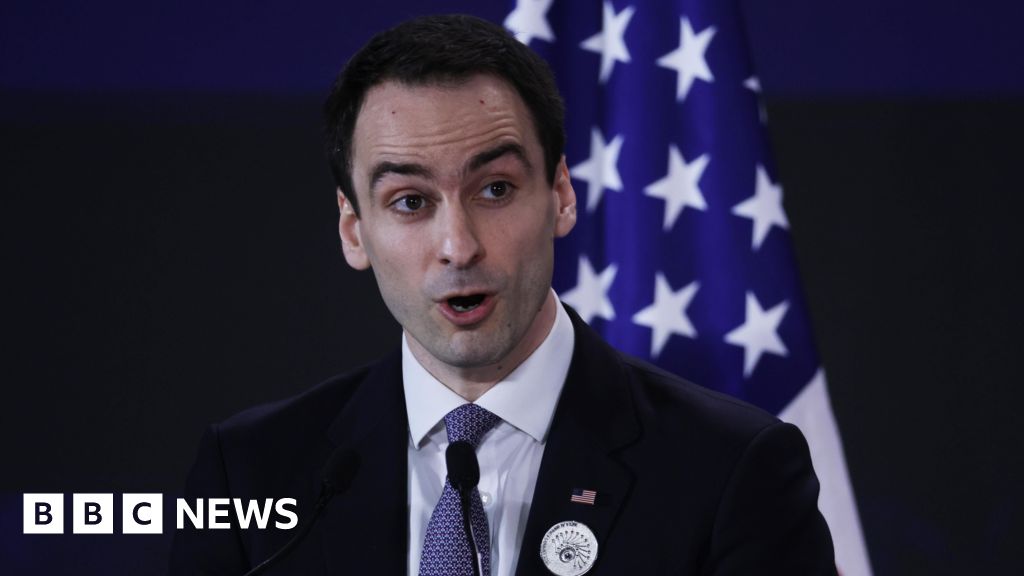
A memo from Michael Kratsios says firms, mainly in China, are wrongfully distilling US AI models.

‘Significant amount’ of child porn found on D4vd’s phone as he is charged with murder in teen’s death, prosecutors say

5 Best Invoice Finance Providers UK (2026)

Ripple Signs First Korea Insurance Deal

Manchester United reach agreement with Casemiro over contract clause amid transfer speculation

US brings back mandatory military draft registration

Steven Gerrard disagrees with Gary Neville over ‘shock’ Chelsea and Arsenal claim | Football


-

 Sports7 days ago
NWFL Suspends Two Players Over Post-Match Clash in Ado-Ekiti
-

 Fashion6 days ago
Weekend Open Thread: Theodora Dress
-

 Politics6 days ago
Palestine barred from entering Canada for FIFA Congress
-
Entertainment4 days ago
NBA Analyst Charles Barkley Chimes in on Ice Spice McDonald’s Fiasco
-

 Tech5 days ago
Auto Enthusiast Scores Running Tesla Model 3 for Two Grand and Turns It Into Bare-Bones Go-Kart
-

 Business4 days ago
Powerball Result April 18, 2026: No Jackpot Winner in Powerball Draw: $75 Million Rolls Over
-

 Politics5 days ago
Zack Polanski demands ‘council homes not luxury flats for foreign investors’
-

 Crypto World6 days ago
Russia Pushes Bill to Criminalize Unregistered Crypto Services
-

 Politics3 days ago
Gary Stevenson delivers timely reminder to register to vote as deadline TODAY
-

 Business2 days ago
Rolls-Royce Voted UK’s Most Iconic Trade Mark as IPO Register Hits 150
-

 Politics1 day ago
Disabled people challenge government SEND proposals over segregation concerns
-

 Politics1 day ago
Making troops accountable for war crimes threatens US alliance, ex-SAS colonel warns
-

 Crypto World6 days ago
Russia Introduces Bill To Criminalize Unregistered Crypto Services
-

 Politics1 day ago
Starmer handler McSweeney to be dragged from shadows by Foreign Affairs Committee
-
Politics1 day ago
Wings Over Scotland | How To Get Away With Crimes
-

 Politics1 day ago
Zack Polanski responds to home secretary’s taser threat
-
 Crypto World5 days ago
Kelp DAO rsETH Bridge Hack Drains $292M as DeFi Losses Top $600M in Two Weeks
-

 Politics1 day ago
‘Iran is still a nuclear threat’
-

 Crypto World2 days ago
New York sues Coinbase, Gemini over prediction market offerings
-
 Sports7 days ago
Kevin Kisner apologizes for Masters criticism: ‘I crossed the line’
You must be logged in to post a comment Login