Connect with us

Business

20 Questions to Ask Before Depositing

Published

on

20 Questions to Ask Before Depositing

A new crypto savings product can present a simple choice between flexible and fixed returns.

The investor’s real decision is more complex: which crypto savings product receives the assets, who controls them, how yield is generated, what can delay withdrawal, and who bears loss.

Digital-asset yield can come from lending, staking, liquidity provision, market-making, arbitrage, token incentives, or promotional subsidy. None is automatically safe or unsafe. Each must be understood in context.

This guide provides an educational framework, not a recommendation. Digital assets can lose substantial value, and users may lose access to funds.

1. Which Legal Entity Contracts With Me?

Record the legal name, registration, address, jurisdiction, governing law, and dispute forum. A brand may use different entities for custody, exchange, cards, or yield.

Advertisement

Verify regulatory claims on official registers. Registration for one activity does not guarantee the product or insure balances.

2. Is the Product Available in My Jurisdiction?

Availability can depend on residence, investor type, verification level, and asset. Accessing a website does not prove eligibility.

Read restricted-country terms and do not provide false information to bypass controls. That can create problems during withdrawal.

3. What Asset Am I Depositing?

Identify the exact token and blockchain network. Similar tickers on different chains may not be interchangeable.

Advertisement

Confirm:

  • contract or official asset identifier;
  • supported network;
  • minimum amount;
  • required confirmations;
  • memo or tag;
  • withdrawal route.

A small test reduces address error but does not remove platform risk.

4. Who Controls the Private Keys?

Custody can be provided by the platform, a third party, a smart contract, or the user.

Ask whether assets are pooled, segregated, held offline, or moved to protocols and exchanges. Key security does not by itself define legal ownership.

5. Can My Assets Be Lent or Pledged?

Terms may permit the provider to lend, rehypothecate, pledge, or otherwise deploy user assets. This can create claims against a counterparty rather than a simple custodial relationship.

Advertisement

Users should know whether they retain title, receive a contractual claim, or accept another arrangement.

6. What Generates the Yield?

Source Revenue Main risks
Lending Borrower interest Default, collateral
Staking Network rewards Protocol, lock, slashing
Liquidity provision Fees and incentives Smart contract, price divergence
Market strategy Trading or basis Leverage, venue, execution
Token incentives New tokens Volatility, dilution
Promotion Provider budget Unsustainable rate

The provider should explain the strategy without revealing proprietary details. “Advanced algorithms” alone is not an economic explanation.

7. Is the Rate Fixed, Variable, or Promotional?

Check:

  1. APY or APR definition.
  2. Compounding frequency.
  3. Balance tiers.
  4. Caps.
  5. Asset paid.
  6. Lock requirement.
  7. Change procedure.
  8. Promotion end date.

An annualized number does not promise the same return over a short holding period.

8. Who Are the Borrowers or Counterparties?

For lending strategies, users need to understand borrower type, concentration, collateral, maturity, and affiliates.

Advertisement

Questions include:

  • Are loans secured?
  • What is the loan-to-value limit?
  • How is collateral valued?
  • What triggers liquidation?
  • Can collateral and borrower fail together?
  • What is the largest exposure?
  • Are related parties involved?

Average statistics can hide one material weak exposure.

9. What Happens After Default?

Collateral only protects users if it is liquid, sufficient, enforceable, and sold in time.

The provider should have a process for margin calls, liquidation, recovery, provisioning, and loss allocation. Markets can gap faster than systems can sell collateral.

Users should know whether the platform, reserve fund, or customers absorb a shortfall.

Advertisement

10. What Is the Liquidity Model?

Flexible withdrawals require liquid assets. If underlying positions are locked or long term, the provider may rely on reserves, repayments, or new liquidity.

Ask:

  • what portion is immediately available;
  • whether withdrawals depend on borrower repayment;
  • whether terms permit queues;
  • whether early redemption has a penalty;
  • which stress tests are used;
  • what happens during mass withdrawal.

“Anytime” should be read with its exceptions.

11. What Are the Withdrawal Rules?

Review:

  • supported asset and network;
  • minimum and maximum;
  • fee;
  • expected processing;
  • manual review;
  • security delay;
  • address allowlist;
  • compliance hold;
  • suspension rights.

Test a small withdrawal early. A successful withdrawal verifies mechanics but not long-term solvency.

12. How Are Stablecoin Risks Managed?

Stablecoins can lose their reference value. Risk depends on issuer, reserves, redemption rights, legal structure, exchange liquidity, and network.

Advertisement

A platform concentrated in one stablecoin can suffer even if its lending strategy performs normally. Review contingency plans for depegging and redemption restrictions.

13. Which Protocols and Bridges Are Used?

DeFi strategies can introduce:

  • smart-contract bugs;
  • admin-key risk;
  • oracle manipulation;
  • governance attacks;
  • bridge exploits;
  • liquidity loss;
  • network congestion.

Audits reduce some uncertainty but do not guarantee safety. Check date, scope, auditor, findings, and remediation.

14. What Does Proof of Reserves Prove?

A reserve snapshot can show some controlled assets. It may not prove all liabilities, ownership, encumbrances, affiliates, or future liquidity.

Review:

Advertisement
  1. Covered legal entities.
  2. Assets included.
  3. Liability method.
  4. Frequency.
  5. Independent verifier.
  6. Borrowed or pledged treatment.
  7. Customer inclusion verification.

Proof of reserves and audited financial statements answer different questions.

15. What Security Controls Exist?

Platform controls may include:

  • cold and warm wallet design;
  • multi-party approval;
  • role separation;
  • penetration testing;
  • monitoring;
  • vendor controls;
  • incident response;
  • business continuity.

Customer features should include strong authentication, session review, withdrawal alerts, and address controls.

Security descriptions should be specific. “Military grade” is not a control.

16. Is There Insurance?

If insurance is mentioned, identify:

  • insurer;
  • insured entity;
  • covered events;
  • wallet or custodian scope;
  • aggregate limit;
  • deductible;
  • exclusions;
  • customer claim mechanism.

Policies may exclude market losses, token failure, protocol exploits, or user phishing.

17. What Are the Full Costs?

The investor’s result can include:

Advertisement
  • subscription;
  • trading spread;
  • conversion fee;
  • deposit fee;
  • withdrawal fee;
  • network fee;
  • early redemption;
  • tax;
  • reward-token value change.

Calculate a complete round trip from deposit to withdrawal.

Net result = rewards − costs ± asset price change

18. How Transparent Is Reporting?

Statements should show:

  • opening balance;
  • deposits and withdrawals;
  • reward amount and asset;
  • accrual time;
  • fees;
  • locked or pending status;
  • closing balance;
  • valuation source.

Downloadable records support tax reporting and independent reconciliation. A portfolio chart alone is insufficient.

19. How Does Governance Control Conflicts?

Potential conflicts arise when the platform:

  • lends to affiliates;
  • promotes its own token;
  • values illiquid collateral;
  • earns more from higher-risk strategies;
  • rewards teams for deposit growth.

Independent risk approval, exposure limits, related-party disclosure, and board reporting help control those conflicts.

Users should be cautious when the provider’s own token is both collateral and reward.

Advertisement

20. What Is the Wind-Down Plan?

A responsible provider should know how to stop new deposits, unwind positions, return assets, preserve records, and communicate if it closes a product.

The plan should consider illiquid positions, disputed claims, unsupported networks, and customers who do not respond.

An exit plan does not predict failure; it reduces disorder.

Additional Question: Who Are the Hidden Dependencies?

One platform may depend on a custodian, exchange, market maker, stablecoin issuer, bank, cloud provider, blockchain node, and screening vendor.

Advertisement

Map the dependencies. Several products can share one underlying point of failure. Diversification by interface does not help if assets are held by the same custodian.

Additional Question: How Does the Provider Communicate Incidents?

A useful incident process defines:

  1. Official status channel.
  2. Update frequency.
  3. Scope and affected product.
  4. Customer actions.
  5. Protection against impersonation.
  6. Post-incident review.

Silence encourages phishing and speculation. Premature certainty can be equally damaging.

Additional Question: How Is Valuation Determined?

A dashboard may convert every asset into dollars using one price, even when the position is illiquid or locked. Users should know the price source, timestamp, and treatment of assets that cannot be sold at the displayed value.

For collateral and liquidation, valuation is critical. An oracle delay or thin market can make protection appear sufficient until it is too late.

Advertisement

Look for independent sources, a fallback method, stale-price thresholds, exchange-outage treatment, haircuts for illiquid assets, and frequent collateral checks. Displayed value is an estimate, not necessarily the amount realizable during stress.

Additional Question: Are Returns Paid From Revenue or Reserves?

A provider can smooth a variable strategy by paying from reserves. That may improve predictability, but users should understand the mechanism and its limits.

If rewards are paid in a newly issued token, the provider may have low cash cost while users bear price risk. If rewards come from new deposits without sustainable external revenue, the model may be fragile or fraudulent.

A transparent product distinguishes realized strategy revenue, promotional subsidy, and discretionary bonuses.

Advertisement

Additional Question: What Happens When Terms Change?

Check the notice period, delivery channel, effective date, and whether existing fixed commitments are protected.

Material changes can include a new rate, custodian, borrower, protocol, withdrawal limit, fee, contracting entity, or automatic asset conversion. Users should be able to retrieve the prior version of terms. Continued use should not be treated as informed consent when notice is obscure.

Additional Question: Can I Export My Records?

Transaction-level exports should show deposits, withdrawals, rewards, fees, conversions, and timestamps. These records support tax, disputes, and independent accounting.

Users should download them periodically rather than wait until closure or an outage. The platform’s retention period and access after closure should be stated.

Advertisement

Additional Question: What Is the Customer-Support Boundary?

Support can explain status and policy; it should not ask for secrets or direct users to send a “verification deposit.”

Before placing meaningful funds, test support with a factual question. A credible response is specific, references official terms, creates a case record, and remains in an official channel.

After a public complaint, impersonators may offer help through direct messages. Users should return to the official site independently.

Red Flags

  • guaranteed return;
  • secret legal entity;
  • yield without an economic source;
  • unusually high rate without explanation;
  • withdrawal requiring a new payment;
  • support requesting credentials;
  • pressure or countdown;
  • reserve claim without liabilities;
  • no risk disclosure;
  • referral rewards dominating activity;
  • related-party exposure not disclosed.

One issue may be explainable. Several unresolved issues should stop the deposit.

A Safe First-Use Process

  1. Verify the official domain.
  2. Identify the legal entity.
  3. Read terms, fees, and risk disclosure.
  4. Secure the account and email.
  5. Confirm token and network.
  6. Deposit a small amount.
  7. Observe reporting and accrual.
  8. Test support.
  9. Withdraw part of the balance.
  10. Reconcile the result.

Only then should the user reconsider the exposure limit.

Set Exposure Limits

Limits can apply by:

Advertisement
  • platform;
  • stablecoin;
  • custodian;
  • protocol;
  • borrower;
  • locked term;
  • percentage of liquid savings.

Money required for essential obligations should remain in an appropriate low-risk and accessible form. Borrowing to chase yield amplifies losses.

Monitor Continuously

Reassess after:

  • withdrawal delay;
  • rate increase;
  • stablecoin depeg;
  • security incident;
  • legal-entity change;
  • new custodian;
  • modified terms;
  • reserve-report change;
  • regulatory restriction.

Save copies of terms accepted at deposit. The current website may not reflect an older agreement.

Conclusion

Crypto yield is not a single risk category. It is a chain of legal, custody, credit, market, liquidity, technology, and operational exposures.

Investors should be able to explain where the asset goes, who pays the return, what protects repayment, and how they exit. If those answers are coherent, a small test can provide practical evidence. If they remain vague, waiting is a rational risk decision.

The best comparison starts after the headline APY. It measures transparency, liquidity, loss allocation, and the ability to withdraw under understandable rules.

Advertisement

Continue Reading
Click to comment

You must be logged in to post a comment Login

Leave a Reply

Business

Dream Finders Homes director Richard Beckwitt buys $1.26m in stock

Published

on


Dream Finders Homes director Richard Beckwitt buys $1.26m in stock

Continue Reading

Business

Digimarc Corporation (DMRC) Q2 2026 Earnings Call Transcript

Published

on

OneWater Marine Inc. (ONEW) Q1 2026 Earnings Call Transcript

Company Participants

Charles Beck – Executive VP, CFO, Secretary & Treasurer
Paul Carreiro – CEO, President & Director

Conference Call Participants

Advertisement

Joshua Reilly – Needham & Company, LLC, Research Division
Vijay Homan – Craig-Hallum Capital Group LLC, Research Division
Jeffrey Milton Bernstein – Silverberg Bernstein Capital Management LLC

Presentation

Operator

Advertisement

Greetings. Welcome to the Digimarc Q2 2026 Earnings Conference Call. [Operator Instructions] Please note, this conference is being recorded. I will now turn the conference over to Charles Beck, Chief Financial Officer. Thank you, Charles. You may begin.

Charles Beck
Executive VP, CFO, Secretary & Treasurer

Thank you, Max. Welcome, everyone, to our Q2 earnings call. I’m Charles Beck, Digimarc’s CFO, and I’m joined today by Paul Carreiro, Digimarc’s CEO. On the call today, Paul will share his plans for the next 90 days, and I will provide a business update and discuss our Q2 2026 financial results. This will be followed by a question-and-answer forum.

Advertisement

Before we begin, let me remind everyone that today’s discussion contains forward-looking statements that have risks and uncertainties. Please refer to our press release for more information on specific risk factors that could cause actual results to differ materially.

Paul, I’ll turn the call over to you now.

Paul Carreiro
CEO, President & Director

Advertisement

Great. Thank you, Charles. Hello, everyone. Before I walk through the plan, I want to spend a moment on why I took this role. Just the lens through which everything else I say today should be understood. When I looked at Digimarc, I saw a company trading well below the value of what had actually been built on, proprietary technology, a genuinely differentiated platform and real provable customer outcomes already in production, held back by commercial execution gap that is entirely fixable. That is rare and, frankly, an exciting setup. The hardest part, building durable

Advertisement
Continue Reading

Business

Wall Street gains as Fed rate hike worries ease

Published

on

Wall Street gains as Fed rate hike worries ease

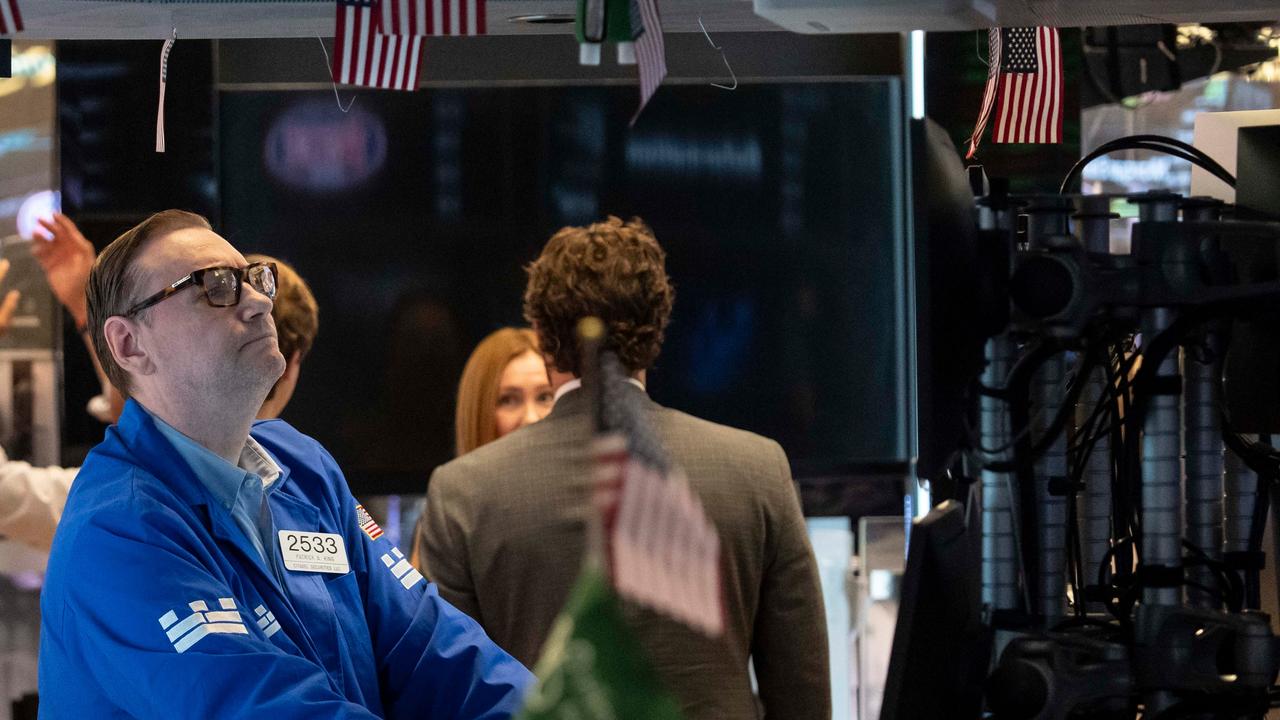
The S&P 500 has notched a ‌record-high close, fuelled by advances in Sandisk and other heavyweight technology stocks, as tame producer price inflation data supported expectations the Federal ‌Reserve will not raise interest rates at its September meeting.

Continue Reading

Business

Reese’s, Almond Joy ice cream bars recalled over labeling error

Published

on

Reese's, Almond Joy ice cream bars recalled over labeling error

The Magnum Ice Cream Company is voluntarily recalling all lots of certain Reese’s and Almond Joy ice cream bars after an internal review found inaccurate nutritional information on the products’ cartons.

The Class III recall covers Reese’s Crunchy Peanut Ice Cream Bars and Almond Joy Ice Cream Bars and extends to the retail store level, according to a recall notice posted by SpartanNash.

Advertisement

The Food and Drug Administration defines a Class III recall as a situation in which use of or exposure to a product “is not likely to cause adverse health consequences.”

WHOLE FOODS RECALLS SALSA, GUACAMOLE AND PREPARED FOODS IN 12 STATES OVER SALMONELLA CONCERNS

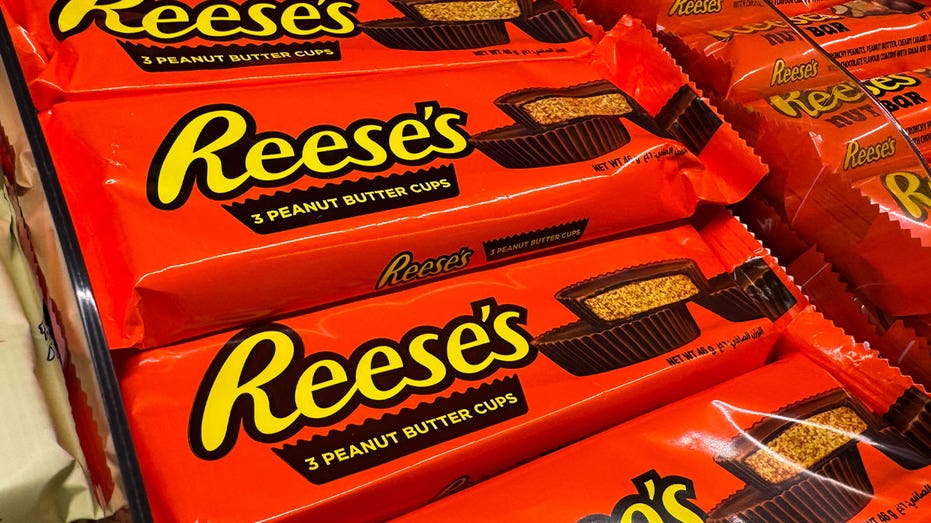
Packages of Reese's peanut butter cups displayed at a retail store

Reese’s products are displayed at a store. The Magnum Ice Cream Company is recalling certain Reese’s and Almond Joy branded ice cream bars over inaccurate nutritional information on the packaging. ( Jakub Porzycki/NurPhoto via Getty Images / Getty Images)

The company said certain nutritional information was inaccurately declared on the nutrition panel. However, the ingredients and allergen information listed on the packaging are correct, according to the recall notice.

The Reese’s Crunchy Peanut Ice Cream Bars can be identified by UPC 8-40473-40024-5 and are sold in six-count packages. The Almond Joy Ice Cream Bars carry UPC 8-40473-40029-0.

Advertisement

All lot codes of the affected products are included in the recall.

TOYOTA RECALLS 655K CAMRYS GLOBALLY OVER DISPLAY DEFECT THAT CAN KNOCK OUT SAFETY INDICATORS

Almond Joy candy bars and packaging featuring the brand's coconut and almond ingredients

Almond Joy candy bars are pictured. The Magnum Ice Cream Company is recalling Almond Joy Ice Cream Bars and Reese’s Crunchy Peanut Ice Cream Bars because of inaccurate nutritional information on the products’ cartons. (Julia Ewan/The Washington Post via Getty Images / Getty Images)

The recall notice did not specify which nutritional information was inaccurate. Consumers who rely on the nutrition panel to monitor their dietary intake should therefore be aware that some of the information printed on the affected cartons may not be accurate.

FOX Business reached out to The Magnum Ice Cream Company for additional information about which nutritional values were incorrectly listed, how many products are affected, where they were distributed and whether the company has received any consumer complaints or reports of adverse health effects.

Advertisement

FOX Business also contacted the FDA for additional information about the Class III recall and any reported adverse health consequences, as well as SpartanNash for details about the affected products’ retail distribution. Responses were not immediately received.

Ticker Security Last Change Change %
HSY THE HERSHEY CO. 186.12 +1.89 +1.03%

CLICK HERE TO GET FOX BUSINESS ON THE GO

SpartanNash instructed customers who may have purchased the recalled ice cream bars not to consume them and instead return the products to the store for a refund or replacement.

Consumers with questions or concerns about the recall can contact The Magnum Ice Cream Company at 1-800-634-7532. SpartanNash customers can contact the retailer’s customer service center at 1-800-451-8500.

Advertisement
Continue Reading

Business

Meta turns to skilled trades as AI boom drives massive workforce demand

Published

on

May 2026 jobs report: US employers add 172,000 jobs, beating expectations

Meta is partnering with North America’s Building Trades Unions (NABTU) to expand the pipeline of skilled workers needed to build and maintain America’s rapidly growing AI infrastructure.

The partnership, announced Wednesday, will give Meta access to NABTU’s network of apprenticeship and training programs while helping connect skilled trades workers with Meta projects across the U.S.

Advertisement

“The Meta partnership with North America’s Building Trades Unions means avenues of communication are open, access to our recruitment and training pipeline of skilled craft will become available and we’ll be able to deploy craft on an as-needed basis to Meta projects anywhere across America,” Sean McGarvey, president of NABTU, told FOX Business.

NEW MEXICO COURT ORDERS META TO PAY $567M, OVERHAUL TEEN PROTECTIONS ON FACEBOOK AND INSTAGRAM

Meta headquarters

The partnership will give Meta access to NABTU’s network of apprenticeship and training programs. (David Paul Morris/Bloomberg via Getty Images)

Demand for skilled trades workers has grown rapidly as tech companies invest in data centers and other infrastructure needed to power AI.

McGarvey said the demand is being felt across a range of trades, including HVAC technicians, laborers, operating engineers and others.

Advertisement

NABTU represents more than 3.2 million skilled craft professionals in the U.S. and Canada through an alliance of 14 national and international unions. 

Its unions and contractor partners operate more than 1,900 apprenticeship and training facilities across North America and invest more than $3 billion annually in training and education, according to the announcement from Meta.

ZUCKERBERG LAYS OUT VISION TO PUT SUPERINTELLIGENT AI IN EVERYONE’S HANDS

Sean McGarvey, president of the North Americas Building Trade Union

McGarvey said the demand for skilled trades workers is being felt across a range of trades. (Daniel Heuer/Bloomberg via Getty Images)

NABTU has roughly 300,000 people enrolled in its registered apprenticeship system, according to McGarvey, who added that number could grow significantly.

Advertisement

“We currently have that 300,000, and we can ramp that up to a million, based on demand,” he said.

Meta President Dina Powell McCormick said skilled trades workers will be critical to building the infrastructure needed for the U.S. to compete in AI.

“We are so proud to work with NABTU on this partnership,” Powell McCormick said in a statement. “I have had the privilege of working with President McGarvey since I took on this new role, and we are excited to work together on skilled trades.

“This is an important moment, and these men and women of the skilled trades are building the American infrastructure needed to ensure America’s values lead the AI race globally.”

Advertisement

META, OTHER COMPANIES MUST FACE THOUSANDS OF LAWSUITS OVER CHILD SOCIAL MEDIA ADDICTION, APPEALS COURT RULES

High-tech data center with server racks

A high-tech data center is pictured here. Demand for skilled trades workers is growing as the country’s AI infrastructure buildout expands. (iStock)

The agreement comes as Meta expands its investment in U.S. infrastructure and workforce development.

The tech company said the partnership builds on its Future Is For Everyone Fund, which is aimed at investing in communities, including teachers, first responders and energy and water infrastructure.

McGarvey said the jobs created by the AI boom could last well beyond the initial construction of data centers because the facilities will need regular upgrades.

Advertisement

GET FOX BUSINESS ON THE GO BY CLICKING HERE

“The need for skilled craft on a constant basis in these digital facilities is ongoing long after initial construction is complete,” he said.

Continue Reading

Business

Mike Ashley’s Frasers Group buys Harvey Nichols in pre-pack deal

Published

on

Business Live

The group, which also owns Sports Direct and Flannels, has acquired most of the chain’s stores from FTI Consulting securing more than 1,000 jobs

Harvey Nichols on New Cathedral Street in Manchester

The Harvey Nichols store on New Cathedral Street in Manchester(Image: Jason Roberts /Manchester Evening News)

Mike Ashley’s Frasers Group has purchased Harvey Nichols, rescuing the embattled luxury department store from the brink of insolvency.

Advertisement

The group, which also owns Sports Direct and Flannels, has snapped up each of the chain’s stores, excluding the Dublin location, from FTI Consulting through a pre-pack administration process.

Frasers’ takeover of Harvey Nichols represents the latest move in its drive into luxury fashion, as it seeks to expand beyond its origins in cut-price sportswear.

The firm, founded by billionaire Mike Ashley, has seen off rivals including FTSE 100 retail giant Next, which had also been involved in the bidding process.

The deal will safeguard the jobs of more than 1,000 members of staff, though Harvey Nichols employs around 1,200 in total, suggesting a number of redundancies will follow. Frasers will also acquire the group’s online operation and existing stock, as reported by City AM.

Advertisement

Frasers stated it will need to commit to “significant restructuring” of the department store group, which has recorded five successive years of losses after buckling under fierce competition from rivals Harrods and Selfridges. In the UK, Harvey Nichols has stores in London, Bristol, Manchester, Birmingham, Leeds and Edinburgh.

Prior to the deal, Ashley warned that Harvey Nichols – which had risen to prominence through its association with the 1990s sitcom Absolutely Fabulous – had fallen into a “death spiral”. He told the Financial Times that he anticipated the department store chain would be sold for less than £40m.

“I don’t think I’ll be writing a huge cheque, because you’ve got to think about the future losses,” he had said.

Earlier this week, directors of the Knightsbridge-based Harvey Nichols warned that the business faced collapse unless it secured a buyer or obtained emergency funding.

Advertisement

Confirming the deal on Thursday, Frasers chief executive Michael Murray said: “Harvey Nichols is an iconic British institution with significant potential, but it is clear meaningful change is needed. “.

“The turnaround will require tough choices, and we are prepared to make those decisions, even if that means a smaller business in the near term, to create a stronger and more sustainable Harvey Nichols for the long term.”

Frasers has made several moves for luxury brands in recent years, including an unsuccessful attempt to gain control of upmarket bagmaker Mulberry.

Last month, the group submitted a £1.7bn offer for German fashion house Hugo Boss. Frasers subsequently increased its stake in the company to 37 per cent, triggering a mandatory offer for all of the shares it does not already own.

Advertisement

Frasers said its acquisition of Harvey Nichols will build on the group’s “elevation strategy, strengthening its luxury positioning”. Julia Goddard, chief executive of Harvey Nichols, said: “Today marks an important milestone for Harvey Nichols and provides a strong platform for the next phase of the business’s evolution under the ownership of Frasers Group.

“Over the past year, we have made significant progress in repositioning this iconic business, investing in our flagship store, broadening our customer proposition, and strengthening the brand DNA.”

Continue Reading

Business

Tyson Foods to shutter 2 facilities amid cattle shortage

Published

on

US beef prices may not drop until 2029 as cattle herd hits 72-year low

Tyson Foods announced Thursday that it will close two facilities and is pursuing the sale of a third as it makes “strategic changes” to its beef business.

The company will end operations at its Joslin, Illinois, beef plant and its Eagle Mountain, Utah, case-ready facility, while pursuing a sale of its Pasco, Washington, beef facility, according to a Tyson Foods news release.

Advertisement

“Tyson Foods will anchor its beef business around three strategically located beef facilities in the central United States: Dakota City, Nebraska; Holcomb, Kansas and Amarillo, Texas, to create a more competitive footprint amidst one of the most historic cattle shortages the country has ever experienced,” the meatpacking giant said.

HIGH BEEF PRICES HITTING CONSUMERS AS MEATPACKING GIANT WARNS OF SUPPLY STRUGGLES

Herd of beef cattle grazing on open grassland.

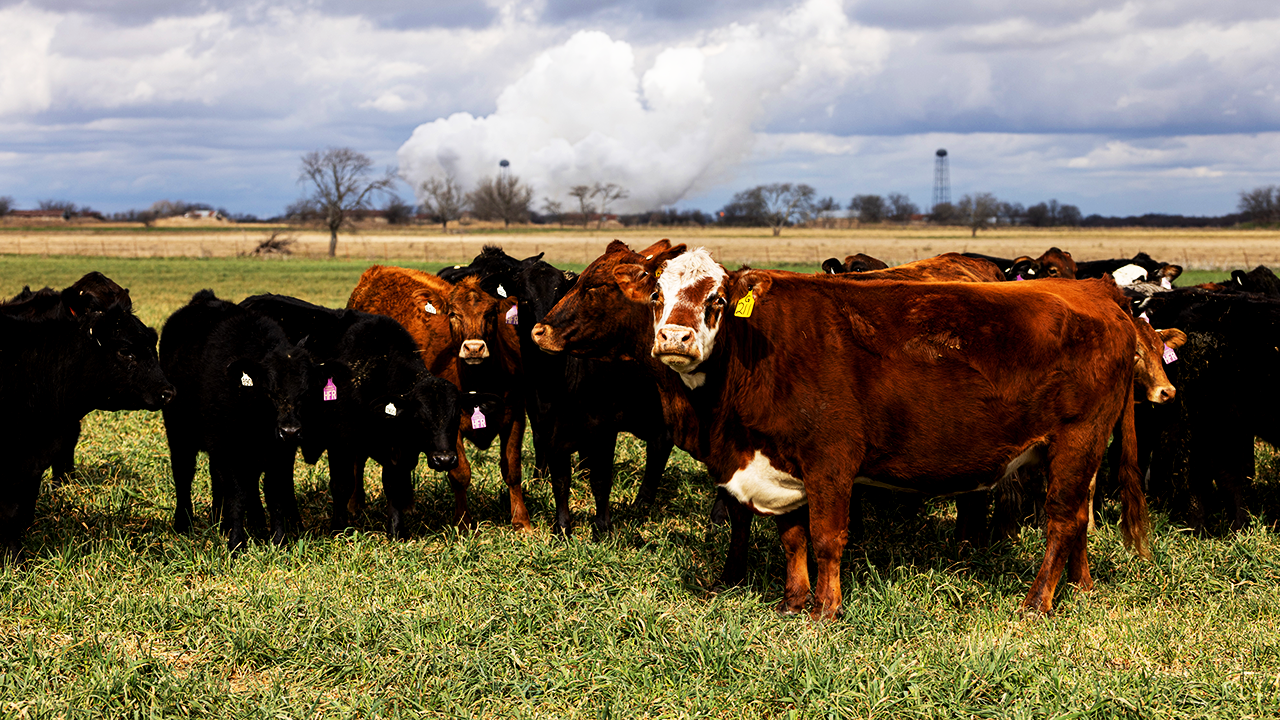
Beef cattle gather in a pasture. Tyson pointed to recent data showing continued limited heifer retention, a sign that tight cattle supplies could persist. (Angela Piazza/The Dallas Morning News, File)

Tyson pointed to recent data showing continued limited heifer retention, a sign that tight cattle supplies could persist.

“Recent USDA cattle inventory data, which included continued evidence of limited heifer retention, indicates these supply constraints are likely to persist, requiring strategic action,” the company said.

Advertisement

Capacity from the Illinois and Utah facilities will be shifted to other Tyson locations that the company said have “ample capacity to grow.”

Tyson also plans to ramp a second shift back up at its Amarillo, Texas, plant as more cattle become available.

US SOYBEAN FARMERS RACE TO MEET GLOBAL DEMAND AS FARMLAND SHRINKS

the logo of Tyson Foods, Inc.

Capacity from the Illinois and Utah facilities will be shifted to other Tyson locations that the company said have “ample capacity to grow.” (Cheng Xin/Getty Images)

“These changes will allow the company to maintain a similar level of cattle harvesting across a more efficient and modern network,” the news release states.

Advertisement

The company also said it will support employees affected by the closures.

Ticker Security Last Change Change %
TSN TYSON FOODS INC. 56.39 +0.58 +1.04%

“The company is committed to supporting our team members through this transition, including helping them apply for open positions at other facilities,” Tyson said. 

The changes come as American consumers continue to face elevated beef prices and meatpackers grapple with tight cattle supplies and higher costs.

TRUMP DECLARES FOOD SUPPLY EMERGENCY, SUSPENDS TARIFFS ON KEY FERTILIZER IMPORTS

Advertisement
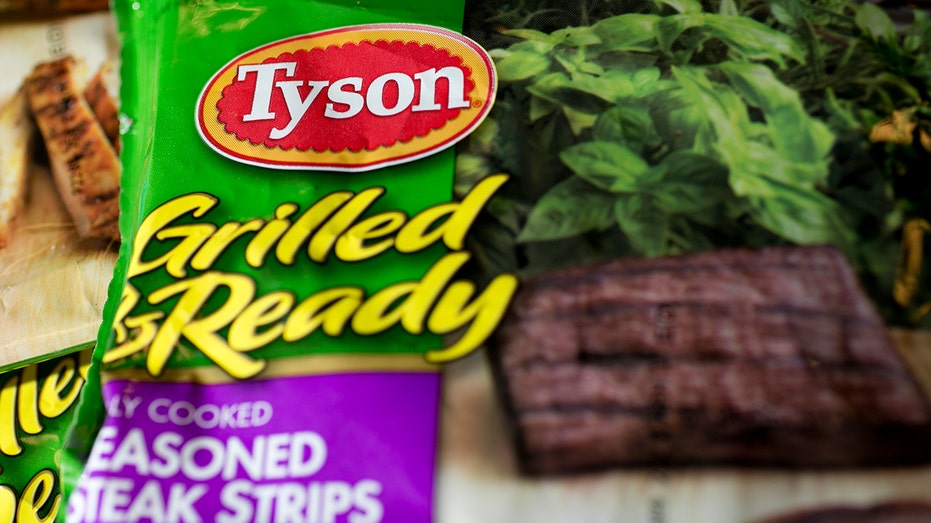
Packages of Tyson Foods Inc.

Tyson Foods packaged steak strips are displayed at a store in Washington, D.C., on Nov. 19, 2012. Tyson also plans to ramp a second shift back up at its Amarillo, Texas, plant as more cattle become available. (Andrew Harrer/Bloomberg via Getty Images)

The U.S. cattle herd has fallen to historically low levels due to drought reducing forage areas in key ranching regions, which forced ranchers to liquidate cattle. 

GET FOX BUSINESS ON THE GO BY CLICKING HERE

Tyson highlighted those pressures during its recent earnings call, with CEO Donnie King saying, “Beef hasn’t performed the way we expected, and we’re not pretending otherwise.”

FOX Business’ Eric Revell contributed to this report.

Advertisement
Continue Reading

Business

Earnings call transcript: Afya posts steady Q2 2026 growth as margins narrow

Published

on


Earnings call transcript: Afya posts steady Q2 2026 growth as margins narrow

Continue Reading

Business

Expectations are high for new B&G Foods CEO

Published

on

Expectations are high for new B&G Foods CEO

Robert Mills has “deeper understanding of challenges and opportunities,” CFO says.

Continue Reading

Business

Alithya Q1 F2027 slides: soft quarter prompts strategic review

Published

on


Alithya Q1 F2027 slides: soft quarter prompts strategic review

Continue Reading

Trending

Copyright © 2025