Connect with us

Business

A backlash over data centres is another threat to the AI juggernaut

Published

on

People holding placards against the approval of a data centre in the government's redevelopment plans for Brick Lane which reads: "Water for humans not AI"

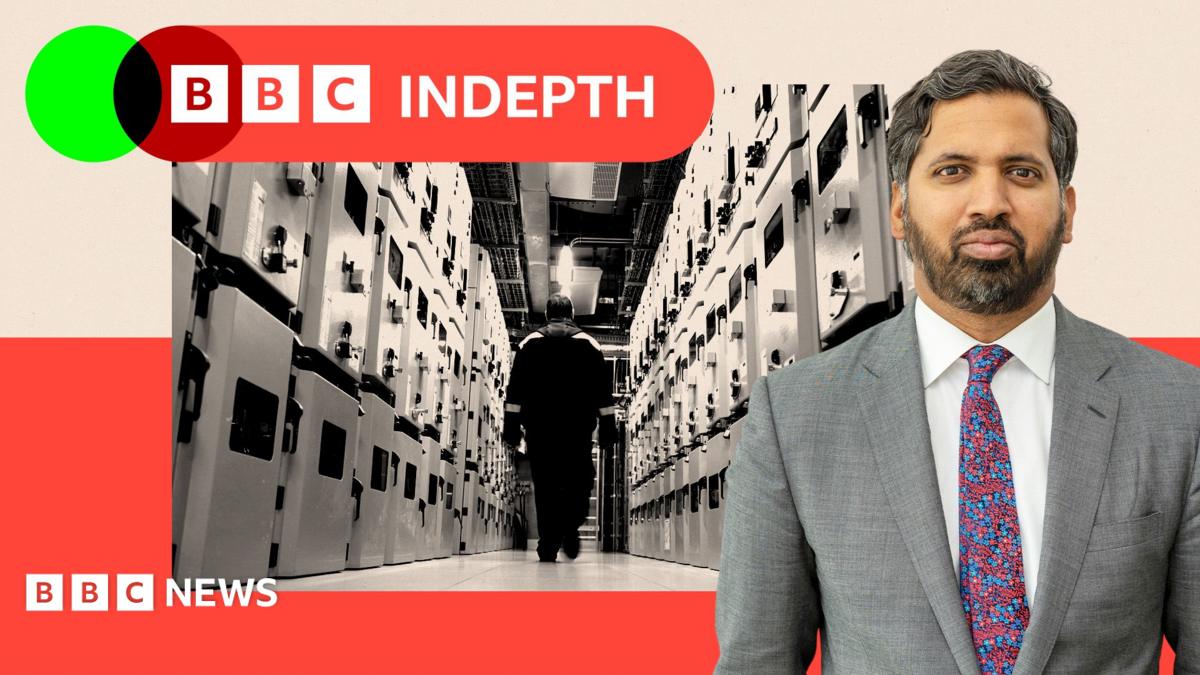
The Labour government last year designated data centres as Critical National Infrastructure, part of its strategy to help fast track their roll out.

It views data centres as underpinning public services and crucial to attract investment and allow Britain to compete in the global economy.

The argument it makes is national economic benefit, but the political challenge is whether locals will put up with it. One of the first acts of the new Labour government was to back a Buckinghamshire data centre that had been repeatedly rejected by the local council because it was going to be built on the green belt.

Permission was granted by ministers, but then challenged by campaigners after a crowdfunded court case, for failing to consider environmental impact. The Government acknowledged errors, quashed its own approval, and the developer eventually conceded it needed to agree binding clean energy obligations with the council. The victorious campaigning group, Foxglove, vowed to refocus its efforts on challenging other data centre schemes across the UK.

Advertisement

Water is another area of concern for campaigners. The tech industry argues its requirements are not so heavy when you consider how much water is lost to leaks, for example.

In a submission to a Commons committee the trade body Water UK criticised “not a single mention of water” in Government AI growth strategies. “There appears to be an assumption that the country will always have enough water for its economic needs. Nothing could be further from the truth.”

Much of the recent UK effort to expand data centres was aimed at areas strategically chosen based on a combination of their potential contribution to the economy, the availability of brownfield sites to develop and their existing connections to energy grids and electricity generation. These areas have been dubbed AI Growth zones.

But even in these places, the political balance between growth and the environment led to hold-ups within Cabinet. A scheme in Teesside saw a tug of war between ministers over whether it should be used for a low carbon hydrogen energy scheme, or a massive new AI data centre. The data centre won out.

Advertisement
Continue Reading
Click to comment

You must be logged in to post a comment Login

Leave a Reply

Business

Riot Platforms Shares Climb 3.81% as Its $9.1 Billion Anthropic Data Center Deal Keeps Steadily Paying Off

Published

on

Buy or Sell AMD Stock in 2026? Analysts Bullish on

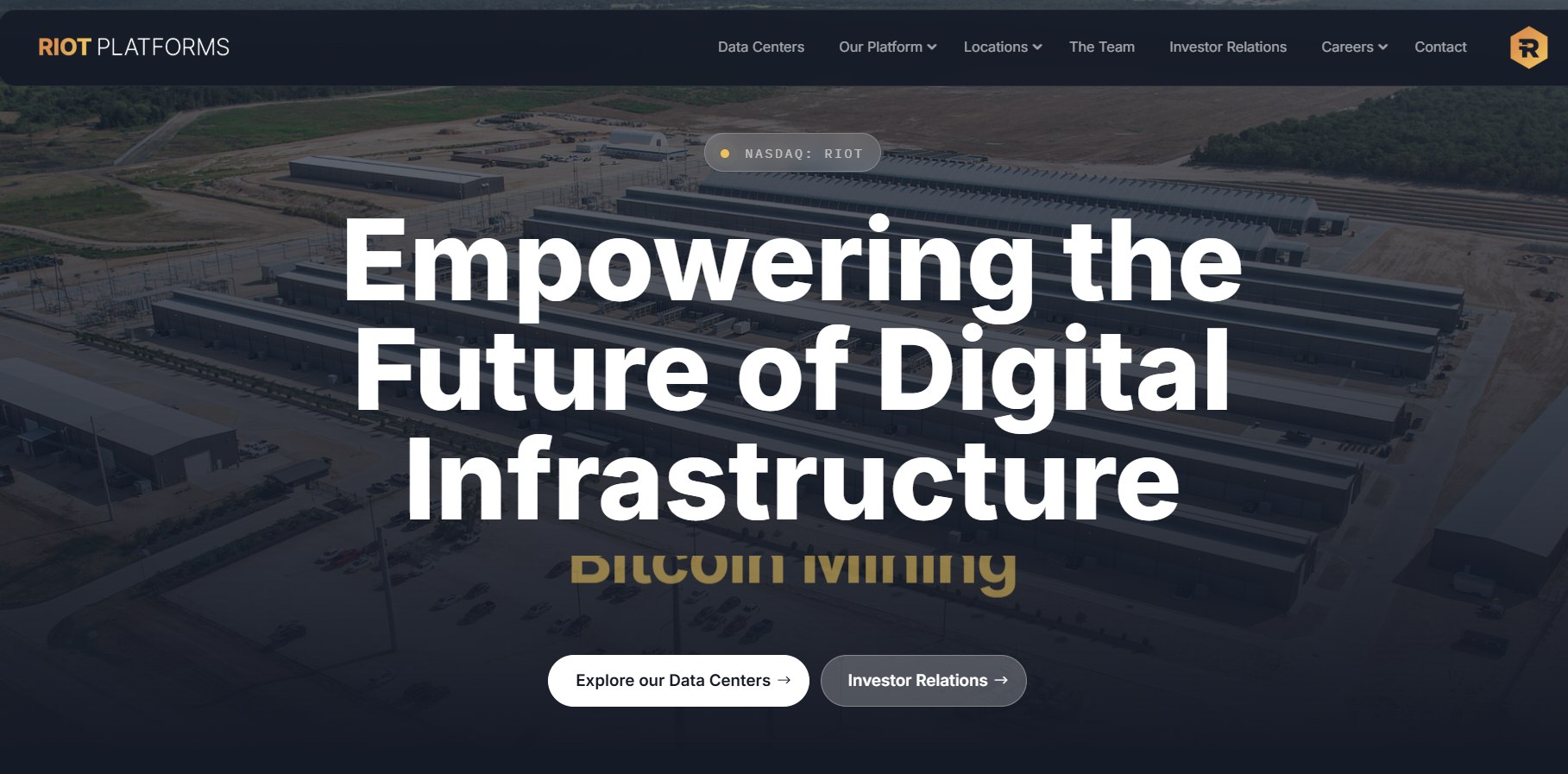
Shares of Riot Platforms Inc. rose 3.81% to $20.45 in Wednesday trading, adding 75 cents, as the bitcoin mining company’s continued transformation into an AI data center operator kept drawing investor interest more than a month after it struck a landmark computing capacity deal with Anthropic.

Riot disclosed on August 10 that it had signed a 20-year agreement to supply 191 megawatts of data center capacity, enough electricity to power roughly 143,000 homes at any given moment, from its campus in Rockdale, Texas, to what the company initially described only as a “leading frontier AI” lab. Bloomberg News reported, citing people familiar with the matter, that the customer was Anthropic, the AI company behind the Claude chatbot. The agreement, which runs through June 2048, is expected to generate approximately $9.1 billion in contracted revenue, with two additional five-year extension options that could push the total potential value of the deal to roughly $16.1 billion if fully exercised.

News of the deal, announced alongside Riot’s second-quarter earnings, sent shares surging as much as 25% in after-hours trading the day it broke, before the stock opened the following session up between 17% and 20%, depending on the specific measurement point cited by different market trackers. Riot Chief Executive Officer Jason Les framed the agreement as a pivotal moment in the company’s ongoing evolution beyond its origins as a pure-play bitcoin miner. “Today’s announcement of a landmark 20-year, 191-megawatt data center lease with a leading frontier AI lab marks a defining moment in our evolution into a leading developer of large-scale data centers,” Les said in the company’s earnings release.

The Anthropic agreement built directly on an earlier deal Riot struck with Advanced Micro Devices, which had already established a presence at the same Rockdale campus. Combined, the two agreements give Riot what Les described as a two-tenant data center campus, bringing the company’s total signed capacity to 241 megawatts and approximately $9.8 billion in long-term contracted revenue, all secured within roughly six months, according to the company.

Advertisement

Riot plans to bring the newly contracted Anthropic capacity online in stages, targeting 96 megawatts by December 2027 and completion of the full 191-megawatt buildout by June 2028. To fund the project’s early construction phase, the company arranged a $573 million interim financing facility through Morgan Stanley while it works to put a permanent credit backstop in place for the longer-term buildout.

Wall Street’s reaction to the deal has remained largely positive in the weeks since it was announced. Compass Point analyst Michael Donovan described the arrangement in a research note as evidence of Riot’s transformation into a company carrying substantial contracted data center revenue, noting the campus now represents a meaningful, diversified revenue base beyond bitcoin mining alone. Bernstein raised its price target on Riot shares to $35 following the announcement, while Citi lifted its own target to $32, with both firms characterizing the deal as transformational for the company’s business model even as Riot continued to post sizable quarterly net losses.

Those losses remain substantial in absolute terms. Riot reported second-quarter revenue of $174.2 million, up 14% from $153 million a year earlier, with bitcoin mining contributing $113.7 million of that total and the company’s newer data center segment contributing $23.2 million. Despite the revenue growth, Riot posted a net loss of $237.2 million for the quarter, a figure that underscores the heavy upfront capital costs associated with the company’s ongoing pivot toward large-scale data center construction, even as its longer-term contracted revenue base has expanded sharply.

Riot’s shift mirrors a broader trend across the bitcoin mining industry, where companies with access to large, power-rich sites have increasingly moved to lease that capacity to AI developers rather than relying solely on cryptocurrency mining for revenue. Industry participants have described the shift as a response to a prolonged period of subdued conditions in the bitcoin mining business, pushing miners to seek steadier, longer-duration revenue streams tied to the broader boom in AI infrastructure spending. Shares of other AI-data-center-adjacent miners, including IREN, Applied Digital and TeraWulf, posted more modest gains of around 2% on the day Riot’s deal was first announced, suggesting the initial rally was driven primarily by company-specific factors tied to Riot’s own agreement rather than a broad rerating of the entire sector.

Advertisement

For Anthropic, the Riot agreement represented its third major computing capacity procurement within a roughly three-month span, part of a broader pattern of large infrastructure commitments that have collectively totaled tens of billions of dollars as the company works to secure sufficient computing capacity to meet growing customer demand for its AI models, while competing for infrastructure access against rivals including OpenAI and Google.

Riot purchased the 200-acre Rockdale site outright in January for $96 million, having previously operated the location under a long-term ground lease, giving the company direct ownership of the land underpinning both its bitcoin mining operations and its expanding data center business. The company said it began developing its data center business in earnest in 2025, generating its first data center revenue in the first quarter of 2026, a business line that has scaled rapidly in the months since as demand for AI computing capacity has continued to accelerate nationally.

With construction on the Anthropic-contracted capacity now underway and staged delivery targeted through mid-2028, investors are likely to continue watching Riot’s progress on the Rockdale buildout closely in the coming quarters, treating the pace of construction and capacity activation as a key indicator of how successfully the company can convert its newly signed, multibillion-dollar contract backlog into recognized revenue over the life of the agreement.

Advertisement
Continue Reading

Business

NSE IPO attracts 150+ anchor investors, raises Rs 6,746 crore

Published

on

NSE IPO attracts 150+ anchor investors, raises Rs 6,746 crore
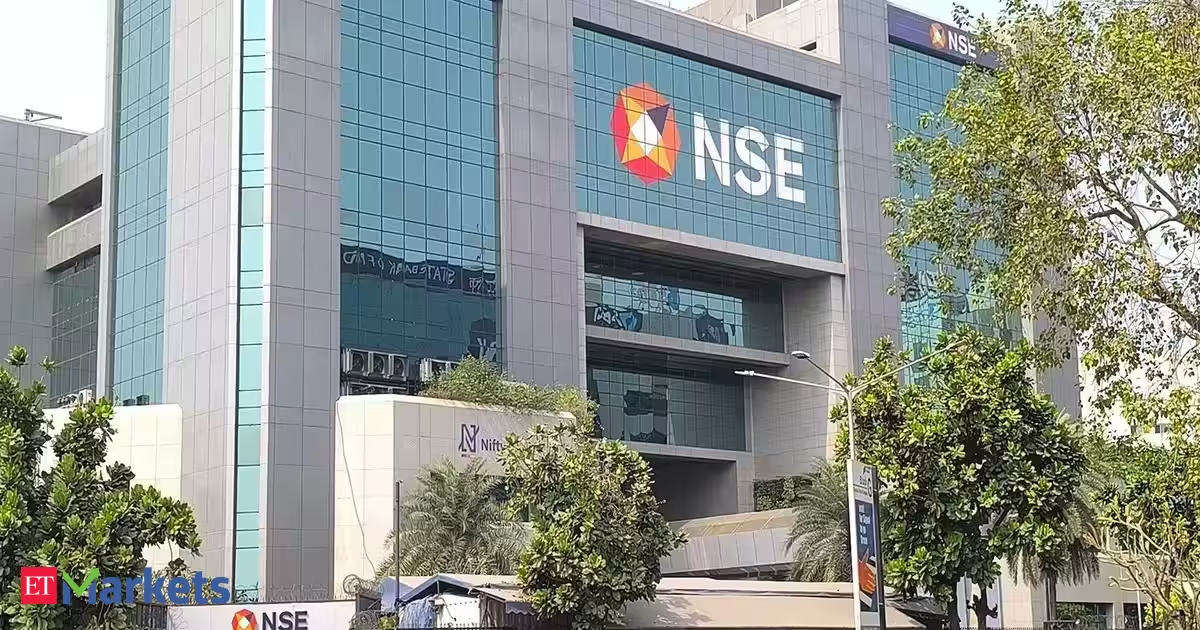
Mumbai: The National Stock Exchange‘s (NSE) share sale Wednesday drew more than 150 anchor investors, with overseas funds collectively garnering 43% of the stock on offer for this category of bidders before the issue opens for the public Thursday.

Bidders for the anchor book included sovereign wealth funds, global asset managers and long-only funds from the US, Europe and Asia, which helped the country’s biggest bourse garner ₹6,746.18 crore. The NSE said in an exchange filing that anchor investors got 37.8 million shares at ₹1,785 apiece.

Foreign portfolio investors accounted for ₹2,883 crore, or 43% of the anchor book. More than 20 foreign long-only funds participated, with the list including Singapore sovereign wealth fund GIC, Abu Dhabi Investment Authority and Norges Bank.

Other global investors included Fidelity, Goldman Sachs Asset Management, Eastspring Investments and HSBC Global Asset Management, people aware of the bids told ET. The IPO will remain open for the public from Thursday and close on Sep 21.

Advertisement

Read more: NSE IPO: Every Rs 10 move in shares could swing Radhakishan Damani’s wealth by nearly Rs 40 crore


Domestic institutional demand was also broad-based, with more than 25 mutual funds and 11 insurance and pension companies investing around ₹3,588 crore, or 53% of the anchor book.
Mutual fund houses participating in the anchor book were SBI Mutual Fund, ICICI Prudential Mutual Fund, HDFC Mutual Fund, Nippon Mutual Fund, Axis Mutual Fund, Aditya Birla Sun Life Mutual Fund, Kotak Mutual Fund, UTI Mutual Fund, Mirae Asset Mutual Fund and Franklin Templeton participated in the anchor book.Read more: Rupee languishes at six-week low ahead of Fed outcome, RBI limits losses

LIC, NSE’s largest shareholder with a 10.72% stake, invested more than ₹500 crore through LIC, LIC Mutual Fund and LIC Pension Fund. The investment comes even as LIC’s existing holding is larger than the stake being offered in the IPO.

The SBI group, which is selling a 1% stake in NSE through State Bank of India and SBI Capital Markets, is also investing in the exchange through SBI Mutual Fund, SBI General, SBI Life and SBI Pension Fund. Its combined investment exceeds ₹400 crore.

NSE IPO Tracker: Catch all the highlights here

Advertisement

Several existing investors also participated in the anchor book, adding to their exposure to NSE ahead of the IPO.

Continue Reading

Business

New business school planned for University of Salford to educate next generation of leaders

Published

on

Business Live

New building set to be ‘anchor institution’ for students and businesses in area

How the new business school at the University of Salford could look.

How the new business school at the University of Salford could look(Image: Salford University / ECF)

CGIs reveal how a brand new Business School building at the University of Salford could look, as the uni seeks opinions about its ‘ambitious’ new plans.

Advertisement

The uni intends to transform 43-44 The Crescent into a three-story block to educate Salford’s next generation of business leaders. The multi-million pound investment is predicted to be the ‘biggest yet’ for the university, whose campus has expanded considerably as part of the £2.5bn Crescent Salford masterplan.

Funded by development partnership ECF, Salford City Council and the University of Salford, the new building would become the new home of courses such as Business Management, HR (human resources), Supply Chain and Logistics, Digital Business, Law, Marketing, Economics, and Accounting and Finance, and others.

Liz Larner, Deputy Dean, Faculty of Social Sciences, Humanities and the Arts for People and the Economy at the University of Salford said: “There’s a lot of excitement about this project, not just from the university perspective, but also for Salford as a whole. Our Business School already works with a lot of local businesses and SMEs, and we’re hoping to turn this new space into a bit of an anchor institution for students and the local area.

“It’s potentially one of the biggest investments to date and is part of the really important development and regeneration happening along the A6.”

Advertisement
How the interior of the new business school at the University of Salford could look.

How the interior of the new business school at the University of Salford could look(Image: Salford University / ECF)

The design by architects BDP includes 7,400m2 of teaching and research space. The CGIs show a bleacher-style auditorium space in the buildings’ entrance, with open-plan study spaces and private nooks across other floors.

The proposal is still in the process of full sign off by the University, but the decision has been taken to open a consultation on the plans to the public.

Locals are invited to attend a feedback session between 3-7pm on Wednesday 23 September in the reception of the University’s Maxwell building.

Aerial view of how the new business school at the University of Salford could look.

Aerial view of how the new business school at the University of Salford could look(Image: Salford University / ECF)

Salford City Mayor Paul Dennett said: “A new Business School has the potential to create an outstanding environment for education, research and innovation, while strengthening the connections between our university, businesses, communities. Importantly, it can help equip students with the skills employers need and support more people to build successful careers here in Salford and across Greater Manchester.

Advertisement

“I’m also pleased to see the University engaging with local people at this early stage.”

Continue Reading

Business

AI app ads promoting ‘objectification of women’ banned by watchdog

Published

on

A man, whose face has been cut off in the picture, holding a phone with both hands while resting his arms on a wooden table. There are out-of-focus plants in the background. He's wearing a dark green t shirt.

The ads were identified by the regulator using its AI-powered “Active Ad Monitoring System”, which proactively searches for ads which might violate UK rules.

It said the five ads it were banned had depicted women irresponsibly, and were likely to cause serious or widespread offence.

One ad for an AI companion generator, developed by Animcha Ltd, was also found to have portrayed someone under 18 in a sexual way, the ASA said.

It presented the synthetic female character as someone users could “customise” and instruct, combining sexualised imagery with childlike clothing and objects.

Advertisement

Two ads for an AI portrait generation tool called Nexaipic encouraged users to “upload your crush and let AI create what you imagine” with sexually explicit videos.

An ad for an AI image-to-video generation app, identified only as KH31 DD22, depicted a clothed woman being transformed into a video in which she was topless.

The watchdog said this suggested the app could be used to create content that exposed women’s bodies.

Further adverts for image generation tool Rusto AI, which encouraged users to create sexualised videos from photographs, were found to have condoned the digital manipulation of women’s images to create sexually explicit content.

Advertisement

And an ad for an AI image-to-video generation app PictoPop used sexualised imagery to demonstrate the tool, including by portraying the woman in a submissive position.

The ASA said none of the apps’ creators responded to its enquiries.

Continue Reading

Business

Retail investors pull Rs 5,674 crore from stocks, invest Rs 12,618 crore into IPOs in July-August

Published

on

Retail investors pull Rs 5,674 crore from stocks, invest Rs 12,618 crore into IPOs in July-August
Mumbai: After heavy buying in the June quarter, India’s retail investors turned sellers in the secondary market in July and August while stepping up investments in IPOs as primary-market activity accelerated. Retail investors sold a combined ₹5,674 crore in the secondary market in July and August after buying ₹42,774 crore in the June quarter, according to data compiled from NSE. In contrast, they invested more than ₹12,618 crore in the primary market during the two months, compared with ₹1,307 crore in the June quarter.

Analysts said the run-up in mid-cap and small-cap stocks since the rebound in early April could have prompted some investors to lock in gains and move money to fresh issuances. “Investors are rotating liquidity from existing stocks towards primary issues,” said Saurabh Jain, Head of Fundamental Research, SMC Global Securities. “It appears more like a tactical shift in allocation. Some investors may be booking profits and becoming selective amid elevated valuations and market volatility. At the same time, the strong IPO pipeline is providing fresh opportunities, including potential listing gains and new growth stories.”

Retail investors shift from secondary market to IPOs in July-August, selling Rs 5,674 crore<br>ET Bureau

So far in FY27, retail investors have bought nearly ₹37,070 crore in the secondary market and ₹13,925 crore in the primary market, taking their cumulative investments across the two markets to ₹50,995 crore in the first 5 months of the financial year.

Read more: NSE IPO: Every Rs 10 move in shares could swing Radhakishan Damani’s wealth by nearly Rs 40 crore

Advertisement

In FY26, retail investors sold nearly ₹5,803 crore in the secondary market while investing ₹42,608 crore in the primary market. Gains from India’s main indices in July and August were moderate, while the broader markets continued to strengthen. The Sensex and Nifty gained 0.1% and 0.3%, respectively, over the two months, while the BSE MidCap 150 and BSE SmallCap 250 indices rose 3.5% and 2.6%. The shift towards primary issues coincided with a sharp pick-up in IPO activity. Twelve IPOs raised ₹28,648 crore in July, while 23 issues raised ₹23,453 crore in August. Average listing-day gains rose to nearly 14% in July and 29% in August, compared with 1.44% between January and June.


Read more: Rupee languishes at six-week low ahead of Fed outcome, RBI limits losses
Puneet Singhania, director, Master Capital Services, said the shift reflects profit booking, selective buying and reallocation of liquidity rather than an exit from equities. “Investors have become more selective about valuations in the secondary market. Importantly, retail participation in mainboard IPOs has increased to 29% in FY27 from 23% in FY26, showing that retail investors continue to deploy capital into equities. Strong SIP inflows, which reached a record ₹32,297 crore in August, further reinforce this trend,” he said. The selling in the secondary market is therefore more of a tactical shift than a structural withdrawal, Singhania said.

Continue Reading

Business

Can NSE IPO deliver long-term growth for high-risk investors?

Published

on

Can NSE IPO deliver long-term growth for high-risk investors?
ET Intelligence Group: National Stock Exchange of India (NSE), the country’s largest stock exchange by total turnover in cash market and equity derivatives, plans to raise up to ₹22,569 crore through an offer for sale (OFS). The OFS will be carried out by 23 existing investors including State Bank of India, Canada Pension Plan Investment Board, Aranda Investments, The New India Assurance Company, SBI Capital Markets and Bank of Baroda. NSE is expected to benefit from the rising participation of retail investors in capital markets. The exchange remains heavily reliant on transaction volumes. Transaction charges formed nearly 79% of FY26 operating revenue, including nearly 60% from options, exposing earnings to regulatory changes, competition, and stock market volatility. Given these factors, the issue appears to be suitable for long-term investors with a higher risk tolerance.
Can NSE IPO deliver long-term growth for high-risk investors?<br>ET Bureau

Business
Incorporated in 1992, NSE operates a vertically integrated platform covering trading, clearing, settlement, listing, market data and index licensing. Its trading portfolio covers cash equities, equity futures and options, mutual funds, commodity derivatives, exchange-traded currency derivatives, wholesale debt and interest-rate futures. In FY26, NSE commanded nearly 93% share in cash market, 99.7% in equity futures and 68.5% in equity options premium turnover.

Read more: NSE IPO Tracker: Catch all the highlights here

While transaction charges remain the core revenue driver, the company has diversified its revenue base through connectivity, colocation, data and licensing services. Revenue from these businesses rose 9.5% year-on-year to ₹1,955.9 crore in FY26 and accounted for 11.8% of operating revenue.


As of June 30, 2026, it had 132.4 million unique registered investors, 1,328 trading members and 3,005 listed entities. However, trading activity remains concentrated, with the top 10 trading members accounting for 46.8% of FY26 revenue from operations. Lower trading volumes, regulatory changes affecting derivatives, technology failures, cyber risks, and delays in implementing diversification initiatives remain key risks.
Read more: UPI MDR could create Rs 27,000 crore revenue pool by FY28: Bernstein

Financials

Though revenue grew by 6% annually over the past three years, it fell by 3% year-on-year to ₹16,601 crore in FY26. The decline was primarily driven by a 4% fall in transaction-charge revenue to ₹13,057 crore as cash-market, futures and options volumes moderated following regulatory changes. Operating margin before depreciation and amortisation (Ebitda margin) was 66.9% in FY26 compared with 66.8% in FY24 and was higher than BSE‘s 64% margin in FY26. Net profit increased by 11% annually to ₹10,302 crore in FY26 from ₹8,305.7 crore in FY24. Return on equity moderated to 33% in FY26 from 37% in FY24 compared with 45% for BSE. It’s a debt-free company with a net cash position of ₹17,976 crore as of March 31, 2026.

Advertisement

Valuation

NSE’s post-issue price-earnings (P/E) multiple of 42.9 is below BSE’s 53, despite its dominant market position. The IPO offers investors exposure to a debt-free, tightly regulated exchange business protected by high entry barriers.

Continue Reading

Business

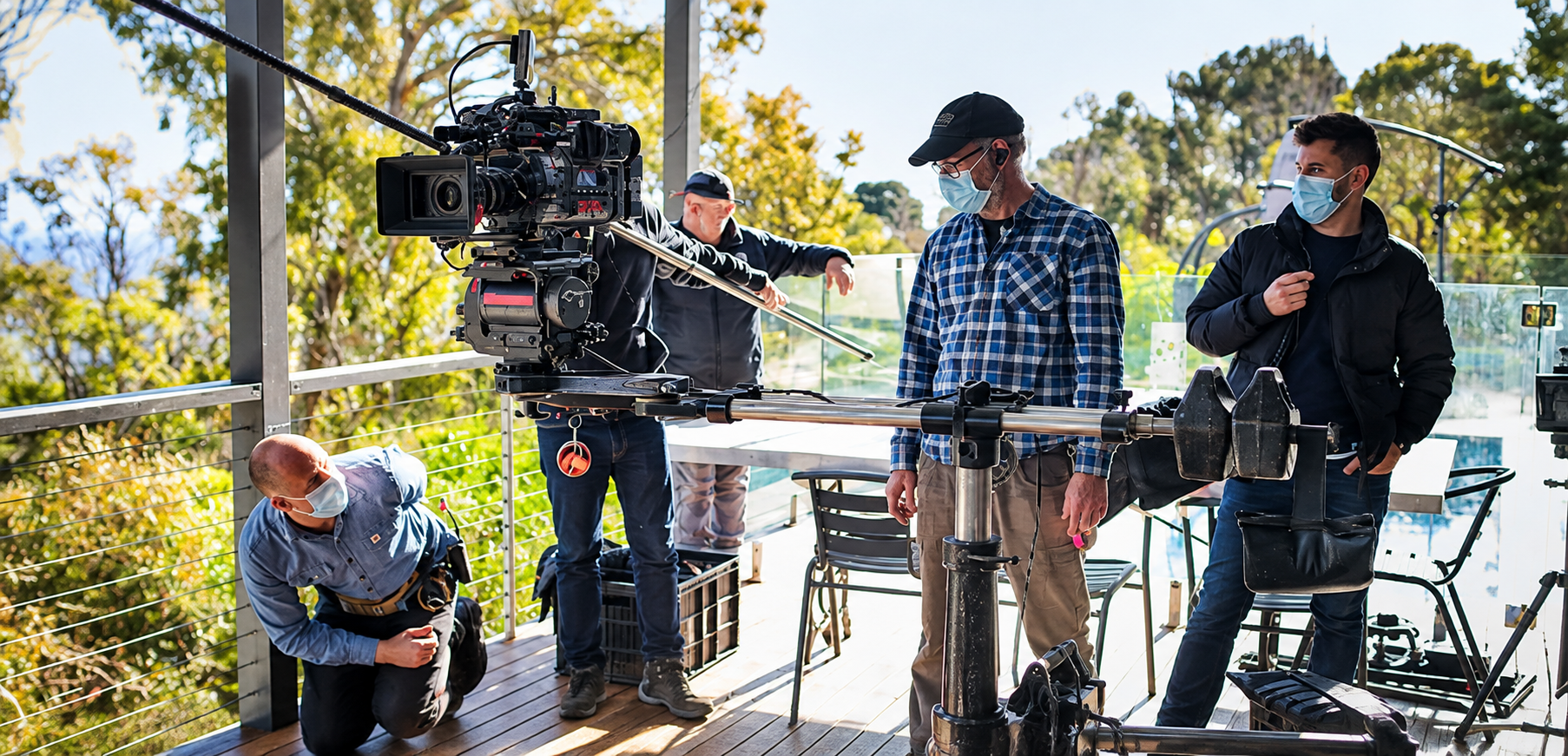
South Australian Filmmakers Offered Free Passes to Nation’s Top Cinema Industry Convention on Gold Coast

Published

on

Marvel's Wolverine Review Roundup: Insomniac's Brutal PS5 Exclusive Draws Praise

ADELAIDE, Australia — The South Australian Film Corporation is calling on local filmmakers to apply for subsidized passes to the Australian International Movie Convention, the country’s largest annual gathering of cinema exhibitors, distributors and technology suppliers, set to take place on the Gold Coast next month.

The state screen agency announced this week that it is offering four full convention passes, each valued at $1,440, to South Australian filmmakers who want to attend the event and connect with industry leaders from across the cinema sector. Applications opened this week and close at 9 a.m. on Sept. 28, with successful applicants to be notified in the days that follow.

The convention, known as AIMC, will run from Oct. 26 to Oct. 29 at The Star Gold Coast in Queensland. Now in its 79th edition, the event bills itself as the premier cinema industry gathering in the Southern Hemisphere and draws delegates from Australia, New Zealand, Asia, the United States and Europe. Organizers describe it as the only event on the Australian film calendar that brings exhibitors, distributors, filmmakers and cinema equipment suppliers together under one roof.

This year’s convention is powered by Vista Group, a New Zealand-based cinema technology company, and is being run by the Cinema Association Australasia. Attendees are expected to include representatives from major Hollywood studios as well as independent distributors, continuing a format that in recent years has featured presentations from companies including The Walt Disney Studios, Sony Pictures, Paramount Pictures, Warner Bros. Pictures, Universal Pictures and Australian distributors such as Roadshow Films and Rialto Distribution.

Advertisement

The South Australian Film Corporation said the passes are intended to give homegrown filmmakers access to exclusive distributor presentations, advance screenings of upcoming releases and sessions on market trends and technology shaping the future of cinema exhibition. The agency framed the opportunity as a chance for South Australian screen practitioners to build relationships with international counterparts and stay abreast of shifts in an industry still adjusting to changes in theatrical distribution and audience habits since the pandemic.

A central part of this year’s program is the Screen Australia Masterclass, scheduled for Oct. 26, the convention’s opening day. The session is aimed at mid-career and senior Australian filmmakers and is designed to bring together industry members focused on producing commercially successful Australian films. Previous editions of the masterclass have featured presentations from exhibitors, distributors, filmmakers, marketers, publicists and screen agency executives, according to organizers.

To qualify for one of the four subsidized passes, applicants must be South Australian residents who meet credit eligibility requirements set out in the film corporation’s terms of trade. They must also demonstrate a genuine track record in feature filmmaking, commit to traveling to the Gold Coast for the full four days of the convention, and be available to attend the Screen Australia Masterclass on the opening day. The film corporation said it will not be able to cover costs associated with travel or accommodation, meaning recipients will need to fund those expenses independently even if their convention registration is covered.

Applicants are required to submit an expression of interest through the film corporation’s online grant portal. Submissions will be evaluated based on the strength of the application, the applicant’s suitability for the opportunity and the outcomes they intend to achieve by attending. With the passes limited to four recipients, the process is expected to be competitive among the state’s pool of established feature filmmakers.

Advertisement

The Australian International Movie Convention has grown over nearly eight decades into a fixture of the country’s exhibition and distribution calendar. Last year’s 78th edition, also held at The Star Gold Coast, featured 13 distributor presentations, 11 keynote sessions with nine international speakers, three panel discussions involving a dozen industry experts, five award presentations and five film screenings, along with several networking events including a studio-hosted welcome party and an industry breakfast focused on social media marketing trends. Organizers said the event also included a session hosted by Screen Queensland to connect delegates with the state’s local screen sector.

International participation has become an increasingly prominent feature of the event. Representatives from the International Union of Cinemas, a Brussels-based organization representing cinema operators across Europe, attended the convention and delivered a keynote focused on European cinema trends, alongside a panel discussion on global and local opportunities within the exhibition sector. The presence of overseas trade bodies at the convention reflects organizers’ efforts to position AIMC as a venue not just for the domestic industry but for international dialogue on cinema-going trends, an area of particular focus as exhibitors worldwide continue working to rebuild audience numbers.

Other Australian states have offered similar funding support for filmmakers to attend the convention. Screen Queensland, the state’s screen agency, has in past years offered practitioners the chance to apply for market and travel grants to attend AIMC, citing the event’s value in allowing delegates to preview upcoming theatrical releases and engage directly with technology and cinema fit-out suppliers.

The South Australian Film Corporation’s latest funding call comes as the state continues to position itself as a hub for local production, alongside its broader support programs, first-nations screen strategy and diversity initiatives. Adelaide Studios, which the corporation operates, has become a base for productions in the state, and agency officials have regularly pointed to opportunities such as the AIMC passes as part of efforts to help local filmmakers build networks beyond South Australia.

Advertisement

Filmmakers interested in applying for one of the four passes have just under two weeks to submit their expressions of interest before the Sept. 28 deadline. More information about the convention program, including registration details for delegates not applying through the subsidized pass scheme, is available through the Cinema Association Australasia’s convention website.

Continue Reading

Business

New chair of Bristol Beacon named as Jonathan Dimbleby steps down

Published

on

Business Live

The broadcaster will leave the organisation behind the Bristol concert hall at the end of January

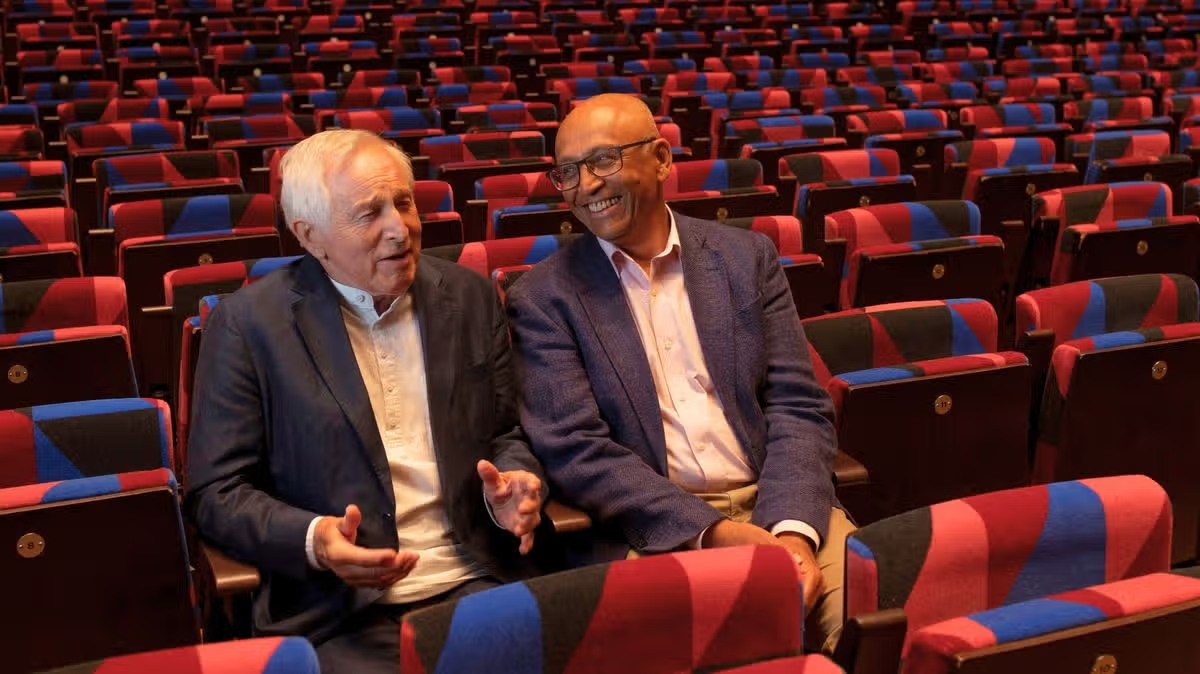
Jonathan Dimbleby and Sandeep Katwala

Jonathan Dimbleby and Sandeep Katwala(Image: Bristol Beacon)

Bristol Beacon, the music charity and concert hall, has named its new chair. Sandeep Katwala will take up the role in February next year, succeeding television presenter and broadcaster Jonathan Dimbleby, who steps down after completing a four-year term.

Mr Katawala, who lives in Bristol, has a background in finance and law, having spent 25 years with Linklaters, a global law firm. He has also held several senior governance roles in the not-for-profit sector including at Depaul UK, which supports young homeless people; Great Ormond Street Children’s Hospital Charity; London-based housing association Octavia Group; and Bail for Immigration Detainees.

He joined the board of Bristol Music Trust, the music charity which operates Bristol Beacon and all of its programmes, in May 2024.

“We are at an exciting stage in the evolution of Bristol Beacon, both in terms of the venue and the wider work we do in the community,” said Mr Katawala. “It is a difficult environment for music venues and charities more generally but I know from my time on the board that we have a fantastic team who can meet these challenges.

Advertisement

“Jonathan has ensured the creation of a very solid foundation since the reopening of the Beacon and will be a very hard act to follow, but I will do my best to play my part in supporting the team as it delivers on our ambitious new strategy. I am passionate about the importance of music in the wider community and the need to support music education for all.”

Mr Dimbleby has chaired Bristol Beacon since 2023, leading the organisation through its reopening following a multimillion-pound transformation, and the establishment of a new operating model.

“It has been a real privilege to have played a part in the new era of Bristol Beacon,” he said. “I have worked with a brilliant board and an outstanding executive and it could not have been a more rewarding experience. In Sandeep Katwala, my colleagues have chosen the ideal person to lead the Beacon onwards and upwards.

“For my part, I am delighted to be asked to become patron of the Bristol Beacon Orchestral Season in which role I will champion a cause which is at the heart of music making. I look forward to staying closely involved with this great Bristol charity in the years ahead.”

Advertisement

Bristol Beacon runs an artistic programme of more than 500 gigs and concerts a year, alongside education and community work including a £1.1m social impact programme.

Earlier this year, the organisation launched an ambitious five-year strategy, setting a vision through to 2031. Under the proposals, Bristol Beacon said it wanted to “deepen its impact” as one of Britain’s top music charities by combining live performances with music education and talent development work.

Simon Wales, chief executive of Bristol Beacon, added: “Jonathan has provided outstanding leadership during a defining chapter in Bristol Beacon’s history. His wisdom, integrity and unwavering belief in the organisation have helped us navigate the opportunities and challenges of reopening, while building a strong foundation for our future. The staff and board sincerely thank Jonathan for his exceptional service.

“We’re equally delighted to welcome Sandeep as our next chair. His strategic insight, commitment to inclusion and passion for the role culture can play in people’s lives make him an outstanding person to lead our board as we enter the next phase of delivering our vision.”

Advertisement
Continue Reading

Business

When Does Joint Pain Really Start? The Average Age When Brits First Notice It

Published

on

When Does Joint Pain Really Start? The Average Age When Brits First Notice It

It is filed under the same mental folder as reading glasses and afternoon naps, or as a problem for later. The data tells a more uncomfortable story. For a lot of us, the first twinge arrives decades earlier than we expect, often before we have given our joints a second thought.

The Average Brit Notices Joint Pain At 38

In a survey of 2,000 UK adults, researchers found that the average person starts to experience aches and pains at just 38 years old, and in some cases as early as the early 20s.

Roughly three-quarters of respondents (74%) said they regularly experience musculoskeletal pain or discomfort, and two-thirds (66%) said it affects their everyday life. Even among 18- to 24-year-olds, a quarter reported struggling with upper back pain.

Free newsletters
Advertisement

The stories that matter to UK business, straight to your inbox.

Advertisement

Wider figures back up the picture. In the 2024 Health Survey for England, 26 percent of adults reported chronic pain, with prevalence climbing steadily with age, from 12 per cent of 16- to 24-year-olds to 40 per cent of those aged 75 and over.

Separate research into joint issues specifically found that around 1 in 8 UK adults are dealing with a joint-related problem at any given time, with stiffness in the back and hips among the most common early complaints.

Why It Starts Sooner Than You Think

There is no fixed switch that flips joint pain on at a certain birthday. What tends to happen is quieter and more gradual. From our 30s and 40s, the cumulative wear on cartilage, tendons and the tissues around our joints begins to build up. Add in desk-based work, high-impact hobbies, old sports injuries and the natural dip in activity that comes with a busy life, and the joints simply start to make themselves known.

That is why the figure of 38 matters. It is not the age at which joints suddenly fail; it is the age when many people first pay attention. The stiff knee after a long drive, the achy wrists in the morning, the hip that grumbles on the stairs. These early signals are easy to shrug off, which is precisely why they often go unmanaged for years.

Advertisement

Women Feel It Differently

The data also shows a clear gender pattern. Chronic pain affects 29% of women and 22% of men, and women report arthritis almost twice as often as men. Hip stiffness, in particular, occurs more frequently among women. It is a reminder that joint comfort is not a niche concern for older men; it affects a broad segment of the adult population, earlier and more often than the stereotype suggests.

The Good News: Joints Respond To Care

Noticing joint niggles in your 30s or 40s is not a sentence; it is a prompt. Staying active, maintaining a healthy weight, strengthening the muscles around the joints, and providing them with the right nutritional support can all help you keep moving comfortably for longer. The worst response to early joint pain is to stop moving altogether, which tends to worsen stiffness.

This is the thinking behind FLEX+, Kollo’s dual capsule joint support supplement. It pairs two clinically studied joint actives, AprèsFlex Boswellia serrata and Univestin, with black seed oil and bone-supporting vitamins D3 and K2.

In published studies of the AprèsFlex extract, improvements in joint comfort were seen from around day 5, building over the following weeks and months, while Univestin has been studied for noticeable comfort and flexibility within the first days of use. Most people are encouraged to take it consistently for a full 8 to 12 weeks as part of a daily routine.

Advertisement

Whether you are chasing a personal best or simply want the stairs to feel easier, the takeaway from the data is the same. Joint pain is not a problem reserved for later life, and the earlier you start looking after your joints, the more mobility you are likely to keep.


Advertisement
Continue Reading

Business

How Exchange Rate Markups Drain Remittance Senders

Published

on

The markup is built into the quoted exchange rate rather than listed as a separate fee, which makes it easy to overlook. On a $500 CAD transfer to India, a 3% markup reduces what the recipient gets by about ₹1,033.

The markup is built into the quoted exchange rate rather than listed as a separate fee, which makes it easy to overlook. On a $500 CAD transfer to India, a 3% markup reduces what the recipient gets by about ₹1,033.

In this guide, we’ll look into:

  • How the markup differs from a flat transfer fee
  • What a monthly sender loses over 12 transfers at different margin levels
  • Why a transfer advertised as “zero fee” can still carry high cost
  • How to compare providers by total cost, not the fee line alone

How exchange rate markups work

Every currency pair has a mid-market rate (the midpoint between global buy and sell prices, published by sources like XE and Google).

Free newsletters

The stories that matter to UK business, straight to your inbox.

Advertisement

When you send money through a bank or transfer service, the rate applied to your transaction often differs from that midpoint. The percentage difference is the exchange rate margin.

Advertisement

The World Bank’s Remittance Prices Worldwide project defines total transfer cost as the sender’s fee plus the exchange rate margin. In Q1 2025, the bank provider-category average was 14.55% on a $200-equivalent transfer.

The Digital-only MTO Index (covering five specified digital-first services including Wise, Remitly, WorldRemit, InstaReM, and Xoom) was 3.55%.

Both figures include fees and margin combined. The World Bank’s Q1 2025 report notes that fees account for a large portion of remittance-service costs, so the gap between banks and digital providers is not explained by exchange rate margins alone.

Still, the margin is the component most likely to go unnoticed because it is embedded in the rate rather than itemized on the receipt.

Advertisement

What $500 a month costs over a year

The numbers below use a mid-market CAD/INR rate of approximately ₹68.88 as of late August 2026, with 3% and 0.5% treated as illustrative markup levels rather than established market ranges.

A sender transferring $500 CAD monthly faces these outcomes depending on the exchange rate margin alone.

Mid-market 3% markup (illustrative) 0.5% markup (illustrative)
Effective rate per CAD ₹68.88 ₹66.81 ₹68.54
Recipient gets per transfer ₹34,440 ₹33,407 ₹34,268
Lost to markup per transfer ₹1,033 ₹172
Lost over 12 months ₹12,398 ₹2,066

The exact annual difference between 3% and 0.5% is ₹10,332, or CAD $150 in FX cost, calculated as $500 × 2.5% × 12. Flat transfer fees (which run $30-50 for a major Canadian bank wire) sit on top of that.

For context, the World Bank’s Q1 2025 data puts the global average total cost at 6.49% for a $200 transfer and 4.26% for a $500 transfer.

Advertisement

South Asia was the lowest-cost receiving region at 4.80% on the $200 measure, compared with 8.78% for Sub-Saharan Africa.

Since we’re modeling $500 transfers, the 4.26% global benchmark is the more relevant comparison.

Why the markup is easy to miss

The exchange rate margin is embedded in the quoted rate rather than itemized as a separate charge. Three overlapping factors make it particularly hard for senders to spot.

Zero-fee illusion

A provider advertising no transfer fee may still apply a wide exchange rate margin. A $0 fee with a 3% margin on $500 costs about $15 in FX alone.

Advertisement

A $4 fee with a 0.5% margin costs $6.50 total. The “free” option is more than twice as expensive, and the fee line on the receipt won’t explain why.

Bundled disclosure

Wire transfer confirmations from some Canadian banks display the converted amount but may not show the exchange rate used alongside the mid-market benchmark.

Without both rates visible, a sender has no quick way to gauge the spread.

The World Bank has flagged exchange rate margin disclosure as a persistent transparency issue in international transfers.

Advertisement

Comparison difficulty

Determining the markup requires checking the mid-market rate at the time of conversion on an independent source, then calculating the percentage gap.

Few senders do this on a routine $500 remittance, which means the margin rarely enters the comparison at all.

How to compare before sending

Comparing providers on total cost (not just the fee line) takes one extra step but changes the outcome materially. A few things to check before confirming a transfer.

  • Look up the live mid-market CAD/INR rate on an independent source like XE or Google Finance
  • Compare it to the rate your provider quotes — the percentage gap is the margin
  • Estimate the FX cost in rupees by multiplying the CAD amount by the mid-market INR/CAD rate and then by the markup percentage
  • Add any transfer fee, expressed in the same currency or as a percentage, to get the total cost

For monthly senders to India, RemitBee’s money transfer service displays both the applied rate and the recipient amount before the transfer is confirmed, making the comparison straightforward.

The published margin for the India corridor runs between 0.3% and 0.8%, with no transfer fee on amounts of $500 CAD or more when funded by e-transfer, EFT, or bill payment.

Advertisement

The ending note

The Canada-to-India corridor has substantial provider competition, with South Asia recording the lowest average receiving-region cost in the World Bank’s Q1 2025 data.

A secure international money transfer provider with a sub-1% total cost sits well below the 4.26% global average for $500 transfers, while a bank wire with a wide margin and a $30-50 fee can push the total cost above 8% on the same amount.

The annual FX-cost difference between a 3% and a 0.5% margin on $500 monthly transfers is CAD $150, equivalent to ₹10,332 at the reference rate.

The markup applies to every single transfer. Whether a sender notices it depends on whether they check the rate or just the fee.

Advertisement

Continue Reading

Trending

Copyright © 2025