Connect with us

Business

A Complete Safety Framework for P2P Crypto Marketplaces

Published

on

A Complete Safety Framework for P2P Crypto Marketplaces

Peer-to-peer marketplaces let users buy and sell cryptocurrency directly under advertisement terms, while the platform supplies order records, escrow, communication tools, and dispute support.

This structure can make a direct exchange more controlled, but it does not remove fraud, external payment risk, or user responsibility.

The safest way to approach P2P trading is as a payment procedure with a platform live EMCD P2P. Every step—offer selection, identity, payment, verification, escrow release, and record retention—has a control.

How the Model Works

A maker creates an advertisement to buy or sell. A taker accepts it. Maker and taker describe who created and accepted the offer; they do not automatically describe buyer and seller.

The advertisement can specify:

Advertisement
  • cryptocurrency;
  • fiat currency;
  • price;
  • minimum and maximum;
  • payment method;
  • payment window;
  • counterparty conditions.

When an order opens, the seller’s cryptocurrency is typically locked in escrow. The buyer pays the seller through the specified external method. The seller verifies receipt and releases the crypto.

Escrow’s Precise Role

Escrow is a temporary lock on the crypto side of the transaction.

It helps It does not guarantee
Reserve crypto for the active order Fiat payment is authentic
Prevent ordinary movement by the seller External payment is irreversible
Link assets to an order Counterparty account is uncompromised
Support release or dispute Recovery after off-platform dealing

This distinction produces the most important seller rule: release only after verifying actual funds in the receiving account.

Account Preparation

Before the first order:

  1. Verify the official website or app.
  2. Use a unique password.
  3. Enable strong authentication.
  4. Secure the email account.
  5. Complete required identity verification.
  6. Add a payment method in the correct name.
  7. Read current platform rules.
  8. Learn the appeal process.

Recovery codes should be stored privately. Support should never ask for a seed phrase, password, or one-time code.

Choosing an Advertisement

Compare effective value, not just the displayed rate.

Advertisement

Consider:

  • counterparty history;
  • completed order count;
  • completion percentage;
  • recent feedback;
  • payment method;
  • limits;
  • response and release time;
  • additional terms;
  • bank and conversion fees.

A new user can begin with a modest amount. A small successful order proves basic operational compatibility, not that every future trade is safe.

Reputation Is Context

Reputation data can reduce uncertainty, but it cannot replace the current order procedure. Accounts can be compromised, and even experienced traders make mistakes.

Apply the same rules to a high-rated counterparty:

  • keep communication in the order;
  • use the displayed payment details;
  • match identity;
  • verify funds;
  • use the dispute process.

Familiarity should not weaken controls.

Buyer Procedure

The buyer should:

Advertisement
  1. Read the full advertisement before opening.
  2. Confirm ability to pay within the timer.
  3. Use an account permitted by the platform and in the correct name.
  4. Send the exact amount.
  5. Use the required reference, if any.
  6. Mark paid only after initiating payment.
  7. Keep proof in the allowed form.
  8. Remain available until completion.

The buyer should not mark an order paid to stop a timer without sending funds.

Seller Procedure

The seller should:

  1. Confirm crypto is locked in escrow.
  2. Review the order identity and amount.
  3. Wait for the buyer’s payment.
  4. Open the bank or payment app independently.
  5. Verify actual receipt, amount, and sender details.
  6. Check that the payment is not merely pending.
  7. Release only after verification.

A screenshot or email is evidence supplied by the buyer; it is not confirmation from the receiving institution.

Keep Everything on the Platform

Order chat gives support a common record. A request to continue in a private messenger can be an attempt to avoid oversight.

Do not accept:

  • changed payment details sent privately;
  • a second transaction outside escrow;
  • unexplained split payments;
  • a third-party payer;
  • a request to cancel while continuing;
  • pressure from purported support;
  • remote-access software.

Open support through the official interface rather than a link received in chat.

Identity Mismatch and Third-Party Payments

If payer identity differs from the order user, the seller may be seeing a triangle scheme, stolen account, business-account issue, or other prohibited arrangement.

Advertisement

Do not improvise a refund to a new account. Follow the platform’s procedure and preserve the funds while the case is reviewed.

Sending money to an unrelated destination can create a second loss and make the evidence harder to interpret.

Fake Payment Evidence

Fraudsters can alter screenshots, imitate bank apps, send fake SMS messages, or create emails that look like transfer notifications.

The seller should:

Advertisement
  • type the bank domain or open the app independently;
  • confirm available balance;
  • inspect the transaction entry;
  • match exact amount;
  • match sender information where available;
  • ignore urgency.

If the receiving service has a pending state, wait for the state required by the platform rules.

Chargeback and Reversal Risk

Some fiat methods allow disputes or reversals in defined circumstances. P2P sellers should understand the rail and retain records. Availability on a marketplace does not override the provider’s terms.

Risk differs between an unauthorized payment claim, a mistaken transfer, and a buyer regretting a completed trade. The response depends on jurisdiction and payment rules; professional advice may be required.

Triangle Fraud

In a triangle scheme, the fraudster coordinates with an unrelated victim. The victim sends fiat to the crypto seller, but the fraudster receives the released crypto. Later, the victim reports the payment.

Controls include:

Advertisement
  1. Match payer and order participant.
  2. Reject third-party instructions.
  3. Keep chat in the order.
  4. Escalate inconsistencies.
  5. Preserve account and payment records.

An incoming credit alone does not prove the correct person sent it.

Impersonated Support

An attacker may claim that escrow must be released for “verification,” that a system error requires a transfer, or that the user must share a code.

Real support should work through official channels and should not require users to ignore fundamental safety rules. Never release because of a phone call, social message, or screenshot of a staff profile.

Disputes

When facts do not align, open an appeal. A useful timeline includes:

  • order ID;
  • advertisement terms;
  • payment details shown;
  • time payment was sent or expected;
  • status in the receiving account;
  • chat;
  • supporting records;
  • exact requested resolution.

Avoid editing evidence or making accusations that are not supported by the record. Clear chronology helps reviewers.

Do not cancel merely because the counterparty promises to resolve the issue later.

Advertisement

Market Risk During the Order

The P2P price may lock when the order opens while the market moves. Neither party should pressure the other to cancel or change terms outside the rules.

Users can limit exposure by choosing a manageable size and payment window. Merchants should ensure available fiat and crypto inventory before advertising.

Market movement does not change the requirement to verify settlement.

Effective Price

Calculate:

Advertisement

Effective price = total fiat cost ÷ net crypto received

Include bank fees, FX conversion, marketplace fees where applicable, and the cost of moving crypto afterward.

For sellers, compare net fiat received after charges. A high advertised premium can disappear after payment-provider fees or reversals.

Payment Method Review

Question Reason
Is the account in the user’s name? Reduces third-party ambiguity
Is the method permitted? Avoids account-policy breaches
Is sender identity visible? Supports matching
When is payment final? Prevents early release
Are reversals possible? Changes risk
What evidence exists? Supports disputes
What limits apply? Prevents failed orders

Users should not disguise the purpose of transfers to bypass controls.

Advertisement

Privacy

P2P orders can expose names, account details, and transaction patterns. Share only what is required in the official workflow.

Avoid posting order screenshots publicly if they contain personal information. Phishing attempts can follow public complaints, with attackers posing as support.

In-person cash trades introduce physical safety risk and should be avoided unless explicitly supported under appropriate safeguards.

Merchant Controls

Frequent traders can establish:

Advertisement
  • approved payment methods;
  • operating hours;
  • order-size limits;
  • counterparty exposure limits;
  • identity-mismatch procedure;
  • separate staff authorization;
  • daily reconciliation;
  • appeal escalation;
  • secure device policy;
  • tax and compliance records.

Automation should not release escrow based solely on a message or unverified notification.

Daily Reconciliation for Frequent Traders

Merchants should reconcile crypto inventory, escrowed amounts, completed orders, fiat receipts, fees, returns, and disputes.

Field Purpose
Order ID Connects platform and accounting
Role Maker/taker and buyer/seller
Crypto and fiat Tracks both value legs
Rate and fees Calculates net result
Payment account Supports traceability
Escrow status Shows asset control
Exception Links dispute and follow-up

Unmatched fiat should not be treated as free funds, and crypto release should not remain unexplained in inventory. Quick reconciliation makes identity mismatches and duplicates easier to detect.

Operating Across Currencies

Cross-border activity can combine crypto-price and foreign-exchange risk. A trader may quote in one currency, receive another through conversion, and value results in a third.

Adjust the displayed premium for bank conversion, receiving fees, timing, account limits, tax, reversal risk, and crypto withdrawal costs. Do not assume every completed order can be repeated at the same rate or volume.

Advertisement

Account Blocking and Banking Relationships

Banks and payment companies may review unusual frequency, counterparties, or crypto-related transfers. Users should understand account terms and provide accurate information.

Splitting transactions, rotating accounts, or mislabeling payments to avoid monitoring can increase risk. Frequent traders may need business accounts, formal records, licences, or professional advice.

If an account is restricted, pause affected advertisements and follow the provider’s review process rather than routing through unrelated accounts.

When Automation Helps—and Hurts

Merchant tools can update rates and send notifications. Automation is helpful when it speeds routine steps without bypassing verification.

Advertisement

Bots can report that a buyer marked paid and retrieve the order, but they should not infer bank settlement from a chat message. Release requires verified payment data or authorized human review.

API keys need least privilege, secure storage, rotation, and monitoring. Compromised merchant automation may alter many orders quickly.

Learn From Near Misses

A mismatched name, fake receipt, or impersonated support contact can be logged even when no loss occurs.

Review patterns by method, time, account age, and scam type. Updated advertisement terms, staff training, and lower limits can reduce recurrence. The goal is not an unsupported blacklist; it is better procedure based on documented events.

Advertisement

Record-Keeping

Retain the order ID, asset, fiat amount, rate, fees, wallet movement, payment record, and timestamps as permitted by law.

Businesses need to connect each order with accounting and tax records. Banks may request an explanation of payment activity. Clear records are better than attempting to split or obscure transactions.

P2P Versus Other Methods

Method Main advantage Main trade-off
P2P Local methods and chosen terms Counterparty procedure
Spot exchange Automated matching Requires funded platform account
Broker/on-ramp Simple purchase flow Fees and provider dependency
Direct transfer User controls wallet movement Irreversibility and limited fiat support

The appropriate method depends on experience, amount, jurisdiction, cost, and desired control.

A Compact Checklist

Before:

Advertisement
  • secure the account;
  • read the offer;
  • review the counterparty;
  • confirm method and timer;
  • choose a manageable size.

During:

  • follow displayed terms;
  • communicate in-platform;
  • match identity;
  • verify actual funds;
  • never share credentials.

After:

  • retain records;
  • reconcile value and fees;
  • report suspicious behavior;
  • review security.

Procedure Beats Speed

P2P marketplaces can make direct trading more structured through escrow, order records, reputation, and disputes. Those protections depend on user behavior.

Buyers should send exact payment and mark it paid honestly. Sellers should verify their own account before release. Both parties should avoid third-party arrangements and off-platform communication.

The safest transaction is not necessarily the fastest or the one with the best visible rate. It is the one whose identity, payment, release, and evidence remain coherent from start to finish.

Advertisement
Continue Reading
Click to comment

You must be logged in to post a comment Login

Leave a Reply

Business

Mortgage rates fall to 6.67%: Freddie Mac

Published

on

Mortgage rates rise to 6.46%: Freddie Mac

Mortgage rates fell for the first time in six weeks, mortgage buyer Freddie Mac said Thursday.

Freddie Mac’s latest Primary Mortgage Market Survey, released Thursday, showed the average rate on the benchmark 30-year fixed mortgage fell to 6.67% from last week’s reading of 6.69%. 

Advertisement

The average rate on a 30-year loan was 6.58% a year ago.

SLOWING LABOR MARKET CREATES NEW HURDLE FOR FIRST-TIME HOMEBUYERS FACING AFFORDABILITY SQUEEZE

Real estate agent and a couple.

The average rate on the 30-year fixed mortgage fell to 6.67% this week. (Getty Images)

“Housing affordability has improved from a year ago, and recent increases in purchase and refinance applications suggest that borrowers continue to respond to even modest changes in mortgage rates,” said Sam Khater, Freddie Mac’s chief economist.

A TALE OF TWO HOUSING MARKETS: LUXURY DEMAND SURGES AS AFFORDABILITY SQUEEZES STARTER-HOME BUYERS

Advertisement

The average rate on a 15-year fixed mortgage fell to 5.96% from last week’s reading of 6.01%.

Mortgage rates are affected by several factors, including the Federal Reserve and geopolitics. Though mortgage rates are not directly affected by the Fed’s interest rate decisions, they closely track the 10-year Treasury yield. The 10-year yield hovered around 4.64% as of Thursday afternoon.

THESE AMERICAN CITIES ARE TRENDING TOWARD A BUYER’S MARKET

“The 10-year Treasury yield increased only slightly this week as the conflict in Iran has drawn on, putting pressure on oil prices and thereby expectations of future inflation,” said Realtor.com senior economist Joel Berner. “Yesterday’s CPI print came in right in line with expectations, having little impact on the markets. While it’s certainly good news that inflation did not surprise us by coming in hotter than expected, a cooler readout could have given the Federal Reserve more pause on what looks like an upcoming rate hike before the end of 2026 after holding rates late last month.”

Advertisement
A "for sale" sign on a house

The average rate on a 15-year fixed mortgage fell to 5.96%. (Joe Lamberti/Bloomberg via Getty Images)

GET FOX BUSINESS ON THE GO BY CLICKING HERE

The current conflict in the Middle East has also affected borrowing rates.

“All told, there is little downward pressure on mortgage rates between a Middle East conflict that’s keeping inflation high and a Federal Reserve that’s laser-focused on driving that inflation lower,” Berner said. “Current mortgage rate levels may become quite familiar in the months ahead.”

Advertisement
Continue Reading

Business

Dream Finders Homes director Richard Beckwitt buys $1.26m in stock

Published

on


Dream Finders Homes director Richard Beckwitt buys $1.26m in stock

Continue Reading

Business

Digimarc Corporation (DMRC) Q2 2026 Earnings Call Transcript

Published

on

OneWater Marine Inc. (ONEW) Q1 2026 Earnings Call Transcript

Company Participants

Charles Beck – Executive VP, CFO, Secretary & Treasurer
Paul Carreiro – CEO, President & Director

Conference Call Participants

Advertisement

Joshua Reilly – Needham & Company, LLC, Research Division
Vijay Homan – Craig-Hallum Capital Group LLC, Research Division
Jeffrey Milton Bernstein – Silverberg Bernstein Capital Management LLC

Presentation

Operator

Advertisement

Greetings. Welcome to the Digimarc Q2 2026 Earnings Conference Call. [Operator Instructions] Please note, this conference is being recorded. I will now turn the conference over to Charles Beck, Chief Financial Officer. Thank you, Charles. You may begin.

Charles Beck
Executive VP, CFO, Secretary & Treasurer

Thank you, Max. Welcome, everyone, to our Q2 earnings call. I’m Charles Beck, Digimarc’s CFO, and I’m joined today by Paul Carreiro, Digimarc’s CEO. On the call today, Paul will share his plans for the next 90 days, and I will provide a business update and discuss our Q2 2026 financial results. This will be followed by a question-and-answer forum.

Advertisement

Before we begin, let me remind everyone that today’s discussion contains forward-looking statements that have risks and uncertainties. Please refer to our press release for more information on specific risk factors that could cause actual results to differ materially.

Paul, I’ll turn the call over to you now.

Paul Carreiro
CEO, President & Director

Advertisement

Great. Thank you, Charles. Hello, everyone. Before I walk through the plan, I want to spend a moment on why I took this role. Just the lens through which everything else I say today should be understood. When I looked at Digimarc, I saw a company trading well below the value of what had actually been built on, proprietary technology, a genuinely differentiated platform and real provable customer outcomes already in production, held back by commercial execution gap that is entirely fixable. That is rare and, frankly, an exciting setup. The hardest part, building durable

Advertisement
Continue Reading

Business

Wall Street gains as Fed rate hike worries ease

Published

on

Wall Street gains as Fed rate hike worries ease

The S&P 500 has notched a ‌record-high close, fuelled by advances in Sandisk and other heavyweight technology stocks, as tame producer price inflation data supported expectations the Federal ‌Reserve will not raise interest rates at its September meeting.

Continue Reading

Business

Reese’s, Almond Joy ice cream bars recalled over labeling error

Published

on

Reese's, Almond Joy ice cream bars recalled over labeling error

The Magnum Ice Cream Company is voluntarily recalling all lots of certain Reese’s and Almond Joy ice cream bars after an internal review found inaccurate nutritional information on the products’ cartons.

The Class III recall covers Reese’s Crunchy Peanut Ice Cream Bars and Almond Joy Ice Cream Bars and extends to the retail store level, according to a recall notice posted by SpartanNash.

Advertisement

The Food and Drug Administration defines a Class III recall as a situation in which use of or exposure to a product “is not likely to cause adverse health consequences.”

WHOLE FOODS RECALLS SALSA, GUACAMOLE AND PREPARED FOODS IN 12 STATES OVER SALMONELLA CONCERNS

Packages of Reese's peanut butter cups displayed at a retail store

Reese’s products are displayed at a store. The Magnum Ice Cream Company is recalling certain Reese’s and Almond Joy branded ice cream bars over inaccurate nutritional information on the packaging. ( Jakub Porzycki/NurPhoto via Getty Images / Getty Images)

The company said certain nutritional information was inaccurately declared on the nutrition panel. However, the ingredients and allergen information listed on the packaging are correct, according to the recall notice.

The Reese’s Crunchy Peanut Ice Cream Bars can be identified by UPC 8-40473-40024-5 and are sold in six-count packages. The Almond Joy Ice Cream Bars carry UPC 8-40473-40029-0.

Advertisement

All lot codes of the affected products are included in the recall.

TOYOTA RECALLS 655K CAMRYS GLOBALLY OVER DISPLAY DEFECT THAT CAN KNOCK OUT SAFETY INDICATORS

Almond Joy candy bars and packaging featuring the brand's coconut and almond ingredients

Almond Joy candy bars are pictured. The Magnum Ice Cream Company is recalling Almond Joy Ice Cream Bars and Reese’s Crunchy Peanut Ice Cream Bars because of inaccurate nutritional information on the products’ cartons. (Julia Ewan/The Washington Post via Getty Images / Getty Images)

The recall notice did not specify which nutritional information was inaccurate. Consumers who rely on the nutrition panel to monitor their dietary intake should therefore be aware that some of the information printed on the affected cartons may not be accurate.

FOX Business reached out to The Magnum Ice Cream Company for additional information about which nutritional values were incorrectly listed, how many products are affected, where they were distributed and whether the company has received any consumer complaints or reports of adverse health effects.

Advertisement

FOX Business also contacted the FDA for additional information about the Class III recall and any reported adverse health consequences, as well as SpartanNash for details about the affected products’ retail distribution. Responses were not immediately received.

Ticker Security Last Change Change %
HSY THE HERSHEY CO. 186.12 +1.89 +1.03%

CLICK HERE TO GET FOX BUSINESS ON THE GO

SpartanNash instructed customers who may have purchased the recalled ice cream bars not to consume them and instead return the products to the store for a refund or replacement.

Consumers with questions or concerns about the recall can contact The Magnum Ice Cream Company at 1-800-634-7532. SpartanNash customers can contact the retailer’s customer service center at 1-800-451-8500.

Advertisement
Continue Reading

Business

Meta turns to skilled trades as AI boom drives massive workforce demand

Published

on

May 2026 jobs report: US employers add 172,000 jobs, beating expectations

Meta is partnering with North America’s Building Trades Unions (NABTU) to expand the pipeline of skilled workers needed to build and maintain America’s rapidly growing AI infrastructure.

The partnership, announced Wednesday, will give Meta access to NABTU’s network of apprenticeship and training programs while helping connect skilled trades workers with Meta projects across the U.S.

Advertisement

“The Meta partnership with North America’s Building Trades Unions means avenues of communication are open, access to our recruitment and training pipeline of skilled craft will become available and we’ll be able to deploy craft on an as-needed basis to Meta projects anywhere across America,” Sean McGarvey, president of NABTU, told FOX Business.

NEW MEXICO COURT ORDERS META TO PAY $567M, OVERHAUL TEEN PROTECTIONS ON FACEBOOK AND INSTAGRAM

Meta headquarters

The partnership will give Meta access to NABTU’s network of apprenticeship and training programs. (David Paul Morris/Bloomberg via Getty Images)

Demand for skilled trades workers has grown rapidly as tech companies invest in data centers and other infrastructure needed to power AI.

McGarvey said the demand is being felt across a range of trades, including HVAC technicians, laborers, operating engineers and others.

Advertisement

NABTU represents more than 3.2 million skilled craft professionals in the U.S. and Canada through an alliance of 14 national and international unions. 

Its unions and contractor partners operate more than 1,900 apprenticeship and training facilities across North America and invest more than $3 billion annually in training and education, according to the announcement from Meta.

ZUCKERBERG LAYS OUT VISION TO PUT SUPERINTELLIGENT AI IN EVERYONE’S HANDS

Sean McGarvey, president of the North Americas Building Trade Union

McGarvey said the demand for skilled trades workers is being felt across a range of trades. (Daniel Heuer/Bloomberg via Getty Images)

NABTU has roughly 300,000 people enrolled in its registered apprenticeship system, according to McGarvey, who added that number could grow significantly.

Advertisement

“We currently have that 300,000, and we can ramp that up to a million, based on demand,” he said.

Meta President Dina Powell McCormick said skilled trades workers will be critical to building the infrastructure needed for the U.S. to compete in AI.

“We are so proud to work with NABTU on this partnership,” Powell McCormick said in a statement. “I have had the privilege of working with President McGarvey since I took on this new role, and we are excited to work together on skilled trades.

“This is an important moment, and these men and women of the skilled trades are building the American infrastructure needed to ensure America’s values lead the AI race globally.”

Advertisement

META, OTHER COMPANIES MUST FACE THOUSANDS OF LAWSUITS OVER CHILD SOCIAL MEDIA ADDICTION, APPEALS COURT RULES

High-tech data center with server racks

A high-tech data center is pictured here. Demand for skilled trades workers is growing as the country’s AI infrastructure buildout expands. (iStock)

The agreement comes as Meta expands its investment in U.S. infrastructure and workforce development.

The tech company said the partnership builds on its Future Is For Everyone Fund, which is aimed at investing in communities, including teachers, first responders and energy and water infrastructure.

McGarvey said the jobs created by the AI boom could last well beyond the initial construction of data centers because the facilities will need regular upgrades.

Advertisement

GET FOX BUSINESS ON THE GO BY CLICKING HERE

“The need for skilled craft on a constant basis in these digital facilities is ongoing long after initial construction is complete,” he said.

Continue Reading

Business

Mike Ashley’s Frasers Group buys Harvey Nichols in pre-pack deal

Published

on

Business Live

The group, which also owns Sports Direct and Flannels, has acquired most of the chain’s stores from FTI Consulting securing more than 1,000 jobs

Harvey Nichols on New Cathedral Street in Manchester

The Harvey Nichols store on New Cathedral Street in Manchester(Image: Jason Roberts /Manchester Evening News)

Mike Ashley’s Frasers Group has purchased Harvey Nichols, rescuing the embattled luxury department store from the brink of insolvency.

Advertisement

The group, which also owns Sports Direct and Flannels, has snapped up each of the chain’s stores, excluding the Dublin location, from FTI Consulting through a pre-pack administration process.

Frasers’ takeover of Harvey Nichols represents the latest move in its drive into luxury fashion, as it seeks to expand beyond its origins in cut-price sportswear.

The firm, founded by billionaire Mike Ashley, has seen off rivals including FTSE 100 retail giant Next, which had also been involved in the bidding process.

The deal will safeguard the jobs of more than 1,000 members of staff, though Harvey Nichols employs around 1,200 in total, suggesting a number of redundancies will follow. Frasers will also acquire the group’s online operation and existing stock, as reported by City AM.

Advertisement

Frasers stated it will need to commit to “significant restructuring” of the department store group, which has recorded five successive years of losses after buckling under fierce competition from rivals Harrods and Selfridges. In the UK, Harvey Nichols has stores in London, Bristol, Manchester, Birmingham, Leeds and Edinburgh.

Prior to the deal, Ashley warned that Harvey Nichols – which had risen to prominence through its association with the 1990s sitcom Absolutely Fabulous – had fallen into a “death spiral”. He told the Financial Times that he anticipated the department store chain would be sold for less than £40m.

“I don’t think I’ll be writing a huge cheque, because you’ve got to think about the future losses,” he had said.

Earlier this week, directors of the Knightsbridge-based Harvey Nichols warned that the business faced collapse unless it secured a buyer or obtained emergency funding.

Advertisement

Confirming the deal on Thursday, Frasers chief executive Michael Murray said: “Harvey Nichols is an iconic British institution with significant potential, but it is clear meaningful change is needed. “.

“The turnaround will require tough choices, and we are prepared to make those decisions, even if that means a smaller business in the near term, to create a stronger and more sustainable Harvey Nichols for the long term.”

Frasers has made several moves for luxury brands in recent years, including an unsuccessful attempt to gain control of upmarket bagmaker Mulberry.

Last month, the group submitted a £1.7bn offer for German fashion house Hugo Boss. Frasers subsequently increased its stake in the company to 37 per cent, triggering a mandatory offer for all of the shares it does not already own.

Advertisement

Frasers said its acquisition of Harvey Nichols will build on the group’s “elevation strategy, strengthening its luxury positioning”. Julia Goddard, chief executive of Harvey Nichols, said: “Today marks an important milestone for Harvey Nichols and provides a strong platform for the next phase of the business’s evolution under the ownership of Frasers Group.

“Over the past year, we have made significant progress in repositioning this iconic business, investing in our flagship store, broadening our customer proposition, and strengthening the brand DNA.”

Continue Reading

Business

Tyson Foods to shutter 2 facilities amid cattle shortage

Published

on

US beef prices may not drop until 2029 as cattle herd hits 72-year low

Tyson Foods announced Thursday that it will close two facilities and is pursuing the sale of a third as it makes “strategic changes” to its beef business.

The company will end operations at its Joslin, Illinois, beef plant and its Eagle Mountain, Utah, case-ready facility, while pursuing a sale of its Pasco, Washington, beef facility, according to a Tyson Foods news release.

Advertisement

“Tyson Foods will anchor its beef business around three strategically located beef facilities in the central United States: Dakota City, Nebraska; Holcomb, Kansas and Amarillo, Texas, to create a more competitive footprint amidst one of the most historic cattle shortages the country has ever experienced,” the meatpacking giant said.

HIGH BEEF PRICES HITTING CONSUMERS AS MEATPACKING GIANT WARNS OF SUPPLY STRUGGLES

Herd of beef cattle grazing on open grassland.

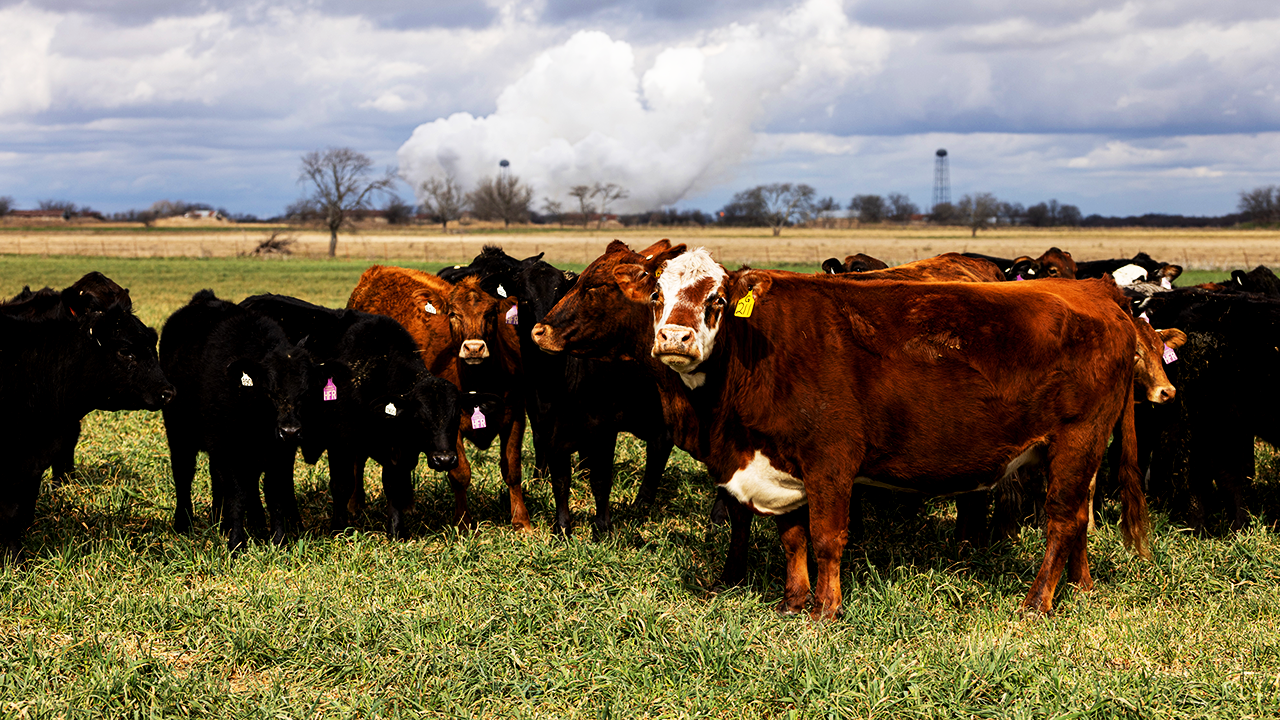
Beef cattle gather in a pasture. Tyson pointed to recent data showing continued limited heifer retention, a sign that tight cattle supplies could persist. (Angela Piazza/The Dallas Morning News, File)

Tyson pointed to recent data showing continued limited heifer retention, a sign that tight cattle supplies could persist.

“Recent USDA cattle inventory data, which included continued evidence of limited heifer retention, indicates these supply constraints are likely to persist, requiring strategic action,” the company said.

Advertisement

Capacity from the Illinois and Utah facilities will be shifted to other Tyson locations that the company said have “ample capacity to grow.”

Tyson also plans to ramp a second shift back up at its Amarillo, Texas, plant as more cattle become available.

US SOYBEAN FARMERS RACE TO MEET GLOBAL DEMAND AS FARMLAND SHRINKS

the logo of Tyson Foods, Inc.

Capacity from the Illinois and Utah facilities will be shifted to other Tyson locations that the company said have “ample capacity to grow.” (Cheng Xin/Getty Images)

“These changes will allow the company to maintain a similar level of cattle harvesting across a more efficient and modern network,” the news release states.

Advertisement

The company also said it will support employees affected by the closures.

Ticker Security Last Change Change %
TSN TYSON FOODS INC. 56.39 +0.58 +1.04%

“The company is committed to supporting our team members through this transition, including helping them apply for open positions at other facilities,” Tyson said. 

The changes come as American consumers continue to face elevated beef prices and meatpackers grapple with tight cattle supplies and higher costs.

TRUMP DECLARES FOOD SUPPLY EMERGENCY, SUSPENDS TARIFFS ON KEY FERTILIZER IMPORTS

Advertisement
Packages of Tyson Foods Inc.

Tyson Foods packaged steak strips are displayed at a store in Washington, D.C., on Nov. 19, 2012. Tyson also plans to ramp a second shift back up at its Amarillo, Texas, plant as more cattle become available. (Andrew Harrer/Bloomberg via Getty Images)

The U.S. cattle herd has fallen to historically low levels due to drought reducing forage areas in key ranching regions, which forced ranchers to liquidate cattle. 

GET FOX BUSINESS ON THE GO BY CLICKING HERE

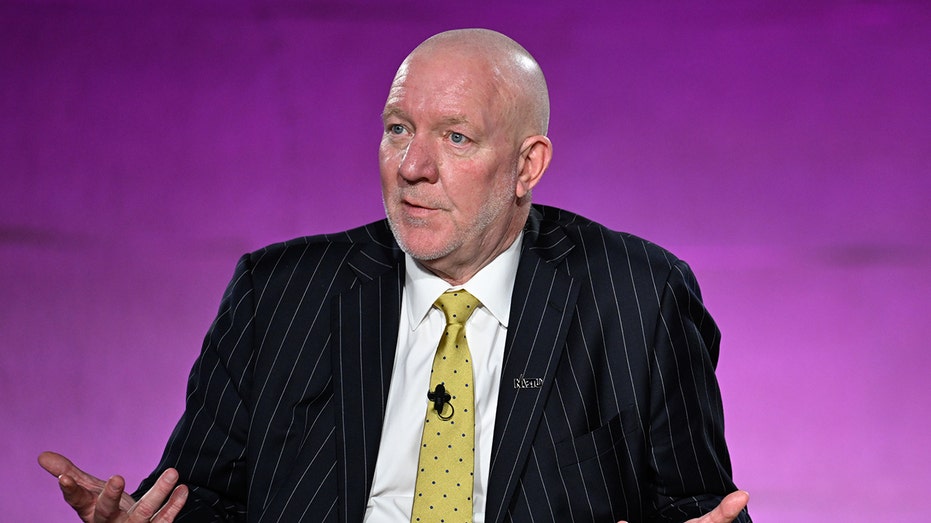
Tyson highlighted those pressures during its recent earnings call, with CEO Donnie King saying, “Beef hasn’t performed the way we expected, and we’re not pretending otherwise.”

FOX Business’ Eric Revell contributed to this report.

Advertisement
Continue Reading

Business

Earnings call transcript: Afya posts steady Q2 2026 growth as margins narrow

Published

on


Earnings call transcript: Afya posts steady Q2 2026 growth as margins narrow

Continue Reading

Business

Expectations are high for new B&G Foods CEO

Published

on

Expectations are high for new B&G Foods CEO

Robert Mills has “deeper understanding of challenges and opportunities,” CFO says.

Continue Reading

Trending

Copyright © 2025