
Business
A Third of Web Pages Published Since ChatGPT’s Launch Show Signs of AI Authorship, Pew Study Finds


More than one-third of English-language web pages published since ChatGPT’s public debut in November 2022 show signs of having been written or substantially edited by artificial intelligence, according to a new analysis from the Pew Research Center, offering one of the most concrete measures yet of how quickly generative AI has reshaped online content.
To conduct the study, Pew researchers used the Common Crawl web archive to collect nearly half a million English-language web pages spanning roughly the past five years, beginning a couple of years before ChatGPT’s release. Researchers then ran the text of those pages through an AI detection tool called Open Pangram to assess how many were likely written or heavily edited by artificial intelligence, according to Pew’s own published findings.
In a random sample of 10,000 web pages collected in July 2026, approximately 10% showed what Pew described as “significant signs of AI authorship.” However, that headline figure includes a substantial share of older pages published well before AI writing tools existed and therefore could not possibly have been AI-generated. When researchers filtered out those older pages and focused exclusively on content published after ChatGPT’s release, the picture shifted dramatically: signs of AI authorship appeared in more than one-third, or 35%, of that more recent content, according to Pew’s report.
“In the July 2026 snapshot, signs of AI authorship can be found in over one-third of pages published after ChatGPT was released,” Pew wrote in its analysis, adding that the finding aligns with other research indicating that a large share of recently published internet content has likely been written or substantially edited using AI tools.
The distribution of AI-authored content across the web is far from uniform. According to Pew, commercial .com domains showed signs of AI authorship at roughly 10 times the rate found on .edu or .gov domains, both of which registered around 1%. Nonprofit .org domains fell in between, with an AI-authorship rate of about 4.6%, according to Pew’s data. That gap has widened considerably since ChatGPT’s initial release; Pew noted that when the chatbot first launched, the kinds of linguistic patterns that can signal AI authorship appeared at broadly similar rates across the major top-level domains, meaning the current divergence reflects a meaningful shift in how different types of websites have adopted AI writing tools over the past several years.
TechCrunch, which reviewed Pew’s findings, cautioned that AI-detection tools such as Pangram are not infallible and can occasionally misclassify genuinely human-written pages as AI-generated. Even so, the outlet noted that “at scale, the data is likely at least directionally correct,” suggesting the overall trend captured by the study reflects a genuine and substantial shift in online authorship patterns rather than a statistical artifact.
Beyond the headline percentage, Pew’s research identified specific stylistic markers that have become increasingly common across web content and are frequently associated with AI-generated writing. According to the study, the use of em dashes, Oxford commas and certain characteristic phrasing patterns, including constructions such as “it’s not X, it’s Y,” have all become noticeably more frequent in recently published web content, further supporting the broader finding that AI tools are playing an increasingly significant role in how online text gets produced.
Digital Trends, in its coverage of the study, emphasized an important nuance in how the findings should be interpreted. The outlet noted that Pew’s research does not claim one-third of web pages were written entirely by AI with no human involvement, but rather that the pages showed indicators suggesting AI played some role in the content’s production. Modern online writing increasingly blends human and machine contributions in varying proportions, the outlet explained, with writers frequently using AI tools to generate initial drafts, rewrite specific sections, correct grammar, expand shorter pieces into longer articles, or produce search-optimized versions of existing content, meaning a single published page can reflect a complex mixture of human and AI authorship rather than falling cleanly into one category or the other.
The findings have already drawn attention from the digital advertising industry, given the significant overlap between AI-generated content and the broader ecosystem of low-quality, high-volume web content sometimes referred to as “Made-for-Advertising,” or MFA, sites. According to B&T’s coverage of the study, industry observers are urging advertisers and publishers to shift their focus away from simply determining whether a given piece of content was created by AI, and toward evaluating whether that content delivers genuine value to readers regardless of how it was produced. The publication noted that generative AI has dramatically reduced both the cost and time required to produce large volumes of low-value content at scale, a dynamic that has significant implications for how digital advertising inventory gets evaluated and purchased going forward.
Separate research cited alongside Pew’s findings has reached broadly similar conclusions using different methodologies. According to Shelly Palmer’s coverage of related Stanford research, researchers there found that 35% of new websites created since 2022 were AI-generated or AI-assisted, drawing on Internet Archive data to track how the composition of the web has shifted in the years following ChatGPT’s launch, a finding that closely mirrors Pew’s own 35% figure for post-ChatGPT content despite the two studies relying on different underlying data sources and detection methods.
Digital Trends pointed to a notable irony embedded within the broader trend the research documents. AI companies require enormous volumes of human-created text to train their language models, the outlet observed, even as those same AI systems are now responsible for producing an increasing share of the content that eventually gets published online, raising longer-term questions about a web increasingly characterized by humans writing content intended for machines to read, machines producing content intended for human readers, and, potentially, future AI models eventually training on content that earlier AI systems helped generate.
As generative AI tools continue to become more sophisticated and more deeply embedded in everyday content production workflows, researchers, publishers and advertisers alike are likely to continue closely tracking how the balance between human and AI-assisted authorship on the web evolves in the years ahead, particularly given how dramatically the share of AI-influenced content has grown in just the roughly three and a half years since ChatGPT’s initial public release in November 2022.


is preparing to meet Monday with California officials with the aim of starting talks to potentially resolve the antitrust lawsuit that stands in the way of the company’s $81 billion deal to acquire rival Warner Bros. Discovery , according to people familiar with the matter.
A dozen Democratic-led states led by California Attorney General Rob Bonta sued in July to block the deal on antitrust grounds, arguing that the combination of Paramount and Warner would create too much concentration in the markets for theatrical films and cable television channels.
Copyright ©2026 Dow Jones & Company, Inc. All Rights Reserved. 87990cbe856818d5eddac44c7b1cdeb8

Canada’s Unifor union, GM reach tentative agreements

Will Bessent’s intervention mark a turning point for the yen?

The Canadian prime minister says the U.S. sought to restrict Canada’s ability to strike trade deals with other countries.
Canadian Prime Minister Mark Carney accused the United States on Saturday of making a last-minute “power play” by trying to restrict Canada’s ability to strike trade deals with other countries, offering new details about what he said caused negotiations between the two sides to collapse.
Carney said the U.S. introduced new demands in the final hours of negotiations involving Canada’s other trading relationships, its auto sector and protections for Canadian culture and the French language.
“The U.S. introduced at the last hours, in the last hour, efforts to restrict our ability to have other trade deals,” Carney told reporters.
Asked what he believed the U.S. was trying to accomplish, Carney responded: “It’s a power play. It’s a power play and, you know, [it] becomes a question of sovereignty.”

Canadian Prime Minister Mark Carney speaks Saturday during a news conference on U.S.-Canada trade negotiations. (Dave Chan/AFP via Getty Images / Getty Images)
The comments came a day after Carney suspended negotiations and ordered Canada’s trade team back to Ottawa as President Donald Trump‘s 50% tariffs on roughly $28 billion in Canadian goods took effect.
Canada said it plans to match the U.S. tariffs dollar for dollar, with Carney saying Saturday that the retaliation will target sectors including steel, dairy, appliances, agricultural equipment, pulp and paper and electronics.
The measures will take effect the Tuesday after Labor Day on Sept. 8.
Washington has disputed Carney’s account of why the negotiations broke down.
U.S. Trade Representative Jamieson Greer said Friday that Canada declined to finalize terms agreed to earlier in the week, accusing Ottawa of making new demands and walking back previous commitments.
TRUMP PAUSES 50% TARIFFS ON CANADA HOURS BEFORE DEADLINE AFTER ANNOUNCING POTENTIAL DEAL

President Donald Trump meets with Canadian Prime Minister Mark Carney in the Oval Office at the White House, May 6, 2025, in Washington, DC. (Anna Moneymaker/Getty Images / Getty Images)
“Tonight [Friday], Canada declined to finalize the trade deal under the terms agreed earlier this week,” Greer said in a statement. “Despite the U.S. offer to Canada to receive the best treatment of any major exporter to our market, new demands and walk backs of other commitments by Canada have upended the careful balance reached in the past days.”
Greer said the U.S. offered Canada significant tariff reductions on steel, aluminum, autos and lumber, along with a broader economic and national security partnership covering digital trade, critical minerals, aerospace and export controls.
Carney offered a different account Saturday.
“In short, they asked too much, and they offered too little,” he said.
US, CANADA STRIKE DEAL TO OPEN BRIDGE LINKING DETROIT AND WINDSOR AFTER DISPUTE DELAYED LAUNCH

Autos were another major issue in the trade deal. (Lucy Nicholson/Reuters, File / Reuters Photos)
Autos were another major sticking point. Carney said the two sides disagreed over tariff levels, the treatment of Canadian content and which vehicles would be covered by a potential agreement.
He said the U.S. also continued efforts to seek changes involving Canada’s protections for its culture and the French language, which Carney said Ottawa would not accept.
The breakdown came just days after Trump paused the 50% tariffs for three days and announced that the U.S. and Canada, subject to final documentation, had reached a “DEAL!”
Carney said Saturday that the two sides had made significant progress before the negotiations unraveled.

President Donald Trump holds up a chart of “reciprocal tariffs” while speaking during a trade announcement event in the Rose Garden at the White House, April 2, 2025, in Washington, D.C. (Chip Somodevilla/Getty Images / Getty Images)
Canada is now preparing additional support for businesses affected by the tariffs, particularly small and medium-sized companies, with Carney saying the government will release details alongside its retaliatory measures.
Asked whether the latest escalation amounted to a full-scale trade war, Carney said Canada was responding to an attack.
CLICK HERE TO GET FOX BUSINESS ON THE GO
“We’re attacked, like you’re at war when you get attacked, we got attacked,” Carney said.
“We’ve got the reserves, we’ve got resilience, we have the plan, we get the focus, we respond, we’re going to focus on what we can control, we are going to build.”

Nvidia customers notified about AI-related price hikes above 15%, Bloomberg News reports

A new business can look established from its first day, even when it has only recently started trading. Customers rarely know how long a company has existed when they first discover it, so they judge what they can see. Presentation, communication, reliability, and consistency shape that first impression.
Looking established does not mean pretending to have a longer history. It means creating an organised presence that gives customers clear reasons to trust the company.
A Consistent Identity Creates Recognition
The business name, logo, colours, contact information, and tone of voice should remain consistent across the website, social profiles, emails, invoices, and directory listings. Consistency makes a business easier to recognise. Different names, old logos, or conflicting contact details can make an organisation appear disorganised.
A Professional Domain Connects the Brand
A dedicated domain gives the company a clear digital home. It also allows the business to use email addresses connected to its own name without relying entirely on personal accounts. A short, relevant domain that resembles the business name is generally easier to remember and recognise.
A Small Website Can Still Look Complete
New businesses sometimes assume an established appearance requires a large website. In reality, a few useful pages create more confidence than many unfinished ones. Customers mainly want to understand what the business does, who it serves, and how to take the next step.
A strong first website might include a homepage, service information, an About Us page, contact details, and answers to common questions. Every page should have a clear purpose. Placeholder text, broken links, empty sections, and outdated details make even an attractive website feel neglected.
Professional Communication Builds Confidence
Customers often form opinions about a company before speaking to anyone directly. An email response, quotation, appointment confirmation, or invoice can influence whether the business feels dependable.
Messages should be clear, polite, and easy to understand. A branded email address also connects correspondence to the company identity.
Clarity Matters More Than Speed
A rapid reply is useful, but speed matters less than clarity. Customers value responses that answer their questions, explain what happens next, and set realistic expectations.
Templates can help with quotations, booking confirmations, and follow ups. They should still be adapted to the customer so communication feels personal rather than automated.
Formal Business Details Make Verification Easier
Some customers will check company information before making a purchase or signing a contract. Formal details therefore support the public-facing brand and make the business easier to verify.
Depending on the location and type of business, founders may need to consider registrations, tax requirements, licences, insurance, and an appropriate legal structure. For some entrepreneurs, completing LLC registration during the wider setup process creates a formal entity, although the legal and tax consequences depend on the jurisdiction and individual circumstances.
Accuracy matters more than appearances. A business should never claim licences, certifications, memberships, years of operation, or regulatory approvals that it does not have.
Proof Makes Business Age Less Important
A company does not need decades of history if it can show evidence that it delivers good work. Reviews, testimonials, case studies, photographs, portfolio examples, and measurable results give potential customers something concrete to evaluate.
Specific evidence is particularly persuasive. A testimonial explaining what problem was solved is more useful than a general statement saying the company was excellent. A case study describing the situation, work completed, and result can demonstrate expertise without exaggerating the business history.
New companies may not have many reviews yet. Founders can instead highlight relevant experience, sample work, qualifications, detailed processes, or educational content that demonstrates knowledge.
Reliable Processes Create a Mature Customer Experience
Established businesses feel predictable. Customers know how to contact them and what happens after a purchase.
A new company can create the same experience with simple systems. Contact forms should reach the correct inbox, appointments should be confirmed, invoices should contain accurate details, and customers should receive clear payment or delivery instructions.
Keep Public Information Current
Outdated information is one of the easiest ways to make a business look neglected. Old opening hours, discontinued services, incorrect telephone numbers, or abandoned social media accounts can create unnecessary uncertainty.
Review important public information regularly. Update the website when services change, remove expired offers, and make sure directory profiles match the main website. A smaller number of accurate profiles is better than many inactive ones.
An Established Appearance Comes From Repetition
No single logo, website feature, or registration makes a young business look established. The impression comes from many small signals working together. Customers see the same identity, receive clear communication, find accurate information, and experience reliable processes.
The goal is not to make a new company appear older than it is. It is to show that the people running it are organised, serious, and prepared to serve customers properly. Consistency makes a young business feel credible and dependable.
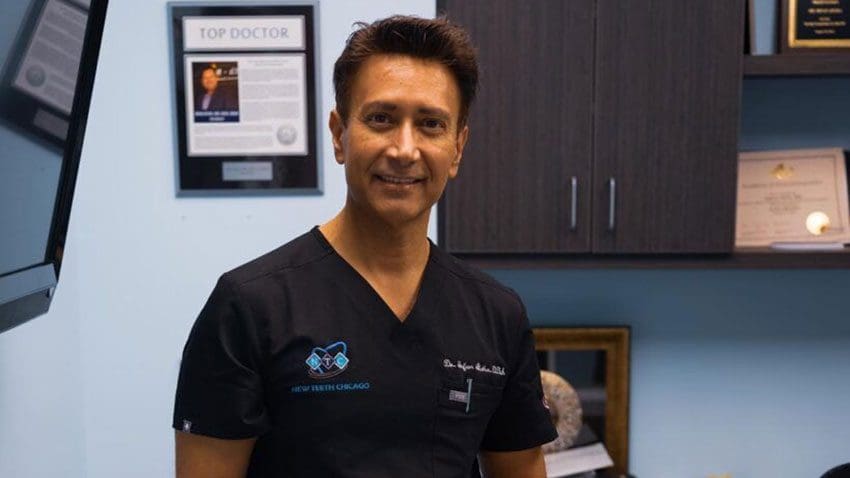
Dr. Irfan Atcha is a Chicago-based implant dentist whose career has been shaped by science, specialisation, and nearly three decades of clinical experience.
His interest in healthcare began while growing up around mentors in medicine and dental medicine. That influence led him to study Biochemistry at the University of Illinois, where he earned his degree in 1991. He later completed his Doctor of Dental Surgery degree at the University of Illinois College of Dentistry in 1996.
Dr. Irfan Atcha began practising in Chicago the same year. As his career developed, he became increasingly focused on patients with complex dental needs, particularly those requiring dental implants and broader forms of oral rehabilitation.
His work has included same-day dental implants, implant-supported dentures, full-arch treatment, and solutions for patients with multiple missing or failing teeth. Rather than remaining a generalist, he continued to deepen his knowledge in implant dentistry.
He earned Fellowship and Diplomate recognition through both the International Congress of Oral Implantologists and the International Dental Implant Association. His academic and professional work has also received first-place recognition at dental table clinic presentations.
Atcha’s career reflects a long-term approach to professional growth. He has continued learning as implant dentistry has changed, while keeping his focus on careful planning and durable treatment outcomes.
Beyond his clinical work, he has supported Susan G. Komen and Room to Read. He also enjoys running, fitness, and travel.
Was dentistry always the career you expected to pursue?
Healthcare was always around me in some form. I grew up in Chicago with mentors in both medicine and dental medicine, so I had an early view of what those careers involved. That had a strong influence on me.
I have said before that growing up in that environment “shaped and moulded my mindset to go into healthcare and heal people”. Dentistry eventually became the place where my interest in science and my interest in helping people could meet.
Why did you begin with a degree in biochemistry?
I was interested in understanding how things worked at a deeper level. Biochemistry gave me that scientific foundation.
I completed my Bachelor of Science at the University of Illinois in 1991. The subject taught me to think about processes, cause and effect, and how small factors can influence a much larger outcome. Those ideas have stayed relevant throughout my career.
Did research play a meaningful role in your early development?
Yes. During dental school, I worked on a table clinic presentation involving biochemistry research and received first place for that work.
What I liked about research was the discipline behind it. You cannot simply assume something will work. You study it, examine the evidence, and try to understand why a result occurs. That way of thinking has influenced how I approach clinical problems as well.
When did you realise you wanted to specialise more heavily in implant dentistry?
When I started practising in Chicago in 1996, I treated many different types of patients. Over time, I became more interested in cases where the problem was not limited to one tooth.
Some patients had several missing teeth. Others had failing teeth or needed a larger rehabilitation plan. Those situations required more planning and a wider view of the mouth as a whole. That level of complexity interested me.
What makes those cases different from more routine dental work?
You have to think several steps ahead.
A complex case may involve the bite, bone support, healing, function, and the condition of the remaining teeth. Each decision can affect another part of the treatment.
That means you cannot simply look at what needs to be done today. You also have to think about what the patient may need years from now.
How did that change the direction of your career?
It pushed me to deepen my knowledge in implant dentistry.
My work became increasingly focused on replacing missing teeth, implant-supported dentures, same-day dental implants, and full-arch approaches such as All-on-4 treatment.
What interested me was the ability to plan a larger rehabilitation rather than treating each issue separately. Implant dentistry allowed me to work on cases where several parts had to come together properly.
Why did you continue pursuing credentials after earning your DDS?
Because graduating from dental school is really the beginning of professional education, not the end.
I later earned Fellowship and Diplomate recognition through the International Congress of Oral Implantologists and the International Dental Implant Association.
Dentistry keeps changing. If you work in a specialised field, you have to keep studying new techniques, technology, and research. You also have to know when a new development is genuinely useful and when the fundamentals still matter more.
Has implant dentistry changed significantly since you started practising?
Very much so.
The technology available for diagnosis and planning has improved, and there are more treatment approaches available today than when I entered practice.
Patients have changed too. They often do a great deal of research before they visit a dentist. They come in with more questions and want to understand the reasoning behind different treatment options.
That makes communication an important part of the work.
What do you think experience adds that technology cannot replace?
Technology can give you more information, but experience helps you interpret it.
After nearly 30 years in practice, you have seen many different situations. You learn that two patients can appear to have similar problems but may need very different plans.
Experience helps you recognise those differences and think about the long-term result rather than just the immediate procedure.
You often refer to long-term success. Why is that such an important idea for you?
Because dentistry should not only be judged by what happens on treatment day.
A procedure can go well initially, but the larger question is how the result functions over time. That is why I place so much importance on long-term success with dental implants.
Good planning means thinking beyond the immediate problem and considering how the entire treatment fits together.
What has helped you maintain your focus over such a long career?
Consistency. I enjoy running and fitness, and both teach you that improvement usually comes from repeated effort. You do not reach a goal because of one good day.
I think professional development is similar. You keep learning, keep refining your approach, and keep trying to become better at what you do.
How would you describe the biggest lesson from your career so far?
I would say that expertise is built gradually. My career started with science, moved into dentistry, and then became more specialised as I gained experience. Each stage taught me something that helped with the next one.
I have been practising in Chicago since 1996, and I still believe there is more to learn. That willingness to keep developing is probably one of the most important parts of building a long career.

Online healthcare has become part of everyday life, but trust is still the difference between a useful digital service and a risky shortcut.
When people use an online pharmacy, they are not just buying convenience. They are sharing health information, asking for clinical judgement and, in some cases, being considered for prescription-only treatment.
That makes regulation and process important. A responsible online pharmacy should explain who is behind the service, how assessments are reviewed, what happens if treatment is not suitable and how patients can ask questions after they begin. The strongest services make healthcare easier to access without making it feel casual.
Why convenience needs clinical review
Speed can be helpful, especially for people balancing work, family, travel or sensitive health concerns. But healthcare is not the same as ordinary online shopping. A safe online process should include a structured assessment, checks around medical history and current medicines, and a clinician or pharmacist review before prescription treatment is supplied.
This matters across private treatment areas such as weight management, skin concerns, hair loss and erectile dysfunction. In each case, suitability depends on the person, not only the product. Sometimes the safest answer is a different treatment, more information, or advice to speak to another healthcare professional.
What patients should look for
Patients can look for simple trust signals before starting: visible pharmacy registration details, clear treatment information, transparent pricing, realistic wording and an explained review process. Claims that sound too effortless or guaranteed should be treated with caution.
Services such as LYV Pharmacy are part of a more careful model for private online healthcare, where patients can start from home while still going through assessment and clinical review.
Why trust is the real differentiator
The point is not to replace every part of healthcare with a website. Some symptoms need urgent care, NHS support or a physical examination. But when online pharmacy is regulated, transparent and clinician-led, it can give patients a calmer route into suitable private care.
For businesses watching the digital health space, the lesson is clear. Convenience may bring people to an online healthcare service, but trust is what makes them comfortable taking the next step.

Most small business owners think of a chargeback as a lost sale and a fee. That is the visible cost.
The hidden one is the ratio the card networks keep on every merchant, and the point at which a rising ratio stops being an accounting nuisance and starts threatening the ability to take card payments at all. For an SME that runs on card revenue, losing that ability is closer to an extinction event than an inconvenience.
The pressure behind those disputes is real and growing. Fraud losses on UK-issued cards reached £572.6 million in 2024, with online remote purchase fraud the main driver, according to UK Finance’s Annual Fraud Report. Each fraudulent card purchase becomes a dispute on some business’s account, and small firms with thinner defences absorb more than their share.
What a monitoring programme is
Card schemes set a ceiling on how many of your transactions can turn into chargebacks. Cross it and you are placed in a monitoring programme, which brings fines, higher processing costs, and a timeline to bring the ratio back down. Stay above the line and the endpoint is losing your merchant account, at which point you cannot accept cards until you find a new processor willing to take the risk.
The thresholds are lower than most owners expect, and they combine a percentage with an absolute number of disputes. A small business with modest transaction volume can breach the ratio on a surprisingly small number of chargebacks, because the denominator is small. Growth does not protect you here. A bad month can.
How the ratio creeps up
Ratios rarely spike from a single event. They climb quietly. A confusing billing descriptor generates a trickle of disputes from customers who do not recognise the charge. A delivery problem on a batch of orders produces a cluster of complaints. A wave of fraudulent card use lands several disputes at once. None of these feels like a crisis on its own, and together they push the ratio toward the threshold before anyone is watching it.
The businesses that get caught out are usually not careless. They simply were not tracking the one number the card networks care about, and found out they had a problem only when the processor’s warning arrived.
Staying off the list
The way to avoid a monitoring programme is to stop disputes before they count. Disputes resolved through the card networks’ own deflection tools, where an alert lets you refund before a formal chargeback is filed, are excluded from the ratio calculation entirely. Every dispute intercepted that way is one that never moves you toward the threshold.
By the time a business is formally in a chargeback monitoring programme, its options have narrowed and the clock is running. The work that keeps a company out of one is unglamorous: watch the ratio, fix the disputes you are causing yourself, and resolve the rest early enough that they never count against you. Almost every business that ends up in trouble got there without noticing. Prevention, in other words, is a good deal cheaper than the exit timeline once you are on the list.
The basics that protect the ratio
Three habits keep most SMEs clear. Use a billing descriptor that customers recognise on their statement, which removes the disputes raised purely from confusion. Keep proof of delivery and customer correspondence so genuine chargebacks can be contested. And resolve disputes at the alert stage where you can, so they never reach the ratio.
None of that requires a large team. It requires knowing the threshold exists and treating the ratio as a number worth watching rather than one you discover under pressure.
Watch the number before it watches you
For a small business, the card payment facility is not a convenience, it is the till. A monitoring programme puts that facility at risk over a metric most owners have never seen, driven by disputes that often had nothing to do with a failure on their part.
The businesses that stay safe are the ones that treat the chargeback ratio as a standing part of running the company, checked and managed, rather than a surprise that arrives in an email from the processor. Knowing the threshold is there is most of the battle.
The wider direction of travel makes the case for watching it now. Card disputes are rising across every major market, and research from Datos Insights shows both the volume and the cost of chargebacks climbing year on year as online spending grows. For a small firm, that means the pressure on the ratio will keep building whether or not the business is paying attention. The owners who come through it are the ones who decided to manage the number before it became the thing that decided their access to card payments for them.

Paramount and California to hold preliminary talks on Warner Bros deal, NYT reports

Deshaun Watson not happy to be booed by Browns fans, says it’s ‘disrespectful’

You Gotta Want It | Hackaday

Aaj Ka Investment, Kal Ki Strong Foundation | Guidance Towards Financial Freedom





-

 Fashion1 day ago
Weekend Open Thread: Madewell – Corporette.com
-

 Business4 days ago
SMA Solar Technology AG (SMTGY) Q2 2026 Earnings Call Transcript
-

 Tech5 days ago
Qwen3.8-27B runs frontier-class coding agents and reasoning locally, no cloud API required
-

 Politics10 hours ago
6 months on, Irish renters crushed by effects of government housing bill
-

 Crypto World5 days ago
OCC Greenlights Trump Family Crypto Firm for Trust Charter
-

 Crypto World5 days ago
NAVI Prime launches institutional lending framework on Sui
-

 News Videos3 days ago
Don’t Leave Your Financial Future To Chance | August 19, 2026
-
 NewsBeat13 hours ago
The ‘Lucky Dip Gang’ causing carnage for clicks: After five thugs were killed speeding in the wrong direction on a motorway, GUY ADAMS investigates a sick new trend… and why police aren’t even allowed to pursue them
-
 Crypto World6 days ago
Data of 54K Wallet Users Leaked, Clarity Odds Just 10%: Hodler’s Digest, Aug. 16
-

 Politics6 days ago
Britain is facing a housing disaster
-

 Tech6 days ago
What are the rumors about the AirPods Pro 4?
-

 Business6 days ago
Rebel Creamery files Chapter 11 with $23.8M Van Leeuwen judgment on appeal
-
 Crypto World5 days ago
Dow’s 3-Year Winning Run Isn’t a Crash Signal, Still 49% Odds of Double-Digit Gains
-

 Business4 days ago
Stock Market Today: Tech Futures Slide As Treasury Yields Jump; Nvidia, Micron, Sandisk Sell Off
-

 Tech7 days ago
DeepSeek’s innovative harness treats everything as a plug-in
-
 Tech6 days ago
OpenAI’s new ChatGPT feature logs your keystrokes and stores them in plain text
-

 Tech5 days ago
Straight Up the Cliff, Yunnan’s New Fuyao Ladder Turns a Three-Hour Climb Into a 50-Second Ride for Students
-

 Tech6 days ago
DeepSeek’s top-ranked V4 Flash stumbles on real agent tasks as its prices surge
-

 Tech7 days ago
Three new Windows flaws can bypass security, gain system privileges, and even install malware remotely
-
 Tech5 days ago
Nvidia discloses $21B stake in SpaceX
You must be logged in to post a comment Login