

Business
Accenture: Nowhere To Hide



Business
Nithin Kamath reveals Zerodha’s playbook: No ads, no sales targets, customer-first approach

In a post on X, Kamath said one of the most common questions he gets from young entrepreneurs at industry events and through Rainmatter is what makes Zerodha different. He directed users to a company page outlining the principles that have shaped the business since its inception.
According to Zerodha, its core philosophy revolves around prioritising customer interests over growth, maintaining transparency and building products that avoid nudging users into unnecessary trading or financial decisions.
The brokerage said it does not advertise, spam customers or use incentives to encourage higher trading activity. Instead, it has relied almost entirely on word-of-mouth referrals to grow from an unknown startup in 2010 into one of India’s largest stockbroking platforms.
Zerodha said more than 1.6 crore customers now trust the platform with around Rs 6 lakh crore worth of equity investments, while the brokerage accounts for nearly 15% of India’s daily retail exchange trading volumes.

Kamath also attributed Zerodha’s culture to its decision to remain bootstrapped and profitable, allowing it to operate without pressure from external investors. The company said employees are not assigned metric-based growth targets such as the number of accounts opened, app installs, orders placed or revenue generated.
Instead, the focus has remained on improving product quality and customer experience rather than pursuing rapid growth at any cost.The comments come at a time when fintech firms are increasingly competing for users through marketing campaigns, cashbacks and incentive-driven customer acquisition strategies. Zerodha has long stood apart by eschewing paid advertising and maintaining a low-profile approach to customer acquisition.
(Disclaimer: Recommendations, suggestions, views and opinions given by the experts are their own. These do not represent the views of Economic Times)

Hims & Hers stock rises after Canaccord price target hike

Australia’s share market has had a dour start to the new financial year, dropping for the seventh time out of its past 10 sessions after a sell-off in banking and supermarket stocks.
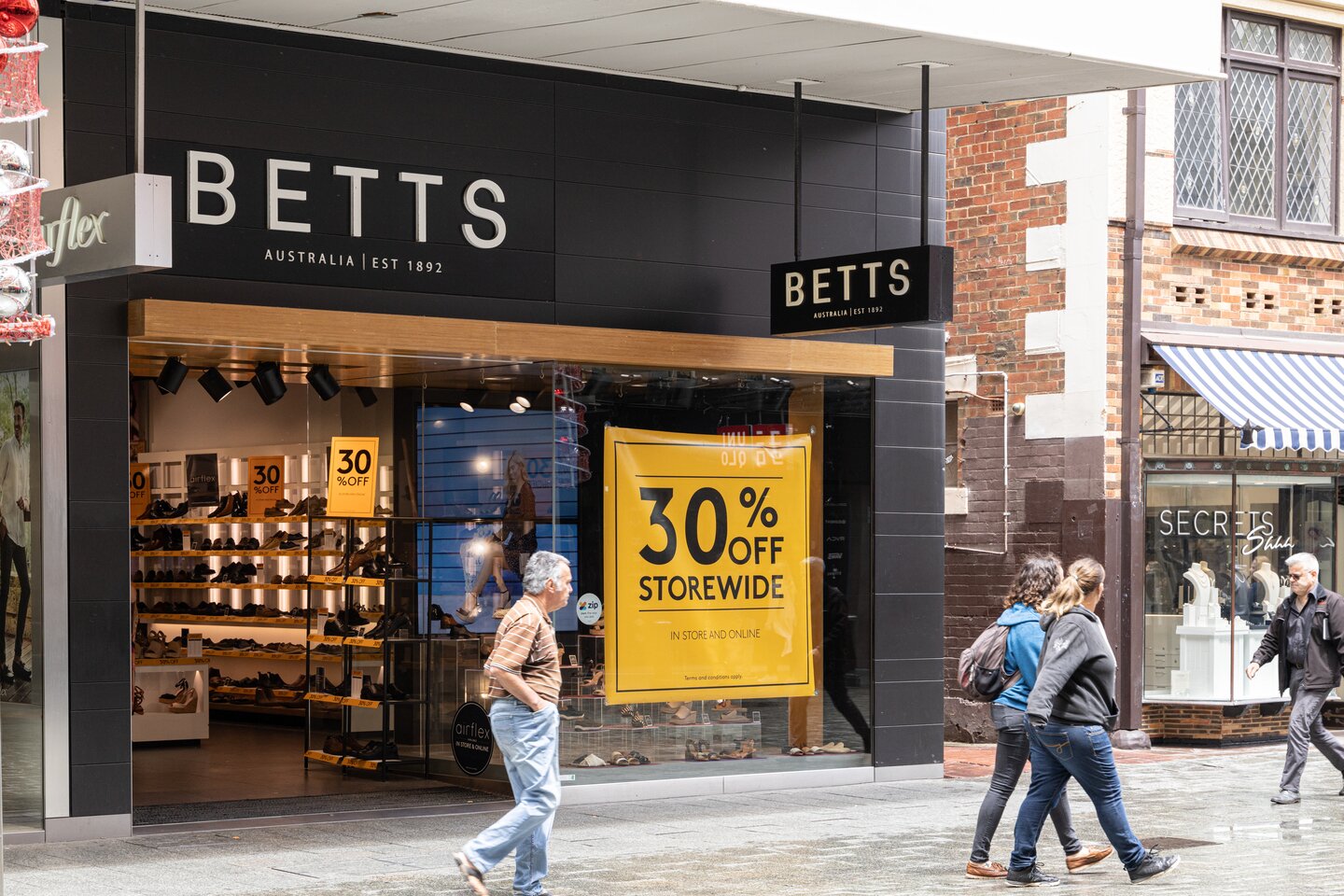
The scale of Betts’ retail store closures has been revealed, with seven of its 11 Western Australian outlets set to shut, as administrators prepare to close 20 unprofitable locations nationwide.
Centene Corp stock hits 52-week high at 66.59 USD
Business
Dow Slips on Wednesday as Chip Stocks Take Profit After Stunning First Half That Crushed Every Major Benchmark

The Dow Jones Industrial Average pulled back Wednesday, retreating modestly from its most recent record close as investors locked in profits on semiconductor and AI-related names that had powered one of the strongest first-half performances for U.S. equities in years.
The blue-chip index fell 215.82 points, or 0.41%, to 52,103.38, backing away from the all-time closing high of 52,319.20 it set Tuesday, the final session of the second quarter. The major averages closed out a strong first half. In the first six months of the year, the Dow climbed 8.9%, marking its best first-half performance since 2021. The broad market S&P 500 rose 9.6%, and the Nasdaq climbed 12.8%. The small-cap Russell 2000 surged nearly 22% to clinch its best first-half performance since 1991.
Wednesday’s session opened on a softer note as investors digested a weaker-than-expected private payrolls report and rotated out of the semiconductor stocks that drove much of Tuesday’s strong close. Private payrolls grew by 98,000 in June, below the Dow Jones consensus of 110,000 and down from 122,000 in May, according to ADP.
Nela Richardson, ADP’s chief economist, said: “The pace of hiring is telling a story of both supply and demand. We know it’s taking people longer to find work, but there also are signs of labor supply constraints in certain industries. For now, the overall effect is a slowdown in job creation.”
The softer hiring figure added urgency to Thursday’s main event: the June nonfarm payrolls report from the Labor Department, moved to Thursday from its typical Friday release because U.S. markets will be closed Friday in observance of Independence Day, which falls on Saturday this year. Analysts are watching the data closely for signals about the Federal Reserve’s next policy move, with the ADP miss suggesting the labor market may be cooling more quickly than previously expected, a development that could give Fed Chair Kevin Warsh room to discuss rate cuts sooner than markets had anticipated.
Micron plunged 7%, although it was still up around 300% in the year to date. Sandisk shed nearly 9%, losing some steam after gaining more than 850% in the first half of 2026. Nvidia and Broadcom also fell roughly 2.5% and 2%, respectively. Their declines came as investors took profit on semiconductor stocks following a record-smashing first half of the year for the group. The VanEck Semiconductor ETF gained 82% in the first six months of the year, marking its best first-half since its inception in May 2000.
The profit-taking in semiconductors reflected a broader pattern analysts have observed throughout the year: individual sessions of sharp gains followed by cooling periods as investors reassessed valuations following periods of rapid appreciation. TheStreet contributor James “Rev Shark” DePorre noted that the same names that drove Monday’s rebound were among the hardest hit. “A sustained market move higher needs broadening participation,” he said. “A bounce driven by short-covering and quarter-end positioning in the most beaten-down names is not an indication of fundamental health. The follow-through in the next few sessions will show the level of buyer confidence.”
Tuesday’s second-quarter close had given investors reason for optimism on multiple fronts. The Dow Jones Industrial Average rose 136 points for its second consecutive record close, finishing out the quarter at 52,319.20. Gains were led by Caterpillar up 2.95%, Apple up 2.70% and Nvidia up 2.66%. Biggest losers on Tuesday were Honeywell International down 3.02%, Walt Disney down 2.33% and Johnson & Johnson down 1.74%.
The overall market’s outperformance in the first six months of 2026 was driven by a surge in chip and AI-related names. The S&P 500 logged its best quarter since the pandemic recovery in 2020, rising more than 14% in the second quarter alone. The Nasdaq soared approximately 20% and the Dow added over 12% during the quarter.
That strong quarterly finish was achieved despite a turbulent backdrop that at various points threatened to upend the rally entirely. A sharply escalating U.S.-Iran conflict in late February and early March sent oil prices spiking and roiled global markets, with the Nasdaq falling nearly 5% in a single week at one point during the conflict’s most acute phase. The gradual de-escalation of hostilities, culminating in a ceasefire that allowed commercial shipping through the Strait of Hormuz to resume, helped reverse those losses and set the stage for the final-week tech rally that pushed all three major averages to strong quarter-end closes.
Easing inflation also supported the strong quarter-end push. Euro zone annual inflation came in at 2.8% in June, below consensus estimates of 3.0% and down from 3.2% year-on-year in May, as energy price pressures caused by the Iran conflict appeared to ease. Euro zone bond yields fell in response, with traders trimming bets on European Central Bank rate hike expectations. Markets are now pricing just 23 basis points of monetary tightening by the end of 2026.
Beyond the index-level moves, Wednesday brought notable corporate news. Stock media company Shutterstock plunged after its $3.7 billion merger with Getty Images collapsed due to an obstacle posed by a U.K. regulator. Getty said it does not accept the U.K. Competition and Markets Authority’s merger condition, which would require Shutterstock to sell its editorial business. Getty’s board unanimously decided not to proceed with the sale and to terminate the merger agreement by July 6. Shutterstock fell 28%, and Getty declined nearly 6%.
SpaceX shares slipped modestly in early trading, falling 1.74% to $161.34 in premarket trading, after surging 7.2% on Monday when Nasdaq officially announced that SpaceX will be added to the Nasdaq-100 index before the market opens on July 7. Analysts have estimated that the forced mechanical buying from index funds tracking the Nasdaq-100 could generate billions of dollars in purchasing demand for the newly listed stock as the inclusion date approaches.
Raymond James initiated coverage of footwear brand Birkenstock on the first day of July with a $52 target price implying upside of 20.1%, writing: “We view BIRK as a more durable growth story than the market appreciates.”
Looking ahead, Thursday’s nonfarm payrolls report, Warsh’s comments at the European Central Bank’s Sintra forum and the market’s overall positioning ahead of the long holiday weekend are likely to shape whether Wednesday’s modest pullback extends or reverses as the final trading day before the Fourth of July break unfolds.
Stagwell Inc stock hits 52-week high at 7.55 USD

More members of limited liability partnerships could soon be taxed as employees rather than as genuine partners, pushing up their income tax bills and, crucially, exposing their firms to employer National Insurance, after HM Revenue and Customs secured a decisive win at the Supreme Court.
The long-awaited judgment in the BlueCrest Capital Management case has landed and, as widely expected across the tax profession, it has gone HMRC’s way. The decision opens the door for the taxman to treat a far wider pool of LLP members as employees, and it lands at a moment when payroll taxes are already a running sore for British business.
Sean Drury, head of tax at audit, tax and business advisory firm Blick Rothenberg, said the ruling was significant well beyond the hedge fund at the centre of it. “This opens the way for more limited liability partnership members to be treated as employees instead of true partners of the business, leading to an increased income tax and National Insurance burden,” he said.
The salaried members rules, introduced by the Finance Act 2014, set three tests, Conditions A, B and C, that determine whether an LLP member is taxed as a self-employed partner or as an employee. The Supreme Court trained its attention on the first two, and in doing so tightened the definitions considerably.
Condition A is the “disguised salary” test. As Drury explained, “If 80 per cent or more of a member’s pay is a fixed monthly salary or a bonus, or linked to personal and divisional performance rather than the overall profit of the LLP, HMRC deems this a disguised salary and therefore that this person should be taxed as an employee.”
Condition B turns on “significant influence”. A partner in a traditional partnership is integral to the business and has a genuine say in how it is run. Someone who merely works within it does not. “Therefore this person should be treated as an employee for tax purposes,” Drury said. Currently, partners are usually taxed as self-employed individuals, so the reclassification is far from academic.
The headline for most firms will not be income tax but National Insurance. Employers now face a 15 per cent employer NIC charge, and applying that to reclassified members’ remuneration is, in Drury’s words, “a significant win for HMRC”.
It may also prove to be the thin end of the wedge. “It may lay a path towards the general application of National Insurance to LLPs, as was widely speculated before the last Budget,” Drury said. That speculation has only intensified as the Treasury leans ever harder on payroll taxes, with employers already shouldering a record National Insurance bill following the rate rise and threshold cut.
LLP structures are commonplace across the professional and financial services sector, from law firms and accountancy practices to asset managers. That is precisely why the reach of this judgment matters.
“The implications of this judgment, not least in HMRC compliance activity, will be significant, and structures which relied on Condition A or Condition B alone will need to review and probably restructure to comply,” Drury warned. Firms that built their partner arrangements around passing just one of the two tests may now find that cushion has gone.
Condition C, which concerns a partner’s contribution to partnership capital, was not addressed by the Supreme Court because it was not relevant to the appeal. Drury expects it to move squarely into HMRC’s sights next. “Capital contributions will need to be genuine contributions of capital at the economic risk of the partner and meet the minimum 25 per cent of expected disguised salary rule,” he said, adding that arrangements underpinned by loans should expect particular scrutiny.
For firms weighing up whether to operate as a partnership, LLP or limited company, the calculus has shifted. Larger LLPs in particular are likely to find that Conditions A and B are now harder to satisfy for their current members, and Drury believes further litigation is a real prospect. “We may see a ‘BlueCrest 2’ appear at the First-tier Tribunal shortly,” he said.
The practical message is to act before HMRC does. With the taxman already sharpening its focus on aggressive planning, partnerships that have leaned on a single condition would be wise to review their member arrangements, capital contributions and profit-sharing mechanics now, rather than wait for a compliance letter to force the issue.

Amy Ingham
Amy is a newly qualified journalist specialising in business journalism at Business Matters with responsibility for news content for what is now the UK’s largest print and online source of current business news.

The company said the promoter group’s 4.97% stake addition during the quarter marks the latest step in a multi-year increase in promoter ownership. Promoter holding has risen from around 26% in FY19 to about 37% in FY25, 41.75% in FY26 and now 46.72% in Q1FY27.
According to the company, the increase in promoter shareholding reflects continued confidence in its long-term strategy, business model, governance, execution capabilities and its focus on delivering technology-enabled credit to MSMEs, micro-enterprises and underserved borrowers across Bharat.
Paisalo said its three-year roadmap targets doubling its assets under management (AUM), total income and profit after tax (PAT), while maintaining disciplined risk management and asset quality. It added that the company is transitioning from a “High Touch-High Tech” model to a “Fin AI”-led lending franchise by integrating artificial intelligence across customer acquisition, underwriting, risk assessment, portfolio monitoring and collections.
The company said its long-term growth strategy rests on four pillars. It plans to deepen the use of AI and machine learning across underwriting, fraud detection, early warning systems and collections, while maintaining asset quality through disciplined credit selection, robust collections infrastructure and real-time monitoring.
Paisalo also aims to expand its distribution network beyond its existing 5,299 touchpoints across 22 states and Union Territories, while scaling its MSME and micro-enterprise lending business, broadening its product portfolio, improving operating leverage and diversifying its liabilities to optimize the cost of capital.
Commenting on the development, Deputy Managing Director Santanu Agarwal said the increase in promoter shareholding to 46.72%, including the 4.97% addition during the quarter, reflects the promoters’ long-term confidence in Paisalo’s growth journey. Also read: Why KPIT Tech shares crashed today? The BMW & Volkswagen connection explained
He added that the company remains focused on building an AI-led and risk-disciplined lending franchise with responsible growth, technology-led underwriting, deep distribution, strong governance and asset quality, while pursuing its roadmap to double AUM, income and PAT.
(Disclaimer: Recommendations, suggestions, views and opinions given by the experts are their own. These do not represent the views of The Economic Times)
Business
LeBron James Is Officially a Free Agent and Open to Hearing From All 30 Teams, His Camp Confirms Today
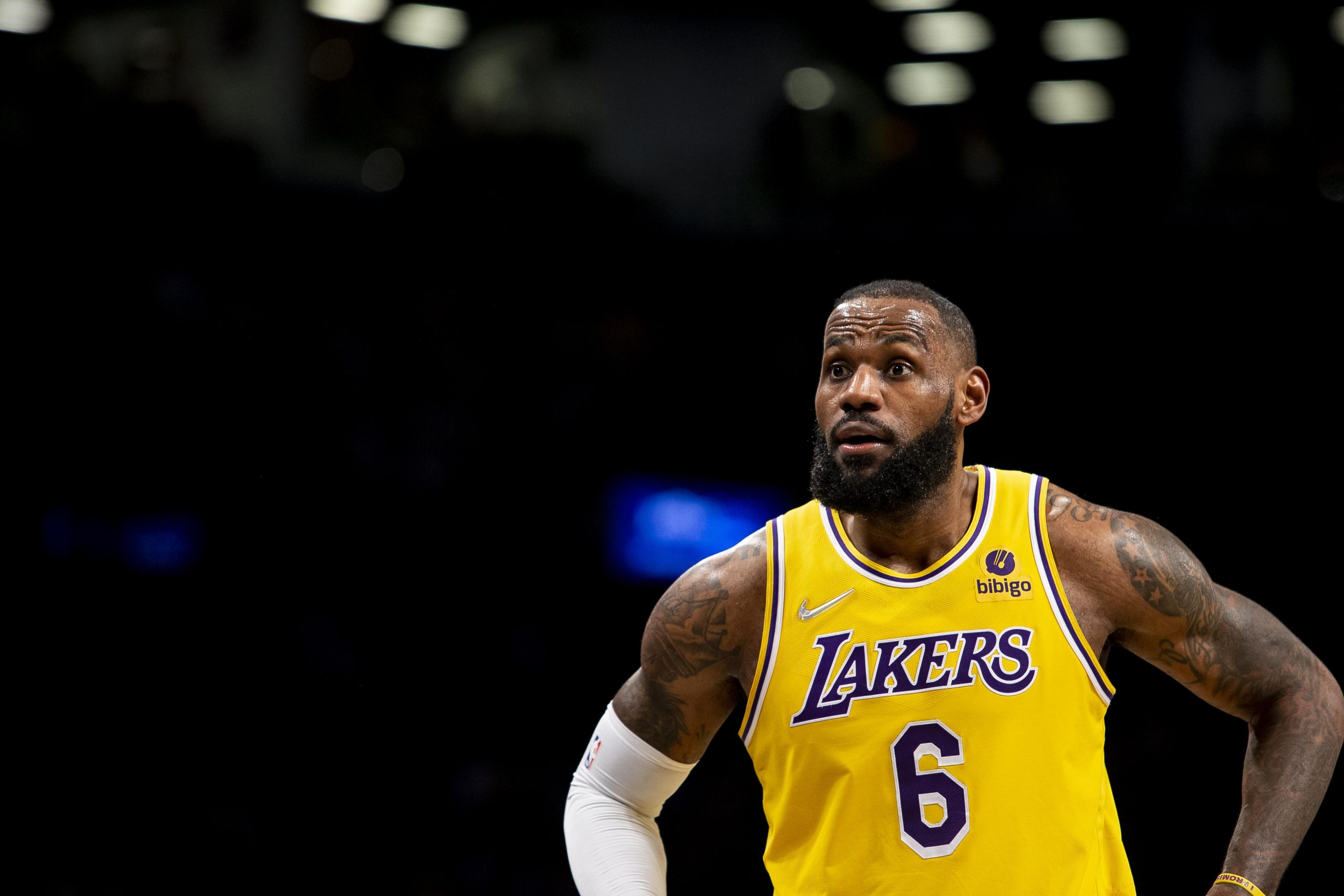
LeBron James is officially a free agent, and according to his representatives, he is prepared to hear from every team in the NBA before making his decision on where he will play next season, a posture that opens what could become the most wide-ranging free agency process of the 41-year-old’s career.
LeBron James has instructed Rich Paul to talk to everyone around the league who is interested in him playing for them and come back to him with what the options are so he can make his decision, a source familiar with James’ thinking told ESPN’s Dave McMenamin. DraftKings Sportsbook
That directive effectively transforms the NBA’s opening week of free agency into a league-wide audition, with front offices from Atlanta to Washington now free to make their case for one of the greatest players in the sport’s history. The question is no longer simply which team LeBron will choose, but which of the 30 available pitches actually resonates.
The Golden State Warriors remain among the most discussed potential destinations. The team’s front office has been openly pursuing both LeBron and Washington Wizards center Anthony Davis, with Draymond Green’s decision Monday to decline his player option creating additional financial flexibility for the pursuit. The pitch from Golden State centers on a concept LeBron and Curry already tested together, winning gold at the 2024 Paris Olympics under current Warriors head coach Steve Kerr.
Cleveland has a compelling case that writes itself. LeBron grew up within an hour of the city, began his professional career there and delivered the franchise its only NBA championship with a comeback from 3-1 down against the Warriors in 2016. The current Cavaliers roster features Donovan Mitchell, Evan Mobley, Jarrett Allen and a returning James Harden, giving James a championship-caliber supporting cast and a clear positional fit at forward with a team that reached the Eastern Conference Finals last season.
The New York Knicks, the league’s reigning champions after ending a 50-plus-year title drought this past season, offer a different version of the same appeal: a ready-made title contender. LeBron would fit seamlessly into the Knicks’ switch-heavy wing rotations alongside OG Anunoby, Mikal Bridges and Josh Hart, and his playmaking would reduce the burden on Jalen Brunson while giving a team that already won a championship an even more formidable roster heading into next year.
San Antonio offers what may be the most forward-thinking narrative available to any team. Victor Wembanyama has emerged as the clear heir apparent to LeBron’s status as the face of the league, and the Spurs have surrounded the French center with a talented, young core in Dylan Harper, Stephon Castle and De’Aaron Fox. A single season pairing LeBron with Wembanyama, with LeBron serving simultaneously as a championship-caliber veteran presence and as a living bridge between the sport’s present and its near future, carries the kind of generational significance that has always appealed to James at key junctures of his career.
The Miami Heat, where LeBron won two of his four NBA championships, offer a reunion wrapped in unfinished business. The Heat now feature Giannis Antetokounmpo alongside Bam Adebayo following the blockbuster trade that sent Giannis from Milwaukee to South Beach earlier this offseason, giving Miami the kind of star-powered core that LeBron has always sought when evaluating potential moves. The spacing concerns of a James-Giannis-Adebayo lineup are real, but three elite passers sharing the floor creates enough offensive flexibility to work around them.
The Detroit Pistons, perhaps the most unexpected name near the top of any legitimate LeBron discussion, offer a pitch rooted purely in winning. Cade Cunningham is one of the league’s better point guards and would absorb the primary ball-handling duties that have become increasingly physically taxing for a 41-year-old LeBron. The Pistons’ roster is filled with aggressive, physical defenders who could cover for any defensive decline from James, and the team is close enough to contention that LeBron might not need to carry the scoring load the way he has at nearly every prior stop.
Oklahoma City, built around Shai Gilgeous-Alexander’s already established status as arguably the game’s best player, offers LeBron a scenario where the defensive attention flows toward someone else. SGA and Jalen Williams command enough defensive focus that LeBron could exist as a secondary offensive option while still controlling the game’s pace and facilitating for teammates, a role increasingly suited to his current physical stage.
The Toronto Raptors have acquired Kawhi Leonard from the Clippers and are building toward a deep Eastern Conference run. LeBron filling the role of primary playmaker alongside Leonard, Scottie Barnes and Collin Murray-Boyles would give Toronto legitimate Finals aspirations, though the irony of LeBron joining the same Raptors he repeatedly eliminated in the playoffs during his Cleveland and Miami years is not lost on anyone in the league.
The Washington Wizards have made their pitch by acquiring both Trae Young on a four-year, $212 million extension and first overall pick AJ Dybantsa. The team also still has Anthony Davis on the roster, the same Davis who helped LeBron win his most recent championship with the Lakers in 2020, making Washington’s pitch a reunion-and-rebuild hybrid that could appeal to James on both competitive and legacy grounds if the Warriors fail to land both players.
For his part, LeBron is said to be genuinely open-minded, unwilling to commit to any destination until he has canvassed the full landscape, and focused on identifying the situation that gives him the clearest path to a fifth championship ring rather than settling for loyalty, geography or narrative alone. The process of working through 30 pitches, with Rich Paul serving as the intermediary between James and every interested front office, is expected to unfold rapidly over the first week of free agency, with most observers expecting a decision before the end of next week regardless of how wide the initial net is cast.

Cinder City becomes the first PC game to recommend 64GB of RAM, and at the worst time
Nithin Kamath reveals Zerodha’s playbook: No ads, no sales targets, customer-first approach

What is alt season? And why it keeps not arriving





-

 Fashion5 days ago
Weekend Open Thread: Staud – Corporette.com
-

 Politics5 days ago
The House | Manchesterism won’t survive the painful trade-offs unless it gets citizens on board
-

 Crypto World1 day ago
Strategy authorizes up to $1.25B in Bitcoin sales under new capital plan
-

 Politics6 days ago
Potential 2028er World Cup attendee leaderboard
-

 Business5 days ago
Asia stock markets slide as tech shares slump
-

 News Videos3 days ago
MAJOR BITCOIN & MARKET UPDATE!!!! (MUST WATCH ASAP!!!)
-

 Tech6 days ago
A Look At A Gaggle Of Transputer Boards
-
 Crypto World6 days ago
Dell (DELL) Shares Tumble Over 5% Following Analyst Downgrade to Hold
-

 Crypto World4 days ago
Coinbase, Circle Deepen Crypto Stock Losses Despite Resilient S&P 500
-

 Business1 day ago
Australia treasurer says alleged access of prime minister’s bank data ’incredibly concerning’
-

 Crypto World4 days ago
Kraken's xStocks Opens Bending Spoons IPO Registration to EEA Retail
-

 Sports5 days ago
FIH Pro League: India defeat Pakistan 7-1, register biggest win of campaign | Other Sports News
-

 Crypto World5 days ago
Bitcoin Sparks $600M Hourly Liquidations With $65,000 Set To Become Resistance
-

 Tech4 days ago
Bluekit phishing kit adopts browser-in-the-middle for login theft
-

 Tech4 days ago
Russian hackers now target Signal backup recovery keys
-
 Crypto World5 days ago
Hyperliquid Named on Singapore MAS Investor Alert Register
-

 Crypto World5 days ago
RTX holders must register wallets before token distribution begins
-

 Crypto World6 days ago
Ripple and SBI launch RLUSD in Japan after JFSA approval
-

 Tech2 days ago
Anonymous researcher drops 0-day ‘exploitarium’ repo
-
 Business2 days ago
The AI boom won’t burst all at once. It will pop in ‘rolling bubbles’: Macquarie
You must be logged in to post a comment Login