
Business
Admiral Group plc 2026 Q2 – Results – Earnings Call Presentation (OTCMKTS:AMIGY) 2026-08-07



Seeking Alpha’s transcripts team is responsible for the development of all of our transcript-related projects. We currently publish thousands of quarterly earnings calls per quarter on our site and are continuing to grow and expand our coverage. The purpose of this profile is to allow us to share with our readers new transcript-related developments. Thanks, SA Transcripts Team

Business
(VIDEO) SpaceX and Tesla Confirm Texas Site for ‘Terafab’ AI Chip Complex With Intel, xAI as Demand Soars

SpaceX and Tesla have formally confirmed the site for Terafab, an enormous artificial intelligence chip manufacturing complex being developed in partnership with Intel and xAI, moving the ambitious project from paperwork toward ground-breaking as Elon Musk’s companies contend with a chip supply gap they say existing global manufacturers cannot fill.
According to a report from Benzinga, the confirmation followed a $10 million payment SpaceX sent to Grimes County, Texas, earlier this week, satisfying a deadline built into a tax abatement agreement the two sides signed in June. Foundation preparation is expected to begin almost immediately, with construction renderings expected within days and physical construction to follow within months, according to Teslarati.
The Terafab is going to become the largest and most valuable building on Earth by a long shot.
This is so much more than just another semiconductor fab.
It’s going to be @Tesla, @SpaceX, xAI, and Intel building what will become the most important AI manufacturing complex EVER… pic.twitter.com/NebcmBQOtY — Teslaconomics (@Teslaconomics) August 6, 2026
Why This Particular Site
SpaceX selected the Gibbons Creek Reservoir, the former home of the Gibbons Creek Steam Electric Station, as the location for the full-scale facility, citing the site’s rainwater storage capacity and its proximity to Houston’s labor pool, with more than 15.9 million people living within a three-hour radius of the property. The company plans to power the complex using its own natural gas plants rather than drawing electricity from Texas’s ERCOT grid, and it has acquired the Navasota River pumping station it intends to use to divert stormwater into the reservoir for cooling and industrial use.
A Venture Bringing Together Four of Musk’s Key Partners
Terafab brings together three companies tied to Musk, SpaceX, Tesla and xAI, alongside chipmaker Intel, which joined the project in April following a meeting between Musk and Intel CEO Lip-Bu Tan at Intel’s campus. Musk first unveiled the venture in March at a launch event held at the defunct Seaholm Power Plant in Austin, describing it at the time as, in his words, the most epic chip-building exercise in history.
An initial prototype fabrication facility is already underway at Tesla’s Giga Texas campus in Austin, designed to feed into the larger, full-scale Grimes County complex. SpaceX has estimated that the first phase of the Grimes County site could cost approximately $55 billion, with total costs across all planned phases potentially reaching as high as $119 billion.
A Staggering Compute Target
At full scale, Terafab is targeting 1 terawatt of annual AI compute capacity, a figure the project’s backers say would roughly double current total U.S. semiconductor output. The plan calls for reaching 1 million wafer starts per month using Intel’s advanced 14A manufacturing process, a considerably more ambitious target than the current global AI chip output, which analysts have estimated at roughly 20 gigawatts annually, meaning Terafab’s stated goal would represent something on the order of 50 times current worldwide production.
Intel, in a statement posted to social media platform X when it joined the project, said its ability to design, fabricate and package ultra-high-performance chips at scale would help accelerate Terafab’s aim of producing 1 terawatt per year of compute to power future advances in AI and robotics. Intel CEO Lip-Bu Tan separately characterized the partnership as representing a step change in how silicon logic, memory and packaging will be built in the future.
The Supply Problem Driving the Project
The scale of the undertaking traces back to a supply constraint SpaceX has described explicitly in its own regulatory filings. In its Form S-1 filed ahead of its recent initial public offering, SpaceX warned that its orbital AI ambitions depend on chip access significantly beyond what is currently available, pointing specifically to capacity constraints at established foundries including TSMC and Samsung Foundry. Musk has repeatedly argued that existing global chip fab output covers only a small fraction of what Tesla and SpaceX will eventually require to power vehicles, Optimus humanoid robots and space-based data centers.
According to Musk’s stated division of labor for the project, Tesla is focused on the smaller prototype fab, while SpaceX is taking the lead on the initial phase of the full-scale Grimes County facility. The venture is designed around two primary facilities: one focused on terrestrial AI chip production, manufacturing processors that power Full Self-Driving software and the Optimus robot, and a second, more experimental facility intended to produce chips specifically engineered for use in orbital data centers.
Not Without Skeptics
Despite the scale of the announced investment, some industry analysts have offered a more measured read on what Terafab actually represents. Writing shortly after Intel’s involvement was confirmed, one technology publication argued that the venture functions less like an independent Tesla-built chip fab and more like an Intel Foundry expansion project for which Tesla, SpaceX and xAI are serving primarily as anchor customers, rather than a fully vertically integrated manufacturing operation built from scratch by Musk’s companies. That analysis noted that leading-edge chip fabrication typically takes established players like TSMC, Samsung and Intel roughly a decade and tens of billions of dollars to stand up, making the idea of an automaker, a rocket company and an AI startup independently building a competitive advanced process node a considerably more difficult proposition than the project’s public framing suggests.
SpaceX’s own regulatory disclosures have echoed a version of that caution. The company’s Form S-1 explicitly warns investors that Terafab “may not be successful” in closing the chip supply gap it was designed to address, an acknowledgment that stands in contrast to the more triumphant framing the project has received in promotional materials and social media commentary surrounding its launch.
Financial Scale Required
Some industry analysts have separately calculated that achieving the full 1-terawatt annual capacity target would require capital expenditures ranging from $5 trillion to $13 trillion over the project’s full lifespan, given the roughly 22.4 million advanced logic wafers that scale of output would require processing each year. To help generate additional liquidity for its broader ambitions, SpaceX previously acquired xAI in an all-stock merger, creating a combined entity valued at approximately $1.25 trillion at the time of that transaction.
With site confirmation now finalized and construction expected to begin within months, Terafab moves into a phase where its backers’ ambitious timelines will face their first real test. Traditional semiconductor fabs typically take five to seven years to progress from initial groundbreaking to full volume production, meaning even an aggressive construction schedule at Grimes County would likely place meaningful chip output for Tesla, SpaceX and xAI’s most demanding AI and robotics applications several years away, even as the underlying chip supply constraints the project is meant to address continue to intensify across the broader technology industry in the meantime.


Profitable US expansion, capital-light international growth key to turnaround.


Updated cereal recipes to contain naturally sourced colors.

The issue comprises a fresh issue of 95 lakh shares worth Rs 201.51 crore and an offer for sale (OFS) of 24 lakh shares valued at Rs 50.37 crore.
The company has fixed the price band at Rs 200-Rs 212 per share, with a lot size of 70 shares. At the upper end of the price band, retail investors will need a minimum investment of Rs 14,840 for one lot.
Following the close of the issue on August 11, the share allotment is expected to be finalised on August 12, while the stock is tentatively scheduled to make its NSE and BSE debut on August 14.
Khambatta Securities is the book-running lead manager for the issue, while Bigshare Services Pvt. Ltd. has been appointed as the registrar.

With a positive grey market premium indicating decent demand, investors will now watch whether the IPO attracts strong subscription across retail, institutional, and non-institutional categories.
Technocraft Ventures IPO GMP today
The grey market sentiment around the Technocraft Ventures IPO remains positive, with the latest GMP (Grey Market Premium) indicating an 5% premium or Rs 11 per share over the upper price band of Rs 212. Based on the current GMP, the estimated listing price of the IPO is around Rs 223 per share.
Technocraft Ventures IPO: Where will the funds be used?
The company plans to primarily utilise the IPO proceeds to strengthen its working capital position. Around Rs 150 crore has been earmarked for meeting working capital requirements, which will help support business expansion, improve operational efficiency, and provide additional financial flexibility. Any remaining funds from the issue will be deployed towards general corporate purposes.
About Technocraft Ventures
Established in October 1998, Technocraft Ventures Ltd. is an infrastructure development company engaged in turnkey Engineering, Procurement, and Construction (EPC) projects. The company executes infrastructure projects largely for state governments and government agencies across northern India, including Uttar Pradesh, Uttarakhand, Rajasthan, and the National Capital Territory of Delhi.
Its services cover a wide range of areas: water and wastewater infrastructure, roads and highways, urban infrastructure, and trenchless and micro-tunnelling works. The company has executed projects under schemes including AMRUT, JNNURM, UIDSST, Namami Gange, JJM, and PMGSY.
The company has experience implementing ADB-funded infrastructure projects with rigorous technical and environmental standards.
As of May 31, 2026, Technocraft Ventures employed 170 full-time staff, including 78 engineers, across functions such as engineering, procurement, finance, safety, business development, and administration.
Strong financial performance
Technocraft Ventures reported healthy growth in FY26, with total income rising 23% year-on-year to Rs 347 crore from Rs 281 crore in FY25. Profitability also improved significantly; profit after tax (PAT) jumped 54% to Rs 43.32 crore in FY26, compared with Rs 28.20 crore in the previous fiscal year, highlighting stronger operational performance.
Should you subscribe to Technocraft Ventures IPO?
According to a research report by Anand Rathi, Technocraft Ventures is valued at a P/E multiple of 19.4x at the upper price band, based on its FY26 annualised EPS of Rs 14.39. The post-issue market capitalisation is estimated at around Rs 8,397 million.
The brokerage highlighted the company’s diversified order book, expanding geographical presence, and integrated EPC capabilities as key positives that provide long-term growth visibility. However, compared with listed peers, the IPO valuation appears fairly priced rather than discounted.
Anand Rathi has assigned a “Subscribe – Long Term” rating to the IPO, citing growth potential and business fundamentals.
(Disclaimer: Recommendations, suggestions, views and opinions given by the experts are their own. These do not represent the views of Economic Times)
Barron’s newsletter editor Josh Schafer discusses tech earnings, artificial intelligence growth and market trends on ‘Maria Bartiromo’s Wall Street.’
A New Mexico court on Thursday ordered Meta to pay $567 million and implement sweeping protections for teen users after finding Facebook and Instagram contributed to the state’s youth mental health crisis.
The judgment comes after a jury in March ordered Meta to pay $375 million for violating the state’s Unfair Practices Act, bringing the company’s total liability in the case to nearly $942 million.
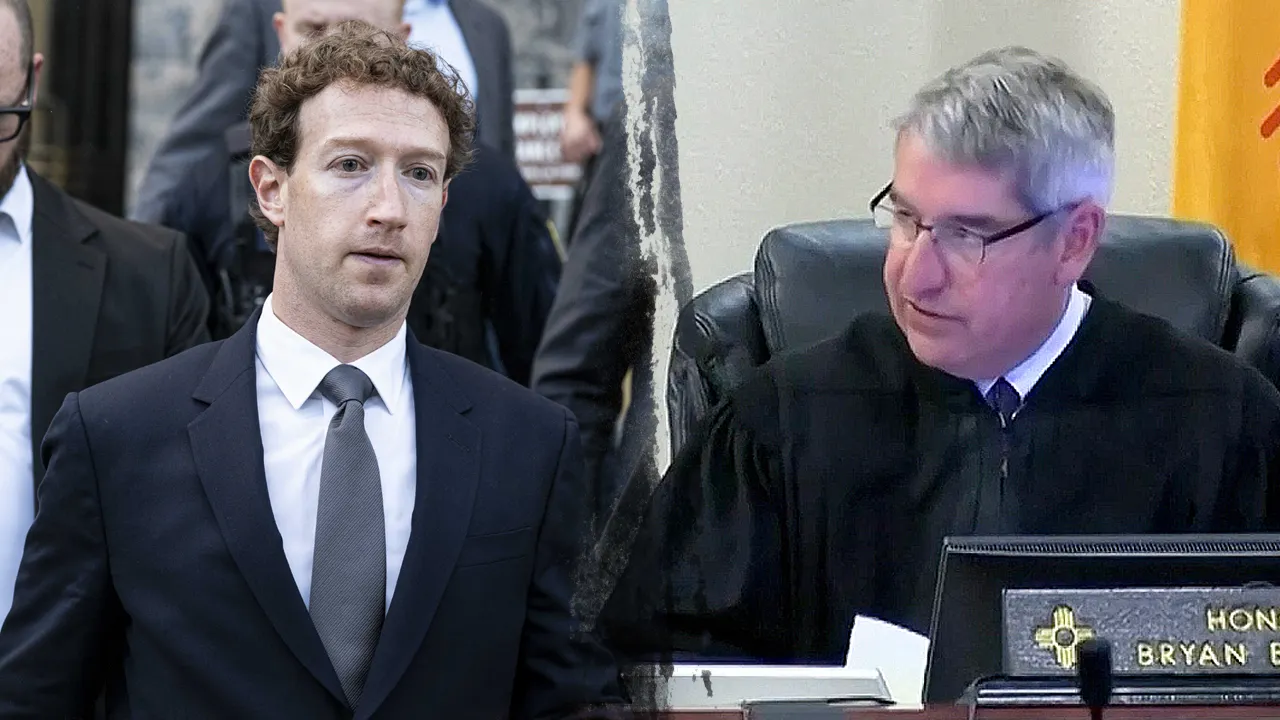
Judge Bryan Biedscheid found Meta had created a public nuisance in New Mexico and ordered the company to implement a series of youth-safety measures over the next five years.
The requirements include monthly limits on teens’ use of Facebook and Instagram, restrictions on notifications, tighter controls on adults contacting minors, safeguards for AI chatbots and enhanced reviews of child sexual abuse reports.

A New Mexico jury found Meta misled users and failed to protect kids on the platform on Tuesday, March 24, 2026. (Pool / Unknown)
In a statement to FOX Business, Meta said it disagreed with the ruling and vowed to appeal.
“We work hard to keep people safe on our platforms and have been transparent about the challenges of identifying and removing bad actors and harmful content,” a Meta spokesperson said.
“We remain confident in our record of protecting teens online and will continue to defend ourselves against claims that misrepresent the facts,” the spokesperson added.
The court sided with New Mexico Attorney General Raúl Torrez, a Democrat, who accused Meta of designing products that addict young users and failing to adequately protect children from sexual exploitation on its platforms.
ZUCKERBERG SAYS AI SHOULD EMPOWER PEOPLE, NOT REPLACE THEM, IN NEW META VISION

Mark Zuckerberg and Bryan Biescheid. (Jon Putman/Anadolu via Getty Images and Pool / Getty Images)
Torrez said the $567 million will fund New Mexico’s abatement plan and comes on top of the $375 million in civil penalties awarded in March.
“For years, Meta knew its platforms were harming New Mexico’s kids, from feeding a youth mental health crisis to connecting predators with children, and it chose engagement and profit over their safety,” Torrez said in a statement.
| Ticker | Security | Last | Change | Change % |
|---|---|---|---|---|
| META | META PLATFORMS INC. | 589.90 | +1.13 | +0.19% |
“Today, Meta is paying for that choice,” he continued. “This judgment holds the company accountable for the damage it caused to our children, our families, and our schools, and it forces real changes to how Meta operates in New Mexico.”
Torrez called the ruling a “blueprint” for other states seeking to pursue similar litigation against social media companies.
TIKTOK SAYS MODERATOR ERROR DELAYED REMOVAL OF PEREZ HILTON’S LIVESTREAM SHOWING ACTS OF SELF-HARM

Meta CEO Mark Zuckerberg leaves the Federal Courthouse in downtown Los Angeles after defending the company in a landmark social media addiction trial in Los Angeles, United States, on Feb. 19, 2026. (Jon Putman/Anadolu via Getty Images / Getty Images)
“For the first time, a court has ruled that a social media giant can be held liable for building products that endanger children and has ordered the structural changes needed to fix it,” he said. “New Mexico led the way in the courtroom. Now other states, and other countries confronting the same crisis, have a roadmap they can follow.”
More than 40 states and over 1,300 school districts have already filed public nuisance lawsuits against social media companies, seeking damages and court orders requiring changes to their products and practices.
The ruling followed three weeks of testimony in the second trial stemming from the lawsuit. Unlike the first trial, the proceeding did not involve a jury and focused on whether Meta’s platforms constituted a “public nuisance” under New Mexico law.
MOST AMERICANS STILL TRUST FINANCIAL ADVISORS OVER AI TOOLS FOR MAJOR MONEY DECISIONS, STUDY FINDS
Signage outside Meta headquarters in Menlo Park, California, US, on Thursday, Feb. 1, 2024. (David Paul Morris/Bloomberg via Getty Images / Getty Images)
Biedscheid compared the alleged harms caused by Meta’s platforms to pollution escaping from a factory.
“(J)ust as noxious pollution produced by the factory can harm the common public right to reasonably clean air, the harmful effects of Meta’s platforms on children do not stay contained by its platforms,” Biedscheid wrote in his ruling.
The judge said those effects extend into the real world and create broader burdens for children, families, schools, hospitals and law enforcement.
GET FOX BUSINESS ON THE GO BY CLICKING HERE
New Mexico filed the lawsuit in 2023, alleging Meta had created a “breeding ground” for child predators and misled users about safety protections on Facebook, Instagram and WhatsApp.
FOX Business’ Jasmine Baehr and Reuters contributed to this report.
Operator
Hello everyone. Thank you for joining us and welcome to Blend’s Financial Results Conference Call for the second quarter of 2026. [Operator Instructions] I will now hand the conference over to management for their prepared remarks. Please go ahead.
Meg Nunnally
Head of Investor Relations
Good afternoon and welcome to Blend’s Financial Results Conference Call for the second quarter of 2026. I’m Meg Nunnally, Blend’s Head of Investor Relations. Joining me today is Nima Ghamsari, our Co-founder and Head of Blend, and Jason Ream, our Head of Finance and Administration. Before we start today’s call, I’d like to note that we will refer to certain non-GAAP measures which are reconciled to GAAP measures in today’s earnings release and in the appendix of our supplemental slides.
Non-GAAP measures are not intended to be a substitute for GAAP results unless otherwise stated all financial measures we’ll discuss today, including our profitability, refer to non-GAAP. Also, certain statements made during today’s conference call regarding Blend and its operations, in particular our guidance for the third and fourth quarter of 2026, other commentary regarding 2026, and our expectations about markets, our strategic investments, product development plans, and operational targets, may be considered forward-looking statements under federal securities law.
We caution you that forward-looking statements involve substantial risks and uncertainties and a number of factors, many of which are beyond the company’s control, could cause
Business
ASX 200 Slips Slightly to Close Out Record-Setting Week as Materials, Tech Buck the Trend This Friday Session

SYDNEY — Australia’s benchmark S&P/ASX 200 index finished marginally lower Friday, slipping 8.00 points, or 0.09%, to close at 9,263.60, as weakness across most sectors outweighed gains in materials and information technology to cap what had otherwise been a record-setting week for the Australian sharemarket.
Seven of the index’s 11 sectors closed in negative territory Friday, with financials bearing the brunt of the day’s selling pressure. Despite the modest pullback, the index remained close to the record highs it had set earlier in the week, extending a broader run in which Australian shares have significantly outperformed many of their global peers over recent sessions.
Oil Prices Surge on Iran Uncertainty
Energy shares stood out as one of Friday’s bright spots, with Santos and Woodside Energy both poised for strong finishes to the week after oil prices jumped sharply overnight. According to Bloomberg data, West Texas Intermediate crude climbed 3.9% to $78.12 a barrel, while Brent crude rose 4.9% to $83.32 a barrel, reversing what had been a week of declining prices tied to optimism over reopening the Strait of Hormuz to commercial shipping.
The overnight reversal came after Iran published a restrictive draft plan for the strait that fell short of the more open arrangement markets had been anticipating. Taking a step back, Woodside shares have still gained 35.6% over the course of 2026, far outpacing the ASX 200’s own 6.2% gain for the year, even though the stock underperformed the broader index over the preceding week amid the earlier decline in global oil prices tied to Hormuz diplomacy.
Woodside Exits Trinidad and Tobago
Woodside also made headlines Friday with a strategic portfolio move, announcing it had agreed to divest its operated interest in the Calypso Project in Trinidad and Tobago to joint venture partner BP, with specific financial terms of the deal not disclosed. Under the agreement, Woodside will sell its 70% operated interest in production sharing contract TTDAA 14, lifting BP’s holding in the project from its existing 30% stake to full ownership. The transaction, structured as a mix of cash and contingent payments, is expected to close by the end of 2026, subject to customary government and regulatory approvals.
The deal brings to a close Woodside’s decades-long presence in Trinidad and Tobago, a footprint that has spanned the company’s Ruby and Angostura offshore oil and gas operations. Woodside Chief Executive Liz Westcott said the transaction demonstrates the company’s clear focus on progressing the right opportunities across its global portfolio, adding that the deal reflects those with the best potential to deliver sustained value for Woodside shareholders.
A Mixed Bag of Corporate Earnings
Friday’s session also featured a busy slate of corporate results from ASX-listed companies. James Hardie Industries, Nick Scali and ResMed were among the major names releasing earnings during the session, with ResMed expected to report full-year 2026 revenue of $5.65 billion and earnings per share of $11.12, according to analyst forecasts heading into the report.
Energy producer Beach Energy posted a mixed set of full-year 2026 results Friday morning, prompting analysts at Bell Potter to retain a hold rating on the stock alongside a 95-cent price target. The broker noted that Beach Energy is focused on shifting from a production-replacement cycle toward building a longer-term, sustainable reserves position, guiding to modest production growth in fiscal 2027 alongside relatively stable capital expenditure, a combination the broker said should support positive free cash flow while maintaining balance sheet strength for future growth initiatives and potentially dividends.
Capping a Standout Week for Miners
While Friday’s session itself was relatively subdued, it capped what had been described as a magnificent week for Australian mining stocks, with strength across gold, copper and lithium producers driving much of the broader market’s gains through the week. Ampol, Woodside and Santos all traded modestly firmer earlier in the week as Brent crude futures surged, while the technology sector extended its own weekly risk-on run despite mixed signals from the U.S. technology sector overnight. WiseTech Global continued a notable recovery during the week, with Catapult Sports, Appen and Xero also advancing alongside it.
Financials bore the most concentrated capital outflow during the week’s trading, a trend that continued into Friday’s session and contributed to the index’s modest overall decline despite strength elsewhere in the market.
A Notable Insider Purchase
Among Friday’s smaller corporate items, Webjet Chief Executive Nicole Sheffield purchased 250,000 shares of the online travel company on-market, a transaction valued at approximately $99,932 based on trading Aug. 5. Insider purchases of that scale are often watched closely by investors as a signal of executive confidence in a company’s near-term prospects, though the broader market impact of any single such transaction typically remains limited.
A Record-Setting Stretch Despite Friday’s Dip
Even with Friday’s slight pullback, the ASX 200 remains close to the all-time highs it touched earlier in the week, a run that has seen the index significantly outperform many of its international peers in recent sessions. Strategists have pointed to Australia’s relatively limited direct exposure to the volatile global artificial intelligence technology trade as one factor that has helped shield the local market from some of the sharper swings experienced on other major exchanges recently, even as Friday’s session showed that individual sector rotations, particularly within financials and energy, continue to drive meaningful day-to-day movement within the index.
With Australia’s corporate reporting season continuing in full swing over the coming weeks, investors are likely to keep a close watch on additional earnings releases for further signals on how individual sectors are performing heading into the back half of 2026. The trajectory of global oil prices, tied closely to the ongoing uncertainty surrounding the Strait of Hormuz and Iran’s latest restrictive shipping proposal, is also expected to remain a key swing factor for the ASX 200’s energy-heavy constituents in the sessions ahead, even as the broader index continues trading within close reach of its recent record levels.
Osac Chief Market Strategist Phil Blancato advises investors to strip emotions from their investment decisions.
This story about the July 2026 jobs report will be updated with further details.
The U.S. economy unexpectedly shed jobs in July amid headwinds caused by elevated inflation and uncertainty over the Iran war’s economic impact.
What are the key findings of the July 2026 jobs report?
The Bureau of Labor Statistics on Thursday reported that employers cut 23,000 jobs in June. That figure was well below the estimate of economists polled by LSEG, who estimated 80,000 jobs would be added.
The unemployment rate dipped to 4.1%, which was also below the estimate of 4.3%.
Revisions were made to the payroll numbers for the prior two months, with May revised down by 66,000 from a gain of 129,000 to 63,000; while June’s report was revised down by 37,000 from a gain of 57,000 to 20,000.
Taken together, employment in May and June combined was 103,000 jobs lower than previously reported.
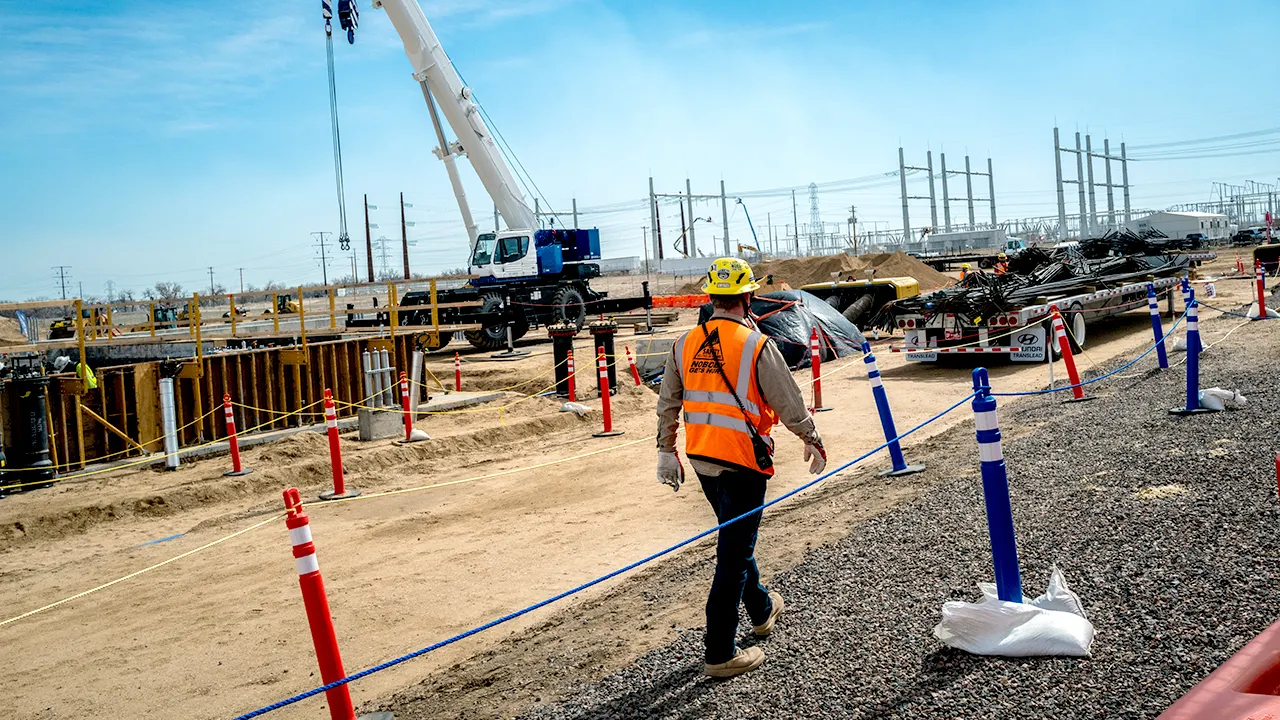
Construction at Fort St. Vrain Generating Station in Platteville, Colorado, on March 9, 2026. (Chet Strange/Bloomberg via Getty Images)


Rida Morwa is a former investment and commercial Banker, with over 35 years of experience. He has been advising individual and institutional clients on high-yield investment strategies since 1991. Rida Morwa leads the Investing Group High Dividend Opportunities where he teams up with some of Seeking Alpha’s top income investing analysts. The service focuses on sustainable income through a variety of high yield investments with a targeted safe +9% yield. Features include: model portfolio with buy/sell alerts, preferred and baby bond portfolios for more conservative investors, vibrant and active chat with access to the service’s leaders, dividend and portfolio trackers, and regular market updates. The service philosophy focuses on community, education, and the belief that nobody should invest alone. Learn More.
Analyst’s Disclosure: I/we have a beneficial long position in the shares of SYF PREFERREDS, SCHW PREFERREDS either through stock ownership, options, or other derivatives. I wrote this article myself, and it expresses my own opinions. I am not receiving compensation for it (other than from Seeking Alpha). I have no business relationship with any company whose stock is mentioned in this article.
Beyond Saving, Philip Mause, and Hidden Opportunities, all are supporting contributors for High Dividend Opportunities. Any recommendation posted in this article is not indefinite. We closely monitor all of our positions. We issue Buy and Sell alerts on our recommendations, which are exclusive to our members.
Seeking Alpha’s Disclosure: Past performance is no guarantee of future results. No recommendation or advice is being given as to whether any investment is suitable for a particular investor. Any views or opinions expressed above may not reflect those of Seeking Alpha as a whole. Seeking Alpha is not a licensed securities dealer, broker or US investment adviser or investment bank. Our analysts are third party authors that include both professional investors and individual investors who may not be licensed or certified by any institute or regulatory body.

United Airlines Polaris lounge in Chicago
United Airlines
CHICAGO — No advanced seat selection, lounge access or flight changes included with a C-suite executive’s business-class ticket? Absolutely not, some companies say.
Delta Air Lines joined United Airlines last month in launching stripped-down business class fares for certain flights, taking the same approach they used to carve up coach class to their more expensive cabins as carriers get customers to pay more for perks in the sky.
That’s a new headache for companies’ business travel mangers.
AerSale — which leases aircraft and engines and offers maintenance and other services — likely won’t block basic premium options altogether for its hundreds of traveling employees. But those tickets would be impractical for many of its workers, said Jackie Carlon, the Doral, Florida-based company’s senior vice president of marketing and communications.
“The real value is flexibility,” Carlon said. “Paying a bit more, it’s not necessarily a cost to us — it’s insurance.”
What’s included with basic business — and what’s not
With the new fares, the cheapest option for long-haul international flights won’t come with things like access to an airport lounge or the ability to pick a seat for free in advance. Perhaps most important for business travel, no changes are allowed without paying a fee on top of a difference in fare.
Delta said change fees for basic business class could range from none at all up to $400, depending on the route, and from $99 to as much as $500 for cancellations.
Because work trips can change on a dime, a restrictive ticket in business class can cost a company even more if travelers have to buy a whole new flight. Only a small proportion of a corporation’s business travelers usually fly in top-tier cabins, but the higher fares could further drive up travel costs.
The difference in fares, meanwhile, could be several hundred dollars to close to $1,000, if not more.
On United, for example, the least expensive fare in the airlines’ lie-flat pod Polaris cabin doesn’t come with access to the Polaris business-class airport lounge, which features a bar, sit-down dining, a rest area, showers and other amenities. The traveler also can’t pick a seat in advance without paying a fee and no changes are allowed. Travelers can cancel the flight with a fee. United doesn’t disclose its fees for the new fares, and a spokeswoman said the amounts vary.
For a flight going from Newark, New Jersey, to London Heathrow on Oct. 1 and returning Oct. 8, the “base” Polaris ticket was going for $4,490, while the standard fare was $4,890, and it was $5,390 for a flexible, refundable ticket.
Airlines say it gives customers more of a choice.
“We support our corporate travel partners by giving them full control over which fare products are available to their business travelers based on their own policies and business objectives,” Delta said in a statement. “We continue to see strong demand for premium travel.”
Corporate considerations
Dane Molter, senior vice president at Navan Group Travel Marketplace, which reported $9.1 billion in gross booking volume in the 12 months ended Jan. 31, said clients that use the platform are seeking more detailed policy controls that could determine which fare an employee books for a trip.
“Travel managers are asking a sensible question: Does the lower upfront fare still represent good value if it lacks flexibility, seat selection, lounge access or other benefits their travelers expect?” he said in a statement.
Two travel managers at public companies at the Global Business Travel Association’s annual convention in Chicago said they would likely seek to block the fares altogether. They spoke on the condition of anonymity because they weren’t authorized to talk about their employers’ travel spending,
While airlines like Germany’s Lufthansa and Etihad Airways, based in the United Arab Emirates, have already offered stripped-down basic business-class fares, it’s still early days for these types of tickets.
The divisions at the front of the plane comes as airfare is on the rise across the board the year. Globally, airfare is set to rise close to 5% this year from last to an average of $756 for a roundtrip flight, with premium rising even more: 9.5% to $4,488, the Global Business Travel Association forecast this week at its annual convention.

John Bukowski, vice president of global marketplace experience, product and engineering at corporate travel and expense giant American Express Global Business Travel, which had $36.3 billion in bookings in 2025, told CNBC earlier this week that he hasn’t seen a lot of clients seeking to block the fares so far, like they have with basic economy tickets.
Companies about a decade ago started blocking their travelers from booking basic economy fares, which have become even more restrictive, including in some cases by lowering the frequent flyer miles a traveler earns or eliminating that option altogether. Airline executives have frequently measured the success of basic economy by how many travelers paid up to avoid it.
Scott Laurence, a partner at Oliver Wyman’s transportation practice who previously worked at JetBlue Airways and American Airlines, said the cheaper, basic business or other premium fares could be attractive to a more price-sensitive small or medium-sized company, but that the options could become complicated.
American doesn’t offer the basic business, or basic premium economy fares, which could also add confusion if another carrier that does appears cheaper at first glance.
“The travel managers are going to value some level of simplicity and making sure things work with their expense system and their policy,” he said.
Laurence added that travel managers are likely to collect a lot of feedback from their customers, especially if they’re used to lounge access at the end of a long-haul flight or they’re earning fewer miles.
But “there’s an interest in offering a lower price point,” he said. “It also is … frankly, about driving buy up.”

Hilary Duff Brings Daughters on Stage at MSG for Pizza Party

MONEY EXPERT: How To Think Like The 1%

Shops shut and nitrous oxide found in Bolton police blitz


-

 Fashion7 days ago
Weekend Open Thread: Wit & Wisdom
-

 Politics7 days ago
Meta enters AI-training agreement with far-right ‘propaganda rag’ Newsmax
-

 Politics5 days ago
Zack Polanski: an incitement to murder Nigel Farage?
-

 Crypto World6 days ago
MicroStrategy Post-Earnings CLARITY Act Push Could Add New Catalyst for Its Stock
-

 Crypto World6 days ago
XRP Ledger v3.3.0 brings five institutional features
-

 Crypto World7 days ago
New York sues Kalshi over prediction market gambling
-

 Crypto World5 days ago
Crypto PAC spending tops $2M in Michigan House race
-

 Business7 days ago
Trump Announces Hamas Disarmament Agreement as Iran Strikes Kuwait Air Base and US Attacks Pause Overnight
-

 Business5 days ago
DTCR: Deleveraging And A Hedge Fund Collapse Point To A Possible AI Bottom
-

 Tech5 days ago
ESET tracks rise in malicious AI skills and adaptable malware
-

 Crypto World7 days ago
3 Fed Officials Just Explained Their Rate Hike Vote: Is Inflation Winning?
-

 Sports6 days ago
France Cricket implodes: letters hidden in a drawer and a board at war
-
Crypto World5 days ago
XRP Ledger urges node upgrade after manifest flood
-

 Crypto World6 days ago
Moneyflip CEO charged in $40K murder-for-hire plot
-
 Sports7 days ago
Bruno Fernandes decision made as Man United ‘discuss’ striker transfer option
-
Business7 days ago
FIFA has scrapped $20 billion World Cup sell-off plan, New York Post reports
-

 News Videos6 days ago
Financial Crash Expert: The 90-Day Collapse Timeline They Are Desperately Hiding.
-

 Sports1 day ago
Jordan Coyle & Cordiamo take Laya Arena Stakes at RDS
-

 Sports7 days ago
Commonwealth Games 2026 Live Updates | Day 9 CWG 2026: Lovlina Borgohain, Sachin Siwach Enter Final After Indian Judokas Script History
-
 Crypto World4 days ago
US Tech Stocks See Largest 5-Week Inflow in History: Can Nasdaq Break Its Downtrend?
You must be logged in to post a comment Login