
Business
After Warren Buffett’s Exit, Greg Abel Starts Deploying Berkshire Hathaway’s $365 Billion Cash Pile

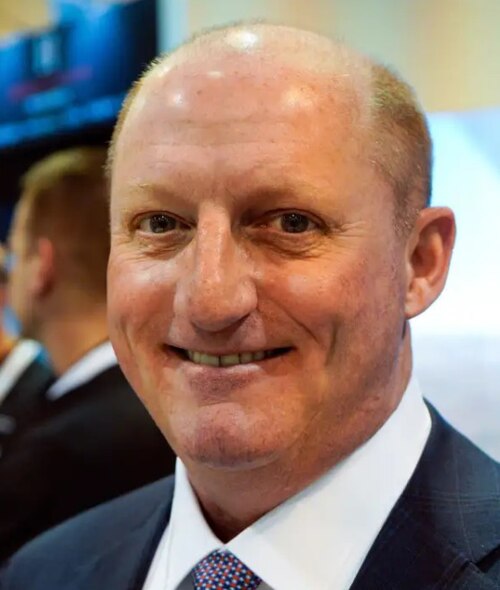
OMAHA, Neb. — Berkshire Hathaway’s enormous cash reserve is beginning to shrink under new chief executive Greg Abel, signaling a potentially significant shift in investment strategy at the conglomerate long led by Warren Buffett.
Berkshire reported Saturday that it held $365.5 billion in cash and Treasury bills at the end of June, down from $397.4 billion at the end of March. Excluding Treasury payables, the company’s cash and short-term government securities fell from roughly $380 billion to $365 billion during the quarter — the clearest sign yet that Abel, who formally succeeded Buffett as CEO at the start of this year, is beginning to put the company’s vast financial reserves to work.
A renewed pace of buybacks and stock purchases
During the April-to-June quarter, Berkshire repurchased approximately $4.5 billion of its own shares, and continued that pace into July with more than $3.3 billion in additional buybacks. The company had resumed share repurchases in March following an almost two-year pause.
Berkshire also made a notable shift in its broader investment activity, purchasing nearly $20 billion more in stocks than it sold during the quarter. According to Yahoo Finance’s reporting on the results, Berkshire bought $23.5 billion in stocks while selling only $3.7 billion — ending a streak of 14 consecutive quarters in which the company had been a net seller of equities. The last time Berkshire had a larger net outlay on stocks was in the first quarter of 2022.
Among the notable purchases was an additional $10 billion investment in Alphabet, the parent company of Google and YouTube, which has made Alphabet one of Berkshire’s largest equity holdings, alongside long-standing positions in Apple, Coca-Cola, American Express and Bank of America.
Strong operating results beat expectations
Berkshire’s underlying business performance was also stronger than expected. Quarterly operating profit rose 16% to $12.98 billion, exceeding analysts’ forecasts. Improved results at BNSF, the company’s railroad operation, along with service businesses such as NetJets and TTI, helped offset weaker performance at Geico, Berkshire’s auto insurance unit.
Net income surged to $25.6 billion, more than double the $12.3 billion reported during the same period a year earlier. Revenue also improved, rising 10% to $101.81 billion following a period of stagnation.
Abel signals a philosophy of disciplined but active investing
Abel, who formally assumed the CEO role in January, laid out his approach to capital allocation in his first letter to shareholders in February. According to Yahoo Finance, Abel wrote that Berkshire pursues opportunities where the reward matches the risk, pledging continuity with Buffett’s signature approach of disciplined capital allocation while pushing back on the notion that the company’s substantial cash position signaled hesitancy.
“Many times in Berkshire’s history, some observers have suggested that our substantial cash position signals a retreat from investing. It does not,” Abel wrote in that letter, according to CNBC’s coverage. “We continue to evaluate many opportunities and will remain patient and disciplined in pursuing the right ones for the benefit of our owners.”
Abel also described Berkshire’s balance sheet in strategic terms, framing the company’s liquidity as a source of flexibility rather than caution. According to Barchart’s reporting on the letter, Abel wrote, “Our balance sheet is a strategic asset to be deployed at the right time. It allows us to act decisively, invest when others are tentative or fearful, and stand firm when financial storms roll through.”
Caution alongside the deployment
Despite the more active investment posture, Berkshire cautioned shareholders that substantial uncertainty remains surrounding the global economic and geopolitical environment. The company pointed to factors including tariffs and ongoing wars, while also flagging weaker demand across several consumer-facing businesses.
Berkshire said changing consumer confidence was affecting operations including its network of 103 car and truck dealerships, its Fruit of the Loom apparel business, and its Forest River recreational vehicle operations — a reminder that even as Berkshire deploys more capital into equities, some of its underlying operating businesses continue to face softer demand conditions.
A notable acquisition completed during the quarter
Beyond its stock purchases, Berkshire also completed its acquisition of Taylor Morrison Home Corporation on July 24, though the company did not disclose the transaction’s valuation in its earnings report.
The second quarterly report under new leadership
Saturday’s results mark the second quarterly report since Abel took over as CEO, succeeding Buffett, who continues to serve as Berkshire’s chairman. The company’s shrinking cash hoard represents a notable change for a business that had accumulated enormous reserves during the final years of Buffett’s leadership, a period in which Buffett developed a reputation for patiently holding cash until sufficiently attractive investment opportunities emerged.
What it signals going forward
Berkshire’s recent buying activity suggests that under Abel, the conglomerate may be increasingly willing to put its vast resources to work when management identifies compelling opportunities — a meaningful, if measured, departure from the extended cash accumulation that characterized much of Buffett’s final years at the helm. Whether this pace of deployment continues in coming quarters will likely serve as an early test of how closely Abel’s investment philosophy tracks with, or diverges from, that of his predecessor.
A sourcing note: all direct quotes above from Greg Abel are confirmed and on the record via his February shareholder letter, as reported by CNBC, Yahoo Finance and Barchart’s coverage of that letter. Financial figures for the quarter are drawn directly from Berkshire’s own earnings disclosure, as reported by Mint.


My investment philosophy is built around one objective: compounding capital over a 30-year horizon to achieve financial independence by age 60. I target 12–15% annual total returns and focus purely on risk-adjusted upside. I don’t subscribe to a specific investing label — value, growth, dividend, or quality. Capital goes where the opportunity is strongest. My portfolio is intentionally concentrated, typically holding no more than 10–15 positions. These are high-conviction investments, not an exercise in diversification for its own sake. Valuation matters, but only in the context of future growth and business quality. I’m not looking for the cheapest stocks — I’m looking for the best risk-reward opportunities. I invest across both US and European markets and use dollar-cost averaging as a core execution discipline to remove emotion and market timing from the process. Outside equities, I own two residential properties. Combined with stocks, this provides geographic and asset-class diversification.
Analyst’s Disclosure: I/we have a beneficial long position in the shares of NVDA, MSFT either through stock ownership, options, or other derivatives. I wrote this article myself, and it expresses my own opinions. I am not receiving compensation for it (other than from Seeking Alpha). I have no business relationship with any company whose stock is mentioned in this article.
Seeking Alpha’s Disclosure: Past performance is no guarantee of future results. No recommendation or advice is being given as to whether any investment is suitable for a particular investor. Any views or opinions expressed above may not reflect those of Seeking Alpha as a whole. Seeking Alpha is not a licensed securities dealer, broker or US investment adviser or investment bank. Our analysts are third party authors that include both professional investors and individual investors who may not be licensed or certified by any institute or regulatory body.
Business
Leonardo DiCaprio Teams Up With Jeff Bezos on $200 Million Plan to Save Endangered Species Worldwide

LOS ANGELES — Foundations funded and co-founded by Leonardo DiCaprio and Jeff Bezos have launched a $200 million initiative aimed at reviving 100 of Earth’s most threatened species, marking what organizers describe as the largest single philanthropic fund in history dedicated exclusively to recovering critically endangered wildlife.
DiCaprio’s conservation organization Re:wild and the Bezos Earth Fund are jointly leading the new effort, called the Phoenix Species Project, which the groups announced Tuesday. The initiative will target species facing imminent extinction across 30 countries, spanning mammals, amphibians, reptiles, birds, fish, invertebrates and plants — including endangered lemurs, salamanders, pangolins, pigs and echidnas.
A years-long partnership finally taking shape
The project’s origins trace back several years, growing out of DiCaprio’s long-standing effort to organize a major concerted push to help species whose habitats and survival are threatened by climate change. In 2021, DiCaprio and Re:wild co-founder and CEO Wes Sechrest, a biologist, met with Amazon founder Jeff Bezos and his wife, Lauren Sánchez Bezos, a former TV news reporter and host who now serves as vice chair of the Bezos Earth Fund alongside her husband, who chairs the organization.
That meeting sparked a series of follow-up conversations involving local governments, environmental groups and Indigenous communities focused on how best to reverse the decline of the world’s most vulnerable species — conversations that ultimately culminated in the Phoenix Species Project’s launch.
How the funding breaks down
The Bezos Earth Fund is committing $100 million to the project, according to Variety, with Re:wild matching that amount through support from DiCaprio, along with additional contributions from Age of Union and the Todd Graves Family Foundation.
The initiative will operate in collaboration with Indigenous peoples, local communities, scientists and conservationists across the participating countries. It also supports broader international efforts tied to Target 4 of the Kunming-Montreal Global Biodiversity Framework, a global agreement that calls on governments to halt extinctions and improve the conservation status of endangered species. The Reverse the Red Action Partnership will work alongside the project to help governments identify priority species and implement recovery actions, while the IUCN Species Survival Commission — described as the world’s largest volunteer conservation science network — is serving as the initiative’s global knowledge partner.
A direct impact for grant recipients on the ground
Local conservation groups are already receiving support through the initiative. Tiana Andriamanana, executive director of Association Fanamby, one of the organizations set to receive a grant, described the funding as a turning point for efforts to protect the golden-crowned sifaka, a critically endangered lemur species found in Madagascar. “We’ve protected the golden-crowned sifaka for years on a budget that would never match what this species deserves, but letting it go extinct was never an option,” Andriamanana said in a statement. “This funding, this global platform and technical support change what is possible.”
Sánchez Bezos frames the effort as a shift from managing decline to recovery
Lauren Sánchez Bezos framed the initiative’s ambitions in stark terms, emphasizing recovery rather than simply slowing species decline. “This project is our answer,” she said in a statement. “One hundred species, 30 countries and a real commitment to bringing them back. Not managing their decline. Recovering them. That’s the whole difference. We know how to do this. We just have to stay committed long enough to see it through.”
Among the species the project will focus on, according to the Hollywood Reporter, are the golden-crowned sifaka of Madagascar, the ancient shark-like bowmouth guitarfish, a small desert succulent illegally harvested for the ornamental plant trade in western South Africa, and tree-dwelling Hickory Nut Gorge species native to specific mountain habitats.
Part of a longer arc of environmental advocacy for both men
DiCaprio has built a decades-long public profile as an environmental advocate, dating back to founding his own foundation in 1998, shortly after finishing filming “Titanic,” with a focus on protecting the planet’s endangered species across more than 40 countries. His advocacy gained further national attention in 2016, when his best actor Oscar acceptance speech — which became the most-viewed best actor speech in YouTube history — closed with a direct appeal about climate change, urging audiences, “Let us not take this planet for granted.”
Bezos, for his part, established the Bezos Earth Fund in 2020, committing billions of dollars toward climate change and environmental restoration efforts globally. The Phoenix Species Project builds on both men’s separate track records of environmental philanthropy, bringing their respective organizations together under a single, targeted conservation effort focused specifically on species recovery rather than broader climate mitigation work.
Organizers describe the $200 million commitment as an initial investment rather than the full scope of the project’s eventual funding, with the initiative structured to provide long-term support for conservation efforts targeting the 100 identified species over an extended period. Additional details on specific country partnerships and individual species recovery plans are expected to be announced as local grant recipients, including groups like Association Fanamby, begin implementing programs in their respective regions.

Sana Biotechnology faces earnings test as CAR-T program advances

Warsh wants a Fed that plays a smaller role in markets

Pagaya: AI Is Turning Consumer Credit Into Infrastructure
Business
Is Capital One Down Right Now? Here’s What the Latest Live Outage Trackers Are Actually Showing
Multiple outage-tracking services checked Sunday show no evidence of a widespread Capital One outage currently affecting customers, with automated monitors and crowdsourced report trackers reporting the bank’s systems as operating normally.
According to Outage.Report, which tracks service disruptions using automated monitoring combined with social media signals, Capital One “appears to be working normally,” with report volume described as within the typical range for this time of day and zero user-submitted signals logged over the past 24 hours as of the latest check. The site noted that if a broader outage isn’t being detected, any individual access problems are more likely tied to a person’s local internet connection, device or app rather than a systemwide issue.
Similarly, outage-tracker Downtester reported Capital One as “fully operational with no user-reported issues detected in the last 24 hours,” while automated monitoring service UptimeRobot’s most recent check — run from North America — did not detect any unusual response times or error codes from the bank’s website.
StatusGator, which aggregates issue reports, page visits and signal strength to assess service health, similarly logged Capital One as operational during its most recent check, noting only a small number of user-submitted outage reports over the prior 24-hour period — a volume consistent with the routine background noise most major online services see on any given day, rather than an indication of a confirmed, active outage.
Why isolated complaints don’t always mean a full outage
Even when overall monitoring shows a service as operational, individual users sometimes report frustrations that can look like outage symptoms but stem from more localized issues. According to UptimeRobot’s guidance for troubleshooting suspected outages, users experiencing access problems should first try opening the Capital One website or app from a different browser, device or network — such as a mobile hotspot — and consider clearing their device’s DNS cache, disabling any active VPN connection, or restarting their router before assuming a broader service failure is underway.
Sites like Is The Service Down also continue to log a steady trickle of individual customer complaints on social media platforms, covering issues ranging from mobile check deposit slowdowns to account access frustrations and disputes over rewards points — the kind of routine, scattered customer service complaints that don’t necessarily reflect a confirmed, systemwide technical outage.
A history of past disruptions
Capital One is not new to periodic service disruptions. The bank has previously experienced significant, confirmed outages tied to third-party vendor problems. In one such incident, an outage stemming from a technical issue with vendor Fidelity Information Services, based in Jacksonville, Florida, left some customers without access to deposits, payments and transfers for multiple days. According to reporting from NBC News at the time, FIS said the disruption was caused by a local power outage affecting a data center critical to various banking applications used by Capital One and other financial institutions.
During that earlier incident, Capital One acknowledged the ongoing issues publicly, with a bank representative telling a customer on social media platform X that the company continued working “around the clock to restore full functionality as soon as possible.” Following resolution of that outage, Capital One issued a statement saying, “We have restored full account functionality and processed outstanding transactions for most of our customers, and are completing work to restore full service to all of our customers as soon as possible. We recognize the frustration this issue has caused and will continue to provide updates. We sincerely apologize to our valued customers.”
Financial industry experts note that outages of this kind, while disruptive, are not unusual across the banking sector given the complexity of the technology infrastructure involved. “Outages are not rare in the financial industry,” Phillip Parker, founder of CardPaymentOptions.com, said in comments reported by AOL. “Banks and payment processors use complicated computer systems, and sometimes they break down. They most often occur due to a bungled software update or a failure in a critical part of the infrastructure. Most institutions have backup plans to minimize disruptions, but sometimes outages still occur.”
Research cited in that same coverage, from PYMNTS Intelligence, estimated that service interruptions cost Global 2000 companies roughly $400 billion annually, underscoring the broader financial stakes tied to outages across major service providers, including banks.
What to do if you’re experiencing issues right now
For anyone currently having trouble accessing Capital One’s website, mobile app or account services, checking a live outage tracker like Outage.Report or Downtester can help determine whether the issue is isolated or part of a broader, confirmed disruption. If other users in your area are reporting similar problems, or if Capital One issues an official statement acknowledging a technical issue, that would indicate a genuine, systemwide outage rather than a local connectivity problem.
As of this writing, no official statement from Capital One acknowledging a current outage had been identified, and the balance of available live monitoring data points to normal service.

As of Thursday, the U.S. Navy has redirected 53 commercial vessels in the Strait of Hormuz, and disabled and boarded two each, according to U.S. Central Command’s recent update as of Saturday. It also said it has permitted more than 30 vessels to pass through the blockade for humanitarian aid.
Oil prices hovered at $83.55 a barrel for Brent crude and around $77 a barrel for WTI as of Friday, and gasoline prices at the retail pump are at about $4.01 a gallon, down from $4.09 a week ago but up from $3.15 a gallon a year ago.
Top White House economic advisor Kevin Hassett cited a number of reasons oil prices have been coming down since their recent Iran war peak above $100 a barrel, including the U.S. Navy escorting commercial vessels through the Strait of Hormuz, increased oil production in the U.S., a waiver of the Jones Act that allows 100 million barrels of oil produced along the U.S. Gulf Coast to be shipped to the East and West coasts.

Blackstone Secured Lending: Discount To NAV And A Dip In Non-Accruals

Victory Capital (NASDAQ: VCTR) is a diversified global asset management firm. We serve institutional, intermediary, and individual clients through our Investment Franchises and Solutions Platform, which manage specialized investment strategies across traditional and alternative asset classes. Our differentiated approach combines the power of investment autonomy with the support of a robust, fully integrated operational and distribution platform. Clients have access to focused, top-tier investment talent equipped with comprehensive resources designed to deliver competitive long-term performance.
Victory Capital is headquartered in San Antonio, Texas. Note: This account is not managed or monitored by Victory Capital, and any messages sent via Seeking Alpha will not receive a response. For inquiries or communication, please use the firm’s official channels.
Business
Warren Buffett Excludes Gates Foundation From Nearly $6 Billion Donations for First Time in Decades
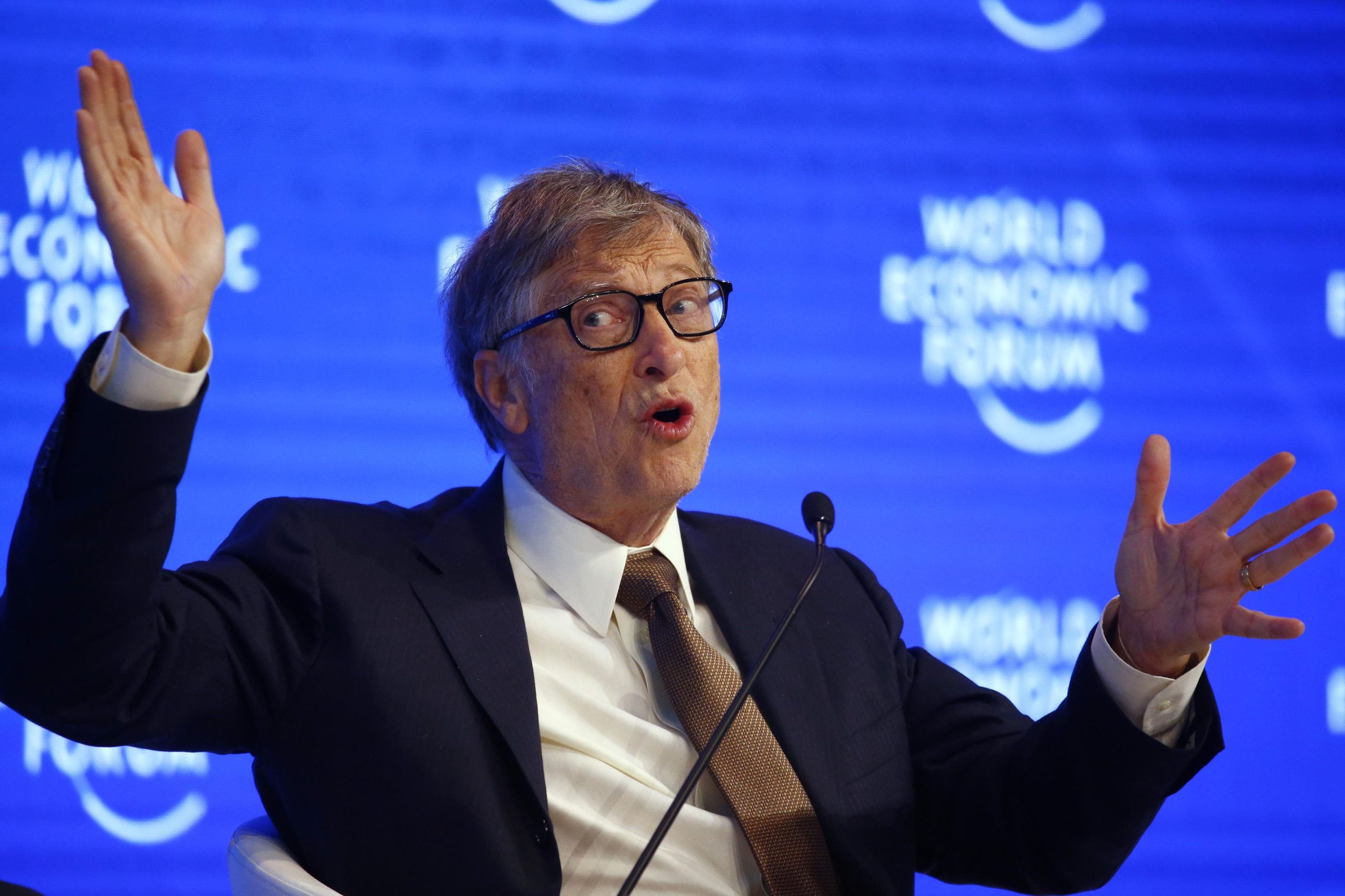
OMAHA, Neb. — Billionaire investor Warren Buffett has directed nearly $6 billion in Berkshire Hathaway shares to four foundations linked to his family, omitting the Bill & Melinda Gates Foundation for the first time since he began his major annual giving program two decades ago.
In a statement released in mid-July, the 95-year-old chairman of Berkshire Hathaway announced he would convert Class A shares into 12 million Class B shares and donate them as follows: approximately 9 million shares, valued at roughly $4.4 billion to $4.5 billion, to the Susan Thompson Buffett Foundation, named for his late wife; and 1 million shares each, worth about $500 million apiece, to the Sherwood Foundation, the Howard G. Buffett Foundation and the NoVo Foundation.
“My goal is to dispose of all of my Berkshire shares within about eight years,” Buffett said. “As I explained last year, my children are unfortunately growing older. I have every hope that the three of them are able to carry out the disposal of my shares by December 31, 2034.”
The announcement marked a clear shift. Since 2006, when Buffett pledged the bulk of his fortune to philanthropy, the Gates Foundation had been the largest regular recipient of his midyear gifts of Berkshire stock. Over that period he has transferred more than $47 billion in shares to the organization founded by Microsoft co-founder Bill Gates and his former wife, Melinda French Gates.
Buffett had already indicated in 2024 that donations to the Gates Foundation would end after his death and that his remaining wealth would be handled through family foundations. The latest move accelerates that timeline by channeling this year’s gifts exclusively to the four family-linked entities and confirming that the rest of his Berkshire holdings will follow the same path by the end of 2034.
The exclusion comes amid heightened scrutiny of the Gates Foundation’s past associations with Jeffrey Epstein, the convicted sex offender who died in 2019. The foundation launched an external review by the law firm WilmerHale after emails and other materials surfaced showing contact between foundation staff and Epstein. Buffett has said he has not spoken with Gates since the disclosures became public.
In comments after the donation announcement, Buffett described Gates’ association with Epstein as “distasteful” while noting that he himself had made mistakes in choosing associates over the years. He emphasized that the primary driver for the change in giving was the advancing age of his children and their readiness to oversee the distribution of the remaining fortune.
The Susan Thompson Buffett Foundation, based in Omaha, has long focused on reproductive health, education and other causes. The foundations run by Buffett’s children—Susie, Howard and Peter—support a range of initiatives including education, environmental work, conflict resolution and social justice. Together they have already received more than $23 billion in Berkshire shares from their father since 2006.
Buffett’s overall philanthropic plan remains one of the largest in history. He has repeatedly stated his intention to give away more than 99 percent of his wealth. The midyear gifts have traditionally provided a steady flow of capital to the recipient organizations, allowing them to plan multiyear programs. Redirecting the entire 2026 allocation to the family foundations concentrates resources under the control of his children.
The decision has drawn attention because of the long and public friendship between Buffett and Gates. The two men had collaborated closely on philanthropy for years, with Buffett frequently praising the Gates Foundation’s work in global health and development. Gates has separately outlined a major spending commitment of $200 billion over 20 years, with a substantial portion directed toward health and economic initiatives in Africa, including efforts to reduce maternal and infant mortality and combat infectious diseases. That plan, announced in 2025, is independent of Buffett’s annual stock transfers.
For the Gates Foundation, the loss of Buffett’s regular midyear contribution represents a notable change in funding flow after two decades of support. The organization has not issued a detailed public response to the specific omission in the July announcement. Foundation leadership has continued its operations and the external review of past Epstein-related contacts.
Buffett’s net worth has fluctuated with Berkshire’s stock performance but has consistently placed him among the world’s richest individuals. By converting larger Class A shares into the more numerous Class B shares for donation purposes, he facilitates the transfer of substantial value while preserving the company’s dual-class structure.
Observers note that the accelerated timeline reflects practical considerations. Susie Buffett, the eldest of the three children, will be in her early 80s by the target date of 2034. Buffett has expressed confidence in their ability to manage the remaining distribution effectively.
The July gifts maintain the overall scale of Buffett’s recent annual giving, which has often totaled several billion dollars. What has changed is the destination. For the first time in 20 years, none of the midyear allocation is going to the Gates Foundation.
Buffett has long framed his philanthropy as a means of returning capital to society in a way that improves opportunities for those with fewer advantages. The latest statement reinforces that the remaining shares will ultimately support the work of the four family foundations, either through continued annual grants or final transfers by the end of 2034.
As Berkshire Hathaway continues its operations under Buffett’s leadership, the philanthropic side of his legacy is entering a new phase focused more tightly on the institutions overseen by his children. The exclusion of the Gates Foundation from this year’s list stands as the most visible marker of that transition to date.

Anti-immigration protesters gather at former RAF base after Thetford unrest

Nvidia’s Stock Is Completely Mispriced (NASDAQ:NVDA)

European Stock ETFs Post First Positive Month Since the Iran War Started


-

 Politics7 days ago
Zack Polanski: an incitement to murder Nigel Farage?
-

 Fashion2 days ago
Frugal Friday’s Workwear Report: Cap-Sleeve Pointelle Crewneck Sweater
-

 Fashion2 days ago
Weekend Open Thread: Mattifying Sunscreen
-

 Business7 days ago
DTCR: Deleveraging And A Hedge Fund Collapse Point To A Possible AI Bottom
-

 Sports4 days ago
Jordan Coyle & Cordiamo take Laya Arena Stakes at RDS
-

 News Videos1 day ago
Can Astrology Help Find Gold and Silver Trends? A Financial Astrology Guide
-
 Crypto World6 days ago
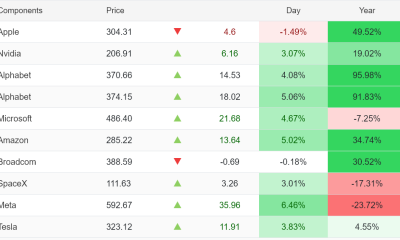
US Tech Stocks See Largest 5-Week Inflow in History: Can Nasdaq Break Its Downtrend?
-
 Business4 days ago
US stocks: Dow closes at record on Mideast optimism; SpaceX, AMD drag Nasdaq
-

 Politics3 days ago
Reform UK And Greens Sink To Lowest Favourability Ratings To Date
-

 Business5 days ago
Nvidia Stock Climbs 2.5% as Chip Sector Rally Builds Ahead of AMD Earnings, Nvidia’s Own Report Looms
-

 Tech7 days ago
OpenAI teases Astra, its next major AI model, after it solves 10 long-standing math problems
-
 Crypto World5 days ago
Polymarket targets $20 billion valuation as competition heats up in prediction market sector
-

 Tech5 days ago
OpenAI, Anthropic AI agents targeted real people and systems in cyber tests
-

 Business4 days ago
Supply chain issues impact Ingredion
-

 News Videos7 days ago
#crypto #cryptocurrency #cryptonews #cuet2026 #ceuta
-

 Business7 days ago
Myspace owners announce plans to relaunch the once-popular platform
-

 News Videos7 days ago
Crypto.com Partners with UFC for UFC 331 Event
-
 Crypto World5 days ago
CLARITY Act Senate Vote Locked In, But 60-Vote Hurdle Looms Large
-
 News Videos7 days ago
Huge SPINS!! (for me) #slots #casino #gambling #money #jackpot
-

 Tech2 days ago
Rinn Pharma & Biopharma to join NordicPharmaTrain network
You must be logged in to post a comment Login