
Business
AIM Surges 44% on Massive Volume After Patent Approval and Cancer Trial Progress


OCALA, Fla. — Shares of AIM ImmunoTech Inc. (NYSE American: AIM) rocketed higher Wednesday, closing at $1.02, up 31 cents or 43.66%, on extraordinarily heavy trading volume exceeding 183 million shares as investors reacted to a key patent milestone and ongoing clinical advancements in its lead drug Ampligen for pancreatic cancer.

The penny stock opened at $1.45, traded in a wide range from $0.9665 to $1.62 and finished with a market capitalization around $4.3 million. Pre-market trading Thursday showed further pressure, dipping to about $0.90, down roughly 12%, reflecting typical volatility after such explosive moves in low-float biotech names.
The surge was sparked by AIM’s March 18 announcement of final approval for a novel cancer therapy patent in Japan. The patent covers the use of Ampligen (rintatolimod), the company’s TLR-3 agonist immunomodulator, in combination with checkpoint inhibitors for enhanced anti-tumor effects. This intellectual property strengthens AIM’s global position in immuno-oncology, particularly for difficult-to-treat cancers like pancreatic ductal adenocarcinoma (PDAC), where Ampligen is showing promise in mid-stage trials.
Analysts viewed the patent news as a positive catalyst for potential partnerships or expanded development programs. The company has positioned Ampligen as a potential adjunct to standard therapies, aiming to boost immune response and survival in late-stage patients.
The patent win follows closely on other pipeline momentum. In early March, AIM signed an agreement with Thermo Fisher Scientific’s PPD clinical research business to design a proposed Phase 3 trial of Ampligen in late-stage pancreatic cancer. This step builds on encouraging data from earlier studies, including a follow-up Phase 2 trial (DURIPANC) combining Ampligen with AstraZeneca’s Imfinzi (durvalumab) in metastatic PDAC patients stable after FOLFIRINOX chemotherapy.
A February year-end interim update from the DURIPANC study reported positive progression-free and overall survival trends, with enrollment ongoing at Erasmus MC Cancer Institute in the Netherlands. The trial, funded partly through AstraZeneca collaboration, follows a prior early access program where Ampligen monotherapy extended median survival to 19.7 months versus 8.6 months with standard care, alongside quality-of-life improvements.
Pancreatic cancer remains one of oncology’s toughest challenges, with five-year survival rates below 13% and limited options beyond frontline chemo. AIM’s approach leverages Ampligen’s ability to activate innate immunity and potentially sensitize tumors to checkpoint blockade, offering a novel angle in a field dominated by few effective therapies.
Financially, AIM remains a development-stage biotech with minimal revenue—about $110,000 in recent periods—and ongoing losses. The company extended and closed a rights offering in early March to raise capital, providing runway amid clinical costs. Cash position details were not updated in the latest releases, but such financings are common for small-cap biotechs advancing trials.
The stock’s dramatic jump came amid broader biotech sector interest in immuno-oncology and rare disease plays. AIM trades at a steep discount to analyst targets; one firm maintains a Strong Buy with a $21.98 12-month price objective, implying massive upside if trials succeed, though such forecasts carry high risk given execution challenges and dilution potential.
Historically, AIM (formerly Hemispherx Biopharma) has faced volatility, with shares swinging from highs above $35 in 2025 to lows near $0.61 earlier this year. The 52-week range reflects speculative swings tied to clinical news, regulatory updates and financing events.
Broader context includes Ampligen’s long development history. Initially pursued for chronic fatigue syndrome and other indications, the drug gained traction in oncology and viral diseases, including exploratory work in Long COVID. While not yet approved anywhere, positive pancreatic data could position it for breakthrough therapy designation or accelerated paths.
Investors should note risks: clinical trials often fail, pancreatic cancer studies face high hurdles, and AIM’s tiny market cap makes it susceptible to manipulation and sharp reversals. The March 18 volume spike—among the highest in recent memory—suggests momentum trading alongside fundamental interest.
As of Thursday pre-market, AIM futures indicated consolidation after the rally. Upcoming catalysts include further DURIPANC enrollment updates, Phase 3 planning progress and potential data readouts later in 2026.
For shareholders, the patent and trial advancements reinforce AIM’s focus on a high-unmet-need area. Success in pancreatic cancer could transform the company’s trajectory, but biotech investing demands caution given binary outcomes.
AIM ImmunoTech continues navigating a challenging landscape for small developers, balancing promise with financial realities. Wednesday’s move highlights how quickly sentiment can shift on incremental wins in this speculative space.


Check out what’s clicking on FoxBusiness.com.
Nearly 90,000 bottles of children’s ibuprofen have been recalled over the potential presence of a foreign substance, according to the Food and Drug Administration.
Strides Pharma, Inc., headquartered in India, recalled about 89,592 bottles of its 100-milligram Children’s Ibuprofen Oral Suspension, the FDA said.
The affected product was manufactured for Taro Pharmaceuticals USA and distributed across the U.S.
The ibuprofen was sold in 4-fluid-ounce bottles at 100 milligrams per 5 milliliters.
HERBAL SUPPLEMENT FOUND TO CONTAIN HIDDEN VIAGRA INGEDIENT, FDA URGES CONSUMERS TO STOP USE

Nearly 90,000 bottles of children’s ibuprofen have been recalled. (Getty Images / Getty Images)
The packages included the lot numbers 7261973A and 7261974A with an expiration date of Jan. 31, 2027.
The recall was first issued earlier this month after complaints of a gel-like mass and black particles in the product.
GM RECALLS 17K VEHICLES OVER REAR TOE LINK FRACTURE THAT COULD LEAD TO CRASHES

The affected product was manufactured for Taro Pharmaceuticals USA and distributed across the U.S. (iStock / iStock)
But the FDA updated the classification this week to a Class II recall, which means “use of or exposure to a violative product may cause temporary or medically reversible adverse health consequences or where the probability of serious adverse health consequences is remote.”
The Class II classification is the FDA’s second-highest urgency level.

The Class II classification is the FDA’s second-highest urgency level. (Stefani Reynolds/Bloomberg via Getty Images / Getty Images)
CLICK HERE TO GET FOX BUSINESS ON THE GO
Consumers who purchased the recalled ibuprofen are urged to stop using it immediately.
Parents with concerns after a child has consumed the product should consult a healthcare provider.

Neurodiverse workers could hold a distinct advantage as artificial intelligence reshapes the modern workplace, according to a UK technology entrepreneur who says businesses are overlooking a critical talent pool at a pivotal moment of change.
Josh Hough, founder of home care software firm CareLineLive, has argued that traits commonly associated with neurodiversity, including heightened focus, pattern recognition and unconventional problem-solving, are becoming increasingly valuable as organisations accelerate their adoption of AI-driven systems and workflows.
Speaking during Neurodiversity Celebration Week, Hough said many employers remain too focused on traditional hiring frameworks, despite the growing need for adaptability and innovative thinking.
“A lot of businesses still want people who tick every box,” he said. “The reality is, people who think differently often solve problems differently.
“In a world where everything is changing quickly, that’s a real advantage. You need people who don’t just follow a process, but can see a better way of doing things.”
His comments come as businesses across the UK and globally invest heavily in artificial intelligence to drive productivity, automate processes and unlock new growth opportunities. However, this shift is also redefining the types of skills and mindsets organisations require, placing a premium on cognitive diversity rather than uniformity.
Hough’s own approach to leadership and hiring has been shaped by personal experience. Born with a rare muscle-weakening condition that left him reliant on a wheelchair for much of his early life, he developed a mindset centred on adaptability and alternative problem-solving from a young age.
“When you grow up having to do things differently you don’t assume the standard way is the best way,” he said. “That carries through into business.”
Founded in 2014, CareLineLive has grown into a significant player in the digital care technology space, supporting more than 700 home care providers across multiple countries and used by over 25,000 carers. Its platform is designed to streamline operations across the care sector, from staff management and patient records to real-time communication between care providers, families and healthcare professionals.
At a time when the care sector is under sustained pressure from staffing shortages, rising demand and regulatory complexity, Hough believes technology, combined with diverse thinking, is essential to improving efficiency and outcomes.
“One of the biggest challenges in care is how information flows between people and services,” he said. “Too often, information doesn’t move between people in the way it should. That creates risk and wastes time.
“Our focus has always been on making sure the right people have the right information at the right time.”
Beyond operational efficiency, Hough’s comments highlight a broader shift in how businesses should think about talent in the AI era. As automation takes over routine and process-driven tasks, the ability to think laterally, identify patterns and approach problems from new angles is becoming more strategically important.
This has significant implications for recruitment, workplace culture and long-term competitiveness. Companies that continue to prioritise rigid skill checklists and conventional career paths risk missing out on individuals who may be better suited to navigating complexity and change.
Hough said the conversation around neurodiversity must evolve beyond compliance or risk management and instead focus on value creation.
“Not everyone is going to fit a traditional mould,” he said. “But that doesn’t mean they can’t be excellent at what they do.
“If anything, in the current environment, thinking differently is exactly what businesses need.”
As AI adoption accelerates and the nature of work continues to shift, his message is clear: the future workforce will not just be defined by technical capability, but by diversity of thought, and those who recognise this early may gain a decisive edge.

Amy Ingham
Amy is a newly qualified journalist specialising in business journalism at Business Matters with responsibility for news content for what is now the UK’s largest print and online source of current business news.

A Malaysian e-commerce technology platform has claimed the top spot in Asia-Pacific’s most closely watched corporate growth ranking, as the region’s startup ecosystem continues to defy a challenging global economic backdrop.
Key takeaways
- Borong of Malaysia leads 500 Asia-Pacific high-growth companies with a staggering 295 per cent compound annual growth rate between 2021 and 2024.
- Singapore and India top the ranking by volume with 101 companies each, while Chinese firms make their first-ever appearance in the index.
- IT and software dominate for the fourth straight year at 21.4 per cent of the list, confirming technology as the region’s primary engine of corporate growth.
Borong, a business-to-business e-commerce platform headquartered in Kuala Lumpur, clinched first place in the Financial Times/Statista High-Growth Companies Asia-Pacific 2026 ranking, rising from second position the previous year.
The company recorded revenues of $99.7 million, translating into a compound annual growth rate of 295 per cent over the three years to 2024, a figure that underscores the explosive appetite for digital commerce infrastructure across Southeast Asia.
The eighth edition of the annual ranking lists the 500 fastest-growing companies across the Asia-Pacific region, measured by organic revenue growth between 2021 and 2024. This year’s edition carries a notable milestone: Chinese companies appear in the ranking for the first time, expanding both the competitive field and the geographic scope of one of the region’s most prestigious business benchmarks.
South Korea Claims Two Podium Places
Borong’s ascent to the summit comes as South Korea cements its reputation as a breeding ground for high-growth technology ventures. Two Korean companies claimed the second and third positions respectively: Bznav, a tax software firm, and InPock, an e-commerce technology platform, reflecting Seoul’s growing influence in the digital services economy.
India and Singapore Dominate by Volume
When measured by the number of entrants, Singapore and India each contributed 101 companies to the ranking, more than any other market, highlighting the twin engines of the region’s innovation ecosystem. Japan followed with 82 companies, and South Korea placed fourth with 79.
The breadth of representation signals a maturing startup culture across diverse economies, from the technology hubs of Bangalore and Singapore’s financial district to the manufacturing corridors of Japan.
Technology Retains Its Iron Grip
For the fourth consecutive year, IT and software companies dominated the sectoral composition of the list, accounting for 21.4 per cent of all ranked firms. Fintech, financial services and insurance followed at 9.6 per cent, while healthcare and life sciences took 5.6 per cent, a share that reflects sustained post-pandemic investment in medical technology and digital health.
The persistence of IT and software at the top of the table points to a structural shift in how Asia-Pacific economies are generating value: less through manufacturing and commodities, and increasingly through scalable, asset-light technology platforms.
The Bar Is Rising
Entry into the ranking has become incrementally harder. The minimum compound annual growth rate required to qualify rose to 8.4 per cent this year, edging up from 8.1 per cent in the prior edition, a modest but telling signal that the pool of high-performing applicants is deepening.
The ranking is drawn from companies that voluntarily submitted and certified their revenue figures, signed off by a chief financial officer, chief executive or member of the executive committee, during an application window that ran from July to December 2025.
Methodology and Limitations
The ranking was compiled in partnership with Statista, which canvassed tens of thousands of companies across 14 Asia-Pacific territories, including Australia, China, Hong Kong, India, Indonesia, Japan, Malaysia, New Zealand, the Philippines, Singapore, South Korea, Taiwan, Thailand and Vietnam. Companies were required to have generated at least $100,000 in revenue in 2021 and at least $1 million by 2024, with growth driven primarily by organic means.
As with any voluntary ranking, the list does not claim to be exhaustive. Many of the region’s fastest-growing businesses remain privately held and decline to disclose financial data, meaning the true universe of high-growth companies is almost certainly larger than the 500 featured.
A special report accompanying the ranking is scheduled for publication on April 10, spotlighting some of the fastest-growing sectors shaping the region’s economic future.
Other People are Reading

The New York Times’ popular word-association game Connections delivered another brain-teasing challenge on Friday, March 20, 2026, with Puzzle No. 1013 featuring a mix of everyday terms, cultural references and clever misdirections that tested players’ pattern recognition and lateral thinking.

Released at midnight Eastern time as part of the daily rotation on nytimes.com and the NYT Games app, today’s puzzle drew praise and frustration in equal measure from the online community for its balanced difficulty and thematic variety. Solvers had to group 16 seemingly unrelated words into four themed categories of four words each, with yellow as the easiest and purple as the trickiest.
The 16 words in today’s grid were: ALARM, CONCERN, RATTLE, SHAKE, BOARDWALK, CHANCE, LUXURY, PARKING, FATE, FURY, MUSE, SIREN, CARTON, NOODLE, ROLL, TIMER.
As with every Connections puzzle, the goal is to identify the common threads without using more than four mistakes. Players receive color-coded feedback: yellow for the simplest category, green next, then blue, and purple for the most obscure.
### Hints for Today’s Puzzle
Before diving into the full answers — which contain spoilers — here are progressive hints to guide solvers who want to crack it on their own:
– **Yellow (easiest):** These words all relate to causing unease or disturbance, often in a physical or emotional sense.
– **Green:** Think classic board game real estate and random events — items you’d find listed on a familiar property-trading board.
– **Blue:** These evoke figures from ancient Greek stories, often tied to destiny, emotion, inspiration or allure.
– **Purple (hardest):** These complete the phrase “egg _____” — a common compound word or expression involving the word “egg.”
Many players reported starting with the yellow group, as words like “shake” and “rattle” immediately suggested agitation or fear. The purple category proved elusive for some, relying on idiomatic English phrases rather than literal meanings.
### Full Answers and Category Breakdown
Here are the complete groupings for Connections #1013 on March 20, 2026:
**Yellow: Disturb**
ALARM, CONCERN, RATTLE, SHAKE
This category captured synonyms for causing worry, fear or physical vibration. “Shake” and “rattle” evoke both literal trembling and figurative unease, while “alarm” and “concern” lean emotional. Solvers noted this as the most straightforward, often solved first.
**Green: Words on a Monopoly Board**
BOARDWALK, CHANCE, LUXURY, PARKING
A nod to the iconic Parker Brothers (now Hasbro) game, these are direct spaces or cards: Boardwalk (the priciest property), Chance (the card deck), Luxury Tax (a space), and Parking (Free Parking, the beloved rest spot). The category rewarded pop-culture knowledge of the classic American board game, with many players calling it a satisfying “aha” moment.
**Blue: Figure in Greek Myth**
FATE, FURY, MUSE, SIREN
Drawing from classical mythology, these represent archetypal beings: the Fates (who spin destiny), a Fury (vengeful deity), a Muse (inspirational goddess), and a Siren (seductive sea creature). The category highlighted how Connections often weaves in literary or historical references, challenging players beyond everyday vocabulary.
**Purple: Egg _____**
CARTON, NOODLE, ROLL, TIMER
The trickiest group completed familiar phrases: egg carton (packaging), egg noodle (pasta type), egg roll (appetizer), and egg timer (kitchen tool). This required thinking in compound words or set expressions, a hallmark of purple categories that often stump even seasoned players.
### Player Reactions and Difficulty Assessment
On forums like Reddit’s r/NYTConnections, users shared mixed experiences. Many achieved perfect solves in under a minute once yellow and green clicked, while others lost attempts to misfires like grouping “shake” with “roll” or “siren” with “alarm.”
“This one felt fair but sneaky — the Monopoly group was a giveaway, but egg phrases took forever,” one commenter wrote. Another praised the Greek myth tie-in: “Loved the blue category; reminded me of high school classics.”
Data from community trackers suggests average solve times hovered around 4-6 minutes, with a moderate mistake rate. The puzzle earned a difficulty rating of about 3.2 out of 5 from aggregate player votes, placing it in the middle range for recent entries.
### How Connections Works and Tips for Success
Created by the New York Times Games team and launched in 2023, Connections has grown into one of the most popular daily brain games alongside Wordle and the Mini Crossword. Players see a 4×4 grid of words and must submit groups of four that share a hidden connection. Correct groups vanish in their assigned color; four mistakes end the game.
Strategies include:
– Scan for obvious synonyms or themes first (yellow often falls quickly).
– Look for proper nouns, brands or cultural references.
– Consider multiple meanings — words can fit literal, slang or idiomatic senses.
– Avoid forcing groups; sometimes stepping away reveals connections.
Today’s puzzle exemplified the game’s appeal: accessible yet layered, rewarding both quick pattern spotting and deeper cultural knowledge.
For those who missed it or want to compare, the official archive on nytimes.com allows replaying past puzzles (subscription required for full access). The next Connections drops at midnight ET on March 21.
As the game approaches its third anniversary, its daily ritual continues to unite word lovers worldwide in a shared moment of mental gymnastics.
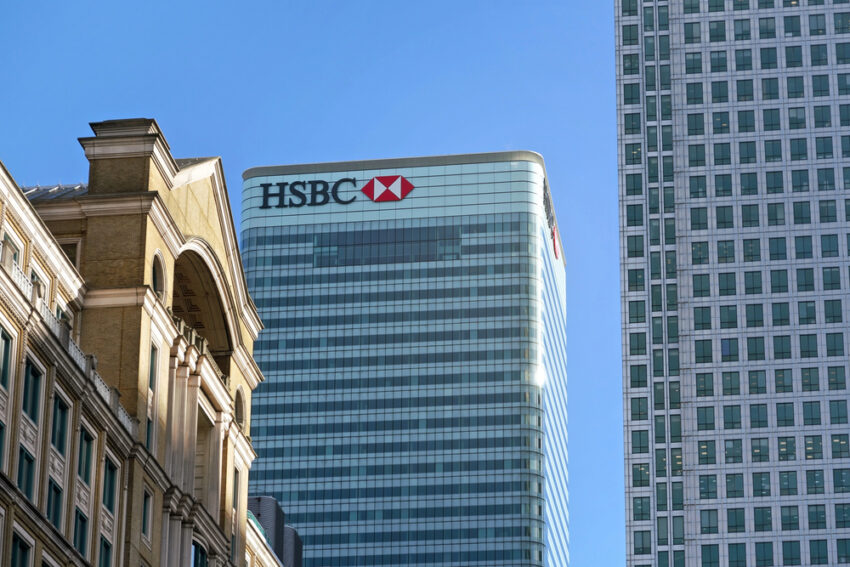
HSBC is weighing up plans to cut as many as 20,000 jobs globally over the next three to five years as it accelerates the use of artificial intelligence to streamline operations, in what could become one of the most significant workforce reductions in modern banking.
According to reports, the lender is exploring how AI can reduce reliance on back- and middle-office roles, with up to 10 per cent of its 210,000-strong global workforce potentially affected. While the bank declined to comment, the proposals align with a broader strategic push under chief executive Georges Elhedery to simplify processes and reduce operational complexity.
In the UK, where HSBC employs around 34,700 people, a proportional reduction could see approximately 3,500 roles impacted. The bank’s domestic footprint spans retail banking, corporate operations and asset management, alongside its London headquarters.
The potential cuts form part of a wider transformation agenda as HSBC seeks to embed generative AI across the organisation. Speaking earlier this year, Elhedery said the bank was rolling out AI tools to all employees, aiming to both improve productivity and enhance customer-facing services through more personalised interactions.
“We want to simplify processes, procedures and policies and reduce complexity,” he said at the time, while also highlighting the role of AI in equipping frontline staff.
The review of headcount began before the recent escalation in the Middle East, underscoring that the move is driven by long-term structural change rather than short-term economic shocks. Since taking over in 2024, Elhedery has already reduced staffing through divestments and a sharper focus on HSBC’s core markets, particularly in Greater China.
A reduction on this scale would place HSBC at the forefront of an emerging trend across global finance, where automation is increasingly targeting traditional white-collar roles. Industry estimates suggest banks could eliminate up to 200,000 positions worldwide in the coming years as AI systems take over tasks such as compliance checks, document processing and client onboarding.
Recent announcements from other sectors reinforce the direction of travel. Amazon has outlined plans to cut 16,000 roles, while Hewlett-Packard expects to shed up to 6,000 jobs over three years, both citing efficiency gains from AI. In the UK, Close Brothers this week confirmed 600 job cuts as it deploys AI “at pace” to reduce costs.
For HSBC, the financial incentives are significant. The bank reported a wage bill of $19.6 billion last year, up 6 per cent, and is targeting $1.5 billion in annualised cost savings ahead of schedule. AI-driven efficiencies are expected to play a central role in achieving those targets.
Pam Kaur, HSBC’s chief financial officer, recently emphasised the dual benefit of AI adoption, highlighting both revenue opportunities and cost reductions. “We are focused on the benefits we can get through AI, whether it’s on better productivity around the revenue line or just the cost benefit,” she said.
The shift also reflects a broader evolution in workforce strategy, with HSBC increasingly adopting a performance-led model in which top performers receive a larger share of bonuses, while underperformers are encouraged to exit.
However, the scale of potential job losses raises questions about the pace at which AI can deliver tangible financial returns. A widely cited study last year found that the vast majority of corporate AI initiatives had yet to materially improve profitability, suggesting that expectations may still be running ahead of reality.
Even so, sentiment among large corporates appears to have shifted. Businesses are now more willing to act on anticipated gains from automation, betting that AI can meaningfully reshape cost structures without undermining service quality.
For HSBC, the outcome of its deliberations will be closely watched across the financial sector. If implemented, the cuts would not only mark a major restructuring for one of the world’s largest banks, but also signal a tipping point in how AI is transforming employment across global finance.

Jamie Young
Jamie is Senior Reporter at Business Matters, bringing over a decade of experience in UK SME business reporting.
Jamie holds a degree in Business Administration and regularly participates in industry conferences and workshops.
When not reporting on the latest business developments, Jamie is passionate about mentoring up-and-coming journalists and entrepreneurs to inspire the next generation of business leaders.


Nineteen-year-old Mexican man dies in ICE custody, agency says

Gold prices steady, head for deep weekly loss as Iran war dents rate cut bets

STOCKHOLM—A Swedish company is defying a downturn in green-technology funding by raising new capital as investors bet that its electric ferries can make a splash with public transport operators and commuters.
Stockholm-based Candela started out developing hydrofoiling electric leisure boats, but is now applying the technology and lessons learned from its speed boats to ferries.
Copyright ©2026 Dow Jones & Company, Inc. All Rights Reserved. 87990cbe856818d5eddac44c7b1cdeb8
Here's How Markets Are Reacting After Hotter-Than-Expected PPI

Analysts said the exit, coupled with uncertainty surrounding the term renewal of the incumbent CEO, may keep the stock under pressure in near term despite mouthwatering valuations. CEO Sashidhar Jagdishan’s second term ends in October.
 Agencies
The stock ended 5.3% lower at ₹798.2, its weakest close since August 2024, erasing ₹69,026 crore in market value. It had fallen to ₹770 apiece at the start of the day. The Nifty 50 fell 3.3% to 23,002.15. HDFC Bank has the strongest influence on the index movement with an 11.83% weight.
Brokerage Macquarie said the stock may continue to underperform in the near term.
“While fundamentals remain strong with good ROA, at this point in time governance concerns will weigh down heavily on the stock,” the brokerage wrote. “Investors would want more comfort from the board. Also now the uncertainty surrounding Sashi’s reappointment will weigh down on the stock.”

Macquarie has an ‘Outperform’ rating on the stock with a target price of ₹1,200.
Brokerage Bernstein noted that while the stock is already trading at or below Covid-era valuation levels, recovery from governance-related concerns will be neither quick nor easy. “Investors will likely wait to ensure that this doesn’t trigger any investigations from regulators that could take longer to conclude,” Bernstein said. The firm has a target price of ₹1,150. Technically, the stock may see some relief after sharp sell-off. HDFC Bank has dropped 24% over the past four months and has breached key support zones at ₹860 and ₹840.
“Momentum indicators are now in oversold territory, suggesting a potential pullback,” said Rohan Shah, technical analyst at Asit C Mehta Investment Intermediates. “But failure to sustain above ₹840 could renew selling pressure, with downside risk towards ₹750-730 over the coming weeks.”
He added that weakness in the broader Bank Nifty and the overall market could add to the drag.
At current valuations of about 1.7 times FY27 price-to-book, the stock offers an attractive entry point, said Sunny Agrawal, Head of Fundamental Research at SBI Securities. who has a target price of ₹1,100.
“The management clarified on Thursday that the resignation was solely due to personal relationship issues between chairman (non executive) and leadership team and does not impact the bank’s business performance or underlying values and ethics,” he said. “With RBI reaffirming the bank’s fundamentals and Keki Mistry returning to the board, we believe investor confidence should stabilise.”

Iran war unleashes ‘world energy shock’ and ‘King of the coast’

FDA recalls 90,000 bottles of children’s ibuprofen over foreign substance

Crypto.com to Cut 12% of Workforce due to Enterprise AI Integration

Smart energy pays enters the US market, targeting scalable financial infrastructure

Why Israel is blocking foreign journalists from entering

Bitcoin: We’re Entering The Most Dangerous Phase

Financial condition right now#viral #comedy #funny #ytshorts #trending #trend #financial #shorts

Saturday evacuation orders were due to Iranian missiles targeting residential areas in Doha

How Fake Money is Printed – Inside North Koreas Dollar Factory
-
 Crypto World6 days ago
HYPE Token Enters Net Deflation as HyperCore Buybacks Outpace Staking Rewards
-

 Tech4 days ago
Your Legally Registered ‘Motorcycle’ Might Not Count Under Proposed US Law
-

 Fashion6 days ago
Weekend Open Thread: Addict Lip Glow
-
 Tech2 days ago
Are Split Spacebars the Next Big Gaming Keyboard Trend?
-
Sports5 days ago
Why Duke and Michigan Are Dead Even Entering Selection Sunday
-

 Business4 days ago
Search for Savannah Guthrie’s Mother Enters Seventh Week with No Arrests
-

 Business6 days ago
US Airports Launch Donation Drives for Unpaid TSA Workers as Partial Government Shutdown Enters Fifth Week
-
Crypto World5 days ago
Coinbase and Bybit in Investment Talks: Could Bybit Finally Enter the US Crypto Market?
-

 Business4 days ago
Australian shares drop as Iran war enters third week
-

 Business6 days ago
Country star Brantley Gilbert enters growing non-alcoholic beer market
-

 Crypto World4 days ago
Crypto Lender BlockFills Enters Chapter 11 with Up to $500M in Liabilities
-

 Sports6 days ago
College Basketball Best Bets: Conference Tournament Semifinal Picks
-

 Politics2 days ago
The House | The new register to protect children from their abusers shows Parliament at its best
-

 Fashion4 days ago
25 Celebrities with Curly Hair That Are Naturally Beautiful
-

 News Videos1 day ago
RBA board divided on rate cut, unusually buoyant share market | Finance Report | ABC NEWS
-

 Crypto World1 day ago
Canada’s FINTRAC revokes registrations of 23 crypto MSBs in AML crackdown
-

 Crypto World5 days ago
Crypto Losses Drop 87% in February, But Hackers Are Now Targeting People, Not Code
-
 Politics2 days ago
Real-time pollution monitoring calls after boy nearly dies
-
 NewsBeat1 day ago
Residents in North Lanarkshire reminded to register to vote in Scottish Parliament Election
-

 Business4 days ago
Meta planning major layoffs as AI spending and automation reshape workforce


You must be logged in to post a comment Login