Connect with us

Business

Airlines hit by jet fuel price surge as Iran conflict disrupts global supply

Published

on

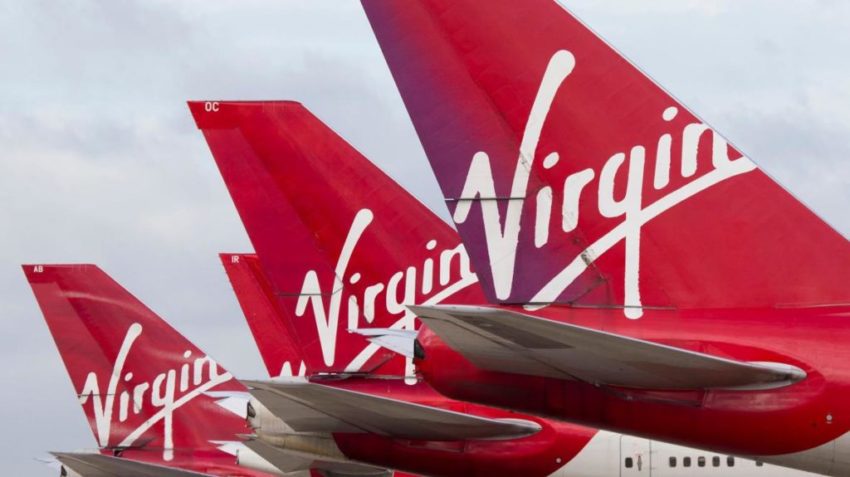
Virgin Planes

Airlines are facing a sharp rise in operating costs after jet fuel prices surged to their highest level in more than three years amid escalating conflict in the Middle East, raising fears of prolonged disruption to global energy supplies.

The price of aviation kerosene in European markets has climbed to levels not seen since the shortages triggered during the Covid-19 pandemic, placing immediate pressure on airline margins and sending aviation stocks lower.

The spike has been particularly severe because jet fuel prices have moved far beyond the rise in crude oil prices. Brent crude has climbed by more than 10 per cent this week to around $78.60 per barrel and is roughly 20 per cent higher than it was a fortnight ago. However, the cost of jet fuel delivered to airlines has risen significantly faster, creating an unprecedented gap between aviation fuel and crude oil benchmarks.

According to commodity pricing specialists Argus Media, the cost of jet fuel physically supplied to airlines has increased by about 23 per cent over the past week alone. The price is now 48 per cent higher than last Friday and has surged by 68 per cent over the past month.

Market participants have described trading conditions as highly unstable. Analysts said the jet fuel market had entered a period of extreme volatility as traders struggled to price in the risks created by military tensions in the Gulf.

Advertisement

Amaar Khan, an analyst at Argus Media, said the current market dynamics were extraordinary. Even though supply risks linked to the conflict are real, he said traders believed the current price spike had become detached from normal supply-and-demand fundamentals. One trader described the situation as “absolute chaos”, noting that “no fundamentals can explain these prices”.

The aviation sector’s exposure to the Middle East has amplified the shock. European airlines depend heavily on jet fuel imports from the Gulf region, with a significant share of those shipments passing through the Strait of Hormuz, one of the world’s most critical maritime energy corridors.

Industry data suggests that at least 40 per cent of Europe’s jet fuel imports last year originated from the Middle East Gulf region and travelled through the strait. Kuwait alone accounted for a substantial portion of these supplies and remains Europe’s largest single supplier of aviation fuel.

The Strait of Hormuz has effectively become a flashpoint for global energy markets after Iran imposed a blockade in response to military attacks carried out by the United States and Israel. The narrow waterway, which sits between Iran and the United Arab Emirates, serves as the primary export route for oil and gas shipments from the Persian Gulf.

Advertisement

Any sustained disruption to traffic through the strait could severely restrict global fuel supplies, particularly for jet fuel, which is already in tight supply across Europe.

Analysts warned that while European refineries could increase their production of jet fuel to offset some of the disruption, they would struggle to replace Gulf imports entirely if the conflict continued.

Argus noted that Europe’s aviation fuel market had already become structurally tighter in recent years due to rising travel demand following the pandemic recovery. With refiners operating near capacity, there is limited scope to increase output quickly enough to compensate for any prolonged interruption to Gulf shipments.

At the same time, the cost of transporting fuel from alternative regions has also risen sharply. Freight rates for tanker shipments have surged as insurers raise premiums on vessels travelling through conflict-affected waters, making imports from other regions significantly more expensive.

Advertisement

The result has been a dramatic increase in jet fuel prices relative to crude oil. Aviation fuel is now trading at almost double the price of Brent crude, a differential that analysts say has never previously been recorded.

For airlines, the timing of the price spike is particularly challenging because fuel typically represents between 25 and 35 per cent of operating costs. Even short-term volatility can therefore have a significant impact on profitability.

Shares of European airline groups have already reacted to the rising costs and growing uncertainty surrounding Middle Eastern airspace.

International Airlines Group has seen its share price fall about 16 per cent from the record high it reached last week when it reported strong annual results. The airline group, which owns carriers including British Airways, Iberia and Aer Lingus, faces both higher fuel costs and operational disruptions on long-haul routes through the region.

Advertisement

Budget airline easyJet has also seen its shares fall around 6 per cent this week. The carrier does not operate routes directly in the Middle East but remains vulnerable to rising fuel costs across the industry. Its stock had already been under pressure, declining roughly 15 per cent since the start of the year.

Meanwhile Wizz Air warned that the conflict could cut €50 million from its annual profits due to cancelled regional flights and adverse movements in fuel and currency costs. The airline has said the combined impact could push it into a full-year loss, with its shares dropping about 20 per cent over the past week.

Airlines have sought to protect themselves from fuel volatility through hedging strategies that lock in fuel purchases months or even years in advance. These hedges can soften the immediate impact of price spikes but cannot fully shield carriers if elevated costs persist for a prolonged period.

Europe’s largest airline by passenger numbers, Ryanair, recently confirmed that it has forward-purchased approximately 80 per cent of its jet fuel requirements at an average price of $67 per barrel through to March 2027.

Advertisement

International Airlines Group has also hedged a large portion of its future fuel consumption, locking in prices for around 62 per cent of its fuel needs for 2026.

Similarly, easyJet said it has hedged about 62 per cent of its fuel requirements for the upcoming summer season at an average price of $68.80 per barrel.

While these measures provide some protection against sudden spikes, analysts warn that sustained price increases would still filter through into airline costs over time as hedges expire and new contracts are negotiated.

Industry observers say the key factor determining how severe the crisis becomes will be the duration of the disruption to Gulf energy flows and whether shipping through the Strait of Hormuz can resume safely.

Advertisement

If the blockade persists or the conflict spreads further across the region, aviation fuel prices could remain elevated for months, forcing airlines to absorb higher costs or pass them on to passengers through higher ticket prices.

For now, airlines and investors alike are watching energy markets closely as geopolitical tensions continue to ripple through the global aviation industry.


Jamie Young

Jamie Young

Jamie is Senior Reporter at Business Matters, bringing over a decade of experience in UK SME business reporting.
Jamie holds a degree in Business Administration and regularly participates in industry conferences and workshops.

When not reporting on the latest business developments, Jamie is passionate about mentoring up-and-coming journalists and entrepreneurs to inspire the next generation of business leaders.

Advertisement

Continue Reading
Click to comment

Leave a Reply

Your email address will not be published. Required fields are marked *

Business

FDA official discusses UniQure gene therapy for Huntington’s disease

Published

on

FDA official discusses UniQure gene therapy for Huntington's disease

Thomas Fuller | SOPA Images | Lightrocket | Getty Images

UniQure needs to run another study to prove that its gene therapy “actually helps people with Huntington’s disease,” a senior U.S. Food and Drug Administration official said on a call with reporters Thursday.

The official, who requested anonymity before discussing sensitive information, confirmed the agency has asked the company to run a placebo controlled trial of its treatment, which is administered directly into the brain. UniQure has said that type of study isn’t ethical because it would require putting people under general anesthesia for hours, a characterization the official disputed.

Advertisement

“So what is really going on? UniQure is the latest company to make a failed therapy for Huntington’s patients,” the official said. “They likely acknowledge or understand at some deep level that their trial failed years ago, and instead of doing the right thing and running the correct clinical study, UniQure is performing a distorted or manipulated comparison in the mind of FDA.”

The comments mark the latest development in a messy public spat between UniQure and the FDA, and as the agency comes under fire for a number of recent drug approval application rejections, including some where companies have accused it of going back on previous guidance. FDA Commissioner Marty Makary in an interview with CNBC’s Becky Quick last week seemingly criticized UniQure’s gene therapy for Huntington’s disease. Makary didn’t name UniQure but described its treatment.

FDA Commissioner Dr. Makary on rare disease therapy approvals, internal politics at the agency

UniQure then accused the FDA of reversing its stance that the company’s clinical trial data would be sufficient to seek approval. UniQure’s study used an outside database to measure how patients with Huntington’s disease might decline without treatment, known as an external control. UniQure has said it wouldn’t be feasible to run a true randomized, double-blind placebo-controlled study, considered the gold standard, because it wouldn’t be ethical to make people undergo a sham hours-long brain surgery.

The FDA official said the agency “never agreed to accept this distorted comparison” and the FDA “never makes such assurances.” Instead, the “FDA will always say, ‘Well, we have to see the data when we get it.’”

UniQure didn’t immediately comment.

Advertisement

The company’s stock rose more than 10% on Thursday and has fallen 58% this year as of Thursday afternoon.

Continue Reading

Business

Broadcom: Like Buying Nvidia In May 2023

Published

on

Broadcom: Like Buying Nvidia In May 2023

Broadcom: Like Buying Nvidia In May 2023

Continue Reading

Business

Savaria Corporation (SIS:CA) Q4 2025 Earnings Call Transcript

Published

on

OneWater Marine Inc. (ONEW) Q1 2026 Earnings Call Transcript

Operator

Good morning. My name is Daniel, and I will be your conference operator today. At this time, I would like to welcome everyone to Savaria Corporation’s Q4 2025 Investor and Analyst Call. [Operator Instructions] Please be advised that today’s conference is being recorded.

This call may contain forward-looking statements, which are subject to the disclosure statement contained in Savaria’s most recent press release issued on March 4, 2026, with respect to its QX 2025 results. Thank you. Mr. Bourassa, you may begin your conference.

Advertisement

Sébastien Bourassa
President, CEO & Director

Thank you, Daniel, and good morning, everyone. Today, I will start with a small recap of our Q4 results. Then Steve will update us on financial, and JP will update us on Savaria One and Europe, followed by a Q&A session.

Once again, I’m very proud of our Q4 results. As for the first time ever, we reached $51.3 million of EBITDA at 21.2%, which is a very important milestone and our best quarter ever. We finished the year with sales of $913 million and an EBITDA of $186.2 million at 20.4%, which again is our best result ever. All KPIs are improving, and Steve will go more in detail later.

Today, there’s 3 things that I would like

Advertisement
Continue Reading

Business

Six Flags sells 7 parks to EPR Properties for $331M

Published

on

Six Flags sells 7 parks to EPR Properties for $331M

Six Flags Entertainment will sell off seven of its amusement parks in the United States and Canada to EPR Properties, the company announced Thursday.

On Thursday, the company said it would sell off Michigan’s Adventure in Muskegon, Michigan; Schlitterbahn Waterpark Galveston in Texas; Six Flags Great Escape in Queensbury, New York; Six Flags La Ronde in Montreal; Six Flags St. Louis in Missouri; Valleyfair in Minneapolis and Worlds of Fun in Kansas City for around $331 million. 

Advertisement

DISNEY CEO DEFENDS MASSIVE AI DEAL, SAYS CREATORS WON’T BE THREATENED

EPR Properties, a real estate investment trust, will acquire the seven parks. (Hans Gutknecht/MediaNews Group/Los Angeles Daily News via Getty Images)

“Consistent with our strategy, this divestiture enables us to concentrate our capital, leadership and operational focus on the properties that we believe generate the strongest returns and offer the greatest long-term upside,” Six Flags Entertainment Corporation chief executive John Reilly said in a news release.

EPR plans to partner with Enchanted Parks to run the six U.S. parks. La Ronde Operations will operate the Canadian park.

The parks will continue to operate on their regular schedule and all season passes sold will be recognized through the 2026 operating season. 

Advertisement

DISNEY ANNOUNCES MAJOR OPENAI DEAL, INCLUDES $1B EQUITY INVESTMENT, USE OF CHARACTERS ON SORA VIDEO PLATFORM

Roller coaster at Six Flags in California

Six Flags will be left with 34 parks across North America after the sale. (Hans Gutknecht/MediaNews Group/Los Angeles Daily News via Getty Images / Getty Images)

Six Flags will continue to operate 34 parks across 23 locations in North America for the 2026 season.

The deal is expected to close by the end of the first quarter or the beginning of the second quarter of 2026. 

Ticker Security Last Change Change %
FUN SIX FLAGS ENTERTAINMENT 16.73 +0.02 +0.12%

Collectively, the seven parks hosted about 4.5 million guests last year, generating about $260 million in net revenue, the company said. Cash proceeds, after taxes and transaction expenses, will be used to pay down debt, it said.

Advertisement
Riders on a Six Flags roller coaster in California.

Around 4.5 million guests visited the seven parks last year. (Mathew Imaging/WireImage)

CLICK HERE TO DOWNLOAD THE FOX NEWS APP

“This strategic acquisition represents a compelling opportunity to expand our attractions portfolio with high-quality experiential real estate assets in established regional markets,” EPR Properties CEO Gregory Silvers said.

Continue Reading

Business

Comfort Systems USA SVP Reed Terrence sells $2.5m in stock

Published

on


Comfort Systems USA SVP Reed Terrence sells $2.5m in stock

Continue Reading

Business

Bitcoin Dips Below $72,000 Amid Geopolitical Tensions and Macro Headwinds

Published

on

Australia's Top 10 Companies Holding Bitcoin: A Growing Corporate Treasury

Bitcoin (BTC) traded at approximately $71,600 USD on March 5, 2026, down roughly 2% over the past 24 hours, according to aggregated data from major tracking platforms like CoinMarketCap, CoinGecko and Binance. The flagship cryptocurrency opened the day near $73,000 but faced selling pressure, dipping to lows around $71,180 before stabilizing in the mid-$71,000 range.

Australia's Top 10 Companies Holding Bitcoin: A Growing Corporate Treasury
Bitcoin

The 24-hour trading volume exceeded $61 billion, underscoring sustained market participation despite the pullback. Bitcoin’s market capitalization stood at about $1.43 trillion, maintaining its position as the largest digital asset by a wide margin, with a circulating supply nearing 20 million coins out of a capped total of 21 million.

This latest movement comes after Bitcoin briefly topped $74,000 in recent sessions, fueled by optimism around institutional adoption and policy developments. However, renewed geopolitical risks, including escalating tensions in the Middle East involving Iran, contributed to a risk-off tone across assets. Oil prices surged on related news, pressuring riskier investments like cryptocurrencies, which have shown correlation with tech stocks in recent months.

“Bitcoin has not decoupled from broader risk sentiment,” noted BitMEX co-founder Arthur Hayes in recent commentary, highlighting that the asset remains tied to performance in U.S. software and tech sectors. Despite the dip, some analysts pointed to resilience, with Bitcoin’s ratio against gold improving slightly and exchange outflows indicating hodling behavior among long-term holders.

Institutional flows provided a counterbalance. U.S. spot Bitcoin ETFs recorded inflows of around $155 million to $462 million in recent days, extending a multi-week streak of positive accumulation. Major players like Wall Street firms continued to pour capital into these vehicles, even as underlying demand showed signs of fragility according to analytics firm Glassnode.

Advertisement

Traders are eyeing key technical levels closely. Bitcoin faces resistance in the $73,750–$74,400 zone — a “make-or-break” area that has acted as a turning point in prior cycles, including early 2024 highs. A sustained break above this could signal resumption of bullish momentum toward $80,000 or higher. Conversely, failure to hold $72,000 support might reinforce bearish patterns, with some forecasts warning of potential drops toward $65,000 or lower in consolidation phases.

The all-time high remains $126,198 from October 2025, meaning the current price reflects a significant correction of over 40% from peak levels. Year-to-date performance has been mixed, with Bitcoin down from late-2025 highs but up modestly in recent weeks on ETF momentum and infrastructure gains.

Recent developments bolster long-term optimism. Crypto exchange Kraken secured a Federal Reserve master account, marking a milestone for crypto-native firms accessing traditional payment rails. Morgan Stanley filed for a spot Bitcoin ETF, adding to growing mainstream integration. Community sentiment polls show about 80% bullish, driven by themes of institutional adoption and Bitcoin’s role as a potential inflation hedge — though that narrative faces tests amid rising energy costs and fiat currency volatility.

Regulatory and policy chatter persists. Speculation around U.S. crypto-friendly legislation, including the Clarity Act, has supported occasional rallies. However, no immediate plans for government Bitcoin accumulation (such as a national reserve stacking program) were confirmed in recent reports.

Advertisement

Market observers note Bitcoin’s price action remains sensitive to macro factors. With equities mixed and the dollar showing strength in some sessions, cryptocurrencies paused after a brief breakout. Ether and other altcoins mirrored Bitcoin’s moves, with the broader market cap showing similar modest declines.

As of early March 6, 2026 (KST), Bitcoin continues to trade in a range-bound pattern between $70,000 and $74,000 support/resistance. Analysts advise monitoring ETF flows, geopolitical headlines and derivatives positioning for the next directional cue.

Bitcoin’s journey in 2026 reflects its maturation: from speculative asset to increasingly institutionalized one, yet still vulnerable to global events. Whether it reclaims higher ground or consolidates further will depend on balancing these forces in the weeks ahead.

Advertisement
Continue Reading

Business

PepGen: Stock Slides On FDA Study Hold – I’m Firmly On The Sidelines (NASDAQ:PEPG)

Published

on

PepGen: Stock Slides On FDA Study Hold - I'm Firmly On The Sidelines (NASDAQ:PEPG)

This article was written by

Edmund Ingham is a biotech consultant. He has been covering biotech, healthcare, and pharma for over 5 years, and has put together detailed reports of over 1,000 companies. He leads the investing group Haggerston BioHealth.

The group is for both novice and experienced biotech investors. It provides catalysts to look out for and buy and sell ratings. It also provides product sales and forecasts for all the Big Pharmas, forecasting, integrated financial statements, discounted cash flow analysis and market by market analysis. Learn more.

Analyst’s Disclosure: I/we have no stock, option or similar derivative position in any of the companies mentioned, and no plans to initiate any such positions within the next 72 hours. I wrote this article myself, and it expresses my own opinions. I am not receiving compensation for it (other than from Seeking Alpha). I have no business relationship with any company whose stock is mentioned in this article.

Seeking Alpha’s Disclosure: Past performance is no guarantee of future results. No recommendation or advice is being given as to whether any investment is suitable for a particular investor. Any views or opinions expressed above may not reflect those of Seeking Alpha as a whole. Seeking Alpha is not a licensed securities dealer, broker or US investment adviser or investment bank. Our analysts are third party authors that include both professional investors and individual investors who may not be licensed or certified by any institute or regulatory body.

Advertisement
Continue Reading

Business

CrowdStrike Earnings Beat Estimates. The Stock Is Up.

Published

on

CrowdStrike Earnings Beat Estimates. The Stock Is Up.

CrowdStrike Earnings Beat Estimates. The Stock Is Up.

Continue Reading

Business

GM Marketing acquires Pitman Berryhill in deal which expands footprint across Ireland

Published

on

Business Live

“We’re proud to build on the strong foundation Philip Pitman has created and remain fully committed to ongoing investment to support future growth.”

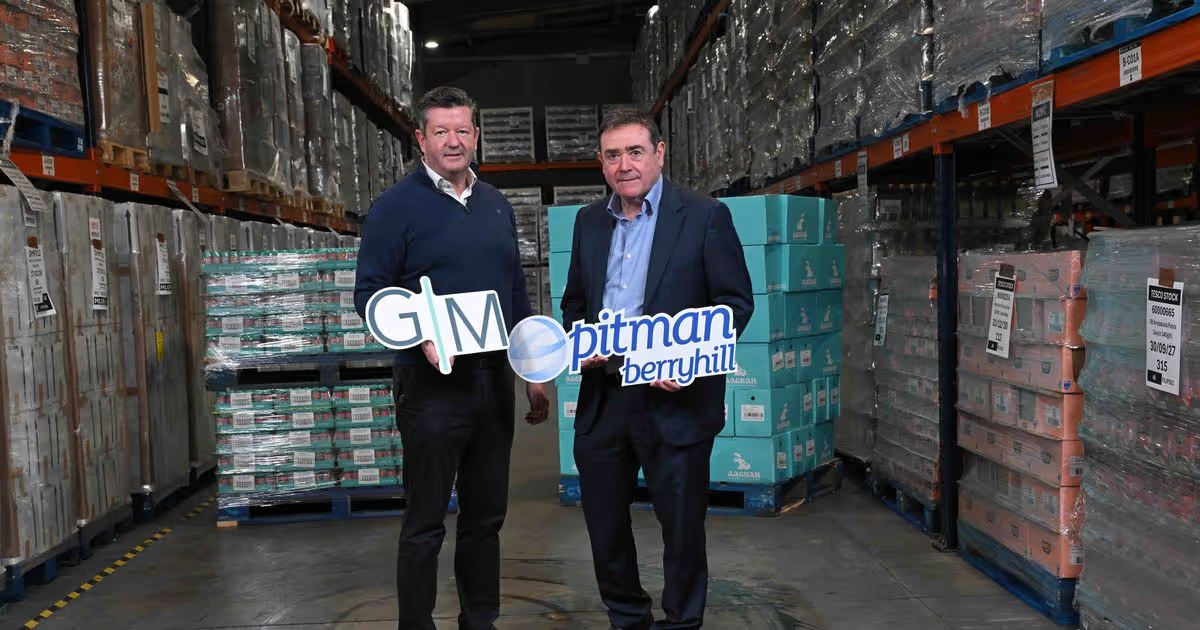
Gerard McAdorey, Managing Director, GM Marketing and Philip Pitman, Managing Director, Pitman Berryhill.

GM Marketing Limited, the Belfast-headquartered sales, marketing and distribution business, has acquired Pitman Berryhill in Lisburn. The move strengthens GM’s capability in the specialist food channel whilst creating new opportunities to build, develop and scale brands across the island of Ireland.

Advertisement

The acquisition gives GM Marketing a dedicated presence in specialist food – a key route to market for brand discovery – while enabling two-way growth: bringing Pitman Berryhill brands into GM Marketing’s established channels and introducing GM partner brands to Pitman Berryhill’s specialist network.

Gerard McAdorey, Founder and Managing Director of GM Marketing, said: “This is an exciting step that aligns strongly with our long-term vision. Our ambition is to expand our footprint in the specialist channel and, in doing so, create greater value and expertise for our existing brands while also attracting new partnerships. It works both ways – bringing Pitman brands into GM channels, and GM brands into the Pitman specialist network.”

Pictured (l to r) is Jonny Burnett, Sales Director, GM Marketing, Hazel Crozier, Marketing Manager, Pitman Berryhill, Gerard McAdorey, Managing Director, GM Marketing, Philip Pitman, Managing Director, Pitman Berryhill and Andrew Cambridge, Sales Manager, Pitman Berryhill.

Pitman Berryhill operates throughout Northern Ireland and the Republic of Ireland, supplying customers across mainstream grocery and specialist food – from major multiples to independent retailers and delis – with a long-standing focus on introducing, supporting and growing international specialist food brands in the Irish market.

Gerard McAdorey added: “We’re proud to build on the strong foundation Philip Pitman has created and remain fully committed to ongoing investment to support future growth. The specialist channel plays a critical role in brand discovery, with many brands gaining early traction here before moving into mainstream grocery and convenience.”

Advertisement

Philip Pitman, founder of Pitman Berryhill, who plans to retire at the end of 2026 and will support the transition over the next 12 months, said: “All current roles at Pitman Berryhill will be retained, with a clear intention to invest in the future growth of the business. The existing team will continue to lead day-to-day operations, with Andrew Cambridge continuing as Head of Sales and Hazel Crozier as Head of Operations.

“GM Marketing is a business I believe will bring further growth for the brands we work with. I’m confident this next chapter will strengthen what we’ve built, and I’m excited for the future.”

Continue Reading

Business

Layoff announcements decline in February despite tech sector cuts

Published

on

Layoff announcements decline in February despite tech sector cuts

Layoffs eased in February as new data showed that U.S. employers announced fewer job cuts last month after they were elevated to start the year, new data shows.

U.S. employers announced 48,307 job cuts in February, according to a report by global outplacement and executive coaching firm Challenger, Gray & Christmas. That figure is down 55% from the 108,435 job cuts announced in January, while it’s also down 72% from the 172,017 cuts announced in the same month last year.

Advertisement

Layoff announcements combined to total 156,742 in January and February, the lowest total for the first two months of the year since 34,309 were announced in 2022. The figure is also the fifth-highest January-February total recorded since 2009.

“February’s dip is a nice reprieve from the elevated job cut plans to start the year. With U.S. involvement in a growing war in Iran, the end of Q1 may bring more layoff plans as companies tighten belts amid uncertainty and higher costs,” said Andy Challenger, workplace expert and chief revenue officer for Challenger, Gray & Christmas.

PRIVATE SECTOR ADDED 63,000 JOBS IN FEBRUARY, ABOVE EXPECTATIONS, ADP SAYS

Job fair

Layoff announcements slowed in February after starting higher to start the year. (Allison Joyce/Bloomberg via Getty Images)

The tech industry announced the most layoffs in February, as firms announced 11,039 cuts for the month, bringing the total for the year to 33,330 – up 51% from the 22,042 cuts announced in the sector during the first two months of last year.

Advertisement

“Tech is responding to a number of pressures right now. AI is the big story, but there are also global regulatory concerns, a slowdown in digital advertising driven by tariffs and economic uncertainty, and higher costs to both employ workers and access funding, forcing companies to make difficult decisions,” Challenger said.

The transportation sector has announced 31,702 job cuts in 2026, the second-most among any sector and an increase of 872% from the 3,261 announced in the same period last year. The report noted that the war in Iran is likely to impact transportation companies due to oil costs and supply chain disruptions.

STANLEY BLACK & DECKER TO CUT HUNDREDS OF JOBS, SHUT CONNECTICUT PLANT

Indian oil tanker near Iraq

The war in Iran could cause further disruptions in the transportation sector due to the impact on oil prices and supply chains, the report noted. (Hussein Faleh/AFP via Getty Images)

Healthcare companies and health product manufacturers, a category which includes hospitals, have announced 19,228 job cuts so far this year for the highest January-February total since 2021, when 20,245 cuts were recorded in the sector over that period.

Advertisement

Education had the second-most layoff announcements in February with 5,417. That brings the running total for 2026 to 6,209 – up 96% from the 3,160 cuts that were announced through February 2025.

Challenger noted that school districts “tend to approve budgets and headcount in February,” adding that with “declining enrollment, particularly in major cities, federal funding cuts and rising costs, schools are cutting more workers than last year.”

People line up for job fair

Job cuts in January and February were the lowest to start the year since 2022. (Joe Raedle/Getty Images)

Industrial manufacturing firms cut 4,109 jobs in February, bringing the 2026 total to 5,685, which is up 143% from the 2,341 cuts announced in the sector in the first two months of last year.

MORGAN STANLEY CUTS 2,500 JOBS DESPITE POSTING RECORD REVENUE YEAR ACROSS ALL DIVISIONS

Advertisement

The leading reasons cited by companies announcing job cuts in February were store or department closings with 10,736, market and economic conditions with 10,114, restructuring with 9,146 and cost-cutting a further 5,636.

In the first two months of the year, market and economic conditions have been cited as causing 38,506 cuts, followed by contract loss with 31,416, restructuring with 29,190, and closings with 23,474.

Artificial intelligence (AI) was cited for 4,680 job cuts in February, representing about 10% of total cuts for the month. In the first two months of 2026, AI was cited in 12,304 layoff announcements, or 8% of total job cut plans.

GET FOX BUSINESS ON THE GO BY CLICKING HERE

Advertisement

Hiring plans rose 140% in February to 12,755 after 5,306 were reported in January. That figure is down 63% from the 34,580 hiring plans in February 2025.

Employers have announced plans to hire 18,061 workers in 2026 so far, down 56% from 40,669 new hires announced in the first two months of 2025.

Continue Reading

Trending

Copyright © 2025