Connect with us
DAPA Banner

Business

Alignment Healthcare Stock Rockets 18% as Medicare Advantage Growth Momentum Ignites Investor Rally

Published

on

Top 50 Best MBA Programs in the World 2026: Wharton

Shares of Alignment Healthcare Inc. surged more than 18% in morning trading Tuesday, climbing to $22.13, up $3.46 or 18.53%, on heavy volume as investors piled into the Medicare Advantage specialist amid renewed optimism about its differentiated care model, strong membership expansion and improving profitability in a sector facing reimbursement pressures.

Alignment Healthcare

The Nasdaq-listed stock (ALHC) broke out sharply by late morning on April 7, marking one of the strongest single-day gains in recent months and pushing the year-to-date performance solidly positive. The rally lifted the company’s market capitalization above $4 billion, reflecting renewed confidence in its ability to deliver robust growth while navigating the complex Medicare Advantage landscape.

Alignment Healthcare operates a tech-enabled Medicare Advantage platform that emphasizes personalized care, lower medical loss ratios and integrated services designed to improve outcomes for seniors. The company has consistently posted impressive membership gains, reporting 31% year-over-year growth to approximately 275,300 members as of Jan. 1, 2026, following a strong annual enrollment period. It has guided for year-end 2026 membership between 290,000 and 296,000, representing 24% to 27% growth.

Analysts and investors appear to be rewarding the company’s execution after a period of caution following the Centers for Medicare & Medicaid Services’ preliminary 2027 rate proposals, which came in lower than many expected. Despite broader sector headwinds, Alignment has highlighted its ability to maintain high Star ratings — with 100% of members in plans rated 4 stars or higher for the second consecutive year — and its reputation as one of the 2026 Fortune World’s Most Admired Companies in its first year of eligibility.

In its fourth-quarter and full-year 2025 results released Feb. 26, Alignment beat the high end of guidance across key metrics. Revenue reached $3.95 billion for the year, up 46.1% from the prior year, while the company produced positive free cash flow on a full-year basis for the first time. The fourth-quarter loss narrowed to $11 million, with adjusted EBITDA showing clear progress toward profitability.

Advertisement

“Alignment Healthcare is taking a positive step forward in profitability,” CEO John Kao said at the time, emphasizing the strength of its integrated care model even as larger rivals pulled back from certain markets. The company has expanded its footprint while many competitors retreated, capitalizing on demand for high-quality Medicare Advantage options.

Wall Street has taken notice. The consensus rating remains a solid Buy, with an average price target near $23 to $25, suggesting further upside from current levels. Firms such as Piper Sandler, JPMorgan and KeyBanc have highlighted the company’s membership momentum and operational efficiency. Some forecasts point to adjusted EBITDA of approximately $145 million for 2026, within the company’s guided range of $133 million to $163 million.

The Tuesday surge lacked an obvious single catalyst in real time, but traders pointed to a combination of factors: the expiration of certain lock-up agreements around April 1 that had previously restricted insider and affiliate sales, continued positive sentiment around Medicare Advantage normalization, and anticipation ahead of the company’s upcoming presentation at the BofA Securities Health Care Conference on May 13.

A secondary offering announced in early March by an affiliate of General Atlantic — involving roughly 13.2 million shares — created temporary overhang, but the lock-up expiration appears to have cleared the way for fresher buying interest without immediate selling pressure.

Advertisement

Alignment’s business model sets it apart in the crowded Medicare Advantage space. The company uses proprietary technology, data analytics and a physician-led approach to manage care more effectively, aiming for better member satisfaction and lower costs. Its plans emphasize whole-person care, including benefits that address social determinants of health, chronic condition management and preventive services.

High Star ratings translate directly into quality bonus payments from CMS, providing a meaningful revenue tailwind. Alignment has maintained strong ratings across its markets, helping it attract and retain members even in a competitive environment.

Q1 2026 results are expected around late April or early May, with guidance calling for membership between 281,000 and 285,000, revenue of $1.21 billion to $1.23 billion, and adjusted EBITDA of $26 million to $36 million. Investors will watch closely for any updates on medical benefits ratios, which the company expects to trend modestly lower in the first half of the year.

Broader industry dynamics have been mixed. Medicare Advantage enrollment continues to grow nationally as baby boomers age into the program, but plans face ongoing scrutiny over utilization trends, prior authorization practices and reimbursement adequacy. Alignment has positioned itself as a nimbler player capable of delivering value where larger insurers sometimes struggle with scale-related inefficiencies.

Advertisement

The stock has shown significant volatility since going public in 2021 but has delivered substantial returns for long-term holders, with some reports noting gains exceeding 400% from 2024 lows into early 2026 before periodic pullbacks. Tuesday’s move recaptured some of that momentum.

Options activity and trading volume spiked during the session, indicating heightened interest from both retail and institutional investors. The breakout above recent resistance levels near $20 could signal technical strength if buying sustains.

Risks and Outlook

Challenges remain. Alignment is still not consistently profitable on a GAAP basis, and heavy investment in growth and technology continues to pressure near-term margins. Regulatory changes, shifts in CMS policy or unexpected spikes in medical costs could impact results. Competition from giants like UnitedHealth, Humana and CVS Health’s Aetna remains intense.

Yet bulls argue that Alignment’s focused model — centered exclusively on Medicare Advantage rather than diversified insurance lines — gives it an edge in execution and innovation. The company’s emphasis on technology-driven care coordination has helped keep its medical loss ratio competitive while delivering high member satisfaction.

Advertisement

Alignment Healthcare, founded with a mission to transform senior care, operates primarily in select markets across California, North Carolina, Nevada, Arizona and other states, with plans to expand thoughtfully. It employs a team dedicated to value-based care principles.

As trading continued Tuesday, the stock tested levels not seen since earlier in the year, with some analysts suggesting the move could mark the start of a fresh leg higher if upcoming earnings reinforce the growth narrative.

For investors, the rally underscores the appeal of high-growth names in health care that demonstrate operational momentum amid an aging U.S. population. With millions more seniors expected to join Medicare Advantage plans in coming years, companies like Alignment that combine technology, quality and scale are well-positioned.

The company will present at the BofA conference in mid-May, offering management an opportunity to update investors on progress toward 2026 targets and longer-term ambitions.

Advertisement

Whether Tuesday’s surge proves sustainable will depend on execution in the coming quarters, but for now, Alignment Healthcare has captured Wall Street’s attention with a breakout performance that highlights its potential as a standout player in one of health care’s fastest-growing segments.

Continue Reading
Click to comment

You must be logged in to post a comment Login

Leave a Reply

Business

OmniAb director Foehr sells $29k in shares

Published

on


OmniAb director Foehr sells $29k in shares

Continue Reading

Business

The US refinery now processing Venezuelan oil

Published

on

The US refinery now processing Venezuelan oil

Chevron is now importing 250,000 barrels of crude per day from Venezuela.

Continue Reading

Business

Goldman, BoA, Citadel clash with brokers over options clearing

Published

on

Goldman, BoA, Citadel clash with brokers over options clearing
Bank of America, Citadel Securities and Goldman Sachs Group have rallied in support of a controversial plan from the world’s largest options clearing house. Retail brokers warn the changes would add hundreds of millions of dollars in extra costs. Executives from the three firms backed a proposal from the Options Clearing, which would change how contributions to a pot of money that pays out in the event a clearing member goes bust are tallied up. They said the plan “reduces the likelihood of abrupt and destabilizing clearing fund reallocations during periods of market stress.”

“Clearing members whose activities drive growth in the size of the overall clearing fund today are not responsible for funding that increase,” wrote Stuart Bourne, co-head of global equities and global head of prime financing at BofA Securities; Stephen Berger, global head of government and regulatory policy at Citadel Securities; and Alicia Crighton, global co-head of futures and global head of clearing at Goldman Sachs.

The row is a sign of growing tensions between Wall Street and retail brokers over risk management amid the explosion in retail derivatives trading since the Covid pandemic, with the Options Clearing now handling trades worth about $4 trillion in notional value a day. The clearinghouse wants risk charges “more fairly” allocated among large banks and retail brokers such as Robinhood Markets and Charles Schwab, which have helped fuel a 130% increase in average daily volume to 69 million trades a day, according to the clearinghouse.

Continue Reading

Business

Phoenix Education Partners, Inc. (PXED) Q2 2026 Earnings Call Transcript

Published

on

OneWater Marine Inc. (ONEW) Q1 2026 Earnings Call Transcript

Phoenix Education Partners, Inc. (PXED) Q2 2026 Earnings Call April 7, 2026 5:00 PM EDT

Company Participants

Elizabeth Coronelli – Vice President of Investor Relations
Christopher Lynne – President, CEO & Director
Blair Westblom – CFO & Treasurer

Conference Call Participants

Advertisement

Jasper Bibb – Truist Securities, Inc., Research Division
Alexander Paris – Barrington Research Associates, Inc., Research Division
Keen Fai Tong – Goldman Sachs Group, Inc., Research Division
Griffin Boss – B. Riley Securities, Inc., Research Division
Ryan Griffin – BMO Capital Markets Equity Research
Stephanie Benjamin Moore – Jefferies LLC, Research Division

Presentation

Operator

Advertisement

Good afternoon, and welcome to Phoenix Education Partners Second Quarter Fiscal 2026 Earnings Conference Call. [Operator Instructions]

I would now like to turn the call over to Beth Coronelli, Vice President of Investor Relations. Please go ahead.

Elizabeth Coronelli
Vice President of Investor Relations

Advertisement

Thank you. Welcome to the Phoenix Education Partners’ Second Quarter Fiscal 2026 Earnings Conference Call. Speaking on today’s call are Chris Lynne, our Chief Executive Officer; and Blair Westblom, our Chief Financial Officer. Before we begin, I would like to remind everyone that certain statements and projections of future results made in this presentation constitute forward-looking statements that are based on current market, competitive and regulatory expectations and are subject to risks and uncertainties that could cause actual results to vary materially.

Listeners should not place undue reliance on such statements. We undertake no obligation to update publicly any forward-looking statements after this presentation. The risks related to these forward-looking statements are described in our filings with the SEC, including our most recent Form 10-K, Form 10-Q and other public filings.

We will also discuss certain non-GAAP financial measures. You should consider our non-GAAP results as supplements to and not in lieu of our GAAP results. Reconciliations to the most directly comparable GAAP measures can be found in

Advertisement
Continue Reading

Business

Sebi grants one-time relaxation to companies planning public issues

Published

on

Sebi grants one-time relaxation to companies planning public issues
Mumbai: The Securities and Exchange Board of India (Sebi) on Tuesday provided a one-time relaxation to companies planning public issues, extending the validity of its observation letters in a bid to ease fundraising pressures in a volatile market.

“Sebi has received representation from the industry body on difficulties faced by the issuers in mobilising resources and accessing the capital market in the backdrop of ongoing geopolitical tensions in West Asia. This has led to several issuers to defer, recalibrate or withdraw issuance plans leading to potential lapses in observation letter validity and duplication of regulatory processes,” Sebi said in a circular.

The regulator said observation letters expiring between April 1, 2026, and September 30, 2026, will now remain valid until September 30, 2026. The relief is conditional upon the lead manager submitting an undertaking confirming compliance with updated disclosure requirements when filing revised offer documents.

“This is a pragmatic move by Sebi acknowledging the impact of global macroeconomic conditions on IPO market activity,” said Dharmesh Mehta, MD & CEO, DAM Capital Advisors.

Advertisement

Out of 141 valid approvals that were to collectively raise about ₹1.73 lakh crore through IPOs, regulatory nods for 15 mainboard companies were about to expire in 1-3 months with issuance worth ₹26,000 crore, according to data from Prime Database.


Under existing norms, Sebi’s observation letters – a key clearance for launching public issues – are valid for 12 months, or up to 18 months in certain cases. The regulator said the new rule takes immediate effect.

Continue Reading

Business

Port investment enables economic growth

Published

on

Port investment enables economic growth

Transport infrastructure spending continues to provide for more volume and diversity.

Continue Reading

Business

Levi Strauss (LEVI) earnings Q1 2026

Published

on

Levi Strauss (LEVI) earnings Q1 2026
Levi Strauss shares pop on strong Q1 earnings beat

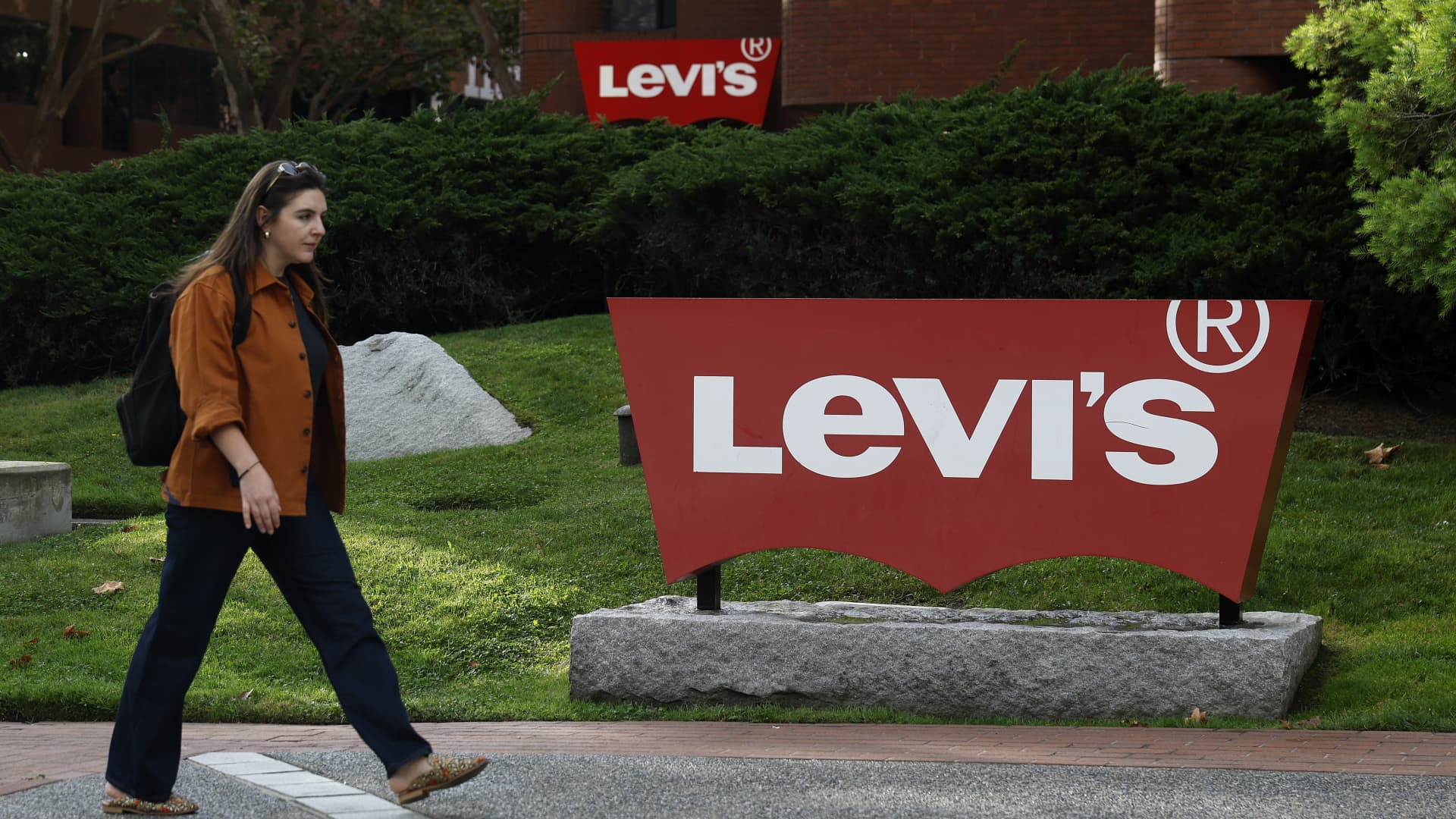
Levi Strauss saw another quarter of strong sales, helped in part by higher prices, and direct-to-consumer sales made up more than half of its overall revenue — a milestone for a company that has long relied on wholesalers.

The denim maker’s revenue grew by 14% while DTC sales through Levi’s own stores and website jumped 16%, bringing total DTC sales to 52% of overall revenue.

In an interview with CNBC, CEO Michelle Gass said she expects DTC revenue to make up more than half of overall sales for the duration of the year, even as its more traditional wholesale channel continues to grow.

The growth is not from increased sales volume alone: Levi is benefiting from higher prices and positive foreign exchange headwinds. Finance chief Harmit Singh, who announced plans to retire on Tuesday, said about half of Levi’s growth is related to recent price increases and half is tied to actual units sold.

Advertisement

Given its first-quarter beat, Levi raised its guidance. It’s now expecting full-year adjusted earnings per share to be between $1.42 and $1.48, shy of expectations of $1.47 per share on the low end, according to LSEG.

It’s expecting sales to rise between 5.5% and 6.5%, largely ahead of estimates of 5.6%, according to LSEG. 

Here’s how the apparel maker did in its first fiscal quarter compared with what Wall Street was anticipating, based on a survey of analysts by LSEG:

  • Earnings per share: 42 cents adjusted vs. 37 cents expected 
  • Revenue: $1.74 billion vs. $1.65 billion expected 

The company’s reported net income for the three-month period that ended March 1 was $175.8 million, or 45 cents per share, compared with $135 million, or 34 cents per share, a year earlier. 

Sales rose to $1.74 billion, up about 14% from $1.53 billion a year earlier. 

Advertisement

Levi’s DTC-first strategy comes with bigger margins but also higher costs in the short term as it changes its distribution system, which has weighed on earnings. However, Singh said its sales are becoming more profitable as DTC scales.

He also noted that Levi’s guidance could rise later in the year. Currently, it’s assuming a 20% global tariff, though President Donald Trump has for now set a 10% duty on U.S. imports after the Supreme Court rolled back so-called reciprocal tariffs earlier this year. If that 10% tariff remains in effect, it could boost full-year earnings by $35 million, or 7 cents per share. The company could also be refunded as much as $80 million after the Supreme Court struck down Trump’s previous global tariff policy, Singh said.

While that could boost earnings, Levi could face weaker sales in the coming months as consumers digest higher gas prices and consider pulling back on nice-to-haves like new clothes. Gass told CNBC she has not seen a pullback in spending so far, and the business is segmented in a way that it’s reaching a wide array of consumer demographics.

For example, Levi’s value brand Signature saw sales rise 16% during the quarter and its middle market Red Cap was up 9%, while its premium line Blue Tab is also growing, said Gass.

Advertisement

“We talked about over the last couple years, we made big, bold moves like selling Dockers and other brands and businesses. Now we’re really focused on segmentation around the Levi’s umbrella,” said Gass. “We feel like we’re really covered to serve the consumer across really every demographic and psychographic cohort and I think the other piece is, when we think about our business globally, 60% of our business is outside the U.S., which also gives us some really nice diversification. So we’re watching it closely, but overall, we’re feeling good about the consumer.”

Choose CNBC as your preferred source on Google and never miss a moment from the most trusted name in business news.
Continue Reading

Business

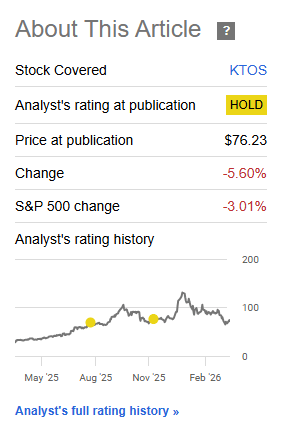
Kratos Defense: The Upside Is Real, The Risk Is Too

Published

on

Kratos Defense: The Upside Is Real, The Risk Is Too

Kratos Defense: The Upside Is Real, The Risk Is Too

Continue Reading

Business

Oil prices slide after Trump agrees to conditional two-week Iran ceasefire

Published

on

Oil prices slide after Trump agrees to conditional two-week Iran ceasefire

In a social media post on Tuesday evening, Trump said: “I agree to suspend the bombing and attack of Iran for a period of two weeks… subject to the Islamic Republic of Iran agreeing to the COMPLETE, IMMEDIATE, and SAFE OPENING of the Strait of Hormuz”.

Continue Reading

Business

Roku Channel Explodes With New Channels and AI Features as Free Streaming Surges in 2026

Published

on

iPhone 18 Pro Leaks: 2nm A20 Pro Chip, 35% Smaller

The Roku Channel is quietly becoming one of the biggest winners in the streaming wars, adding more than a dozen new free channels in March 2026 alone while rolling out user-requested features and leaning into AI personalization to keep viewers glued to ad-supported content without subscriptions.

Roku
Roku

The free, ad-supported streaming television service — available on Roku devices, Roku TVs and increasingly across other platforms — continues its rapid expansion, strengthening Roku Inc.’s position as the dominant player in connected TV with nearly half of all U.S. streaming hours flowing through its ecosystem. As of early April 2026, The Roku Channel boasts hundreds of live linear channels and tens of thousands of on-demand titles, all accessible at no cost beyond watching occasional commercials.

In late March, Roku quietly added 15 to 16 new channels spanning news, sports, classic cartoons, reality TV and nature documentaries. Highlights include Salem News Channel, Scripps Sports, Inspector Gadget, Grizzly and the Lemmings, Nat Geo Animals, Nat Geo History, Flo Racing 24/7 and Life with Derek. The additions cater to families, sports fans, nostalgia seekers and international viewers, further diversifying the platform’s already robust lineup of more than 500 live FAST channels.

“Roku continues to strengthen its position in the competitive streaming market by emphasizing free ad-supported streaming television, or FAST, services,” noted industry observers. The strategy allows users to enjoy live and on-demand content across genres with nothing more than an internet connection and a Roku device or app.

The channel expansion comes alongside welcome usability upgrades. Roku TV owners recently gained a long-requested “last channel” button in the Live TV Guide, making channel flipping faster and smoother than ever. Previously, switching between FAST channels like those on The Roku Channel or Pluto TV could involve noticeable delays as streams reloaded. The 2026 software update has reduced lag, improved the guide’s interface and made navigation more responsive, addressing one of the most common complaints from cord-cutters.

Advertisement

Roku is also betting heavily on artificial intelligence to transform how viewers discover content. In its 2026 predictions for the streaming industry, the company forecast a new wave of AI-driven personalization that will dramatically shrink the time it takes users to find their next show or live channel. By combining first-party viewing data with generative AI tools, The Roku Channel aims to deliver hyper-relevant recommendations, boosting retention and ad engagement in the process.

These moves appear to be paying dividends. In December 2025, The Roku Channel captured a record 3% share of total U.S. television viewership according to Nielsen’s The Gauge — higher than Paramount+ and approaching levels of larger subscription services. Creator-led content on the platform saw nearly 80% year-over-year growth in streaming hours per household in some periods, while the service has consistently ranked among the top apps on Roku devices.

Roku’s broader platform, which powers streaming on millions of devices, reported strong momentum heading into 2026. The company expects to surpass 100 million streaming households this year and is on track for double-digit platform revenue growth. Analysts have grown bullish, with Baird raising its price target on Roku stock to $120 in early April, citing improving fundamentals and the rising value of The Roku Channel’s ad inventory.

Advertising remains the lifeblood of the free service. Roku has expanded its self-service Ads Manager, introduced innovative formats like Pause Ads and partnered with major players including Amazon Ads to reach a massive authenticated connected TV audience. Video advertising on the platform is growing faster than the overall OTT market, executives have said, as brands seek measurable performance in a fragmented media landscape.

Advertisement

Small and mid-sized businesses are increasingly turning to Roku for their first TV campaigns, with some reporting significant sales lifts. The company’s emphasis on outcome-based optimization through partnerships like iSpot further enhances its appeal to performance-focused advertisers.

Beyond free content, Roku is layering in premium options. The platform now offers seamless access to dozens of subscription services directly within The Roku Channel, including recent additions like Apple TV. It also continues to grow its low-cost Howdy service — a $2.99 monthly ad-free streaming option — which recently launched a companion mobile app and expanded availability on Prime Video.

A redesigned home screen planned for later in 2026 will place even greater emphasis on The Roku Channel and the Live TV Guide, aiming to drive higher engagement and monetization while keeping the interface intuitive.

The aggressive push into FAST comes as consumers grow weary of rising subscription costs. With multiple streaming services now charging $15 or more monthly, free tiers like The Roku Channel, Tubi and Pluto TV have captured a growing slice of viewing time — together accounting for about 5% of total TV consumption in recent measurements, outpacing some paid services.

Advertisement

Roku’s scale gives it a distinct advantage. Its devices and platform reach tens of millions of households daily, providing unparalleled first-party data for targeting and personalization. The company has invested in original programming and licensed libraries, offering everything from classic movies and TV reruns to live news, sports and niche entertainment.

Industry analysts say the combination of free access, improving user experience and AI enhancements positions The Roku Channel for continued gains. Digital news brands and independent creators are also taking notice, viewing the platform as a valuable distribution channel with massive potential reach and no upfront cost to viewers.

Yet challenges remain. Competition in the FAST space is intensifying, with rivals adding their own live channels and improving interfaces. Roku must continue innovating to maintain its edge while balancing ad load to avoid alienating users. Regulatory scrutiny of connected TV advertising and data practices could also shape future growth.

For consumers, the latest updates mean more choice without additional bills. Whether binge-watching classic cartoons, catching up on sports highlights or exploring international news, the expanding Roku Channel library offers something for nearly every interest.

Advertisement

Roku, headquartered in San Jose, California, has transformed from a simple streaming device maker into a full-fledged media and advertising platform. Its stock has shown volatility in 2026 amid broader market swings, but many Wall Street voices see long-term upside tied to platform revenue and The Roku Channel’s rising influence.

As April 2026 unfolds, the service shows no signs of slowing its content rollout or feature improvements. With Q1 earnings expected later in the month, investors and viewers alike will watch closely for updates on viewership metrics, ad growth and plans for the rest of the year.

In an era of streaming fatigue, Roku’s bet on free, easy-to-use television backed by smart technology appears to be resonating. The Roku Channel isn’t just surviving the cord-cutting revolution — it’s helping lead it, one new channel and smoother swipe at a time.

For millions of households, that means more entertainment options at zero extra cost, proving that in streaming, free can still feel premium when executed well.

Advertisement
Continue Reading

Trending

Copyright © 2025