

Business
American Airlines CEO lays out vision to close $3 billion profit gap

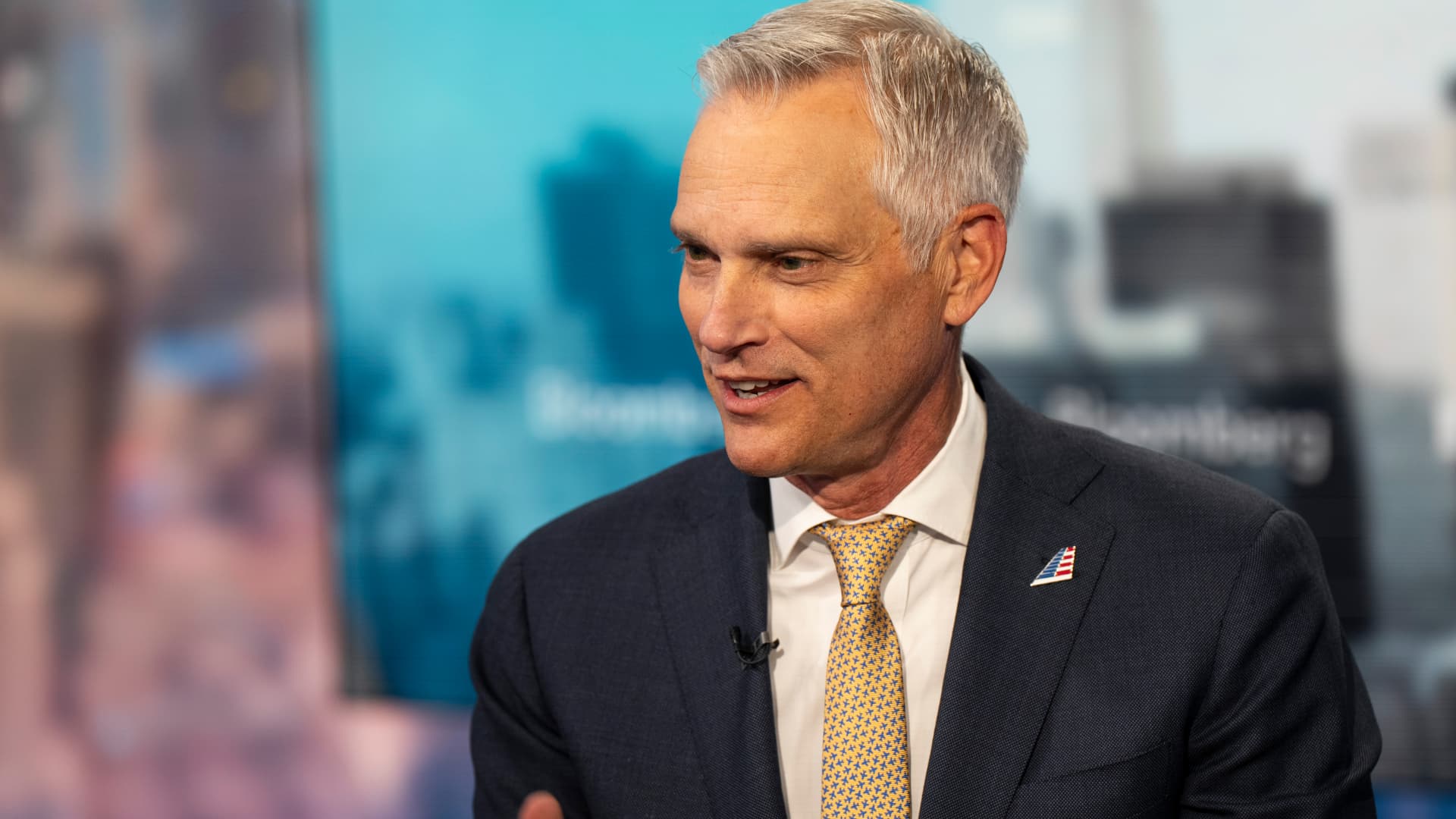
Robert Isom, chief executive officer of American Airlines Group Inc., speaks during a Bloomberg Television interview in New York, US, on Wednesday, Dec. 10, 2025.
Christian Monterrosa | Bloomberg | Getty Images
FORT WORTH, Texas — American Airlines CEO Robert Isom has a math problem.
The carrier is flying about 6,500 flights per day this year — nearly an entire Alaska Airlines more worth of travel more than its closest competitor, according to Cirium — yet American’s profit gap has grown. United Airlines brought in about $3 billion more than American last year, and U.S. profit leader Delta Air Lines made nearly $5 billion more.
In an exclusive interview with CNBC late last month, Isom said American and its nearly 140,000 employees want “to be best at everything that we do.” He said that carrier’s “long-range plan is certainly making up the margin gap,” but he didn’t put a timeline on that goal.
American’s top executives at the carrier’s headquarters late last month outlined new initiatives to CNBC: bigger, more luxe airport lounges, a new wide-body aircraft order, and fresh interiors for even more of its long-haul fleet to attract big spenders.
Isom described the carrier’s identity as “a premium global airline with the largest footprint in North America.”
American has more decisions it needs to make — and soon — to close the gap. Perhaps its biggest challenge is getting customers to shell out more to fly, something Delta and United zeroed in on years ago.
American has mastered running an efficient business but “what we will measure over time is: Are we closing this revenue gap and closing the unit revenue gap?” American CFO Devon May said.
Cabins, planes and lounges
The carrier’s executives reiterated that American’s plan rests on growing its ever-more important loyalty program, improving customers’ experience, expanding its network and increasing higher-end revenue.
The airline is forecast to earn 64 cents a share this year, on an adjusted basis, which would be up almost 80% from last year, according to analyst estimates. It will give an updated forecast when it reports second-quarter results on Thursday.
United and Delta earlier this month reported bookings are still strong. The surge in fuel prices have both helped and hurt the industry this year: The sudden run-up in prices because of the Iran war took carriers off guard, though they’re passing more of those costs along to travelers, and executives don’t expect fares will drop much anytime soon.
Wall Street is optimistic American will continue to improve, expecting it to quadruple adjusted earnings in 2027 to $2.58 a share.
American is now remodeling cabins across the fleet and taking deliveries of new planes with interiors that feature new amenities and more premium seats. Executives have said they’re considering but haven’t decided on bringing back seatback screens to much of its narrow-body fleet, though American recently joined the ranks of airlines that are adding satellite Wi-Fi from SpaceX‘s Starlink.
Customers who are willing to pay more for premium seats or other perks like lounge access have been a bright spot across the industry, and everyone from profit leader Delta to now-defunct budget carrier Spirit Airlines has tried to woo those travelers as airlines rush to get fancy, new seats — small but profitable real estate — in the air.
Isom told CNBC that work to refresh cabins will soon expand to American’s Boeing 787-8 Dreamliners. Its revamped cabins on its largest planes, the 777-300ERs, could debut in the next few weeks. Each business-class, lie-flat seat can bring in close to $10,000 on some long-haul international routes compared with $2,000 or even much less for a seat in the back.
Keeping up high-touch service levels could be a challenge, the airline’s flight attendant union said, as the 70-seat business class soon comes online. American has been phasing out planes with separate first and business classes.
“Now, as American introduces 70 Business Suites and markets a premium international experience, they’re expecting a reduced number of Flight Attendants to deliver significantly more personalized service,” Julie Hedrick, president of the Association of Professional Flight Attendants, said in a statement. (American reduced flight attendant staffing on those aircraft from 13 to 11 in 2020. Other carriers have made similar moves.) “The result will be longer service times and a customer experience that falls short of what passengers expect.”
In another lure for premium travelers, Chief Customer Officer Heather Garboden told CNBC that American is going to build the biggest Admirals Club lounge in its network, at 37,000 square feet, at its sprawling Dallas Fort Worth International Airport hub in Terminal C.
Dallas Fort Worth International Airport under construction, American Airlines’ largest hub, June 2026.
Leslie Josephs/CNBC
At the under-construction Terminal F at that airport, American is also planning a grab-and-go Provisions airport lounge, as well as a Flagship check-in area in Terminal D. The entire airport, American’s largest hub, is undergoing a $12 billion makeover, and the carrier recently unveiled new gates in Terminal C, which will expand further. American and others have been upgrading and expanding airport lounges for the spendiest customers around the U.S.
But United has had a roughly decade head start at catering to higher-paying travelers, while Delta has close to two decades of experience. In the late 2000s, Delta was giving away about 90% of its domestic first-class seats through free upgrades for frequent flyers, but now it says it sells the vast majority, with customers paying cash or redeeming miles, now a trend among big carriers, though American wants to increase buy-ups.
Under Isom, American has been upping its game in premium investments. American’s commercial team is working on technical changes that aim to offer customers more opportunities to buy pricier seats.
Aside from its of fortress hubs, American’s chief commercial officer, Nat Pieper, said the airline needs to win in so-called jump-ball markets like Los Angeles, Chicago and Washington, D.C. He said American continues to grow sign-ups for its lucrative credit card program in some of those, including New York.
American said it’s flying is split about 80% domestic versus 20% international. International flights often carry a high premium compared with domestic routes — and the planes serving them generally have more luxurious seats on board.
Isom said the airline’s network breadth is a major strong suit and will continue to be.
While American and other airlines rely on alliances and partnerships to expand reach, United is flying a lot of that itself.
United flies more internationally than Delta and American, and made its geography quiz-like network a calling card and , adding dots on the map from Mongolia to Galicia, Spain.
‘Never been deterred’
Robert Isom, chief executive officer of American Airlines Group Inc., center, following a news conference at the US Department of Transportation in Washington, DC, US, on Thursday, May 8, 2025.
Samuel Corum | Bloomberg | Getty Images
A mechanical engineer by education who took his first flight at about age 4, Isom rose up the ranks at Northwest Airlines and America West Airlines, which through mergers became modern-day Delta and American, respectively.
The airline industry is one of the most insular. In part, because of the safety-critical and specific knowledge needed to keep thousands of planes on track every day, airlines don’t often hire from other industries, especially at the top.
The executive team that long worked at American is split between that carrier and United. The CEO of United, Scott Kirby, used to work at American, until he was fired almost exactly 10 years ago. United announced it hired Kirby as president the same day.
Isom, 62, took over the top role at American in March 2022, after the airline industry had been rocked by the pandemic.
“I’ve never been deterred, no matter what the challenges that we face,” he said.
He took over in a quarter when American lost $1.6 billion.
“I’m clear-eyed about the challenges in this business,” he said, pointing to an industry that has been through everything from the 9/11 terrorist attacks, to the financial crisis, bankruptcies, mergers and wars and disease.
American ranked sixth of 11 U.S. airlines in punctuality in the first half of the year, according to Cirium data that pointed to with a 76.6% on-time rate, while Delta and United took the No. 2 and No. 3 spots, respectively. Under Isom and COO David Seymour, the carrier is working to improve its on-time rate, spreading out its schedule instead of jamming chaotic connecting banks in major hubs, and using artificial intelligence to predict maintenance problems.
On top of that, the carrier’s earnings are still hamstrung from its $35 billion debt load though American has slashed that from around a $54 billion peak coming out of the pandemic, with balance sheet improvement a major priority.
“They’re a giant — with a limp,” said Dennis Tajer, spokesman for the Allied Pilots Association, which represents American’s 15,000 aviators. Earlier this year, the APA and the flight attendants’ union called Isom’s leadership into question. Underperformance from the broader company means less profit-sharing for staff.
Getting customers to notice improvements could take time.
“Changing a service culture is hard, but not impossible,” said Jay Barney, a professor of strategic management at the University of Utah David Eccles School of Business. To alter overall brand perception, he said, “You have to make the changes obvious and visible, to current customers and potential customers.”
One issue is that flyers are often locked in because the biggest airlines have such overwhelming market share at major hub airports, he added.
What airlines might be trying to do is “charge more to their current customers,” Barney said.
Wide-body planes
An American Airlines Boeing 787-9 Dreamliner approaches for a landing at the Miami International Airport on December 10, 2021 in Miami, Florida.
Joe Raedle | Getty Images
American might be behind in its premium game, but Isom said customer satisfaction scores are rising. Chief Commercial Officer Pieper, an airline industry veteran whom the company appointed last fall as the carrier was recovering from a failed corporate sales strategy in 2024, said demand is strong across the board.
Buying new wide-body planes will be key to the airline’s next phase, Isom said. An order is on the table for this year, with both Boeing and Airbus in the mix, he said.
American’s more than 1,000 planes make up the youngest fleet of the three largest U.S. airlines, according to 2025 annual filings, thanks in part to a more than 400-airplane order it made about 15 years ago for new Boeing and Airbus narrow-body planes, but dozens of its Boeing 777 wide-bodies average more than two decades old.
American’s refresh of those older planes, Boeing 777-200s, are next, Isom said, but the carrier is shopping for new planes.
“I think that Airbus could play a big role” in the new order, Isom said. American’s wide-bodies are all currently Boeing planes.
American declined to say the size of its planned order. New aircraft for American would likely arrive in the early or middle of the next decade.
Up in Chicago, rival United — which has been duking it out with American at O’Hare International Airport — snatched up delivery slots for more than 100 Boeing Dreamliners in the last four years.
A future without United
As Isom lays out his vision for the future of the airline, there’s one path he says the carrier doesn’t see as feasible.
United CEO Kirby suggested this year a merger with American, an idea the airline rebuffed.
“I spoke with Scott,” Isom told CNBC. “Given history, given law, given past mergers, there wasn’t anyone that we talked to, our advisors, interested parties, politicians, that said that there was any chance of this happening.
“At the end of the day, we spend time looking at things that have a chance of happening. We don’t spend a lot of time pursuing impossibilities,” he said.
United has a partnership with JetBlue (American had a more involved one with JetBlue in the Northeast but it was blocked by a judge on antitrust grounds in 2023). But Kirby has repeatedly said this year he’s not interested in acquiring that New York airline. He also acknowledged that a merger with American won’t happen without a willing partner in that carrier’s management.
United, meanwhile, gets several slots at New York’s John F. Kennedy International Airport as early as next year under the JetBlue deal.
“Why buy the cow if you’re getting the milk for free?” said Brett Snyder, who writes the Cranky Flier blog.
Isom gave a standard line from executives when CNBC asked his own appetite for possible mergers and acquisitions, saying the carrier is always on the lookout for opportunities to serve the company’s customers.
For now, though, Isom said he is firmly focused on American’s new chapter.
He said he gravitated toward the industry “to be involved with something where you can make a difference.
“This is this one that you never wake up in the morning or going to bed at night thinking: Did I do good for somebody or something?” he said. “You certainly had the chance to in this business.”

Business
(PHOTO) Topps Announces Rare One-of-One Trading Card of the Now-Viral Messi and Baby Yamal Photoshoot Image

Topps announced Monday that it will release a one-of-one trading card featuring the widely circulated photograph of Argentina’s Lionel Messi holding a young Lamine Yamal, an image that became a viral sensation throughout this year’s World Cup as the two players’ paths eventually crossed on soccer’s biggest stage.
The card, which the company confirmed via a post on X, will be inserted into boxes of Topps Stadium Club UCC later this year. “The iconic Messi & Yamal photoshoot is going on a 1-of-1 trading card,” Topps wrote in its announcement, sharing an image of the card alongside the post.
A photo that predates Yamal’s rise to stardom
The photograph at the center of the card dates back to a period when Yamal, now a 19-year-old rising star at FC Barcelona, was still an infant, and Messi was already established as one of the sport’s most decorated players during his own time with the Catalan club, where he became a global star and won numerous trophies. The original photo session came about through a fundraising initiative for UNICEF, during which Messi took part in the campaign and ended up holding the child who would, nearly two decades later, become one of the faces of the sport’s next generation.
A meeting nearly two decades in the making
The renewed attention around the photograph stems directly from Sunday’s World Cup final, in which Yamal and Spain defeated Messi and Argentina 1-0 in extra time, marking the first time the two players faced each other at the international level. The moment carried added symbolic weight given the earlier photograph, transforming what had once been a charity photo op into what many viewed as a full-circle moment linking one generation of soccer’s biggest stars to the next.
Speaking ahead of Sunday’s final, Messi reflected on the unlikely nature of the connection between the old photograph and the current tournament. “That photo is incredible,” Messi said Friday. “I took a picture with him when he was a baby. The fact that we’re both playing in the World Cup now is crazy.”
A potential changing of the guard
Sunday’s final carried broader significance beyond the individual result, with many observers describing the match as a symbolic passing of the torch within international soccer. At 39, Messi is widely believed to have played in his final World Cup, while the 19-year-old Yamal, appearing in his first, is increasingly viewed as a central figure in the sport’s next era.
Both players logged heavy workloads throughout the tournament, each appearing in eight matches across the six-week competition. Following the World Cup’s conclusion, both are expected to take time off before returning to their respective club and league commitments. Yamal is set to resume training ahead of the 2026-27 La Liga season with Barcelona, while Messi will rejoin Major League Soccer club Inter Miami CF as the team resumes its league schedule following the break for the FIFA tournament.
Part of a broader wave of World Cup memorabilia interest
Topps’ announcement of the Messi and Yamal card arrives amid a broader surge of interest in collectibles and memorabilia tied to this year’s tournament, one of the most closely watched and heavily attended World Cups in the competition’s history. The specific choice to commemorate the Messi-Yamal photograph as a one-of-one card, the rarest possible designation in trading card production, reflects the significance collectors and the broader soccer community have placed on the image following its resurfacing throughout the tournament’s buildup and eventual final.
A tournament full of storylines beyond the pitch
The Messi-Yamal card announcement adds to a wide range of storylines that emerged from Sunday’s final and its aftermath. Spain’s players returned home to a jubilant welcome in Madrid, where hundreds of thousands of fans gathered to celebrate the team’s second World Cup title with an open-top bus parade through the city. Messi, meanwhile, was reported to be taking a brief hiatus from his club duties with Inter Miami following the emotional conclusion to his World Cup campaign, reflecting the toll of an extended and demanding tournament run for the Argentine captain.
FIFA has also confirmed it will investigate a clash between players that occurred following the conclusion of Sunday’s final, adding another layer of post-match scrutiny to a tournament that organizers have already described as one of the most significant in the competition’s history, both on and off the field.
With the Topps card set for release later this year as part of the Stadium Club UCC product line, collectors and fans are expected to closely watch for further details regarding the card’s exact release timing and any accompanying promotional rollout. In the meantime, the renewed attention surrounding the Messi-Yamal photograph is likely to remain one of the more enduring storylines from this year’s tournament, encapsulating both the emotional weight of Messi’s likely final World Cup appearance and the growing anticipation surrounding Yamal’s emergence as one of the sport’s next great stars.

Nissan to recall about 168,000 US vehicles over incorrect weight rating labels

Players looking for help with today’s NYT Connections puzzle can find hints, category breakdowns and the complete solution below for game #1136, released Tuesday, July 21, 2026.
Connections, published daily by The New York Times, challenges players to sort a grid of 16 words into four distinct groups of four, with each group sharing a hidden theme or category. The game presents an added layer of difficulty because individual words can often plausibly fit into more than one potential grouping, meaning players must identify the specific connection the puzzle’s creators intended rather than simply the most obvious pairing.
How Connections works
Each puzzle assigns its four groups a color, ranging from yellow, generally considered the most straightforward category, through green and blue, to purple, typically the most challenging and often built around wordplay, shared prefixes or suffixes, or more obscure thematic links. Players select four words they believe belong together and submit their guess, with the game confirming whether the selection is correct. Players are allowed up to four incorrect guesses before the puzzle ends, and the game will alert players when a guess is “one away” from being correct, offering a helpful nudge without fully revealing the intended grouping.
A new puzzle becomes available daily at midnight in each player’s local time zone, meaning solvers in different parts of the world are often working through the same puzzle at staggered times relative to one another.
Category hints for today’s puzzle
For players seeking guidance before jumping straight to the full answer, several outlets covering today’s puzzle offered spoiler-light hints for each of the four categories. The yellow group, generally the easiest of the four, centers on types of women’s clothing tops. The green group focuses on categories of software downloads. The blue group is built around core components involved in staging a musical theater production. The purple group, as is often the case, relies on a shared prefix, specifically words that form recognizable compound terms when combined with “tele.”
Today’s Connections answers
The full solution to Connections puzzle #1136 for July 21, 2026, breaks down as follows:
The yellow group, representing kinds of tops, consists of CROP, HALTER, TANK and TUBE, each of which commonly precedes or pairs with the word “top” to form a recognizable clothing item. Several solvers noted this category as the easiest entry point into today’s puzzle, given how directly and consistently each word connects to the shared “top” theme.
The green group, focused on software downloads, includes APP, DRIVER, EXTENSION and PLUGIN, four terms commonly used to describe different types of software components that users install to add or expand functionality on a computer or device.
The blue group, built around elements of a musical, consists of BOOK, LYRICS, MUSIC and ORCHESTRATION, each referring to a core structural component involved in the creation and staging of a musical theater production.
The purple group, the puzzle’s trickiest category, is built around the shared prefix “tele,” with GRAM, KINESIS, PROMPTER and VISION each combining with that prefix to form familiar compound words: telegram, telekinesis, teleprompter and television.
A tricky purple category, according to solvers
Coverage of today’s puzzle noted that the purple category, while conceptually straightforward once identified, proved to be an unusually satisfying “aha” moment for many players, given how the words GRAM, KINESIS, PROMPTER and VISION do not immediately suggest an obvious shared connection on their own. Several solvers highlighted that recognizing the “tele” prefix pattern, and specifically noting that the word “telegram” refers to a now largely obsolete form of communication, added a layer of enjoyable difficulty to an otherwise clean and well-constructed category.
About the Connections franchise
Connections first launched in June 2023 as part of The New York Times’ broader stable of daily word and logic games, following the success of Wordle, which the Times had acquired the previous year. Since its debut, Connections has grown into one of the publication’s most consistently popular daily offerings, available for free both on desktop browsers and through the New York Times Games mobile app.
The puzzle’s format, requiring players to think critically about overlapping category possibilities rather than simply matching obvious word pairs, has helped fuel its popularity among fans of daily brain-teaser games, with many players maintaining ongoing solving streaks and sharing their results, including how many mistakes they made along the way, across social media platforms.
Other daily puzzles from the Times
Players looking for additional daily word games beyond Connections can also find Wordle, the Times’ original viral word-guessing game, as well as Strands, a word-search-style puzzle built around a central hidden theme known as the “spangram.” Tuesday’s editions of both companion puzzles, Wordle #1858 and Strands #870, were also published alongside today’s Connections puzzle, giving solvers several additional options as part of their daily puzzle rotation.
With today’s Connections puzzle now solved, a new puzzle will become available at midnight local time Wednesday, continuing the game’s regular daily schedule. Players hoping to maintain their solving streaks, or simply looking for a quick daily mental challenge, can expect a fresh set of 16 words and four new hidden categories to sort through when tomorrow’s puzzle unlocks, regardless of how challenging or straightforward today’s “tele”-themed purple group proved to be for individual solvers.
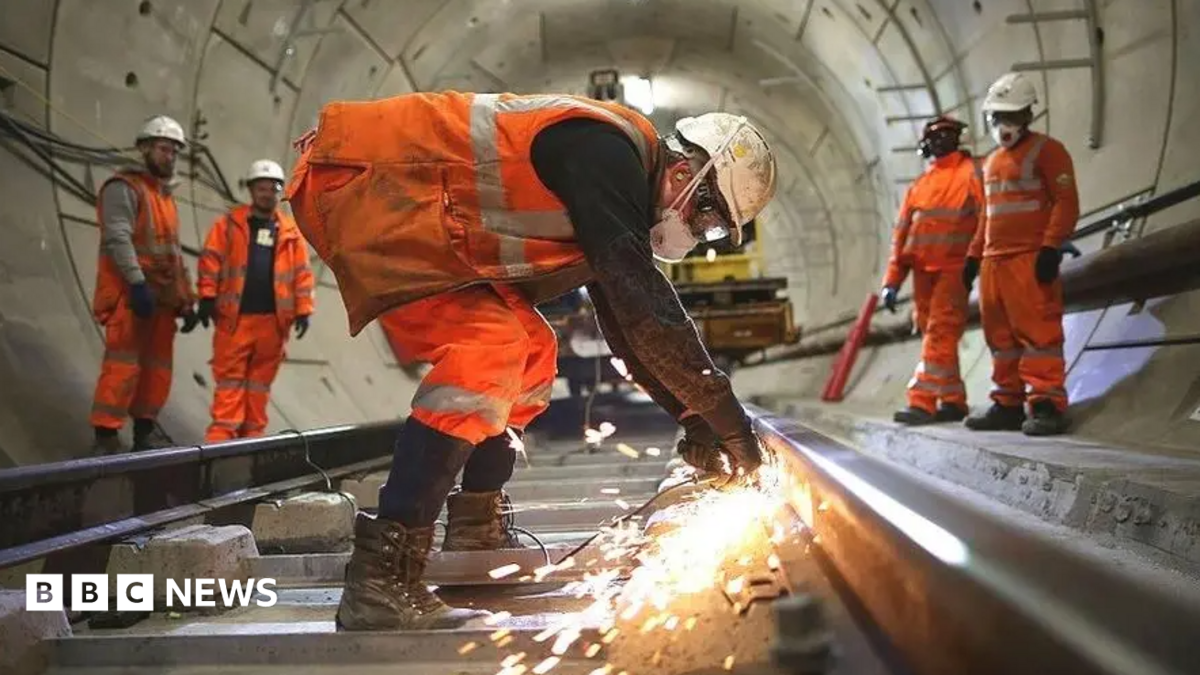
The UK government borrowed slightly less than expected in June, according to official figures published as new prime minister Andy Burnham began setting out measures to cut living costs for households.
Borrowing – the difference between spending and income from taxes – was £16bn last month, £7.9bn lower than June last year, the Office for National Statistics (ONS) said.
Separate figures also showed the unemployment rate was unchanged between March and May, with the ONS saying the labour market was “relatively steady”.
However while the borrowing figures were better than forecast the ONS said total debt remained near £3 trillion, which is close to the annual value of the entire UK economy.
Borrowing for June was slightly below the £16.3bn that had been predicted by the government’s official forecaster, the Office for Budget Responsibility (OBR).
Ruth Gregory, deputy chief UK economist at Capital Economics, said June’s slightly lower than expected borrowing figure was “a rare piece of good news” for the new prime minister and his new chancellor John Healey.
However, she added: “Overall, there’s no escaping the fact that the public finances are fragile and that there is limited scope for extra borrowing.”
So far in the current financial year, borrowing has reached a total of £57.6bn. While this is down £3.7bn from the same period last year, it is £2.7bn above the OBR’s forecast.
Burnham and Healey have both pledged to stick to former chancellor Rachel Reeves’ fiscal rules on spending and borrowing.
Although the new prime minister said on Monday he would use “any flexibility within them” to help with policy changes.
Meanwhile, the latest survey of the labour market showed the unemployment rate remained unchanged at 4.9%.
Growth in regular earnings – which excludes bonuses – remained unchanged, rising at an annual pace of 3.4% in the March to may period.
However, the ONS noted that regular wage growth in the private sector fell below 3% for the first time since 2020.
Gregory said the latest data suggested the labour market was “still weak”, and as a result the Bank of England was likely to keep interest rates on hold at 3.75% when it meets next week.

CMPDI reported an 18% year-on-year increase in revenue from operations to Rs 481.4 crore in Q1 FY27, compared with Rs 409.3 crore in the same quarter last year.
The company’s net profit witnessed a significant 54% YoY jump to Rs 116.3 crore, up from Rs 75.5 crore reported in the corresponding period of the previous year. Other income also rose 62% to Rs 22.7 crore from Rs 14.06 crore a year ago, further supporting the bottom-line growth.
Operational performance remained strong, with EBITDA rising 61.87% year-on-year to Rs 168 crore in Q1 FY27 from Rs 103.85 crore in the same period last year.
Dividend Announcement
Along with its quarterly results, CMPDI’s Board of Directors approved the first interim dividend for FY27 at Rs 1.05 per equity share on a face value of Rs 2 per share. The dividend was recommended by the Audit Committee, and the company has fixed Friday, July 24, 2026, as the record date to determine shareholder eligibility.
The payment of the first interim dividend for FY27 will be completed on or before August 19, 2026.

The company has also fixed Monday, August 10, 2026, as the record date for determining shareholder eligibility for the final dividend of Rs 1.06 per share for FY26, as recommended by the Board of Directors.
Stock Performance and Valuation
CMPDI shares have delivered strong momentum in recent months, gaining around 45% over the past three months. The stock currently commands a market capitalisation of approximately Rs 18,097 crore.
The company’s shares have traded between a 52-week high of Rs 283.69 and a 52-week low of Rs 150.10.On the valuation front, CMPDI is trading at a price-to-earnings (P/E) ratio of 28.55, while its price-to-sales ratio stands at 4.75 and price-to-book ratio at 7.97.
From a technical perspective, the stock’s 14-day Relative Strength Index (RSI) stands at 49.0, indicating a neutral trend. An RSI below 30 is generally considered to indicate oversold conditions, while a reading above 70 suggests an overbought zone.
With strong quarterly earnings, improved margins, and consistent shareholder returns through dividends, CMPDI continues to attract investor attention as one of the key companies within Coal India’s ecosystem.
(Disclaimer: Recommendations, suggestions, views and opinions given by the experts are their own. These do not represent the views of Economic Times)
Japan stocks higher at close of trade; Nikkei 225 up 3.29%
Business
Alpha Wealth 2.0: Why some investors keep finding the next opportunity before everyone else

A decade ago, building wealth was all about buying good businesses, staying invested and letting time do its work. Those principles still have value, but the context in which they are applied is now far more layered. Investors today are looking at opportunities across geographies, looking at alternative assets, looking at private markets and thinking more deliberately about how they allocate capital than ever before. The question is not where the market is headed next. It’s whether our mindset around investing has kept up with the opportunities around us.
This is perhaps the biggest shift in wealth creation today. Success is becoming less about reacting to headlines and more about understanding the repercussions and then building a portfolio that reflects long-term conviction.
Investors are increasingly asking different questions. How should capital be distributed across asset classes? What role should global exposure play in a portfolio? Where do alternative investments fit into a long-term wealth strategy? Which structural changes are likely to influence the next decade rather than the next quarter?
The answers rarely come from a single market update or earnings season. They emerge through perspective, experience and informed discussion. As investment opportunities continue to expand, so does the need to understand how they connect with one another. Wealth management is becoming more strategic, portfolio diversification more intentional and capital allocation more dynamic. For high net worth individuals, family offices and serious investors, staying informed has become as important as staying invested.
This evolution is mirrored in India’s financial landscape. The country’s expanding economy, growing investor base and enhanced access to global markets are reshaping the way wealth is created and preserved. At the same time, investors have more choices than ever before thanks to new financial ecosystems, regulatory developments and investment vehicles. There has never been a shortage of opportunity. The real difference maker is knowing how to evaluate it.
That is why conversations around wealth deserve as much attention as investment decisions themselves. The most valuable insights often come from understanding how experienced investors interpret changing market conditions, allocate capital across opportunities and prepare for the next phase of growth. These discussions help separate enduring trends from short-term noise and offer a clearer perspective on the forces shaping the future of investing.This growing appetite for meaningful discussion was on display at the inaugural Alpha Wealth Summit, held earlier this year, which brought together more than 250 attendees and over 20 prominent speakers for a day of high value conversation on investing, wealth management and long-term capital allocation. The conversations were about longer term trends, changing investment strategies and the shifting nature of wealth creation rather than short term market moves, giving participants views far beyond the event itself.
The Alpha Wealth Summit 2.0 will continue those conversations, and build on that momentum. The summit will bring together leading investors, wealth managers, family offices and market experts to discuss the ideas, investment strategies and emerging opportunities that are shaping the next chapter of wealth creation. If the future of investing starts with asking better questions, this is where many of those conversations will take place.
Reserve your seat at Alpha Wealth Summit 2.0 and join the conversations shaping the future of wealth creation.

Mineral Resources’ CSI subsidiary has made a Swan Valley business a target in its legal campaign to find those responsible for the toppling of a crane at Mt Whaleback.

Shares of the company rose to Rs 113.38 apiece today, the highest level seen in nearly three months. The lender on Saturday reported a 214% YoY surge in Q1 FY27 net profit to Rs 5,253 crore, while net interest income (NII) rose 2% YoY to Rs 10,798 crore.
The PSU bank’s return on assets (RoA) increased to 1.04% in Q1 FY27 from 0.37% in Q1 FY26, but decreased from Rs 1.06% in Q4 FY26. Return on Equity (RoE) meanwhile stood at 17.33% during the quarter under review.
PNB’s asset quality improved, with gross non-performing assets (NPAs) declining to 2.78% at the end of the June quarter, from 3.78% a year ago. Its current account savings account deposits increased around 8% YoY to Rs 5.69 lakh crore, while total term deposits increased 9% YoY to Rs 10.21 lakh crore.
Also read | PNB Q1 Results: Net profit surges 214% YoY to Rs 5,253 crore; NII up 2%
JM Financial on PNB share price
JM Financial upgraded its rating on PNB shares to ‘Add’ from ‘Reduce’, and hiked its target price to Rs 120 apiece from Rs 110 apiece. The latest target price implies more than 7% upside potential.
The domestic brokerage highlighted that the PSU lender reported healthy Q1 FY27 results with PAT rising 214% YoY, beating its estimate by 17%, driven by improving core operating performance and continued strengthening in asset quality. NII grew 2% YoY as NIM expanded 6 bps QoQ, supported by lower funding costs and continued run-down of low-yielding IBPC and corporate exposures, it said.
Loan growth remained healthy despite balance-sheet re-pricing, JM Financial noted, adding that management reiterated confidence in further margin improvement through FY27, aided by FCNR mobilisation and continued repricing of liabilities. “Given improving core profitability, resilient asset quality and FCNR mobilisation providing incremental support to funding, downside looks limited at ~0.8xFY28 P/BV. Accordingly, we raise our FY27E/FY28E EPS estimates by 18%/15%,” it said.
Motilal Oswal on PNB share price
Motilal Oswal Financial Services noted that PNB reported a mixed quarter, with earnings beat led by controlled provisions and opex. Provisions came in lower, reflecting strong asset quality, while opex was lower due to fewer AS-15 provisions and a decline in PSLC costs.The domestic brokerage noted that PNB’s business growth remained modest, and management guided for loan growth of nearly 12-13% in FY27. Asset quality trends were healthy, with slippages showing a dip with no significant stress. It reiterated its ‘Buy’ call on the stock with a target price of Rs 135, implying a 21% upside potential.
PNB share price
PNB shares gained over 7% in one week and 4% in one month, but have overall fallen more than 9% in 2026 so far. The PSU lender currently has a market capitalisation of nearly Rs 1.3 lakh crore.
In the longer term, PNB shares delivered marginal returns in one year, but gained over 80% in three years and nearly 184% in five years.
Also read | ICICI Bank wins analysts’ vote after Q1 show; HDFC Bank, Axis, Kotak & Yes Bank face scrutiny
(Disclaimer: Recommendations, suggestions, views and opinions given by the experts are their own. These do not represent the views of The Economic Times)
Business
LeBron James Will Not Return to the Lakers, Agent Rich Paul Confirms Ahead of Record 24th NBA Season
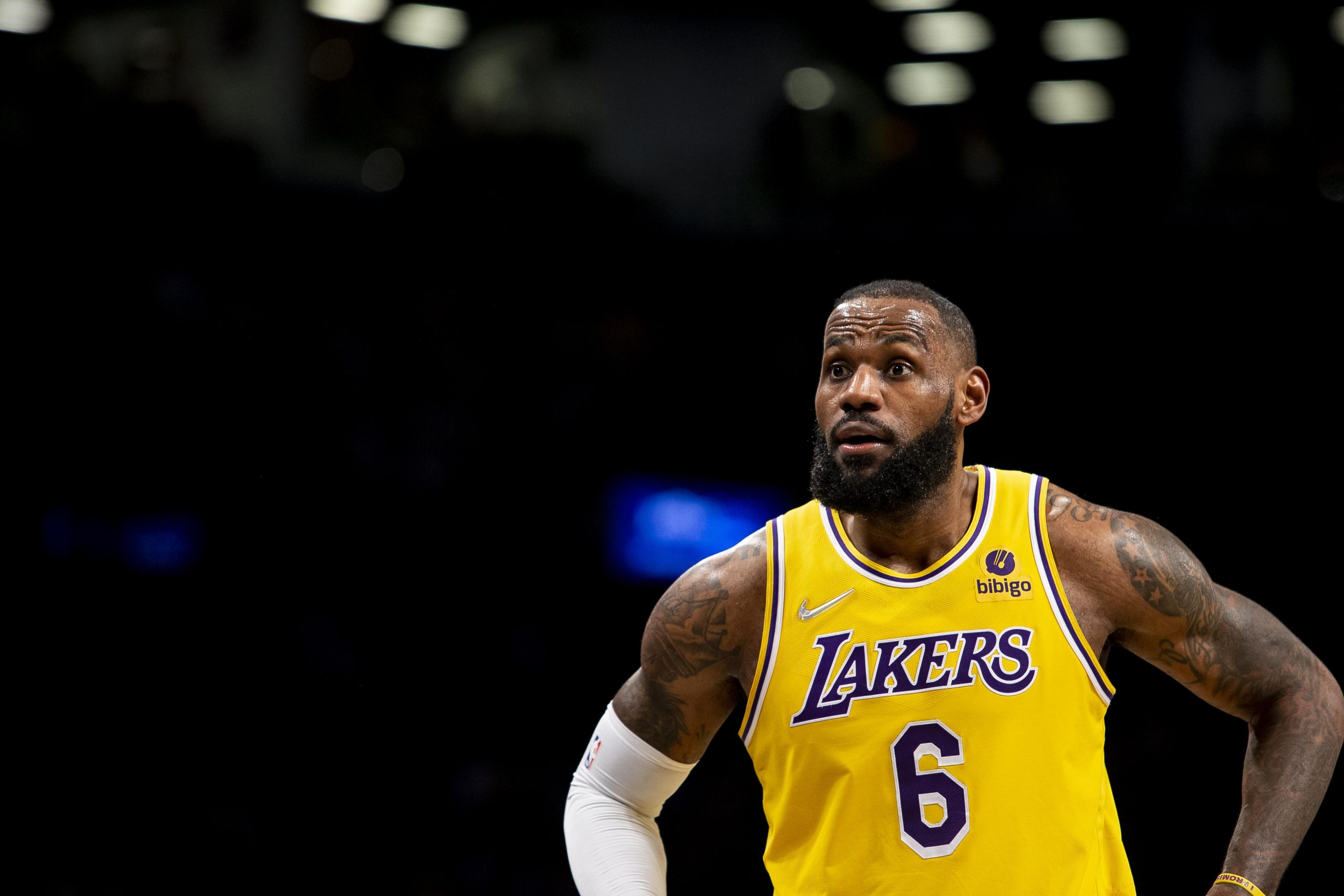
LeBron James will play a record-breaking 24th NBA season this fall, but he will not be doing so with the Los Angeles Lakers, according to his agent, Rich Paul, who confirmed the decision to ESPN’s Shams Charania on Tuesday.
“LeBron James will return for an unprecedented 24th season in the NBA — but it won’t be with the Los Angeles Lakers. James has informed the Lakers that the franchise can move on without him because he will play elsewhere,” Paul told Charania, according to ESPN. The confirmation ends weeks of speculation over whether James might remain with the franchise he has played for since 2018, while still leaving open the question of exactly which team he will join next.
A monthslong free agency saga
James’ free agency has stretched on for nearly a month, with the four-time NBA champion taking his time to weigh what he has described as the right decision for both himself and his family. His deliberate approach has effectively put much of the league’s broader free agency market on hold, as teams with cap flexibility earmarked for a potential James signing have waited to see where he ultimately lands before finalizing their own offseason plans.
Charania had previously reported that James had narrowed his list of potential landing spots to a group of finalists, each considered a legitimate championship contender. “It’s decision time for LeBron James… The leading suitors have been CLE, MIA, GSW, PHI, and MIN…. LeBron James has made it clear privately that he wants to go somewhere he can compete for a championship. Somewhere he feels he finds that happiness from a team environment and culture that he can uplift,” Charania said, referring to the Cleveland Cavaliers, Miami Heat, Golden State Warriors, Philadelphia 76ers and Minnesota Timberwolves.
Even those closest to the process say uncertainty remains
Despite the confirmation that James will leave the Lakers, Paul has continued to push back against the wave of reports speculating about where and when James will ultimately sign, insisting that even well-sourced NBA reporters do not yet have a clear picture of the outcome. “I’ll say it again, none of these people know anything. Nobody knows nothing, and I say that respectfully because we haven’t made it to where anyone knows anything,” Paul said.
That characterization suggests the final decision remains fluid even as James’ departure from Los Angeles is now confirmed, leaving the five reported finalist teams, and the broader NBA world, waiting for further clarity on which franchise will ultimately land one of the league’s most accomplished players for the next chapter of his career.
A departure that reshapes the league’s biggest storyline
James’ exit from the Lakers marks a significant turning point for a franchise he helped lead to an NBA championship in the pandemic-shortened 2020 season, during a tenure that also included numerous deep playoff runs and cemented his status as one of the most impactful players in franchise history. His departure leaves the Lakers needing to reshape their roster and long-term direction without one of the most decorated players in NBA history at its center.
For the broader league, James’ continued playing career at 24 seasons represents an extraordinary milestone in NBA history, extending a run of sustained excellence and durability that has already made him the league’s all-time leading scorer and a fixture of championship contention across multiple franchises throughout his career.
Ripple effects across the league
James’ extended free agency process has already begun triggering related roster moves elsewhere around the league. The Lakers themselves recently agreed to a one-year deal with wing Matisse Thybulle, part of the team’s broader effort to reinforce its roster depth as it awaits clarity on James’ final decision and adjusts its long-term plans in the wake of his departure. Other teams around the NBA, including several of the reported finalists in James’ free agency search, have similarly been navigating their offseason roster construction with James’ looming decision as a central variable shaping their broader plans.
Beyond the direct James storyline, this offseason has already featured other significant transactions, including forward Lu Dort’s move as part of a larger trade that has been described as an early domino falling out of the Oklahoma City Thunder’s championship window, illustrating how interconnected this year’s free agency and trade landscape has become across the league.
With James’ departure from the Lakers now confirmed but his ultimate destination still undecided, attention across the NBA remains fixed on which of the reported finalist teams, the Cavaliers, Heat, Warriors, 76ers or Timberwolves, will ultimately secure his signature. Once that decision is finalized, it is expected to immediately trigger a fresh wave of roster moves across the league, as teams that have been waiting on the outcome of James’ free agency move to finalize their own plans heading into the 2026-27 season. For now, even those closest to James’ inner circle maintain that no one outside his immediate team truly knows how the situation will ultimately resolve, leaving one of the NBA’s most consequential offseason storylines still unresolved even after Tuesday’s confirmation that his time with the Lakers has come to an end.

Below Deck’s Captain Sandy Reports Luke for Soiled Sheets Scandal

Bitcoin: Mi Fai Impazzire

Manu Kone’s transfer wish as Man United begin formal talks after price tag change


-
 NewsBeat5 days ago
London Mayor Sadiq Khan handed a peerage by Keir Starmer alongside 15 other Labour figures… just days before the PM leaves No10
-

 Fashion4 days ago
Weekend Open Thread – Corporette.com
-

 Politics3 days ago
The House | The City of London can help the new chancellor deliver growth in every postcode
-

 Politics6 days ago
Young campaigners urge incoming PM to act on outdoor junk food ads
-

 Crypto World5 days ago
CFTC blocks Kalshi from unwinding Michigan trades after court order
-
 Crypto World4 days ago
Two July Windows Left: The CLARITY Act’s Senate Fight and What Failure Means
-

 Crypto World3 days ago
Ripple Payments Joins MiCA With 14 Firms, Does It Mean Anything For XRP?
-

 Business5 days ago
Nvidia Stock Slips After Big Tuesday Rally as Huang Confirms Vera Rubin Chip Is Now in Production Today
-

 Politics2 days ago
Democrats look to World Cup watch parties to register thousands of voters
-
 Entertainment6 days ago
Disney’s Most Ambitious Failed Star Wars Attraction Is Coming to SDCC
-

 Crypto World3 days ago
Ripple wins EU-wide access as ESMA adds it to MiCA register
-

 Crypto World4 days ago
Injective Submits SEC Transfer-Agent Registration to Onchain Ownership Records
-

 Business5 days ago
Palantir Shares Rise After Expanded Nvidia Partnership and Fresh Analyst Upgrades Ahead of Earnings Day
-

 Tech7 hours ago
Sail Virtually Aboard The “Itanic” With IA-64 Emulator
-
 Tech5 hours ago
Turtle Beach Command Series KB7 review: a nifty screen-equipped gaming keyboard
-

 Tech6 days ago
Dark Secrets Emerge When Jailbreaking LLMs
-

 News Videos7 days ago
XRP BOMBSHELL… XRP OMBOARDED FOR TRANSACTIONS!!!
-

 NewsBeat4 days ago
Registration is now open for March for Men with Kev 2026
-

 NewsBeat21 hours ago
Unregistered fitter used Gas Safe logo on business flyers
-
 Sports5 days ago
New Cornerback Enters Vikings Trade Rumor Mill
You must be logged in to post a comment Login