A large number of new energy vehicles for export park at a car terminal on the Hangzhou section of the Beijing-Hangzhou Grand Canal in Hangzhou, Zhejiang Province, China, on June 2, 2025.
Costfoto | Nurphoto | Getty Images
DETROIT — The unraveling of the U.S. electric vehicle push is increasingly raising concerns of an existential crisis for the American auto industry, as Chinese carmakers surge ahead in the technologies that many still believe will define the next era of cars.
Advertisement
The latest warning sign came Friday, when Stellantis disclosed a $26 billion charge from a major business overhaul, including a pullback in EVs, triggering a more than 20% plunge in its stock. CEO Antonio Filosa blamed the hit on overestimating the pace of the energy transition.
It follows other automakers in the U.S. significantly pulling back from pure EVs in favor of large gas-guzzling trucks such as the Ford F-150 and SUVs like the Chevrolet Suburban. Chinese automakers are taking the opposite approach and are growing globally, led by EVs.
Legacy automakers General Motors and Ford Motor have lost billions of dollars on EVs and are pulling back partly because of the loss of a federal tax credit and lackluster consumer demand.
Even Tesla, which pioneered the EV industry, is facing pressure. It was surpassed by Chinese automaker BYD in EV sales as the Elon Musk-led brand lost its appeal and market share in Europe this year, while BYD ramped up exports there and around the world. Tesla also last week canceled its two oldest, lowest-selling electric vehicles to repurpose an American plant for humanoid robots.
Advertisement
After helming the electrification movement for years, Musk increasingly appears focused elsewhere, especially on robots, driverless taxis and his artificial intelligence company, which he combined with Space X in what was the biggest merger in history.
Meanwhile, global market share of Chinese brands has jumped nearly 70% in five years, and many experts see a threat to U.S. automakers, including the anticipated entrance of Chinese brands into America.
There’s fear among global automakers that Chinese rivals like BYD and Geely could flood global markets, undercutting domestic production and vehicle prices. The U.S. has taken a protectionist approach by implementing 100% tariffs on imported EVs from China, but Chinese automakers have made inroads across Europe, South America and elsewhere.
Companies in the U.S., where the automotive industry represents about 5% of the country’s gross domestic product, are worried about long-term implications.
Advertisement
“The Chinese auto industry presents an existential threat to the traditional [automakers],” said Terry Woychowski, a former GM executive who serves as president of automotive at engineering consulting firm Caresoft Global.
Several automotive experts used the word “existential” when discussing the growth of Chinese automakers.
“The existential risk to the U.S. auto industry isn’t Chinese EVs alone, it’s the combination of sustained government support, vertically integrated supply chains and speed,” said Elizabeth Krear, Center for Automotive Research CEO. “Those advantages lower costs and accelerate execution. Concurrently, saturation in China’s domestic market is driving automakers to expand aggressively into global markets.”
China’s growth
The Chinese automotive sector has rapidly changed from an insular industry to the largest exporter of vehicles globally since 2023.
Advertisement
China’s growth has been fueled by government funding for companies as well as a culture of innovation and speed the country has instilled in its workers, experts said. A slowing Chinese market and plant underutilization have also forced companies to begin exporting to major auto markets globally.
China’s expansion of EVs has been particularly impressive, with a nearly 800% increase globally, largely fueled by sales in China growing from roughly 572,300 in 2020 to 4.95 million in 2025, according to GlobalData. Outside of China, EV sales have increased by more than 1,300%, from less than 33,000 to more than 474,000, per the firm.
While China has grown, Detroit’s “Big Three” automakers — GM, Ford and Chrysler parent Stellantis, which is no longer based in the U.S. — have collectively fallen from a global market share of 21.4% in 2019 to an estimated 15.7% in 2025, according to S&P Global Mobility.
That compares to China’s largest automakers BYD and Geely, which have grown from a less than 3% market share to an estimated 11.1%, according to S&P Global Mobility.
Advertisement
HONG KONG, CHINA – JANUARY 05: A general view of the BYD Auto showroom on January 5, 2026, in Hong Kong, China. (Photo by Sawayasu Tsuji/Getty Images)
Sawayasu Tsuji | Getty Images News | Getty Images
China’s most recent announced expansion is to Canada, a relatively small vehicle market that removed 100% tariffs on imported vehicles from China amid a trade dispute with the Trump administration.
That follows the rapid growth of Chinese automakers in lower-income, less established regions that have historically been growth markets for U.S. automakers, such as South America, India, and Mexico. They’re also making inroads in Europe, where the share of sales has risen from virtually nothing in 2020 to nearly 10% in December, according to Germany-based Dataforce.
Advertisement
“The shift to electric has made it easier for them, because they’ve got the right products,” said Al Bedwell, U.K.-based expert and director of global automotive powertrain for GlobalData. “The fact that it is electric has really opened the doors, and it wouldn’t have happened otherwise.”
Bedwell said China wanted to wean itself off oil since it doesn’t have vast amounts on its own. “It saw an opportunity to be a leader,” he added.
GlobalData forecasts Chinese EVs will continue to grow globally to roughly 6.5 million units by 2030, followed by nearly 8.5 million in 2035. That includes continued growth in the U.S., where a few China-made vehicles such as the Buick Envision have been imported in recent years.
“Breaking into the U.S. market successfully and sustainably is not an easy accomplishment; it takes time, investment, patience and the willingness to make product mistakes but improve them until you get it right. It is expected that some Chinese automakers will have that blend and eventually look to participate in the U.S. market,” said Stephanie Brinley, a principal automotive analyst at S&P Global Mobility.
Advertisement
Brinley noted it took Japan’s Toyota Motor from 1957 to 2001 to reach a 10% market share, while South Korea’s Hyundai Motor reached 10% after 26 years in 2022.
US President Donald Trump speaks alongside Ford executive chairman Bill Ford as he tours Ford Motor Company’s River Rouge complex in Dearborn, Michigan, on January 13, 2026.
Mandel Ngan | Afp | Getty Images
“Because the U.S. is a mature market and sales are forecast to remain between 16 million and 16.5 million units through at least 2035, newcomers will take share from existing brands and automakers,” Brinley said. “How quickly they connect with consumers and which automakers lose volume or share to the new competitor remains to be seen.”
Advertisement
The Alliance for Automotive Innovation, a lobbying group representing nearly every automaker in the U.S., wants to prevent that from happening. It called on Congress and the Trump administration in December to prevent Chinese government-backed auto and advanced battery manufacturers from gaining entry to manufacture in the U.S.
“Automakers doing business inside the United States face geopolitical and market pressures from China that are a direct threat to America’s global competitiveness and national security,” John Bozzella, CEO of the alliance, said in a message to a U.S. House of Representatives select committee, citing unfair, anticompetitive trade practices and intellectual property theft.
State of U.S. EV industry
U.S. automakers spent billions of dollars developing and launching EVs under regulations and incentives from the Biden administration that have largely been undone by the Trump administration.
That deregulation opened the doors for automakers to deemphasize all-electric vehicle plans.
Advertisement
GM and Ford alone have announced more than $27 billion in write-downs recently due to their retreat on EVs, including canceling new models and lowering production of current ones.
U.S. EV sales peaked in September, ahead of the federal incentives ending, at 10.3% of the new vehicle market, according to Cox Automotive. That demand plummeted to preliminary estimates of 5.2% during the fourth quarter.
GM CFO Paul Jacobson said Wednesday that the Detroit automaker, which has largely become a regional player in North America, isn’t abandoning EVs but is right-sizing to natural demand instead of attempting to appease regulators.
Advertisement
When asked about the expansion of Chinese automakers, Jacobson said GM “can hold our own” but that it needs to be on a level playing field — rehashing that he thinks U.S. tariffs should work to offset subsidies Chinese companies get from the Chinese government.
“You can see the type of intensity and competitiveness that those vehicles bring to the marketplace. And therefore, we’ve got to be ready,” he said during a Chicago Federal Reserve automotive conference in Detroit.
GM wasn’t ready for the rise of the domestic auto industry in China, which was the company’s top sales market from 2010 to 2023. The automaker’s earnings from China fell from around $2 billion annually in 2018 to a second consecutive year of losses in 2025 as China grew its own auto manufacturing.
GM’s crosstown rival Ford is taking a different approach. It has largely scrapped plans for large EVs in exchange for a next-generation of smaller models that CEO Jim Farley believes will be the company’s saving grace against Chinese automakers.
Advertisement
Farley, who has been complimentary of Chinese automakers at times, said the new platform will be a simple, efficient, flexible ecosystem to deliver a family of affordable, electric, software-defined vehicles.
“This is a Model T moment for the company,” Farley said last year. “We really see, not the global [automakers] as a competitive set for our next generation of EVs, we see the Chinese. Companies like Geely and BYD … and that’s how we built our vehicle.
From autos to autonomy
Domestic EV startups such as Rivian Automotive and Saudi-backed Lucid Group — both exclusively producing vehicles in the U.S. — are facing profitability and sales challenges.
Amid the demand issues, the EV startups have tried to appeal to investors by touting themselves as technology plays rather than automakers, following in the footsteps of U.S. EV industry leader Tesla.
Advertisement
Tesla’s Musk has been warning about Chinese automakers for years, saying in 2023 after the rise of BYD that such companies will “demolish” global rivals without trade barriers.
Musk has historically positioned Tesla as a technology company that also sells cars despite the vast majority of its revenue comes from car sales, leasing and repairs. He took it a step further on the company’s most recent quarterly earnings call, saying that Tesla is ending production of its Model S and X vehicles and will use the factory in Fremont, California, to instead build Optimus humanoid robots.
After the original Roadster, the two models are Tesla’s oldest vehicles. The EV maker started selling the Model S sedan in 2012, and the Model X SUV three years later. They only represented about 3% of Tesla’s sales in 2025, with the company continuing to offer the Model Y, Model 3 and Cybertruck.
In recent, years the company has slashed prices for those vehicles as global competition for electric vehicles has soared.
Musk believes China will once again be the company’s main competition in its newest humanoid robot venture.
Advertisement
“China will definitely be the tough competition as there’s no two ways about it,” Musk said on the company’s fourth-quarter earnings call. “So I always think people outside of China kind of underestimate China. China’s an ass-kicker, next level.”
For more than a decade, Japanese home builders have been tiptoeing into the U.S. housing market with small, discreet acquisitions of private American construction companies. Their quiet era is over.
Japanese builders have announced or closed acquisitions of 23 U.S. single-family home builders since 2020, more than double the number from 2013 to 2019. That doesn’t include the multifamily developers and construction-supply companies they have also bought. By some estimates, Japanese builders are now set to own about 6% of the U.S. home-construction market.
The Trump administration proposed a regulation on Monday that is intended to open 401(k)s and similar retirement plans to private equity and private credit.
It is a victory for the Wall Street firms that have lobbied to get these higher-cost alternative investments into the $14.2 trillion 401(k) market. But it comes at an inopportune time for the industry, as investors pull money from some private-credit funds.
Payments firm to reorganise into four business units
Alistair Houghton Editor, Business Live and Anna Wise Press Association Business Reporter
15:52, 30 Mar 2026Updated 15:54, 30 Mar 2026
The PayPoint sign can be found across the UK(Image: Newcastle Chronicle)
Payment solutions provider PayPoint has revealed a restructuring plan aimed at cutting costs and attracting more customers to use its services in shops.
It will result in the company being restructured into four divisions, encompassing its network services, merchant services, digital payments and open banking, and its Love2shop brand.
Advertisement
PayPoint operates a retail network of over 30,000 convenience stores, offering community services such as cash withdrawals and deposits, ATMs, cash bill payments, energy top-ups and vouchers. It also runs Collect+ and Royal Mail Shops, enabling parcels to be collected and returned at thousands of local outlets.
The company has not disclosed cost-cutting targets or specified whether there will be any impact on its workforce, which numbered around 940 employees this time last year. However, it said the reorganisation will create cost savings and could potentially result in increased dividends for shareholders.
As part of the changes, PayPoint stated it is concentrating on boosting consumer footfall and enhancing sales from its services across retail partners. The overhaul will also entail a significant “reset” of the structure of its merchant services division, which collaborates with over 30,000 UK SMEs (small and medium-sized enterprises) to provide payment services in their shops.
Meanwhile, PayPoint plans to expand the Love2shop brand, which provides digital and physical gift cards. That division, based in Liverpool’s landmark 20 Chapel Street building, is set to bring in £53.2m in revenue this financial year.
Advertisement
The group said: “The reorganisation will enable an improved focus on new business growth and on maximising opportunities across Love2shop’s distribution channels. Continued investment in our technology platform, ongoing product enhancement and leveraging AI to improve marketing insight will strengthen our go-to-market strategy and support accelerated new business growth across Love2shop Business, the expansion of our prepaid savings proposition and growth of our consumer channels, including through our Incomm Payments partnership. There also remain significant opportunities to integrate Love2shop more efficiently across the wider PayPoint Group and client base.”
PayPoint acquired Love2Shop when it took over Merseyside Christmas vouchers firm Appreciate Group in an £83m deal in 2023. That business, formerly known as Park Group, was founded by former Everton FC and Tranmere Rovers owner Peter Johnson and was originally best known for its Christmas hamper savings scheme.
London-listed PayPoint anticipates reporting a record financial performance for the year ending in March, with results due to be published in June. It also forecasts returning over £90 million to shareholders through buybacks and dividends during the financial year.
Ineos has reported a sharp widening in losses to $593 million, as rising energy costs, supply chain disruption and geopolitical tensions weigh heavily on Sir Jim Ratcliffe’s petrochemicals empire.
The group, controlled by Jim Ratcliffe alongside co-owners Andy Currie and John Reece, has also suspended its dividend for a second consecutive year, underscoring the financial pressure facing the business.
Losses before tax increased significantly from $71.1 million the previous year, while revenues declined to €14.3 billion from €16.2 billion. The downturn reflects a challenging operating environment for the European chemicals sector, where demand has weakened and costs have risen sharply.
Ineos pointed directly to the escalation of tensions in the Middle East as a key risk factor, warning that disruption to global energy markets is already impacting operations.
The group highlighted Iran’s strategic position near the Strait of Hormuz, a critical shipping route for oil and liquefied natural gas, noting that any prolonged conflict could further destabilise supply chains and drive up commodity prices.
Advertisement
“Any escalation or expansion of hostilities could adversely affect global supply chains, commodity prices and macroeconomic conditions,” the company said in its annual report.
The surge in oil and gas prices has increased input costs across the petrochemicals industry, while also raising shipping expenses as companies adjust logistics routes to avoid high-risk areas.
The impact has been particularly acute in Europe, where Ineos has long warned of structural challenges including high energy prices, carbon taxes and competitive pressures from overseas producers.
Earnings before exceptional items in the region almost halved to €252.3 million in 2025, down from €470.2 million the previous year. Revenues in the European business fell by 9.2 per cent, reflecting weaker demand and margin compression.
Advertisement
Ratcliffe has previously described the European chemicals industry as facing “challenging market conditions”, with rising regulatory costs and energy prices eroding competitiveness.
The group has also been hit by logistical challenges linked to global shipping disruptions. In previous years, Ineos was forced to reroute shipments for its major Project One chemicals plant in Belgium around the Cape of Good Hope, adding more than €30 million in costs.
The company warned that similar disruptions could occur again if tensions escalate, potentially delaying the completion of key projects and further increasing expenses.
It also flagged risks to the delivery timeline of a new plant in the Netherlands, citing ongoing volatility in energy markets.
Advertisement
Ineos ended the year with net debt of €11.7 billion, highlighting the scale of its financial commitments at a time of declining profitability.
The decision to halt dividend payments reflects a focus on preserving cash and maintaining financial flexibility as the company navigates an uncertain outlook.
The results underline the pressures facing energy-intensive industries in Europe, where companies are grappling with a combination of high input costs, regulatory burdens and geopolitical instability.
For petrochemical producers, the reliance on oil and gas as both feedstock and energy source makes them particularly sensitive to price fluctuations.
Advertisement
Looking ahead, Ineos warned that continued volatility in energy markets could have a “significant” impact on its operations and financial performance.
The trajectory of the Middle East conflict will be a key factor, with prolonged disruption likely to exacerbate cost pressures and delay investment projects.
For Ratcliffe’s group, the challenge will be balancing investment in long-term growth with the need to manage short-term financial strain — a task made more complex by the increasingly uncertain global economic environment.
Amy Ingham
Amy is a newly qualified journalist specialising in business journalism at Business Matters with responsibility for news content for what is now the UK’s largest print and online source of current business news.
Stone Fox Capital is an RIA from Oklahoma. Mark Holder is a CPA with degrees in Accounting and Finance. He is also Series 65 licensed and has 30 years of investing experience, including 15 years as a portfolio manager. Mark leads the investing group Out Fox The Street where he shares stock picks and deep research to help readers uncover potential multibaggers while managing portfolio risk via diversification. Features include various model portfolios, stock picks with identifiable catalysts, daily updates, real-time alerts, and access to community chat and direct chat with Mark for questions. Learn more.
Analyst’s Disclosure: I/we have no stock, option or similar derivative position in any of the companies mentioned, but may initiate a beneficial Long position through a purchase of the stock, or the purchase of call options or similar derivatives in UPST over the next 72 hours. I wrote this article myself, and it expresses my own opinions. I am not receiving compensation for it (other than from Seeking Alpha). I have no business relationship with any company whose stock is mentioned in this article.
The information contained herein is for informational purposes only. Nothing in this article should be taken as a solicitation to purchase or sell securities. Before buying or selling any stock, you should do your own research and reach your own conclusion or consult a financial advisor. Investing includes risks, including loss of principal.
Advertisement
Seeking Alpha’s Disclosure: Past performance is no guarantee of future results. No recommendation or advice is being given as to whether any investment is suitable for a particular investor. Any views or opinions expressed above may not reflect those of Seeking Alpha as a whole. Seeking Alpha is not a licensed securities dealer, broker or US investment adviser or investment bank. Our analysts are third party authors that include both professional investors and individual investors who may not be licensed or certified by any institute or regulatory body.
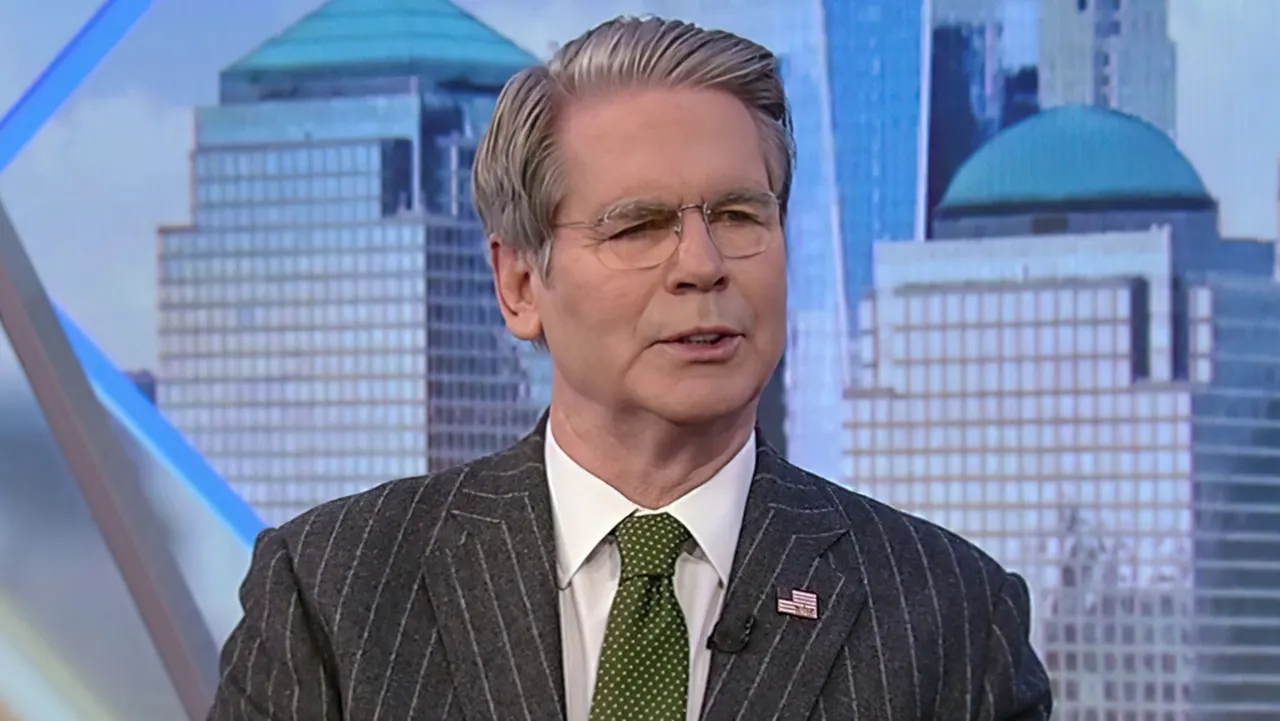
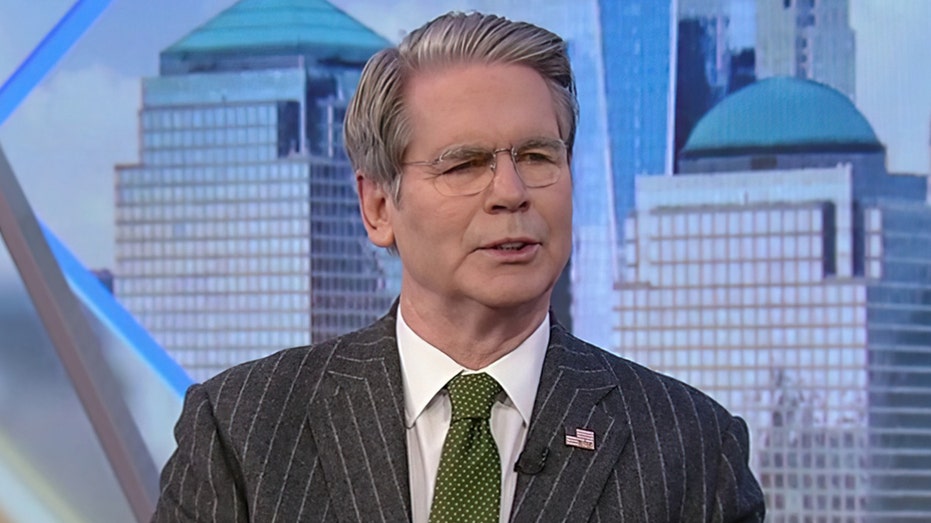
Treasury Secretary Scott Bessent joins ‘Fox & Friends’ to discuss the gradual reopening of the Strait of Hormuz and unveils a new fraud crackdown program to expose scams in healthcare and other industries.
Treasury Secretary Scott Bessent is offering what could be big money for potentially “hundreds of billions” recouped from fraudsters emboldened during a Biden administration that unwound guardrails under the guise of COVID relief urgency, he told Fox News on Monday.
“We can pay up to a 30% reward for the recovered funds,” Bessent told “Fox & Friends.”
Advertisement
Bessent said fraudsters were let loose as a result of former President Joe Biden’s administration reducing fraud controls to expedite hundreds of billions in pandemic-related funds out to Americans who needed it, and now the buck stops with President Donald Trump and Vice President JD Vance as fraud czar.
“We are all hands on deck because this is money that is not going to where it’s supposed to go, but more importantly, it’s being stolen from the American taxpayer,” Bessent said. “We need to be a high-trust society. We need to understand where the money is going.”
Treasury Secretary Scott Bessent is offering up to 30% of “hundreds of billions” potentially recouped from Biden-era emboldened fraudsters. (FOX Business)
“This could be hundreds of billions of dollars in recouped money,” he noted.
Advertisement
Bessent’s Treasury Department is now offering whistleblowers a major financial incentive to help expose fraud, directing would-be tipsters to the Treasury.gov website and saying the administration has already received more than 700 leads. Treasury’s whistleblower page says eligible tipsters can receive between 10% and 30% of monetary sanctions collected in successful actions.
Bessent also blamed weaknesses in anti-fraud enforcement on the Biden administration’s handling of pandemic aid.
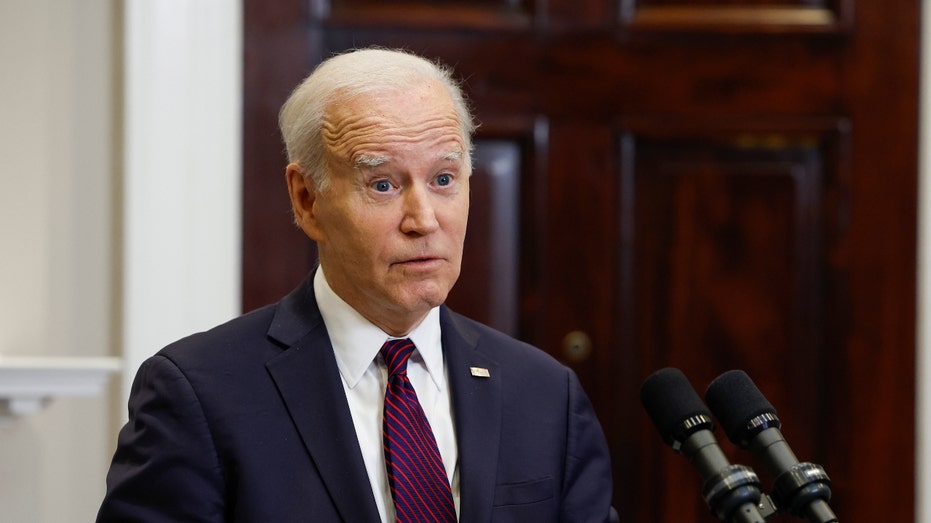
Former President Joe Biden’s administration has been rebuked for unwinding fraud and oversight controls of hundreds of billions of COVID relief funds. (Anna Moneymaker/Getty Images)
“A lot of this is a result of during COVID,” Bessent said. “Many of the agencies under the Biden administration gutted their fraud departments, their fraud detection, or took down the fraud detection to get the money out quickly for COVID relief. But they never brought back the guardians of our money. So, we have to have integrity in these programs.”
Advertisement
He argued stronger oversight and public visibility are needed to restore integrity to government programs, claiming that blue states like California and New York are covering for fraudsters against government oversight and investigations.
Unleash Prosperity co-founder Stephen Moore and Heritage Foundation senior economist Peter St. Onge discuss the Trump administration’s push to crack down on fraud on ‘The Bottom Line.’
While Minnesota fraud among the state’s Somali community has made headlines thus far thanks to independent journalist Nick Shirley’s reporting, Bessent actually praised that state for having some level of transparency that is not permitted in California or New York.
Advertisement
“That’s why that young man, Nick Shirley, was able to go to see the scams, because it was: This is the name of the facility; this is the address; this is how much money they got,” Bessent said. “Oh look, it’s an empty storefront. There’s no one here. New York, California are hiding it.”
Independent journalist Nick Shirley breaks down his alleged fraud findings in Minnesota and California on ‘FOX Business In Depth.’
“We’re all in favor of states’ rights and states doing more, but the money goes into a lot of these blue states, and some of the red states could be more transparent,” he said.





















































You must be logged in to post a comment Login