
Business
AMP expands profit by a third as super fund outperforms


Business
LG Electronics, APL Apollo Tubes among 7 mid & smallcap picks by Axis Securities for August

Axis Securities has identified 7 mid and smallcap stocks for August. These selections offer potential upside and are based on company growth prospects. Dalmia Bharat and LG Electronics are among the recommended midcap companies. APL Apollo Tubes and Ujjivan Small Finance Bank also feature in this list. Minda Corporation and Healthcare Global Enterprises complete the analyst’s picks.

Biocon Q1 FY27 slides: profit surges 245% on biosimilar strength
Business
ASX 200 Hits Second Straight Record High as Australia Sidesteps Global AI Stock Sell-Off This Week So Far
SYDNEY — Australia’s benchmark S&P/ASX 200 index climbed to a fresh record high Thursday, trading at 9,255.2 points, up 27.4 points or 0.30%, as of 2:37 p.m. AEST, marking the index’s second consecutive all-time high after a strong session Wednesday that surprised many market watchers who had grown accustomed to Australian shares lagging their global peers.
Thursday’s gain built directly on Wednesday’s session, when the ASX 200 added 0.9% to close at a lifetime peak of 9,227.80 points, extending the index’s gains since the start of August to 2.8%. New Zealand’s benchmark index also finished at a record Wednesday, climbing 0.7% to 13,997.18 points, as strength spread across both markets.
A Surprising Turnaround for a Perceived Laggard
The rally marks a notable shift in narrative for the Australian sharemarket, which had spent much of the past 12 months trailing international peers, largely attributed to its limited direct exposure to artificial intelligence-related technology stocks. That relative underweight to AI, long viewed as a drag on the index’s performance during the sector’s rapid ascent, has instead become an unlikely source of strength in recent sessions.
UBS strategist Richard Schellbach has pointed to Australia’s limited pure AI technology exposure as a factor that has repeatedly benefited the ASX during periods of global AI sector disruption, drawing interest from Asian investors at moments when AI chip stocks elsewhere have struggled. As cracks appeared in parts of the global AI trade in recent weeks, institutional funds rotated capital toward Australia, drawn by the market’s comparatively lower concentration risk in the sector. Commentators tracking the move have likened the index’s unexpected outperformance to Australian short-track speed skater Steven Bradbury, who famously won an Olympic gold medal in 2002 after every other skater in his race crashed, with some in the market now referring to the ASX as the “Steven Bradbury of financial markets.”
Sector Performance Diverges Sharply
Beneath Wednesday’s headline gain, performance varied considerably across sectors. Materials led the market with a 3.56% surge, while Information Technology added 2.51% and Industrials contributed a further 1.01% gain. By contrast, the Energy sector tumbled 2.22% and Financials slipped 0.44%, a divergence analysts attributed to shifting expectations around the trajectory of commodity prices and interest rates. The broader All Ordinaries Index climbed 1% to 9,405.40 on Wednesday, though it remained just below the 9,436.20 level it reached in an earlier March high.
By Thursday afternoon, that sector rotation appeared to be continuing, with Materials up 1.1% and Financials up a more modest 0.3%, both having pulled back from earlier session highs of 2.2% and 0.6%, respectively. Even so, both sectors have posted substantial gains over recent weeks, with Materials up 7.5% over the past five trading sessions and Financials up roughly 10% since the start of July.
Gold and Base Metals Lead Individual Movers
Wednesday’s standout individual performers clustered heavily around gold and base metals producers. Capricorn Metals surged 8.74% to $14.19, Genesis Minerals jumped 8.24% to $6.44, and Bellevue Gold climbed 8.08% to $1.405. Several other miners, including Predictive Discovery, Ora Banda Mining and Vault Minerals, all posted gains exceeding 7.5% during the session, reflecting broad strength across the domestic gold sector even as bullion prices themselves moved only modestly.
A Rally Fueled by Global Tailwinds
The rally in Sydney has closely tracked developments overseas. Equities in Australia and New Zealand closed at record highs Wednesday alongside a broader rally in U.S. and European shares, driven in part by strong AI-related corporate earnings and growing optimism over easing tensions in the Middle East tied to the Strait of Hormuz. That risk appetite carried into Thursday’s session, with improving global technology sentiment combining with continued strength across mining and financial sectors to push the ASX 200 to its second straight record.
A fourth consecutive session of gains through Wednesday pushed the benchmark’s relative strength index into overbought territory, reaching its highest level since mid-June 2025, a technical signal some analysts have pointed to as evidence the rally may be due for at least a temporary pause even as the broader trend has remained firmly positive.
New Listings Add to Market Activity
Thursday’s session also featured corporate developments beyond the index’s daily movements. Commodities giant Glencore has confirmed plans to pursue a secondary listing on the ASX, targeting Australia’s roughly $4.4 trillion pension pool, which is projected to nearly triple to $12.4 trillion by 2045. The listing, to be structured through CHESS Depositary Interests, would proceed without any capital raising or share transfer. Glencore chief executive Gary Nagle has said he expects the company to qualify for ASX 200 inclusion within about 12 months, requiring roughly $1.5 billion of local market capitalization, before eventually qualifying for the ASX 100 as well.
Reporting Season in Full Swing
Thursday’s trading also coincided with the height of Australia’s corporate reporting season, with more than 250 ASX-listed companies expected to report earnings or dividend updates over the coming weeks. That steady stream of company-specific news has added to the volatility underlying individual stock movements even as the broader index has continued grinding to new highs, with investors weighing individual earnings results against the more supportive macro backdrop driving the market’s overall direction.
With the ASX 200 now on track for its second consecutive record close, market watchers are likely to continue closely tracking whether Australia’s relative shelter from the recent AI sector volatility persists, or whether renewed strength in U.S. technology shares eventually reasserts the index’s more familiar pattern of trailing global peers. For now, the combination of strong mining and financial sector performance, continued reporting season activity, and improving global risk sentiment has positioned the Australian sharemarket for a rare stretch atop the list of the world’s best-performing major indexes.
Business
SolarEdge Stock Plunges 30% After Weak Q3 Guidance Overshadows Surprise Profit and Drags Solar Sector Lower

shares plunged Wednesday, closing down 30.48% at $33.90, after the solar equipment maker’s disappointing third-quarter revenue outlook overshadowed a second-quarter report that beat Wall Street’s earnings expectations, dragging shares of several other solar companies lower in sympathy.
The stock, which had gained roughly 27% for the year heading into the report, gave back a substantial portion of those gains in a single trading session, marking one of the sharpest single-day declines the company has experienced in recent memory. Shares showed a partial rebound overnight, rising 2.04% to $34.59 as of 12:39 a.m. Eastern time Thursday, though the stock remained well below its pre-earnings level.
A Mixed Quarter With a Bright Spot
SolarEdge reported second-quarter revenue of $346.2 million, up 19.6% from a year earlier and narrowly ahead of Wall Street’s consensus estimate. Gross margin improved sharply to 27.5%, up from just 11.1% in the same quarter a year earlier, reflecting continued progress in the company’s efforts to rebuild profitability after a prolonged industry downturn.
On an adjusted, non-GAAP basis, SolarEdge posted earnings of 5 cents per share, a swing from a loss of 81 cents per share in the same period last year and a result that comfortably cleared analyst expectations. Under standard GAAP accounting, however, the company still reported a net loss of $30.8 million, or 50 cents per share, an improvement from a loss of 95 cents per share in the first quarter of 2026 and a substantial improvement from the $124.7 million, or $2.13 per share, loss recorded in the second quarter of last year.
Guidance Undercuts the Recovery Narrative
Despite the improved margins and narrower losses, investors focused overwhelmingly on SolarEdge’s forecast for the current quarter, which fell well short of expectations. The company guided to third-quarter revenue of $310 million to $340 million, a range that sits below the second quarter’s own revenue total and well under Wall Street’s expectations of more than $370 million.
That guidance suggested to many analysts that SolarEdge’s fragile recovery may remain uneven, undercutting the more encouraging signals from the quarter’s underlying earnings performance. Immediately following the results, shares initially traded down between 8.3% and 22.3% in various sessions of trading before ultimately settling at the steeper 30.48% decline by Wednesday’s close, reflecting a market that grew increasingly skeptical as the day progressed.
Regional Demand Diverges Sharply
SolarEdge Chief Executive Shuki Nir attributed much of the company’s ongoing challenges to a stark divergence in regional demand. Nir said the company continues to make progress as solar demand remains strong in Europe and is improving across the commercial and industrial segments of the U.S. market. That strength, however, has not been enough to offset persistent weakness in the U.S. residential solar sector, which has continued to struggle amid higher interest rates and shifting state-level incentive policies that have curbed household demand for rooftop solar installations.
A Volatile Pattern Heading Into Earnings
Wednesday’s selloff extended a pattern of volatility that has defined SolarEdge’s stock over the past several quarters. The company’s first-quarter results, released in May, saw revenue rise 46% year over year to $310 million, beating estimates, but adjusted earnings per share of negative 43 cents missed forecasts by more than 50%, sending shares down more than 7% in premarket trading at the time. A $14 million charge tied to doubtful debt contributed to a widening net loss in that period, illustrating the kind of one-off financial pressures that have periodically complicated the company’s underlying operational recovery.
Ahead of Wednesday’s report, Wall Street had entered with cautious optimism, projecting earnings of roughly negative 2 cents per share on revenue of about $341 million, positioning the actual results as a mixed but directionally positive surprise on the bottom line, even as the more forward-looking guidance ultimately drove the stock’s reaction.
Broader Solar Sector Feels the Pressure
SolarEdge’s steep decline rippled across the broader solar industry Wednesday, with shares of several other major solar companies trading lower in sympathy. First Solar, Enphase Energy, Fluence Energy, Array Technologies and Sunrun all declined alongside SolarEdge, as investors reassessed the health of the broader U.S. solar demand environment in light of the company’s cautious third-quarter outlook.
A Company Still Working Toward Sustained Profitability
Despite the disappointing guidance, some of SolarEdge’s underlying financial trends have shown improvement over a longer time horizon. The company’s two-year annualized earnings-per-share growth rate of 59.9% has outpaced its longer five-year trend, an encouraging signal even as the company’s earnings remain negative overall. Wall Street analysts have forecast that SolarEdge’s full-year adjusted earnings per share could flip from a loss of 83 cents to a projected profit of 92 cents over the next 12 months, reflecting continued optimism about the company’s longer-term trajectory even amid near-term volatility.
Even so, some of the company’s underlying structural challenges have persisted for years. SolarEdge’s operating margin came in at negative 4.6% for the quarter, and the company’s earnings per share have declined by an average of 16.9% annually over the past five years, a steeper drop than its revenue decline over the same period, reflecting a fixed cost base that has made it difficult for the company to adjust quickly to shifting demand conditions across its core markets.
With SolarEdge’s stock now trading well below its pre-earnings level despite the quarter’s improved margins and narrower losses, investors are likely to focus closely on whether the company can translate its stated progress in Europe and the U.S. commercial and industrial segments into a more encouraging outlook when it next reports results. Until residential demand in the U.S. shows clearer signs of stabilizing, analysts say SolarEdge’s recovery is likely to remain a story of incremental operational improvement overshadowed by continued uncertainty about the pace of the broader solar market’s rebound.

Bianco Research President Jim Bianco weighs in on AI resulting in groupthink investing and SpaceX hitting the market on Making Money.
Investors are turning to artificial intelligence (AI) tools for guidance on their finances and investments, though they remain skeptical of its output and continue to lean on human advice ahead of key decisions, new data shows.
A new study by Gallup conducted in partnership with Edward Jones found that about three-quarters of Americans have sought financial guidance from at least once source in the last year.
Among those U.S. adults who have done so, 73% used their own internet research, while 35% talked to family members, 32% sought out professional financial advisors, 26% leaned on news or social media, and 23% talked to their friends. Another 18% sought financial guidance from AI tools like ChatGPT and Claude, among others.

Americans have broad confidence in financial advisors, with about one-in-four saying they have a great deal of confidence in them, Gallup found. (istock)
The level of confidence in the advice they received varies widely based on the source – 79% of American adults had at least some confidence in financial advisors, with about one-quarter having a great deal of confidence. By contrast, less than three in 10 have at least some confidence in AI for financial guidance, with just 3% saying they have a great deal of confidence.
AMERICANS’ 401(K) BALANCES HIT RECORD LEVELS IN 2025
David Chubak, head of wealth management at Edward Jones, told FOX Business that what the research “reaffirms to us is that when it comes to the conversation of consequence, to making a real-life decision, people aren’t ready to trust AI as the decision maker for them, as the counselor.”
“Rather, they are still relying on their financial advisor as their trusted human partner to help them think through the process, the experience of that decision.”
“AI, as we see it, plays an important role in some of the discovery and approach to people improving their finances. When it comes to improving their financial fulfillment, people still believe inherently in the importance of a human, trust relationship,” he added.
WHAT ARE THE INVESTMENT OPTIONS FOR TRUMP ACCOUNTS?

The study found that about 18% of American adults have used AI tools for financial guidance. (iStock/Getty Images Plus)
Chubak said that AI searches for financial guidance often involve the use of what he called “tactical” questions involving things like getting information about 401(k) retirement plans, 529 education savings accounts or the recently-launched Trump Accounts.
He said that individuals are generally not spending as much time with AI tools when it comes to addressing things like the purpose of their personal financial planning and the anxieties they may have about that.
MOST 401(K) SAVERS MAY BE SHORT-CHANGING THEMSELVES, DATA SHOWS

Chubak said that AI can help an individual refine their financial questions or concerns, which can be addressed with a human advisor. (iStock)
“There, they’re going to the advisor to have that conversation, to unroot what the real question is that they’re trying to solve and then try to solve it with them,” Chubak said.
He added that the more tactical or discovery-oriented interactions with AI tools can “really help them identify when they need an advisor,” as well as to help them “sharpen where the focus areas that they want to go are, so that the advisor can really hone in on the most impactful opportunities.”
Big Tech Stocks Could Extend Rally After ‘Momentum Shock’

Zeta Global: The Growth Is Finally Showing Up On The Bottom Line

The World Has Changed – Portfolio Construction Should Too
Business
Remitly Global, Inc. 2026 Q2 – Results – Earnings Call Presentation (NASDAQ:RELY) 2026-08-06


Seeking Alpha’s transcripts team is responsible for the development of all of our transcript-related projects. We currently publish thousands of quarterly earnings calls per quarter on our site and are continuing to grow and expand our coverage. The purpose of this profile is to allow us to share with our readers new transcript-related developments. Thanks, SA Transcripts Team

Palantir: I Am Raising My Price Target As AIP Momentum Accelerates

LG Electronics, APL Apollo Tubes among 7 mid & smallcap picks by Axis Securities for August

ElizaOS Token Collapses to All-Time Low as Foundation Shuts Down

‘His name’s probably Vaibhav Sooryavanshi’: Jos Buttler backs teenage Indian star to break his T20 run record | Cricket News


-

 Fashion6 days ago
Weekend Open Thread: Wit & Wisdom
-

 Politics5 days ago
Meta enters AI-training agreement with far-right ‘propaganda rag’ Newsmax
-

 Politics4 days ago
Zack Polanski: an incitement to murder Nigel Farage?
-

 Crypto World5 days ago
MicroStrategy Post-Earnings CLARITY Act Push Could Add New Catalyst for Its Stock
-

 Crypto World5 days ago
XRP Ledger v3.3.0 brings five institutional features
-

 News Videos7 days ago
Bitcoin Enters the 3rd Stage of the Bear Market
-

 Politics7 days ago
Luke Littler’s dominance sparks GOAT debate
-

 Sports6 days ago
Seema Kaliramna Wins Discus Throw Bronze, Takes India’s CWG Medals Tally To 17
-

 Crypto World5 days ago
New York sues Kalshi over prediction market gambling
-

 Crypto World4 days ago
Crypto PAC spending tops $2M in Michigan House race
-

 Business3 days ago
DTCR: Deleveraging And A Hedge Fund Collapse Point To A Possible AI Bottom
-

 Business6 days ago
Trump Announces Hamas Disarmament Agreement as Iran Strikes Kuwait Air Base and US Attacks Pause Overnight
-
 Crypto World5 days ago
3 Fed Officials Just Explained Their Rate Hike Vote: Is Inflation Winning?
-

 Tech4 days ago
ESET tracks rise in malicious AI skills and adaptable malware
-

 Tech6 days ago
Gemini Spark can now use Chrome logins and saved passwords to run errands on your behalf
-

 Sports5 days ago
France Cricket implodes: letters hidden in a drawer and a board at war
-

 NewsBeat7 days ago
Four people die trying to cross Channel in small boats
-
 Tech6 days ago
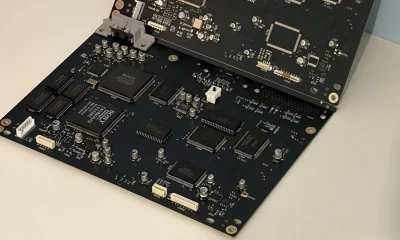
Building A Reproduction PlayStation Motherboard
-
Crypto World4 days ago
XRP Ledger urges node upgrade after manifest flood
-

 Crypto World5 days ago
Moneyflip CEO charged in $40K murder-for-hire plot
You must be logged in to post a comment Login