
Business
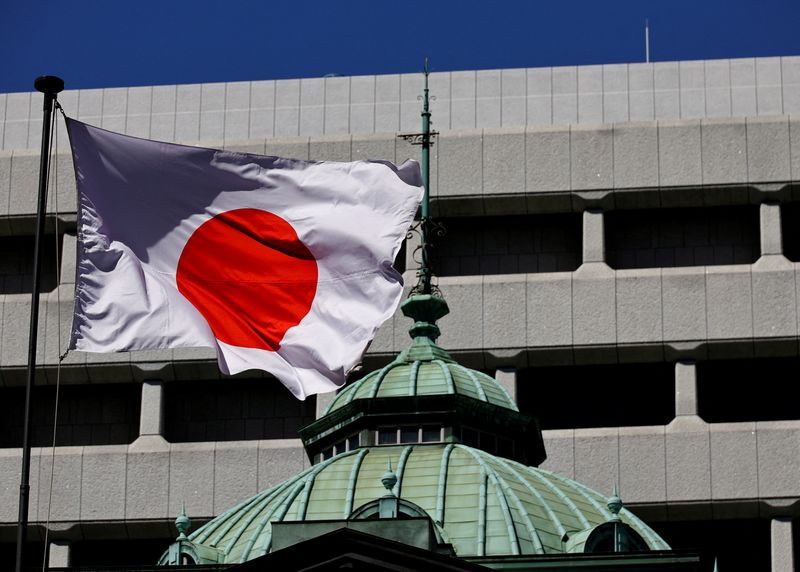
Analysis-Protracted Iran war narrows BOJ’s rate hike options



They are understood to have passed off some of the arbitrage deals, which were hit by the recent regulatory directives, as transactions done to hedge the capital received from overseas parents, two persons told ET.
Arbitrage deals are cut to profit from price differences in the local foreign exchange forward market and the offshore market for non-deliverable forwards (NDFs).
Banks were forced to unwind these deals after the Indian regulator slapped a uniform limit of $100 mn on the net open position (NOP) a
bank can have onshore.
However, some MNC banks are showing the capital that has come in earlier or flowed in recently from their head-offices as underliers for the onshore forward leg in the arbitrage deals. Thus, this buy-dollar forward contract with a proper underlier is shown as a transaction to cover the risk arising from a slide in the rupee – and not as any part of an arbitrage deal.

Foreign banks function as branches in India which are part of the global books. The capital coming in as dollars or euros into an MNC bank’s India operations, are converted into rupees to support and grow the business here.
“Technically, this may be a response to the NOP limit. But whether this explanation would stand regulatory scrutiny is unclear as RBI may tend to look into the timeline – when the capital came in, when the forward deals were struck, which of these are now claimed as hedges, how they were accounted for, etc. Also, are there communications between India and the HQ to back the explanation?” said another person.THE NDF DEALS
When the rupee comes under pressure, banks cut arbitrage deals by buying dollar forward in India and selling dollar forward in the NDF market which has been flourishing in London, Singapore, Hong Kong, and New York since the ‘90s when foreign portfolio managers,hedge funds and others explored ways to bet on the USD-INR rate following partial convertibility of the rupee.
Typically, when geopolitical turmoil and sell off by foreign funds pulls down INR, the USD trades a little stronger (and INR quotes a tad weaker) in NDF compared to the onshore market. So, the USD-INR rate is higher in NDF than the forward USDINR rates in India.
MNC and Indian banks cash in on this by buying USD in the onshore forward market, and simultaneously selling USD-INR in the NDF market. Forward contracts with tenures of one to three months are the most liquid.
RBI came down heavily as the banks with their arb deals were providing liquidity to hedge funds and other international speculators who were shorting the INR. When these players shorted INR, they went long on USD and therefore bought USD-INR forward contracts in NDF. Their counterparties were the Indian banks selling USDINR forwards in the NDF – the offshore leg in the two-legged arbitrage deals.
REGULATORY BYPASS
The central bank, which rushed in with restrictions in two phases, had also taken an exception to the practice of corporates in India, who cannot access the NDF, using banks to enter the offshore market. Since USD-INR was slightly higher in NDF, large corporate exporters would sign forward deals with banks in India which did a backto-back deal in the NDF market to offer the companies rates that are very close to the NDF rate – thus, allowing clients to convert more rupees from their export proceeds. This partly shifted liquidity from the onshore to offshore market.
While a forex dealer or a corporate treasurer may find such company-bank-NDF deals kosher, legal practitioners would find them in violation of the central tenet of the Foreign Exchange Management Act: what cannot be done directly, cannot be done indirectly.

IXN: Global Tech Leadership Remains, Eyeing A New Record High
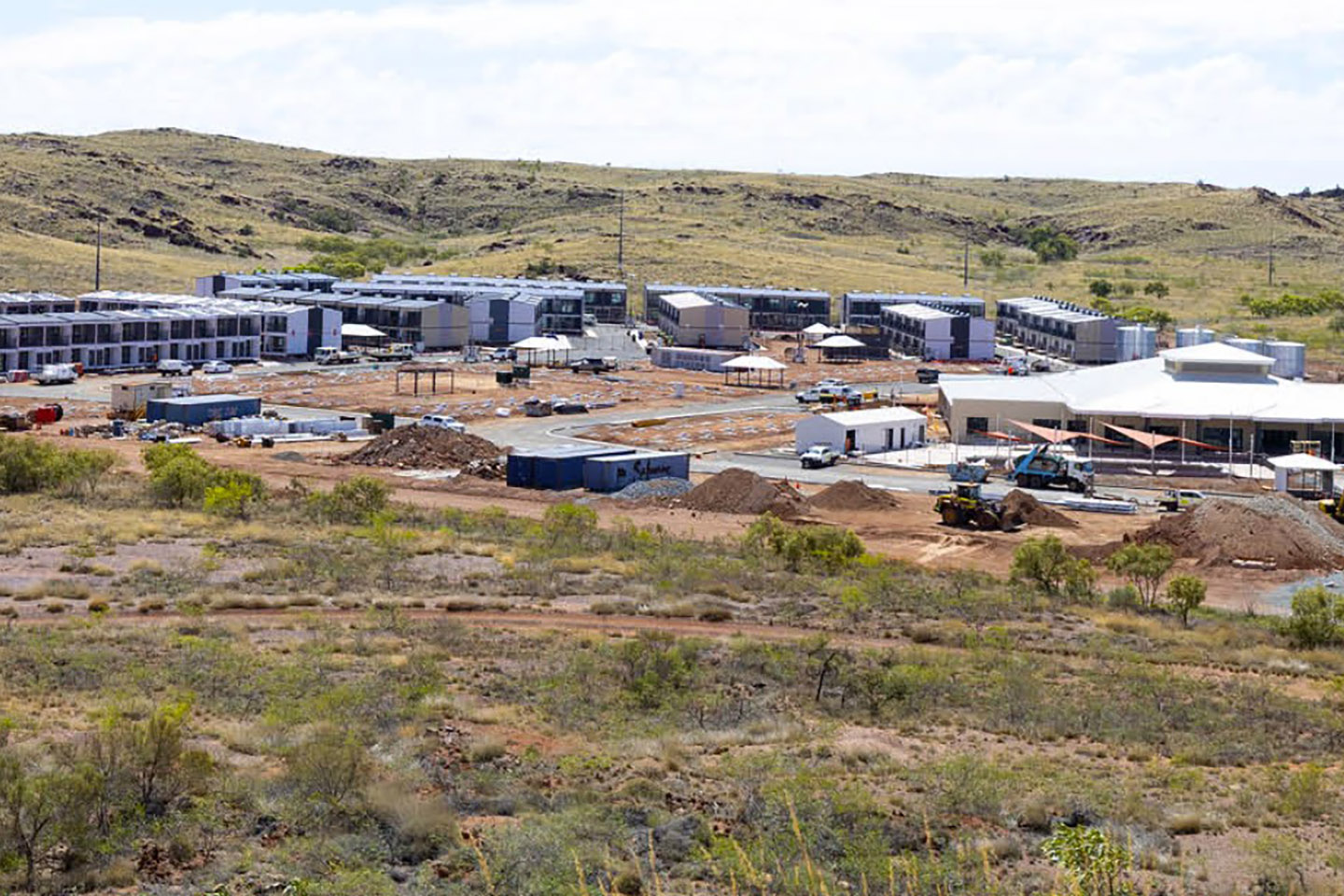
The flexible design of a large modular camp on the outskirts of Karratha could lend itself to townhouse living.

US Foods Holding: A Truly Defensive Winner Of The Trade-Down Economy
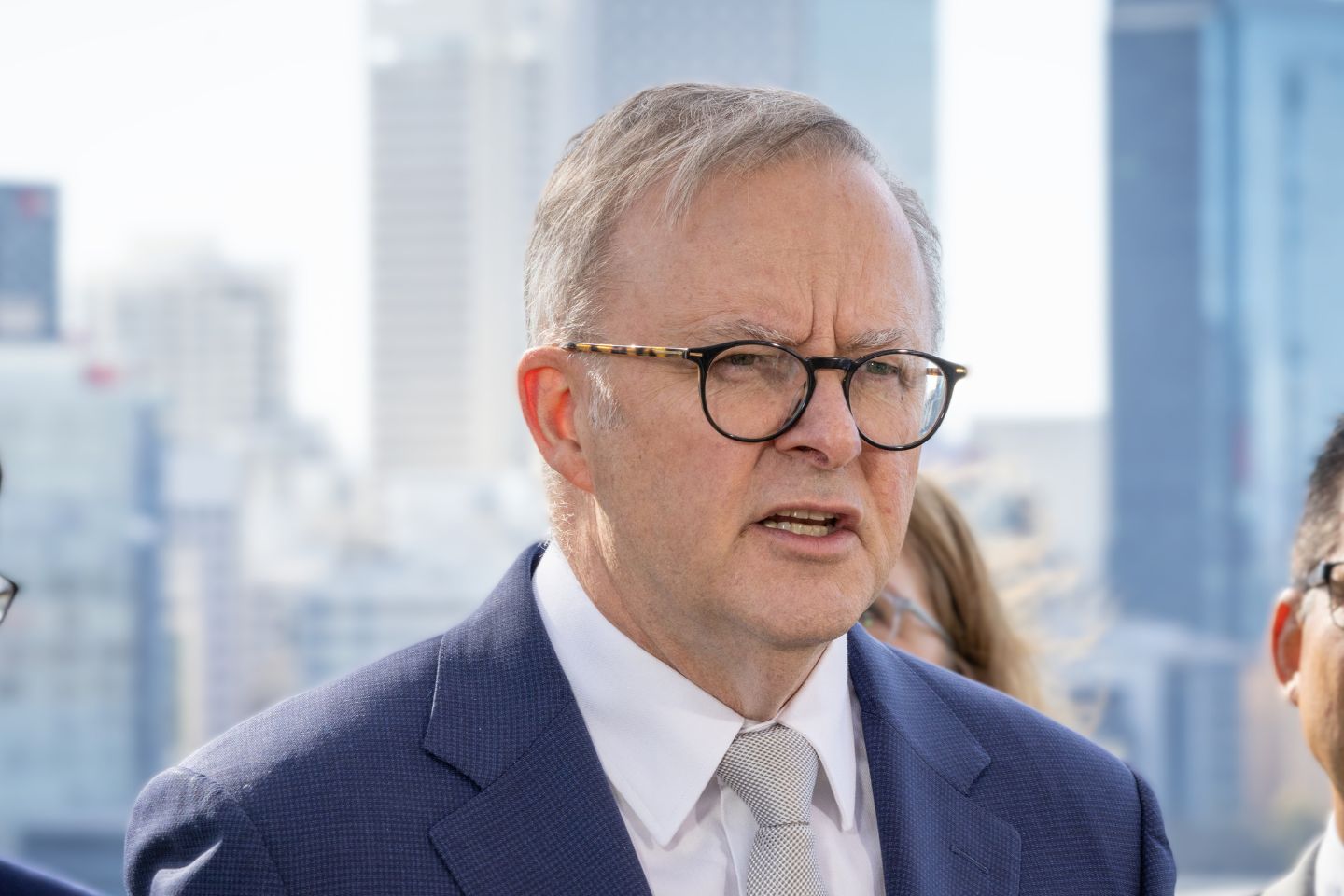
Australia has not been asked to help stop ships travelling through the critical Middle East waterway and doesn’t expect to be, the prime minister says.

The long-short ratio-the proportion of bullish (long) positions to bearish (short)-of foreign portfolio investors’ Nifty futures wagers rose to 22% on Friday, close to the 18-21% range seen in the last week of February before the start of the US-Iran clash on February 28.
The reading had fallen to 9.9% on March 13 and stayed between 10% and 18% for most of the fighting period as these investors had increased the hedges against their portfolios. The ratio had made a lifetime low of 5.98% on September 30, 2025.
 ET Bureau
The short covering came amid Nifty’s weekly gains of 5.9% until Friday, when it ended at 24,050.6, its highest closing level in a month.
“FIIs had begun covering shorts in the derivatives segment in the past few days, signalling early reversal cues,” said Nilesh Jain, head of technical and derivatives research, Centrum Finverse.. “Friday’s return to buying in the cash market after multiple sessions is a positive development and could support further pullback alongside continued short covering.”
FPIs were buyers to the tune of ₹672 crore in the cash market on Friday, after remaining sellers in all trading sessions in March and April so far. Further cuts in bearish positions will depend on the progress of the US-Iran talks, which began on a sour note over the weekend . “While the long-short ratio has improved due to short covering, we do not see many fresh long additions, suggesting that FIIs remain cautious rather than bullish,” said Siddarth Bhamre, head of institutional research at Asit C Mehta. “Continued selling in cash markets with one day of pause is not a sign of a U-turn in sentiment.” Since end of September 2024, when the downtrend in Indian equities kicked in, the long-short ratio of FPIs’ Nifty futures positions has mostly stayed between 10% and 20%, indicating predominantly bearish bets. Before the slide started, the reading was at 81%.
Somil Mehta, head of retail research at Mirae Asset Sharekhan said the shift in the ratio is yet to show foreigners are back to their bullish ways. “Sustained improvement in their sentiment will depend on stability in global factors like crude oil prices and geopolitical developments,” he said. The progress in companies’ fourth quarter earnings will be one of the factors for foreigners to revisit their stance on Indian equities.
“If earnings remain under pressure, valuations may not be attractive to foreign investors. They are also likely to wait for currency stability in India,” said Bhamre.
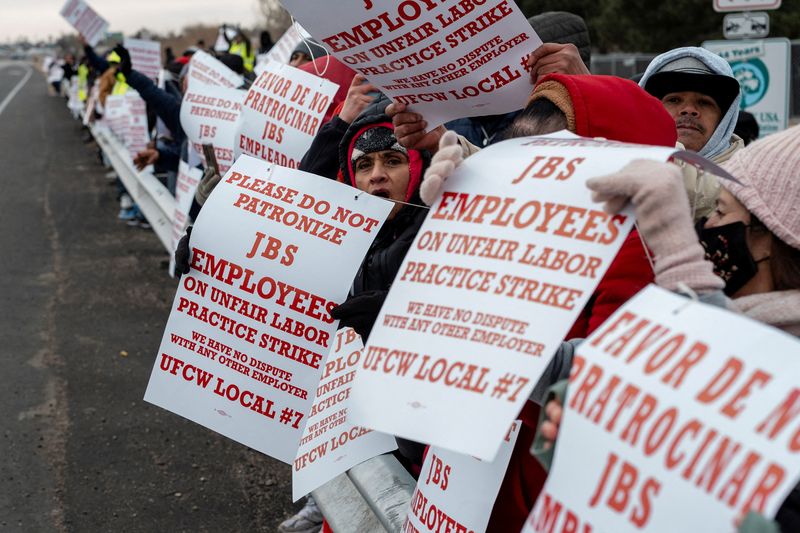

Meatpacker JBS reaches tentative agreement with striking Colorado workers

Muji owner Ryohin Keikaku shares rise on upbeat earnings, guidance hike
Mastercard: Finding Reasons For The Selloff (Rating Upgrade)

As green bond and loan activity cools elsewhere, the Asia Pacific region is emerging as a rare engine of growth in the world’s sustainable finance market, according to a new report from ING.
Key takeaways
- Asia Pacific bucked a global decline in sustainable finance in 2025, posting strong growth in green bonds and loans driven by financial institutions and corporations.
- ING forecasts a rebound in global sustainable issuances to US$1.621 trillion in 2026, with Asia Pacific expected to lead momentum through transition finance.
- While EMEA remains the largest sustainable finance market, corporate appetite there is softening, making Asia Pacific’s real-economy demand increasingly decisive for global growth.
Despite mounting geopolitical and economic turbulence rattling global markets, the Asia Pacific is holding its ground and in some areas, pulling ahead in sustainable finance. That is the central finding of Dutch banking group ING’s latest Sustainable Finance Pulse report, which paints an increasingly divergent picture between a softening West and a resilient, growing East.
Globally, sustainable issuances totalled US$1.557 trillion in 2025, a decline of roughly 6.7 per cent from the US$1.669 trillion raised the previous year. Yet within that subdued global picture, Asia Pacific stands out. The region recorded strong year-on-year growth in green bonds and green loans in 2025, even as sustainability-linked loans and transition bonds experienced a modest pullback.
The drivers of that growth are notable. Financial institutions and corporations led the expansion, while governments, supranational firms, and sovereign funds and agencies saw a slight decline in activity. ING also reported record-high sustainable finance volumes in the region last year, driven by robust deal activity across the first three quarters and its leading role as sustainable finance coordinator on the majority of its transactions.
A Pivot Point for Transition Finance
Looking ahead, ING is cautiously optimistic. “In 2026, we expect to see more growth from Asia Pacific and potentially a pick-up in transition issuance as policy frameworks continue to develop across the region,” said Martijn Hoogerwerf, head of ING’s sustainable solutions group in Asia Pacific. The bank specifically flagged the possibility of a rebound in transition bond debt, instruments designed to help carbon-intensive industries shift toward cleaner operations, as regulatory architecture matures across regional markets.
The demand underpinning this growth, ING argues, is structural rather than speculative. “The resilience of Asia Pacific’s sustainable finance market is increasingly underpinned by real-economy demand in areas such as energy, infrastructure and digital capacity,” said Anand Sachdev, country manager for ING Singapore and head of South and Southeast Asia.
Sachdev also pointed to a shift in client priorities. Companies in the region are increasingly focused on “practical, bankable green and transition financing solutions,” underscoring the growing importance of structuring expertise in delivering credible decarbonisation pathways.
Contrast with EMEA
The contrast with Europe, the Middle East and Africa is striking. While EMEA is expected to remain the largest source of sustainable finance globally in 2026, its growth will be led by governments and financial institutions, even as corporate issuances see a notable decline. ING attributes this partly to the relative ease of accessing conventional, non-ESG-linked debt, and describes sustainability-linked instruments in the region as a weak spot.
Bucking that trend within EMEA, however, is Central and Eastern Europe. Sustainable issuances there surged 40 per cent year-on-year in 2025, driven by sovereigns and state-owned enterprises.
A Cautious Global Rebound Expected
Despite the global dip in 2025, ING sees reasons for renewed confidence. The bank is forecasting a recovery to around US$1.621 trillion in sustainable issuances for 2026, pointing to a relatively strong start to the year with US$257 billion coming to market in January and February alone. March, however, brought a slowdown as market volatility linked to conflict in the Middle East weighed on sentiment.
For the Asia Pacific, the trajectory appears more insulated. With policy frameworks catching up to market appetite and corporations seeking credible paths to decarbonisation, the region looks set to play an increasingly central role in shaping how the world finances its climate transition.
Other People are Reading
Global banks play hedge card after RBI blow on rupee bets
“Euphoria” season 3 premiere reveals what happened to Fezco after actor Angus Cloud's death

easyJet passengers ‘vomiting and close to passing out’ after 3-hour Milan queues


-

 Politics2 days ago
US brings back mandatory military draft registration
-

 Fashion2 days ago
Weekend Open Thread: Veronica Beard
-
 Sports2 days ago
Man United discover Nico Schlotterbeck transfer fee as defender reaches Dortmund agreement
-

 Tech5 days ago
How Long Can You Drive With Expired Registration? What Florida Law Says
-

 Politics12 hours ago
World Cup exit makes Italy enter crisis mode
-

 Crypto World4 days ago
Canary Capital Files SEC Registration for PEPE ETF
-

 Fashion7 days ago
Massimo Dutti Offers Inspiration for Your Summer Mood Board
-

 Business2 days ago
Tesla Model Y Tops China Auto Sales in March 2026 With 39,827 Registrations, Beating Cheaper EVs and Gas Cars
-

 Fashion5 days ago
Let’s Discuss: DEI in 2026
-

 Crypto World5 days ago
Bitcoin recovers as US and Iran Agree a Ceasefire Deal
-

 Politics3 days ago
Malcolm In The Middle OG Turned Down ‘Buckets Of Money’ To Appear In Reboot
-
 NewsBeat4 hours ago
Pep Guardiola and Gary Neville agree over Arsenal title problem that benefits Man City
-

 Business3 days ago
OpenAI Halts Stargate UK Data Centre Project Over Energy Costs and Copyright Row
-

 Tech7 days ago
Italian court says Netflix must refund customers up to $576 over price hikes
-

 Tech7 days ago
Haier is betting big that your next TV purchase will be one of these
-

 Business1 day ago
Ireland Fuel Protests Enter Day 5 as Blockades Spark Shortages and Government Prepares Support Package
-

 Tech7 days ago
Gamer Restores the Original PlayStation Portal From Two Decades Ago
-

 Tech7 days ago
The Xiaomi 17 Ultra has some impressive add-ons that make snapping photos really fun
-

 Tech7 days ago
Samsung just gave up on its own Messages app
-

 Tech7 days ago
Save $130 on the Samsung Galaxy Watch 8 Classic: rotating bezel, sleep coaching, and running coach for $369
You must be logged in to post a comment Login