
Business
Asia Pacific Defies Global Slowdown in Sustainable Finance


As green bond and loan activity cools elsewhere, the Asia Pacific region is emerging as a rare engine of growth in the world’s sustainable finance market, according to a new report from ING.
Key takeaways
- Asia Pacific bucked a global decline in sustainable finance in 2025, posting strong growth in green bonds and loans driven by financial institutions and corporations.
- ING forecasts a rebound in global sustainable issuances to US$1.621 trillion in 2026, with Asia Pacific expected to lead momentum through transition finance.
- While EMEA remains the largest sustainable finance market, corporate appetite there is softening, making Asia Pacific’s real-economy demand increasingly decisive for global growth.
Despite mounting geopolitical and economic turbulence rattling global markets, the Asia Pacific is holding its ground and in some areas, pulling ahead in sustainable finance. That is the central finding of Dutch banking group ING’s latest Sustainable Finance Pulse report, which paints an increasingly divergent picture between a softening West and a resilient, growing East.
Globally, sustainable issuances totalled US$1.557 trillion in 2025, a decline of roughly 6.7 per cent from the US$1.669 trillion raised the previous year. Yet within that subdued global picture, Asia Pacific stands out. The region recorded strong year-on-year growth in green bonds and green loans in 2025, even as sustainability-linked loans and transition bonds experienced a modest pullback.
The drivers of that growth are notable. Financial institutions and corporations led the expansion, while governments, supranational firms, and sovereign funds and agencies saw a slight decline in activity. ING also reported record-high sustainable finance volumes in the region last year, driven by robust deal activity across the first three quarters and its leading role as sustainable finance coordinator on the majority of its transactions.
A Pivot Point for Transition Finance
Looking ahead, ING is cautiously optimistic. “In 2026, we expect to see more growth from Asia Pacific and potentially a pick-up in transition issuance as policy frameworks continue to develop across the region,” said Martijn Hoogerwerf, head of ING’s sustainable solutions group in Asia Pacific. The bank specifically flagged the possibility of a rebound in transition bond debt, instruments designed to help carbon-intensive industries shift toward cleaner operations, as regulatory architecture matures across regional markets.
The demand underpinning this growth, ING argues, is structural rather than speculative. “The resilience of Asia Pacific’s sustainable finance market is increasingly underpinned by real-economy demand in areas such as energy, infrastructure and digital capacity,” said Anand Sachdev, country manager for ING Singapore and head of South and Southeast Asia.
Sachdev also pointed to a shift in client priorities. Companies in the region are increasingly focused on “practical, bankable green and transition financing solutions,” underscoring the growing importance of structuring expertise in delivering credible decarbonisation pathways.
Contrast with EMEA
The contrast with Europe, the Middle East and Africa is striking. While EMEA is expected to remain the largest source of sustainable finance globally in 2026, its growth will be led by governments and financial institutions, even as corporate issuances see a notable decline. ING attributes this partly to the relative ease of accessing conventional, non-ESG-linked debt, and describes sustainability-linked instruments in the region as a weak spot.
Bucking that trend within EMEA, however, is Central and Eastern Europe. Sustainable issuances there surged 40 per cent year-on-year in 2025, driven by sovereigns and state-owned enterprises.
A Cautious Global Rebound Expected
Despite the global dip in 2025, ING sees reasons for renewed confidence. The bank is forecasting a recovery to around US$1.621 trillion in sustainable issuances for 2026, pointing to a relatively strong start to the year with US$257 billion coming to market in January and February alone. March, however, brought a slowdown as market volatility linked to conflict in the Middle East weighed on sentiment.
For the Asia Pacific, the trajectory appears more insulated. With policy frameworks catching up to market appetite and corporations seeking credible paths to decarbonisation, the region looks set to play an increasingly central role in shaping how the world finances its climate transition.
Other People are Reading


Apple: Wait For A Drop

A slump in forward bookings has prompted a third of tourism businesses to cut down on employee numbers and staff hours, according to Tourism Council WA.
Business
Buffett Describes Investing Environment as Not Ideal. And He's Glad Powell Is Staying at Fed.
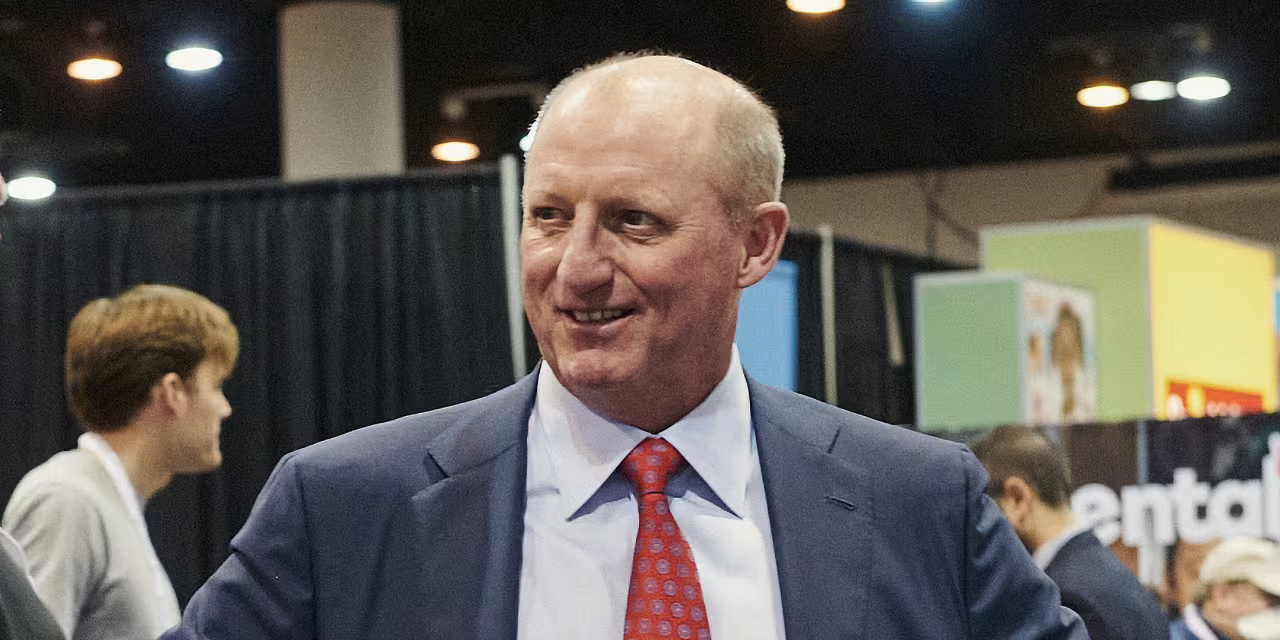
Buffett Describes Investing Environment as Not Ideal. And He's Glad Powell Is Staying at Fed.
Perth-founded proptech Openn Negotiation has been removed from the Australian Stock Exchange after a two-year trading hiatus through several financial woes.
Anthropic close to finalizing $1.5 bln AI venture with Wall St firms- WSJ

Datavault AI raises $60 million in registered direct offering

Dollar steady, Asia FX flat as M.East uncertainty, rate jitters persist
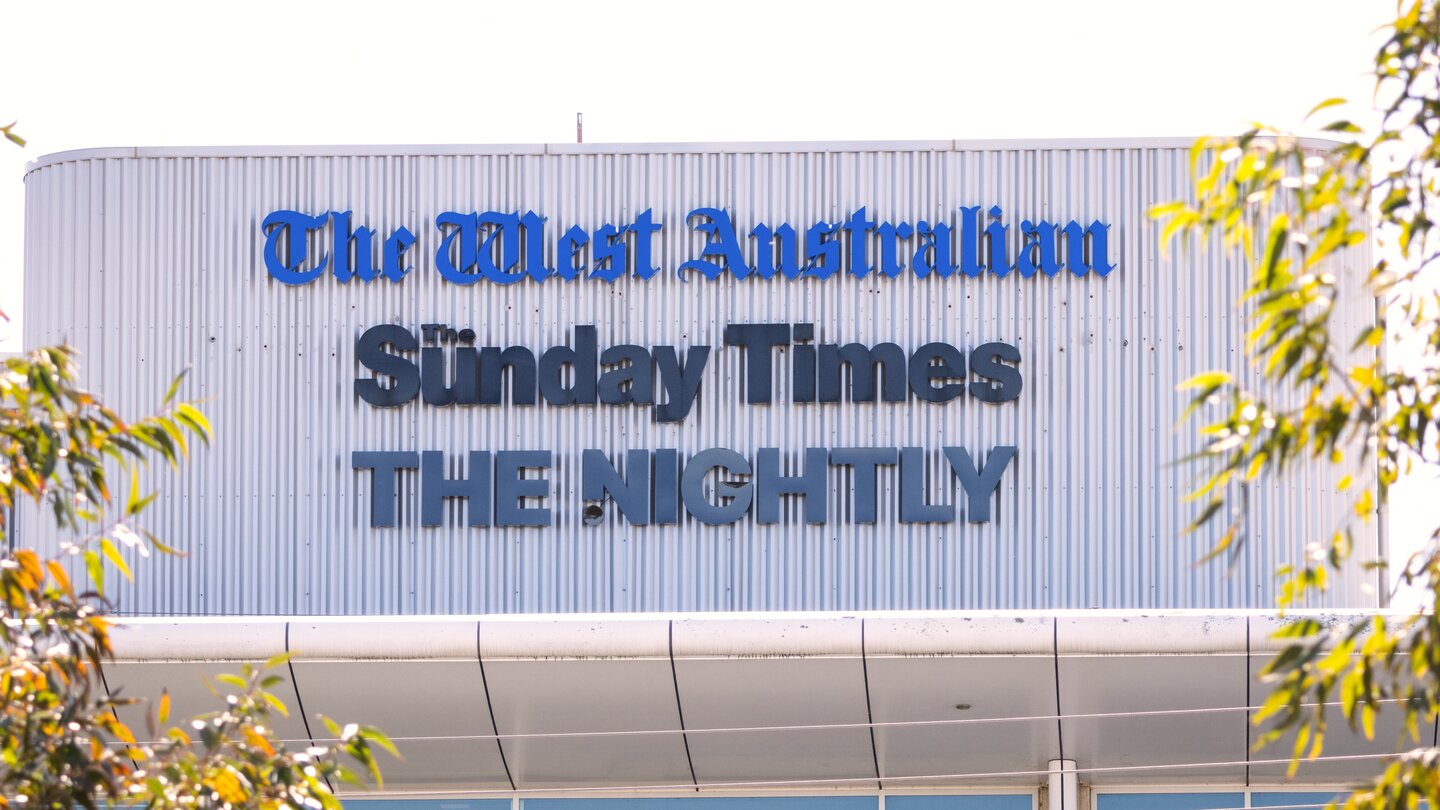
Southern Cross Media Group chair Heith Mackay-Cruise is the latest victim of the battle for control of the media conglomerate, which owns the Seven television network and The West Australian newspaper.


I have been working in the logistics sector for almost two decades. I have been into stock investing and macroeconomic analysis for almost a decade. Currently, I focus on ASEAN and NYSE/NASDAQ Stocks, particularly in banks, telco, logistics, and hotels. Since 2014, I have been trading on the PH stock market. I focus on banking, telco, and retail sectors. A colleague encouraged me to engage in the stock market as part of my portfolio diversification instead of putting all my savings in banks and properties. That was also the year when insurance companies became very popular in the PH. Initially, I invested in popular blue-chip companies. Now, I have investments across different industries and market cap sizes. There are stocks I hold for my retirement, while others are purely for trading profits. In 2020, I also entered the US Market. It was about a year after I discovered Seeking Alpha. Originally, I was using the trading account of NY CA-based cousin. Somehow, I acted like his personal broker. That made me more aware of the US market before deciding to open my own account. I decided to write for Seeking Alpha to share and gain more knowledge since I have been trading on the US market for only four years. Like in the ASEAN market, I have holdings in US banks, hotels, shipping, and logistics companies. I discovered it in 2018. Since then, I have been using the analyses here to compare them to the ones I’m doing in the PH Market.
Analyst’s Disclosure: I/we have no stock, option or similar derivative position in any of the companies mentioned, and no plans to initiate any such positions within the next 72 hours. I wrote this article myself, and it expresses my own opinions. I am not receiving compensation for it (other than from Seeking Alpha). I have no business relationship with any company whose stock is mentioned in this article.
Seeking Alpha’s Disclosure: Past performance is no guarantee of future results. No recommendation or advice is being given as to whether any investment is suitable for a particular investor. Any views or opinions expressed above may not reflect those of Seeking Alpha as a whole. Seeking Alpha is not a licensed securities dealer, broker or US investment adviser or investment bank. Our analysts are third party authors that include both professional investors and individual investors who may not be licensed or certified by any institute or regulatory body.

Seacor Marine Holdings: Unlocking Value Through Strategic Asset Sales – Buy
Stablecoin Firms $112B Opportunity LATAM Remittance Market
21 Gingham Clothing Finds on Amazon for Spring 2026

Coway Airmega Mighty2 Review: The Sequel Is Better Than the Original

Manchester United reach agreement with Casemiro over contract clause amid transfer speculation

US brings back mandatory military draft registration

Steven Gerrard disagrees with Gary Neville over ‘shock’ Chelsea and Arsenal claim | Football

HUGE XRP WEEK AHEAD?! – 1000 XRP = WEALTH?! – 65% SIDELINED STILL!

Financial Instruments Revision | All Concepts + Imp Ques | CA Final FR Revision | CA Aakash Kandoi

Adrien Broner now asking for money and financial assistance just to secure and afford uber ride
-

 Tech6 days ago
Register Renaming | Hackaday
-

 Politics6 days ago
Drax board avoid their own AGM, accused of greenwashing & environmental racism
-

 Fashion5 days ago
Kylie Jenner’s KHY Enters a New Era with ‘Born in LA’
-

 Tech7 days ago
Why Blue Badges Disappeared From Toyota Hybrids
-

 Tech6 days ago
Images of Samsung’s rumored smart glasses have leaked
-
 Tech2 days ago
Trump’s 25% EU auto tariff breaches Turnberry Agreement that also covers semiconductors and digital trade
-

 NewsBeat11 hours ago
Channel 5 – All Creatures Great and Small series 7 new post
-

 Business5 days ago
Most Commercial Energy Audits Miss the Real Losses
-

 Business7 days ago
(VIDEO) Charlize Theron Climbs Times Square Billboard to Promote New Netflix Thriller ‘Apex’
-

 Crypto World6 days ago
CFTC’s AI will review U.S. crypto registration applications, chairman tells CoinDesk
-
 Sports2 days ago
Paul Scholes issues Marcus Rashford reality check as agreement emerges over Man United star
-

 Business5 days ago
Barclay Brothers Avoid Bankruptcy: HSBC Drops High Court Petitions After IVA Deal
-
 Entertainment7 days ago
Alicia Keys Calls Out Music Industry ‘Boys Club’
-
 Business4 days ago
Tesla Officially Registers Elon Musk’s Stock: What Investors Need to Know
-

 Tech6 days ago
Get Ready for More Brain-Scanning Consumer Gadgets
-
 Crypto World6 days ago
Robinhood Phishing Scam Exploits Gmail Dot Feature to Bypass Security
-

 Entertainment6 days ago
Sister Wives: Janelle Posts New Scary Warning
-

 Crypto World6 days ago
Gmail Dot Trick Underpins Robinhood Phishing, Sending Real-Looking Emails
-

 Business3 days ago
Two Powerball Tickets Split $143 Million Jackpot in Indiana and Kansas
-

 Tech7 days ago
The next iPhone moment might come from an AI company, not Samsung or Apple
You must be logged in to post a comment Login