Connect with us
DAPA Banner
DAPA Coin
DAPA
COIN PAYMENT ASSET
PRIVACY · BLOCKDAG · HOMOMORPHIC ENCRYPTION · RUST
ElGamal Encrypted MINE DAPA
🚫 GENESIS SOLD OUT
DAPAPAY COMING

Business

Analysts Say Strong Buy with $250+ Targets Amid AI Cloud Boom

Published

on

Oracle is the latest global tech titan to announce major digital investments in Southeast Asia

NEW YORK — Oracle Corporation (NYSE: ORCL) stock draws a resounding “Buy” recommendation from Wall Street in May 2026, with consensus ratings of Moderate Buy to Strong Buy and average 12-month price targets implying 30-50% upside from current levels near $175–$183. Despite volatility from heavy AI infrastructure spending and a year-to-date pullback, the database and cloud giant’s explosive remaining performance obligations (RPO), cloud revenue growth and strategic positioning in artificial intelligence infrastructure position it as a favored long-term holding for many investors.

As of early May 2026, Oracle shares trade around $175–$182 after recovering modestly from earlier 2026 lows. The stock has faced pressure amid broader tech sector rotations and concerns over elevated capital expenditures, yet analysts overwhelmingly see current valuations as attractive given Oracle’s fundamentals and AI tailwinds.

Strong Analyst Consensus

Across 35–55 covering analysts, Oracle earns predominantly Buy or Strong Buy ratings, with very few Holds and minimal Sells. Average 12-month price targets range from $220 to $260, with highs reaching $400 and lows near $155–$160. This suggests substantial potential upside, with some models projecting even higher returns if cloud and AI momentum accelerates.

Advertisement

Firms like Guggenheim, Bank of America and others maintain bullish stances, citing Oracle’s massive RPO backlog — which surged over 300% year-over-year in recent quarters — as evidence of sustained demand for its cloud offerings.

Fiscal 2026 Performance and Earnings Highlights

Oracle has delivered solid results through its fiscal year. In Q3 FY2026 (reported March 2026), the company posted revenue of about $17.19 billion (up ~22% YoY) and beat EPS estimates. Remaining Performance Obligations reached $553 billion, up 325% year-over-year, signaling strong future revenue visibility driven by cloud infrastructure and AI-related deals.

Earlier quarters showed cloud revenue growth exceeding 25–28%, fueled by demand for Oracle Cloud Infrastructure (OCI) used in large-scale AI training and deployment. However, higher capex for data centers has weighed on near-term margins and free cash flow, contributing to stock volatility.

Advertisement

Bull Case: AI and Cloud Leadership

Supporters highlight Oracle’s transformation into a major cloud player. Its focus on high-performance computing for AI, strategic partnerships and ability to win large enterprise contracts differentiate it from competitors. Analysts project continued double-digit revenue growth, with some bull scenarios seeing the stock reaching $300–$344 within 12–18 months if RPO converts efficiently.

Valuation remains reasonable relative to growth prospects, with forward multiples that many view as discounted compared to pure-play cloud peers. Dividend growth and share repurchases add to shareholder returns.

Risks and Bear Concerns

Advertisement

Critics point to execution risks around heavy AI spending, rising debt levels and potential delays in monetizing infrastructure investments. A tougher macroeconomic environment or slower AI adoption could pressure results. Some analysts trimmed targets after recent quarters, citing margin compression.

Short-term volatility remains a factor, with the stock sensitive to quarterly guidance and broader tech sentiment. A deeper market correction could test lower support levels.

Investment Considerations for 2026

For growth-oriented investors, Oracle offers exposure to enterprise software stability plus high-growth cloud and AI opportunities. Long-term holders may benefit from dollar-cost averaging during dips. Those concerned about capex timing might prefer a more cautious allocation or wait for clearer cash flow inflection.

Advertisement

Financial advisors often recommend tech holdings like Oracle as part of diversified portfolios, especially for those seeking AI adjacency without pure-play startup risk. Position sizing should reflect individual risk tolerance given sector volatility.

Broader Market Context

Oracle’s story mirrors other Big Tech names balancing massive AI investments with profitability. Its hybrid cloud-database strengths provide a moat in enterprise markets where data sovereignty and performance matter. As AI infrastructure demand grows, Oracle is well-placed to capture share.

Upcoming earnings, macroeconomic data and AI spending trends will influence sentiment through the rest of 2026. Analysts will closely watch cloud bookings, margin trends and progress on capital efficiency.

Advertisement

Conclusion: Favored as a Buy for Most Investors

The overwhelming Wall Street consensus tilts strongly toward buying Oracle stock in 2026. Structural growth drivers in cloud and AI, combined with a solid backlog and reasonable valuation, outweigh near-term spending concerns for most analysts. While risks around execution and macro conditions exist, current levels appear attractive for those with a medium-to-long-term horizon.

Investors should perform their own research, consider diversification and consult professionals. Oracle is not without volatility, but the balance of evidence supports its role as a core tech holding with meaningful upside potential as AI infrastructure spending translates into sustained revenue and profits.

Advertisement
Continue Reading
Click to comment

You must be logged in to post a comment Login

Leave a Reply

Business

Navitas Semiconductor Shares Surge 22% on NVIDIA AI Partnership and Power Chip Momentum

Published

on

Buy or Sell Navitas Semiconductor Stock in 2026? Analysts Split

NEW YORK — Navitas Semiconductor Corporation shares skyrocketed more than 22% on Wednesday, climbing to $31.61 as investors reacted enthusiastically to the company’s growing role in powering next-generation artificial intelligence data centers through advanced gallium nitride technology.

The California-based semiconductor firm, which specializes in GaN and silicon carbide power chips, saw heavy trading volume as its collaboration with NVIDIA’s AI ecosystem took center stage at Computex 2026 in Taipei. Navitas demonstrated an 800V-to-6V DC-DC power delivery board featuring its GaNFast technology, achieving up to 97.5% efficiency and high power density critical for megawatt-scale AI infrastructure.

The announcement aligned with NVIDIA’s push toward higher-voltage architectures to handle the enormous energy demands of modern AI servers. Traders quickly bid up Navitas shares, adding roughly $1.3 billion in market capitalization in morning trading alone. The stock had traded around $25.86 at the previous close.

Navitas has positioned itself as a key player in the shift toward more efficient power conversion solutions for AI data centers. Its GaN and SiC technologies address critical challenges including heat management, energy efficiency and space constraints in high-performance computing environments. The company’s participation in NVIDIA’s MGX Ecosystem highlights its growing relevance in the AI supply chain beyond traditional consumer electronics.

Advertisement

Analysts have increasingly highlighted power management semiconductors as the next major growth area in the AI boom, following memory chips and networking components. Navitas’ focus on high-efficiency solutions has resonated with investors seeking exposure to the infrastructure buildout supporting large language models and generative AI applications.

The company’s strategic pivot toward higher-value markets such as AI data centers, energy infrastructure and industrial electrification has driven recent momentum. In its first quarter 2026 results, Navitas reported revenue of $8.6 million, beating estimates, while outlining ambitious growth targets for its high-power GaN and SiC platforms.

Management has emphasized the massive secular opportunity in AI power electronics. The company’s 800V architectures and solid-state transformer demonstrations at industry events have drawn attention from data center operators facing unprecedented electricity demands. Navitas claims its solutions can significantly reduce energy consumption and cooling requirements compared to traditional silicon-based power systems.

Wall Street has responded positively to these developments. Several analysts raised price targets throughout 2026, with some firms citing strong potential for market share gains in AI-related power delivery. The stock’s year-to-date performance has been exceptional, reflecting growing conviction in its technology roadmap.

Advertisement

However, the company faces typical challenges for a growth-oriented semiconductor firm. Navitas continues to invest heavily in research and development while navigating supply chain dynamics and competition from larger established players. Gross margins and path to sustained profitability remain key metrics for investors.

The broader semiconductor sector has shown renewed strength in 2026, driven by AI capital expenditure from major technology companies. Navitas stands out due to its specialized focus on power efficiency, a critical bottleneck as data centers scale to handle increasingly complex AI workloads.

Industry events like Computex have become important catalysts for semiconductor stocks. Navitas’ prominent role in NVIDIA’s ecosystem demonstrations provided tangible validation of its technology in real-world AI applications. Such partnerships can accelerate customer adoption and revenue visibility.

Navitas has expanded its portfolio with new product launches tailored for AI infrastructure. Recent introductions include advanced SiC MOSFETs and high-voltage GaN devices optimized for data center power supply units. These products target improved thermal performance and power density, addressing operator priorities around efficiency and reliability.

Advertisement

Financially, the company has strengthened its position through equity offerings and strategic initiatives. While still in a growth investment phase, Navitas has made progress toward positive cash flow and scalable operations. Management continues guiding for sequential revenue growth as AI-related demand ramps up.

Investor enthusiasm reflects optimism about the long-term AI infrastructure cycle. Data centers are expected to consume enormous amounts of electricity in coming years, making efficient power conversion technologies increasingly valuable. Navitas’ GaN solutions offer advantages in switching speed and size that appeal to system designers.

The stock’s sharp move on Wednesday came amid elevated trading volume, indicating strong participation from both institutional and retail investors. Such surges often reflect momentum trading layered on improving fundamentals and positive news flow.

Looking ahead, Navitas will need to execute on its growth plans while managing execution risks common in the semiconductor industry. Key metrics to watch include design win momentum, gross margin expansion and progress toward profitability targets.

Advertisement

The company’s success could have broader implications for the power electronics sector. As AI infrastructure expands globally, specialized players like Navitas may capture significant value in what some analysts describe as the “picks and shovels” of the AI revolution.

Navitas Semiconductor has transformed from a relatively niche player into a notable name in the AI supply chain narrative. Its technology addresses real constraints in modern data centers, giving it potential for sustained growth as long as AI investment continues at current levels.

For investors, the recent surge underscores both opportunity and volatility inherent in semiconductor stocks tied to emerging technologies. While the long-term thesis around AI power efficiency remains compelling, share prices can experience significant swings based on news flow and market sentiment.

As the trading day progressed, Navitas shares maintained strong gains, reflecting continued enthusiasm for its role in enabling more efficient AI computing. The company’s performance highlights how specialized technologies can drive outsized returns when aligned with major secular trends.

Advertisement

The semiconductor industry continues evolving rapidly, with power management emerging as a critical area for innovation. Navitas’ focus on GaN and SiC positions it well for this shift, particularly as energy efficiency becomes paramount in large-scale AI deployments.

Wednesday’s trading action reinforces Navitas’ status as a high-beta play on AI infrastructure spending. Whether the momentum sustains will depend on continued execution and broader market conditions for technology stocks.

Continue Reading

Business

Ford recalls 420,000 Expedition, Navigator SUVs over seat belt defect

Published

on

Ford recalls 420,000 Expedition, Navigator SUVs over seat belt defect

Ford recently announced a recall affecting nearly 420,000 Ford Expedition and Lincoln Navigator sport utility vehicles (SUVs) over an issue with seat belts locking and potentially causing injury to occupants during a crash.

The auto recall covers 342,283 Ford Expedition vehicles from model years 2018 to 2022, as well as 77,684 Lincoln Navigators in the same model years.

Advertisement

The National Highway Transportation Safety Administration (NHTSA) recall report explains that the seat belt retractor pretensioners may inadvertently deploy on the driver and front passenger seat belts, causing them to be in a locked position and unable to retract or extend.

The issue is noticeable to occupants and could cause injuries in the result of a crash because the seat belt wouldn’t retract or extend. The report notes that in some cases, the inadvertent deployment could injure occupants due to rapid seatbelt retraction.

FORD ISSUES URGENT ‘DO NOT DRIVE’ ADVISORY FOR BRONCO SPORT, MAVERICK MODELS OVER SUSPENSION DEFECT

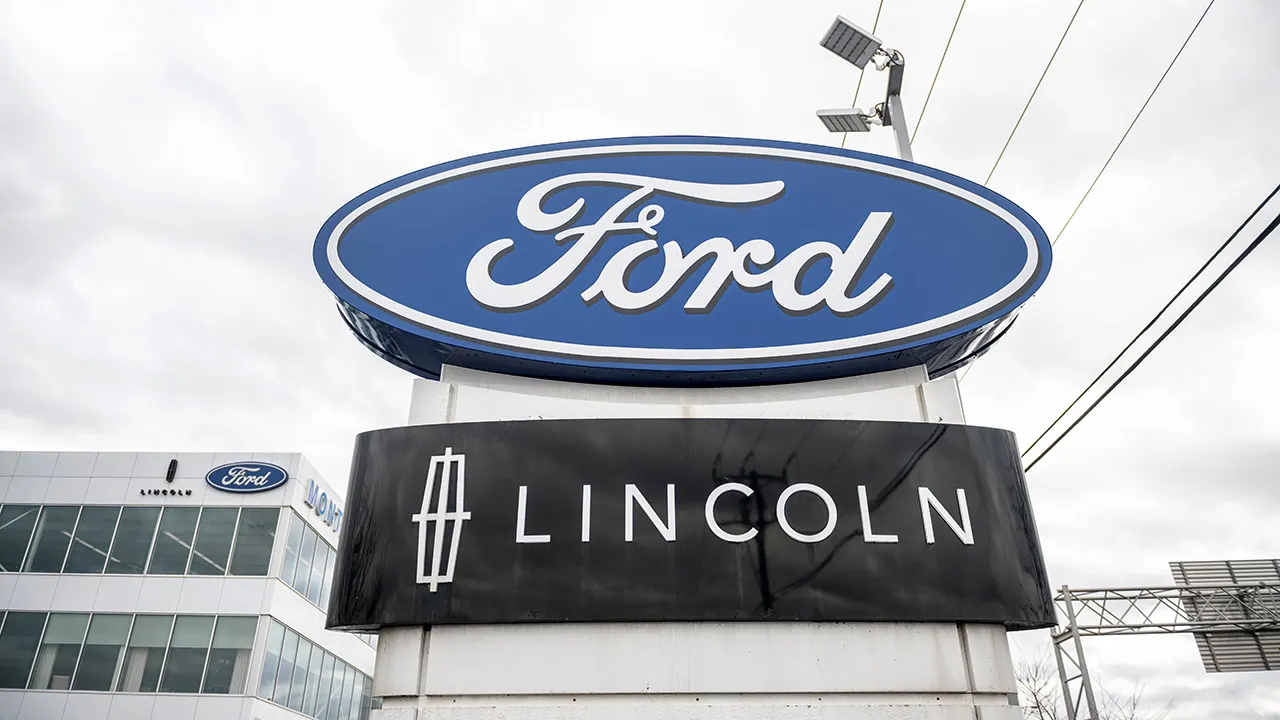
A Ford and Lincoln dealership's sign

Ford and Lincoln dealers will handle the inspection and potential replacement of the seat belt pretensioners. (Andrej Ivanov/Bloomberg via Getty Images)

The problem is caused by the degradation of the propellant used in the retractor pretensioner, which can occur in high-heat environments that result in the oxidation of internal components and, over time, lead to the inadvertent deployment of the pretensioner.

Advertisement

Owners of affected vehicles may notice an airbag malfunction light illuminating on their instrument cluster before an inadvertent deployment of the seat belt retractor pretensioner.

FORD RECALLS OVER 179,000 BRONCO AND RANGER VEHICLES OVER SEAT DEFECT

Ticker Security Last Change Change %
F FORD MOTOR CO. 15.75 -0.42 -2.60%

Ford conducted a series of tests and investigations into the issue starting in January 2026 following two previous recalls related to seat belt pretensioners, leading to its decision in May to issue a field service action.

The automaker said it’s aware of one injury globally that was related to this issue.

Advertisement

FORD RECALLS OVER 140,000 PICKUP TRUCKS OVER WIRING FIRE RISK

2022 Ford Expedition

The recall covers 2022 Ford Expeditions. (Jeff Kowalsky/AFP via Getty Images)

Owners of vehicles covered by the recall will be notified by mail and take their vehicle to a Ford or Lincoln dealership to have both front seat belt retractors inspected and to replace retractors that fall within the suspect production date range in which they may have been produced with the legacy propellant and stabilizer.

The mailing of interim vehicle owner notification letters is expected to begin next week on June 8 and completed by June 12. Mailing of remedy owner notification letters is expected to begin on Aug. 31 and be completed by Sept. 4.

GET FOX BUSINESS ON THE GO BY CLICKING HERE

Advertisement
Continue Reading

Business

Earnings call transcript: ChargePoint’s Q1 2027 Results Show Growth

Published

on


Earnings call transcript: ChargePoint’s Q1 2027 Results Show Growth

Continue Reading

Business

US stocks today: Dow Jones drops over 500 points as Middle East tensions escalate

Published

on

US stocks today: Dow Jones drops over 500 points as Middle East tensions escalate
Wall Street stocks pulled back from ​record highs on Wednesday as flaring tensions in the Middle East and rising crude prices stoked inflation jitters and convinced investors to take some profits.

All three major U.S. stock indexes closed in negative territory, dragged lower by financials and tech , with the small-cap Russell 2000 underperforming its larger-cap counterparts.

Chips advanced, indicating the artificial intelligence ‌fervor is alive ⁠and well. ⁠Still, most of the Magnificent Seven group of AI-related megacaps were lower.

“The AI names are trading on their own completely separate world, largely oblivious to macro and geopolitical ​risk, at least within reason,” said Ross Mayfield, investment strategy analyst at Baird in Louisville, Kentucky. “And so there’s going to be a bid for those ​names, especially on days where everything else looks a little bit less attractive.”

Advertisement

The S&P Software & Services index declined. It has been battered in recent months by fears of AI disruption.


Middle East hostilities intensified as the U.S. and Iran traded a new round of air strikes, ​the latest test of a shaky ceasefire.
Oil prices rose, adding to worries that upward ⁠pressure on energy prices ‌could metastasize into broader, systemic inflation.”This market continues to demonstrate a tug of war between fundamentals in the ​U.S. economy, which ​are incredibly positive, and concerns that the duration of the conflict in the Middle East will lead to ⁠downside risks,” said Bill Northey, senior investment director at U.S. Bank Wealth Management, Billings, Montana. “Our ​framework is centered around the duration of the closure of the Strait of Hormuz as ​the primary input to inflation expectations.”

“The longer the duration of that closure, the less likely the Federal Reserve will be able to ease in 2026,” Northey added.

In fact, financial markets are pricing more than a 40% likelihood of a rate hike at the conclusion of the U.S. Federal Reserve’s December meeting, up from 9.1% one month ago, according to CME’s FedWatch tool.

New York Fed President John Williams reiterated his position that the central bank does not need to change interest rates despite upside inflation risks, stating monetary policy is “in the right place.”

Advertisement

Economic ‌data suggested the labor market was stable, and the services sector continued to expand, but input prices remained elevated and corporate spending plans appeared soft amid rising energy costs and geopolitical uncertainties.

The Beige Book, the Fed’s ​regional economic survey, showed economic ​activity gathered steam in recent ⁠weeks, employment was little changed, but the fallout from higher energy prices due to the war was pervasive.

According to preliminary data, the S&P 500 lost 54.11 points, or 0.74%, to end at 7,555.67 points, while the Nasdaq Composite lost 230.97 points, or 0.85%, to 26,862.93. The Dow ​Jones Industrial Average fell 581.84 points, or 1.13%, to 50,725.95.

Among chipmakers, Marvell, Intel, Qualcomm , and Sandisk outperformed.

Advertisement

Asset managers dropped after Switzerland’s Partners Group capped withdrawals from an $8.6 billion private equity fund. KKR, Blackstone, Blue Owl and Ares Management all lost ground.

GameStop advanced after the original meme-stock posted a rise in quarterly revenue and unveiled a $2 billion share buyback program.

Elon Musk’s SpaceX plans to price its IPO at $135 a share to raise a record $75 billion, a source familiar with the matter told Reuters on Tuesday.

Broadcom results were expected shortly.

Advertisement
Continue Reading

Business

Rivian Automotive, Inc. (RIVN) Presents at UBS Auto and Auto Tech Conference 2026 Transcript

Published

on

OneWater Marine Inc. (ONEW) Q1 2026 Earnings Call Transcript

Rivian Automotive, Inc. (RIVN) UBS Auto and Auto Tech Conference 2026 June 3, 2026 1:50 PM EDT

Company Participants

Claire McDonough – Chief Financial Officer

Conference Call Participants

Advertisement

Joseph Spak – UBS Investment Bank, Research Division

Presentation

Joseph Spak
UBS Investment Bank, Research Division

Advertisement

Thanks, everyone, for joining us for the next session. Very pleased to have with us from Rivian, Claire McDonough, CFO.

Question-and-Answer Session

Advertisement

Joseph Spak
UBS Investment Bank, Research Division

So just to get started, Claire, I mean, a couple of things we want to sort of really touch on here. But I think first and foremost is the upcoming R2, right, which I think everyone is sort of pretty excited about. Maybe you can sort of just tell us about how the preparations for that vehicle are going. I think it start — officially sort of maybe opening things up to configuration sort of in the coming weeks. So where we are in the process and sort of how investors should sort of think about the cadence of R2 over the balance of the year?

Claire McDonough
Chief Financial Officer

Advertisement

Sure. Well, first off, Joe, thanks so much for having us. For those of you in the audience that haven’t seen it already, we do have an R2.

Joseph Spak
UBS Investment Bank, Research Division

Sorry, I should have mentioned that. Yes.

Advertisement

Claire McDonough
Chief Financial Officer

So definitely the better than listening to me is to go and experience the vehicle directly yourself, and you’ll understand what we’re going to talk about a little bit more today in terms of the intentionality in the design, the technology and the utility and performance that gets unlocked with the smaller and more affordable package that we’ve brought to market with R2. So on June 9, we’ll kick off the first

Advertisement
Continue Reading

Business

Hewlett Packard Enterprise Company (HPE) Presents at Bank of America 2026 Global Technology Conference Transcript

Published

on

OneWater Marine Inc. (ONEW) Q1 2026 Earnings Call Transcript

Q2: 2026-06-01 Earnings Summary

EPS of $0.79 beats by $0.26

 | Revenue of $10.68B (40.00% Y/Y) beats by $917.95M

Hewlett Packard Enterprise Company (HPE) Bank of America 2026 Global Technology Conference June 3, 2026 2:20 PM EDT

Company Participants

Shannon Cross – Senior VP, Chief Strategy Officer & Investor Relations

Advertisement

Conference Call Participants

Wamsi Mohan – BofA Securities, Research Division

Advertisement

Presentation

Wamsi Mohan
BofA Securities, Research Division

Welcome to Day 2 of Bank of America’s Global Tech Conference. I’m Wamsi Mohan. I cover IT hardware here for the bank. Delighted to welcome HP Enterprise today to the stage. We have Shannon Cross, who’s Chief Strategy Officer. A lot of you probably know Shannon Cross from her prior roles as well. So Shannon, welcome. Pleasure to have you here.

Advertisement

Shannon Cross
Senior VP, Chief Strategy Officer & Investor Relations

Thank you. Very excited to be here. It’s a great time to be talking about the company.

Advertisement

Question-and-Answer Session

Wamsi Mohan
BofA Securities, Research Division

Yes, absolutely. I mean this has been a pretty incredible earnings season from a hardware standpoint and you guys really knocked it out of the park. The question that we get a lot is how sustainable is this? And you expressed confidence by giving an outlook for ’27 as well. So I would love to — for you to frame that a little bit for everyone.

Advertisement

Shannon Cross
Senior VP, Chief Strategy Officer & Investor Relations

Sure. I think when we see what we — obviously, we’re very pleased with what we were able to report for the quarter, how we’re looking at the growth that we expect, I mean, in ’26, we took up our EPS target by 40%. And then we did provide a financial framework for ’27 that I think underscores our belief that what we’re seeing is durable and sustainable. What we’ve been getting in terms of questions clearly on the sustainability and durability side is far more on the server versus networking. I think

Advertisement
Continue Reading

Business

Cookies supporting focus, protein and sleep launch

Published

on

Cookies supporting focus, protein and sleep launch

Daughter of Mrs. Fields founder and her friend launch Fields Good company.

Continue Reading

Business

Constellium: Quality Segments, Better Cash Flow, And Still Reasonable Upside (NYSE:CSTM)

Published

on

Constellium SE: My Conviction Just Got A Boost As Earnings Come In Strong (NYSE:CSTM)

This article was written by

I’m an independent equity trader and licensed financial advisor focused on uncovering high-upside opportunities in overlooked sectors especially focusing on small-caps, energy, commodities, and special situations. My investment strategy is based on growth. I look for fundamental momentum (EPS, ROE, revenue), price-volume confirmation, and macro filters. I also use econometric tools and calculations to analyse market direction, cycles and behaviour. I’ve been managing personal capital since 2020 and advising under MiFID II since qualifying with a license. I hold a bachelor’s in Business Administration and Economics and am currently completing a master’s in Finance. My masters thesis topic: Impact of Financial Results Announcements on Stock Returns and Trading Volumes of Micro-Capitalization Gold Mining Companies.

Analyst’s Disclosure: I/we have no stock, option or similar derivative position in any of the companies mentioned, but may initiate a beneficial Long position through a purchase of the stock, or the purchase of call options or similar derivatives in CSTM over the next 72 hours. I wrote this article myself, and it expresses my own opinions. I am not receiving compensation for it (other than from Seeking Alpha). I have no business relationship with any company whose stock is mentioned in this article.

Seeking Alpha’s Disclosure: Past performance is no guarantee of future results. No recommendation or advice is being given as to whether any investment is suitable for a particular investor. Any views or opinions expressed above may not reflect those of Seeking Alpha as a whole. Seeking Alpha is not a licensed securities dealer, broker or US investment adviser or investment bank. Our analysts are third party authors that include both professional investors and individual investors who may not be licensed or certified by any institute or regulatory body.

Advertisement
Continue Reading

Business

Adobe Stock Drops 3% to $253.81 as Tech Rotation Hits Software Giants

Published

on

Executives at Silicon Valley chip maker Intel say 'fluid' US trade policies and regulatory moves have increased the chances of economic slowdown

NEW YORK — Adobe Inc. shares fell sharply on Wednesday morning, declining 3.17% or $8.30 to trade at $253.81 as investors rotated out of high-valuation software stocks amid mixed signals on artificial intelligence spending and broader market caution.

The drop in Adobe, a leader in creative software and digital experience tools, came as the Nasdaq Composite showed limited gains while small-cap indexes advanced. Trading volume was elevated in morning sessions, reflecting active position adjustments by institutional investors.

Adobe has been a major beneficiary of the AI boom through its Firefly generative AI tools integrated across Creative Cloud and Experience Cloud platforms. However, some investors appear to be taking profits after strong gains earlier in 2026, citing concerns over valuation multiples and increasing competition in the generative AI space.

The company’s current price-to-earnings ratio remains elevated compared to historical averages, even as growth in subscription revenue has remained solid. Adobe has consistently delivered strong cloud-based recurring revenue, but recent market sentiment has favored companies with clearer near-term catalysts or lower valuations.

Advertisement

Analysts maintain generally positive outlooks on Adobe’s long-term prospects. The company continues expanding its AI capabilities, with Firefly now powering features across Photoshop, Illustrator and other flagship applications. Enterprise adoption of Adobe’s Experience Cloud suite has also shown resilience, particularly in digital marketing and analytics tools.

Wednesday’s decline fits within normal market fluctuations for a stock that has delivered substantial returns over the past several years. Adobe’s market capitalization still exceeds $110 billion, reflecting its dominant position in creative software and its successful transition to a cloud-first business model.

Broader technology sector dynamics influenced the move. While artificial intelligence enthusiasm remains strong, investors have shown increasing selectivity, favoring hardware providers and companies with direct exposure to data center buildouts over pure software plays. This rotation has affected several high-profile software names in recent sessions.

Adobe’s business fundamentals remain robust. The company reported solid quarterly results earlier in 2026, with Creative Cloud revenue continuing to grow through new AI features that enhance productivity for designers and creators. Document Cloud, including Acrobat, has also benefited from AI-powered search and summarization tools.

Advertisement

Competition in generative AI presents both challenges and opportunities. While OpenAI, Midjourney and other tools have gained attention, Adobe has differentiated itself through commercial safety, intellectual property protection and seamless integration with existing creative workflows. The company’s focus on enterprise-grade AI has resonated with professional users concerned about copyright and brand consistency.

Macroeconomic factors also played a role in Wednesday’s trading. Persistent questions about the pace of Federal Reserve rate cuts have kept pressure on growth stocks. Adobe, with its high multiple, is sensitive to changes in interest rate expectations as higher rates increase the discount applied to future earnings.

Despite the daily decline, many long-term investors remain bullish on Adobe’s moat in creative tools. The company’s installed base of professional users creates significant switching costs, while its subscription model provides predictable revenue visibility. New product innovations, particularly around video and 3D design tools, continue expanding addressable markets.

Analysts project continued mid-teens revenue growth for Adobe in coming quarters, supported by AI-driven feature updates and enterprise expansion. Price targets on Wall Street generally remain well above current trading levels, though some firms have noted the need for Adobe to demonstrate accelerating AI monetization to justify premium valuations.

Advertisement

The stock’s performance year-to-date has still been positive, though it has lagged some other technology leaders. Adobe shares have faced periodic pressure during broader market rotations but have shown resilience during periods of AI optimism.

Looking ahead, investors will watch for Adobe’s next earnings report and any updates on AI product adoption metrics. The company has scheduled several industry events where it is expected to showcase further advancements in generative AI tools for creative professionals.

Adobe’s strategic acquisitions and partnerships have strengthened its position in the digital economy. Its purchase of Figma, though facing regulatory scrutiny in previous years, highlighted ambitions in collaborative design tools. The company continues investing in cloud infrastructure and AI research to maintain technological leadership.

For retail investors, Wednesday’s decline may present a buying opportunity for those with long-term conviction in digital transformation and creative software demand. However, near-term volatility is likely as markets digest economic data and corporate guidance.

Advertisement

The technology sector overall has shown resilience in 2026 despite periodic pullbacks. Adobe’s role as an essential tool for marketers, designers and enterprises provides a defensive quality even during periods of market rotation.

Broader economic context remains supportive for software companies. Corporate spending on digital transformation continues, driven by competitive pressures and efficiency goals. Adobe’s ability to embed AI features that deliver measurable productivity gains positions it well within this trend.

As trading continued Wednesday morning, Adobe shares stabilized somewhat after the initial drop, though they remained in negative territory. The move highlights the stock’s beta to overall technology sentiment while underscoring ongoing investor selectivity within the sector.

Adobe has transformed significantly over the past decade, successfully shifting from perpetual licenses to a cloud subscription model that has driven consistent revenue growth and improved margins. This strategic evolution has been well-received by investors, contributing to substantial share price appreciation over time.

Advertisement

The company’s focus on artificial intelligence represents the next phase of growth. By integrating responsible AI tools directly into creative workflows, Adobe aims to maintain its leadership position while addressing ethical concerns around generative technology.

Market watchers will continue monitoring Adobe’s performance relative to peers. While some software stocks have faced pressure, those demonstrating clear AI differentiation and strong execution have generally held up better during rotational periods.

Wednesday’s trading in Adobe shares serves as a reminder of the dynamic nature of technology investing. Despite strong fundamentals, stocks can experience short-term volatility based on sentiment shifts, macroeconomic data and sector rotations.

Longer-term, Adobe’s combination of market leadership, recurring revenue and innovation pipeline supports a constructive outlook for patient investors. The company’s ability to adapt to changing technology landscapes has been a hallmark of its success over multiple decades.

Advertisement

As the trading day progresses, further developments in broader markets or sector-specific news could influence Adobe’s direction. For now, the 3.17% decline reflects normal market mechanics rather than any fundamental shift in the company’s competitive position.

Continue Reading

Business

Honeywell Aerospace CEO forecasts big growth ahead of standalone debut

Published

on

Honeywell Aerospace CEO forecasts big growth ahead of standalone debut
Honeywell Aerospace CEO on Q2 spinoff: The biggest unlock for us will be around capital allocation

SCOTTSDALE, ARIZONA — For Honeywell Aerospace CEO Jim Currier, it’s time to show investors what his company can do as a standalone business.

“We have a purpose-built management team just solely focused on one strategy, one mission as opposed to disparate missions of a conglomerate,” Currier told CNBC at his company’s investor day.

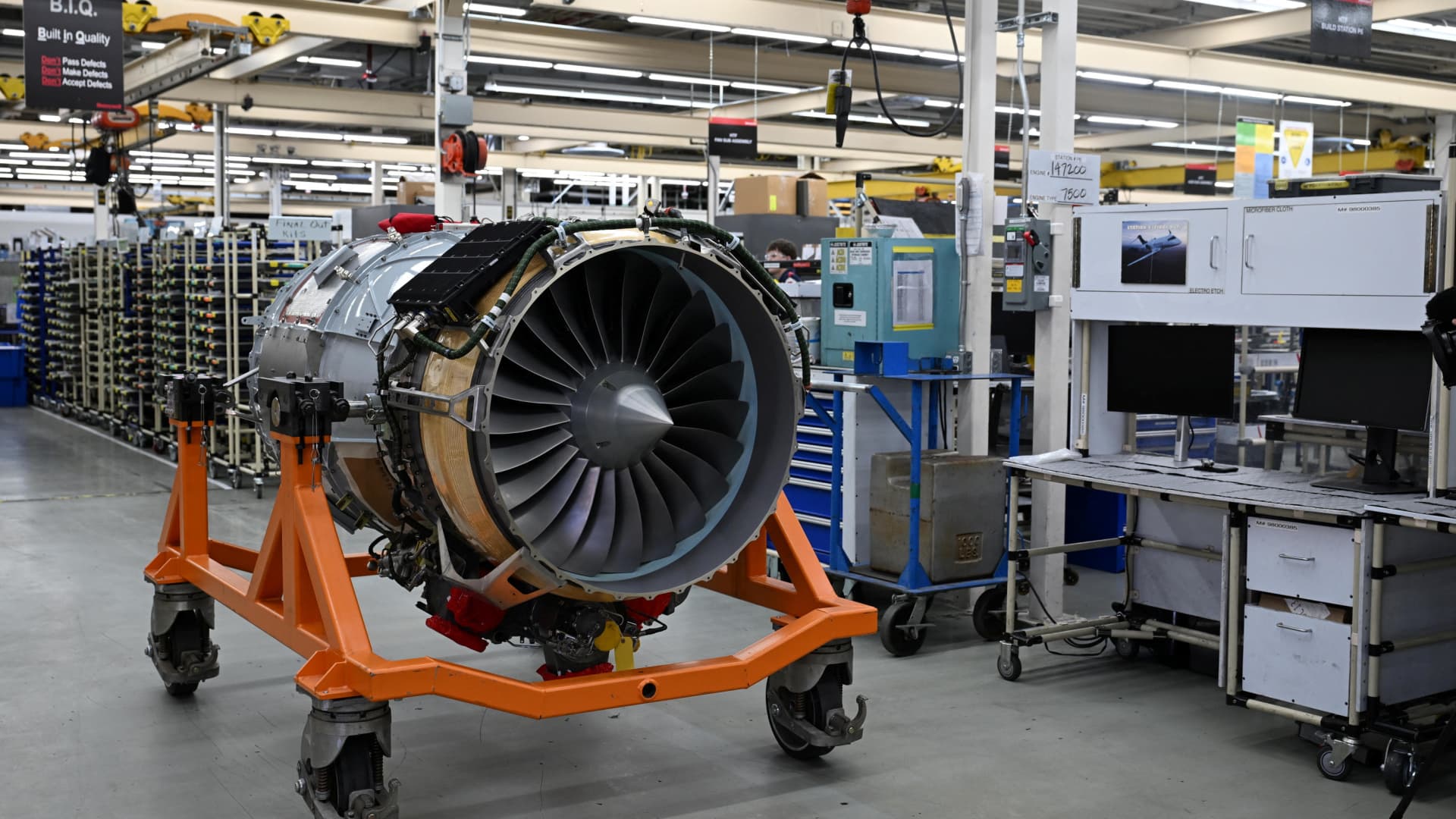
When it’s officially spun off from its parent company later this month, Honeywell Aerospace will be aggressively pushing its advantages in avionics, engine control systems and a host of technologies from the nose to tail of commercial airplanes, business jets and military aircraft.

The hope is to accelerate growth.

Advertisement

As a standalone company, Honeywell Aerospace expects to generate full-year 2026 adjusted earnings before interest and taxes of $4.65 billion to $4.75 billion with free cash flow in the second half of the year of between $1 billion and $1.5 billion.

By 2030 Honeywell is targeting annual earnings of at least $6.5 billion and full-year free cash flow of at least $4 billion.

“The greatest growth for us is occurring in the commercial transport market and in defense and space,” Currier said Wednesday. “We have opportunities where we are well positioned in our products and technologies.”

Currier added Honeywell has “record” backlog orders from Airbus and Boeing.

Advertisement

Why separate Honeywell

As a part of Honeywell International over the last several decades, the aerospace division became one of the largest manufacturers and suppliers in the commercial and business aviation markets as well as in the defense industry.  

From flight management systems in the cockpit to engine controls under the wing to the auxiliary power unit in the tail, its technology and components are in thousands of planes.

Last year the business generated profits topping $4.2 billion with margins of 24.5%.

Those results failed to impress investors, however, because they were clouded by the overall results of Honeywell, a conglomerate struggling to generate the stock returns enjoyed by the market and competing companies in the last several years. 

Advertisement

Since June 2023, Honeywell shares have gained about 20%, compared to the S&P 500’s roughly 77% gains.

That underperformance is a primary reason Honeywell decided in 2024 to eventually break up operations into three separate companies: Solstice Advanced Materials, Honeywell Technologies and Honeywell Aerospace.

“Essentially, on the other side of the separation … each business is positioned so well for the market it serves,” Honeywell CEO Vimal Kapur told CNBC last month.

Converting aerospace skeptics

For investors, Honeywell Aerospace represents a pure play on the growth of commercial aviation and the defense industry.

Advertisement

That focus on aviation and defense has paid off for GE Aerospace, which has seen its stock jump about 125% since it became a standalone company in April 2024, easily outpacing the S&P 500 — up almost 45% over the same timeframe — and Honeywell, which is up almost 20%.

Currier believes Honeywell Aerospace has the team and technologies to capitalize on the expected continued demand for air travel worldwide.

The company is targeting organic annual sales growth of 6% to 8% through 2030, with annual earnings growth of 9%.

While Currier is optimistic about growing profits as a standalone company, Honeywell Aerospace has faced a number of questions about recent challenges with key suppliers during the first quarter.

Advertisement

The company says the temporary issues were tied to the war in the Middle East, which weighed on its engines and control systems divisions in January and February.

Since then, Honeywell Aerospace executives say the problems with some of its suppliers have been corrected.   

Nonetheless, analysts will likely push Currier for a greater understanding of the state of the Honeywell Aerospace supply chain.

“Bottom line: This is an opportunity for management to convert a generally skeptical crowd of aerospace specialists,” said Wolfe Research analyst Nigel Coe in a recent note.

Advertisement
Choose CNBC as your preferred source on Google and never miss a moment from the most trusted name in business news.
Continue Reading

Trending

Copyright © 2025