Connect with us

Business

Andrew’s time as trade envoy should be investigated, says Vince Cable

Published

on

Andrew’s time as trade envoy should be investigated, says Vince Cable

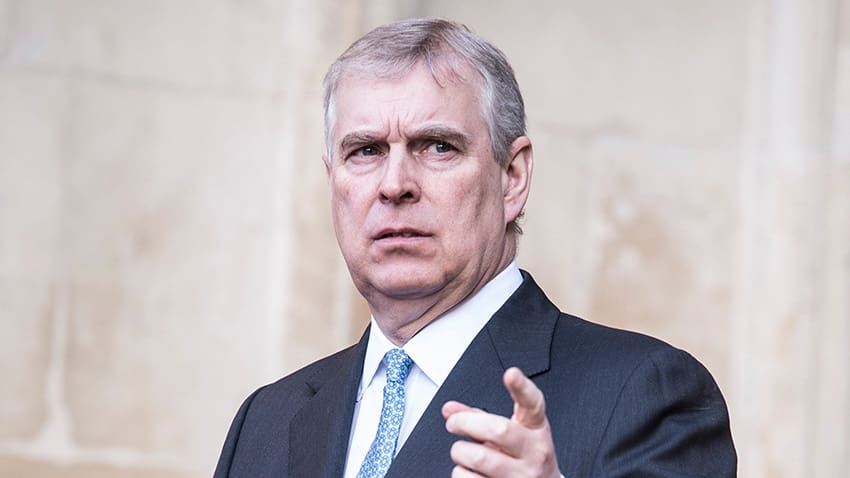
Former business secretary Sir Vince Cable has called for a police and government investigation into the conduct of Andrew Mountbatten-Windsor during his tenure as the UK’s trade envoy, following the release of US justice department files that appear to show he shared official and commercial information with the convicted sex offender Jeffrey Epstein.

The newly released documents suggest that Andrew, who served as Britain’s special representative for international trade and investment from 2001 to 2011, forwarded UK government documents and commercially sensitive material to Epstein.

Sir Vince, who was secretary of state for business and trade during part of Andrew’s tenure, described the alleged behaviour as “totally unacceptable” and said the matter should be scrutinised by law enforcement authorities.

“We need a police or DPP check on whether criminal corruption took place and a government investigation into how this was allowed to happen,” he said.

Andrew has consistently and strenuously denied any wrongdoing.

Advertisement

According to the documents, in 2010 Andrew forwarded an email exchange concerning Royal Bank of Scotland and Aston Martin to a contact, David Stern, who subsequently passed it to Epstein. The correspondence reportedly included details about RBS restructuring plans and comments regarding its then chief executive, Stephen Hester, as well as references to internal tensions at Aston Martin.

It remains unclear whether the information originated directly from Andrew’s official role. At the time, RBS was majority-owned by the taxpayer following its financial crisis bailout. Andrew was also a customer of the bank and may have had separate dealings with management.

Further emails cited in the US files indicate that Andrew may have shared government visit reports relating to Vietnam, Singapore and China with Epstein. Separate correspondence suggests information about Iceland was passed from Treasury sources to banker Jonathan Rowland.

Under official guidance, trade envoys are bound by confidentiality obligations covering sensitive commercial and political information obtained during official visits.

Advertisement

Thames Valley Police confirmed it had consulted specialists at the Crown Prosecution Service regarding the allegations.

Labour MP Sarah Owens, chair of the women and equalities committee, said Andrew must answer questions from police and Parliament. Fellow Labour MP Rachael Maskell called for greater transparency and accountability, arguing that Andrew should be stripped of his remaining constitutional roles.

King Charles has previously expressed “profound concern” over allegations surrounding his brother. Buckingham Palace has said it stands “ready to support” police if requested.

The latest disclosures add to longstanding scrutiny of Andrew’s association with Epstein. Additional images released in the US document tranche have further intensified calls for him to testify in the United States.

Advertisement

The former duke recently relocated from his Windsor residence to the Sandringham estate in Norfolk as pressure surrounding the case continues to mount.


Amy Ingham

Amy is a newly qualified journalist specialising in business journalism at Business Matters with responsibility for news content for what is now the UK’s largest print and online source of current business news.

Advertisement
Continue Reading
Click to comment

Leave a Reply

Your email address will not be published. Required fields are marked *

Business

How systematic active investing combines data, discipline and dynamic allocation to help deliver alpha

Published

on

How systematic active investing combines data, discipline and dynamic allocation to help deliver alpha
Investing has traditionally been shaped by human judgment—port analysing companies, interpreting macroeconomic signals, and making decisions based on experience and intuition. While this approach has produced many successful strategies, it is inherently constrained by human bandwidth and individual bias.

Considering the above, research teams can track a limited number of companies, process a finite volume of information, and react within time-bound constraints.

Systematic investing represents a meaningful evolution in this framework. It combines human expertise with machine-driven analytical power to create a more structured and scalable investment process.

In essence, systematic investing brings together two complementary strengths:

Advertisement
  • Human insight — experience, judgment, and economic understanding
  • Machine intelligence — speed, scale, and analytical precision

This fusion allows the investment team to analyse vast datasets, evaluate market signals in real time, and apply consistent decision-making frameworks.

The result is an investment approach that is disciplined, repeatable, and resilient, which are qualities that are increasingly valuable in modern markets.

Why India Is an Ideal Market for Systematic Investing

India’s capital markets are undergoing a structural transformation. Over the past decade, the ecosystem has been shaped by several powerful trends, these include rapid growth in retail investor participation, Digitisation and faster dissemination of information, increasing market depth and sectoral diversity along with Greater liquidity and trading activityIn such an environment, the ability to process information quickly and identify signals efficiently can become a powerful competitive advantage.

This is where the Systematic Active Equity (SAE) strategies stand out.

SAE combines the alpha-seeking intent of active management with rules-based, data-driven execution frameworks that are cost-controlled and risk-managed. This allows investment strategies to identify opportunities more efficiently and implement them with discipline and precision at lower cost.

The Core Pillars of Systematic Active Equity

Advertisement

1. Data-Driven Decision Making at Scale

One of the defining characteristics of SAE strategies is their ability to process vast and diverse datasets. These include traditional financial metrics such as earnings, valuations, balance sheet indicators, Market-based signals like price momentum and liquidity trends. Furthermore, the strategies also include Alternative datasets such as News sentiment analysis, Social media signals, Satellite and geospatial data, amongst others.

The objective is to identify repeatable patterns and predictive signals that can inform investment decisions. Over time, models continuously learn from new information, refine their insights, and adapt to evolving market dynamics.

2. Dynamic and Adaptive Portfolio Construction

Unlike static portfolios or purely benchmark-hugging strategies, SAE portfolios are inherently dynamic. They continuously adjust based on:

  • Signal strength
  • Changing market conditions
  • Factor performance cycles

This enables portfolios to rebalance efficiently and allocate capital where opportunities looks strong. In markets like India—where sector leadership and market themes can rotate rapidly—this adaptability becomes an important source of investment edge.

3. Integrated Risk Management

Risk management in systematic strategies like SAE is not a separate layer applied after portfolio construction. Instead, it is embedded within the investment framework itself.

Advertisement

This includes:

  • Volatility targeting
  • Position sizing/weighting frameworks
  • Diversification across sectors and market caps
  • Active Risk control mechanisms
  • Analyzing factor exposures and tilting them based on strategy goals
  • Focusing on risk-return metrics like IR (Information Ratio) Alpha consistency as a target
  • Eliminating key-man risk

The goal is not only to generate returns but also to ensure consistency of outcomes across market cycles.

How Systematic Investing Reduces Behavioural Biases

Traditional discretionary investing, while driven by expertise, can sometimes be influenced by behavioural biases such as, Recency bias, Overconfidence etc

By reducing the influence of emotion and subjectivity, systematic strategies enable a more consistent and forward-looking investment process, thereby eliminating human biases by relying on , pre-defined investment rules, Data-backed signals and Objective decision frameworks

Ensuring Continuity Beyond Individuals

Another structural advantage of SAE lies in its process-driven nature. In traditional setups, fund performance can sometimes be closely associated with individual portfolio managers and hence lead to key man risk. Changes in personnel may lead to shifts in strategy or portfolio construction leading to very different risk and return orientations than originally anticipated. Systematic investing reduces this dependency. Despite changes in the investment team, the underlying models remain constant as data pipelines continue operating ensuring the overall investment philosophy remains undisturbed.

Advertisement

In many ways, it is like changing the driver while the navigation system guiding the journey remains the same.

Combining Human Expertise with Machine Precision

Despite common perception, systematic investing is not about replacing human decision-making. Instead, it is about augmenting human expertise with technology.

Humans play a critical role in

Designing robust and efficient investment frameworks is important to avoid GIGO (Garbage-In, Garbage-Out)

  • Selecting relevant signals
  • Interpreting macroeconomic context to decide on active risk levels
  • Monitoring and refining models

Machines, in turn, excel at:

  • Processing vast datasets
  • Identifying patterns across markets
  • Executing strategies with speed and consistency

Together, this partnership creates a powerful investment engine—where humans define the “what” and “why,” and machines optimise the “how” and “when.”

A New Paradigm for India’s Investors

As India’s markets become more complex, information-rich, and competitive, investors increasingly require strategies that can combine discipline, scalability, and adaptability.

Advertisement

Systematic Active Equity addresses this need by integrating:

  • Data-driven intelligence
  • Machine efficiency
  • AI/ML techniques
  • Human oversight and governance

The outcome is a robust and repeatable investment approach designed to navigate volatility, capture opportunities, and deliver alpha over time with controlled risk and reduced cost.

For Indian investors, this represents a shift towards a more institutional-grade investment framework incorporating global best practices.

(The author is CIO at JioBlackRock Asset Management)

Advertisement
Continue Reading

Business

As crude oil price breaches $100 mark, Systematix recommends RIL, a potential multibagger and 4 more stocks to buy – Ripple Effect

Published

on

As crude oil price breaches $100 mark, Systematix recommends RIL, a potential multibagger and 4 more stocks to buy - Ripple Effect

The Iran-Israel war has entered its 15th day, causing crude oil prices to soar to $103 a barrel. They have increased by over 35% so far this year, and expectations are that they could hit the $150 mark if the war continues. In light of the ongoing crisis, brokerage Systematix Institutional Equities has recommended 6 stocks with a potential upside of 103%. Destruction of oil & gas assets amid the West Asia War triggered a strong risk premium in prices. Tightening supply dynamics—owing to the closure of the Strait of Hormuz, elevated tanker freight rates and insurance premiums for vessels—will keep prices high, helping upstream companies in its view.

Continue Reading

Business

Trump threatens to hit Iran’s Kharg Island oil network if shipping lanes remain blocked

Published

on

Trump threatens to hit Iran’s Kharg Island oil network if shipping lanes remain blocked


Trump threatens to hit Iran’s Kharg Island oil network if shipping lanes remain blocked

Continue Reading

Business

'I was charged double for oil I already paid for'

Published

on

'I was charged double for oil I already paid for'

People say they are being charged massively inflated prices for heating oil they already paid for.

Continue Reading

Business

Adobe Q1 2026 Earnings Update (ADBE)

Published

on

Wall Street Breakfast Podcast: Adobe Beats, CEO Exits

Adobe headquarters in San Jose, California, USA

JHVEPhoto/iStock Editorial via Getty Images

At first glance, everything seems to be chugging along just fine at Adobe (ADBE). Their earnings on Thursday continued to show that revenue is still growing at a double-digit rate, with operating margins remaining

Continue Reading

Business

Crude futures turn positive on continued Hormuz closure

Published

on

Crude futures turn positive on continued Hormuz closure
Crude futures climbed higher on Friday as the Strait of Hormuz remained closed, but analysts were wary the weekend might bring surprise changes in the status of the war two weeks after it started.

Brent futures for May were up $1.59, or 1.58%, to $102.05 a barrel at 11:35 a.m. CDT (1635 GMT), heading for a weekly increase. U.S. West Texas Intermediate (WTI) crude for April gained $1.15, or 1.2%, to $96.88 a barrel, and was also set for an uptick on the week.

“We’re getting hammered by the news,” said Phil Flynn, senior analyst for ‌Price Futures Group. “We’re coming ⁠into another weekend ⁠where you could see this over by Monday. Then again, we could see the war still going on and the market will be testing highs on Sunday night.”

The U.S. issued a 30-day license for countries to buy Russian oil and petroleum products stranded at sea. Treasury Secretary Scott Bessent said it was a step to stabilise global energy markets roiled by the U.S.-Israeli war on Iran.

Advertisement

This will affect 100 million barrels of Russian crude, equal to almost a day’s worth of global output, according to Russia’s presidential envoy Kirill Dmitriev.


“Russian oil was already going to buyers; this is not bringing additional barrels to the market but it does reduce some friction,” said Bjarne Schieldrop, chief commodities analyst at SEB.
“The market is starting to get very concerned that this (war) is going ⁠to last longer. ‌The big fear is that we have severe damage to oil infrastructure, which would be a lasting loss of supply.”

OIL TO BE RELEASED FROM STOCKPILES

The announcement on Russian oil came a day after the U.S. Energy Department said Washington would release 172 million barrels of ⁠oil from its Strategic Petroleum Reserve to help curb skyrocketing oil prices.

That plan was coordinated with the International Energy Agency, which has agreed to release a record 400 million barrels of oil from strategic stockpiles, including the U.S. contribution.

Fleeting relief sparked by the IEA release, however, was shattered by a re-escalation of Middle East risks, IG analyst Tony Sycamore said in a note.

Advertisement

Iran’s new Supreme Leader Ayatollah Mojtaba Khamenei said Iran would fight on, and keep the Strait of Hormuz shut as leverage against the United States and Israel.

Two fuel tankers in Iraqi waters were struck by explosives-laden Iranian boats, Iraqi security officials said on Thursday. An Iraqi official told state media the country’s oil ports have completely stopped operations.

U.S. President Donald Trump said on Thursday the United States stood to make significant money from oil prices, driven higher by the ‌war with Iran. But stopping Iran from getting nuclear weapons was far more important, he said.

Both benchmark prices surged more than 9% on Thursday and hit their highest levels since August 2022.

Advertisement

Goldman Sachs predicted on Friday that Brent oil would average more than $100 a barrel in March and $85 in April, as energy prices remain ⁠volatile due to the Iran war, damage to Middle East energy infrastructure and disruptions in the Strait of Hormuz.

Brent is better supported than WTI because Europe is more susceptible to energy security issues, while the U.S. is able to stave off its exposure due to its domestic output, said Emril Jamil, senior analyst at LSEG.

In another sign the disruptions may drag on, sources told Reuters that Iran had deployed about a dozen mines in the strait, a move that is likely to complicate the reopening of the critical waterway.

New Supreme Leader Mojtaba Khamenei said in a statement on Thursday Iran would continue to block the Strait of Hormuz and attack neighbouring nations that host U.S. military bases.

Advertisement

Treasury Secretary Bessent told Sky News in an interview that the U.S. Navy, perhaps with an international coalition, would escort vessels through the Strait of Hormuz when it is militarily possible.

Continue Reading

Business

Form 4 Pegasystems Inc For: 14 March

Published

on


Form 4 Pegasystems Inc For: 14 March

Continue Reading

Business

Form 4 Q2 Holdings For: 14 March

Published

on


Form 4 Q2 Holdings For: 14 March

Continue Reading

Business

Form 4 Enanta Pharmaceuticals Inc For: 14 March

Published

on


Form 4 Enanta Pharmaceuticals Inc For: 14 March

Continue Reading

Business

Mutual fund portfolio down Rs 1.5 lakh in 12 days. Is the decline due to regular plans or market volatility?

Published

on

Mutual fund portfolio down Rs 1.5 lakh in 12 days. Is the decline due to regular plans or market volatility?
Short-term declines in mutual fund portfolios often lead investors to question whether they are invested in the right schemes or plans. One common misconception is that losses in mutual funds are linked to the type of plan—regular or direct. However, financial experts say short-term portfolio movements are usually driven by market volatility, global developments, or geopolitical events rather than the structure of the plan itself. While direct plans may offer lower expense ratios compared to regular ones, switching between the two requires careful consideration of taxation, diversification, and long-term investment goals.

A similar situation was faced by Vijay, a 43-year-old IT professional from Haryana and a viewer of The Money Show on ET Now. His mutual fund portfolio, originally created by his father in 2013 and transferred to him in 2023, is currently valued at around Rs 31 lakh against a total investment of Rs 15.5 lakh.

The portfolio consists entirely of regular plans from a single fund house – SBI Mutual Fund and includes schemes such as SBI Equity Hybrid Fund, SBI Contra Fund, SBI ESG Fund, SBI Consumption Opportunities Fund, SBI Focused Fund, and SBI MNC Fund. Vijay had also been investing through SIPs earlier, but stopped contributions in October 2025.

Also Read | Domestic vs global investors: How silver ETF bets played out differently in 400% rally

Recently, he noticed that the value of his portfolio declined by around Rs 1.5 lakh in just 12 days. This led him to believe that being invested in regular plans could be the reason behind the loss, prompting him to consider redeeming the investments and moving to direct plans. He is also planning to restructure his portfolio and use the available long-term capital gains exemption of Rs 1.25 lakh before March 31.

Vijay also proposed a new portfolio allocation where 50% would be invested in flexi-cap funds such as Parag Parikh Flexi Cap Fund and HDFC Flexi Cap Fund, around 15% in midcap funds, including HDFC Midcap Fund and Edelweiss Midcap Fund, about 15% in global equities, and nearly 10% in gold.
In addition, he continues to invest Rs 90,000 per month through SIPs and aims to build a corpus of around Rs 1 crore within five years. He also wants to know whether his diversification plan is appropriate and which funds may be suitable for long-term retirement planning.

Existing portfolio analysis

According to Vishwajeet Parashar, a mutual fund expert, the first issue in Vijay’s portfolio is concentration risk. All the investments are currently with a single asset management company. While SBI Mutual Fund is the largest fund house in India, having all investments within one AMC may not be ideal. Diversifying across different fund houses can help reduce risk and improve portfolio balance.
However, Parashar advises Vijay not to redeem the entire portfolio at once. “He should diversify across AMCs for better diversification, and should not idly redeem the entire 30 lakhs in one chunk and he should withdraw slowly and gradually because otherwise, he would draw a good amount of capital gain tax,” Parashar said.

Advertisement

Since Vijay invested around Rs 15 lakh and the current value is close to Rs 30 lakh, the capital gains amount to roughly Rs 15 lakh. Redeeming the entire amount in one go could result in a capital gains tax of nearly Rs 1.8 lakh. Instead, he suggests withdrawing the money gradually across financial years. This staggered approach can help reduce the tax burden and avoid exiting the market at a single point.

He also recommends using the available long-term capital gains exemption of Rs 1.25 lakh before March 31 by redeeming units accordingly from selected funds.

Within the current portfolio, Parashar believes that two schemes—SBI Contra Fund and SBI Focused Fund—are strong performers and can be continued. The remaining funds may be gradually redeemed as Vijay restructures his portfolio and diversifies across fund houses.

“He can go slowly and instead of timing the market also in one shot, so it would be better if he can take out a few lakhs this financial year and maybe a few lakhs in the next financial year, so that would stagger the investment also. Having said this, two of his funds within the SBI category, SBI AMC, are good,” Parashar said

Advertisement

“So, he should continue with that like the SBI Contra Fund and SBI Focused Fund. The rest of the funds he can think of withdrawing. And yes, he is definitely right. He should enjoy this capital gain benefit of 1.25 lakh before March 31st, so he can withdraw from other funds and take this advantage,” the expert further said.

Also Read | Large, mid and small cap mutual funds see rising inflows in February. Is the shift back to equities underway?

Decline in portfolio – Regular plan or market volatility

Addressing Vijay’s concern about the recent decline in his portfolio, Parashar clarified that the loss is not linked to the fact that the funds are regular plans. The fall is largely due to market volatility and geopolitical tensions affecting equity markets currently. The difference between direct and regular plans lies primarily in the expense ratio, as direct plans have lower costs because they do not include distributor commissions.

However, investors should note that shifting from regular to direct plans is treated as a redemption followed by a fresh investment. Even if the switch is within the same fund house, it will still be considered a redemption for tax purposes. Therefore, investors should plan such transitions carefully while keeping tax implications in mind.

Advertisement

Proposed allocation

Looking at Vijay’s proposed allocation, Parashar believes the overall selection of funds is good but suggests avoiding duplication within categories. Instead of investing in two flexi-cap funds, he recommends choosing Parag Parikh Flexi Cap Fund, which also provides some exposure to global equities. Similarly, among the midcap options, he suggests continuing with HDFC Midcap Fund rather than holding two midcap schemes.

Along with these funds, Vijay can continue with the SBI Contra Fund and the SBI Focused Fund. This combination would provide diversification across fund houses and investment styles. Since Vijay is also planning to invest directly in gold and silver, he may not need additional multi-asset or multi-cap funds for diversification.

From a financial goal perspective, Vijay appears to be on track. With SIP contributions of Rs 90,000 per month and assuming an average return of around 12% annually, his SIP investments could grow to roughly Rs 73 lakh over the next five years. His current portfolio value of about Rs 29.5 lakh, after the recent decline, could potentially grow to around Rs 52 lakh over the same period. Together, this would take the total corpus to approximately Rs 1.25 crore, which is higher than his target of Rs 1 crore.

Also Read | Gold and silver ETFs slip up to 3% as rising crude prices dampen rate cut hopes. Is it time to buy or wait?

Advertisement

Retirement planning

For long-term retirement planning, Parashar suggests that Vijay may eventually consider hybrid-oriented funds that offer better downside protection. Funds such as ICICI Balanced Advantage Fund or ICICI Multi Asset Fund can help balance equity exposure and reduce volatility during market downturns.

He recommends that Vijay continue with his equity-oriented portfolio for now and gradually move a portion of the corpus toward hybrid or debt-oriented funds about a year before retirement to safeguard the accumulated gains.

Overall, the key takeaway for investors is that short-term declines in mutual fund portfolios are usually linked to market movements rather than the type of plan chosen. While shifting from regular to direct plans can reduce costs over time, not offset the loss incurred in the portfolio. So, such decisions should be made carefully with attention to taxation, diversification, and long-term investment goals.

(Disclaimer: Recommendations, suggestions, views and opinions given by the experts are their own. These do not represent the views of The Economic Times)

Advertisement

If you have any mutual fund queries, message on ET Mutual Funds on Facebook/Twitter. We will get it answered by our panel of experts. Do share your questions on ETMFqueries@timesinternet.in alongwith your age, risk profile, and Twitter handle.

Add ET Logo as a Reliable and Trusted News Source

Continue Reading

Trending

Copyright © 2025