
Crypto World
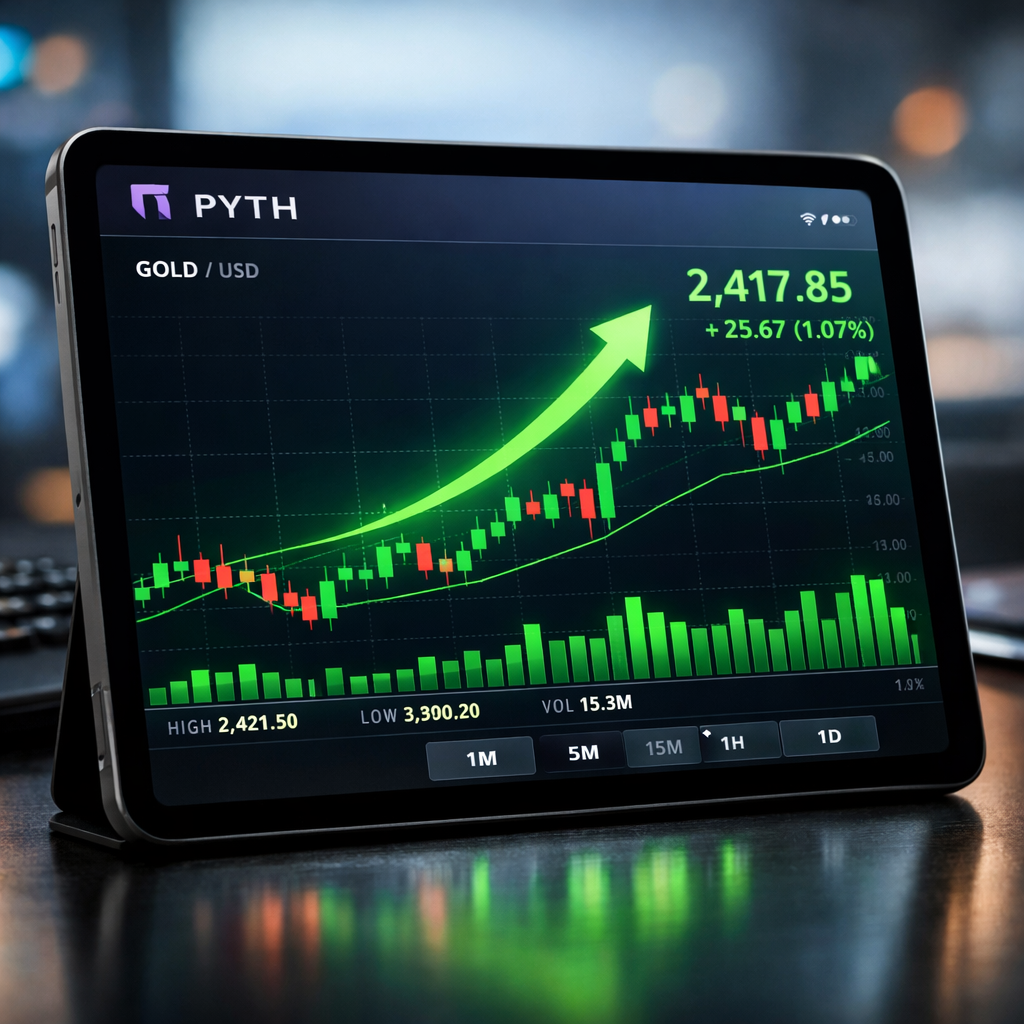
Pyth soars 9% following Polymarket integration. Will it rally higher?


Key takeaways
- PYTH is up 9% in the last 24 hours, outperforming other major cryptocurrencies.
- The rally comes following Pyth Network’s integration with Polymarket.
PYTH, the native coin of the Pyth Network, is one of the best performers in the crypto market over the past 24 hours. It could rally higher in the near term as the broader market recovers from Thursday’s slump.
PYTH rallies on Polymarket integration
On Thursday, Pyth Network revealed in a blog post that Polymarket, the world’s largest prediction market platform, has integrated Pyth Pro as its data source for a new suite of traditional asset contracts.
The initial offerings include gold, silver, and major equity index ETFs. Polymarket now relies on Pyth Pro’s data to power its daily up/down and daily close markets, with live price charts updated every second to ensure full transparency.
The integration has seen PYTH rally by 9% in the last 24 hours and now trades at $0.0420 per coin.
Pyth Pro provides real-time price data through WebSocket, which Polymarket samples every second to display as a live “price to beat” chart. This allows traders to monitor the market’s status relative to their position in real-time.
The selected assets span a wide range of traditional finance, including major equity indices, commodities like gold, silver, WTI crude, and natural gas, along with over a dozen high-profile U.S. equities such as TSLA, COIN, and PLTR.
Polymarket has integrated this real-time data as a key component of its perpetual futures trading platform. Pyth Pro delivers institutional-grade market data directly from top firms, ensuring it is accurate, transparent, and affordable across all asset classes and regions.
To enhance this, Pyth has partnered with industry leaders and government agencies like Cboe, Jane Street, Revolut, and the U.S. Department of Commerce. This collaboration has helped establish a new model to make market data more accessible, accurate, and transparent.
PYTH eyes $0.050 as bulls step in
The PYTH/USD 4-hour chart is bearish and efficient despite the coin adding 9% to its value in the last 24 hours.
The technical indicators have flipped bullish, indicating that the bulls are now in control of the market. The RSI of 63 is well above the neutral 50 and would enter the overbought territory if the rally persists.

The MACD lines are also within the positive region, indicating a strong bullish bias. If the rally continues, PYTH could retest the $0.050 psychological level for the first time since March 17.
However, if the bears regain control, PYTH could retest the Thursday low of $0.038 over the next few hours or days.


As geopolitical tensions ripple through global energy markets and a deal to end the U.S.-Iran war remains elusive, oil prices have soared, but there’s an even better trade on energy volatility that investors have flocked to: the cost of moving crude.
The Breakwave Tanker Shipping ETF (BWET), a little-known exchange-traded fund tied to crude oil tanker freight rates, has surged more than 600% year-to-date as war and disruption in key maritime corridors drive shipping rates sharply higher.
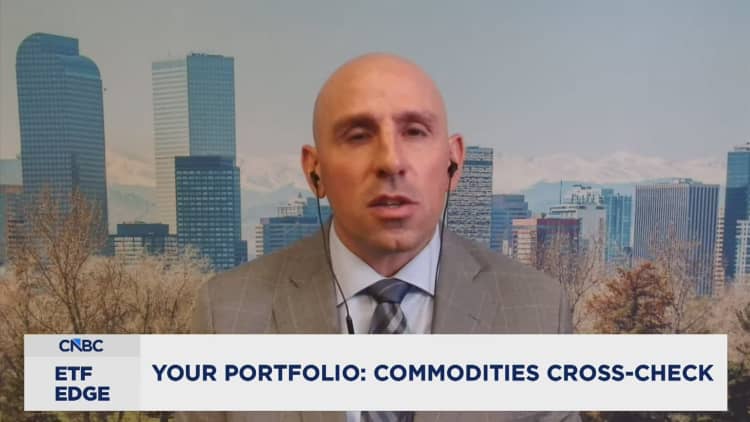
“I started getting a lot of questions about this ETF, like, what is up with it? What kind of performance is this?” Cinthia Murphy, VettaFi director of research, said on this week’s CNBC’s “ETF Edge.”
BWET is a $30 million portfolio that launched in May 2023, in an ETF market that has over $13 trillion in assets.
Murphy explained the scale of the move has forced the market to rethink where the real leverage in energy resides. Rather than focusing only on oil prices, which have been extremely volatile this year, investors may be looking toward infrastructure that the world relies on to move energy commodities.
“It really is a story about shipping costs,” Murphy said. “Anytime you have some big disruption to shipping … freight futures skyrocket and there’s one ETF that captures pretty much that performance better than anybody else.”

BWET 1Y
Murphy said the ongoing tensions in the Strait of Hormuz have proven to hold the ability to send freight futures higher quickly while markets reprice the risk of moving commodities through the region, and not only oil. For example, the Baltic Exchange Dry Index is up over 6% for the past week and 41% since the beginning of the year.
But, “it’s really moving that oil around that has been a big story,” said Paul Baiocchi, head of fund sales & strategy at SS&C Technologies.
Oil prices have risen sharply this year, with the U.S. Oil Fund (USO) up close to 90% as of Friday, and the SPDR State Street Energy Select Sector SPDR ETF (XLE) up over 23% as energy stocks have posted strong gains. But those moves seem modest compared with the spike in freight futures, and the surge in BWET began even before the outbreak of war in the Middle East, with BWET up over 1,000% in the past year.
“Of course, oil prices have been dramatically higher and the energy sector in general, energy equities, every part of the energy story this year has been a big blockbuster year,” Murphy said. But she added, “BWET is really standing [out].”
Wall Street equity research teams are also placing more attention on surging tanker stocks.
At the same time, Baiocchi said the rally ties into a broader theme that is being played out throughout global markets: underinvestment in energy infrastructure and the growing need to secure more resilient supply chains.
“[We talked] about this idea that even before the Iran conflict, a lot of these global commodities markets were fraught, and if nothing else, this conflict has exacerbated a lot of the challenges,” Baiocchi said.
That includes not just oil transport, but the broader buildout of energy systems. “Countries and companies around the world will be scrambling to find more stable sources of energy,” he said.
Even as BWET draws outsized attention, ETF experts caution that freight rates are inherently volatile and driven by short-term shocks. But as geopolitical conflict continues to reshape global trade, more investors are looking beyond commodity prices and to the system that determines how commodities move to market for investing profits.
Sign up for our weekly newsletter that goes beyond the livestream, offering a closer look at the trends and figures shaping the ETF market.


Coinbase has filed with the CFTC to activate Trade at Settlement for XRP futures on May 1, placing XRP alongside Bitcoin, Ethereum, gold, and crude oil as an asset institutional traders can execute at the official settlement price.
Summary
- Coinbase will launch Trade at Settlement for XRP futures on May 1, covering both nano XRP and full-sized contracts.
- TAS lets institutions execute large block orders at the official closing price, eliminating intraday price exposure that makes high-volume execution costly and unpredictable.
- The launch completes XRP’s institutional execution pathway on Coinbase, following the SEC and CFTC’s joint March 2026 classification of XRP as a digital commodity.
Coinbase filed with the CFTC on April 21 to roll out Trade at Settlement for XRP futures starting May 1. The filing covers both nano XRP and standard full-sized XRP futures contracts on Coinbase Derivatives. TAS lets large institutions execute block orders at the official 4:00 p.m. settlement price, removing the intraday execution risk that distorts costs when trading at volume.
Coinbase XRP Institutional Trading TAS Closes the Final Execution Gap
As crypto.news reported, the CFTC filing outlines how TAS will support block trades under the Commodity Exchange Act, with Coinbase’s Market Regulation team overseeing all TAS activity to ensure market fairness and prevent manipulation. TAS has been standard in traditional commodity futures markets because institutional participants managing large positions cannot afford to execute against live, fluctuating intraday prices without moving the market against themselves. By locking in the settlement price, TAS makes cost management transparent and position sizing precise. The 247 Wall St. analysis noted that in March, Ripple Prime added Coinbase’s XRP futures to its $3 trillion clearing platform, meaning institutional clients can already route XRP trades through Ripple to Coinbase Derivatives. Adding TAS on May 1 closes the last execution gap in that institutional pipeline.
XRP’s Institutional Infrastructure Is Expanding Simultaneously
The TAS launch is arriving as XRP’s broader institutional footprint grows on multiple fronts. As crypto.news documented, Goldman Sachs has disclosed a $153.8 million position across four XRP ETFs, becoming the largest known institutional holder among the top 30 disclosures, which collectively control approximately $211 million in XRP ETF exposure. Total XRP ETF assets under management have now reached $1.53 billion with 773 million XRP in custody, and as crypto.news tracked, the funds have not recorded a single outflow day since April 9, the longest positive streak in their history. A Coinbase and EY-Parthenon survey of 351 institutional investors found that 25% plan to add XRP to their portfolios in 2026, with 65% citing regulatory clarity as the single condition holding them back.
The Regulatory Foundation Behind the TAS Move
The TAS expansion into XRP carries direct regulatory context. The SEC and CFTC jointly classified XRP as a digital commodity in March 2026, giving the asset the same legal standing as Bitcoin and Ethereum under the commodity framework that governs Coinbase’s TAS-eligible products. As crypto.news noted, the commodity classification removed a key legal barrier that had previously complicated institutional deployment in XRP futures, and the TAS mechanism is designed precisely for the institutional buyer profile that commodity frameworks attract. If sustained block trade flows through TAS materialize after May 1, they would represent the clearest on-chain signal yet that institutional demand for XRP is converting from stated intent into actual capital deployment.
Coinbase’s Market Regulation team will oversee all TAS activity for XRP futures, and the feature will go live on May 1 barring any CFTC objection to the filed documentation.


XChat, the standalone messaging app from Elon Musk’s X, climbed to the top spot on the US App Store, edging out OpenAI’s ChatGPT and Anthropic’s Claude within hours of its iPhone debut.
The leap to No. 1 hands Musk an early win in his bid to fold messaging, AI, and crypto-ready payments into a single app under the X brand.
XChat tops the free app chart
The App Store screenshot, shared by X head of product Nikita Bier on Saturday morning, showed XChat first, ChatGPT second, and Claude third. Bier reposted the chart with a brief caption.
Bier joined X last year to lead consumer growth and previously took social apps TBH and Gas to the top of the chart.
The chart performance puts a private messenger ahead of two of the highest-profile US AI assistants. ChatGPT had held the top free spot through much of the past year, with Claude tracking it closely.
XChat is built in Rust with what X calls Bitcoin-style encryption. The app offers end-to-end encrypted chats, voice and video calls, and file transfer without requiring a phone number.
Group chats hold up to 481 members, with X targeting a 1,000-seat cap in the coming weeks. The integrated Grok assistant lets users summarize files and draft messages inside conversations.
X Money and Crypto Rails are Next?
The download surge matters because XChat is one piece of Musk’s broader stack. X has said its X Money wallet, built with Visa, will roll out shortly after the messaging launch.
The roadmap covers peer-to-peer fiat transfers first, with crypto support flagged for a later release. That would put XChat users a tap away from on-platform payments. X has secured money transmitter licenses in more than 40 US states, clearing one regulatory hurdle for the rollout.
The launch positions XChat against WhatsApp, Telegram, and Signal on messaging, with PayPal and Venmo entering the picture once payments go live. For traders, the pairing matters most when Cashtags and X Money sit alongside group chats.
Whether XChat holds the No. 1 spot past the launch news cycle will depend on retention, not headline downloads. The next test arrives once X Money rolls live and the promised crypto rails switch on inside Musk’s broader vision. Holding the chart will be the harder challenge once the launch news fades.
The post Elon Musk’s XChat Tops App Store, Beats ChatGPT and Claude at Launch appeared first on BeInCrypto.
Brazilian authorities have moved to shut down 27 prediction market platforms, including Kalshi and Polymarket.
The decision, announced Friday, follows a directive from the Ministry of Finance and enforcement by the National Telecommunications Agency (Anatel), according to state-owned news outlet Agência Brasil. Authorities claimed that such services fall outside Brazil’s current legal framework and therefore operate illegally.
“We have been monitoring the evolution of this sector in Brazil, which suffered a period of anarchy because there were no rules, no oversight, from 2018 to 2022,” Finance Ministry executive secretary Dario Durigan reportedly said during a press conference at the Palácio do Planalto.
The crackdown follows Resolution 5.298 issued by Brazil’s National Monetary Council (CMN) on Friday, which takes effect in early May and sharply limits what prediction market platforms can offer. Under the new rules, contracts tied to sports, politics, entertainment, or social events are banned, as authorities consider them closer to gambling than financial investments.
Only contracts linked to economic indicators, such as inflation, interest rates, exchange rates, or commodity prices, will remain allowed and fall under financial market oversight.
Related: Kalshi bans 3 US politicians for betting on their own election races
Brazil flags prediction platforms as debt risk
Durigan claimed that prediction markets could deepen household debt and expose users to financial harm. “At a time when we are working to reduce debt levels among families, small businesses, and students, we must also prevent new forms of harmful indebtedness,” he said.
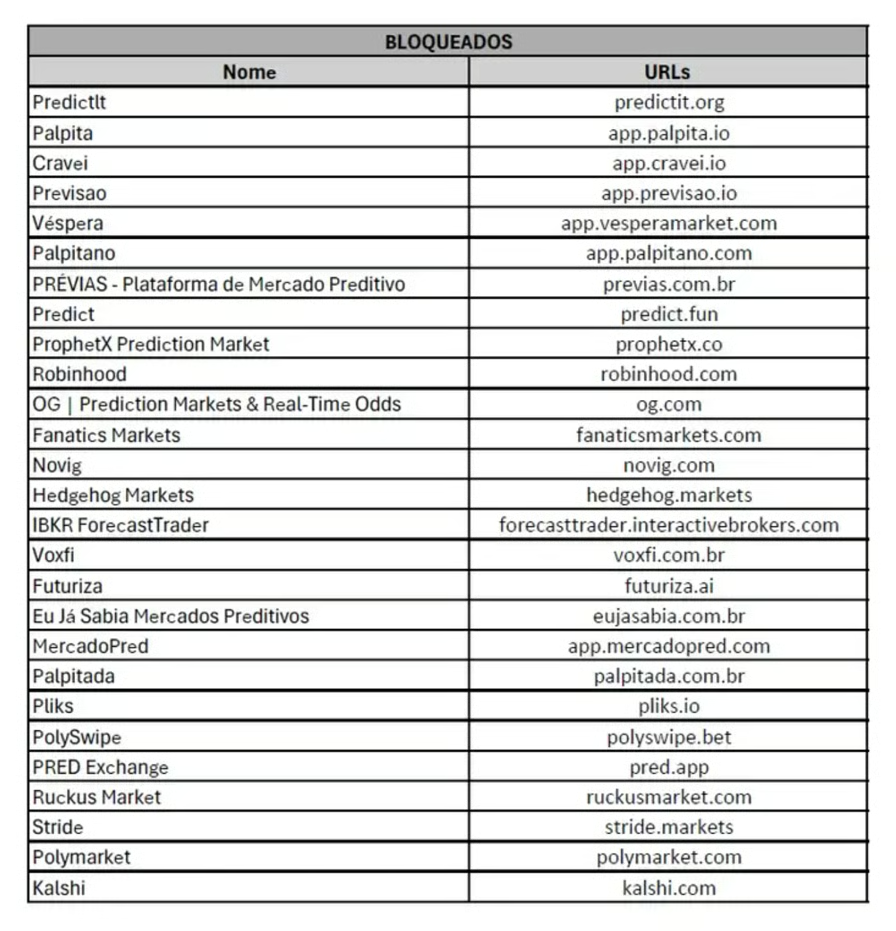
The blocked platforms include a mix of international and Brazil-focused services, with major names including Kalshi, Polymarket, PredictIt, Robinhood (via its forecasting feature) and Fanatics Markets.
Banned prediction markets in Brazil. Source: Agência Brasil
Other affected platforms include ProphetX, Hedgehog Markets, Novig, Polyswipe, PRED Exchange and Stride, alongside several Brazil-focused services such as Palpita, Cravei, Previsao, and MercadoPred.
Related: Prediction market battle gets closer to Supreme Court
More countries ban prediction markets
A growing number of jurisdictions have moved to ban prediction markets, often folding them into gambling or financial regulations. Several European nations, including France, Belgium and the Netherlands, have blocked or penalized platforms operating without authorization.
In the United States, the situation is more fragmented, with an ongoing tug-of-war between federal regulators and individual states over prediction markets.
Magazine: How to fix suspected insider trading on Polymarket and Kalshi
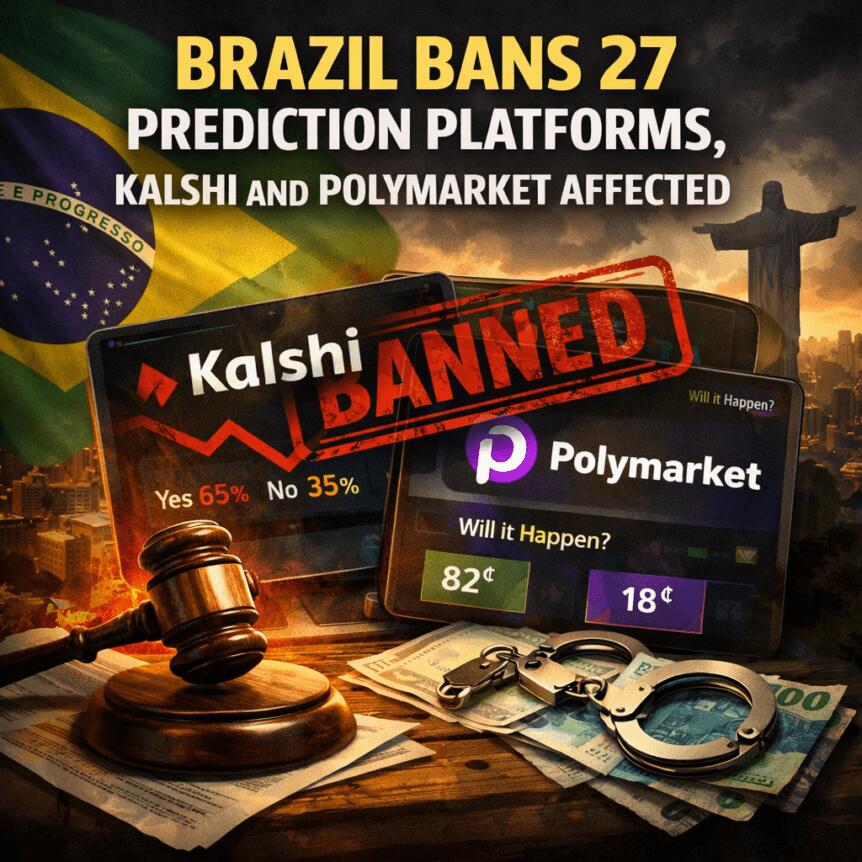
Brazilian authorities have intensified a crackdown on prediction-market platforms, ordering the blocking of 27 services, including Kalshi and Polymarket. The move was announced in a joint escalation by the Finance Ministry and enforcement agencies, with state media Agência Brasil confirming the action. Officials argued that these platforms operate outside Brazil’s current legal framework and are therefore illegal.
According to Agência Brasil, the enforcement follows a directive from the National Monetary Council (CMN) and marks a shift toward tighter oversight. Finance Ministry executive secretary Dario Durigan described the regulatory stance as a response to a period of regulatory “anarchy” in the sector from 2018 to 2022, signaling a transition to structured rules intended to prevent unregulated financial activity.
The crackdown is anchored in CMN Resolution 5.298, issued on Friday and set to take effect in early May. The regulation sharply curtails the scope of prediction-market offerings: contracts tied to sports, politics, entertainment, or other social events are banned, with authorities classifying them as closer to gambling than traditional financial investments. Only contracts linked to economic indicators—such as inflation, interest rates, exchange rates, or commodity prices—will remain permissible and will fall under financial-market oversight.
Related platform activity has drawn attention from industry observers, including prior coverage of market-betting platforms and their governance. For example, Kalshi’s governance actions have recently been scrutinized in other jurisdictions as part of a broader debate about insider-trading concerns and regulatory compliance.
Brazil flags prediction platforms as debt risk
Durigan argued that prediction markets can amplify household indebtedness and expose participants to financial harm at a time when policy aims include reducing debt burdens for families, small businesses, and students. He suggested that curbing exposure to non-productive debt forms is a key objective of the new framework.
The list of platforms affected by the ban comprises a mix of international and Brazil-focused services. Notable names among those blocked include Kalshi, Polymarket, PredictIt, Robinhood’s forecast feature, and Fanatics Markets. Several smaller and domestic platforms were also targeted, reflecting a broad sweep across the sector.
- Kalshi
- Polymarket
- PredictIt
- Robinhood (Forecasting)
- Fanatics Markets
- ProphetX
- Hedgehog Markets
- Novig
- Polyswipe
- PRED Exchange
- Stride
- Palpita
- Cravei
- Previsao
- MercadoPred
- And other Brazil-focused services
Ahead of the May effective date, the CMN’s resolution delineates the boundary between permissible financial-market instruments and prohibited speculative bets presented as market forecasts. The policy is designed to channel market activity into instruments that regulators deem financial in nature, rather than gambling, and to provide clearer supervisory oversight for platforms and participants.
What changes for market participants and platform operators
From the perspective of compliance teams, the new rules impose several practical shifts. Prediction-market operators must implement licensing or registration under the established financial-market framework, align product offerings with economic-indicator-based contracts, and strengthen KYC/AML procedures to satisfy the oversight regime. For financial institutions and banks, the threshold effect is a narrowing of permissible partnerships or facilitation services for unfettered speculative markets, potentially influencing cross-border flows and data-sharing arrangements.
For Brazil-based users, the immediate effect is a reduction in the availability of prediction-market products and a narrowing of hedging or speculative tools that rely on non-traditional event outcomes. While the prohibition targets non-financial event contracts, market participants seeking exposure to macroeconomic or commodity-price developments can still access allowed instruments within the new framework, subject to the appropriate regulatory oversight.
Regional and global regulatory context
The Brazilian action sits within a broader, evolving regulatory pattern. A growing cohort of jurisdictions has moved to ban or tightly regulate prediction markets, often recasting them under gambling or financial-regulatory regimes. In Europe, several member states have restricted or penalized platforms operating without authorization, while the broader trend emphasizes consumer protection, anti-fraud safeguards, and prudential risk management.
In the United States, policy and enforcement around prediction markets remain fragmented, with ongoing tensions between federal authorities and state-level regulators over permissible operations. The Brazilian case adds to a global mosaic in which regulators are increasingly scrutinizing cross-border platforms and the reliability of dispute resolution, KYC/AML standards, and traceable ownership structures.
From a policy perspective, the Brazil action reinforces several themes: the alignment of prediction-market activity with formal financial instruments, the emphasis on debt-risk mitigation for households, and the push for clear licensing and oversight for platforms that reach Brazilian users. For multinational operators and custodians, the actions underscore the importance of jurisdiction-specific licensing, risk frameworks, and data-transfer arrangements necessary to operate legally in diverse markets.
Compliance, licensing, and enforcement implications
Operators—particularly those with cross-border reach—will need to reassess product catalogs, geographic availability, and compliance controls. The enforcement approach in Brazil signals a willingness to actively police non-compliant services and to enforce interagency coordination between the Ministry of Finance, Anatel, and other regulatory bodies. For exchanges and banks that support related activities, the ruling may affect how they structure custody arrangements, settlement processes, and Know-Your-Customer/Anti-Money Laundering programs to remain within permitted use cases.
The case also raises questions about licensing timetables, potential transitional periods, and the degree of alignment with international standards. As CMN Resolution 5.298 takes effect, firms will need to monitor developments in domestic enforcement, anticipate future rule refinements, and adjust risk assessments accordingly. Analysts and compliance teams should track any further guidance from Brazil’s monetary authorities regarding acceptable contract types, reporting obligations, and supervisory expectations for ongoing operations in the country.
Overall, the Brazilian action highlights a tightening of regulatory oversight over prediction markets and a preference for instrument classes with clearer financial-market characteristics. Institutions with exposure to global platforms or Brazilian users should prepare for tighter controls, clearer licensing paths, and enhanced due diligence requirements as regulatory authorities continue to refine the framework for these market-forecasting tools.
Closing perspective: The ongoing regulatory consolidation around prediction markets suggests that institutions will need to prioritize clear governance, robust compliance programs, and vigilant monitoring of cross-border activity. As jurisdictions converge on stricter oversight, market participants should anticipate further policy developments and the potential for additional platform-level restrictions in other regions.


US consumer sentiment has hit a record low, collapsing to 47.6 in April. That reading is the lowest in the University of Michigan’s 74-year survey history, deeper than pessimism recorded during the 2008 crisis or COVID pandemic shutdowns.
Economists blame the ongoing war with Iran, surging energy costs, and persistent inflation for the historic drop. The preliminary reading fell 10.7% from March, with every demographic group and index component registering declines across income, age, and political lines.
Inflation Expectations Spike as Oil Prices Climb
One-year inflation expectations jumped to 4.8% in April, a full percentage point above March’s reading. That figure marks the highest forecast since August 2025, according to the University of Michigan survey team.
Long-run inflation expectations also climbed to 3.5%, the highest reading since October 2025. Vanguard economists described the shift as a classic stagflationary shock. They linked it directly to the energy price surge from the Iran conflict.
Oil prices have driven transportation and food costs higher across the board. Household budgets now face mounting pressure as grocery bills and gasoline receipts continue to climb.
Treasury yields responded quickly to the data release. Investors priced in a slower pace of Federal Reserve rate cuts through the summer, reflecting entrenched inflation risk and mounting economic uncertainty.
Spending Pullback Threatens Broader Economy
Nearly 27% of US consumers have cut discretionary spending. An Ernst & Young Parthenon survey shared by the Kobeissi Letter flagged the pullback. Households are prioritizing essentials like food, medicine, and rent over non-essential purchases.
The sentiment collapse spans all political affiliations, income brackets, age groups, and education levels. That universality has alarmed analysts who view sentiment as an early indicator of household spending behavior.
Historically, weak sentiment precedes reduced consumer spending, which accounts for roughly 70% of US economic activity. The Federal Reserve now faces growing pressure to balance inflation risk against slowing growth.
Crypto markets have felt the strain indirectly. Bitcoin slipped below $66,000 during the war’s peak, though the asset has since clawed back losses as ceasefire hopes improved risk appetite.
President Donald Trump announced a fragile ceasefire with Iran shortly after most survey responses were collected. Whether that agreement holds could determine if May’s reading recovers or falls further.
The coming weeks will test whether asset markets, including the K-shaped crypto market, can decouple from deteriorating household confidence.
The post US Consumer Sentiment Hits Record Low Amid Iran War appeared first on BeInCrypto.


DoorDash has begun building stablecoin payment infrastructure on Tempo, the Layer-1 blockchain incubated by Stripe and Paradigm, to pay delivery workers and merchants across more than 40 countries at near-instant settlement speeds and fixed US dollar fees, in one of the largest real-world stablecoin payment deployments by a publicly traded US company to date.
Summary
- DoorDash is using Tempo’s stablecoin blockchain to pay drivers and merchants across more than 40 countries, targeting payout speed, cross-border cost reduction, and transaction flexibility as the primary benefits.
- Tempo, which raised $500 million at a $5 billion valuation and launched its public mainnet in March 2026, also announced that Stripe, Coastal Community Bank, Fifth Third Bank, and Latin American fintech ARQ are now running payment operations on its stablecoin rails.
- DoorDash processed nearly $75 billion in merchant sales last year and manages a three-sided marketplace across more than 40 countries, each with different payment rails, FX dynamics, and regulatory requirements.
DoorDash announced on April 21 that it is building stablecoin payment infrastructure with Tempo to pay its delivery workers and merchants across more than 40 countries, choosing on-chain settlement to solve the fragmentation of running global payouts across dozens of different payment rails, currencies, and regulatory environments simultaneously. “If we can get merchants and Dashers their money faster, and do that in a way that’s affordable for them, that’s a no-brainer for the entire ecosystem,” said DoorDash’s head of payments.
DoorDash Stablecoin Payments Tempo Partnership Targets the Global Payout Problem
DoorDash’s operational complexity is substantial. Its three-sided marketplace connects consumers, merchants, and delivery workers across more than 40 countries, each with different settlement timelines, FX spreads, and compliance requirements. A payout flow that works in Atlanta may require an entirely different infrastructure stack in Helsinki, Mexico City, or São Paulo. Stablecoin settlement compresses that variability. As crypto.news reported, Tempo is positioned as a payments-first blockchain with sub-second deterministic finality, fees paid in dollar-denominated stablecoins rather than a volatile native gas token, reserved blockspace for payment workloads, and ISO 20022 compliance for enterprise reconciliation. DoorDash chose Tempo over other stablecoin options because of what it described as Tempo’s “payments focus and enterprise readiness,” noting the platform’s experience combining crypto technology with the regulatory and operational requirements of large-scale enterprise deployments.
Tempo’s Growing Institutional Ecosystem
The DoorDash announcement was one of several that landed the same day, with Tempo simultaneously confirming that Stripe, Coastal Community Bank, Fifth Third Bank, and ARQ, a Latin American fintech operating in Mexico, Colombia, Argentina, and Brazil, are all now running or preparing to run payment operations on its stablecoin rails. As crypto.news documented, Stripe, which processed $1.9 trillion in payment volume in 2025, is using Tempo as a core blockchain for its money-management products, allowing businesses to hold, send, and receive stablecoins alongside traditional currencies. Klarna has announced plans to launch a stablecoin on Tempo’s mainnet, while Visa, Nubank, and Shopify had been cited as early ecosystem participants during the testnet phase. Tempo itself raised $500 million at a $5 billion valuation ahead of its March 2026 mainnet launch, with Stripe and Paradigm as founding investors and Paradigm co-founder Matt Huang serving as CEO.
What the DoorDash Move Signals for Enterprise Stablecoin Adoption
The DoorDash deployment is meaningful precisely because DoorDash is not a crypto company. It is a publicly traded consumer platform that generated nearly $75 billion in merchant sales last year and whose primary relationship with payments is operational rather than speculative. As crypto.news tracked, Tempo was explicitly designed to solve the practical obstacles that have prevented enterprises from adopting blockchain rails at scale, including network congestion, volatile gas fees, and settlement delays. For DoorDash, the stablecoin integration is invisible to end users: merchants and Dashers receive funds faster and at lower cost without interacting with blockchain tooling directly. Stablecoin settlement on Tempo compresses international payout windows from the standard one to three business days on ACH-equivalent rails toward near-instantaneous finality, the same performance benchmark that makes card networks indispensable for real-time commerce.
DoorDash said it will start with the payout flows where faster and cheaper settlement creates the most immediate value, prioritizing the cross-border corridors where traditional rail delays and FX costs are most punishing for merchants and delivery workers.
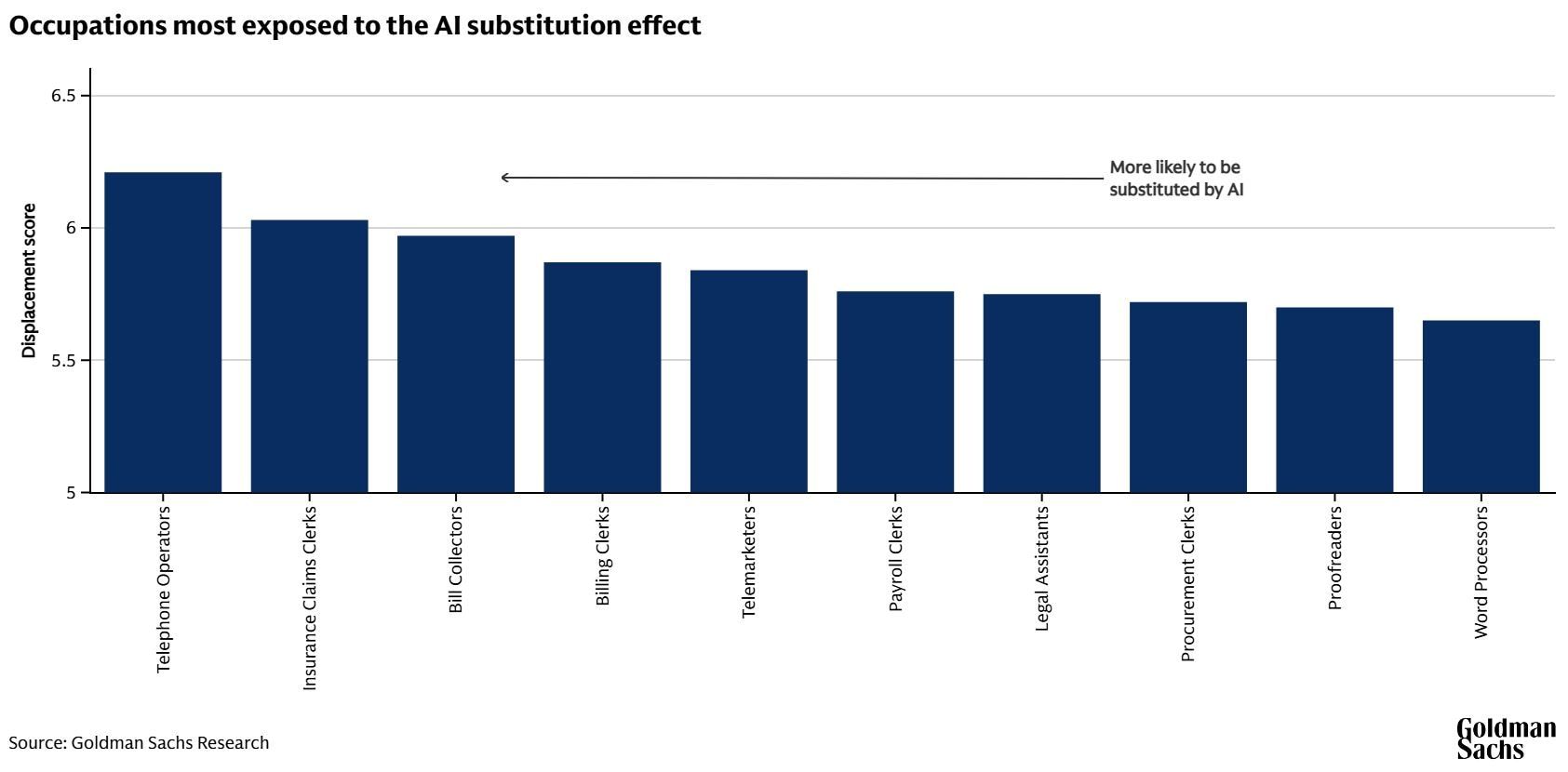
AI has trimmed US monthly payroll growth by roughly 16,000 jobs over the past year, according to new research from Goldman Sachs economists, nudging the unemployment rate up by 0.1 percentage point.
The analysis separates jobs at risk of being replaced by AI from those where the technology augments human workers. That distinction reveals a far more uneven labor market than headline figures suggest.
The Jobs AI Is Replacing
The study from Goldman Sachs economist Elsie Peng combines a displacement score with an IMF complementarity index. The result pinpoints roles where AI substitutes for workers rather than simply overlapping with them.
Telephone operators, insurance claims clerks, and bill collectors face the highest substitution risk, Peng writes. Customer service representatives and data entry staff sit close behind. These occupations have already shown declines in operating costs and job postings at exposed firms.
However, the costs are not distributed evenly. The research finds the employment drag falls mainly on younger, less experienced workers. They compete most directly with AI systems on tasks that once served as entry-level pathways into white-collar work. Entry-level hiring in professional services has cooled sharply over the same period.
Where AI Creates New Work
Still, not every exposed role is shrinking. Looking only at occupations with high augmentation potential, Goldman Sachs estimates AI has added roughly 9,000 jobs per month. That modestly lowered the unemployment rate.
Education workers, judges, and construction managers top the augmentation list. These roles require physical presence, judgment, or interpersonal skills that AI cannot fully replicate. Studies cited by Peng show firms in augmented sectors have posted stronger productivity growth and more job openings.
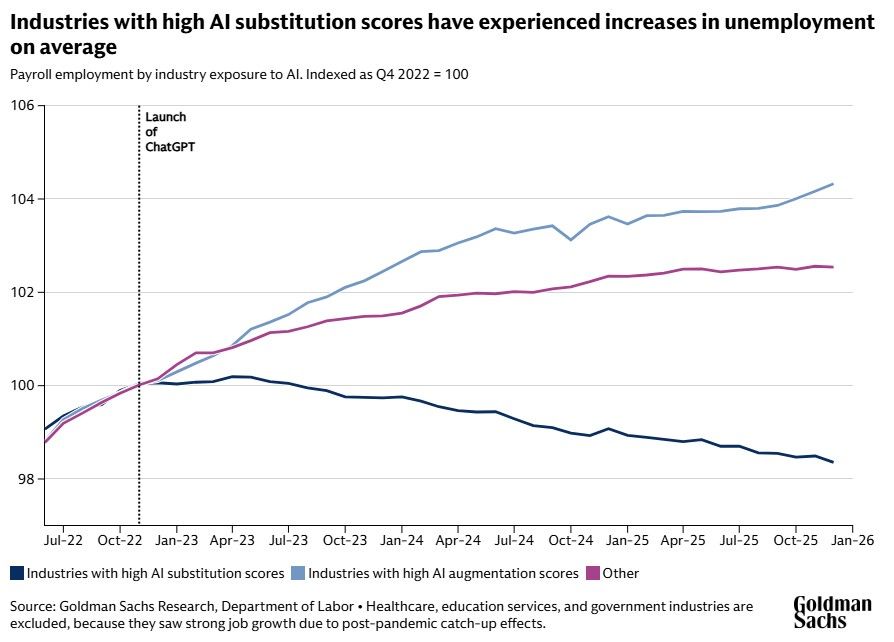
Peng frames the pattern through Jevons paradox, the 19th-century observation that efficiency gains can raise total demand. When AI cuts the cost per unit of output, buyers often want more. That pulls additional workers back into exposed sectors.
However, the aggregate figure may also understate AI’s role in job creation. Hiring tied to data center construction and wider productivity gains from AI adoption are not captured in Goldman’s current estimate.
That leaves the true net effect on US employment an open question as corporate AI spending continues to climb through 2026. The next monthly jobs report should offer a fresh data point on whether the substitution trend is accelerating.
The post Goldman Sachs Says AI Cost US Economy 16,000 Jobs Per Month appeared first on BeInCrypto.
Ripple released a detailed four-phase roadmap on April 20 to protect the XRP Ledger from future quantum computing attacks, with Phase 2 testing already underway, targeting full post-quantum cryptography implementation no later than 2028, as SoFi separately enabled XRP deposits for retail users the same week.
Summary
- Ripple published a four-phase post-quantum cryptography roadmap on April 20, with Phase 2 NIST-standard algorithm testing already active in partnership with Project Eleven.
- The plan includes a Phase 1 Quantum-Day contingency that would immediately block classical signatures and force migration to quantum-safe accounts if current cryptography is compromised ahead of schedule.
- XRPL’s native key rotation gives it a structural advantage over Ethereum and Bitcoin in a post-quantum migration, allowing users to update cryptographic keys without moving funds or abandoning accounts.
Ripple published a four-phase roadmap on April 20 to make the XRP Ledger resistant to quantum computing attacks, with Ayo Akinyele, Senior Director of Engineering at RippleX, stating that the quantum threat has shifted “from theoretical to credible, and preparation timelines now matter.” The roadmap targets full quantum readiness no later than 2028 and was developed in response to Google Quantum AI research showing that approximately 500,000 physical qubits could eventually break the elliptic curve cryptography that secures most blockchain wallets today.
XRP Ledger Quantum Resistant Roadmap Covers Four Phases Through 2028
As crypto.news reported, the roadmap is structured around two parallel objectives: preserving XRPL’s operational performance throughout the transition, and building contingency measures in case a quantum threat arrives earlier than projected. Phase 1 establishes a Quantum-Day emergency protocol that would immediately block classical signatures across the network and direct users to migrate to quantum-safe accounts using zero-knowledge proofs to prove key ownership without exposing vulnerable cryptographic material. Phase 2 is already active in the first half of 2026, with Ripple’s applied cryptography team testing NIST-standardized post-quantum algorithms against real XRPL workloads and benchmarking their effects on signature size, storage, bandwidth, and throughput. Core engineer Denis Angell has already deployed ML-DSA quantum-safe signatures on XRPL’s AlphaNet as part of this phase. Phase 3, targeted for the second half of 2026, will deploy candidate post-quantum signature schemes alongside existing elliptic curve signatures on Devnet for developer testing without touching mainnet. Phase 4 proposes a formal XRPL network amendment by 2028 implementing native post-quantum cryptography at full production scale.
XRPL’s Structural Advantages in a Post-Quantum Migration
The XRP Ledger has two protocol-native features that give it a migration advantage over Bitcoin and Ethereum. XRPL supports native key rotation, allowing users to replace cryptographic keys without changing their account address or moving funds, meaning holders will not need to create new accounts or transfer assets during the upgrade. Ethereum has no protocol-level equivalent, meaning any post-quantum migration on Ethereum would require users to manually move all assets to entirely new accounts, a process significantly complicated by smart contract dependencies. XRPL also supports deterministic seed-based key generation, which enables coordinated, network-wide cryptographic upgrades without requiring individual manual action from every holder. As crypto.news documented, Project Eleven, a quantum security research firm that raised $20 million in a January 2026 Series A, is partnering with Ripple on validator-level testing, developer benchmarking, and a post-quantum custody wallet prototype as part of Phase 2 delivery.
The Broader Quantum Threat to Crypto Infrastructure
Ripple’s roadmap is the most detailed public post-quantum commitment from any major blockchain network and positions XRPL ahead of the broader industry response. As crypto.news tracked, Coinbase’s cryptography advisory board, which includes Stanford’s Dan Boneh and Ethereum Foundation researcher Justin Drake, published a 50-page analysis the same week warning that post-quantum transitions across blockchains, wallets, and exchanges could take years to execute safely even after technical standards are in place. Bitcoin developers remain split between optional opt-in upgrades and more forceful migration measures, while Ethereum is targeting 2029 through a multi-fork roadmap. XRP traded at $1.42 on April 20 when the announcement landed, rising approximately 5% intraday on the news before settling back. On the same day, SoFi separately confirmed that XRP deposits are now available for retail users on its platform, though external wallet withdrawals remain restricted pending further regulatory review.
Ripple said the 2028 target is contingent on successful Devnet testing in Phase 3, ecosystem-wide coordination with validators, and passage of a formal network amendment, each of which introduces its own execution risk to the timeline.
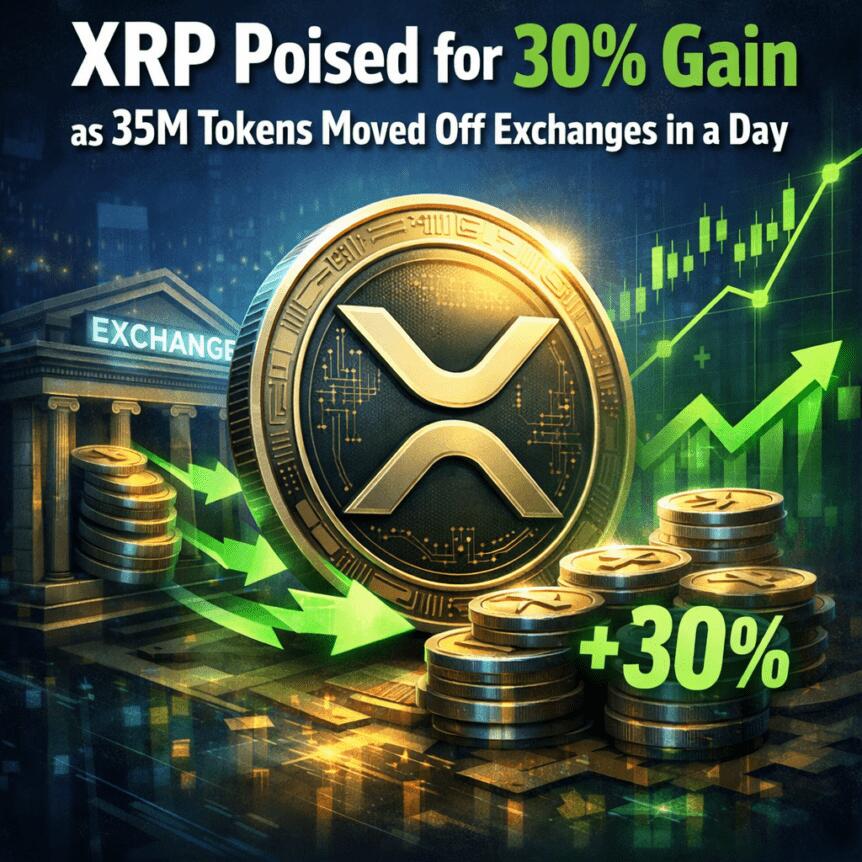
XRP has climbed more than 30% over the last three months, and fresh on-chain and market signals are fueling a cautiously constructive outlook for the XRP/USD pair. As institutional interest, token flows, and a key technical setup align, traders are watching whether the momentum can extend into late spring and early summer.
Analysts are dialing in on a confluence of factors: a notable outflow of XRP from exchanges, renewed large-holder accumulation signals, and a tilt in U.S. spot XRP ETF demand. Together, these elements paint a picture of a market shifting away from near-term selling pressure and toward a more sustained demand dynamic, even as the price hovers near a critical technical juncture.
Key takeaways
- Exchange outflows are signaling a shift of XRP into private wallets or custody, with nearly 35 million XRP leaving exchanges in the last 24 hours—the sixth-largest daily outflow of the year, according to Santiment.
- U.S. spot XRP ETFs have seen three consecutive weeks of net inflows, totaling about $82.88 million as of Saturday, lifting assets under management to roughly $1.1 billion, per SoSoValue data.
- Whale flows have turned positive, with CryptoQuant data showing the 90-day moving average moving back above zero, indicating accumulation by larger holders.
- Technically, XRP/USD sits inside a long-running falling wedge, with a potential 30% move higher by June if the price breaks toward the wedge’s upper boundary, targeting the 50-week EMA near $1.87–$1.89.
On-chain and custody signals bolster the bull case
Exchange outflows have historically accompanied rebounds in XRP price, and the latest spike of around 35 million XRP moving out of exchanges in a 24-hour window marks a notable moment in the current cycle. Santiment highlights that this is among the year’s larger daily outflows, suggesting a concentration of tokens in private wallets or custody rather than ready-for-sale stock on exchanges.
Looking back, similar outflow surges have preceded meaningful upside moves. In March, a pronounced exchange withdrawal spike preceded roughly a 20% price rebound, while February’s outflow surge foreshadowed a near 50% rally. Although past performance is not a guarantee of future results, the pattern adds weight to the view that lower sell-side availability could support higher prices if demand remains steady.
The current outflow narrative dovetails with other positive signals from the XRP ecosystem, offering a more data-driven rationale for optimism over the near term. As long as private wallets and custody arrangements continue to grow while on-exchange liquidity remains constrained, the downside pressure from day-to-day selling may subside, allowing other buyers to push the price higher on favorable momentum.
Institutional demand rises as XRP ETFs attract capital
Institutional interest appears to be crystallizing through benchmark XRP spot exchange-traded products in the United States. SoSoValue data shows three consecutive weeks of net inflows into XRP spot ETFs, with total inflows around $82.88 million through the most recent tally. This flow has helped push the aggregate assets under management for XRP ETFs to roughly $1.1 billion, a milestone that underscores growing institutional exposure to the token.
For traders and investors, ETF inflows can be a proxy for broader appetite among institutions and wealth managers. The persistence of inflows suggests a more constructive stance toward XRP-related products, especially when combined with the custody-driven on-chain dynamics mentioned above. While the ETF channel is just one of several data points, it reinforces the case that demand for XRP products remains more robust than it did earlier in the year.
Whale activity confirms persistent accumulation
Beyond exchange outflows and ETF demand, large-holder behavior is flashing a positive signal. CryptoQuant data indicate that XRP whale flows have flipped to a net-positive regime, with the 90-day moving average rising above zero after spending most of early 2026 in negative territory. Historically, positive whale-flow environments have preceded notable price upswings, lending additional credibility to the current bulge of accumulation by bigger holders.
In the context of the broader accumulation narrative, the shift in whale behavior aligns with the exchange outflows and ETF inflows. When whales accumulate and tokens move into non-exchange custody, the supply-side pressure from sell orders tends to ease, while demand-side pressure from institutions and retail buyers looking to participate in a potential breakout can sustain upside momentum.
Technical setup signals a potential 30% lift, with clear risks
From a chart perspective, XRP/USD has spent a lengthy period trapped inside a falling wedge—two converging downward-sloping lines that have defined the asset’s path for nearly two years. Recent price action has rebounded off the wedge’s lower boundary, setting the stage for a test of the upper boundary. If the pair can clear resistance near the wedge’s apex, the technical picture points toward a measured upside objective near the 50-week exponential moving average, around $1.87 to $1.89. That zone also coincides with the 0.5 Fibonacci retracement level, positioning the move roughly 30% above current prices by June, according to the prevailing technical framework drawn from weekly charts.
On the flip side, a decisive break below the lower trend line would undermine the bullish setup. A break that closes below the wedge could open the door to a revisit of support near the apex point, with a potential retreat toward the $0.98 level—the wedge apex coinciding with the 0.786 Fibonacci retracement.
For traders, the key takeaway is that the current arrangement requires confirmation. The convergence of on-chain outflows, ETF inflows, and positive whale activity lowers the risk of a sudden, sharp pullback, but the technical pattern will remain invalidated unless XRP breaks decisively above the wedge’s resistance. If the price sustains a move into the upper boundary and beyond, the upside path becomes clearer, but any erosion of the momentum or a return of selling pressure could shift the risk-reward balance toward the downside.
What readers should watch next
As May unfolds, the market will be testing whether the confluence of outflows, custody trends, ETF inflows, and whale accumulation translates into a durable uptrend for XRP. Investors should watch two interlinked developments: whether exchange outflows maintain their tempo, signaling ongoing token migration away from tradable liquidity, and whether ETF inflows sustain their momentum, indicating continued institutional appetite for XRP exposure. Additionally, the price action around the wedge’s resistance will be a critical signal for the near-term trajectory. If XRP can establish a breakout above the upper boundary with convincing volume, the medium-term case for a roughly 30% rise by mid-year strengthens. If not, a revisit to the wedge’s lower bound or apex could introduce renewed caution for bulls.

Jet2 issues surcharge update amid rising jet fuel prices

Mycronic AB (publ) 2026 Q1 – Results – Earnings Call Presentation (OTCMKTS:MICLF) 2026-04-25

This little-known ETF is up over 600% during U.S.-Iran war

Manchester United reach agreement with Casemiro over contract clause amid transfer speculation

US brings back mandatory military draft registration

Steven Gerrard disagrees with Gary Neville over ‘shock’ Chelsea and Arsenal claim | Football


-

 Business6 days ago
Powerball Result April 18, 2026: No Jackpot Winner in Powerball Draw: $75 Million Rolls Over
-

 Politics6 days ago
Zack Polanski demands ‘council homes not luxury flats for foreign investors’
-

 Fashion18 hours ago
Weekend Open Thread – Corporette.com
-
Entertainment6 days ago
NBA Analyst Charles Barkley Chimes in on Ice Spice McDonald’s Fiasco
-

 Tech6 days ago
Auto Enthusiast Scores Running Tesla Model 3 for Two Grand and Turns It Into Bare-Bones Go-Kart
-

 Politics5 days ago
Gary Stevenson delivers timely reminder to register to vote as deadline TODAY
-

 Politics3 days ago
Making troops accountable for war crimes threatens US alliance, ex-SAS colonel warns
-

 Business3 days ago
Rolls-Royce Voted UK’s Most Iconic Trade Mark as IPO Register Hits 150
-

 Politics3 days ago
Disabled people challenge government SEND proposals over segregation concerns
-
 Crypto World5 days ago
Bank of Hawai’i (BOH) Q1 2026: Net Income Drops to $57.4M as Net Interest Margin Expands
-

 Politics3 days ago
Zack Polanski responds to home secretary’s taser threat
-
Politics3 days ago
Wings Over Scotland | How To Get Away With Crimes
-

 Politics3 days ago
Starmer handler McSweeney to be dragged from shadows by Foreign Affairs Committee
-
Crypto World6 days ago
Kelp DAO rsETH Bridge Hack Drains $292M as DeFi Losses Top $600M in Two Weeks
-

 Politics3 days ago
‘Iran is still a nuclear threat’
-
 Crypto World4 days ago
Five Value Stocks with Recovery Potential in 2026: PayPal (PYPL), Nike (NKE), and More
-

 Crypto World4 days ago
New York sues Coinbase, Gemini over prediction market offerings
-

 Business3 days ago
The Job Benefits Most Men Don’t Know to Negotiate
-

 Crypto World1 day ago
Michael Saylor says BTC winter is over. Market analyst disagrees, says bitcoin was in a pullback
-

 Politics6 days ago
Reform investigating candidate who ‘hates’ the NHS
You must be logged in to post a comment Login