Connect with us
DAPA Banner

Business

Applied Nutrition profits surge 77% as sales rise and firm says ‘innovation engine is stronger than ever’

Published

on

Business Live

Merseyside firm says it expects to hit full-year targets despite war disruption

Coleen Rooney with a packet of Applied Nutrition Diet Protein and branded water bottle

Coleen Rooney with a packet of Applied Nutrition Diet Protein and a branded water bottle(Image: Applied Nutrition/PA)

Merseyside’s Applied Nutrition has seen profits soar in the past six months as sales have risen – and says it still expects to meet full-year revenue targets despite the impact of the Iran war.

The sports nutrition business said pre-tax profits for the six months to January 31 stood at £20.9m, up 77.1% on a year earlier. Sales rose 56.5% to £74.5m.

Advertisement

In its half-year statement, the company said it was “cognisant” of disruption to shipping routes and purchasing habits in the Middle East with the Iran war and predicted “some reduction” in sales volumes into the region in the current half-year. But it said it still expects to meet full-year revenue targets of around £140 million.

The group said successes over the year included its first out-licensing agreement with Morrisons, extending the Applied Nutrition brand into “mainstream grocery” with new high‐protein food products. It said it had also seen growth in Europe, Latin America and Asia. Work has also begun on the group’s global distribution facility and head office, as well as phase 3 of a factory extension which “will increase revenue capability to £300m”.

Applied Nutrition floated on the London stock market in 2024. The business has been backed by JD Sports and by TV personality Coleen Rooney, who in February increased her stake in the business.

Thomas Ryder, CEO of Applied Nutrition, said: “Our vision to become the world’s most trusted and innovative sports nutrition, health, and wellness brand remains at the heart of our ambition. This six-month period has further highlighted both the breadth of opportunity before us and our proven ability to realise it. The performance and momentum across the business reflects a consumer environment that continues to shift decisively towards health, fitness and wellbeing.

Advertisement

“We have continued to execute against our strategic priorities in the period, with deeper engagement and expanded shelf space with existing customers, new customer wins and entry into new channels, continued international rollout into new geographies, while further progressing the build-out of our D2C offering.

“Since our IPO, we have seen an uplift in our profile, awareness, trust and credibility – exactly as we had envisaged, but even more impactful than we could have anticipated. This has enabled us to move faster and think bigger, with an innovation engine that is stronger than ever, allowing us to bring new products to market at pace, deepen customer relationships and adapt quickly to evolving consumer needs as we continue to build the business for the long term.”


Continue Reading
Click to comment

You must be logged in to post a comment Login

Leave a Reply

Business

Asia Pacific Defies Global Slowdown in Sustainable Finance

Published

on

Asia Pacific Defies Global Slowdown in Sustainable Finance

As green bond and loan activity cools elsewhere, the Asia Pacific region is emerging as a rare engine of growth in the world’s sustainable finance market, according to a new report from ING.

Key takeaways

  • Asia Pacific bucked a global decline in sustainable finance in 2025, posting strong growth in green bonds and loans driven by financial institutions and corporations.
  • ING forecasts a rebound in global sustainable issuances to US$1.621 trillion in 2026, with Asia Pacific expected to lead momentum through transition finance.
  • While EMEA remains the largest sustainable finance market, corporate appetite there is softening, making Asia Pacific’s real-economy demand increasingly decisive for global growth.

Despite mounting geopolitical and economic turbulence rattling global markets, the Asia Pacific is holding its ground and in some areas, pulling ahead in sustainable finance. That is the central finding of Dutch banking group ING’s latest Sustainable Finance Pulse report, which paints an increasingly divergent picture between a softening West and a resilient, growing East.

Globally, sustainable issuances totalled US$1.557 trillion in 2025, a decline of roughly 6.7 per cent from the US$1.669 trillion raised the previous year. Yet within that subdued global picture, Asia Pacific stands out. The region recorded strong year-on-year growth in green bonds and green loans in 2025, even as sustainability-linked loans and transition bonds experienced a modest pullback.

The drivers of that growth are notable. Financial institutions and corporations led the expansion, while governments, supranational firms, and sovereign funds and agencies saw a slight decline in activity. ING also reported record-high sustainable finance volumes in the region last year, driven by robust deal activity across the first three quarters and its leading role as sustainable finance coordinator on the majority of its transactions.

A Pivot Point for Transition Finance

Looking ahead, ING is cautiously optimistic. “In 2026, we expect to see more growth from Asia Pacific and potentially a pick-up in transition issuance as policy frameworks continue to develop across the region,” said Martijn Hoogerwerf, head of ING’s sustainable solutions group in Asia Pacific. The bank specifically flagged the possibility of a rebound in transition bond debt, instruments designed to help carbon-intensive industries shift toward cleaner operations, as regulatory architecture matures across regional markets.

Advertisement

The demand underpinning this growth, ING argues, is structural rather than speculative. “The resilience of Asia Pacific’s sustainable finance market is increasingly underpinned by real-economy demand in areas such as energy, infrastructure and digital capacity,” said Anand Sachdev, country manager for ING Singapore and head of South and Southeast Asia.

Sachdev also pointed to a shift in client priorities. Companies in the region are increasingly focused on “practical, bankable green and transition financing solutions,” underscoring the growing importance of structuring expertise in delivering credible decarbonisation pathways.

Contrast with EMEA

The contrast with Europe, the Middle East and Africa is striking. While EMEA is expected to remain the largest source of sustainable finance globally in 2026, its growth will be led by governments and financial institutions, even as corporate issuances see a notable decline. ING attributes this partly to the relative ease of accessing conventional, non-ESG-linked debt, and describes sustainability-linked instruments in the region as a weak spot.

Bucking that trend within EMEA, however, is Central and Eastern Europe. Sustainable issuances there surged 40 per cent year-on-year in 2025, driven by sovereigns and state-owned enterprises.

Advertisement

A Cautious Global Rebound Expected

Despite the global dip in 2025, ING sees reasons for renewed confidence. The bank is forecasting a recovery to around US$1.621 trillion in sustainable issuances for 2026, pointing to a relatively strong start to the year with US$257 billion coming to market in January and February alone. March, however, brought a slowdown as market volatility linked to conflict in the Middle East weighed on sentiment.

For the Asia Pacific, the trajectory appears more insulated. With policy frameworks catching up to market appetite and corporations seeking credible paths to decarbonisation, the region looks set to play an increasingly central role in shaping how the world finances its climate transition.

Advertisement
Continue Reading

Business

Global Markets | Dollar and oil rise, stocks slide as US-Iran peace talks collapse

Published

on

Global Markets | Dollar and oil rise, stocks slide as US-Iran peace talks collapse
Oil and the dollar jumped on Monday as the failure of U.S.-Iran talks to yield an agreement left a fragile ceasefire hanging in the balance and no end to a choke on Mideast energy exports.

Stocks were set to fall in Asia and S&P 500 futures dropped around 1.1% in early trade. Benchmark Brent crude futures opened about 7.5% higher at $102.37 a barrel.

The euro fell about 0.5% to $1.1672.

Marathon talks in Islamabad ended in stalemate and U.S. President Donald Trump on Sunday ‌said the U.S. ⁠Navy would ⁠itself start blockading the Strait of Hormuz.

Advertisement

Iran has effectively closed the choke point for 20% of the world’s daily energy supplies since the war started in late February, driving up oil prices by more than 30% and fuelling fears of a surge in inflation that has whacked bond markets.


U.S. Treasury futures sank in early trade and gold , which has been a loser as investors have cashed out profits from its long pre-war rally, fell almost 2%.
“This is an absolute unwinding of any optimism heading into the peace talks into that play of dollar: safe-haven; oil jumping and selling ⁠out of ‌everything else,” City Index senior market analyst Fiona Cincotta said. “On the other hand, we have seen the markets over-exaggerate sometimes. And I think especially around this scenario, the market is struggling to really price ⁠it correctly, because there is so much uncertainty, so many unknowns.”

Moves early on Monday dragged many asset prices back near where they had traded in the middle of last week, before the U.S. and Iran had struck a two-week ceasefire deal.

“The market is now largely back to conditions before the ceasefire, except now the U.S. will block the remaining up to (2 million barrels) Iranian-linked flows through the Strait of Hormuz as well,” said Saul Kavonic, MST Marquee analyst in Sydney.

“The key remaining question is if the U.S. renews strikes on Iran, raising the risk of strikes on energy infrastructure across the region which could have a further ‌lasting impact beyond the duration of the war.”

Advertisement

The Wall Street Journal reported Trump and his advisers were now weighing limited strikes on Iran.

Risk-sensitive currencies such as the Australian dollar and sterling came under pressure, falling 0.7% and 0.5%, respectively. The dollar rose ⁠0.3% to 159.78 yen.

With expectations building for a resurgence in inflation, investors have priced in the possibility of several central banks, such as the European Central Bank and Bank of England, leaning towards raising interest rates this year, in stark contrast with pre-war expectations for cuts or steady rates.

Global equities, which ended last week around their highest since early March, buoyed by optimism that the United States and Iran were heading towards some kind of resolution, are still 2% below where they were prior to the war breaking out.

Advertisement

Trump said on Sunday that the price of oil and gasoline may remain high through November’s midterm elections, a rare acknowledgement of the potential political fallout from the war.

Continue Reading

Business

Oil jumps 8% to above $100 ahead of US blockade on Strait of Hormuz

Published

on

Oil jumps 8% to above $100 ahead of US blockade on Strait of Hormuz
Oil prices jumped above $100 a barrel on Monday as the U.S. Navy prepared a blockade of the Strait of Hormuz that could restrict Iranian oil shipments after the U.S. and Iran failed to reach a deal to end the war.

Brent crude futures rose $7.60, or 7.98%, to $102.80 a barrel by 2310 GMT after settling 0.75% lower on Friday.

U.S. West Texas Intermediate was at $104.88 a barrel, up $8.31, or 8.61%, following a 1.33% loss ‌in the previous ⁠session.

“The market ⁠is now largely back to conditions before the ceasefire, except now the U.S. will block the remaining up to 2 million barrels per day Iranian linked flows through the Strait of Hormuz as well,” said Saul Kavonic, head of energy research at MST Marquee.

Advertisement

President Donald Trump https://www.reuters.com/world/us/donald-trump/ said on Sunday the U.S. Navy would start blockading nL1N40U07M the Strait of Hormuz, raising the stakes after marathon talks with Iran failed to reach a deal to end the war, jeopardising a fragile two-week ceasefire.


He added that ⁠the price of ‌oil and gasoline nL1N40V03P may remain high through November’s midterm elections, a rare acknowledgement of the potential political fallout from his decision to attack Iran six weeks ago.
U.S. Central ⁠Command said U.S. forces would begin implementing the blockade of all maritime traffic entering and exiting Iranian ports at 10 a.m. ET (1400 GMT) on Monday. “Not only does this restrain exports from Persian Gulf oil producers, but it will also restrict Iran’s ability to export oil and will exacerbate the supply disruptions the market is experiencing,” ANZ analysts Brian Martin and Daniel Hynes said in a note.

IG market analyst Tony Sycamore said the move would effectively choke off the flow of Iranian oil, forcing Tehran’s allies and customers to apply the necessary ‌pressure to get the waterway reopened.

Iran’s Revolutionary Guards nS8N40E024 said on Sunday that any military vessels attempting to approach the Strait of Hormuz would be considered a violation of the two-week U.S. ceasefire and be dealt ⁠with harshly and decisively.

Despite the stalemate, three supertankers nL1N40U04R fully laden with oil passed through the Strait of Hormuz on Saturday, shipping data showed. They appeared to be the first vessels to exit the Gulf since the ceasefire deal was struck last week.

Advertisement

No other ships were spotted in the strait on Monday except for one Iran-flagged vessel anchored there, shipping data on LSEG showed.

On Sunday, Saudi Arabia said it has restored full oil pumping capacity through the East-West pipeline nL1N40S100 to about 7 million barrels per day, days after providing an assessment of damage to its energy sector from attacks during the Iran conflict.

Continue Reading

Business

Barron Trump SOLLOS yerba mate brand announces pineapple coconut flavor

Published

on

Barron Trump SOLLOS yerba mate brand announces pineapple coconut flavor

First son Barron Trump’s new beverage venture has announced its first two flavors ahead of its planned launch, now set for May. 

SOLLOS Yerba Mate, headquartered near Mar-a-Lago, revealed the news in a LinkedIn post last week.

Advertisement

“Introducing our 12-pack: Pineapple + Coconut,” the company said. “Launching May 2026.”

The announcement comes after the 19-year-old, the youngest son of President Donald Trump, was listed as a director of the Palm Beach, Florida-based beverage company, according to January SEC filings in Florida and Delaware.

BARRON TRUMP LINKED TO BEVERAGE COMPANY BASED NEAR MAR-A-LAGO

Barron Trump fist pump

Barron Trump’s new beverage venture has announced its first two flavors ahead of its May launch. (Mike Segar/Reuters / Reuters)

The product will be available for purchase online at sollos.com, the company said.

Advertisement

The company also shared videos showcasing the design of its new beverage packaging ahead of launch.

In one video, light blue cans featuring “SOLLOS” in bold lettering over an orange-and-yellow sun graphic appear to move through a factory during mass production.

Another clip shows packaging for the 12-pack, including a light blue box with yellow graphic accents.

A LOOK AT THE TRUMP FAMILY’S BUSINESS EMPIRE

Advertisement
blue and yellow case with "sollos" brand

SOLLOS Yerba Mate launches a 12-pack pineapple and coconut beverage line. (SOLLOS Yerba Mate/LinkedIn / Fox News)

Yerba mate, a caffeinated herbal tea native to South America, has recently gained popularity in the U.S. as an alternative to coffee.

SOLLOS was previously announced as a beverage brand designed to complement life in the “Sunshine State,” with branding centered on the sun.

“SOL,” meaning sun in Spanish, represents sunrise and the beginning of the day, the company said. “LOS,” spelled backwards from “SOL,” represents sunset. The startup emphasized that the name is intended to capture the full cycle of the sun, reflecting the idea that “It Begins Where It Ends.”

HERE’S HOW MUCH TRUMP ACCOUNT BALANCES COULD GROW OVER TIME

Advertisement
yellow and blue drink cans

Light blue cans, featuring the logo “SOLLOS,” move through a factory line. (SOLLOS Yerba Mate/LinkedIn / Fox News)

According to SEC filings dated Jan. 23, SOLLOS raised $1 million through a private placement and lists at least five partners.  

Barron, a student at New York University’s Stern School of Business, along with four others named in the SEC filing, are listed as executive officers and members of the company’s board of directors.

Others involved in the company include Spencer Bernstein, Rudolfo Castello, Stephen Hall and Valentino Gomez, some of whom attended the same high school as Barron. 

GET FOX BUSINESS ON THE GO BY CLICKING HERE

Advertisement

Bernstein, a Villanova University student who previously attended Oxbridge Academy in Palm Beach with Trump, was listed as an executive officer.

“I’ve decided to postpone my final semester at Villanova University to focus on something I’ve been building for the past 8 months,” Bernstein previously posted on LinkedIn. 

“Since the end of last school year I have been working alongside my co-founder, Stephen Hall, and a few close friends on SOLLOS Yerba Mate, a lifestyle beverage brand built around clean + functional ingredients.”

Hall, now a student at the University of Notre Dame who also attended Oxbridge Academy, was listed as an executive officer and director. 

Advertisement

FOX Business’ Sophia Comptom contributed to this report.

Continue Reading

Business

Analysis-Protracted Iran war narrows BOJ’s rate hike options

Published

on

Analysis-Protracted Iran war narrows BOJ’s rate hike options


Analysis-Protracted Iran war narrows BOJ’s rate hike options

Continue Reading

Business

US stock futures slide over 1% after Iran ceasefire talks fall through

Published

on


US stock futures slide over 1% after Iran ceasefire talks fall through

Continue Reading

Business

TAT Shifts Focus to Value-Driven Tourism in Recalibrated 2026 Outlook

Published

on

TAT Shifts Focus to Value-Driven Tourism in Recalibrated 2026 Outlook

The Tourism Authority of Thailand emphasizes sustainable growth by promoting premium experiences and prioritizing safety. After welcoming 9.31 million visitors in early 2026, Thailand projects a total of 30 to 34 million arrivals by the end of the year.

Emphasizing Quality in Tourism

Bangkok, 8 April 2026 – The Tourism Authority of Thailand (TAT) is committed to The New Thailand vision, focusing on Value over Volume to ensure sustainable and meaningful growth. Despite global economic uncertainties, Thailand aims to sustain its competitiveness and recalibrate its 2026 international tourism outlook. TAT is implementing targeted measures to enhance high-value experiences, expand quality market segments, and ensure safety and reliability through the Trusted Thailand framework. This approach not only reinforces confidence but also aligns with evolving traveler priorities through the “Healing is the New Luxury” concept, bolstering Thailand’s reputation as a resilient and competitive destination.

Strengthening Resilience Amid Global Challenges

Building on its 2025 performance, Thailand continues to leverage tourism in economic recovery amidst global challenges like economic uncertainty and regional competition. While international arrivals are gradually recovering, changing travel behaviors and cautious spending underline the need to focus on quality growth and greater value per trip. In the first quarter of 2026, Thailand welcomed 9.31 million international visitors, with China leading, followed by Malaysia, Russia, India, and South Korea. Long-haul markets, including the UK and the US, also contributed significantly to a diversified market mix, supporting sustained tourism growth.

Projected Growth and Future Outlook

For 2026, TAT anticipates international arrivals around 30–34 million, taking into account global fluctuations such as travel demand, air connectivity constraints, and energy price volatility. Domestically, 206 million trips are expected, with total tourism revenue projected to be approximately 2.58 trillion Baht. The strategy acknowledges anticipated easing of geopolitical tensions in the Middle East within months. By aligning with global conditions, TAT is poised to maintain Thailand’s position as a preferred travel destination, focusing on quality growth and ensuring economic resilience through enhanced traveler experiences.

Advertisement

Source : TAT refocuses on value over volume as 2026 tourism outlook is recalibrated

Continue Reading

Business

Dollar strengthens as peace talks falter, US blockade of Iran’s ports to begin

Published

on

Dollar strengthens as peace talks falter, US blockade of Iran’s ports to begin


Dollar strengthens as peace talks falter, US blockade of Iran’s ports to begin

Continue Reading

Business

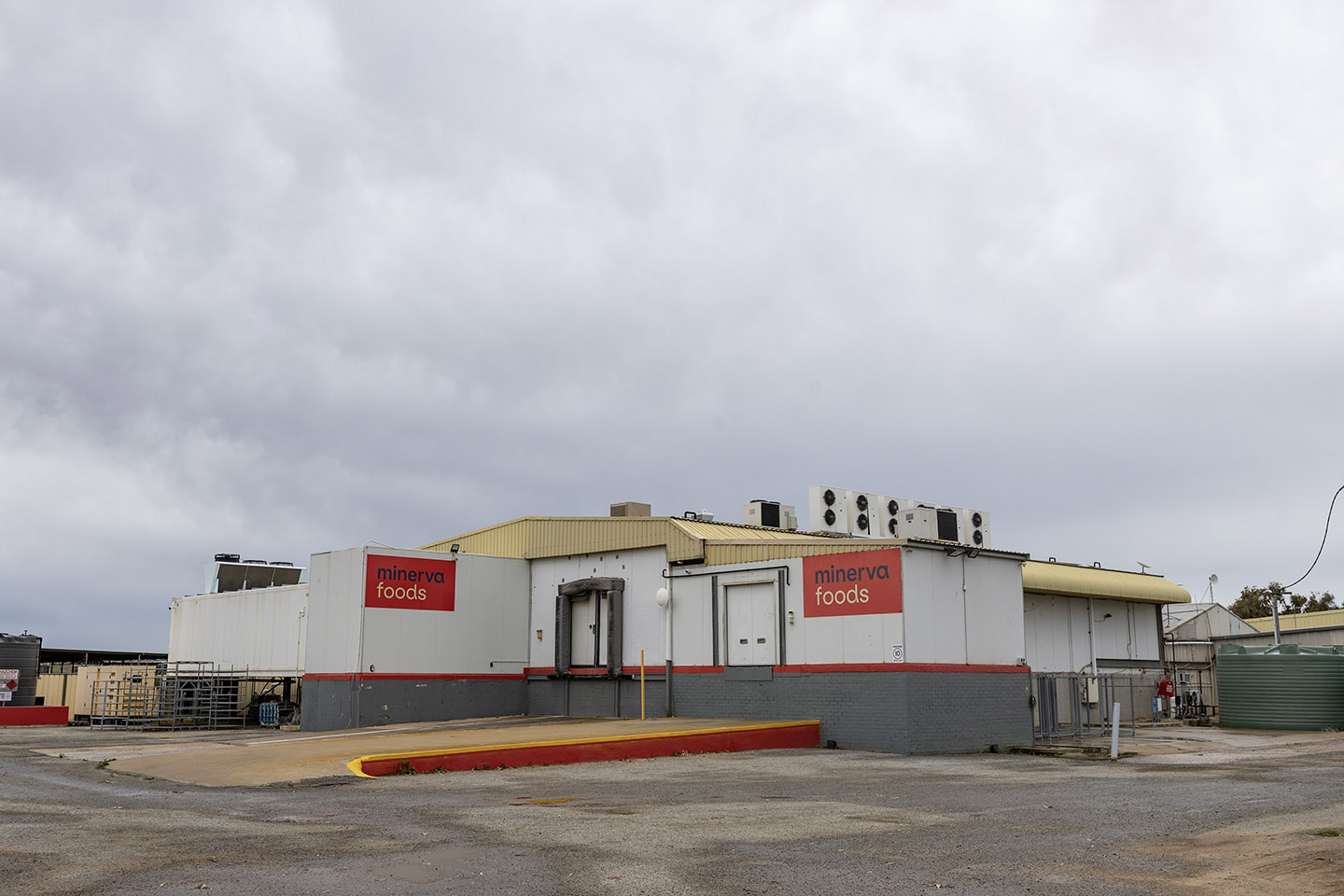
Brazil's Minerva puts Tammin, Esperance abattoirs on the market

Published

on

Brazil's Minerva puts Tammin, Esperance abattoirs on the market

The foreign owner of two mothballed abattoirs has put both facilities up for sale and will exit WA after two years of radio silence about its future.

Continue Reading

Business

CrowdStrike: A Wing And A Prayer

Published

on

CrowdStrike: A Wing And A Prayer

CrowdStrike: A Wing And A Prayer

Continue Reading

Trending

Copyright © 2025