

Business
April 2026 CPI: Inflation rose in April as Iran war jolted energy prices


Meridian Equity Partners senior managing partner Jonathan Corpina analyzes how news on Iran and OpenAI has driven market struggles on ‘The Claman Countdown.’
Inflation surged in April as consumer prices rose amid the impact of the Iran war on the energy market and broader economy.
The Bureau of Labor Statistics on Tuesday said that the consumer price index (CPI) – a broad measure of how much everyday goods like gasoline, groceries and rent cost – rose 0.6% from a month ago and is 3.8% higher than last year. That’s the highest level since May 2023.
Expectations vs. reality
The 0.6% monthly increase was in line with the expectations of economists polled by LSEG, while the annual figure was hotter than the prediction of 3.7%.
So-called core prices, which exclude volatile measurements of gasoline and food to better assess price growth trends, were up 0.4% on a monthly basis and 2.8% from a year ago. Both of those figures were higher than economists’ predictions of 0.3% and 2.7%, respectively.
AMERICANS LEAN ON CREDIT CARDS AND BUY NOW, PAY LATER AS GAS PRICES EAT BIGGER SHARE OF INCOME
Economists have noted that the inflation data from December 2025 through April 2026 will be affected by data collection interruptions that occurred during last fall’s 43-day government shutdown.
During the shutdown, the BLS wasn’t able to gather data and used a carry-forward methodology to make up for the lack of an October CPI report and missing data in November’s report. Economists say this is likely to impart a downward bias on inflation data until this spring, when fresh data will negate the discrepancy.
The cost of living breakdown
High inflation has created severe financial pressures in recent years for most U.S. households, which are forced to pay more for everyday necessities like food and rent. Price hikes are particularly difficult for lower-income Americans, because they tend to spend more of their already-stretched paychecks on necessities and have less flexibility to save.
Energy prices rose 3.8% in April amid the Iran war’s disruption of Middle Eastern oil supplies, with prices up 17.9% in the last year. The BLS noted that the energy index accounted for over 40% of the overall CPI increase in April.

Gasoline prices have risen significantly compared with last year due to the impact of the Iran war. (Justin Sullivan/Getty Images)
GAS PRICE SURGE HITTING LOW-INCOME HOUSEHOLDS HARDEST, FED STUDY FINDS
Gasoline prices increased 5.4% in April and are up 28.4% from a year ago. Electricity prices rose 2.8% on a monthly basis and are up 6.1% from a year ago. Utility gas service prices declined 0.1% in April and are up 3% in the last year.
Food prices rose 0.5% in April and were up 3.2% from a year ago. The food at home index rose 0.7% on a monthly basis and is up 2.9% from last year. The food away from home index increased 0.2% in April and is 3.6% higher than a year ago.
Meats, poultry and fish prices were up 1.2% on a monthly basis and are up 6.7% from a year ago. Beef and veal prices were up 2.7% in April and are 14.8% higher than a year ago. Egg prices rose 1.5% in April but are down 39.2% year over year as supplies normalized after an avian flu outbreak created shortages. The fruits and vegetables index rose 1.8% in April and is 6.1% higher than a year ago.

Food prices rose in April and are up 3.2% from a year ago. (Justin Sullivan/Getty Images / Getty Images)
Housing prices were 0.6% higher in April and are up 3.3% over the last year. Tenants’ and household insurance costs rose 0.1% for the month but are up 7.2% year over year.
Transportation service prices were up 0.3% for the month and are 4.3% higher than a year ago. Airline fares accounted for much of the increase, as they rose 2.8% in April and are up 20.7% year over year.
FEDERAL RESERVE LEAVES INTEREST RATES UNCHANGED AS POWELL’S CHAIRMANSHIP NEARS END
What experts are saying
James McCann, senior economist for investment strategy at Edward Jones, said that “American households continue to feel the brunt of surging energy costs, adding to the deluge of inflation they have weathered since the pandemic. Moreover, with the Strait of Hormuz still effectively shuttered, the risk that we are not past the peak of these price pressures is rising.”
“The good news is that the economy looks resilient to this price shock so far. Many consumers have benefited from tax refunds this year, hiring has picked up from near stagnant rates in 2025 and businesses are generating robust profit growth,” McCann added.
GET FOX BUSINESS ON THE GO BY CLICKING HERE
Seema Shah, chief global strategist at Principal Asset Management, said that the inflation data has likely pushed a Federal Reserve rate cut until December at the earliest, with risks rising that it won’t occur until 2027.
“While the pickup in headline inflation was expected, the upside surprise in core is more consequential. It tentatively hints at broadening price pressures, something the Fed will be reluctant to dismiss,” Shah explained. “It is still too soon to conclude that a sustained second-round dynamic is underway. But with inflation rising to its highest level since 2023 and looking uncomfortably sticky, alongside a more resilient and dynamic labor market, the case for policy caution has strengthened.”

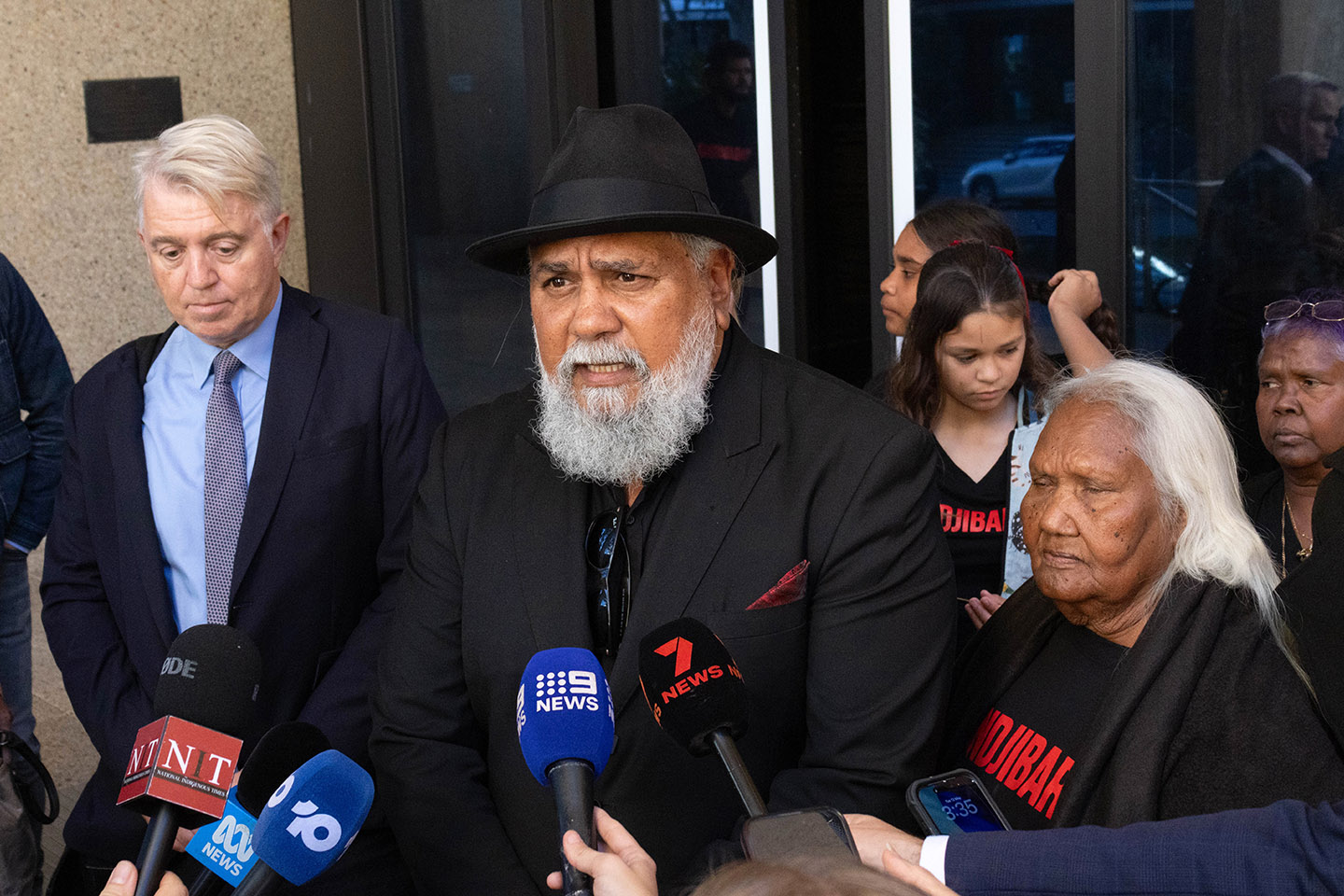
Fortescue has been ordered to pay the Yindjibarndi people $150 million for mining their lands without approval by Australia’s Federal Court.

Revenue from operations fell 13% YoY to Rs 14,900 crore in the reporting March quarter, compared with Rs 17,096 crore in the year-ago quarter.
EBITDA rose 10% to Rs 4,216 crore during the quarter.
Tata Power said operational efficiency improvements and growth across core businesses supported earnings during the quarter. The company’s core business reported 13% YoY growth in PAT in Q4, driven mainly by generation, transmission and distribution, and renewables businesses.
For the full financial year FY26, Tata Power reported its highest-ever annual PAT of Rs 5,118 crore, up 7% year-on-year, while EBITDA increased 11% to Rs 16,090 crore. Annual revenue stood at Rs 63,681 crore.

The renewables segment remained a key growth driver. Renewable business PAT before exceptional items rose 59% YoY to Rs 1,994 crore in FY26, while Q4 PAT stood at Rs 406 crore.
The solar manufacturing business also saw strong traction, with FY26 PAT more than doubling to Rs 857 crore, aided by module and cell manufacturing ramp-up and yields exceeding 95%.The rooftop solar business reported a 150% jump in FY26 PAT to Rs 499 crore, while the transmission and distribution business posted a 49% rise in annual PAT to Rs 2,978 crore. Odisha discoms recorded an 84% increase in FY26 PAT at Rs 809 crore.
During the year, Tata Power commissioned 2.5 GW of renewable energy capacity and said its total renewable portfolio has now reached 11.6 GW, including projects under construction. The company also announced that the board of Tata Power Renewable Energy approved an investment of around Rs 6,500 crore for a 10 GW photovoltaic ingot and wafer manufacturing facility to deepen backward integration in solar manufacturing.
CEO and MD Praveer Sinha said the company continued to focus on long-term growth through clean energy expansion, transmission projects and distribution improvements across Odisha, Delhi and Mumbai. He added that rising electricity demand and India’s energy transition would continue to create growth opportunities across rooftop solar, manufacturing and customer-centric energy solutions.
Business
Is Spotify Down Now? App Experiences Minor Glitches as Users Report Playback and Login Issues on May 13

NEW YORK — The Spotify app faced scattered reports of technical difficulties Tuesday, with some users experiencing playback interruptions, login errors and delayed playlist loading, though the streaming giant has not confirmed a widespread outage. As of midday May 13, 2026, Downdetector and other monitoring sites showed elevated but not critical complaint levels, primarily centered on the mobile app rather than a full service disruption.
User reports spiked modestly in the morning hours, with many complaining about songs stopping mid-play, search functions failing, or the app freezing when opening curated playlists. Android users appeared disproportionately affected, echoing similar Android-specific issues reported on May 11. Spotify’s official status channels and support forums have remained relatively quiet, suggesting the problems may be isolated or resolving quickly.
A Spotify spokesperson said the company is aware of “intermittent issues affecting a small percentage of users” and that engineering teams are actively investigating. “Most users should experience normal service,” the statement read. “We recommend updating the app and restarting devices as a first step.” No major global outage has been declared, distinguishing today’s reports from previous widespread disruptions that affected tens of thousands.
Recent History of Spotify Disruptions
Spotify has encountered several technical hiccups in 2026. On May 11, Android users reported “Something went wrong” errors when accessing playlists, a problem that was largely resolved within hours. Earlier incidents in April and February also involved app crashes and server connection issues, often tied to backend updates or high traffic periods.
The music streaming service, which boasts more than 600 million users worldwide, relies on a complex infrastructure of content delivery networks, recommendation algorithms and real-time syncing. Even minor glitches can frustrate millions when they occur during peak listening hours.
What Users Are Experiencing
Common complaints Tuesday included:
- Songs buffering indefinitely or stopping after 10-15 seconds
- Playlists failing to load or showing as empty
- Login loops on mobile devices
- Search bar returning no results
- Downloaded content becoming temporarily inaccessible
Most affected users reported the issues began around 8-10 a.m. EDT. Desktop and web player versions appeared less impacted, with many listeners switching platforms as a workaround. Spotify Premium subscribers were not spared, though free-tier users with advertisements sometimes saw additional delays.
Troubleshooting Tips
Spotify recommends the following steps for users facing problems:
- Force-close and restart the app
- Check for app updates in the App Store or Google Play
- Restart the device
- Reinstall the app if issues persist
- Clear cache (Android) or offload/reinstall (iOS)
- Try switching between Wi-Fi and mobile data
For persistent problems, users can visit Spotify’s support site or community forums, where moderators actively monitor and update ongoing issues.
Broader Context of Streaming Reliability
Spotify is not alone in facing occasional service hiccups. Major streaming platforms including Netflix, YouTube Music and Apple Music have all experienced similar intermittent issues in recent months, often linked to rapid feature rollouts, server maintenance or unexpected traffic surges. As streaming consumption grows, the pressure on backend systems increases.
Industry analysts note that Spotify has invested heavily in infrastructure resilience, including multi-region data centers and advanced load balancing. However, the complexity of personalized recommendations, podcast integration and social features creates more potential points of failure than simpler services.
Impact on Users and Business
For casual listeners, today’s glitches represent a minor inconvenience. For heavy users and those relying on Spotify for focus, workouts or commutes, interruptions can be frustrating. Content creators and podcasters have also voiced concerns about reliability during live events or scheduled releases.
From a business perspective, Spotify continues to grow its user base and improve monetization despite occasional technical hiccups. The company reported strong subscriber growth in its most recent earnings, with premium users driving the majority of revenue. Short-term outages rarely have lasting effects on overall retention when resolved quickly.
When to Expect Resolution
Most reported Spotify issues in 2026 have been fixed within a few hours. If problems persist into the afternoon or evening, users should monitor official channels for updates. Spotify’s @SpotifyStatus account on X and the company’s community board typically post acknowledgments during significant events.
In the meantime, many affected users have turned to downloaded content, alternative platforms or web browsers as temporary solutions. Spotify encourages patience while technical teams work behind the scenes.
As streaming becomes central to daily entertainment, reliable uptime grows increasingly important. Today’s scattered reports serve as a reminder of the infrastructure challenges behind seamless music delivery. For now, most Spotify users appear able to listen without major disruption, with only a subset experiencing temporary issues.
Spotify continues to dominate the music streaming landscape, and these occasional glitches have not slowed its overall momentum. Users experiencing problems today are encouraged to try basic troubleshooting or wait for an automatic resolution, which has proven effective in similar past incidents.

Earnings call transcript: Suncor Energy Q1 2026 beats forecasts but shares dip

Australia’s share market has wobbled ahead of the federal budget, as investors brace for tax reforms expected to impact returns on housing and stocks.

The proposed fundraising comes at a time when investor sentiment around the company has improved sharply following a series of developments that eased concerns around its long-standing balance sheet stress and capital raising ability.
Vodafone Idea stock has surged nearly 30% over the past month and gained more than 50% in the last four months, aided by regulatory relief on adjusted gross revenue (AGR) liabilities, management changes and renewed expectations around network expansion funding.
A major trigger came earlier this month after the Department of Telecommunications recalculated the company’s AGR dues, lowering the outstanding amount to around Rs 64,046 crore as of December-end. The move was seen by analysts as a significant reduction in financial overhang for the debt-laden telecom operator.
The company also saw renewed investor attention after Kumar Mangalam Birla returned as non-executive chairman, nearly five years after stepping down during a period marked by mounting financial pressure and uncertainty over the telecom operator’s future.
The sharpest rally in the stock, however, came earlier this week after a Bloomberg report said UK-based Vodafone Group was exploring a potential transfer of a portion of its stake in Vodafone Idea back to the company for treasury holding purposes. Vodafone Plc currently owns about 19% in the Indian telecom operator.
Brokerages have turned more constructive on the stock after the AGR clarity. Citigroup maintained its “Buy-High Risk” rating on Vodafone Idea with a target price of Rs 14, implying further upside from current levels.According to Citi, uncertainty surrounding AGR liabilities had for years weakened lender confidence and delayed the company’s fundraising plans. The brokerage said the government’s conversion of dues into equity, resulting in a 36% stake in Vodafone Idea, has materially improved the company’s prospects of securing fresh capital for network investments.
Also read: Gold, housing play under pressure as PM’s pitch rattles consumer-facing stocks
Citi also noted that the improved regulatory clarity reduces execution risk around Vodafone Idea’s previously announced fundraising roadmap. The brokerage now expects the telecom operator to have better visibility in completing its targeted debt raise, which is crucial for accelerating 4G and 5G rollout plans and competing more effectively with rivals Reliance Jio and Bharti Airtel.
(Disclaimer: Recommendations, suggestions, views and opinions given by the experts are their own. These do not represent the views of The Economic Times)
Business
These Stocks Are Today’s Movers: Qualcomm, Intel, Micron, Zebra, Nvidia, Quantum Computing, GameStop, and More

These Stocks Are Today’s Movers: Qualcomm, Intel, Micron, Zebra, Nvidia, Quantum Computing, GameStop, and More
Business
Dixon Technologies Q4 Results: Cons PAT falls 36% YoY as topline grows 2%; Rs 10/share dividend announced
Meanwhile, Dixon Technologies’ total income grew 3% year-on-year to Rs 10,595 crore versus Rs 10,304 crore in Q4FY25. It included other income of Rs 84 crore compared to Rs 11 crore in the year-ago period.
The company’s board recommended a final dividend of Rs 10 per equity share for the financial year 2025-26. The dividend, if approved by the company members at its 33rd Annual General Meeting (AGM), will be credited within 30 days from the AGM date, the company filing said.
The company’s Earnings Before Interest, Taxes, Depreciation and Amortisation (EBITDA) stood at Rs 493 crore in the quarter under review, up 9% YoY.
Dixon Tech’s expenses in the reported quarter stood at Rs 10,231 crore versus Rs 10,399 crore in Q3FY26 and Rs 9,982 crore in the year-ago period. The expenses were for the cost of material consumed, employee benefits and finance cost, among other things.
The profit before tax (PBT) was Rs 370 crore in Q4FY26 versus Rs 412 crore in Q3FY26 and Rs 576 crore in Q4FY25.
For the full financial year, PAT stood at Rs 1,644 crore, gaining 33% YoY, while total income stood at Rs 49,586 crore, up 28%. EBITDA for FY26 increased 69% to Rs 2,580 crore over the previous financial year. The earnings were announced after market hours, and Dixon Tech shares ended today at Rs 10,120, down by Rs 652 or 6.05%.
(Disclaimer: The recommendations, suggestions, views, and opinions given by the experts are their own. These do not represent the views of The Economic Times.)

The online auction giant said it doubted how the video game retailer would finance its offer.

Britain’s bond market delivered its sharpest rebuke yet to Sir Keir Starmer’s premiership on Tuesday, with 30-year gilt yields climbing to their highest level this century as the prime minister stared down a growing chorus of Labour MPs demanding he step aside.
The sell-off, which dragged sterling and equities lower in lockstep, wiped out the relief rally that followed Starmer’s defiant intervention last week. Tuesday’s cabinet meeting, at which the prime minister once again refused to countenance resignation, did little to settle nerves. Investors are now openly pricing in the prospect of a leftward lurch in Labour policy, with the attendant risks of looser fiscal rules, higher gilt issuance and a further squeeze on the cost of capital for British business.
For the country’s 5.5 million small and medium-sized enterprises, the implications are far from academic. Higher long-dated gilt yields feed directly into the swap rates that underpin commercial lending, business mortgages and asset finance, raising the prospect of yet another leg up in the borrowing costs faced by Britain’s corporate backbone at a time when many are still nursing the legacy of post-pandemic debt.
The 30-year gilt yield rose 13 basis points to 5.81 per cent, the highest since May 1998. The benchmark 10-year yield gained 10 basis points to 5.1 per cent, within a whisker of breaching the post-2008 peak it set earlier this month. Bond prices move inversely to yields.
“A new Labour leader may face pressure to ease the fiscal rules and raise gilt issuance,” warned Jim Reid, analyst at Deutsche Bank, capturing the City’s central concern that any successor would lean towards higher spending and heavier taxation of the very businesses the Treasury is counting on to drive growth.
Sterling’s slide alongside government bonds will draw uncomfortable parallels with the dark days of Liz Truss’s mini-budget. When a currency weakens in concert with rising borrowing costs, it is the trading pattern of an emerging market that has lost the confidence of foreign capital, not that of a G7 economy. The pound fell 0.64 per cent against the dollar to a two-week low of $1.352, and shed 0.21 per cent against the euro to €1.152, its weakest since mid-April.
Some of the pressure is undeniably imported. Bunds, OATs and BTPs all sold off as President Trump declared the Iran ceasefire was “on life support”, sending Brent crude up 2.8 per cent to $107.17 a barrel and reigniting inflation fears across advanced economies. The Strait of Hormuz, through which a fifth of global oil and gas once flowed, remains largely shut. Germany’s Dax bore the brunt of the European sell-off, falling more than 1 per cent. But gilts underperformed by a substantial margin, marking out Westminster’s political turmoil as a uniquely British risk premium.
Mohit Kumar, chief European economist at Jefferies, urged clients to short sterling, arguing any change in the composition of government “would likely be left-leaning”. Anthony Willis, senior economist at Columbia Threadneedle Investments, cautioned that the bond market was unlikely to settle “until greater clarity emerges”.
Equities followed suit. The FTSE 100 surrendered 0.3 per cent having opened the week with a 0.4 per cent gain, while the more domestically focused FTSE 250 dropped 211 points, or 0.9 per cent, extending its losing streak to a second day. Mid-cap stocks, dominated by UK-facing businesses, are the clearest read on how the City judges Britain’s economic prospects.
The grim verdict from Andrew Goodwin, chief UK economist at Oxford Economics, is that there is little prospect of meaningful relief. He expects 10-year borrowing costs to remain stuck above 5 per cent for the remainder of the year, regardless of who occupies Number 10. “Markets clearly perceive the UK has a bigger inflation problem and that tighter monetary policy will be needed to limit second-round effects from the energy shock, while political uncertainty has added to pressures at the long end,” he said.
Even were Starmer to dig in, Goodwin argued, the bond market would have little to celebrate, with the prime minister’s “attempts to regain popularity, or, more likely, from a successor implementing more costly left-wing economic policies” weighing on sentiment. “If Starmer sets out a timetable to stand down, the uncertainty premium will persist.”
For owner-managers already navigating a punishing cost base, a softening consumer and the fallout from this spring’s National Insurance changes, the message from the bond vigilantes is unambiguous: brace for borrowing to stay dear, and for political risk to remain firmly on the balance sheet.

Jamie Young
Jamie is Senior Reporter at Business Matters, bringing over a decade of experience in UK SME business reporting.
Jamie holds a degree in Business Administration and regularly participates in industry conferences and workshops.
When not reporting on the latest business developments, Jamie is passionate about mentoring up-and-coming journalists and entrepreneurs to inspire the next generation of business leaders.

Federal court orders $150m compensation for Yindjibarndi in Fortescue feud

Ethereum Foundation Launches Clear Signing Standard

Inside Josh Duggar’s Correspondence With Only Sister Who Wrote

Manchester United reach agreement with Casemiro over contract clause amid transfer speculation

US brings back mandatory military draft registration

Steven Gerrard disagrees with Gary Neville over ‘shock’ Chelsea and Arsenal claim | Football

Jahvillani – MONEY-POWER-RESPECT | Official Music Video

XRP Ripple Believe IT or NOT, XRP USE CASE ONLY FLARE Delivers, SBI LEADS with XRP CANTON SOLANA ETH

$30,000 XRP BUYBACK WON’T HAPPEN! – DTCC IS JUST ONE XRP SWITCH – BRAD SAYS IT ALL CONNECTS TO XRP!
-
 Crypto World4 days ago
HarrisX Poll Found 52% of Registered Voters Support the CLARITY Act
-

 Fashion4 days ago
Weekend Open Thread: Marianne Dress
-

 Crypto World5 days ago
Upbit adds B3 Korean won pair as Base token gains Korea access
-
 NewsBeat5 days ago
NCP car park operator enters administration putting 340 UK sites at risk of closure
-

 Fashion1 day ago
Coffee Break: Travel Steam Iron
-

 Fashion2 days ago
What to Know Before Buying a Curling Wand or Curling Iron
-

 Tech2 days ago
Auto Enthusiast Carves Functional Two-Stroke Engine from Solid Metal
-

 Politics19 hours ago
What to expect when you’re expecting a budget
-

 Politics3 days ago
Politics Home Article | Starmer Enters The Danger Zone
-
 Business3 days ago
Ignore market noise, India’s long-term story intact, say D-Street bulls Ramesh Damani and Sunil Singhania
-

 Tech1 day ago
GM Agrees To Pay $12.75 Million To Settle California Lawsuit Over Misuse Of Customers’ Driving Data
-

 Crypto World6 days ago
BlackRock CEO Larry Fink Discusses a New Asset Class
-

 Entertainment6 days ago
Sarah Paulson Called Out For Met Gala ‘Hypocrisy’
-

 Entertainment5 days ago
General Hospital: Ric & Ava Bombshell – Ric’s Massive Secret Exposed!
-
 Sports6 days ago
NBA playoff winners and losers: Austin Reaves is not loving Lakers vs. Thunder matchup, but Chet Holmgren is
-

 Entertainment6 days ago
Bold and Beautiful Early Spoilers May 11-15: Steffy Revolted & Liam Overjoyed!
-

 Politics5 days ago
Simon Cowell Says He Was ‘Horrible’ To Susan Boyle During BGT Audition
-

 Crypto World6 days ago
Robinhood says Wall Street is building onchain
-

 Sports5 days ago
UEFA Champions League final schedule, teams, venue, live time and streaming | Football News
-

 Tech7 days ago
Apple and Samsung are dominating smartphone sales so thoroughly that only one other company makes the top 10
You must be logged in to post a comment Login