
Business
Artemis II Crew Poses with Orion ‘Integrity’ in Viral Post-Splashdown Photo After Historic Moon Flyby

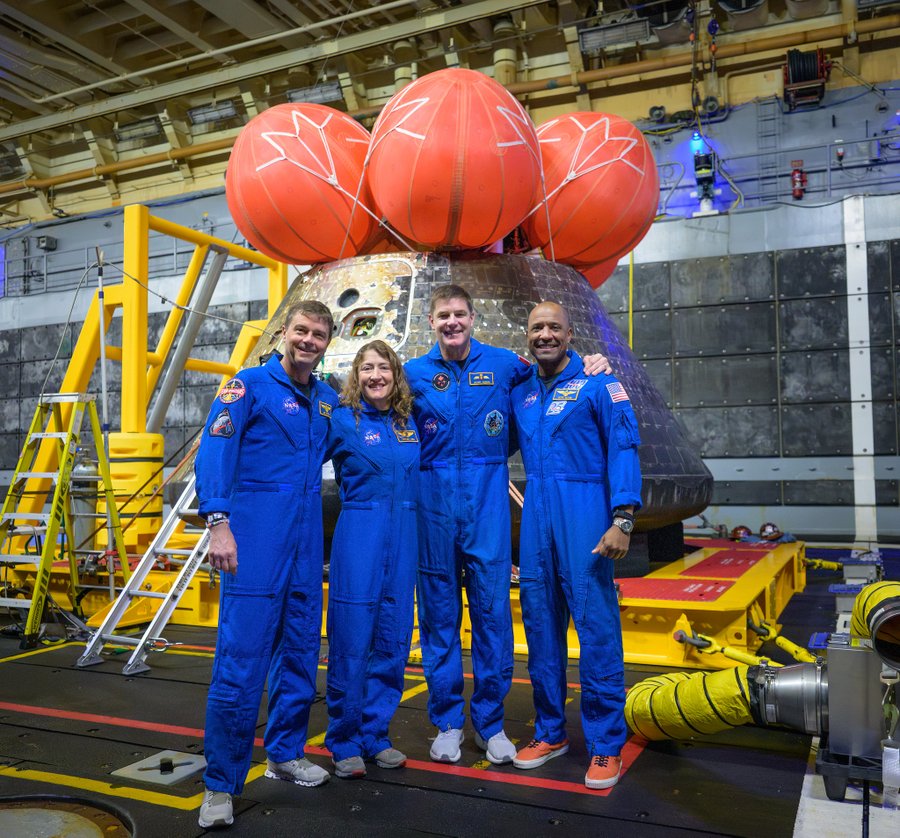
SAN DIEGO — NASA released an iconic image Saturday showing the four Artemis II astronauts standing proudly beside their Orion spacecraft, named Integrity, in the well deck of the USS John P. Murtha just hours after a flawless Pacific Ocean splashdown that capped humanity’s first crewed lunar voyage in more than half a century.

The photograph, posted by the official NASA Artemis account on X, captured Commander Reid Wiseman, Pilot Victor Glover, Mission Specialist Christina Koch and Canadian Space Agency astronaut Jeremy Hansen smiling in their launch-and-entry suits alongside the gumdrop-shaped capsule that carried them 252,756 miles from Earth and back.
” The astronauts. Their ride around the Moon,” the agency captioned the image, which quickly amassed more than 11,000 likes and thousands of shares within hours of its release.
The crew splashed down off the coast of California at 8:07 p.m. EDT Friday after a nearly 10-day mission that tested Orion’s life-support systems, re-entry capabilities and deep-space navigation in preparation for future lunar landings.
The astronauts. Their ride around the Moon.
The Artemis II astronauts pose for a group photo after viewing their Orion spacecraft — which they named Integrity — in the well deck of USS John P. Murtha following their splashdown. pic.twitter.com/dLicqJPoox — NASA Artemis (@NASAArtemis) April 11, 2026
Navy recovery teams extracted the astronauts one by one onto an inflatable platform before ferrying them by helicopter to the amphibious transport dock USS John P. Murtha, where the group photo was taken. All four were reported in excellent health following post-flight medical evaluations.
A Mission for the History Books
Artemis II marked the first time humans traveled beyond low-Earth orbit since Apollo 17 in 1972. The crew looped around the Moon on April 6, surpassing the Apollo 13 distance record by traveling 248,655 miles from Earth at one point.
Wiseman, Glover, Koch and Hansen conducted scientific observations, tested spacecraft systems and even named two lunar features during a live broadcast that moved the crew to tears.
The mission’s success validates NASA’s Orion spacecraft and Space Launch System rocket for Artemis III, targeted for a crewed lunar landing as early as 2027 near the Moon’s south pole.
“This is a gift to the world from NASA,” one NASA commentator said during the live splashdown broadcast, echoing the sentiment shared by millions watching worldwide.
Meet the Crew Making History
The diverse Artemis II team represented a deliberate step forward in space exploration demographics. Koch became the first woman to fly to the Moon’s vicinity. Glover is the first Black astronaut to travel that far from Earth. Hansen is the first non-American and first Canadian on a lunar mission. Wiseman, a veteran Navy test pilot and father, commanded the flight.
All four are seasoned spacefarers except Hansen, who made his first trip beyond Earth orbit. Their selection underscored NASA’s commitment to international partnership through the Artemis Accords, which now include more than 40 nations.
During the mission, the crew shared stunning views of Earth and the Moon, conducted live calls with schoolchildren and performed experiments that will inform long-duration human spaceflight to Mars.
The Road to Splashdown
After launch from Kennedy Space Center on April 1 aboard the SLS rocket, the crew spent nine days, one hour and 31 minutes in space. They performed a lunar flyby that brought them within about 4,000 miles of the Moon’s surface before beginning the long journey home.
Re-entry was textbook. Traveling at Mach 33, the capsule endured peak heating of nearly 5,000 degrees Fahrenheit as it plunged through the atmosphere. Communication blackout lasted several tense minutes before Wiseman radioed, “Houston, Integrity. We have you loud and clear.”
Parachutes deployed perfectly, slowing the spacecraft to a gentle 20 mph impact with the Pacific. Recovery forces from NASA, the U.S. Navy and U.S. Air Force secured the capsule within minutes.
The USS John P. Murtha, positioned 200 miles southwest of San Diego, served as the primary recovery vessel. Once aboard, the astronauts underwent medical checks before boarding aircraft back to NASA’s Johnson Space Center in Houston.
The Orion capsule itself will be transported to Naval Base San Diego and eventually returned to Kennedy Space Center for analysis.
Public Reaction and Cultural Impact
The group photo has resonated deeply online. Commenters called it “the family photo civilization should keep on the mantelpiece” and praised the crew’s composure after what one described as a “white-knuckle ride” through re-entry.
Social media lit up with tributes to the mission’s inclusivity and its role in inspiring the next generation. “They didn’t just orbit the Moon — they gave an entire generation their Apollo 8 moment,” one viral reply read.
NASA Administrator Bill Nelson hailed the mission as “a triumph of American engineering and international cooperation.” He noted that Artemis II paves the way for sustainable lunar presence and eventual human missions to Mars.
What Comes Next for Artemis
With Artemis II complete, NASA turns full attention to Artemis III, which will attempt the first crewed landing on the lunar south pole using SpaceX’s Starship lander. That mission could occur as soon as late 2027, pending successful uncrewed tests of the lander and additional SLS flights.
The program also includes plans for a lunar Gateway space station and long-term habitats. International partners, including Canada, Japan and the European Space Agency, continue to play key roles.
For the Artemis II crew, the coming weeks will involve debriefings, medical monitoring and public appearances. Wiseman, Glover, Koch and Hansen are expected to share their experiences at events across the country, much as Apollo astronauts did decades ago.
The mission’s success comes at a pivotal time for NASA, which faces budget scrutiny and technical challenges but has now demonstrated that Orion can safely carry humans to deep space and back.
As the astronauts reunite with families in Houston, the image of them standing beside Integrity serves as a powerful symbol: humanity has returned to the Moon’s vicinity, and the journey to live and work there — and eventually beyond — has truly begun.
The viral NASA photo posted Saturday reminds the world that exploration is not just about destinations but about the people who dare to go — and the spacecraft that bring them home.



I am a stock analyst with over 20 years of experience in quantitative research, financial modeling, and risk management. My focus is on equity valuation, market trends, and portfolio optimization to uncover high-growth investment opportunities. As a former Vice President at Barclays, I led teams in model validation, stress testing, and regulatory finance, developing a deep expertise in both fundamental and technical analysis. Alongside my research partner (also my wife), I co-author investment research, combining our complementary strengths to deliver high-quality, data-driven insights. Our approach blends rigorous risk management with a long-term perspective on value creation. We have a particular interest in macroeconomic trends, corporate earnings, and financial statement analysis, aiming to provide actionable ideas for investors seeking to outperform the market.
Analyst’s Disclosure: I/we have no stock, option or similar derivative position in any of the companies mentioned, and no plans to initiate any such positions within the next 72 hours. I wrote this article myself, and it expresses my own opinions. I am not receiving compensation for it (other than from Seeking Alpha). I have no business relationship with any company whose stock is mentioned in this article.
Seeking Alpha’s Disclosure: Past performance is no guarantee of future results. No recommendation or advice is being given as to whether any investment is suitable for a particular investor. Any views or opinions expressed above may not reflect those of Seeking Alpha as a whole. Seeking Alpha is not a licensed securities dealer, broker or US investment adviser or investment bank. Our analysts are third party authors that include both professional investors and individual investors who may not be licensed or certified by any institute or regulatory body.

Labour MP Nic Dakin says it is “the best outcome” for British Steel as ownership talks continue.
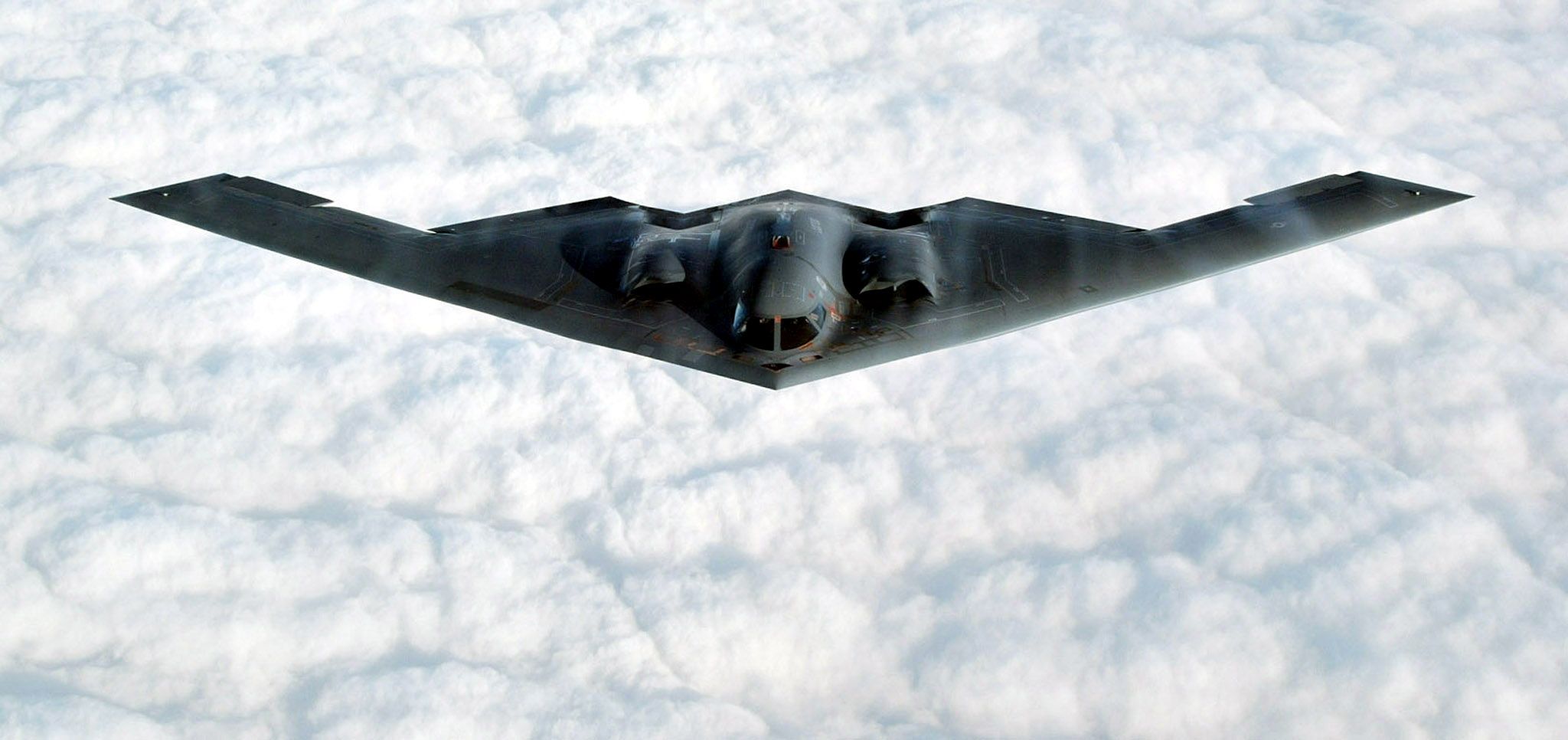
WHITEMAN AIR FORCE BASE, Mo. — The Northrop Grumman B-2 Spirit, the world’s most advanced and expensive stealth bomber, continues to demonstrate unmatched penetrating strike capability as the U.S. Air Force deploys the aircraft in Operation Epic Fury against hardened targets in Iran.
With recent images showing B-2s departing Missouri for long-range missions — some featuring puzzling white patches along wing leading edges — the 35-year-old platform remains a cornerstone of American strategic power projection even as the B-21 Raider enters development. Here are 10 essential things to know about the B-2 Spirit as of April 2026.
1. The Most Expensive Aircraft Ever Built
Each B-2 Spirit carries a staggering program cost of approximately $2.13 billion when factoring in development, testing and production, making it the priciest combat aircraft in history. The total program cost through the early 2000s reached about $44.75 billion for just 21 aircraft produced between 1989 and 2000. Flyaway unit costs were lower — around $737 million per plane — but the combination of advanced stealth materials, flying-wing design and sophisticated systems drove expenses sky-high. Operating costs run roughly $135,000 to $150,000 per flight hour, largely due to specialized radar-absorbent coatings that require meticulous maintenance.
2. Only 20 Operational Aircraft Remain
The Air Force operates a tiny fleet of about 20 B-2s, all based at Whiteman Air Force Base in Missouri under Air Force Global Strike Command. One aircraft was retired following damage in a 2022 landing accident, reducing the inventory from 21. Plans call for eventual retirement once sufficient B-21 Raiders enter service around 2032, though ongoing modernization aims to keep the Spirits viable into the 2030s. The small fleet size underscores the aircraft’s strategic rarity and high value.
3. Revolutionary Flying-Wing Design
Inspired by Jack Northrop’s earlier flying-wing concepts from the 1940s, the B-2 has no traditional fuselage or vertical tail. Its 172-foot wingspan, 69-foot length and 17-foot height create a smooth, blended shape that minimizes radar returns. The design reduces infrared, acoustic, electromagnetic, visual and radar signatures, allowing the bomber to penetrate sophisticated air defenses undetected. This low-observable technology gives the B-2 unique freedom to operate at high altitudes with greater range and sensor coverage.
4. Massive Payload with Precision Strike
Despite its stealth profile, the B-2 can carry more than 40,000 pounds of ordnance in two internal bays. It delivers conventional weapons such as up to 80 500-pound JDAM GPS-guided bombs or the 30,000-pound Massive Ordnance Penetrator (GBU-57) “bunker buster” designed for deeply buried targets. It also carries nuclear gravity bombs including the B61 and B83. The aircraft is the only stealth platform capable of delivering large standoff cruise missiles while remaining low-observable.
5. Intercontinental Range Without Refueling
Powered by four General Electric F118-GE-100 engines producing 17,300 pounds of thrust each, the B-2 achieves high subsonic speeds and a service ceiling of 50,000 feet. Its unrefueled range exceeds 6,000 nautical miles (about 6,900 statute miles), extending to more than 10,000 nautical miles with a single aerial refueling. This enables nonstop missions from Missouri to virtually any target worldwide, as demonstrated in operations over Kosovo, Afghanistan, Iraq, Libya and now Iran.
6. Tiny Crew of Just Two Pilots
Only two crew members — a pilot and mission commander — fly the B-2. The spacious cockpit includes a small rest area with a camp bed, toilet and provisions for hot meals, allowing one pilot to rest while the other monitors systems during marathon flights. Advanced automation and fly-by-wire controls make the aircraft manageable for such a small crew despite its complexity.
7. Record-Breaking Long Missions
The B-2 holds the record for the longest air combat mission in history. In 2001, during Operation Enduring Freedom, B-2s flew 44-hour round-trip sorties from Whiteman to Afghanistan, with one aircraft logging more than 70 hours including a brief engine-running crew swap. In 1999 over Kosovo, a single B-2 accounted for destroying 33 percent of Serbian targets in the campaign’s first weeks while flying nonstop from Missouri.
8. Combat Role in Operation Epic Fury Against Iran
In March 2026, B-2 Spirits conducted long-range strikes as part of Operation Epic Fury, targeting hardened underground missile facilities, nuclear-related infrastructure and command nodes in Iran. Departing from Whiteman, the bombers delivered precision bunker-busting munitions that no other platform could reliably employ against advanced air defenses. Recent photos released by U.S. Central Command show B-2s with unidentified white rectangular patches sealed along wing leading edges — possibly new radar-absorbent coatings, sensor enhancements or protective coverings whose exact purpose remains classified.
9. Continuous Modernization Keeps It Relevant
Northrop Grumman and the Air Force are actively upgrading the B-2 fleet with improved communications, survivability features, avionics, sensors and stealth coatings drawn partly from B-21 technology. Programs focus on better battlefield information sharing, in-flight target updates and reduced maintenance demands for radar-absorbent materials. These efforts aim to maintain the B-2’s edge against evolving threats until the Raider fully replaces it. Software updates alone can number in the hundreds per upgrade cycle.
10. Hollywood Star and Cultural Icon
Beyond its military role, the B-2 has appeared in numerous films including “Armageddon” and “Captain Marvel,” cementing its image as a futuristic symbol of American airpower. Its dramatic public unveiling in 1988 and distinctive bat-wing silhouette continue to captivate the public. The aircraft’s secrecy — much of its low-observability technology remains classified — only adds to its mystique.
The B-2 Spirit represents a technological leap born in the Cold War that has repeatedly proven its worth in post-Cold War conflicts. Its ability to strike anywhere on Earth with minimal warning and extreme precision makes it a vital deterrent and first-strike option. As operations against Iran highlight, the “ghost bomber” still has no peer for penetrating the world’s most defended airspace.
With modernization continuing and the B-21 on the horizon, the B-2 fleet — though small and expensive — delivers outsized strategic impact. For U.S. adversaries, the mere possibility of undetected B-2 overflights remains a powerful psychological and operational constraint.

Week Ahead: Hope Springs Eternal
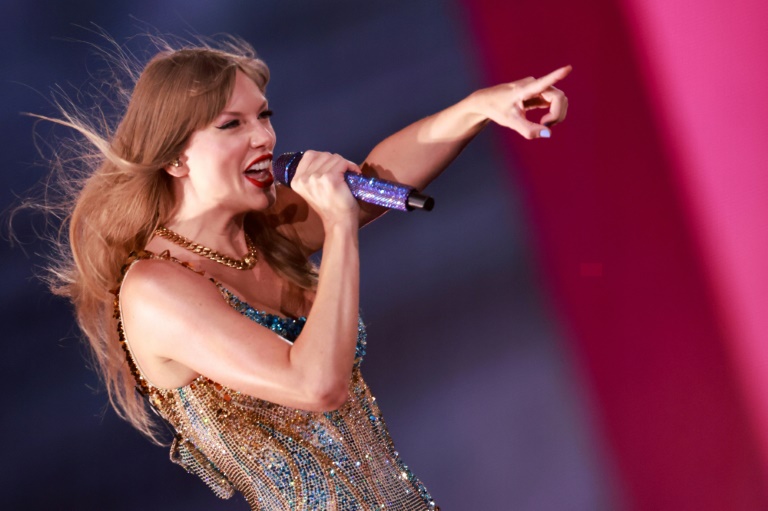
NEW YORK — Taylor Swift and Travis Kelce’s long-awaited wedding is set for July 3, 2026, in New York City, according to multiple reports citing save-the-date cards that have begun circulating among close friends and family.

AFP
The development marks a notable shift from months of speculation that the couple would exchange vows in Rhode Island, either at Swift’s historic Watch Hill mansion or the nearby luxury Ocean House resort. Those earlier rumors, which peaked around a potential June 13 date tied to the pop star’s lucky number, have been largely debunked by venue insiders and recent reporting.
Page Six reported exclusively on April 9 that save-the-dates listing New York City as the location and July 3 as the date have gone out, with guests asked to block off the Fourth of July weekend. The outlet described the move as allowing for a larger, more accommodating indoor celebration in a city both Swift and Kelce know well and frequently visit. Swift maintains a residence in Tribeca, while the couple has been spotted together often in Manhattan.
The exact venue within New York remains undisclosed, though sources told outlets including the Daily Mail it will likely be an indoor space such as a museum, historic hall or private arena-like setting capable of hosting an estimated 150 guests. Insiders emphasized the couple’s desire for privacy, with reports of strict no-phone policies and personalized save-the-dates designed to trace any potential leaks. One source noted Swift wanted to avoid an outdoor ceremony similar to friend Selena Gomez’s recent wedding.
Rhode Island Rumors Debunked
For much of late 2025 and early 2026, speculation centered heavily on Watch Hill, Rhode Island, where Swift owns a multimillion-dollar oceanfront estate known as the “Holiday House.” Tabloid reports suggested the wedding could take place at the property itself or spill over to the exclusive Ocean House resort just steps away — a yellow Victorian-style landmark overlooking the Atlantic with a reputation for luxury and discretion.
Those claims gained traction after reports that Swift allegedly paid another couple to relinquish their June 13 reservation at Ocean House. However, luxury wedding planner Tara Guérard publicly shut down the rumors in early April. Commenting on an Instagram post, Guérard wrote that she is handling the June 13 event at Ocean House and confirmed, “Taylor is not my bride this weekend! Boo!” The planner’s statement aligned with the resort’s denial that any buyout occurred and its limited capacity for a guest list the size Swift reportedly desired.
Local Rhode Island wedding professionals had weighed in enthusiastically on the coastal charm of the Ocean State, citing its Gilded Age mansions, scenic waterfronts and experienced luxury event infrastructure. Yet as save-the-dates surfaced pointing to New York, those predictions faded. Providence Journal reporting further noted that Ocean House could not comfortably accommodate the scale described in earlier rumors.
Why New York City Makes Sense
New York holds deep personal significance for Swift, who has immortalized the city in songs such as “Welcome to New York” and maintains strong professional and residential ties there. Kelce, while rooted in Kansas City with the NFL’s Chiefs, has embraced Manhattan life alongside Swift, with the couple frequently photographed enjoying the city’s restaurants, events and private moments.
Sources indicate the venue switch accommodates a growing guest list and allows for a grander, more controlled indoor affair away from coastal weather variables. July 3 falls during a relatively quiet period in the NFL offseason, giving Kelce flexibility, while aligning with Swift’s touring and recording schedule. The long holiday weekend also provides guests extra time to travel and celebrate without immediate professional conflicts.
Privacy and Planning Details
The couple, engaged since August 2025, has maintained tight control over wedding information. Family members, including Kelce’s sister-in-law Kylie Kelce, have pushed back against intrusive questions, with Kylie bluntly telling podcast listeners that details are not for public consumption. Close friends such as Selena Gomez and potential bridesmaids from Swift’s inner circle — often referred to as her “girl squad” — are expected to play prominent roles, with some reports suggesting the bridesmaids are planning a special surprise for the bride.
Security and discretion remain paramount. Reports mention non-disclosure agreements for vendors and guests, along with measures to prevent unauthorized photography. The wedding is described as intimate yet celebratory — a private affair for their tight-knit circle rather than a media spectacle.
Neither Swift nor Kelce has publicly commented on the plans, consistent with their approach throughout the relationship. Swift has occasionally teased fans about personal milestones in interviews, including a lighthearted exchange with Graham Norton where she hinted the wedding timing would be noticeable, but specifics have stayed under wraps.
Cultural Impact and Fan Reaction
News of the reported New York City wedding has already sparked widespread online discussion, with Swifties and NFL fans alike dissecting every clue. The shift from seaside Rhode Island to the bustling energy of Manhattan fits Swift’s narrative style — blending personal history with a fresh chapter. Some fans noted the poetic resonance of a “Welcome to New York” wedding, while others expressed mild disappointment that the coastal estate rumors did not materialize.
The couple’s high-profile romance, which began in 2023 and captured global attention through Swift’s “The Tortured Poets Department” era and Kelce’s on-field success, has fueled endless speculation. Their engagement announcement generated massive media coverage, and the wedding is poised to be one of 2026’s defining celebrity events regardless of final details.
As planning continues behind closed doors, representatives for both Swift and Kelce have declined to confirm or deny specifics. Industry observers expect any official confirmation or first images to emerge only after the event, preserving the couple’s preference for privacy on their special day.
For now, the latest reports point clearly to New York City on July 3 as the setting where Taylor Swift and Travis Kelce will say “I do.” Whether the ceremony unfolds in a storied Manhattan landmark or a more modern private space, the union of pop music’s reigning superstar and one of football’s most charismatic players promises to be a memorable celebration of two intertwined worlds.
Fans will continue watching for subtle hints in Swift’s music, social media or public appearances, but the couple appears determined to keep the focus on their commitment rather than the spectacle. In a city that never sleeps, the biggest love story in entertainment may finally reach its next chapter — quietly, elegantly and on their own terms.
Business
Saudi Arabia restores full capacity on East-West oil pipeline to 7 million bpd after attacks


Saudi Arabia restores full capacity on East-West oil pipeline to 7 million bpd after attacks
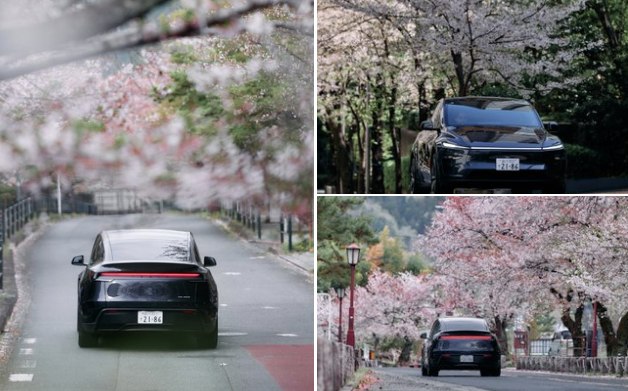
TOKYO — Tesla Japan’s official X account unleashed a social media sensation Sunday with three breathtaking photographs of a sleek black Model Y cruising beneath tunnels of pink-and-white cherry blossoms, instantly captivating fans and underscoring the electric vehicle maker’s accelerating push into the Japanese market during peak sakura season.

Posted at 1:35 p.m. local time with the simple caption “Model Y🌸,” the images captured a glossy Model Y on scenic roads lined with blooming sakura trees — one rear view framed by overhanging branches heavy with petals, another front three-quarter shot reflecting spring light off its LED headlights, and a third pulling away along a riverside path with dense floral canopies and scattered blossoms on the pavement. Within hours, the post had amassed more than 209,000 views, 2,291 likes and hundreds of replies praising the harmonious blend of cutting-edge technology and timeless Japanese beauty.
The timing could not have been more poetic. As of April 12, 2026, cherry blossom viewing — or hanami — remains in full swing across much of Japan, with late-blooming varieties and cooler northern regions still offering prime displays. Meteorologists note that the 2026 season started slightly earlier than average in many areas, with Tokyo’s peak around late March and lingering beauty into mid-April in places like Kyoto and rural roads outside major cities. Tesla Japan’s visuals, apparently shot in such idyllic settings, perfectly captured the fleeting elegance of sakura petals drifting around the silent, zero-emission SUV.
The post resonated deeply with Japanese netizens and global Tesla enthusiasts alike. Replies flooded in with heart emojis, comments such as “Tesla + Cherry Blossom 🌸 in Japan 🤍” and videos of fans recreating the scenes. One user called it “the best Tesla photos ever,” while another noted, “Model Yに桜は似合いますね!” — “Cherry blossoms suit the Model Y perfectly!” Even Elon Musk reposted the images, amplifying their reach.
Tesla’s Expanding Footprint in Japan
The viral moment arrives as Tesla ramps up its presence in a market long dominated by hybrid vehicles and domestic automakers. The company sold approximately 10,600 vehicles in Japan in 2025 — a 90% year-over-year increase — and moved roughly 5,000 units in the first quarter of 2026 alone, according to statements from Richi Hashimoto, head of Tesla Japan. That momentum reflects growing consumer interest in the Model Y, Tesla’s best-selling vehicle globally and a practical family SUV that appeals to Japanese buyers seeking efficiency without sacrificing space or performance.
Just days earlier, Tesla launched the new Model Y L — a long-wheelbase, six-seater variant — in Japan and seven other Asian markets. Priced starting around 5.92 million yen (roughly $39,000–$41,000), the three-row configuration comes with dual-motor all-wheel drive and incentives including three years of free Supercharging. Deliveries are scheduled to begin by the end of April, broadening appeal to larger families in a country where space-efficient vehicles are prized.
Tesla also announced plans to more than double its directly operated service centers from 14 to over 30 by the end of 2026 and aims to expand its retail footprint to around 60 stores and showrooms nationwide. The strategy mirrors the company’s successful retail reset elsewhere, emphasizing hands-on customer experiences, staff training and accessible financing — including 0% options on select models — to overcome Japan’s historically cautious approach to full battery-electric vehicles.
EV adoption in Japan remains modest compared to Europe or China, with battery-electric vehicles accounting for only about 1.6% of new car sales last year. Yet Tesla’s growth demonstrates that premium offerings like the Model Y can thrive even in a hybrid-heavy market. Local analysts credit the company’s focus on real-world usability, rapid charging infrastructure and the quiet, refined driving experience that pairs elegantly with Japan’s winding countryside roads and urban efficiency.
Symbolism and Cultural Resonance
The images strike a chord beyond automotive enthusiasm. Cherry blossoms symbolize renewal, beauty and the transient nature of life in Japanese culture — themes that align philosophically with Tesla’s mission of sustainable energy. Driving a silent electric SUV beneath sakura trees evokes a future where modern innovation respects and enhances tradition rather than displacing it.
Fans on X highlighted this fusion. “A Tesla under cherry blossoms is where the future meets tradition in the most beautiful way,” one commenter wrote. Others shared their own photos of Teslas amid spring blooms, turning the post into an informal community celebration of both EVs and hanami season.
The Model Y itself features prominently in the shots: its minimalist design, panoramic glass roof reflecting sky and petals, and signature light bar taillights glowing against the floral backdrop. At roughly 5,000 pounds and with up to 320 miles of range in select configurations, the vehicle offers a smooth, responsive ride ideal for Japan’s mix of highways, mountain passes and city streets. Recent software updates and the upcoming Juniper refresh — expected later in 2026 — promise even greater efficiency and features tailored to local preferences.
Broader Implications for Tesla’s Asia Strategy
Tesla’s Japan success is part of a larger Asia-Pacific push. The Model Y L rollout targets family buyers in high-density cities across the region, where three-row SUVs have long been popular among gas-powered competitors. By offering competitive pricing, generous incentives and expanding Supercharger networks, Tesla is positioning itself as a practical alternative rather than a niche luxury choice.
Industry observers note that Japan’s government continues to support EV infrastructure through subsidies and charging mandates, creating tailwinds for Tesla despite competition from Toyota’s hybrids and emerging Chinese EV brands. Hashimoto has emphasized that Tesla views Japan not just as a sales market but as a key part of its global sustainability goals.
For potential buyers, the viral photos may serve as unintended marketing gold. Test-drive requests at Tesla Japan showrooms have reportedly spiked following similar aesthetic campaigns, and social media buzz often translates into showroom traffic during sakura season when many families take spring outings.
As petals continue to fall across Japan this week, Tesla Japan’s timely post reminds the world that electric mobility can be as visually poetic as it is practical. The Model Y gliding beneath ancient cherry trees offers a glimpse of a cleaner, quieter future — one where technology and tradition bloom side by side.
Whether the images inspire more Japanese drivers to consider electrification or simply provide a moment of seasonal delight, one thing is clear: the combination of Tesla and sakura has struck a chord. In a country that cherishes fleeting natural beauty, the enduring appeal of sustainable innovation appears to be taking root.


’Paddington’ musical, Hollywood stars to vie for prizes at Olivier Awards

NEW YORK — Alphabet Inc. (NASDAQ: GOOGL) shares traded around $317 as of April 10, 2026, with Wall Street maintaining a strong consensus “Buy” or “Moderate Buy” rating amid robust AI-driven growth in Google Cloud and Search, even as the company prepares for sharply higher capital spending that could pressure near-term margins.

Analysts covering the Google parent company largely recommend buying the stock, with an average 12-month price target clustering between $354 and $379 — implying 12% to 20% upside from current levels. The highest targets reach $420–$443, while a small number of more cautious forecasts sit near $270–$300. Out of roughly 40–70 analysts tracked across major firms, the vast majority rate Alphabet a Buy or Strong Buy, with only a handful of Hold ratings and zero Sells.
The stock has delivered solid gains in recent periods but remains below its February 2026 peak near $349. Year-to-date performance reflects broader market rotation and investor focus on AI infrastructure spending across big tech.
Strong Fundamentals and AI Progress Support Bull Case
Alphabet continues to demonstrate resilience in its core advertising business while accelerating in cloud and artificial intelligence. Google Cloud posted impressive growth rates in recent quarters, with analysts highlighting Gemini AI model adoption, enterprise wins and monetization progress. The Gemini app has surpassed hundreds of millions of monthly active users, and products built on generative AI models showed triple-digit year-over-year revenue growth in late 2025.
Search remains a cash engine, bolstered by AI Overviews and other enhancements that improve user experience without cannibalizing revenue significantly. YouTube and subscription services add further diversification. Consensus estimates project healthy revenue expansion in 2026, with Google Cloud expected to remain a standout performer.
Several firms, including J.P. Morgan, Mizuho and Wells Fargo, recently reaffirmed Buy or Overweight ratings with targets in the $360–$420 range, citing Alphabet’s leadership in AI infrastructure via custom TPUs, vast data advantages and consumer reach. Earnings growth has consistently beaten expectations, with a history of positive surprises around 20%.
Q1 2026 results are scheduled for release after market close on April 29, with a conference call following. Analysts anticipate revenue near or above $106 billion and EPS around $2.76, though focus will center on forward guidance, cloud margins and commentary on AI monetization trends.
The CapEx Challenge and Margin Pressure
The primary counterweight to the bullish narrative is Alphabet’s aggressive capital expenditure plan. Management guided for $175 billion to $185 billion in 2026 capex — a significant ramp from prior years — largely directed toward AI data centers, servers and infrastructure. This level of spending, while positioning the company for long-term leadership, is expected to weigh on free cash flow and operating margins in the near term.
Some analysts note that EPS growth for 2026 may lag revenue growth due to these investments. The stock currently trades at a forward price-to-earnings multiple in the high-20s to low-30s, a premium to historical averages but justified by many as reasonable for a high-quality compounder with AI tailwinds.
Regulatory risks persist, including ongoing antitrust matters and potential appeals, though investors appear to view them as manageable given the company’s scale and diversification.
Investment Outlook: Lean Toward Buy on Dips
Most Wall Street research tilts clearly toward buying Alphabet stock in 2026, particularly on any post-earnings weakness or market pullbacks. The combination of durable advertising cash flows, accelerating cloud and AI momentum, and a massive installed user base creates a compelling long-term setup. Bulls argue that heavy 2026 investments will fuel superior growth and market share gains beyond the current year, potentially re-rating the multiple higher if execution impresses.
Cautious voices highlight valuation, the risk of margin compression from capex, and intensifying competition in AI from players like OpenAI, Microsoft and emerging challengers. Those preferring a more defensive stance may opt to wait for clearer visibility on spending returns after the April 29 report.
Free cash flow generation remains robust outside peak investment periods, supporting potential shareholder returns via buybacks or future dividends, though management has prioritized growth and infrastructure.
For growth-oriented investors with a multi-year horizon, Alphabet offers exposure to one of the strongest AI ecosystems combined with a proven, highly profitable core business. The upcoming earnings will serve as an important checkpoint on whether the AI inflection is translating into sustainable acceleration or if near-term spending will create temporary headwinds.
As Alphabet navigates 2026 — a pivotal year for scaling its AI ambitions — the consensus view remains constructive. With no analysts recommending a Sell and broad support for accumulation on dips, the stock appears positioned as a core holding for those betting on continued digital and artificial intelligence leadership.
Whether the heavy infrastructure outlays deliver outsized returns remains the defining question. For now, the weight of analyst opinion and business momentum points to a selective Buy case, with disciplined investors monitoring capex efficiency and AI monetization metrics closely in the quarters ahead.
Baird cuts Tesla stock price target on energy deployment miss

Ayush Shetty vs Shi Yu Qi Badminton Asia Championships Final Live Score: India’s giant killer on the cusp of history vs World no.2

AI That Bankrupted a Vending Machine is Now Running a Store in San Francisco

John Swinney ‘has right to demand’ IndyRef2 if SNP majority prediction comes true

Why Israel is blocking foreign journalists from entering

Bitcoin: We’re Entering The Most Dangerous Phase

Alan Cumming Brands Baftas Ceremony A ‘Triggering S**tshow’

The #1 Financial Account Nobody is Talking About #finance #wealth #money #tyler #realwealth

Les 7 sites que les pros crypto ne veulent pas que tu connaisses.

Dopamine Hits Vs Financial Freedom (Choose One) #moneytips #psychology #shorts
-

 Business6 days ago
Three Gulf funds agree to back Paramount’s $81 billion takeover of Warner, WSJ reports
-

 Politics2 days ago
US brings back mandatory military draft registration
-

 Fashion2 days ago
Weekend Open Thread: Veronica Beard
-

 Tech4 days ago
How Long Can You Drive With Expired Registration? What Florida Law Says
-

 Business7 days ago
No Jackpot Winner, Prize to Climb to $231 Million
-

 Fashion6 days ago
Massimo Dutti Offers Inspiration for Your Summer Mood Board
-
 Sports2 days ago
Man United discover Nico Schlotterbeck transfer fee as defender reaches Dortmund agreement
-

 Crypto World3 days ago
Canary Capital Files SEC Registration for PEPE ETF
-

 Fashion5 days ago
Let’s Discuss: DEI in 2026
-

 Business1 day ago
Tesla Model Y Tops China Auto Sales in March 2026 With 39,827 Registrations, Beating Cheaper EVs and Gas Cars
-

 Crypto World4 days ago
Bitcoin recovers as US and Iran Agree a Ceasefire Deal
-

 Politics2 days ago
Malcolm In The Middle OG Turned Down ‘Buckets Of Money’ To Appear In Reboot
-

 Business2 days ago
OpenAI Halts Stargate UK Data Centre Project Over Energy Costs and Copyright Row
-

 Business16 hours ago
Ireland Fuel Protests Enter Day 5 as Blockades Spark Shortages and Government Prepares Support Package
-

 Tech6 days ago
Gamer Restores the Original PlayStation Portal From Two Decades Ago
-

 Tech6 days ago
Italian court says Netflix must refund customers up to $576 over price hikes
-

 Tech6 days ago
Samsung just gave up on its own Messages app
-

 Tech6 days ago
Haier is betting big that your next TV purchase will be one of these
-

 Tech6 days ago
The Xiaomi 17 Ultra has some impressive add-ons that make snapping photos really fun
-

 Politics2 days ago
LBC Presenter Mocks Trump Over Iran War Failures
You must be logged in to post a comment Login