
Business
At Close of Business podcast April 8 2026



Gov. Ron DeSantis joins ‘Hang Out with Sean Hannity’ to discuss the massive migration to Florida and why blue states like New York and California are facing declining populations.
A new economic iron curtain is falling across America as the “Boom Belt” — an 11-state powerhouse in the U.S. Southeast — shatters records and challenges the traditional financial dominance of New York and Chicago.
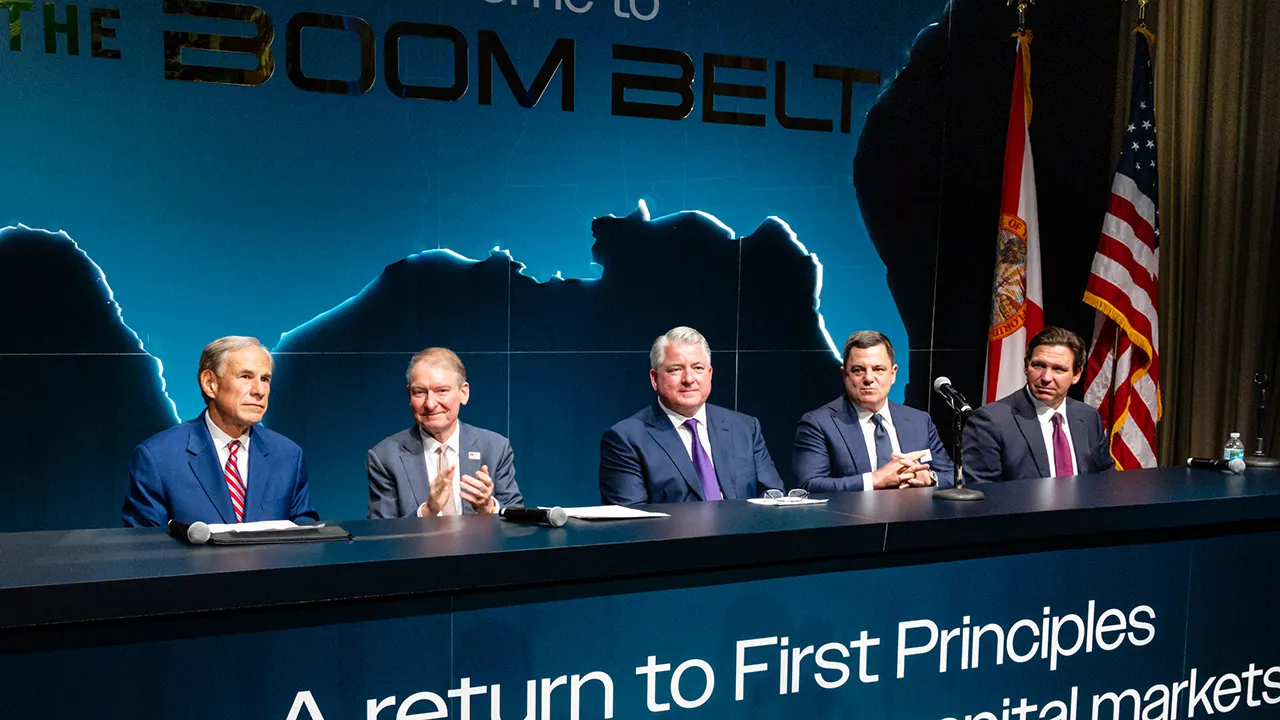
Florida Gov. Ron DeSantis and Texas Gov. Greg Abbott joined forces in Miami on Tuesday to celebrate a $9 trillion gross domestic product (GDP) region that is now outpacing every other quadrant of the country in population, jobs and capital investment.
“I often tell people, as Governor of Florida, my job is to closely follow California, Illinois, New York, so I can do precisely the opposite of what they do,” DeSantis said during the panel held at the Pérez Art Museum. “Florida’s had more adjusted gross income move into our state since I’ve been governor than has ever moved into any state in the history of the United States.”
“Visionary business leaders seek to where not the puck is right now, but to where it is going… while other regions where the puck has been in the past, they’re now burdened by high taxes, by restrictive regulations, by policies that are actually hostile to businesses,” Abbott added.
The governors spotlighted how Alabama, Arkansas, Florida, Georgia, Louisiana, Mississippi, North Carolina, Oklahoma, South Carolina, Tennessee and Texas now generate $9 trillion in annual GDP, trailing only the U.S. and China globally, while absorbing 70% of all U.S. population growth in the last five years.
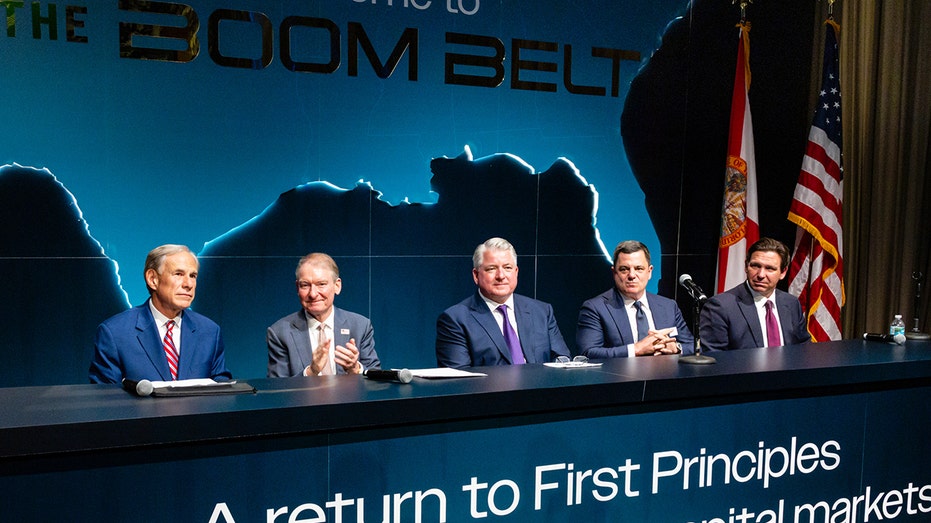
Greg Abbott, governor of Texas, from left, Paul Atkins, chairman of the U.S. Securities and Exchange Commission (SEC), Jim Lee, founder and chief executive officer of the Texas Stock Exchange, Jim Esposito, president of Citadel Securities, and Ron De (Getty Images)
The migration has been fueled by more than just sunshine; it is a tactical retreat from a wave of tax-the-rich proposals sweeping through blue-state legislatures including California, New York and now Washington.
“We’re in the 250th anniversary of the founding of the United States. The founding fathers, they wanted a system based on the consent of the government… They wanted to have a rule of law and they wanted some of this stuff, particularly private property, to not just be subjected to those types of whims,” DeSantis said.
“Hence, in Texas, even though we have never had a state income tax, we wanted to make sure that future generations would not be able to impose an income tax, so we made income taxes unconstitutional in the state of Texas,” Abbott said. “We made a wealth tax unconstitutional. We made a death tax unconstitutional, and as [Citadel’s] Jim Lee pointed out, we made a transactions tax unconstitutional.”
Texas REALTORS Chairman of the Board Jennifer Wauhob speaks to Fox News Digital about the Lone Star State’s recent wealth and population boom that’s ‘creating good things for Texas.’
“I know that there’s been a lot of very healthy competition between states like Florida, Tennessee, Texas, Georgia, some of these. And I think that’s really, really good,” DeSantis noted. “When Greg’s doing stuff, people say, ‘Look [at] what Texas just did.’”
SEC Chairman Paul Atkins and TXSE CEO Jim Lee warned that the U.S. has lost half of its public companies over the last 30 years because the federal government made it “complicated, expensive and legally treacherous” to go public.
“When capital, companies and people all move in the same direction, with that kind of consistency and at that kind scale, it behooves us to ask why. I believe that the answer, more often than not, is the region’s steady adherence to first principles, including those that rigorously protect investors without needlessly paralyzing companies,” Atkins said. “So for our part, the SEC is returning to those same principles by renewing the conditions that make our public markets the natural destination for companies to raise capital and for investors to share in their success.”
‘The Big Money Show’ examines blue state tax policies as the wealthy flock to low-tax states.
“As Chairman Atkins has remarked repeatedly, it used to be cool to be public, so what happened? The answer is we made it complicated, expensive and legally treacherous to be a public company. Remaining private became the only rational choice. This is not a coincidence. It is a consequence,” Lee emphasized.
GET FOX BUSINESS ON THE GO BY CLICKING HERE
As someone who helped lead the firm’s move from Chicago to Miami, Citadel Securities President Jim Esposito highlighted the practical, bottom-line reasons why the “Boom Belt” is winning the war for capital — framing the Southern governing style as an inspiration for the rest of America.
“Across Florida, Texas and other high-growth states, government officials have created environments where businesses can operate, invest. And importantly, grow with confidence,” he said. “This type of public and private partnership should be the model for the rest of our country.”

5 Markets Getting Pummelled Right Now

India’s aviation market is set to grow but is held back by limited long-haul capacity, says Willie Walsh.
The consumer council says the government is profiting from rising fuel costs via taxation.

Analysts fear long-lasting economic damage has already been set in motion.


The Crave Shoppe offers new snack options.

A new government fund launched on 1 April will provide financial support for households on heating oil.

Britain’s standing as a global climate leader faces a critical test as senior figures in international diplomacy have warned that any move to open new oil and gas fields in the North Sea would deal a severe blow to worldwide efforts to cut greenhouse gas emissions.
The government is facing mounting pressure from the oil industry, the Conservative opposition, Reform UK, certain trade unions and factions within the Treasury to grant new drilling licences. This comes despite research showing that the two largest remaining fields, Rosebank and Jackdaw, would displace just 1% and 2% respectively of the UK’s gas imports, offering negligible benefit to either prices or energy security.
The North Sea basin is now more than 90% depleted, and extracting its remaining pockets of hydrocarbons is becoming progressively more costly and energy-intensive. Yet the political appetite for new licensing persists, placing Ed Miliband, the energy security and net zero secretary, in an increasingly uncomfortable position.
Nicolas Stern, professor at the London School of Economics, cautioned that fresh drilling would be damaging on multiple fronts, bad for growth, bad for energy security and a harmful signal to the international community. Lord Stern pointed to Britain’s track record as the first G7 nation to commit to net zero by 2050 and its influential climate legislation, arguing that the world pays close attention when the UK changes course.
The backlash from the developing world has been particularly fierce. A senior African negotiator, speaking anonymously, said the continent would reject any UK expansion of oil drilling, describing it as fundamentally at odds with the Paris agreement. Mohamed Adow, director of the Nairobi-based Power Shift Africa thinktank, warned that approval of new projects would signal that short-term interests were being placed above long-term responsibility, setting a precedent that could prove impossible to contain.
The timing is especially sensitive. Britain has been one of the principal supporters of a global conference on fossil fuel transition taking place in Colombia later this month. However, Miliband will not attend, with climate envoy Rachel Kyte going in his place, a decision likely to disappoint campaigners who credited the energy secretary with brokering a last-minute deal at the Cop30 summit in Brazil last November.
Christiana Figueres, former executive secretary of the UN framework convention on climate change, acknowledged the geopolitical pressures driving the energy security debate but argued that expanding drilling risked locking in infrastructure that was increasingly out of step with the direction of the global energy system. True energy independence, she suggested, lay in scaling up clean domestic energy rather than prolonging the life of declining industries.
The strategic concern for Britain’s business community is clear. Many developing nations are weighing whether to exploit their own fossil fuel reserves rather than invest in renewables. If they choose the former path, the world would far exceed the carbon limits scientists say are necessary to avert the worst consequences of climate breakdown. A senior development official put the matter bluntly: developing countries are already asking why they should forgo their own resources if the UK will not do the same.
An ally of Miliband defended the government’s position, describing the decision to halt new exploration licences as a landmark stance for a major oil and gas producing nation. A government spokesperson confirmed that clean energy and climate action remained at the heart of the agenda, including what it called a world-leading commitment to stop issuing licences for new fields.
Whether that commitment holds in the face of political and industrial pressure will be one of the defining questions of Britain’s energy policy in the months ahead.

Jamie Young
Jamie is Senior Reporter at Business Matters, bringing over a decade of experience in UK SME business reporting.
Jamie holds a degree in Business Administration and regularly participates in industry conferences and workshops.
When not reporting on the latest business developments, Jamie is passionate about mentoring up-and-coming journalists and entrepreneurs to inspire the next generation of business leaders.

Elon Musk’s SpaceX holds a commanding lead in the intensifying rivalry with Jeff Bezos’ Blue Origin, launching more rockets, deploying thousands of satellites and securing key NASA contracts, even as both billionaires pivot aggressively toward lunar ambitions in 2026 amid a broader U.S. push to beat China back to the Moon.

As of April 2026, SpaceX has flown hundreds of missions with its reusable Falcon 9 rockets, maintains a Starlink constellation exceeding 10,000 satellites and continues rapid testing of its massive Starship vehicle. Blue Origin, while making strides with its New Glenn rocket — including successful booster landings in late 2025 — remains years behind in flight rate and orbital infrastructure.
The contest, once focused on low-Earth orbit and reusable rocketry, has shifted to the Moon. Musk has redirected SpaceX resources toward “Moonbase Alpha,” including plans for a lunar launch device, while Bezos has refocused Blue Origin on its Blue Moon lander for NASA’s Artemis program.
“This rivalry is accelerating America’s return to the Moon,” said a NASA official involved in Artemis planning. “Competition between these two is healthy, even if one is clearly ahead right now.”
SpaceX’s Dominance in Launch and Satellites
SpaceX’s operational edge is undeniable. The company generated roughly $8 billion in profit in 2025 and has received more than $24 billion in U.S. government funding over time. Its Falcon 9 rocket achieved the first orbital-class booster landing a decade before Blue Origin’s New Glenn accomplished similar feats.
In 2026, SpaceX prepares to fly an upgraded Starship version 3 with enhanced payload capacity — up to 200 tons to low-Earth orbit in reusable mode. The vehicle’s full reusability and potential for orbital refueling remain critical for lunar missions, though testing has included fiery setbacks that Musk embraces as part of rapid iteration.
Starlink continues to expand, providing broadband to remote areas and generating significant revenue. Musk has dismissed Blue Origin’s new TeraWave satellite constellation — a planned 5,408-satellite network promising up to 6 terabits per second — by stating that SpaceX’s laser links will surpass those speeds.
Blue Origin announced TeraWave in January 2026 as a direct challenge, alongside Amazon’s Project Kuiper (now Leo) efforts. Yet analysts say SpaceX’s head start and scale make catching up difficult in the near term.
Blue Origin’s Methodical Approach Gains Traction
Bezos has poured more than $10 billion of his personal fortune into Blue Origin since its founding, calling it his most important work. The company’s New Glenn rocket, powered by BE-4 engines, achieved its first orbital flight and booster recovery in 2025. Plans call for 12 or more launches in 2026, with potential for up to 24.
New Glenn’s upgrades, including variants with greater thrust, position it as a heavy-lift competitor, though its payload capacity remains smaller than Starship’s. Blue Origin has shifted resources toward the Blue Moon lander, aiming for uncrewed lunar missions soon and crewed capabilities later.
In NASA’s Artemis program, SpaceX holds the primary human landing system contract worth billions for Starship-derived landers. Blue Origin secured a $3.4 billion award for a competing lander starting with later missions, such as Artemis V. NASA has adjusted timelines, adding test flights and reopening elements of competition due to Starship delays, giving Blue Origin a clearer path on some fronts.
Internal Blue Origin documents suggest a strategy to avoid Starship’s complex orbital refueling by pursuing a more straightforward architecture, prompting public jabs between the founders, including Bezos sharing turtle memes implying slow-and-steady wins.
Lunar Focus Intensifies Rivalry
Both companies now eye sustained lunar presence ahead of China’s targeted 2030 crewed landing. Musk envisions a self-growing lunar city with satellite-slinging capabilities. Bezos has long advocated industrial activity on the Moon, including potential factories.
NASA’s Artemis program relies on both: SpaceX for initial human landing systems and Blue Origin for cargo and follow-on landers. Recent changes to Artemis architecture include low-Earth orbit tests of commercial landers, potentially accelerating development for either or both firms.
The competition has spurred investor interest in the broader lunar economy, with startups in rovers, infrastructure and resource utilization reporting increased attention. One lunar company CEO noted 20 investor inquiries in a single week following heightened Musk-Bezos announcements.
Contrasting Styles, Shared Goals
Musk’s “move fast and break things” philosophy has delivered rapid progress — and occasional explosions during Starship tests — but also criticism over safety and regulatory pace. Bezos favors a more deliberate, engineering-heavy approach, which critics say has slowed Blue Origin but may yield more reliable systems long-term.
Both face pressure in 2026. SpaceX must demonstrate reliable Starship refueling and lunar-capable flights. Blue Origin needs to ramp New Glenn operations and prove its lander technology.
The rivalry extends beyond hardware. Musk’s xAI ties and planned SpaceX IPO (potentially valuing the company at over $1 trillion) contrast with Bezos stepping back from Amazon to focus more on Blue Origin. Public exchanges on social media add drama, yet both have expressed respect for the other’s contributions to humanity’s spacefaring future.
NASA leaders have praised private investment from Musk, Bezos and others, noting it advances capabilities benefiting all. “These billionaires are putting resources on the line for the good of humankind,” one official said.
Broader Implications for U.S. Space Leadership
The Musk-Bezos contest occurs against a national push to maintain superiority over China in cislunar space. Delays in government-led systems like the Space Launch System have elevated commercial partners.
Analysts say SpaceX currently “wins” on metrics of launches, revenue and deployed infrastructure. Blue Origin, however, could close gaps if New Glenn achieves high flight rates and its lunar lander matures faster than expected.
No clear victor exists yet in the long-term “space war.” Musk’s Mars ambitions persist in the background, while Bezos emphasizes gradual expansion from the Moon outward. The real beneficiaries may be NASA and the emerging space economy, driven by competition that lowers costs and accelerates innovation.
For now, SpaceX sets the pace while Blue Origin mounts a serious challenge. As both target the Moon in 2026 and beyond, their duel could determine not just who plants more footprints on lunar soil, but the speed and scale of humanity’s multi-planetary future.
Business
Artemis II Pilot Victor Glover Delivers Viral Easter Message on God’s Creation from Deep Space
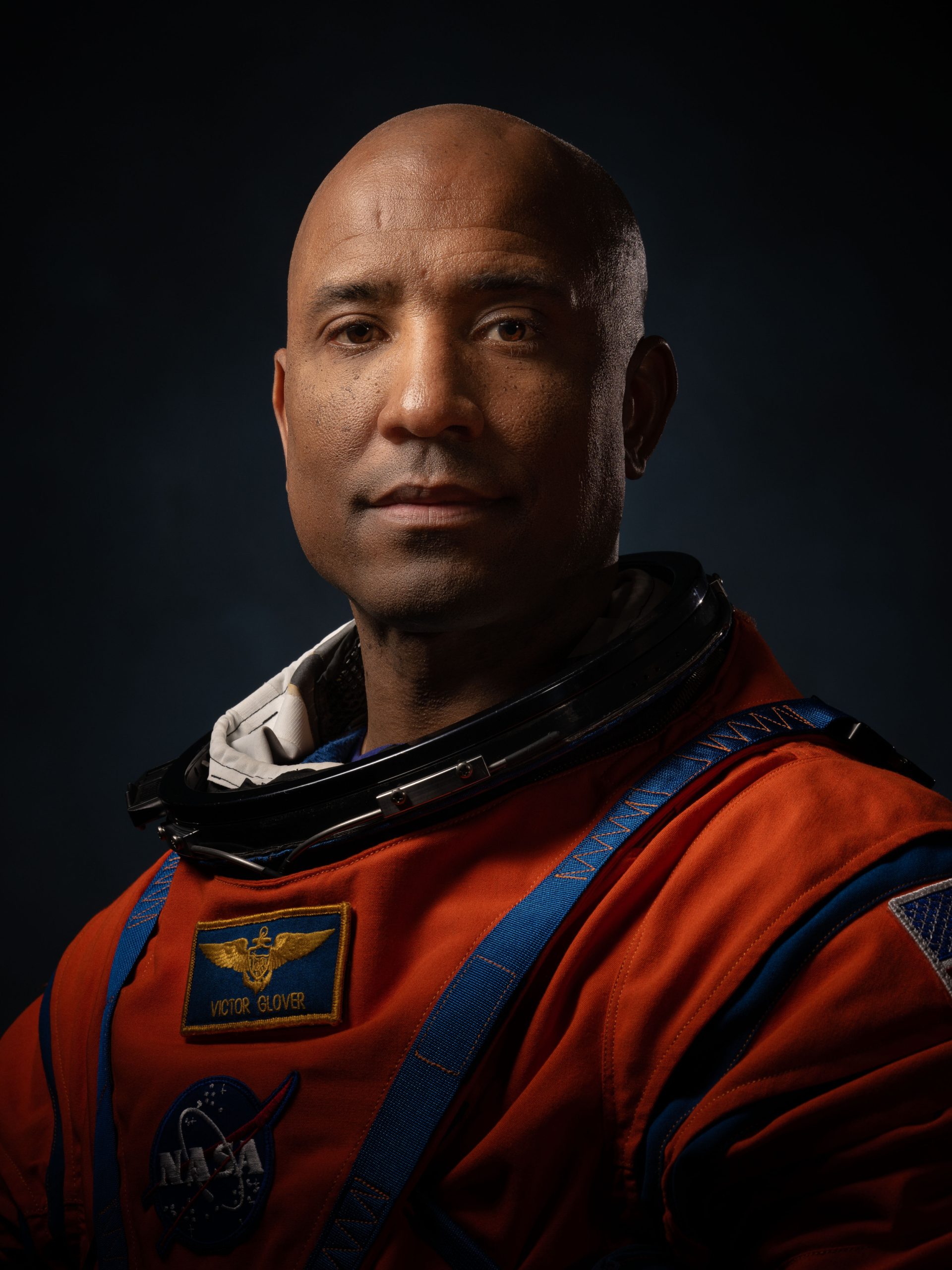
From roughly 250,000 miles away aboard NASA’s Orion spacecraft, Artemis II mission pilot Victor Glover offered an impromptu Easter reflection that has resonated far beyond the lunar orbit, marveling at “the beauty of creation” and reminding Earthlings they inhabit a special “spaceship” crafted for human life amid a vast, mostly empty cosmos.

In a CBS interview and additional remarks broadcast as the crew approached the far side of the Moon on April 6, 2026, Glover — a devout Christian and veteran astronaut — spoke without notes about the profound perspective gained from humanity’s first crewed lunar voyage since Apollo.
“When I read the Bible and I look at all of the amazing things that were done for us who were created, you have this amazing place, this spaceship,” Glover said. “You guys are talking to us because we’re in a spaceship really far from Earth, but you’re on a spaceship called Earth that was created to give us a place to live in the universe and the cosmos.”
He continued with quiet conviction: “And I’m trying to tell you, just trust me, you are special. In all of this emptiness, this is a whole bunch of nothing, this thing we call the universe. You have this oasis, this beautiful place that we get to exist together.”
The message, delivered days into the Artemis II mission that launched April 1 from Kennedy Space Center, quickly went viral on social media and Christian outlets, drawing millions of views and heartfelt responses across faith communities.
A Historic Mission and a Personal Faith Perspective
Artemis II, the first crewed flight of NASA’s Artemis program, sent Glover alongside commander Reid Wiseman, mission specialist Christina Koch and Canadian astronaut Jeremy Hansen on a journey that eclipsed the Apollo 13 distance record on April 6. The crew successfully performed critical maneuvers, including a close approach to a discarded rocket stage, and captured striking images of the Moon and distant Earth.
Glover, who previously piloted SpaceX’s Crew-1 mission to the International Space Station in 2020-2021 as part of Expedition 64, became the first Black astronaut to travel beyond low Earth orbit and to the vicinity of the Moon. His public expressions of faith have been consistent throughout his NASA career, including quoting Psalm 30 during his earlier ISS stay.
As the Orion spacecraft named Integrity prepared for a planned communications blackout while passing behind the Moon, Glover offered another layer to his Easter thoughts. He spoke of love as one of Earth’s greatest mysteries, citing Jesus’ commands to love God with all one’s being and to love one’s neighbor as oneself.
“To all of you down there on Earth … we love you from the Moon,” he added before the signal lapse.
The remarks came naturally when interviewers asked for an Easter message. Glover admitted he had nothing prepared but drew directly from the awe of viewing Earth against the blackness of space.
Blending Science, Exploration and Belief
Glover’s reflections highlight a perspective long shared by astronauts: the “overview effect,” a cognitive shift reported by those who see Earth from space as a fragile, borderless oasis. For Glover, that view reinforced rather than challenged his Christian worldview.
He emphasized humanity’s unique place in creation, contrasting the barren vastness of the universe with Earth’s life-sustaining environment. The message echoed biblical themes of stewardship, wonder at God’s handiwork and the value of every person — ideas he has voiced in pre-mission interviews and public appearances.
“I want to use the abilities that God has given me to do my job well and support my crewmates and mission and NASA,” Glover said in earlier comments about balancing faith and professional duties.
His openness has drawn praise from faith leaders and everyday believers who see in his words a bridge between modern space exploration and ancient spiritual truths. Some commentators noted the timeliness of the message during Holy Week, as Christians worldwide commemorated the resurrection.
Critics of mixing faith with NASA missions have been minimal in this case, with most responses focusing on the universal appeal of awe at Earth’s beauty and calls for unity.
Crew Dynamics and Mission Milestones
The four-person international crew has worked seamlessly, conducting systems checks, scientific observations and public outreach during the roughly 10-day mission. Artemis II serves as a critical test flight for Orion ahead of future landings under Artemis III and beyond, aiming to return humans to the lunar surface and eventually establish a sustainable presence.
Glover’s piloting skills were on display early in the flight when he maneuvered Orion to within about 33 feet of a discarded rocket stage in a successful demonstration.
While the crew’s primary focus remains technical and scientific, moments of personal reflection like Glover’s have humanized the mission for millions following along on Earth. NASA has shared select video and audio, amplifying the reach of the astronauts’ perspectives.
Previous astronauts, from Apollo-era figures to ISS crews, have similarly spoken of spiritual or philosophical insights gained from space. Glover’s explicit Christian framing stands out in an agency that maintains strict separation of personal belief from official messaging.
Broader Impact and Public Response
The clip of Glover’s Easter message spread rapidly on platforms including Instagram, YouTube, Facebook and Christian media sites. Hashtags related to Artemis II, faith in space and God’s creation trended among religious communities.
Many viewers described the remarks as timely and uplifting amid global tensions, including the recent U.S.-Iran ceasefire and ongoing economic volatility. Others saw it as a reminder of shared humanity in an increasingly divided world.
Glover has not sought the spotlight for his faith but has been consistent when opportunities arise. Before launch, he asked supporters to pray for the crew and referenced living out the Lord’s Prayer in his daily work.
His message aligns with a long tradition of astronauts expressing wonder at creation. From Apollo 8’s reading of Genesis during lunar orbit in 1968 to more recent ISS crews sharing Earth views, spaceflight has often prompted reflections on origins, purpose and interconnectedness.
Looking Ahead as Artemis II Concludes
As the crew prepares for re-entry and splashdown in the coming days, NASA officials expressed pride in both the technical achievements and the inspirational moments shared by the astronauts.
Artemis II paves the way for increasingly ambitious missions, including crewed landings near the lunar south pole. Glover’s contributions as pilot have been praised for precision and calm under pressure.
For Glover personally, the flight represents the culmination of years of training and a chance to witness sights few humans have seen. His ability to articulate faith alongside professional excellence has resonated deeply.
In one pre-mission interview, he spoke of putting God first in his life and work. From deep space, that perspective translated into a simple yet profound reminder: Earth is a beautiful, specially prepared home — an oasis worth cherishing and sharing in love.
As the Orion spacecraft heads home, Glover’s words continue to echo: in the emptiness of the cosmos, humanity’s shared “spaceship” is a testament to something greater, inviting awe, gratitude and unity.

Trump Announces 50% Tariff Penalty for Nations Arming Iran

Hulu’s Best Sci-Fi Series Officially Begins Production on Final Season With First Image

So Iran’s civilisation is safe. Now what about the West’s?

Why Israel is blocking foreign journalists from entering

Bitcoin: We’re Entering The Most Dangerous Phase

Alan Cumming Brands Baftas Ceremony A ‘Triggering S**tshow’

Joe Rogan on Ferrari Suing Philipp Plein! #money #finance #changeyourmindsetchangeyourlife

Monthly Subsidy of 70,000 Rupees Announced | Big Financial Relief| Hum News | Pakistan

New Financial Year 2026, Major Changes From April 1st | V6 News
-

 NewsBeat6 days ago
Steven Gerrard disagrees with Gary Neville over ‘shock’ Chelsea and Arsenal claim | Football
-

 Business6 days ago
No Jackpot Winner and $194 Million Prize Rolls Over
-

 Fashion5 days ago
Weekend Open Thread: Spanx – Corporette.com
-

 Crypto World7 days ago
Gold Price Prediction: Worst Month in 17 Years fo Save Haven Rock
-

 Business4 days ago
Expert Picks for Every Need
-

 Business3 days ago
Three Gulf funds agree to back Paramount’s $81 billion takeover of Warner, WSJ reports
-

 Sports4 days ago
India men’s 4x400m and mixed 4x100m relay teams register big progress | Other Sports News
-

 Business7 days ago
Login and Checkout Issues Spark Merchant Frustration
-

 Tech17 hours ago
How Long Can You Drive With Expired Registration? What Florida Law Says
-
Business3 days ago
No Jackpot Winner, Prize to Climb to $231 Million
-

 Tech6 days ago
Commonwealth Fusion Systems leans on magnets for near-term revenue
-

 Fashion2 days ago
Massimo Dutti Offers Inspiration for Your Summer Mood Board
-

 Crypto World7 days ago
Ripple rolls out enterprise crypto treasury platform for corporates
-

 Tech7 days ago
Drawing Tablet Controls Laser In Real-Time
-

 Fashion22 hours ago
Let’s Discuss: DEI in 2026
-
Politics5 days ago
Wings Over Scotland | The quality of mercy
-

 Crypto World7 days ago
Why It’s Partnering, Not Issuing
-
 Sports7 days ago
Steal Gary Woodland’s subtle power move for longer drives
-
Sports7 days ago
Tom Pelissero Drives the Final Nail in the Coffin
-

 Tech7 days ago
Battery Tester Outperforms Cheaper Options
You must be logged in to post a comment Login