Connect with us
DAPA Banner
DAPA Coin
DAPA
COIN PAYMENT ASSET
PRIVACY · BLOCKDAG · HOMOMORPHIC ENCRYPTION · RUST
ElGamal Encrypted MINE DAPA
🚫 GENESIS SOLD OUT
DAPAPAY COMING

Business

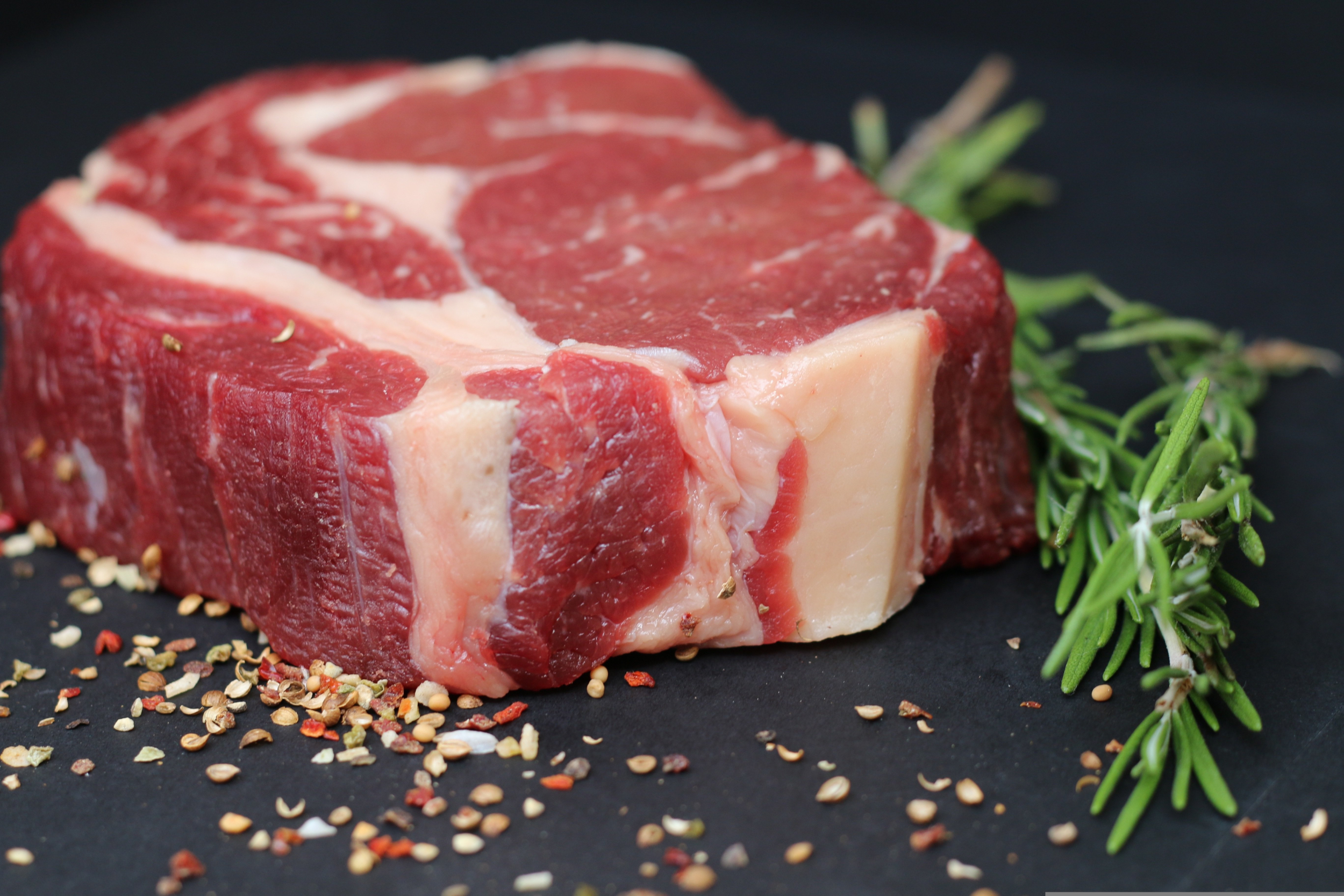
Australian Beef Hit With 55% China Tariff After Hitting Import Quota in Record Time

Published

on

Australian beef

CANBERRA, Australia — Australian beef exports to China will face an additional 55% tariff starting this weekend, after the country’s shipments hit Beijing’s annual import quota in record time, a development that could significantly disrupt trade flows and push producers to seek out new markets for their red meat.

The tariff comes after Australian exports hit Beijing’s annual quota limit, a development that could impact trade flows and prompt producers to seek new markets for red meat. The Chinese Ministry of Commerce announced that the 205,000-tonne safeguard had been hit as of Thursday, June 18, with the 55% tariff set to take effect at midnight on June 20.

A Quota Hit Faster Than Expected

The speed at which Australian exporters reached the threshold caught much of the industry by surprise. On June 16, 2026, Australia crossed the 205,000-tonne limit set by China for Australian beef imports this year. The news came just two weeks after China’s Ministry of Commerce announced that Australian shipments had already reached 90% of the annual quota as of June 1. The final 10% was consumed quickly, and the threshold was crossed sooner than some in the industry had expected.

Advertisement

Beef exports have hit the Chinese quota in record time.

The Origins of the Quota System

The Chinese government in December imposed a quota of 205,000 tons on beef imports from Australia as part of a range of trade limits on major red meat-producing nations, including Brazil and Argentina, in a push to protect local farmers.

China introduced a three-year beef safeguard system in January 2026, setting import quotas for several major exporting countries, including Australia, Brazil, Argentina, New Zealand, Uruguay, and the United States. The system was introduced to protect China’s domestic beef industry, with Chinese farmers having faced pressure from rising import volumes that pushed down local prices and made it harder for domestic producers to compete.

Advertisement

Beijing introduced the quota system following a safeguard investigation into beef imports. Under the arrangement, a set volume of beef from each country enters China at the standard low or zero tariff rate established under existing trade agreements. Once the quota is surpassed, an extra 55% duty applies automatically. For Australia, the 2026 quota stands at 205,000 tonnes, rising slightly in subsequent years before the policy concludes in 2029.

The Scale of the Cutback

The new quota represents a dramatic reduction compared to the volumes Australian exporters had been shipping to China just one year earlier. Australia exported more than 295,000 tonnes of beef to China in the first 11 months of 2025 alone, highlighting the scale of prior trade volumes. The quota for Australia of 205,000 tonnes for 2026 is significantly lower than the volume Australia shipped to China in 2025.

What Remains Exempt

Advertisement

Not all Australian beef products will be subject to the new tariff. The safeguard restrictions do not apply to beef offal, which remains exempt from tariffs, as negotiated under the China-Australia Free Trade Agreement.

Industry sources also suggest a narrow subset of high-value products may continue moving despite the steep new duty. Industry sources say only a small number of product types might still make financial sense under a 55% tariff. High-end Wagyu beef destined for premium food service customers is one example. A handful of specific cuts, such as brisket and short plate, may still be shipped in very small volumes. For the most part, trade will stop.

Industry Reaction

Australian meat industry representatives described 2026 as an unusually difficult year for the sector, citing a combination of factors weighing on producers and exporters alike. “The combination of external trade barriers and rising domestic costs means 2026 is an exceptionally challenging year for the sector,” an industry representative said, according to reporting from Farm Online. “We will continue to work with our members and partners in the Australian government to advocate for improved trading conditions which facilitate a more stable and reliable trade in Australian beef to China.”

Advertisement

Limited Expected Impact on Domestic Cattle Prices

Despite the significant trade disruption the tariff is expected to cause, analysts have suggested the effects on Australian domestic cattle prices are likely to be modest and short-lived, given strong demand from other export markets. Episode 3 meat industry analyst Matt Dalgleish said the tariff would likely lead to a dip in flows to China until mid-November but should have little impact on local cattle prices. “The broader global picture is one of tight supplies and there are several other destinations that will have demand remaining firm,” he said. “We shouldn’t see too much price weakness locally for cattle.”

A Shifting Competitive Landscape

The tariff’s introduction is also expected to reshape competitive dynamics among beef exporters within the Chinese market, potentially benefiting rival suppliers from other countries whose own quotas have not yet been triggered. While Australian exports will face the significant 55% tariff for the remainder of 2026, this could make expensive U.S. product more price competitive than “Aussie Beef” in Chinese retailers, though the impact on domestic cattle prices is not expected to be notable or to last for long. Beef from New Zealand and Argentina will also be landing in China on a more price competitive footing for the next six months.

Advertisement

Potential Financial Toll for Australian Producers

The broader financial stakes for Australia’s red meat sector are considerable, with some industry estimates pointing to losses well into the billions of dollars if trade volumes to China decline as sharply as expected. Industry groups warn of potential losses exceeding A$1 billion annually if exports to China fall by approximately one-third.

Producers Already Adapting

In anticipation of the quota being reached, Australian producers and exporters had already begun adjusting their strategies in recent weeks. Producers are accelerating shipments, exploring alternative markets in Asia and the Middle East, and investing in value-added products and diversification.

Advertisement

An Equal-Opportunity Safeguard

Australian exporters can take some measure of comfort in the fact that the new tariff regime is not targeted specifically at Australia, but rather applies uniformly across all of China’s major beef trading partners. The safeguard applies equally to Brazil, the United States, Argentina, New Zealand and Uruguay under similar quota arrangements.

What Comes Next

With Australia’s quota now officially exhausted for the remainder of 2026 and the 55% tariff set to take effect at midnight on June 20, the coming months will test how much of the country’s beef trade with China can be sustained through premium product categories and tariff-exempt offal exports. Industry attention will also turn to how quickly producers can pivot toward alternative markets in Asia and the Middle East to offset the expected decline in shipments to what has long been one of Australia’s most important beef export destinations, with the quota system set to remain in place, gradually rising, through 2029.

Advertisement
Continue Reading
Click to comment

You must be logged in to post a comment Login

Leave a Reply

Business

Slideshow: Foodservice innovation ramps up

Published

on

Slideshow: Foodservice innovation ramps up

A number of operators are expanding their menus with permanent additions.

Continue Reading

Business

SpaceX, OpenAI And Anthropic: The S&P 500 Inclusion Question And Investment Consequences

Published

on

S&P 500 Snapshot: Best Week In 4 Months

SpaceX, OpenAI And Anthropic: The S&P 500 Inclusion Question And Investment Consequences

Continue Reading

Business

UniCredit to Lift Commerzbank Stake to 42.5% After Initial Offer Period

Published

on

UniCredit to Lift Commerzbank Stake to 42.5% After Initial Offer Period

Italy’s UniCredit UCG 0.46%increase; up pointing triangle said it secured control over 42.5% of Commerzbank CBK 0.70%increase; up pointing triangle after the close of an initial offer period, and plans to reopen its takeover bid for another two weeks.

UniCredit received valid acceptances representing a 12.51% stake in Commerzbank at the end of its initial offer period earlier this week, the Italian bank said Friday. This takes UniCredit’s stake in Commerzbank to 42.5% when added to the direct stake of 26.77% it already owned and the 3.22% held through financial contracts for which it can demand delivery of shares, it added.

Copyright ©2026 Dow Jones & Company, Inc. All Rights Reserved. 87990cbe856818d5eddac44c7b1cdeb8

Continue Reading

Business

Ukraine accepts proposal from Brazil’s Lula to work for peace, Kyiv adviser says

Published

on

Ukraine accepts proposal from Brazil’s Lula to work for peace, Kyiv adviser says


Ukraine accepts proposal from Brazil’s Lula to work for peace, Kyiv adviser says

Continue Reading

Business

Netball team the Dragons in funding boost

Published

on

Business Live

It has been backed by Machroes Holding owned by Lord Mervyn Davies of Abersoch and his wife

The Dragons.(Image: Chris Fairweather/Huw Evans Agen)

Professional netball team the Dragons has been boosted with a significant investment.

Machroes Holdings has taken a 40% ownership stake in the Dragons. The remaining 60% is held by the game’s governing body Wales Netball. The value of the investment has not been disclosed. The Dragons are Wales’ only Netball Super League team.

Advertisement

Machroes is owned by former chief executive of Standard Chartered and UK Government Minister for Trade, Investment and Business, Lord Mervyn Davies of Abersoch, and his wife Lady Jeanne Marie Davies.

Wales Netball said the investment marks an important step for the future of elite netball in Wales. It follows a period of significant transformation, during which it said it has strengthened its governance, financial management and commercial foundations – putting the Dragons and the wider sport on a more sustainable footing.

The investment is also a key step in delivering Ymladd 2030, its strategic blueprint for building a financially sustainable, high-performing netball ecosystem from grassroots to elite level.

Sarah Boswell, chief executive of Wales Netball, said: “This is a landmark moment for netball in Wales. Securing this investment is a powerful endorsement of the work that has gone on behind the scenes to put our sport on a sustainable footing, and it gives the Dragons the stability and ambition to compete at the very highest level.

Advertisement

“Wales Netball retains majority ownership and control of the club, and this partnership allows us to accelerate everything we set out to achieve through Ymladd 2030 – from the grassroots game right through to the international stage.

“I am very excited to build on the Dragons’ performance this season with this fantastic support from Machroes Holdings and look forward to seeing the team continue to perform at the highest level.”

Chief executive of Machroes Holdings, Thomas Davies, said: We are proud to be investing in the Dragons and in the future of women’s sport in Wales. The ambition, talent and momentum at Wales Netball and the club are clear to see, and I have great confidence in the leadership and the vision being built through Ymladd 2030. This is the start of an exciting journey and we are looking forward to playing our part in it.”

Mark Loosemore, partner and head of sport at law firm Hugh James, led the team advising Wales Netball on the investment, supported by senior associate Matt Detheridge.

Advertisement

Mr Loosemore said:“This transaction represents a significant moment for the Dragons and Wales Netball. The investment reflects confidence in the organisation’s future and highlights the growing profile of Welsh women’s sport.

“We were pleased to support Wales Netball throughout the transaction and help bring together the arrangements needed to complete the investment. This is the beginning of an exciting new chapter for the Dragons, and we wish everyone involved every success for the future.”

Continue Reading

Business

Turkey stocks lower at close of trade; BIST 100 down 0.63%

Published

on


Turkey stocks lower at close of trade; BIST 100 down 0.63%

Continue Reading

Business

EnQuest reports $172.5m in government payments for 2025

Published

on


EnQuest reports $172.5m in government payments for 2025

Continue Reading

Business

Why the Next Chapter of Credit Card Rewards May Be Written Around Everyday Spending

Published

on

Spending short periods of time shopping or browsing online during work hours is not a sackable offence, a UK judge has ruled in a case that awarded an employee more than £14,000 in compensation.

The modern loyalty program occupies a curious place on corporate balance sheets, recorded as a liability that many issuers quietly prefer never comes due.

For decades the economics of credit card rewards have rested on a predictable pattern of human behavior, namely that a substantial share of the points, miles, and cash-back balances consumers earn will sit dormant, expire, or be redeemed at a fraction of their advertised worth. Programs engineered around aspirational travel, tiered status, and partner portals have rewarded the disciplined few who master their rules while leaving the majority to accumulate value they rarely convert into anything tangible. The outcome is an industry that markets generosity while monetizing friction, and a generation of younger cardholders who have grown skeptical that the figures printed on their statements bear any relationship to money they will ever actually see.

Coverd, an Andreessen Horowitz backed fintech company preparing to bring its first product to market this summer, is wagering that this arrangement has reached the end of its useful life. The company’s namesake card, developed under founder and chief executive Albert Wang, is built around a single proposition that inverts the conventional model. Where traditional programs award points to be banked and deciphered later, the newly launched Coverd Card returns cash back on many purchases instantly, in amounts that can reach the full value of the transaction. A cardholder who buys groceries, fills a tank of gas, or orders lunch may find the purchase partially offset or, in certain cases, entirely covered at the moment of the swipe.

The mechanism behind that promise is a transparent rewards matrix that the company publishes openly, an unusual posture in a category long accustomed to burying its rules in fine print. The amount a cardholder earns on any given purchase is determined by where that purchase falls within the matrix, a structure that accounts for spending category, timing, and transaction size, and that yields a defined cash-back figure in place of an opaque accrual of points. Once those rewards are earned, the company returns the decision of what to do with them to the cardholder, who may apply a balance directly as a statement credit, take it as straightforward cash back, or carry it into a set of interactive in-app features designed to let users increase what they have already earned.

That emphasis on routine, unglamorous spending is deliberate, and it marks a departure from a rewards landscape oriented largely toward frequent business travelers and high-balance luxury consumers. Coverd’s early usage data points toward the categories that dominate ordinary household budgets, with cardholders concentrating their activity at major retailers and quick-service or fast-food restaurants including. The company has positioned the card around the spending of the broad majority of consumers whose everyday purchases have historically generated the thinnest and slowest-accruing rewards, a population that legacy programs have been comparatively slow to court.

Advertisement

The interactive layer reflects a wider shift in how a younger cohort of consumers expects to engage with financial products. Major investing, prediction market, and language learning companies have shown that introducing elements of immediacy, feedback, and play into categories once regarded as static can meaningfully change the frequency and depth of user engagement. Coverd is applying a comparable logic to the most habitual financial activity in most people’s lives, on the premise that rewards experienced in real time and shaped by the user carry a resonance that deferred points have never managed to deliver.

The early signals suggest the proposition is finding an audience ahead of the card’s formal debut. Coverd reports a waitlist of roughly 50,000 prospective cardholders and says it has covered more than $25 million in consumer purchases through its app to date, including more than $10 million in the month of May 2026 alone. Pre-launch, the company reports its application has been drawing approximately 3,000 downloads, pre launch.

Coverd has raised capital from a group of investors that includes Andreessen Horowitz, through its Speedrun program, along with Tusk Ventures, Yolo Investments, WndrCo, and Volt Capital. Its card is issued through Rain, a blockchain-based card infrastructure platform valued at $1.95 billion.

Whether Coverd can convert pre-launch enthusiasm into a durable market position will depend on questions that only scale can answer, among them the economics of returning so much value to cardholders so quickly and the company’s ability to sustain its rewards matrix as its user base expands. What the company has identified, and what its early traction appears to support, is a real gap between the way the rewards industry has long operated and the way a rising generation of consumers expects to interact with their money.

Advertisement

If that gap proves as wide and as lasting as Coverd is betting, the card’s arrival this June may register less as the debut of a single product than as an early marker of where credit card rewards are heading.

Advertisement
Continue Reading

Business

Socket Mobile appoints David Holmes as president and CEO

Published

on


Socket Mobile appoints David Holmes as president and CEO

Continue Reading

Business

Campbell’s promotes two in leadership changes

Published

on

Campbell’s promotes two in leadership changes

Nippert and Jolly to succeed retiring Poland and Sanzio.

Continue Reading

Trending

Copyright © 2025