Connect with us
DAPA Banner
DAPA Coin
DAPA
COIN PAYMENT ASSET
PRIVACY · BLOCKDAG · HOMOMORPHIC ENCRYPTION · RUST
ElGamal Encrypted MINE DAPA
🚫 GENESIS SOLD OUT
DAPAPAY COMING

Business

Australian Tutoring Brand ‘Success Tutoring’ Continues Global Expansion With Launch of US Office and NZ Sites

Published

on

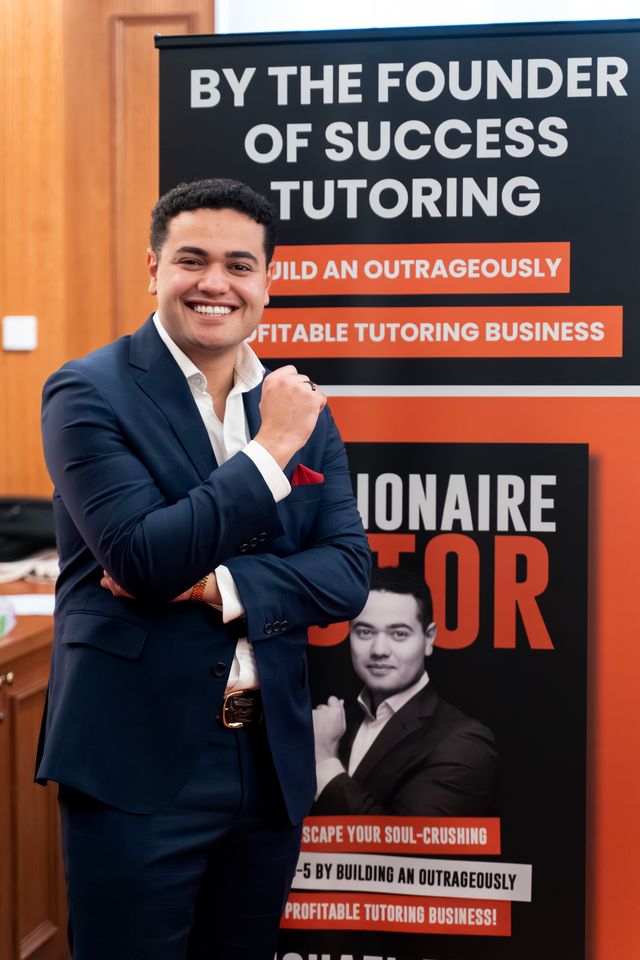
Michael Black, founder and Global CEO of Success Tutoring

Michael Black’s Success Tutoring expands across four continents as parents, students and franchise investor partners embrace innovative approach to learning, community based fundamentals and generous business returns.

Michael Black, founder and Global CEO of Success Tutoring

The fast growing Australian education franchise is challenging one of the biggest assumptions in modern learning, that more technology equals better outcomes.

Michael Black, founder and Global CEO of Success Tutoring, is leading one of the most aggressive international expansions in the sector, with the brand now operating across Australia, the United States, India, Canada and New Zealand. Further countries including Singapore and the UK are slated for later this year and next year.

At the centre of its growth is the proposition that the future of education needs to embrace technology as well as a return to paper.

“We are seeing a global shift,” Black said.
“Parents are questioning whether screen based learning is actually delivering results and they are actively looking for alternatives that build real capability. We believe that it needs to include both.”

Advertisement

A structural shift in education demand

The rapid expansion of Success Tutoring is being fuelled by broader structural changes across global education systems.

Rising migration is increasing demand for English language support, public education systems are under pressure in many markets and parents are investing more heavily in supplementary education to ensure their children keep pace.

Black said these conditions are creating a powerful tailwind for tutoring providers that can demonstrate measurable outcomes.

Advertisement

“Education is no longer optional,” he said.

“It is becoming one of the most important investments families make and they are far more discerning about what actually works.”

Building capability is essential for lifelong learning and increased confidence

While much of the education sector has moved toward digital delivery, Success Tutoring has deliberately positioned itself as a hybrid player, embracing both in the learning process.

Advertisement

Its model focuses on structured, paper based learning in English and mathematics, designed to strengthen core cognitive skills such as writing, problem solving and independent thinking.

“Technology has a role, but it should not replace thinking,” Black said.
“We are focused on teaching students how to process information, how to structure their thoughts and how to solve problems step by step.”

He argues that over reliance on screens risks weakening these foundational skills.
“When everything is done on a device, students can become dependent rather than capable,” he said.

“What we are seeing is that when students return to paper, their confidence and performance improve significantly.”

Advertisement

Strong returns drive franchise demand

The model is resonating not only with families, but also with franchise partners, who are increasingly attracted to education as a resilient and scalable sector.

Success Tutoring’s membership based model provides predictable recurring revenue while maintaining affordability for families, a combination Black says is critical to long term success.

“Franchise partners are seeing strong returns because the demand is consistent and growing,” he said.

Advertisement

“When you deliver real outcomes for students, the business builds itself through reputation and referrals.”

The result is a surge in franchise interest across multiple markets, with rapid rollout underway internationally.

New Zealand growth signals global appetite

New Zealand has emerged as a key indicator of the brand’s momentum, with six new centres opened in the past six months and further expansion in progress.

Advertisement

The speed of uptake highlights what Black describes as a universal demand for foundational learning.

“No matter the country, the feedback is the same,” he said.
“Parents want their children to be confident, capable and able to think for themselves.”

A global education movement, not just a brand

Black believes Success Tutoring’s growth reflects a broader shift in how education is valued and delivered.

Advertisement

“We are not just building a franchise network,” he said.

“We are part of a global movement back to fundamentals, where learning is about understanding, not just completing tasks.”

As education systems grapple with the impact of technology, workforce demands and population growth, he expects the tutoring sector to continue expanding rapidly.

“The market is growing year on year because the need is growing,” Black said.

Advertisement

“When schools are stretched and expectations are rising, families look for solutions that work.”

The future of learning may look familiar

For Black, the lesson is simple and somewhat unexpected.

“In a world obsessed with innovation, sometimes the most powerful solution is returning to what works,” he said.

Advertisement

As Success Tutoring continues its international expansion, one thing is becoming increasingly clear, the future of education may not be digital first, but fundamentals first.

Continue Reading
Click to comment

You must be logged in to post a comment Login

Leave a Reply

Business

OpenAI staff cash out $6.6bn as 600 employees become millionaires in tender offer

Published

on

OpenAI has agreed a multibillion-dollar partnership with Advanced Micro Devices (AMD) to secure massive computing power for its next generation of artificial intelligence models — a direct challenge to Nvidia’s dominant position in the global AI chip market.

Roughly 600 staff at OpenAI have walked away with an average of $11 million (£8 million) apiece after cashing out a combined $6.6 billion (£4.8 billion) in shares, in one of the largest single transfers of employee wealth that Silicon Valley has produced.

The secondary share sale, first reported by the Wall Street Journal, allowed early employees of the ChatGPT developer to sell stock to incoming investors rather than wait for an initial public offering. As many as 75 of the lucky group sold the maximum permitted by the company and walked away with $30 million each.

It is a vivid illustration of the concentration of wealth being generated by the artificial intelligence boom and a sharp reminder, for British SME founders watching from the sidelines, of the scale at which the US technology sector now operates. The single payout pool exceeds the entire annual research and development budget of most FTSE 250 companies.

OpenAI requires staff to hold their shares for two years before they can be sold, meaning last year’s deal was the first significant opportunity for early employees to realise their gains since ChatGPT was released to the public in November 2022. The product’s instant global success has driven one of the steepest re-ratings of a private company in corporate history.

The lab founded by Sam Altman and his co-founders was valued at around $1 billion in 2019, when it established a profit-making subsidiary alongside its non-profit parent. By 2023, after Microsoft’s landmark investment shortly following ChatGPT’s launch, the figure had reached $29 billion. The October secondary sale that delivered last year’s payouts valued the company at $500 billion, and a further $122 billion fundraising round completed in March pushed the figure to $852 billion.

Advertisement

An initial public offering, expected in early 2027, could value OpenAI at more than $1 trillion and turn dozens of its earliest employees into multimillionaires several times over. Elon Musk’s SpaceX, which now houses his xAI laboratory, and Anthropic, the developer of the Claude chatbot, are both reported to be eyeing public market debuts at comparable valuations.

The scale of the OpenAI payout has not gone unnoticed in the wider technology labour market. Meta, the owner of Facebook and Instagram, is reported to have offered individual compensation packages worth more than $300 million in an attempt to lure leading AI researchers from rivals. The resulting talent war has pushed salaries for senior machine-learning engineers well into seven figures and is making it increasingly difficult for European start-ups, including British ones, to retain home-grown talent.

The transaction was completed even as concerns about an AI bubble reached a recent peak. Technology stocks suffered a sharp sell-off between September and October last year amid investor unease over the circular financing arrangements between AI laboratories, chipmakers and cloud providers, and over the eye-watering capital expenditure being committed by the largest players. That OpenAI was able to clear a $6.6 billion secondary at a $500 billion valuation in the middle of that wobble underlines the strength of demand from sovereign wealth funds and private investors for exposure to the sector.

The payouts also coincide with an increasingly bitter legal dispute between the company and Mr Musk, an early backer who has sued OpenAI over its conversion from a charitable foundation into a for-profit enterprise. The case, which has been in court for the past fortnight, has produced one of the more eye-popping disclosures of the boom: Greg Brockman, OpenAI’s president, testified that his stake in the business is worth approximately $30 billion. OpenAI has dismissed the litigation as motivated by jealousy and did not respond to a request for comment on the share sale.

Advertisement

For founders of British growth-stage businesses, the OpenAI numbers serve as both inspiration and warning. They demonstrate the extraordinary value that secondary markets can unlock for employees without the need to list, a route increasingly favoured in Silicon Valley as companies stay private for longer. They also underline the talent and capital headwinds facing any UK firm hoping to compete with the American hyperscalers, where stock-based compensation alone can exceed the lifetime earnings of an entire British R&D team.

Whether the AI boom proves to be a generational technological shift or a richly priced rerun of the dotcom era, the cheques have already cleared.


Paul Jones

Harvard alumni and former New York Times journalist. Editor of Business Matters for over 15 years, the UKs largest business magazine. I am also head of Capital Business Media’s automotive division working for clients such as Red Bull Racing, Honda, Aston Martin and Infiniti.

Advertisement

Continue Reading

Business

April home sales disappoint as higher mortgage rates weigh on buyers

Published

on

April home sales disappoint as higher mortgage rates weigh on buyers

Prospective buyers arrive during an open house in Rancho Cucamonga, California, US, on Saturday, May 9, 2026.

Kyle Grillot | Bloomberg | Getty Images

Sales of previously owned homes in April were essentially flat compared with March, rising just 0.2% to 4.02 million units on a seasonally adjusted, annualized basis, according to the National Association of Realtors. Housing analysts were expecting a gain of more than 3%.

Advertisement

April sales were unchanged year-over-year. This count is based on closings, so contracts likely signed in late February and March. The average rate on the 30-year fixed mortgage ended March in the high 5% range, according to Mortgage News Daily, and then shot up sharply, due to the start of the U.S.-Israel war with Iran.

“Despite mixed macroeconomic signals—including a record-high stock market and historically low consumer confidence—home sales were modestly boosted by the continued improvement in housing affordability,” said Lawrence Yun, NAR’s chief economist, in a release. “Mortgage rates are lower from a year ago, and average income growth is outpacing home price gains.”

Inventory in April rose 5.8% from March, but was up just 1.4% from the previous April to a 4.4-month supply. That is still considered tight, as a 6-month supply represents a balanced market between buyer and seller.

“We really need to see 30% growth in inventory, but we are not seeing that,” Yun said. “Multiple offers, though not as intense as a few years ago, are still occurring. At the same time, days on market are lengthening on average, implying that consumers are taking their time before making decisions.”

Advertisement

That pushed prices higher. The median price of a home sold in April was $417,700, up 0.9% from the year before. That is the highest April price on the NAR’s record.

The average days on market increased to 32 days in April, up from 29 days during the same month last year. First-time buyers represented a 33% share of sales during the month, down slightly from a year ago. One quarter of all sales were all cash, unchanged from last year.

Mortgage rates have remained higher, starting this week at 6.42%. Other reports this month show that while pending sales have increased some in April and May, supply is tightening again. That will continue to lift prices.

Get Property Play directly to your inbox

CNBC’s Property Play with Diana Olick covers new and evolving opportunities for the real estate investor, delivered weekly to your inbox.

Advertisement

Subscribe here to get access today.

Choose CNBC as your preferred source on Google and never miss a moment from the most trusted name in business news.
Continue Reading

Business

Earnings call transcript: Arko Petroleum Q1 2026 growth amid fuel volatility

Published

on


Earnings call transcript: Arko Petroleum Q1 2026 growth amid fuel volatility

Continue Reading

Business

Micron Looks Surprisingly Cheap For An AI Leader

Published

on

Micron Looks Surprisingly Cheap For An AI Leader

Micron Looks Surprisingly Cheap For An AI Leader

Continue Reading

Business

United Natural Foods stock hits 52-week high at $52.79

Published

on


United Natural Foods stock hits 52-week high at $52.79

Continue Reading

Business

M&S acquires Asos distribution centre to create 600 jobs as it bids to double online sales

Published

on

Business Live

The 437,000 sq ft Staffordshire warehouse was mothballed by Asos in 2023

ASOS has officially opened a new £90m fulfilment centre in Lichfield

The ASOS fulfilment centre in Lichfield has a new owner

Marks & Spencer has struck a deal to acquire a warehouse from Asos in Staffordshire, a move set to generate 600 new jobs and bolster its ambitions to double online sales.

Advertisement

M&S confirmed the 437,000 square foot facility in Lichfield will rank among its largest distribution centres upon opening in 2027.

The warehouse was mothballed by Asos in 2023 as part of a restructuring drive aimed at reducing stock levels and costs while improving profitability.

It had employed a few hundred workers at the time, though Asos said when it announced the move that those staff were not directly employed by the group.

M&S said the site will expand capacity and enable faster order processing, supporting the retailer’s long-term ambition to double the scale of its online fashion, home and beauty operation.

Advertisement

“The new site will support the strategy to deliver more of M&S fashion faster than ever before, enabling customers to order later in the day and with more sizes and styles available,” the retailer said.

John Lyttle, managing director for fashion, home and beauty, said: “As we transform M&S fashion, home and beauty, our ambition is to double online sales.

“To achieve this and serve our customers faster, more efficiently and with better availability, our 24/7 distribution network needs more capacity.”

He added that the acquisition would advance its transformation agenda at considerably less expense than constructing a new site from the ground up. Asos confirmed it will pocket a minimum of £66 million from the warehouse sale while cutting approximately £6 million in annual running costs, including rent.

Advertisement

The transaction is set to generate a one-off profit uplift of around £85 million upon completion, which is anticipated before the end of August.

Asos shares surged 12% in morning trading on Monday following the announcement of the sale.

The retailer stated that its remaining facilities in Barnsley, South Yorkshire, and Berlin will “provide sufficient capacity to support future growth”.

Asos chief executive Jose Antonio Ramos said: “The disposal of our Lichfield fulfilment centre represents a further step in strengthening Asos’s balance sheet and improving our capital efficiency.

Advertisement

“This transaction enables us to unlock value from one of our non-core assets while reducing our ongoing cost base, consistent with the actions we have taken over the past three years to simplify the business and enhance financial resilience.”

Continue Reading

Business

Caledonia Mining Corporation Plc 2026 Q1 – Results – Earnings Call Presentation (NYSE:CMCL) 2026-05-11

Published

on

OneWater Marine Inc. (ONEW) Q1 2026 Earnings Call Transcript

This article was written by

Seeking Alpha’s transcripts team is responsible for the development of all of our transcript-related projects. We currently publish thousands of quarterly earnings calls per quarter on our site and are continuing to grow and expand our coverage. The purpose of this profile is to allow us to share with our readers new transcript-related developments. Thanks, SA Transcripts Team

Continue Reading

Business

The best in HR and people development in Wales revealed

Published

on

Business Live

The winners of the 2026 of HR in Wales Award have been revealed

The best in HR and people development in Wales has been recognised at an awards ceremony.

The outstanding contributions of six organisations and four individuals were acknowledged at the 2026 HR in Wales Awards with winners including S4C, St John Ambulance Cymru, Cartrefi Cymru Cooperative, Cardiff Community Housing Association and Creditsafe Business Solutions.

Held at the Marriott Hotel in Cardiff and hosted by former Welsh rugby international Alex Cuthbert, the awards were launched in 2025 by Lesley Richards, independent HR consultant and former head of the CIPD in Wales, to recognise the crucial role of the people profession in the workplace. This year’s awards saw another record number of entries from organisations across Wales.

Advertisement

READ MORE: Scarlets Rugby extends sponsorship tie-up with food wholesaler Castell HowellREAD MORE: One of Cardiff’s best known buildings under new ownership in multi-million-pound deal

Ms Richards said: “We’re proud to have been able to celebrate the remarkable contributions of leading industry talent for a second year running. It was fantastic to see so many strong entries for this year’s HR in Wales Awards, the winners really are a testament to all the transformative work being done in Wales, despite ongoing economic uncertainty and budget pressures.

“We’d like to say a huge thank you to our sponsors and partners who joined us in celebrating the outstanding achievements of those who have been practicing great HR in Welsh workplaces. Congratulations to all winners and entrants.”

Among the four individuals recognised at the awards were Sadie Govier of Cardiff Airport and Nadine Beaton of S4C, winning in the rising star of the profession and excellence in HR Leadership categories respectively.

Advertisement

Rosie Sweetman from Cardiff-based Sweetmans and Partners, was also recognised in the individual impact category for her intelligent and adaptable approach to group coaching for her work with Williams Medial Supplies.

The special recognition for outstanding contribution to the people profession this year was awarded to Anne Middleton, HR manager at Atradius, in recognition of the vast contribution she has made to the profession across Wales and beyond over the last 35 years. Her achievements include playing a pivotal role in the establishment of the Welsh financial services graduate programme and leading the HR function for a global workforce of nearly 4,000 people.

Cartrefi Cymru Cooperative took home the accolade for employee engagement, with judges noting that its meaningful and impactful approach and efforts to recognise achievements at all levels made the business stand out.

Cardiff-based Creditsafe Business Solutions was awarded in the wellbeing category, while Cardiff Community Housing Association was recognised for equality, diversity and inclusion.

Advertisement

Welsh language broadcaster S4C won the award for transformation and Cchange with the judges applauding the organisation’s genuine cultural improvements which they say have helped staff to act with pride, clarity and autonomy.

Manufacturing firm, Siderise, which is based in Maesteg, was recognised for learning and development while St John Ambulance Cymru took home the award for the talent management category, with the judges impressed by its human-first approach to recruitment.

Ms Beaton of S4C said: “The win for the transformation and change category is a reflection of the hard work of the whole organisation and its commitment to cultural change. We couldn’t be prouder. It’s a pleasure to lead such an exceptional people and culture team. I try and make it my job to employ people who are better than me and it must be working.”

The winners of The 2026 HR in Wales Awards are:

Advertisement

Category

Winner

Employee Engagement

Cartrefi Cymru Cooperative

Advertisement

Equality, Diversity and Inclusion

Cardiff Community Housing Association

Individual Impact

Rosie Sweetman, Sweetmans and Partners

Advertisement

Learning and Development

Siderise

Talent Management

St John Ambulance Cymru

Advertisement

Transformation and Change

S4C

Wellbeing

Creditsafe Business Solutions

Advertisement

Rising Star of the Profession

Sadie Govier, Cardiff Airport

Excellence in HR Leadership

Nadine Beaton, S4C

Advertisement

Outstanding Contribution to the People Profession

Anne Middleton, Atradius

Continue Reading

Business

Nirvana Systems: Building Long-Term Client Trust Through Education and Transparency

Published

on

Nirvana Systems: Building Long-Term Client Trust Through Education and Transparency

Trust is one of the most valuable currencies in financial technology, especially in a field as complex as algorithmic trading. For more than three decades, Nirvana Systems has built its reputation by approaching trading technology as a long-term discipline rather than a short-term opportunity. Founded with the mission of helping individual investors access institutional-grade tools, the company has focused on turning market complexity into structured, rules-based decision-making through technology such as its OmniFunds platform.

Rather than promoting speed or speculation, Nirvana Systems has centered its client relationships on education, transparency, and realistic expectations. Its philosophy is rooted in the belief that successful trading is less about chasing the next opportunity and more about creating repeatable systems that reduce emotional decision-making. That approach has helped position the company as a client-focused provider of trading solutions designed for both experienced investors and those new to automated strategies.

Common Misconceptions About Algorithmic Trading

Algorithmic trading often attracts attention for the wrong reasons. Popular discussions tend to focus on fast profits, constant market action, or the idea that automation can eliminate uncertainty. These assumptions create unrealistic expectations for traders entering the space for the first time.

In reality, algorithmic trading is not about prediction. It is about probability management. Even the most sophisticated systems experience drawdowns, periods of underperformance, and changing market conditions. No strategy performs the same way in every environment, and historical success does not guarantee future outcomes.

Advertisement

One of the most common misconceptions is that automation means a trader no longer needs discipline. In practice, automated systems require a different kind of responsibility. Users must understand risk limits, market conditions, and the operational side of execution, from broker synchronization to system monitoring.

Nirvana Systems has long challenged the “set it and forget it” mindset. Its approach encourages clients to view losses as operational costs rather than failures and to understand that disciplined execution matters more than emotional reactions. This shift in mindset is foundational to building sustainable trading habits and avoiding the common traps that lead many retail traders to abandon systems too early.

How Nirvana Systems Prioritizes Transparency From Day One

For Nirvana Systems, transparency begins before a client ever uses the platform. The company places strong emphasis on showing prospective users the full picture, including the less comfortable realities of trading.

Performance reporting within OmniFunds is designed to make drawdowns visible rather than hidden. Users can review maximum drawdown scenarios, recovery periods, and historical volatility before making decisions. This helps replace unrealistic optimism with practical understanding. Instead of asking how quickly profits can be generated, clients are encouraged to ask whether they are prepared for normal periods of decline.

Advertisement

The company also separates backtesting from forward-testing in a clear and meaningful way. Historical results are presented as proof of logic, not proof of future performance. By prioritizing out-of-sample data and live validation, Nirvana Systems reinforces an important principle: past performance can inform strategy, but it cannot remove uncertainty.

This kind of trading transparency is central to client trust. It reduces the appeal of “black box” systems and replaces blind confidence with informed participation. Clients are not expected to simply follow signals. They are expected to understand the framework behind them.

Nirvana Systems and the OmniFunds Onboarding Experience

Strong onboarding is often overlooked in financial technology, but it is one of the most important factors in long-term client retention. Nirvana Systems treats onboarding as a professional transition rather than a software installation.

New OmniFunds users receive direct setup assistance to ensure the platform is correctly integrated with their brokerage environment. This process reduces technical friction and helps clients start with the right operational structure from day one. Instead of a “sink or swim” experience, the company focuses on making the bridge between automation and capital secure and understandable.

Advertisement

The platform itself is built with accessibility in mind. OmniFunds’s architecture is designed to reduce the technical barriers that often prevent retail traders from using advanced tools. Complex elements such as market state detection, optimization logic, and strategy deployment are already embedded, allowing clients to benefit from professional-grade systems without needing to build them from scratch.

Equally important is the educational layer. Training is focused on understanding why the system behaves the way it does. Clients learn why the platform may shift to cash during volatility, how position sizing protects against oversized losses, and why disciplined inactivity can be more valuable than unnecessary trading.

This educational emphasis transforms onboarding into a foundation for long-term trading discipline rather than a simple product introduction.

How Nirvana Systems Supports Long-Term Client Success

Trading education does not end after implementation. Long-term success depends on consistent reinforcement, and Nirvana Systems has built its support model around ongoing guidance rather than one-time instruction.

Advertisement

Clients have access to technical support through dedicated channels, including direct assistance for software questions and operational troubleshooting. This ensures that issues are addressed quickly and that clients remain connected to the platform rather than frustrated by preventable obstacles.

The company also provides continuous educational resources, including tutorials, research updates, and product enhancements as its systems evolve. Because markets change and technology advances, client-focused trading solutions must remain dynamic. A static platform quickly becomes outdated, while a continuously supported ecosystem helps traders adapt.

Many long-term users describe the value of Nirvana Systems not simply as software, but as a professional relationship. The emphasis on human support, clear communication, and personalized onboarding creates trust that extends beyond the platform itself. Clients are not left to interpret complex systems alone. They have a team and a structure designed to keep them aligned with the process.

This relationship-based model helps explain why many clients stay with the company for years rather than treating trading software as a temporary tool.

Advertisement

Risk Management and Responsible Trading Practices

Responsible trading practices are often defined by what a system prevents, not just what it enables. Nirvana Systems has built much of its philosophy around capital preservation and mechanical discipline.

A core principle within OmniFunds is that cash is a position. When market conditions become hostile or volatile, the system can automatically move capital out of active exposure and into cash rather than remaining fully invested through uncertainty. This defensive framework reflects a different philosophy from platforms that prioritize constant market participation.

Risk controls are also embedded directly into execution. Position sizing, predefined stops, and automated boundaries help standardize losses and prevent emotional override. A loss is treated as part of the operational process, not a reason for panic.

This approach reinforces an important lesson for traders: discipline is often more valuable than prediction. Successful algorithmic trading depends less on finding perfect entries and more on protecting capital through difficult conditions.

Advertisement

Nirvana Systems also teaches clients to understand market states rather than fear volatility. Volatility is not treated as random noise but as information that can trigger defensive action. By reviewing how OmniFunds has performed during previous unstable periods, clients learn to interpret these transitions with confidence rather than anxiety.

That education is part of responsible stewardship. Technology alone cannot create discipline. It must be paired with realistic understanding.

Customer Feedback and the Continuous Improvement Loop

One of the strongest indicators of trust is whether clients feel heard. Nirvana Systems has built a culture where customer feedback plays an active role in product refinement and client experience.

Long-term users often point to the professionalism of the support team and the visibility into trading logic as defining parts of their experience. Being able to see risk parameters and execution details creates confidence during both strong and difficult market periods.

Advertisement

Clients also value the collaborative structure behind product development. Feedback from real-world users helps inform updates to research models, strategy enhancements, and platform usability improvements. This creates a sense of partnership rather than a purely transactional relationship.

The result is a stronger alignment between technology and user expectations. Instead of selling a fixed solution, Nirvana Systems treats its platform as an evolving ecosystem that grows alongside client needs and market realities.

That long-term stewardship matters. In trading, confidence is built over time, and trust often depends on consistency more than performance alone.

Why Nirvana Systems Continues to Stand Out

In a market where many trading platforms compete for attention through complexity or aggressive promises, Nirvana Systems has built authority through clarity. Its long-standing focus on education, trading transparency, and responsible execution has made OmniFunds more than an automation tool. It has become part of a broader philosophy centered on discipline, realism, and client trust.

Advertisement

From onboarding to ongoing support, the company’s process reflects a belief that informed clients make stronger long-term decisions. By helping traders understand drawdowns, risk boundaries, and market state changes, Nirvana Systems reinforces a professional approach to algorithmic trading that prioritizes sustainability over excitement.

That is ultimately what separates trusted financial technology providers from short-term solutions. Nirvana Systems has positioned itself not as a source of quick answers, but as a long-term partner in structured decision-making. In an industry where credibility is earned slowly, that commitment to transparency and education remains one of its strongest advantages.

Continue Reading

Business

Post rings up solid quarter with CEO change coming

Published

on

Post rings up solid quarter with CEO change coming

Food company said “portfolio performed quite well in Q2.”

Continue Reading

Trending

Copyright © 2025