
Business
AutoNation, Inc. 2025 Q4 – Results – Earnings Call Presentation (NYSE:AN) 2026-02-06



Seeking Alpha’s transcripts team is responsible for the development of all of our transcript-related projects. We currently publish thousands of quarterly earnings calls per quarter on our site and are continuing to grow and expand our coverage. The purpose of this profile is to allow us to share with our readers new transcript-related developments. Thanks, SA Transcripts Team

Business
Bulls to return after March massacre? Elara sees limited downside for Nifty after 11% crash amid Iran-US war
The domestic brokerage cited data from the timeframes of seven major geopolitical conflicts in the past 25 years – Iraq war (2003), the Lebanon war (2006), the Libyan Civil War (2011), Russia–Ukraine (2022), Israel–Hamas war (2023), Iran–Israel conflict (2025), and the ongoing US–Iran escalation. It said that Nifty’s drawdown during the onset of conflicts has usually been capped at approximately 10%. Hence, historical patterns suggest limited downside for the benchmark index now, after the 11% crash in March.
“Importantly, once early signs of normalisation emerge, markets tend to recover swiftly,” Elara said. However, it noted that the key exception to this historical pattern was in calendar years 2011-2014 when Brent sustained above $100 per barrel, leading to a prolonged sideways market without meaningful highs. The eventual decline in oil prices acted as the trigger for a strong Nifty upcycle, it added.
Also read: Sammaan Capital becomes IHC Group co, receives Rs 5,652 cr in first tranche of stake sale
Nifty’s valuation below the long-term trend signals a potential rebound
Elara assessed the one-year forward P/E relative to its rolling 10-year average and concluded the Nifty is trading 7% below its 10-year average, placing it in a historical “bounce zone”. “Outside of extreme disruptions like COVID-19, this level usually acted as a floor for valuation. Even during the Russia–Ukraine conflict, despite Brent sustaining above USD 100/bbl, Nifty multiples bounced back from 10-year rolling averages,” it said.

“The recent TACO and Iran allowing ‘nonhostile ships’ to transit the Strait of Hormuz, along with crude oil prices dropping below USD 100/bbl, have reduced immediate energy supply risks. With our base case assuming gradual de-escalation, the current valuation provides a favourable entry point, with limited downside. We pick 20 value plays which offer a good risk-reward opportunity with healthy fundamentals in the current scenario of extreme correction,” the brokerage added.
Elara’s top pics
Auto and power remain Elara’s preferred bets, which added that large-cap auto stocks like Maruti Suzuki and Royal Enfield-maker Eicher Motors have corrected sharply since the onset of the US-Iran conflict. While near-term concerns persist around input cost pressures from elevated commodity prices and potential demand moderation in the event of a prolonged conflict triggering an inflation shock for consumers, underlying retail data remains robust and encouraging, it further said.
The domestic brokerage added that Vahan retail registrations so far show strong double-digit growth, and this momentum is expected to receive further tailwinds from the Eighth Pay Commission awards, slated for announcement early next year.Within the power sector, 18 out of the 19 utility stocks under the brokerage’s coverage have outperformed the Nifty 50 in current drawdown, which the firm said underscores the sector’s relative resilience. “The escalating conflict is expected to accelerate India’s electrification cycle, while surging data centre capex is driving incremental power demand. This positive backdrop is further supported by the likely passage of the New Electricity Amendment Bill, which will unlock structural reforms in the sector. Consequently, power generation, transmission, distribution, and data centre-linked plays are emerging not merely as defensive anchors but as clear structural beneficiaries in the medium to long term. NTPC, NLC India, and ACME Solar remain our highest conviction picks within the space,” it added.
Also read: FY26 IPO market a disaster as investors lose money in 2 out of 3 issues. Will next year be better?
Where is the value currently?
In its report, Elara listed out several stocks emerging with better risk-reward dynamics where fundamentals remain intact, and valuation is either trading below the five-year median, and in some cases even below the Russia–Ukraine crisis lows.
These include HDFC Bank, Maruti Suzuki, Eicher Motors, Infosys, LTI Mindtree, L&T, Godrej Properties, NTPC, NLC India, ACME Solar and Eternal.
(Disclaimer: Recommendations, suggestions, views and opinions given by the experts are their own. These do not represent the views of The Economic Times)

There’s a subtle difference between self-care and self-respect.
Self-care is often portrayed as something occasional—spa days, special routines, moments carved out for relaxation. It’s visible, sometimes even performative.
Self-respect, on the other hand, is quieter. It lives in the decisions you make when no one is watching. It shows up in consistency, in the standards you set for yourself, and in the way you engage with your daily routines.
And perhaps surprisingly, it’s often reflected in the most ordinary products you use.
The Standard You Accept
Every product you use sets a baseline.
Not just for performance, but for what you consider “good enough.”
If something works “well enough,” you keep using it. If it causes minor irritation or discomfort, you might ignore it. Over time, these small compromises become normalized.
This is how standards quietly drift.
But when you choose something like aluminum and baking soda free deodorant, you’re making a different kind of decision. You’re saying that “good enough” isn’t enough—that your comfort, your skin, and your long-term well-being matter.
It’s not a dramatic statement. It’s a quiet adjustment in standards.
The Daily Mirror
Your routine is a mirror.
Not in the literal sense, but in what it reflects back to you about how you treat yourself.
Do you rush through it, using whatever is easiest?
Do you pay attention to how things feel?
Do you notice when something isn’t working for you?
These questions aren’t about perfection. They’re about awareness.
Using an organic face soap, for example, can shift your experience from purely functional to slightly more intentional. The ingredients, the texture, the way it interacts with your skin—all of it becomes part of a more attentive process.
You’re not just washing your face. You’re engaging with the act.
And that engagement reflects a form of respect.
The Relationship You Have with Routine
Most routines are built on autopilot.
You wake up, go through the motions, and move on. Efficiency takes priority over experience.
But routines are also opportunities.
They’re moments that repeat every day, giving you consistent chances to reinforce how you approach yourself.
When you introduce products that require a bit more attention—like aluminum and baking soda free deodorant—you interrupt the autopilot just enough to notice what you’re doing.
That moment of noticing is small, but it matters.
It turns a routine into a relationship.
Comfort as a Priority, Not a Bonus
In many cases, comfort is treated as optional.
If a product works, slight discomfort is tolerated. It’s seen as a trade-off, not a problem.
But what if comfort were the baseline?
Choosing products that align with your body—ones that avoid common irritants or unnecessary additives—shifts comfort from a bonus to a priority.
An organic face soap, for instance, often emphasizes gentler ingredients. It’s not about doing more—it’s about doing what’s necessary without excess.
This approach respects your skin’s natural state rather than overriding it.
And that respect, repeated daily, becomes part of your standard.
The Language of Consistency
Self-respect is not built on occasional actions. It’s built on consistency.
What you do every day matters more than what you do once in a while.
The products you use daily are part of that consistency. They are tools that either support or undermine your standards.
When you consistently choose items that align with your values—whether that’s comfort, simplicity, or awareness—you reinforce those values internally.
You’re not just making a choice once. You’re making it every day.
Small Decisions, Lasting Impact
It’s easy to dismiss small decisions as insignificant.
A different deodorant.
A different soap.
But these decisions are repeated hundreds, even thousands of times over the course of your life.
And repetition is what gives them weight.
Each time you choose something that aligns with your standards, you reinforce a pattern.
Over time, that pattern becomes part of who you are.
Not in a dramatic way, but in a steady, cumulative one.
Moving Away from Neglect
There’s a subtle form of neglect that often goes unnoticed.
It’s not about ignoring yourself entirely. It’s about settling.
Using products that are “fine.”
Ignoring small discomforts.
Avoiding the effort of finding something better.
This kind of neglect is easy to justify because it doesn’t feel serious.
But over time, it adds up.
Shifting to more intentional choices—like selecting aluminum and baking soda free deodorant or using organic face soap—is a way of moving away from that pattern.
It’s not about perfection. It’s about paying attention.
Respect Without Complexity
There’s a misconception that treating yourself well requires complexity—multiple products, elaborate routines, constant upgrades.
But self-respect doesn’t have to be complicated.
It can be simple.
Choosing products that align with your needs.
Paying attention to how they feel.
Making small adjustments when something isn’t right.
These are straightforward actions, but they carry meaning.
They show that you value your own experience, even in the smallest ways.
The Internal Shift
At first, these choices might feel external—just different products, different routines.
But over time, they create an internal shift.
You become more aware.
More selective.
More aligned with what works for you.
This shift extends beyond personal care.
It influences how you approach other areas of your life:
What you eat.
How you spend your time.
What you prioritize.
It all starts with small, consistent decisions.
Conclusion: The Way You Do Small Things
There’s a well-known idea that the way you do small things reflects the way you do everything.
Your daily routine is made up of small things.
The products you use.
The time you spend.
The attention you give.
By choosing items like aluminum and baking soda free deodorant and organic face soap, you’re not just changing what you use.
You’re changing how you approach yourself.
With more attention.
With higher standards.
With quiet, consistent respect.
And while these changes may seem minor, they have a way of shaping something much larger:
The relationship you have with yourself, every single day.


I am working as a Business Analyst and Data Engineer in Germany and have started to build up a portfolio focused on Dividend Growth, both on the high and low-end yield spectrum. Primary focus is on Blue Chips with long-reaching dividend track records. I have been investing for 2 years and have been standing on the sidelines for way too long before. I love developing spreadsheets in Google and Excel to analyze financial performance and integrate these two sources with each other!Happy to connect on the various channels!
Analyst’s Disclosure: I/we have a beneficial long position in the shares of ALL STOCKS MENTIONED either through stock ownership, options, or other derivatives. I wrote this article myself, and it expresses my own opinions. I am not receiving compensation for it (other than from Seeking Alpha). I have no business relationship with any company whose stock is mentioned in this article.
I am not offering financial advice but only my personal opinion. Investors may take further aspects and their own due diligence into consideration before making a decision.
Seeking Alpha’s Disclosure: Past performance is no guarantee of future results. No recommendation or advice is being given as to whether any investment is suitable for a particular investor. Any views or opinions expressed above may not reflect those of Seeking Alpha as a whole. Seeking Alpha is not a licensed securities dealer, broker or US investment adviser or investment bank. Our analysts are third party authors that include both professional investors and individual investors who may not be licensed or certified by any institute or regulatory body.

The Australian share market has closed higher following reports US President Donald Trump is willing to wind up its military campaign against Iran without first reopening the Strait of Hormuz.
syahrir maulana/iStock via Getty Images
Our philosophy
Simply put, the upward inflection in stock prices can be a confirmatory signal of fundamental improvement. Our approach to investing is based on our view that fundamentals ultimately drive stock prices. Through deep fundamental research, we

The lender says the market regained momentum in March, but rising mortgage and energy costs could hit consumer confidence.
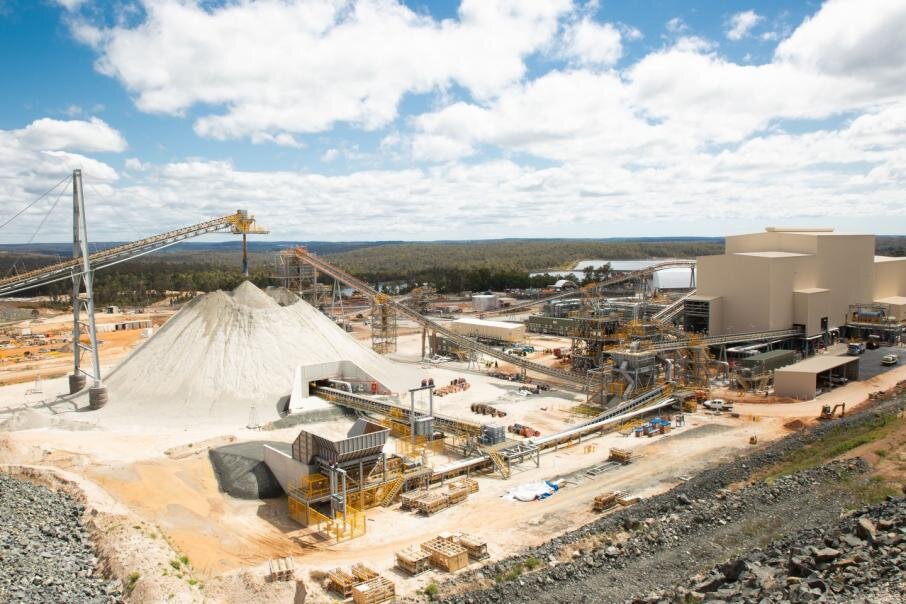
The Greenbushes lithium mine in the state’s South West generated a $624 million profit for its three joint venture owners, a far cry from its bumper $6 billion profit two years ago.


Pickleball paddle producer Devi Wei has a message for U.S. shoppers.
“Americans will have to pay more,” the Chinese businessman told CNBC at a Beijing trade show last week at the China International Exhibition Center.
Because of the recent swings in oil prices resulting from the Iran war and closure of the Strait of Hormuz, Wei, who founded his own exporting business, Huijin Trade, has had to hike prices on his paddles and pickleballs by as much as 20%, he said.
Wei’s goods are made with polypropylene, a plastic material derived from oil and made in the Middle East, a dominant producer in the global industry. The war in Iran has stalled shipments of oil and its products through the Strait of Hormuz, raising concerns among Chinese manufacturers at the trade fair about further disruption across the global supply chain.
“I might have to go even higher,” Wei said. “Maybe double if the Iran war doesn’t stop soon.”
Surging oil prices are filtering into prices of all kinds of products that rely on the commodity for manufacturing.
James Li, who makes scarves and said he sells a third of his inventory to the U.S., has marked up his polyester products by 5%.
“This scarf is 30% polyester,” Li told CNBC from his trade show booth. “We will definitely pass on the extra cost to our customers.”
Wang Mingming, a general manager of toy manufacturer Jinming Gifts, said he is hoarding two months’ worth of the plastic polymer PVC, but isn’t sure he can hold off charging more for his figurines.
“In our industry, these materials are almost irreplaceable,” Wang said. “If oil prices rise any further, we really won’t be able to manage.”
Cameron Johnson, senior partner at Shanghai-based supply chain consultancy Tidalwave Solutions, said he foresees competition for oil-related products among entire sectors if the crisis at the Strait of Hormuz isn’t resolved soon. A prolonged impasse in the critical waterway also raises the possibility of product shortages.
“If this goes on into May, everyone will be in big trouble and there will be triage between industries,” Johnson said, predicting autos and the medical field would be granted higher priority. “There is no visibility when new supply will come.”
Perhaps the biggest worry among China’s manufacturers is what costlier oil will mean for discretionary spending by consumers worldwide.
More money for gas means less for Wei’s pickleballs.
“Ordinary people are getting squeezed the most from the high oil price,” he said. “Their spending power just isn’t what it used to be.”
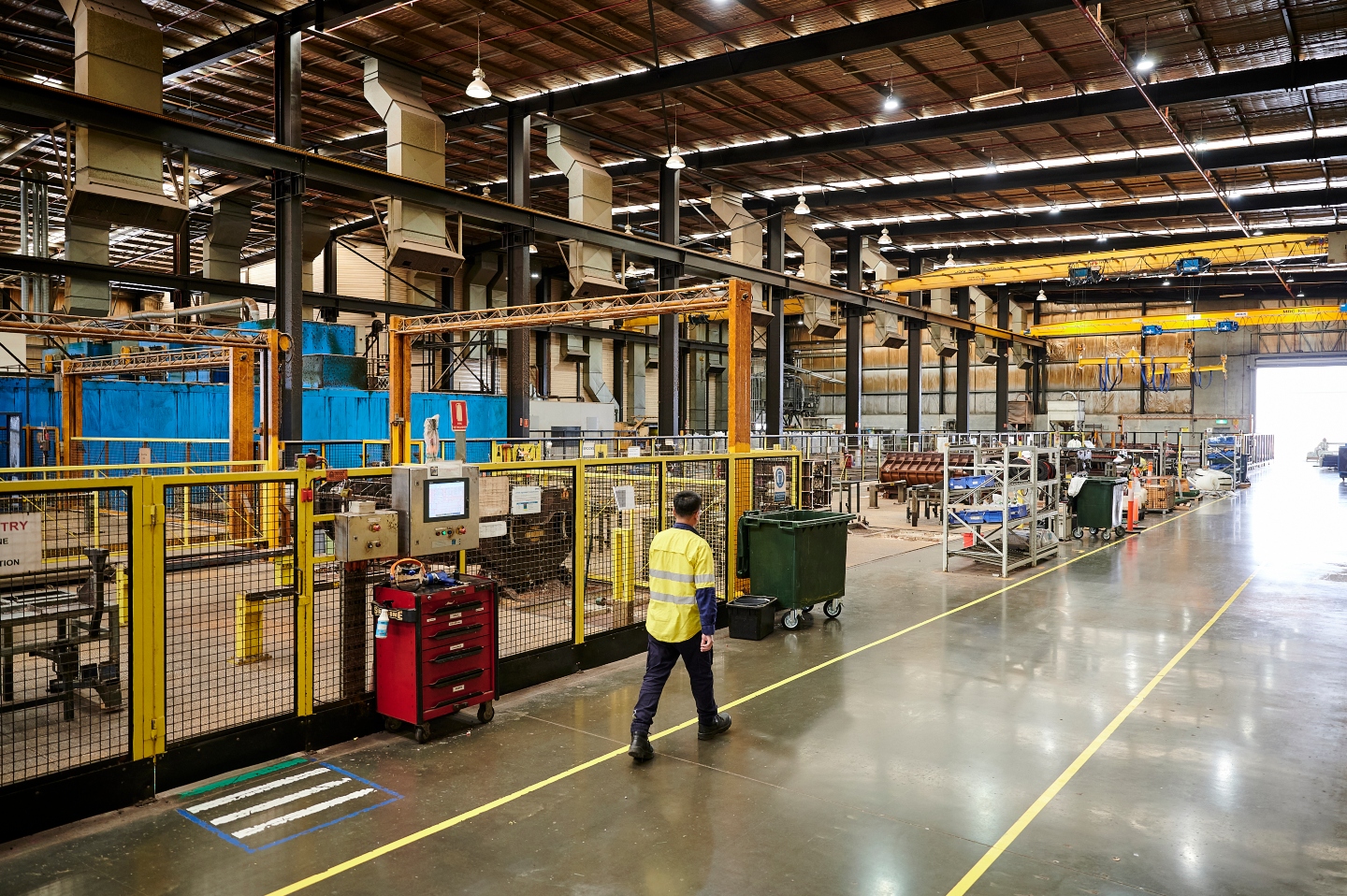
Shares in Matrix Composites & Engineering rose strongly today but are still slightly below the price at which Advanced Innergy Holdings plans to bid for the Perth company.

The last month, coinciding with the Iran war, was particularly brutal and accounted for a 4% decline. The currency, which touched an all-time low of 95.21/$, had briefly advanced to 93.59/$ in the early hours, its strongest level on Monday. The trading amplitude for the unit was one of the widest Monday.
Intervention from the Reserve Bank of India (RBI) in the last 15 minutes of trading lifted the local currency to close at 94.83/$ on the last trading day of the year. It closed at 94.81/$ on Friday.
The rupee was widely expected to strengthen on Monday.
 Agencies
Rupee Seen Staying at 94-95 per Dollar
This was following Friday’s central bank directives to curb lenders’ open positions in FX to $100 million. However, high dollar demand from oil companies, importers and hedge funds caused the rupee to retrace its steps and trade at record lows, traders said.
“The curbs by RBI created an arbitrage between NDF and onshore rates. With simultaneous buying in the NDF market and selling in the domestic market, along with year-end dollar demand from oil companies and corporates, the rupee came under pressure,” said Anil Bhansali, head of treasury, Finrex Treasury Advisors.
The rupee is expected to remain between 94/$ and 95/$ on April 2, when the market opens after a 2-day holiday.
Currency markets are closed on March 31, April 1, and April 3, making this a short trading week.
The currency opened at 93.59/$ on Monday and depreciated continuously till about 3:15 PM to a low of 95.22/$. At these levels, dollar sales by the RBI helped trim losses, allowing the rupee to close slightly stronger.
“Push for dollars from oil companies, importers, hedge funds and corporates was very high due to sharp rupee appreciation in the morning,” said Kunal Sodhani, head of treasury at Shinhan Bank India.

Days of our Lives 2-Week Spoilers Mar 30-Apr 10: Johnny Desperate & Stephanie Confesses!

Butler and Wilson New Arrival fashion jewellery

Politics Home | King’s US State Visit To Go Ahead Despite Trump Attacks On UK Over Iran


-
 NewsBeat6 days ago
Manchester United reach agreement with Casemiro over contract clause amid transfer speculation
-

 News Videos6 days ago
Parliament publishes latest register of MPs’ financial interests
-

 NewsBeat4 days ago
The Story hosts event on Durham’s historic registers
-
 Tech5 days ago
Intercom’s new post-trained Fin Apex 1.0 beats GPT-5.4 and Claude Sonnet 4.6 at customer service resolutions
-

 Business5 days ago
Instagram, YouTube Found Responsible for Teen’s Mental Health Struggle in Historic Ruling
-
 NewsBeat6 days ago
Tesco is selling new Cadbury Dairy Milk bar and people can’t wait to try it
-

 Sports4 days ago
Sweet Sixteen Game Thread: Tide vs Michigan
-

 NewsBeat7 days ago
Entrepreneurs Forum survey reveals optimism in North East
-

 Fashion7 days ago
Does It Matter What You Wear When You’re Laid Off and Looking?
-
 Entertainment3 days ago
Lana Del Rey Celebrates Her Husband’s 51st Birthday In New Post
-
Entertainment23 hours ago
Fans slam 'heartbreaking' Barbie Dream Fest convention debacle with 'cardboard cutout' experience
-
 Crypto World7 days ago
BTC gives up $70,000 level as markets mull higher interest rates
-

 Sports6 days ago
Fantasy Baseball Week 1 Preview: Top sleeper hitters for both five- and 12-day period led by Munetaka Murakami
-

 Tech7 days ago
Embedding compliance in AI adoption
-

 Tech6 days ago
US FCC Prohibits Approval Of New Foreign-Made Consumer Routers
-
 Fashion7 days ago
Coffee Break: Korean Skincare Set
-
Sports6 days ago
One Team in Particular Is Monitoring Kirk Cousins
-

 Fashion7 days ago
Althea Mink: Patrice Taylor’s Atlanta Couture Brand Built on Legacy, Resilience, and Architectural Glamour
-
 Fashion6 days ago
How to Style Spring Like WeWoreWhat: Easy Outfit Ideas for 2026
-
 NewsBeat6 days ago
DWP to close two benefits for all new and existing claimants before April
You must be logged in to post a comment Login