Connect with us

Business

Aviva boss in warning to Chancellor ahead of October’s budget

Published

on

Business Live

Dame Amanda Blanc said kite flying ahead of John Healey’s maiden budget would not be helpful

Dame Amanda Blanc(Image: CREDIT: Aviva)

The boss of insurer Aviva has urged the new Chancellor not to “fly kites” with prospective policies ahead of the October budget after last year’s speculation around pension changes

Chief executive Dame Amanda Blanc, who was born and brought up in Treherbert, said widespread rumours that the UK Government might cut or restrict the 25% tax-free pension lump sum ahead of the autumn budget in 2025 led to a surge in early withdrawals.

Advertisement

She revealed she made the plea to clamp down on pre-budget policy speculation directly with Chancellor John Healey at a recent event to avoid policyholders making rash decisions with long-term consequences.

Dame Amanda said she wants the government “to not fly kites” ahead of the Budget on October 28.

She said: “We do not want to see new things every week in the press around what might happen in the run-up to the budget.

“That is not very helpful, because what we do not want is for customers to make decisions that they will regret in the long run when policies are not changed.”

Advertisement

She said the group saw a “significant” amount of money withdrawn from pensions due to the worries over impending tax-free lump sum changes, with former chancellor Rachel Reeves ultimately not altering the rules at least autumn’s fiscal event.

“Customers would have been better to wait and see what the Government was going to do,” said Dame Amanda.

“Once you’ve made the decision to take your tax-free lump sum, you cannot reverse the decision.”

She said Mr Healey had made the commitment in person to her at the recent event not to pre-brief on possible policy changes ahead of the Budget.

Advertisement

She also backed wider industry calls for the Government not to alter the tax-free lump sum allowances.

“We would definitely concur that it’s something that shouldn’t be touched,” she said.

She added the government should be “encouraging people to save into their pension” and not “double-taxing people”.

A Treasury spokesperson said: “The Chancellor is fully focused on his priorities, to boost business, help with the cost of living and support people in every postcode.

Advertisement

“As has always been the case, the Chancellor will set out decisions at fiscal events, rather than routinely commenting on rumour, speculation or proposals.”

Aviva’s budget plea came as the firm reported better than expected half-year earnings and cheered action to “quickly” improve profitability at Direct Line since buying the firm in a £3.7 billion deal.

The group posted a 24% surge in operating profits to £1.33 billion for the six months to June 30.

It said the firm had already started to turn around the performance at Direct Line following the acquisition in July last year, boosting price comparison website sales.

Advertisement

Dame Amanda said: “We are making very good progress with the integration of Direct Line. We have quickly improved Direct Line’s profitability, grown price comparison website sales and maintained excellent levels of customer service.

“We are well on track to deliver all the financial benefits of the acquisition.”

Aviva revealed in November last year it was doubling aims for cost savings following the Direct Line deal, having met the £100m original cost-saving target ahead of plan.

The FTSE 100 firm now expects to strip out £225m in costs by 2028 following the deal, though it said at the time this was not set to involve further job cuts, with Aviva having already signalled last December that up to 2,300 jobs could go under the cost-cutting plans.

Advertisement

The results showed on a bottom line basis, interim profits nearly halved to £418m from £819m a year earlier due to a hit from hedging for interest rate and equity exposures, as well as Direct Line integration and restructuring costs.

Aviva also lowered the outlook for its health division, saying it now expects the division to deliver full-year operating profit of £90 million compared with its previous guidance for around £100m.

This is due to “slowing market growth” in consumer and small business markets, according to Aviva.


Advertisement
Continue Reading
Click to comment

You must be logged in to post a comment Login

Leave a Reply

Business

ATI: Why I Am Downgrading This Strong Performer (NYSE:ATI)

Published

on

ATI: Why I Am Downgrading This Strong Performer (NYSE:ATI)

This article was written by

Dhierin-Perkash Bechai is an aerospace, defense and airline analyst.
Dhierin runs the investing group The Aerospace Forum, whose goal is to discover investment opportunities in the aerospace, defense and airline industry. With a background in aerospace engineering, he provides analysis of a complex industry with significant growth prospects, and offers context to developments as they occur, describing how they might affect investment theses. His investing ideas are driven by data informed analysis. The investing group also provides direct access to data analytics monitors.
Learn more.

Analyst’s Disclosure: I/we have no stock, option or similar derivative position in any of the companies mentioned, and no plans to initiate any such positions within the next 72 hours. I wrote this article myself, and it expresses my own opinions. I am not receiving compensation for it (other than from Seeking Alpha). I have no business relationship with any company whose stock is mentioned in this article.

Seeking Alpha’s Disclosure: Past performance is no guarantee of future results. No recommendation or advice is being given as to whether any investment is suitable for a particular investor. Any views or opinions expressed above may not reflect those of Seeking Alpha as a whole. Seeking Alpha is not a licensed securities dealer, broker or US investment adviser or investment bank. Our analysts are third party authors that include both professional investors and individual investors who may not be licensed or certified by any institute or regulatory body.

Advertisement
Continue Reading

Business

Royal Parks gardeners vote to strike over 70p an hour pay rise

Published

on

People walk, run and cycle through the parched park lands of Hyde Park during the drought in central London.

Gardeners at The Royal Parks in London have voted to strike in a dispute over pay, their union has said.

The workers, who are employed by sub-contractor Idverde, will strike over a proposed pay rise of 70p an hour for skilled gardeners and team leaders, which GMB union said was “an insult”.

There are eight Royal Parks in London; Bushy Park, Green Park, Greenwich Park, Hyde Park, Kensington Gardens, Regent’s Park-Primrose Hill, Richmond Park and St James’s Park.

A Royal Parks spokesperson said pay was a matter for Idverde, adding: “We recognise that this is a matter of concern for those involved and hope that a constructive resolution can be reached.” Idverde has been contacted for comment.

Advertisement

Skilled gardeners and team leaders at The Royal Parks are currently paid 55p an hour above the London Living Wage, external, currently set at £14.80, the union said.

GMB accused contractor Idverde of failing to recognise and value the workers’ skills and experience, and of treating the London Living Wage as a maximum rather than a minimum.

Anna Lee, its regional organiser, said: “Our members create and maintain these amazing spaces and to be offered 70p [extra per hour] is just an insult.

“They are skilled, experienced professionals and they know what their labour is worth.

Advertisement

“We’re calling on Idverde to get back round the table and offer our members a fair pay deal.”

The voting recieved a 75% turnout and 95% voted in favour of strike action.

Listen to the best of BBC Radio London on Sounds and follow BBC London on Facebook, external, X, external and Instagram, external. Send your story ideas to hello.bbclondon@bbc.co.uk, external

Advertisement
Continue Reading

Business

Jeff Bezos group buys stake in Liverpool FC

Published

on

Jeff Bezos group buys stake in Liverpool FC

Jeff Bezos attends the Viva Technology show at Parc des Expositions on June 17, 2026 in Paris, France.

Chesnot | Getty Images Entertainment | Getty Images

A group that includes Jeff Bezos has struck a deal with Fenway Sports Group to become minority owners in Liverpool Football Club, FSG said Friday.

Advertisement

The deal is the Amazon founder’s first investment in a sports property. The consortium will buy roughly one-third of the Premier League club, and the minority transaction is valued at about $7.1 billion, according to people familiar with the matter who were not authorized to speak publicly.

As a condition of the deal, the investment group has an option to become the majority shareholder of Liverpool at a valuation around $8 billion in the next 12 months, according to a person familiar with the matter. The largest contribution to the $7.1 billion minority investment — more than $1 billion — comes from the firm K5 Global. Jeff Bezos is the lead investor in the K5 fund.

The consortium behind the deal, 1892 Holdings, is managed by businessman Amit Bhatia, who is the primary partner in the deal and a former co-owner of the Queens Parks Rangers soccer club. The group also includes K5 Sports and EE Capital, the family office of Elaine and Eduardo Saverin. Eduardo is the co-founder of Facebook.

Bhatia will serve as Liverpool’s new vice chairman, and will also join the club’s expanded board, according to a person familiar with the matter. Bezos will not have a seat on the board, but Bryan Baum from K5 Sports and Elaine Saverin both will, according to one of the people familiar with the matter.

Advertisement

The investment group declined to comment.

The new minority owners will support Liverpool FC’s long-term ambitions by bringing together experts from global business, technology and investment, the club said.

“Liverpool has always been built by thinking beyond one season and making decisions with the club’s long-term interests in mind. That approach continues to attract interest from respected investors and business leaders around the world. As we considered this opportunity, it became clear that Amit and the consortium shared our long-term philosophy and appreciation for what makes Liverpool special,” FSG President Mike Gordon said in a press release.

Bezos, who made his fortune as the founder of Amazon, has a net worth of $272 billion, according to Forbes. He has previously explored ownership in the NFL’s Washington Commanders and Seattle Seahawks.

Advertisement

CNBC’s 2026 Official Global Soccer Team Valuations listed Liverpool FC as the fourth-most valuable soccer club in the world, valued at $6 billion.

Liverpool FC competes in the Premier League in England. The club has won 20 league titles, with its most recent championship in 2025.

Get the CNBC Sport newsletter directly to your inbox

The CNBC Sport newsletter with Alex Sherman brings you the biggest news and exclusive interviews from the worlds of sports business and media, delivered weekly to your inbox.

Subscribe here to get access today.

Advertisement
Choose CNBC as your preferred source on Google and never miss a moment from the most trusted name in business news.
Continue Reading

Business

OSF Flavors introduces ‘swicy’ flavors in natural forms

Published

on

OSF Flavors introduces ‘swicy’ flavors in natural forms

Swicy soy barbecue and swicy corn are available in natural powder forms.

Continue Reading

Business

Source Says LeBron James Might Have Stayed With Lakers Under New $12.5 Billion Ownership

Published

on

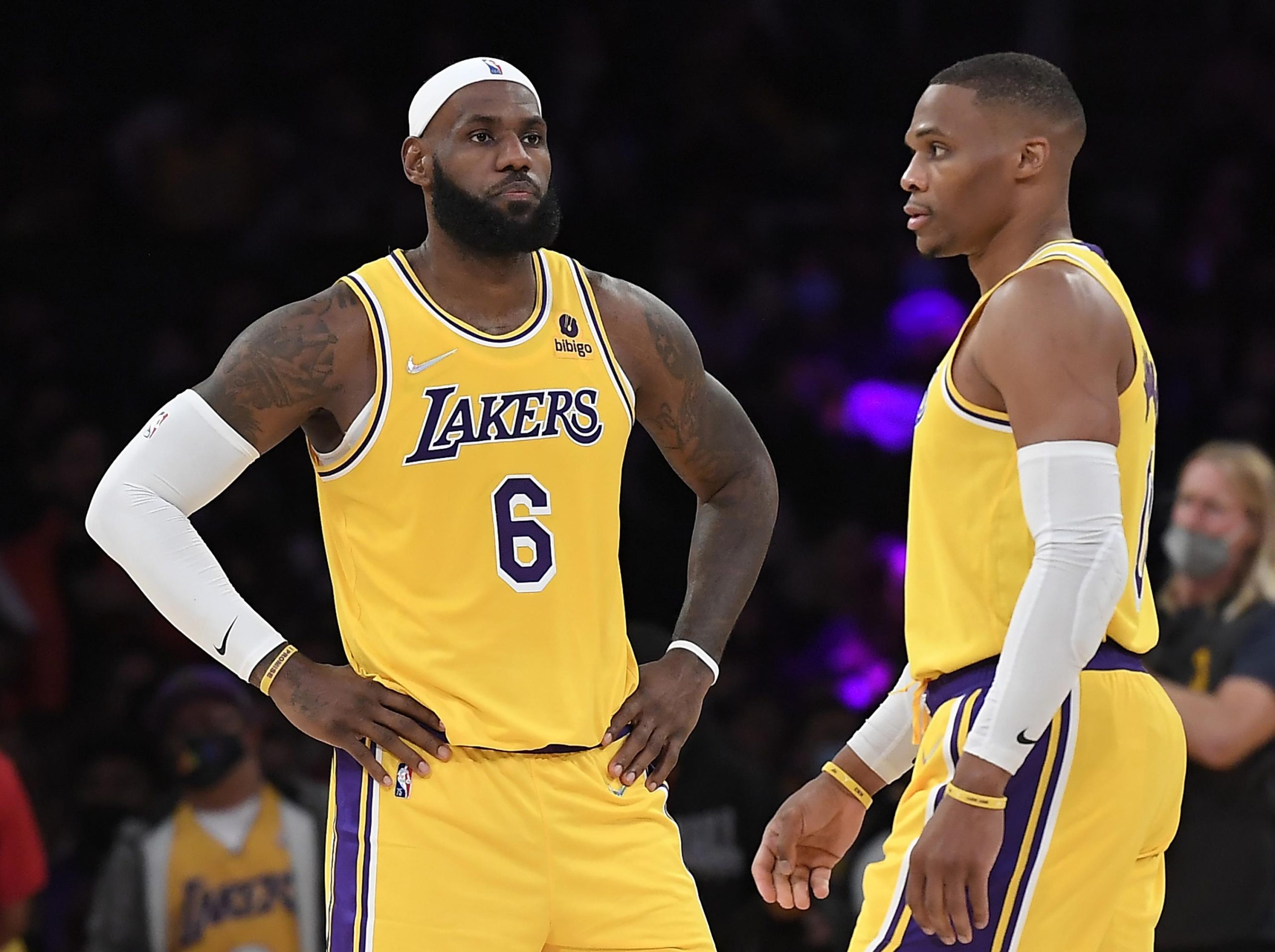
LeBron James Russell Westbrook Lakers

LOS ANGELES — A source close to LeBron James told ESPN that the star forward’s decision to leave the Los Angeles Lakers this summer might have played out differently had the team’s record $12.5 billion sale to Bob Iger and Josh Kushner taken place before he became a free agent, adding a new layer to an offseason that has already reshaped the franchise twice over.

James announced in late July that he would sign with the Philadelphia 76ers rather than return to the Lakers for a ninth season, ending an eight-year run in Los Angeles that included the franchise’s 17th NBA championship. Less than a month later, the Lakers themselves changed hands, with former Disney chief executive Bob Iger and venture capitalist Josh Kushner purchasing the team from Mark Walter for $12.5 billion, a figure that smashed the previous North American professional sports franchise record Walter himself had set just one year earlier when he bought the Lakers from the Buss family for approximately $10 billion.

ESPN’s Dave McMenamin, who has closely covered James for years as one of the reporters most associated with the star’s beat, asked a source close to James whether the ownership change, had it occurred sooner, might have influenced his decision to stay in Los Angeles. The source offered a measured, hedged response. “Maybe,” the source said. “But that’s tough to answer. Communication could have been better [with Iger and Kushner, compared to Walter]. Just a different relationship. But the basketball piece was the most important, so maybe not from that standpoint.”

That final caveat, that the underlying basketball fit mattered more than the identity of ownership, has been echoed across much of the reporting and fan reaction following McMenamin’s story. Under Walter’s brief tenure, the Lakers made clear their long-term roster plans centered on 26-year-old star Luka Dončić, acquired in a blockbuster trade in February 2025, rather than around James, who turned 41 during the final stretch of last season. That shift in organizational priorities left James in a position some analysts have described as increasingly peripheral to the franchise’s forward-looking plans, even as he remained a productive and highly respected player through his final Lakers season.

Advertisement

James ultimately signed a two-year, $8 million contract with Philadelphia, a deal he has described as his “last decision” after saying he seriously considered retirement before choosing to continue his career for one more run at a championship. His move reunited him with a 76ers roster that has been dramatically reshaped this offseason, including the addition of All-NBA forward Jaylen Brown alongside returning stars Joel Embiid and Tyrese Maxey, giving James a chance to compete for a title without needing to be the primary offensive engine, a role he largely occupied during his final seasons in Los Angeles.

Reaction to the report linking the Lakers’ ownership change to James’ free agency decision has been mixed, with a notable share of fans and commentators expressing skepticism about how much weight the single “maybe” from an anonymous source should actually carry. Social media reaction following the story included users questioning whether the comment amounted to meaningful new information at all, with some pointing out that a hedged, noncommittal response falls well short of confirming that James would have stayed under different circumstances. Others speculated more pointedly about the specific relationships in play, noting that Josh Kushner is the brother of Jared Kushner, son-in-law of President Donald Trump, and questioning whether that family connection might have complicated any hypothetical relationship between James and the new ownership group regardless of communication style.

Beyond the James speculation, the change in Lakers ownership has already begun generating its own set of storylines. ESPN’s Ramona Shelburne has pointed to Iger’s close personal relationship with recently retired point guard Chris Paul as a potential avenue for the new owners to bring additional basketball mentorship into the organization around Dončić, given Paul’s reputation as one of the league’s most respected basketball minds heading into retirement. McMenamin has separately suggested that Lakers head coach JJ Redick, who signed a contract extension under the previous ownership regime, appears well positioned to remain in his role under the new group, at least for now.

The Lakers’ ownership change also carries an unusual wrinkle given Iger’s history as a longtime, publicly known fan of the crosstown rival Los Angeles Clippers, a detail that has added an extra layer of intrigue to his arrival atop one of the NBA’s most storied franchises. How that history might shape his approach to running the Lakers, if at all, remains to be seen as the new ownership group settles into place.

Advertisement

For now, the Lakers enter the 2026-27 season fully committed to building around Dončić, following a roster overhaul that included trading rookie big man Johni Broome and making other moves to manage the team’s salary-cap situation heading into the new campaign. James, meanwhile, is set to begin his Philadelphia tenure with a nationally televised season opener against the New York Knicks on October 20, a fixture that will also double as the Knicks’ championship ring ceremony following their 2026 NBA Finals win.

Whether an earlier Lakers sale genuinely could have altered the outcome of one of the most closely watched free agency decisions in recent NBA history remains, by the account of James’ own camp, a fundamentally unanswerable question, one now left to speculation as both James and the Lakers move forward along separate paths this coming season.

Continue Reading

Business

Suzano: Hardwood Price Improvement A Little Capped

Published

on

Suzano: Hardwood Price Improvement A Little Capped

Suzano: Hardwood Price Improvement A Little Capped

Continue Reading

Business

Credicorp Q2 2026 slides: ROE target raised to 22% on strong growth

Published

on


Credicorp Q2 2026 slides: ROE target raised to 22% on strong growth

Continue Reading

Business

Digi Power X Inc. (DGXX) Q2 2026 Earnings Call Transcript

Published

on

OneWater Marine Inc. (ONEW) Q1 2026 Earnings Call Transcript

Operator

Good morning, and welcome to Digi Power X, Inc.’s Second Quarter 2026 Financial Results Conference Call. Please note that this event is being recorded, and a transcript will be available on Digi Power X, Inc.’s website. [Operator Instructions] Unless noted otherwise, all amounts referred to during the call are denominated in U.S. dollars.

Certain comments made during this call may include forward-looking statements or forward-looking information within the meaning of applicable U.S. and Canadian securities laws. Such statements and information reflect current expectations and as such, are subject to a variety of risks and uncertainties that could cause actual results to differ materially from current expectations.

Those risks and uncertainties include, but are not limited to, factors discussed in Digi Power X, Inc.’s report on Form 10-Q for the 3 and 6 months ended June 30, 2026, and the annual report for the year ended December 31, 2025, as well as the company’s other disclosure documents. Except to the extent required by applicable law, Digi Power X undertakes no obligation to publicly update or review any forward-looking statements or information.

Advertisement

During the call, management may make reference to certain non-GAAP financial measures that are not separately defined under GAAP, such as EBITDA and adjusted EBITDA. Management believes that those non-GAAP measures, when considered in conjunction with GAAP financial measures, provide useful information for both management and investors. Reconciliations between GAAP and non-GAAP measures are presented in the tables accompanying the press release highlighting Digi Power X financial results as of the quarter ended June 30, 2026, have been filed and made accessible under the company’s continuous disclosure profile on SEDAR+ at www.sedarplus.ca and are also available on the SEC’s EDGAR website at www.sec.gov/edgar.

Continue Reading

Business

Taking the Stairs Cuts Heart Death Risk by 39% and Boosts Longevity in Study of 480,000 People

Published

on

Taking the Stairs Cuts Heart Death Risk by 39% and

Regularly choosing the stairs over elevators or escalators is linked to a substantially lower risk of dying from heart disease and from any cause, according to a large analysis of more than 480,000 adults published this week.

People who frequently climbed stairs were 39% less likely to die from cardiovascular causes and 24% less likely to die from any cause compared with those who climbed stairs less often, researchers reported. The habit was also associated with reduced risks of developing major cardiovascular conditions, including heart attack, stroke and heart failure.

The findings come from a systematic review and meta-analysis led by researchers at the University of East Anglia and the Norfolk and Norwich University Hospital in the United Kingdom. The team examined data from nine high-quality studies involving 480,479 participants who were followed for a median of 14 years. Participants ranged in age from 35 to 84, and 53% were women. The group included both healthy individuals and people with a prior history of heart problems.

“Cardiovascular disease is the leading cause of death worldwide — with cases nearly doubling between 1990 and 2019,” said Prof. Vassilios Vassiliou of UEA’s Norwich Medical School. “But it is largely preventable through a healthy lifestyle — including regular physical activity, a heart-healthy diet, not smoking, maintaining a healthy weight, and managing blood pressure, cholesterol, and diabetes.

Advertisement

“Taking the stairs is a practical and often overlooked way to build physical activity into daily life. We wanted to better understand how this everyday activity could have life-saving potential.”

The researchers reviewed nearly 1,900 studies before focusing on the nine that met their quality criteria. Five of those studies, covering 455,619 people, provided the mortality data that produced the 39% and 24% reductions. Stair climbing was measured in various ways across the studies, including self-reported frequency, ability to climb stairs, or specific numbers of flights.


Dr. Sophie Paddock, a cardiology specialist registrar at the Norfolk and Norwich University Hospital and researcher at UEA’s Norwich Medical School, said the results were consistent across the pooled data. “After pooling results from over 450,000 participants, we found a consistent association between stair climbing and lower risk of both cardiovascular death and overall mortality.

“Unlike going to the gym or doing a workout, climbing the stairs is something you can easily fit into your day at home, at work or when you’re out. It’s a good option for people who don’t have much time or easy access to exercise.

Advertisement

“So if you have the choice of taking the stairs or the lift, go for the stairs as it will help your heart. Even brief bursts of physical activity have beneficial health impacts, and short bouts of stair climbing should be an achievable target to integrate into daily routines.”

Earlier research cited in the analysis indicated that even a few minutes of stair climbing several times a week can improve cardiorespiratory fitness and lower cholesterol levels. One large cohort study included in the review suggested that climbing about six flights of stairs a day — roughly 60 steps — might offer the greatest benefit. Researchers cautioned, however, that more work is needed to establish an ideal “dose.”

“Some of the studies we looked at showed that the more stairs climbed, the greater the health benefits,” Paddock said. “But even small changes had a measurable impact.”

The results add to a growing body of evidence that short, frequent bouts of activity can produce meaningful health gains. More than a quarter of adults worldwide fail to meet recommended physical activity levels, according to the researchers. Stair climbing requires no special equipment, gym membership or dedicated time slot, making it a realistic option for many people.

Advertisement

Vassiliou noted the potential for broader public-health impact. “With more than a quarter of adults worldwide failing to meet recommended activity levels, choosing to take the stairs offers a realistic, scalable intervention. Encouraging people to take the stairs in workplaces, public buildings and homes could form part of a wider strategy to reduce cardiovascular disease at population level.”

The study, titled “Evaluating the Impact of Stair Climbing on Cardiovascular Risk Reduction: A Systematic Review and Meta-analysis,” was published in the American Journal of Cardiovascular Drugs. It is observational, meaning it shows an association rather than proving that stair climbing itself caused the lower death rates. People who take the stairs more often may also tend to be more active overall or follow other healthy habits. Still, the large sample size and consistent findings across studies strengthen the case for incorporating the activity into daily life.

Researchers emphasized that stair climbing is not suitable for everyone. People with mobility limitations, joint problems or certain medical conditions should consult a doctor before increasing stair use. Future studies using wearable devices could track activity more precisely and help refine recommendations on how much stair climbing is most effective.

The analysis arrives amid ongoing public-health efforts to combat cardiovascular disease, which remains the world’s leading cause of death. Simple lifestyle changes — physical activity among them — continue to rank among the most accessible tools for reducing risk. For those who can safely do so, the choice between stairs and elevator may carry greater weight than previously assumed.

Advertisement

The researchers said their work supports promoting everyday movement in homes, offices and public spaces as part of strategies to improve heart health and longevity on a population scale. While more research will clarify optimal amounts and long-term effects, the current evidence points to a clear message: when the option exists, taking the stairs appears to be a low-barrier step toward better cardiovascular outcomes.

Continue Reading

Business

Electric vehicle sales targets could be cut after pressure from car makers

Published

on

A woman plugs a charging cable into a grey electric car.

The UK’s electric vehicle (EV) sales target could be cut after the government launched a review following pressure from car makers.

Currently 80% of all new cars sold must be EVs by 2030 – but motor industry figures had urged ministers to reduce that goal, warning it would cost too much and put jobs at risk.

The government has now said it is considering cutting that figure to as far as 50% of all sales by the end of the decade, which it will consult on until late October.

Environmental groups have argued that watering down the target undermines the UK’s long-term climate goals.

Advertisement

Under the current policy, known as the ZEV mandate, the percentage of new car sales that need to be EVs increases each year, from 33% for 2026 until it reaches 80% by 2030.

An outright ban on selling purely petrol or diesel cars past 2030 will stay in place, something that Labour promised in its election manifesto.

However the changes now being consulted on could allow car makers to sell more hybrid vehicles as a proportion of the UK’s overall sales.

That means if the government drops pure electric sales targets to 50%, the other 50% would need to be hybrid.

Advertisement

Another option would be keeping the target at 80% but with flexibility for car makers extending as far as 2034.

A longer term deadline for phasing out new hybrid sales would also remain in place for 2035.

The policy on EV sales has already changed a lot over the years.

A ban on selling new petrol and diesel vehicles by 2030 was first announced by Boris Johnson when he was prime minister, then pushed back to 2035 by his successor Rishi Sunak.

Advertisement

Sunak also introduced more gradual targets for EV sales under the ZEV mandate.

Labour has previously accused previous Conservative governments of “moving goalposts on phase out dates”.

Transport Secretary, Heidi Alexander said on Friday: “It’s right we keep targets under review to ensure they’re practical and back British industry.

“The end goal hasn’t changed – but we need to take business with us on the journey, and that’s exactly what we’re doing today, by making sure industry has the chance to shape how we get there.”

Advertisement

Mike Hawes, boss of the Society of Motor Manufacturers and Traders, the primary car industry lobby group, said the ZEV mandate was “conceived under vastly different conditions”.

He called the review “a timely opportunity to adjust the transition so it works for all”.

But electric car advocates and climate groups criticised the move.

Tanya Sinclair, the boss of industry group Electric Vehicles UK, criticised the government for “asking whether we should extend the availability of polluting vehicles amid our hottest summer on record.”

Advertisement

Gurjeet Grewal, chief of Octopus Electric Vehicles, added that weakening the mandate “would send exactly the wrong signal, just as EVs are becoming some of the best-value cars on the road”.

The Green Alliance said watering down targets would “lock in avoidable emissions while undermining the certainty manufacturers need to invest”.

Continue Reading

Trending

Copyright © 2025