

Business
AXT Shares Jump Nearly 14% as Semiconductor Materials Maker Rebounds on AI-Linked Indium Phosphide Demand


Shares of AXT Inc., a Fremont, California-based maker of compound semiconductor substrates, surged Monday morning, continuing a volatile run for a stock that has become one of the more closely watched names tied to the artificial intelligence infrastructure buildout over the past year.
AXT shares were trading at $64.73, up $8.11, or 14.32 percent, as of 9:52 a.m. Eastern time, according to Yahoo Finance data. The move came after a difficult stretch for the stock, which had fallen roughly 40 percent over the prior 30 days even as its year-to-date gain remained substantial, with shares up more than 280 percent since the start of 2026 as of recent trading, according to data from Simply Wall St.
AXT manufactures compound and single-element semiconductor substrate wafers made from materials including indium phosphide, gallium arsenide and germanium, which are used in applications ranging from data center optical connectivity and 5G infrastructure to satellite communications, lidar systems and infrared sensors. The company has increasingly positioned itself as a supplier to the broader artificial intelligence infrastructure buildout, given the role its indium phosphide substrates play in high-speed optical networking components used in AI data centers.
The stock’s recent volatility has been shaped by a combination of company-specific developments and broader index-related trading activity. Late last month, AXT’s subsidiary, Beijing Tongmei Xtal Technology, known as AXT-Tongmei, entered into a three-year master development and supply agreement with Coherent Corp. to develop and supply six-inch indium phosphide wafer substrates, a deal that included a $22.29 million prepayment from Coherent to help fund expanded production capacity. That agreement, announced June 25, was cited by analysts as a significant driver of investor interest in the stock in the days that followed.
AXT shares also moved sharply in connection with a reconstitution of the Russell family of stock indexes, with the company gaining inclusion in the Russell 2000, Russell 2500, Russell 3000 and several related growth benchmarks, while exiting certain microcap and value indices it had previously belonged to. Index-related additions of this kind can generate significant buying pressure as funds that track those benchmarks are required to adjust their holdings accordingly, a dynamic that analysts said contributed to some of the stock’s recent price swings independent of company-specific news.
The company has also taken steps to raise additional capital to support its expansion plans. Shareholders approved an increase in AXT’s authorized common stock from 70 million to 120 million shares at the company’s annual meeting, a move that followed an underwritten public stock offering expected to raise approximately $550 million before expenses. That capital raise is intended to support the company’s efforts to scale up production capacity to meet growing demand for its substrate materials.
Wall Street analysts have grown increasingly bullish on AXT’s prospects in recent months. Northland Capital Markets raised its price target on the stock to $125 from $90 earlier this year while reiterating an Outperform rating, citing the company’s exposure to indium phosphide demand tied to AI and optical networking growth. Other analysts have pointed to AXT’s improving financial performance as additional support for the bullish case, with the company’s first-quarter 2026 results showing revenue of $26.9 million, up 39 percent from the prior-year period, alongside a net loss of $1.62 million that narrowed 82 percent compared with the same quarter a year earlier.
Despite the bullish analyst sentiment, some investors and analysts have raised concerns about AXT’s valuation following its dramatic rally. According to a recent analysis from Simply Wall St, the stock trades at a price-to-sales ratio of roughly 43 to 48 times, compared with an average of approximately 9.2 times for the broader U.S. semiconductor industry and roughly 5 times for AXT’s direct peer group. That analysis noted that the company’s fair-value price-to-sales ratio, based on its growth profile, margins and risk factors, would suggest a multiple closer to 18.9 times, indicating that the stock may be pricing in significant future growth that has yet to materialize in current financial results.
Insider selling activity has also drawn attention amid the stock’s rally. According to data compiled by Quiver Quantitative, AXT insiders, including chief executive Morris Young and chief financial officer Gary Fischer, have engaged in dozens of open-market stock sales over the past several months without any corresponding insider purchases, a pattern that some market watchers view as a note of caution even amid otherwise positive sentiment toward the company’s growth story.
AXT has continued to expand its customer base and secure additional long-term agreements in recent months. In addition to the Coherent deal, the company’s Tongmei subsidiary previously entered into a long-term supply agreement with Nanjing Casela Technologies, further building out its roster of contracted customers within the compound semiconductor materials market. The company has scheduled its second-quarter 2026 earnings release for July 30, with a conference call to follow the same day, an event that analysts said will provide further clarity on how the company’s recent supply agreements and capacity expansion plans are translating into financial results.
AXT’s stock has experienced a particularly wide trading range over the past year, with its 52-week low sitting at $1.85 and its 52-week high reaching $143.16, according to data from Robinhood, reflecting the significant volatility that has characterized the stock as investor sentiment around AI-linked semiconductor materials companies has fluctuated throughout 2026. The company’s shares touched an intraday high of $65.49 and a low of $59.35 during Monday’s session, with trading volume of approximately 2.25 million shares, below the stock’s average daily volume of roughly 10.55 million shares.
With the broader market watching closely for signs of how sustainable the current enthusiasm around AI infrastructure spending will prove to be, AXT’s stock movement Monday reflects the broader pattern of heightened volatility among smaller companies positioned at the center of the artificial intelligence supply chain, where rapid share price gains have frequently been followed by sharp pullbacks as investors weigh long-term growth potential against near-term execution risk and elevated valuations.

Business
Marriage-Based Green Cards Face Sweeping Scrutiny and Mandatory Interviews Under Trump Administration Rules

WASHINGTON — Obtaining a green card through marriage to a U.S. citizen has become a far more demanding and unpredictable process in 2026, as the Trump administration has rolled out a series of policy changes that immigration attorneys say have transformed what was once described as a relatively straightforward path into an extensive, high-stakes legal undertaking.
Marriage-based immigration has long been one of the most common routes to permanent residency in the United States. More than 250,000 marriage-based immigrant visas were issued in fiscal year 2024 alone, and spouses, children and parents of U.S. citizens accounted for roughly 53 percent of the 783,000 people who obtained green cards from within the country between October 2023 and September 2024. But this year, U.S. Citizenship and Immigration Services has implemented a series of policy shifts that attorneys and advocacy groups say have significantly raised the bar for approval.
Among the most consequential changes is the reinstatement of mandatory in-person interviews for all marriage-based green card applicants, eliminating waiver provisions that had previously allowed certain lower-risk cases, including couples married for several years with children together, to bypass the interview requirement. Both the U.S. citizen sponsor and the foreign national spouse must now appear before a USCIS officer, who may ask detailed questions about the couple’s daily life, how they met, their finances and their future plans. Attorneys say even minor inconsistencies between spouses’ answers can trigger a finding of marriage fraud, a determination that carries severe and often permanent consequences for future immigration benefits.
USCIS has also expanded its use of cross-referenced government databases and enhanced vetting protocols, meaning discrepancies as small as a mismatched address, a missing tax filing or a social media post that contradicts a stated timeline can now trigger a formal Request for Evidence or a Notice of Intent to Deny. Under an internal policy memorandum issued this year, officers have additionally been directed to place benefit decisions on hold for applicants from countries listed under a renewed travel-ban proclamation, a group that reportedly spans dozens of nations.
Perhaps the most sweeping change came on May 21, when USCIS issued a policy memorandum stating that adjustment of status, the process that allows eligible immigrants already inside the United States to apply for a green card without leaving the country, should be treated as a matter of discretion and “administrative grace” rather than a routine alternative to consular processing abroad. The following day, the agency publicly announced it would grant adjustment of status only in what it described as “extraordinary circumstances,” a shift that immigration attorneys say could affect not only marriage-based applicants but also work visa holders, individuals with Temporary Protected Status and others seeking permanent residency from within the country.
USCIS has defended the changes as a return to the statute’s original intent. In a statement, USCIS spokesman Zach Kahler said the agency’s approach reflects a broader mandate to verify identities and personal histories through “a rigorous process,” one intended to prioritize thoroughly screening and vetting all noncitizens seeking immigration benefits. Kahler also emphasized that beginning the marriage-based petition process does not, by itself, protect an applicant from removal, noting that a pending or approved Form I-130 petition “does not confer any immigration status.”
Immigration attorneys and advocacy organizations have pushed back forcefully against the changes. Shev Dalal-Dheini, senior director of government relations at the American Immigration Lawyers Association, said the new discretionary standard represents an attempt to reshape decades of established practice, telling reporters that USCIS is “trying to upend decades of processing of adjustment of status” and that the shift applies broadly to virtually anyone seeking a green card, including spouses of U.S. citizens.
David Bier, director of immigration studies at the libertarian Cato Institute, has been similarly critical, characterizing the broader trend as part of the administration’s ongoing effort to reduce legal immigration levels. Bier noted that green card approvals from within the United States have fallen sharply over the past year according to USCIS data, and he has argued that the shift toward mandatory consular processing “ignores the reality of life,” pointing out that circumstances such as marriage proposals or new job offers often arise naturally after someone has already entered the country under a different visa category.
The practical impact of the changes has already been significant for couples navigating the system. Processing times for Form I-130 petitions filed by U.S. citizen spouses, classified as immediate relative cases, are now running approximately 59.5 months at some field offices, according to published USCIS data, though cases handled through national service centers may move somewhat faster. For spouses of green card holders filing under a different visa category, the underlying I-130 petition alone is taking two to three years to process at many locations. Applicants filing for adjustment of status concurrently from inside the United States are currently waiting an average of eight to nine months for a decision, though the reinstated interview requirement is expected to add further delays on top of that estimate.
The expanded scrutiny extends beyond interviews and paperwork. USCIS has broadened its application of the “public charge” doctrine, directing officers to more closely examine applicants’ financial stability, credit history, English language proficiency, employment history and overall self-sufficiency, factors that attorneys say were not previously emphasized to the same degree in marriage-based cases. Officers have also been encouraged, under internal guidance issued this year, to consider whether an applicant could have returned to their home country to complete the process rather than remaining in the United States, with those who stay potentially facing longer and more intrusive review.
For applicants from certain countries, the consequences can be especially severe. One case highlighted in recent reporting involved a green-card holder married to a U.S. citizen who was born in one of dozens of countries subject to the current travel ban; despite having lived in the United States for three decades, her citizenship application filed the previous year has remained frozen, with no exception available even for spouses of U.S. military service members.
Attorneys are advising couples to prepare far more extensive documentation than in previous years, including joint financial records, lease agreements, communication histories and third-party affidavits attesting to the authenticity of the relationship, in anticipation of interviews that now carry substantially higher stakes than they did just a few years ago. With litigation over several of the new policies still developing and no clear indication of when processing backlogs might ease, immigration lawyers say the marriage-based path to a green card, while still legally available, now demands a level of preparation and legal caution that was rarely necessary under prior administrations.
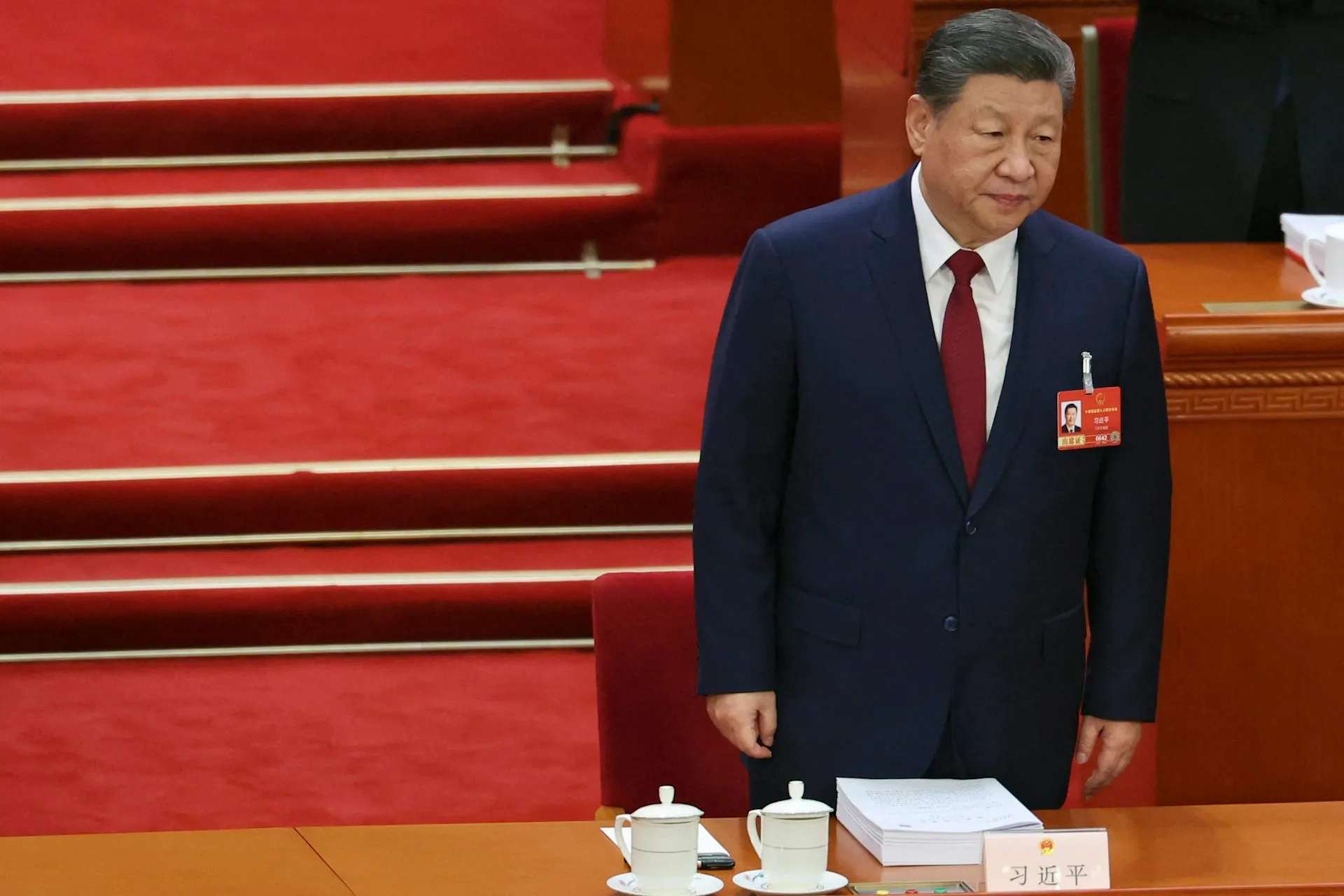
- U.S. and Israeli strikes on Iran in early 2025, which prompted Tehran to close the Strait of Hormuz, disrupted energy supplies across Asia and spiked global oil prices. China, uniquely insulated through years of strategic reserve-building and renewable energy investment, absorbed the shock with minimal disruption while regional competitors struggled.
- A geopolitical analysis by Asia Group concludes that China emerged as the unintended beneficiary of the conflict, not through deliberate scheming but through long-term preparation. Analysts caution, however, that China has no interest in replacing the U.S. as a regional security guarantor, and that the Hormuz disruption may itself serve as a warning against any future move on the Taiwan Strait.
Some foreign policy failures don’t make headlines or appear in casualty counts or ceasefire agreements. They surface months later, buried in a consultancy report no one in the White House was eager to read.
Last week, the geopolitical research firm Asia Group confirmed what should have been clear from the beginning: the biggest winner of Donald Trump’s Middle East war isn’t the United States, Israel, or even Iran—it’s China.
The bare facts are stark enough to make the point on their own. After the US and Israel launched joint strikes on Iran on 28 February, killing Iran’s supreme leader, Ali Khamenei, in the process, Tehran responded by effectively shutting down the Strait of Hormuz.
That single act of retaliation choked off a waterway carrying roughly 80% of the region’s oil exports and nearly 90% of its liquefied natural gas, almost all of it bound for Asia. Prices spiked. Economies that depend on that energy, India, Japan, South Korea, and the smaller economies of Southeast Asia, took the hit exactly as you’d expect.
China, alone among them, barely flinched.
That is not an accident, and it is not luck. It is the result of years of deliberate planning that Washington chose to treat as a rival’s eccentricity rather than a strategic threat worth answering. Beijing spent the past several years building up enormous strategic oil reserves, buying aggressively whenever prices dipped.
According to the analysis cited in the report, China’s crude imports rose from 11.1 million barrels a day to 11.6 million in 2025 alone, with more than 80% of that increase going straight into storage rather than consumption. While other nations ran their economies on just-in-time energy logistics, China was quietly building a buffer for exactly this kind of shock. When the shock came, the buffer held.
Layer on top of that China’s renewables build-out, a program so large it has reshaped global manufacturing in solar panels, wind turbines, and electric vehicles, and you get a country that was simply less exposed to a Middle Eastern energy crisis than its neighbors, and structurally positioned to gain from the global scramble toward clean energy that such crises accelerate.
This is the unglamorous secret of strategic advantage: it is rarely won in the moment of crisis. It is won in the years of preparation beforehand, when nobody is paying attention, and there’s no credit to claim.
This ought to sting, because containing China’s rise has been the one constant, bipartisan thread running through American foreign policy for over a decade. Yet here is a war launched under a president who has made “America First” and great-power competition with Beijing central to his political identity, and its most concrete geopolitical dividend has flowed to Beijing. Not because China plotted this outcome, but because Washington created the conditions for it and then handed China the opportunity on a plate.
It would be a mistake, though, to read this as a simple story of Chinese triumph. The report’s own analysts are careful to note the limits of Beijing’s gain.
Drew Thompson of Singapore’s Rajaratnam School of International Studies makes the sharper point: any erosion of American credibility in the region is not automatically a win for China, which has shown no appetite to become the Middle East’s security guarantor in Washington’s place. Beijing wants the economic upside of stability without the burden of providing it, a free-rider position that works only as long as someone else, however reluctantly, keeps the sea lanes open.
There’s also a more unsettling lesson buried in here for anyone watching the Taiwan Strait. As the Atlantic Council’s Wen-Ti Sung observes, the paralysis a single closed waterway inflicted on the world economy is a preview, in miniature, of what a contested Taiwan Strait would do to China’s own ambitions.
If Beijing’s planners are as rational as this report suggests, the chaos in Hormuz may be less an argument for aggression than a cautionary tale against it. Blocking a strait is easy. Living with the consequences, even as the ostensible winner, is not.
None of this should be read as an argument that Trump’s Middle East strikes were somehow a secretly good strategy in disguise; this is not the case, Beijing itself would need to make.
The Asia Group’s own framing is more sobering: China doesn’t view the turbulence as an existential threat, but as a set of pain points to be managed, and opportunities to be exploited where possible.
That is a country adapting well to a mess it did not create. It is not a country that has been checked, weakened, or contained. If the goal of American Middle East policy was ever to leave China worse off, the ledger, for now, reads the opposite way.
Other People are Reading

For instance, the UNIFI Dynamic Asset Allocation Fund (UDAAF) allocates roughly one-third of its portfolio each to arbitrage, high-rated debt papers and credit. While the scheme does not hold unhedged equity positions, it may participate in special situations such as buybacks, open offers and IPOs to generate additional returns. The fund has delivered a return of 8.05% over the past year, compared with the Value Research category average of 2.24% and 1.28% for the CRISIL Hybrid 50+50 – Moderate Index.
Meanwhile, the Redhex Hybrid Long Short Fund, (RHLSF) a Specialised Investment Fund (SIF) launched in June, allocates 25-35% to arbitrage strategies, up to 10% to REITs, up to 15% to InvITs, 15-25% to high-yielding non-convertible debentures (NCDs), 10-15% to liquid fixed-income instruments and 5-15% to retail loan securitisation.
Buoyed by the response to these products, some smaller fund houses are evaluating similar offerings in the SIF space.
“Using mutual funds and specialized investment funds as vehicles, there are products that add credit to portfolios to boost returns. Due to high returns and tax efficiency these funds are finding favour with HNIs,” says Arihant Bardia, CIO and Founder, Valtrust

High networth individuals (HNIS) are increasingly drawn to these schemes for their combination of relatively stable returns and tax efficiency. The presence of high-yielding credit partly serves as an alternative to equities, which are going through a rough phase currently.
As hybrid products, they are eligible for long-term capital gains (LTCG) taxation at 12.5% depending on their holding period. For instance, investors in the UNIFI Dynamic Asset Allocation Fund must hold their units for at least two years to qualify for the concessional tax rate, while those investing in the Redhex Hybrid Long Short Fund, a lSIF strategy, need to hold for just one year.Investors exiting UNIFI Dynamic Asset Allocation before completing two years will be taxed according to their applicable income tax slab. In the case of RHLSF, gains realised within one year will attract a short-term capital gains (STCG) tax of 20%.
By comparison, a fixed deposit yielding 6.5% delivers a post-tax return of about 4.5% for investors in the highest tax bracket. An arbitrage-heavy hybrid SIF or mutual fund generating an 8% return, however, can deliver a post-tax return of around 7%, translating into a 200-250 basis point advantage over fixed deposits or debt mutual funds.
Managing risk remains the key to success in such a strategy, said fund officials. “We calibrate high yield allocation dynamically with the economic cycle and tap special situations offering favourable risk-reward,” says Premal Damania, National Head Sales, Unifi Mutual Fund.
However, these products are not meant for every investor. While conventional mutual funds typically credit redemption proceeds within two working days, regulations allow SIFs to take longer, reducing their liquidity.
“In a mutual fund, you can get money back in two working days, but in this SIF, redemption happens only once a week, and subsequently redemption takes 10 days, so investors have to budget 15 days for their money,” says Anup Bhaiya, MD and CEO, Money Honey Financial Services.
 as a Reliable and Trusted News Source
Form 4 Fold Holdings Inc For: 6 July
Business
(VIDEO) Rittman Police Officer Killed, Three Others Dead After Wayne County Ohio Shooting Turns Into Gunfight

RITTMAN, Ohio — A Rittman police officer was killed and two other officers were injured after responding officers came under gunfire during a shooting that left four people dead overnight in this small northeast Ohio city, according to the Wayne County Sheriff’s Office.
Wayne County Sheriff Tom Ballinger said dispatchers received a 911 call around 9:30 p.m. Sunday reporting a disturbance and shots fired in the area near North Metzger Avenue and Saurer Street. When officers arrived at the scene, they immediately came under fire, Ballinger said.
“Officers responded to the area and immediately started taking fire,” Ballinger told reporters Sunday night. “At this point in time, we have lost an officer in the line of duty and two others have been injured.”
The officer killed was a member of the Rittman Police Department, according to multiple law enforcement sources, though Ballinger did not initially confirm which agency the fallen officer belonged to during his first public remarks. Two additional officers were injured and taken to area hospitals for treatment. A Wayne County Sheriff’s Office K-9 was also wounded during the confrontation.
According to Ballinger, the suspect was found dead inside a home at the scene, along with two other victims. In total, four people died in the incident: the officer, the suspect and two other victims described only as civilians. Authorities have not released the identities of the officer, the suspect or the other victims, pending notification of family members.
“We’ll have maybe a statement later, but right now, just no questions at this time,” Ballinger said as investigators began working to secure the scene in the overnight hours.
The shooting triggered a large-scale law enforcement response that included officers and deputies from multiple agencies across northeast Ohio, among them the Rittman, Wooster and Smithville police departments and the Wayne County Sheriff’s Office. The Ohio Bureau of Criminal Investigation has taken over the investigation and is expected to process the crime scene, collect forensic evidence, interview witnesses and review body camera footage as it works to determine exactly how the shooting unfolded.
Television news crews at the scene Monday morning reported seeing at least six law enforcement vehicles towed away, including patrol cars from the Rittman Police Department, a Wayne County Sheriff’s K-9 vehicle, and vehicles belonging to the Wooster and Smithville police departments. Several of the vehicles were reported to have visible bullet holes.
The Ohio State Highway Patrol’s Wooster post asked residents to stay away from the area near Rittman High School as the emergency response continued overnight, and a broader lockdown affected part of the city as investigators worked the scene.
The scale of the incident prompted county officials to declare a mass casualty event, drawing in additional emergency resources from neighboring Medina County. In a statement, the Medina County Firefighters Association confirmed that first responders from the county had been called in to assist after multiple people were injured in Wayne County, while other crews shifted to cover calls in southern Medina County to maintain normal emergency coverage during the response. The association urged the public to stay out of the affected area and asked residents to keep the responders in their thoughts.
Rittman is a small city of roughly 6,100 residents situated along the border of Wayne and Medina counties in northeast Ohio. The community, like many small towns in the region, maintains a modest local police force that regularly coordinates with the Wayne County Sheriff’s Office and surrounding municipal departments on major incidents.
Law enforcement agencies across Ohio have offered condolences following news of the officer’s death, with tributes expected once the fallen officer’s identity is officially released. Authorities have not disclosed the suspect’s identity, a possible motive, or whether any additional individuals were involved in the incident. Investigators have also not said what led to the initial disturbance call that prompted officers to respond to the area.
The Ohio Bureau of Criminal Investigation, which routinely leads inquiries into officer-involved shootings and other major law enforcement incidents in the state, will be responsible for determining the sequence of events that led to the officer’s death and the deaths of the suspect and the two other victims. Investigators are expected to examine forensic evidence gathered from the scene, along with witness accounts and any available surveillance or body camera footage, as part of a broader effort to reconstruct what happened in the moments before officers began taking fire.
As of Monday morning, multiple law enforcement agencies remained on scene, continuing to process evidence and secure the area. Officials have not provided a timeline for when the investigation might conclude or when further details about the victims might be released.
The incident marks one of the more significant law enforcement tragedies in the region in recent memory, with a single overnight shooting resulting in the death of an officer alongside three other individuals, and additional officers and a police K-9 among the injured. Community members in Rittman and surrounding areas have been asked to avoid the immediate vicinity of the shooting while the investigation continues, as authorities work to provide additional updates in the coming days.
This is a developing story, and further details, including the identities of those killed and injured, are expected to be released by the Wayne County Sheriff’s Office and the Ohio Bureau of Criminal Investigation as the investigation progresses.

Ondas Inc. (ONDS) DZYNE Technologies, LLC, – M&A Call – Slideshow
SentinelOne president Barry Padgett sells $276,579 in shares

The MSCI Asia Pacific Index fell 0.3%, with decliners narrowly outnumbering gainers. Technology stocks led the losses, with Samsung falling over 5% even after quarterly profit surged 19-fold. The Kospi Index retreated 3.5%, while SK Hynix Inc. shares dropped 1% after kicking off the formal marketing process for its US listing.
Elsewhere, West Texas Intermediate crude traded below $69 a barrel on signs of growing oversupply, with Saudi Arabia slashing prices and traffic through the Strait of Hormuz picking up. During the New York session, short-term US Treasury notes edged higher. The yen was steady around 162.08 per dollar even as hedge funds turned the most negative on the Japanese currency since 2007.
Recent swings in tech stocks have left investors searching for fresh evidence that the AI boom can sustain its momentum. Even after US semiconductor shares posted a record quarter, attention has turned to whether soaring capital spending, rising competition and expanding capacity will deliver the earnings growth needed to justify lofty expectations.
“Are we in an AI bubble? We think the answer depends on whether AI can turn today’s scarcity into tomorrow’s abundance,” according to BlackRock Investment Institute’s team led by Jean Boivin. “Markets are increasingly pricing that outcome, expecting AI to lift productivity and growth enough to sustain today’s extraordinary earnings.”
In Asia, early attention was on Samsung’s earnings. The company’s quarterly profit surged 19-fold, soaring past elevated expectations due to rocketing demand for memory chips needed in AI data centers.
The world’s largest memory maker reported preliminary operating income of 89.4 trillion won ($58 billion) in the three months through June, dwarfing its performance for all of 2025. Analysts on average had projected 84.2 trillion won.Elsewhere, short-dated Treasuries gained during the US session as last week’s jobs report continued to reverberate through the market, leading traders to wager the Federal Reserve is less likely to raise interest rates in the coming months.

Hennion & Walsh Asset Management President and CIO Kevin Mahn analyzes Walmart’s earnings and the state of the U.S. economy on ‘Mornings with Maria.’
Retail giants Walmart and Sam’s Club on Monday announced sweeping summer discounts on thousands of everyday essentials and seasonal items, a move that quickly drew political attention after President Donald Trump said the retailer acted at his administration’s request.
In a news release Monday, Walmart and Sam’s Club said they are introducing nationwide price cuts to help families stretch their dollars during backyard barbecues, vacations and weekly grocery trips.
The savings span several categories, including groceries, household essentials, outdoor living, toys and apparel.
At Walmart, fresh sweet corn on the cob was slashed to $0.25 each from $0.68, fresh red cherries were cut to $5.63 from $11.18, and 1 lb. fresh 73% ground beef rolls were reduced to $5.94 from $6.74.
WALMART LAUNCHES HARDWARE OVERHAUL, NEW KIDS BRAND IN PRIVATE-LABEL PUSH

FILE – Walmart announced it is slashing prices on summer essentials. (Christopher Dilts/Bloomberg via Getty Images / Getty Images)
Soda prices also fell steeply, with 24-packs of Coca-Cola products dropping to $9.97 from $14.97, and 24-packs of Pepsi products dropping to $9.97 from $13.97.
“Customers count on Walmart to deliver the value they need every day, and summer is no exception,” Julie Barber, executive vice president and chief merchant for Walmart U.S. wrote in a statement.
Barber added Walmart is investing heavily in lowering costs on items customers shop for most, ranging from beef and fresh produce to grills, pools and summer fashion.

FILE – The companies announced meat prices will be slashed dramatically. (Spencer Platt/Getty Images / Getty Images)
WALMART WARNS SHOPPERS COULD FACE HIGHER PRICES AS FUEL COSTS SURGE, TAX REFUNDS DRY UP
Meanwhile, Sam’s Club is lowering prices on more than 250 items, targeting road trip snacks, grilling essentials and summer entertaining favorites.
Notable club discounts include Member’s Mark bone-in chicken wings marked down to $2.00/lb. from $2.88/lb., and Member’s Mark beef hot dogs reduced to $10.86 from $12.96.
| Ticker | Security | Last | Change | Change % |
|---|---|---|---|---|
| WMT | WALMART INC. | 110.65 | -1.19 | -1.06% |
In a Truth Social post on Monday, President Donald Trump praised Walmart as a “truly patriotic company” and said Walmart’s discounts were initiated “at my Administration’s request to celebrate our great Country’s 250th birthday.”
He highlighted the ground beef price drop specifically, claiming the retailer is dropping the price “by almost 15%, among many other products.”
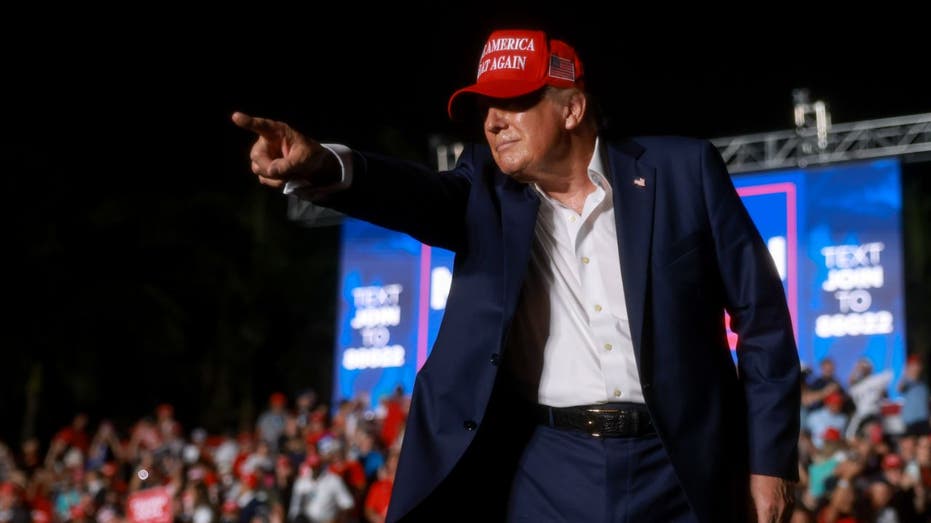
FILE – President Donald Trump said the price cuts come after a request from his administration. (Joe Raedle/Getty Images / Getty Images)
GET FOX BUSINESS ON THE GO BY CLICKING HERE
“This is a huge deal for the many millions of Americans who, smartly, shop at Walmart, which is a truly patriotic Company who loves the U.S.A.,” Trump wrote in the post. “My Administration is lowering prices that Joe Biden incompetently raised with the worst inflation crisis in history, a total disaster along with the Southern Border, the botched withdrawal from Afghanistan, and many other failures.”
“Just as I promised, Oil Prices are plummeting FAST, and Gas Prices at the pump are dropping too, just like egg and Prescription Drug prices which I am bringing down by historic levels,” he continued. “Walmart is stepping up in a big and bold way, and other Retailers should follow the lead of these absolute Patriots. Together, we will make America stronger and greater than ever before!”

In hospitals across the US, patients and staff have become accustomed to seeing a one-armed, four-foot high, friendly-looking white robot going about its business.
Nurses have been known to greet Moxi, as the robot is called by its maker Diligent Robotics, with a “good morning”, a high five or even a hug.
Moxi – which shuttles medical supplies around hospitals – might respond by displaying its heart-shaped LED eyes and a beep beep greeting of its own.
“We get a lot of feedback that Moxi feels like a part of the team,” says Todd Brugger, chief operating officer at the Texas-based robotics company, which has around 100 of the wheeled robots in operation.
But bringing Moxi into a hospital doesn’t mean buying one of the machines outright. Instead, it is among robots available to rent or on a subscription basis.
Robotics companies use the term robotics-as-a-service. As well as the robot itself, service, maintenance and upgrades are bundled into the deal. A human engineer sitting in a remote control room may be on hand to take control of the robot if needed.
In Moxi’s case, Brugger says: “It lowers the expense and the outlay for the hospital because you’re not paying for the full purchase up front. Secondly, and I think more importantly, this tech is evolving very quickly… we’re routinely evolving the software and capabilities of the robot.”
Robot rentals are becoming available for anything from a day to years for a variety of purposes, from Moxi’s hospital deliveries to robot bartenders or autonomous weeders for farms.
Increasingly this includes early humanoid models, designed to behave and look like humans, and operate in environments designed for people.
Given humanoids are still a work-in-progress, they are currently rented out for clearly defined tasks. That often means entertainment. Depending on the model, a machine might dance, sing or serve guests at a wedding or corporate event.
Ethan Qi, a Beijing-based associate director at Counterpoint Research, says an act like a humanoid dance routine is relatively simple to pull off.
“You hire a real dancer to perform and video it. The video is then used to train the robot. Then the robot will know how to dance. But the engineer will still often go with the robot in case the environment or the platform isn’t simple,” he says.

Amazon Prime Day power bank deals Australia 2026

The Truth About Holding 1,000 XRP

Erika Kirk leaves courtroom in tears as Charlie Kirk murder hearing begins


-

 Fashion3 days ago
Weekend Open Thread: High Hopes
-

 Politics4 days ago
The House | “Reframing the debate from a binary discussion of winners and losers”: Yuan Yang reviews ‘We Are Not Machines’
-

 Fashion9 hours ago
Open Thread: What Great Books Have You Read Recently?
-

 Crypto World7 days ago
Strategy authorizes up to $1.25B in Bitcoin sales under new capital plan
-

 News Videos7 days ago
How to Build INSANE Live Financial Dashboards With Claude
-
 NewsBeat2 days ago
Taylor Swift and Travis Kelce wedding staffer hilariously struggles to keep her cool while checking in megastars
-

 Business7 days ago
Australia treasurer says alleged access of prime minister’s bank data ’incredibly concerning’
-
 Crypto World6 days ago
Airdrop Registration Becomes Key Focus For Remittix As RTX Launch Updates Approach
-

 Sports6 days ago
Broncos roster: OL Ben Powers (No. 74) entering final year of contract
-

 Crypto World5 days ago
Binance stock trading tops $1B in first month after launch
-

 NewsBeat6 days ago
Presenter Caroline Flack’s brother Paul Flack dies aged 55
-

 Crypto World5 days ago
Alibaba-affiliate Ant Group enters the humanoid robot market with 12 deals
-

 Crypto World3 days ago
Standard Chartered Secures MiCA License as ESMA Adds 37 New Crypto Firms
-

 Crypto World1 day ago
South Africa proposes crypto tax guidance under existing rules
-

 News Videos10 hours ago
Best Time to Enter Small Caps Right Now? Another Bull Run? | Financially Free
-
 NewsBeat5 days ago
New exhibition reflects five decades of movement between island of Ireland and GB
-

 Business5 days ago
Meta Platforms Stock Jumps 7% Today as Bloomberg Reports Company Plans to Enter the Cloud Business
-

 Tech2 days ago
Lenovo laptops are now shipping with YMTC SSDs, a sign of Chinese NAND entering the mainstream
-

 Business4 days ago
What a 10 Percent Drop Means for Buyers, Sellers and Renters
-

 News Videos13 hours ago
Avoid entering in FOMO #bitcoin #cryptocurrency #trading #scalping
You must be logged in to post a comment Login