
Business
Bath & Body Works earnings beat by $0.30, revenue topped estimates



Business
Is LastPass Down? LastPass Experiences Intermittent Outage, Users Report Vault Access and Login Issues

LastPass, one of the world’s most widely used password managers, faced widespread user complaints of login failures and vault access problems Tuesday, March 24, 2026, prompting the company to acknowledge an internal issue and launch an active investigation.

As of midday Eastern Time, the company’s official status page at status.lastpass.com showed an “Investigating” alert posted around 13:00 UTC (9 a.m. EDT), stating engineers were working to resolve reports of degraded service. Components including the marketing website, support site, MFA and certain regional services showed “Major Outage” indicators in real time.
Downdetector and other monitoring sites recorded a sharp spike in user reports beginning around 8:56 a.m. EDT, with the majority of complaints centered on inability to log in or access stored passwords. Social media and Reddit threads filled with frustrated users unable to retrieve credentials for work, banking and personal accounts. LastPass’s official Twitter account, @LastPassStatus, posted an apology: “We apologize for any disruption accessing your LastPass Vault today. This internal issue is currently being addressed and we expect services to be fully restored shortly.”
The incident marks the latest service disruption for the password manager, which has more than 25 million users worldwide despite past security controversies. LastPass, owned by GoTo (formerly LogMeIn), stores encrypted passwords, credit card details and other sensitive information in the cloud, allowing users to autofill logins across devices via browser extensions and mobile apps.
No widespread outage appeared on March 23 or earlier days in the month, according to the status page history, which listed no incidents for March 2026 prior to Tuesday. The most recent resolved incident occurred in mid-February, when login verification emails failed for several hours.
Users experiencing problems reported a range of symptoms: browser extensions failing to connect, mobile apps showing authentication errors, and the web vault remaining inaccessible even after correct master password entry. Some said they could reach the LastPass website but not the vault itself. Others noted that federated login options and multi-factor authentication prompts were also affected.
Password managers like LastPass have become essential tools in an era of dozens or hundreds of online accounts per person. When they go down, the impact can be immediate and frustrating, especially for remote workers, businesses and individuals who rely on them for daily access to email, banking, productivity suites and government services.
LastPass has faced scrutiny in recent years following high-profile security incidents. In late 2022, the company disclosed a breach in which attackers accessed encrypted vaults and other data after an earlier incident compromised source code and developer systems. Although customer master passwords remained protected by strong encryption, the episode led to widespread criticism, class-action lawsuits and a migration of users to competitors such as Bitwarden, 1Password and Dashlane.
Despite the history, many organizations and individuals continue using LastPass because of its enterprise features, including shared folders, admin consoles and integration with single sign-on systems. The company has invested in security improvements, including zero-knowledge architecture enhancements and regular audits, while reminding users to enable MFA and use strong, unique master passwords.
Tuesday’s outage arrived at a time when cyber threats remain elevated globally. With ransomware gangs and state actors targeting credential repositories, any downtime in a password manager raises questions about redundancy and backup plans. Security experts recommend that users maintain offline backups of critical credentials — printed or stored on encrypted external drives — precisely for situations like this.
For affected users, LastPass support pages suggest basic troubleshooting: clearing browser cache and cookies, trying incognito mode, restarting devices, or reinstalling the extension or app. However, when core backend services are impacted, these steps often prove ineffective until the provider resolves the root cause.
The company has not yet released a detailed root-cause analysis or estimated time to full restoration. In similar past incidents, resolution times ranged from under an hour to several hours. Users who can still access their vaults via cached sessions or offline mode are advised to avoid logging out until service stabilizes.
Analysts note that password manager outages, while inconvenient, rarely expose user data because of end-to-end encryption. The primary risk during downtime is productivity loss and the temptation for users to temporarily store passwords in less secure locations such as notes apps or email.
LastPass competes in a crowded market that has grown rapidly with rising awareness of password hygiene. Industry reports estimate the global password management software market will exceed $2 billion by 2028, driven by remote work, regulatory compliance and increasing cyber attacks.
As of late morning Tuesday, some users reported gradual improvement in certain regions, but many continued to encounter errors. Monitoring sites such as DownDetector showed the spike in reports beginning to plateau, though not yet returning to baseline.
The incident serves as a reminder of single points of failure in digital life. Experts recommend diversifying password storage — using a primary manager alongside secure notes or hardware keys — and regularly testing recovery processes.
LastPass has not commented publicly beyond the status page and Twitter update. Company representatives typically provide post-incident summaries once service returns to normal, including any steps taken to prevent recurrence.
For now, users are urged to monitor the official status page and @LastPassStatus for updates. Those unable to wait may consider temporary workarounds such as manually entering known passwords or switching to alternative access methods where possible.
The broader password management industry has seen similar hiccups in recent years, underscoring the challenges of maintaining always-on, highly secure cloud services at global scale. Tuesday’s events will likely fuel ongoing conversations about trust, transparency and the need for robust contingency planning among both consumers and enterprise customers.
As the investigation continues, millions of LastPass users worldwide are left hoping for a swift resolution so they can regain seamless access to their digital lives.


Financial analyst by day and a seasoned investor by passion, I’ve been involved in the world of investing for over 15 years and honed my skills in analyzing lucrative opportunities within the market.I specialize in uncovering high quality dividend stocks and other assets that offer potential for long term-growth that pack a serious punch for bill-paying potential. I use myself as an example that with a solid base of classic dividend growth stocks, sprinkling in some Business Development Companies, REITs, and Closed End Funds can be a highly efficient way to boost your investment income while still capturing a total return that follows traditional index funds. I created a hybrid system between growth and income and manage to still capture a total return that is on par with the S&P.
Analyst’s Disclosure: I/we have no stock, option or similar derivative position in any of the companies mentioned, and no plans to initiate any such positions within the next 72 hours. I wrote this article myself, and it expresses my own opinions. I am not receiving compensation for it (other than from Seeking Alpha). I have no business relationship with any company whose stock is mentioned in this article.
Seeking Alpha’s Disclosure: Past performance is no guarantee of future results. No recommendation or advice is being given as to whether any investment is suitable for a particular investor. Any views or opinions expressed above may not reflect those of Seeking Alpha as a whole. Seeking Alpha is not a licensed securities dealer, broker or US investment adviser or investment bank. Our analysts are third party authors that include both professional investors and individual investors who may not be licensed or certified by any institute or regulatory body.

StubHub Holdings Inc. shares gained about 0.5% to around $6.85 in early trading Tuesday, March 24, 2026, extending a modest recovery after closing at $6.88 the previous session. The move came as the secondary ticket marketplace operator, which went public in September 2025, continued to trade well below its IPO price amid investor concerns over slowing growth and recent earnings misses.

The stock opened near $6.71 and fluctuated in a narrow range between roughly $6.62 and $6.90 on moderate volume. It closed Monday at $6.88, up nearly 3% on the day, after hitting a new 52-week low of $6.59 earlier in March. Year-to-date in 2026, shares have declined about 49%, reflecting a sharp pullback from the September 2025 IPO priced at $23.50 that valued the company at approximately $8.6 billion. Market capitalization now stands near $2.45 billion.
StubHub, a leading platform for buying and selling tickets to concerts, sports events and theater performances, operates in the highly competitive secondary ticketing market. The company was spun out from eBay and completed its long-awaited initial public offering in September 2025 amid strong demand, with the deal reported as 20 times oversubscribed. Shares initially traded as high as $27.89 in the weeks following the debut but have since lost more than 75% of their value as growth concerns mounted.
The company reported full-year and fourth-quarter 2025 results on March 4, 2026, posting a wider-than-expected loss and softer guidance that triggered a sharp sell-off. Gross merchandise sales (GMS) for the full year came in below some analyst expectations, while the company highlighted progress in reducing debt and strengthening its balance sheet. StubHub also disclosed that IPO lock-up restrictions expired on March 6, potentially adding selling pressure from insiders and early investors.
For 2026, StubHub provided guidance calling for GMS of $9.9 billion to $10.1 billion, implying roughly 9% growth at the midpoint. Adjusted EBITDA is projected to rise sharply to $400 million to $420 million, representing about 70-80% growth from 2025 levels and signaling a potential inflection in profitability driven by operating leverage in its core resale marketplace. Management emphasized international expansion, improved marketing efficiency and consistent take rates as key drivers, while noting that new initiatives such as direct issuance and advertising are not expected to contribute materially to 2026 results.
Analysts remain divided but largely constructive on the longer-term story. Consensus ratings lean toward Strong Buy, with an average 12-month price target around $12.83, implying significant upside from current levels. Some firms have lowered targets following the Q4 report, citing near-term margin pressures and regulatory risks in the ticketing industry. The stock trades at a forward price-to-sales multiple near 1.4x and an enterprise value to 2026 EBITDA multiple around 11x, which some value investors view as attractive after the steep decline.
Challenges persist for StubHub. The secondary ticketing sector faces ongoing scrutiny over dynamic pricing, bot activity and consumer protection issues. Competition from platforms such as Ticketmaster’s resale arm, SeatGeek and Vivid Seats remains intense. Macroeconomic factors, including consumer discretionary spending on live events, could weigh on demand if economic uncertainty lingers. The company has also faced class-action litigation related to its IPO disclosures, adding to volatility.
On the positive side, StubHub benefits from an asset-light business model with high gross margins in its core operations. Live events demand has shown resilience post-pandemic, particularly for major tours and sports. The company has invested in technology, including an AI-powered tool launched in March 2026 to help artists, teams and venues optimize ticket distribution and pricing. International markets, where growth has outpaced North America, offer additional runway.
Wall Street has noted the potential for margin expansion as StubHub scales. The 2026 EBITDA guidance suggests the company is transitioning from heavy investment in competitive positioning to harvesting returns. However, execution risks remain, particularly around timing of new product rollouts and maintaining market share without aggressive discounting.
Beta for the stock is elevated, reflecting its status as a newer public company in a cyclical industry. Trading volume has averaged around 4-5 million shares daily in recent sessions, with occasional spikes on news flow.
Investors will watch closely for the first-quarter 2026 results, expected in May, for updates on GMS trends, international progress and any commentary on debt reduction or capital allocation. With the lock-up expiration already behind it, the stock may see more normalized trading dynamics in coming weeks.
StubHub’s journey from eBay subsidiary to independent public company highlights both the opportunities and pitfalls of the live-events economy. While the platform connects millions of fans with tickets, its valuation has compressed dramatically since the IPO, leaving room for debate over whether current levels represent a buying opportunity or continued downside risk.
As of early Tuesday, the modest gain reflected some bargain hunting after recent lows, but broader market sentiment and upcoming earnings will likely dictate near-term direction. For now, StubHub trades as much on hopes for a 2026 profitability inflection as on current fundamentals.

A Louisiana Upbringing That Built Practical Skills
Steven Keller grew up in Reserve, Louisiana, a small community along the Mississippi River. Life there was simple, hands-on, and close to nature. Those early years helped shape the work ethic that would later define his career.
“My early years were spent fishing and hunting in the Garyville swamp,” Keller says. “It teaches you patience and respect for the environment.”
His family placed a strong value on education and service. His father, Dr. Gerald Keller, served as the retired Superintendent of Schools in St. John the Baptist Parish and was known locally as a historian. His mother, Cheryl Keller, worked for years as a registered nurse.
Education and hard work were normal expectations in the Keller household.
“My father always believed in learning and discipline,” Keller says. “Watching both of my parents dedicate themselves to their careers had a big impact on me.”
Steven grew up alongside three siblings: Dr. Lisa Keller Watson, Gerald Keller Jr., PE, and David Keller. Each pursued professional careers, reinforcing a culture of achievement within the family.
Education in the River Parishes
Keller’s education began at St. Peter’s Catholic School, where he attended through eighth grade. He later graduated from East St. John High School, one of the main public schools serving the River Parishes region of Louisiana.
After high school, he continued his studies locally.
“I went to River Parishes Community College and later Northshore Technical College,” Keller explains. “Those programs helped me develop technical skills that I use every day.”
The path he chose focused less on theory and more on practical application. Technical trades were essential to the region’s industrial economy, which includes chemical plants, logistics hubs, and food distribution centers.
For Keller, the appeal was simple.
“I like working with systems and solving problems,” he says. “Every day is a little different.”
Building a Career in Refrigeration Engineering
Today, Steven Keller works as a Refrigeration Technician at C&S Wholesale Grocers, one of the largest wholesale grocery supply companies in the United States.
Industrial refrigeration systems play a critical role in food distribution. These systems keep large warehouses and storage facilities at precise temperatures to maintain food safety and supply chain efficiency.
Keller specializes in ammonia refrigeration, a complex and highly regulated industrial cooling system commonly used in large facilities.
“Ammonia refrigeration requires knowledge and patience,” Keller says. “You have to understand the equipment and respect the process.”
Earlier in his career, Keller also worked as a Project Engineer at Wink Engineering, where he gained experience managing technical projects and complex systems.
Those experiences helped him develop both hands-on technical skills and a broader understanding of industrial operations.
“You learn quickly that knowledge comes from experience,” he says. “You keep studying, asking questions, and improving your craft.”
Recognition for Workplace Performance
Keller’s work has also earned recognition within the energy and industrial sector.
He received the Tiger Award from ExxonMobil, an honor that recognizes performance, safety, and excellence in industrial environments.
While Keller is modest about the recognition, he sees it as confirmation that consistency matters.
“Achieving all the goals you set for yourself takes time,” he says. “You focus on doing your job well every day.”
That mindset has helped him build a reputation as a dependable professional in a highly technical field.
Lessons From Work and Life
Keller often emphasizes that technical careers require patience.
“Patience and knowledge go hand in hand,” he says. “You can’t rush learning a trade.”
The work itself demands careful thinking. Industrial refrigeration systems operate under pressure and require strict safety procedures. Mistakes can be costly, which means technicians must approach every job with discipline.
Keller believes long-term success comes from steady improvement rather than quick wins.
“You have to stay curious,” he says. “There’s always something new to learn.”
Personal Interests and Life Outside Work
When he’s not working, Keller still enjoys the outdoor lifestyle he grew up with in Louisiana.
“I still like fishing when I can,” he says. “And riding four-wheelers.”
Like many people balancing work and family life, he also enjoys simple downtime.
“Sometimes it’s just relaxing and watching Netflix,” he adds.
Those moments of balance help recharge after long workdays in industrial environments.
A Career Built on Discipline and Determination
For Keller, professional success is less about titles and more about commitment.
His career reflects the values he learned growing up in Reserve: patience, discipline, and respect for knowledge.
“Work hard, stay focused, and keep learning,” Keller says. “That’s the formula.” In
From fishing in Louisiana swamps to maintaining critical refrigeration systems that support major food supply chains, Keller’s journey shows how technical careers often grow from practical roots.
And for him, the path forward remains simple.
“Just keep improving,” he says. “That’s always been the goal.”

Fleet management has become all the more important to business owners and finance leads in recent years because of the need for tighter profit margins, financial pressures, and a broadening of vehicle options.
The lingering volatility of global energy markets and the move towards electrification are causing confusion in the cost per mile, and so a better strategy is needed.
Proactive cost management
Small business owners used to treat fleet expenses as a lagging indicator in that costs were reviewed weeks after they were incurred via disparate receipts and expense claims. In 2026, this retrospective approach is a liability for cash flow.
Real-time visibility has never been so important. By centralising all mobility spending with a fuel card, startups and SMEs can find inefficiencies right away. This might be unauthorized premium fuel purchases or inefficient route planning. The data is now so comprehensive that these insights are instantaneous.
Growing teams are beginning to see fuel consumption as a variable cost now—one that can be throttled through policy changes mid-month rather than a fixed cost accepted after the fact. This then opens the door to better cash flow management as finance teams can predict quarterly energy spends with more accuracy and how market changes are affecting them.
A multi-fuel fleet
2026 is going to be yet another year of EVs transition, with most corporate fleets now in a hybrid state, which isn’t the worst situation to be in regarding diversifying risk away from fuel prices, charging prices, changing road tax laws, changing subsidies, and other volatilities.
Fleets are now making up around 82% of all new BEV registrations, but it creates an administrative headache: managing petrol and diesel via traditional methods while accounting for home, work, and public EV charging.
To stay in control here, it’s all about ditching fragmented payment systems and using a fuel card that consolidates these energy costs into one stream of data. It makes life simpler for the accounting team when there’s a single source of truth.
This consolidation helps owners to accurately calculate the ‘tipping point’ of total cost of ownership – it shows exactly when the operational savings of an EV outweigh the higher capital lease cost. Again, given the volatility in policy and costs, this has never been so relevant to understand in real-time.
Streamlining
One of the worst hidden costs in SME fleet management is the administrative hours spent on VAT recovery and HMRC compliance. Manual reconciliation of paper receipts is not efficient, nor accurate. It increases the risk of under-claiming VAT too, with the cost of processing a single manual expense report being £23.14 according to Levvel.
So it’s not just about spending cards but digitisation more broadly. Each transaction needs to be automatically captured and HMRC-compliant. Automation is a way to cut costs, but this level of digital integrity creates an audit-ready environment too—one that is prepared for tax season without the usual stress.
More data
Entrepreneurs will undoubtedly be realizing the value of fleet data more and more. Driver behaviour may be one area, but understanding the true total cost of ownership for different vehicles is perhaps the best takeaway in a time of volatility. Energy prices will continue to be unpredictable, as is policy, and so efficiency doesn’t just become about saving pennies at the pump.

American Petroleum Institute CEO Mike Sommers discusses the national average price of diesel at $5.28 per gallon, oil prices and the impact of the Strait of Hormuz functionally being closed on ‘Varney & Co.’
Energy titans at the CERAWeek conference in Houston are sounding the alarm, warning that the U.S.-Israel conflict with Iran is causing long-term damage to the global economy.
Despite the White House’s energy chief aiming to ease concerns, the executives of oil giants like TotalEnergies, Chevron, Abu Dhabi’s ADNOC and Vitol Americas expressed concern about prolonged Iran-linked volatility.
“The consequence is not only high energy prices. It will damage other supply chains,” TotalEnergies CEO Patrick Pouyanne said, according to Reuters.
“This is raising the cost of living for those who can least afford it and slowing economic growth everywhere. From factories to farms to families around the world, the human cost is mounting by the day,” ADNOC CEO Sultan Al Jaber said.
INSIDE CHEVRON’S FLAGSHIP REFINERY TAPPING INTO VENEZUELAN CRUDE AFTER MADURO’S CAPTURE
“It will take time to come out of this,” Chevron CEO Mike Wirth said at the conference on Monday, while Vitol Americas’ Ben Marshall cautioned about “severe” demand destruction if global benchmark Brent crude eventually hits $120 a barrel.

An Iranian national flag flies at the Persian Gulf Star Co. (PGSPC) gas condensate refinery in Bandar Abbas, Iran. (Getty Images)
The U.S. standard for oil prices, West Texas Intermediate (WTI) crude, was trading at roughly $91.74 per barrel just before the market opened Tuesday, up about 4% from its previous close. WTI reached a 52-week high of $113.41 per barrel late last week, according to market data.
U.S. Energy Secretary Chris Wright joined FOX Business’ Lauren Simonetti on “Varney & Co.” Monday to discuss how a potential agreement with Iran could help reopen the Strait of Hormuz and stabilize prices after weeks of disruption.
“They would go down quite a bit. If we see a pathway to have the Strait of Hormuz open soon and energy flowing again, you’d see energy prices drop pretty significantly,” Wright said.
U.S. Energy Secretary Chris Wright joins FOX Business’ Lauren Simonetti to discuss how a potential peace deal with Iran could reopen key oil routes and bring relief to Americans facing rising gas prices.
“That could happen if a peace agreement is reached,” Wright continued. “If Iran thinks enough is enough, and they’re willing to make a deal… then there’ll be a deal.”
U.S. Ambassador to the United Nations Mike Waltz said the Trump administration is working to blunt rising oil prices by allowing Iranian crude already at sea to be sold, a move he described as turning Tehran’s own strategy against it.
GET FOX BUSINESS ON THE GO BY CLICKING HERE
‘Kudlow’ panel discusses the U.S. decision to pause sanctions on some Iranian oil as energy prices climb and blue states push tax hikes.
Treasury Secretary Scott Bessent first outlined the approach, saying the administration could temporarily lift sanctions on roughly 140 million barrels of Iranian oil loaded on tankers, adding supply to global markets rather than intervening directly in oil futures markets.
President Donald Trump has opened a path of diplomacy with Iran, allowing a five-day window for negotiations to end the conflict this week. The pause began on Tuesday even amid reports that the U.S. and Israel were escalating other aspects of the war against Tehran.
FOX Business’ Arabella Bennett and Fox News’ Taylor Penley contributed to this report.
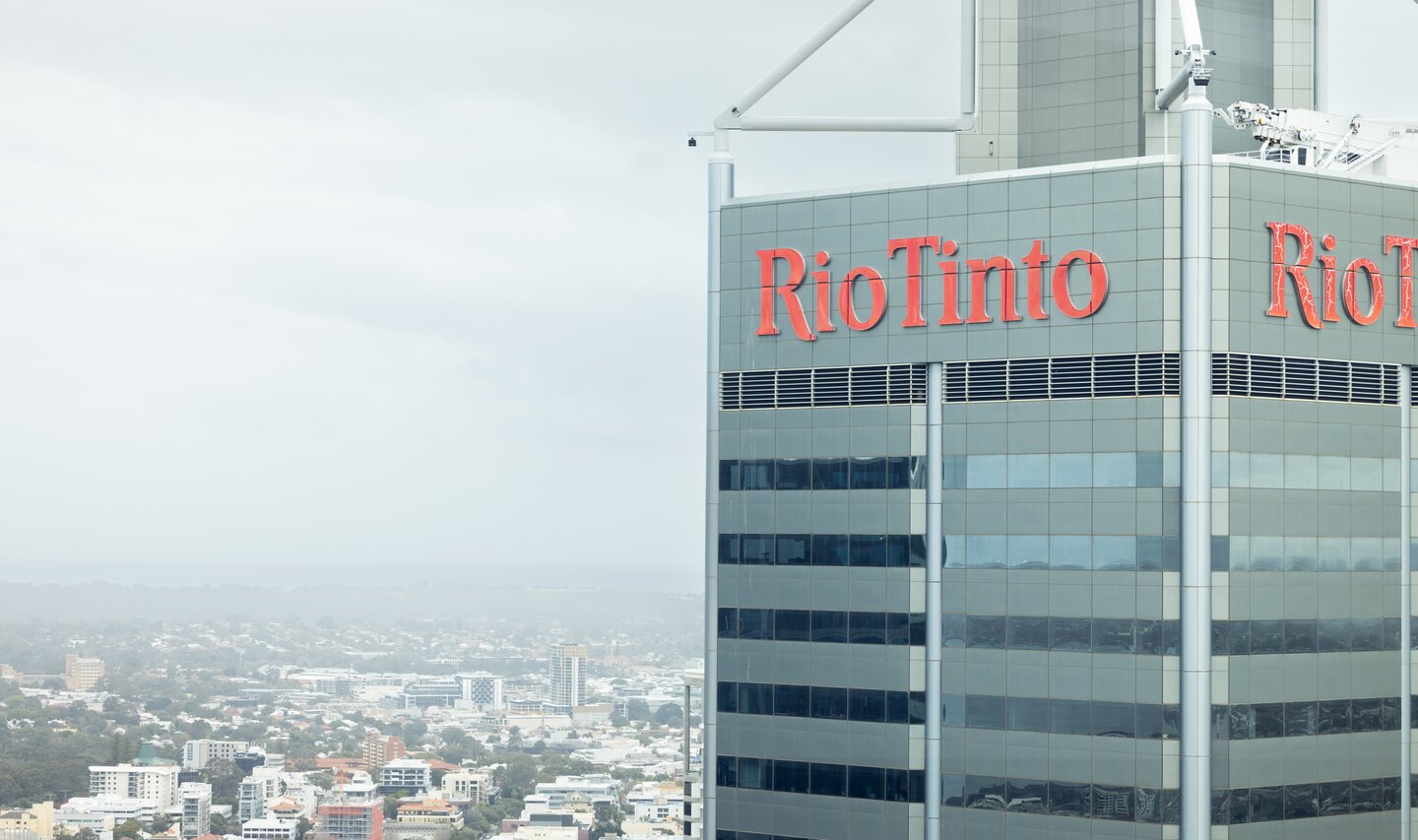
A key aluminium smelter will receive billions of dollars in government funding to stay open until 2040, the latest metals manufacturer to be bailed out.

SYDNEY — The S&P/ASX 200 index rose 0.16% to close at 8,379.40 on Tuesday, March 24, 2026, clawing back some ground after a volatile start to the week as gains in mining and resources stocks offset weakness in financials and broader concerns over escalating tensions in the Middle East.

The benchmark opened at 8,365.90 — its previous close — and traded in a range between 8,365.90 and 8,504.60 before finishing the session up 13.50 points. Volume reached approximately 893 million shares. The modest rebound followed a 0.74% decline on Monday that left the index at 8,365.90, its lowest level in recent weeks amid persistent selling pressure.
The S&P/ASX 200, which tracks the 200 largest companies listed on the Australian Securities Exchange by float-adjusted market capitalization, has now fallen about 8.1% over the past month and sits roughly 9% below its all-time high of 9,202.90 reached in February 2026. Year-to-date in 2026, the index is down around 3.8%, though it remains up about 5.6% over the past 12 months.
Mining and resources shares led Tuesday’s gains, buoyed by a modest recovery in iron ore and other commodity prices. BHP Group rose about 3.4%, Rio Tinto advanced 3%, and Fortescue gained roughly 3.7%. The resources sector as a whole climbed more than 2% in early trading, providing a counterweight to declines in the heavily weighted financials sector, where Commonwealth Bank of Australia, Westpac and National Australia Bank each fell around 1%.
The rebound came against a backdrop of global uncertainty stemming from the ongoing crisis in the Strait of Hormuz and U.S.-Iran tensions. Washington delayed planned strikes on Iranian energy infrastructure by five days while citing diplomatic talks, though Tehran denied any negotiations and accused the U.S. of spreading misleading information. Any prolonged disruption to oil flows through the strait could ripple through energy markets and affect Australian resource exporters.
Domestically, Australian economic data released Tuesday showed mixed signals. The manufacturing PMI slipped to a five-month low of 50.1 in March, while the services PMI contracted for the first time since January 2024, registering 46.6 and raising concerns about slowing activity. The Reserve Bank of Australia’s recent rate hike continues to weigh on interest-rate-sensitive sectors such as real estate and consumer discretionary stocks.
The March 2026 quarterly rebalance of the S&P/ASX 200, effective from March 23, added three new constituents — Predictive Discovery Limited, SRG Global Limited and Vulcan Energy Resources Limited — while removing Catapult Sports Limited, DigiCo Infrastructure REIT and E Bos Group Limited. The changes had limited immediate impact on overall index performance but reflected ongoing shifts in Australia’s corporate landscape toward mining and industrial names.
Analysts remain divided on the near-term outlook. Some point to the index’s recent oversold conditions and attractive valuations in the resources sector as reasons for potential stabilization. Others warn that persistent geopolitical risks, combined with tighter monetary policy at home and uncertainty over U.S. Federal Reserve decisions, could keep pressure on equities.
The financials sector, which accounts for roughly one-third of the index’s weight, has been a notable underperformer in recent sessions as higher interest rates squeeze margins and dampen lending growth. In contrast, energy and materials stocks have shown resilience on commodity price swings, though they remain vulnerable to any escalation in global trade disruptions.
Broader market sentiment was also influenced by developments in major trading partners. China, Australia’s largest export market, continues to navigate its own economic challenges, while a newly sealed free-trade agreement between Australia and the European Union — finalized after nearly a decade of negotiations — offered a long-term positive for diversified trade ties.
The S&P/ASX 200’s performance this year stands in contrast to its strong finish to 2025, when it closed above 8,700. The pullback has been driven by a combination of profit-taking after February’s record levels, higher borrowing costs and external shocks, including Middle East conflicts that have rattled commodity and equity markets worldwide.
Technical analysts note the index has now tested support near 8,300-8,400 multiple times in March. A sustained break below that zone could open the door to further declines toward 8,000, while a convincing move above 8,500 might signal the start of a recovery toward 8,700-8,900 by mid-year.
For individual investors, the current environment highlights the importance of diversification. Heavy exposure to banks or miners can amplify volatility, while more balanced portfolios incorporating healthcare, technology and consumer staples have shown relative stability.
Looking ahead, investors will watch closely for the next round of corporate earnings, particularly from major miners and banks in coming weeks. Any signs of resilient commodity demand or easing inflation pressures could support a rebound. Conversely, fresh geopolitical escalations or weaker-than-expected Australian data could prolong the recent selling.
The S&P/ASX 200 remains Australia’s most widely followed equity benchmark, serving as the underlying for numerous exchange-traded funds, futures contracts and derivatives. Its movements influence superannuation funds, retail portfolios and corporate decision-making across the country.
As trading continues in Sydney on Tuesday afternoon, the modest gain reflected bargain hunting in beaten-down resource names rather than a broad shift in sentiment. With global markets still digesting developments in the Middle East and awaiting clarity on U.S. policy, Australian equities are likely to remain sensitive to external headlines in the days ahead.
The index’s journey through early 2026 underscores the challenges facing resource-heavy economies in an uncertain geopolitical climate. Whether Tuesday’s uptick marks the beginning of stabilization or merely a temporary pause in the sell-off will depend on commodity prices, domestic data and the trajectory of international tensions.

SYDNEY — With escalating U.S.-Iran tensions threatening to disrupt 20% of global oil supply through the Strait of Hormuz, Australian investors are increasingly favoring physical gold and gold mining stocks over Bitcoin as a store of value, according to market participants and fund flow data on Tuesday, March 24, 2026.

Gold prices stabilized around $4,360 per ounce after sharp declines earlier in the week, while Bitcoin traded near $70,000, showing resilience but failing to deliver the classic “digital gold” safe-haven performance many had anticipated. The divergence highlights a broader reassessment among retail and institutional investors Down Under, where superannuation funds and self-managed accounts grapple with geopolitical risk, sticky inflation and higher-for-longer interest rates.
The conflict intensified after U.S. and Israeli strikes on Iranian targets in late February, prompting Tehran to restrict shipping in the Strait of Hormuz. Oil prices surged above $100 a barrel at times, fueling inflation fears that have weighed on both assets but hit gold particularly hard in recent sessions. Australian gold miners on the S&P/ASX 200, such as Northern Star Resources and Evolution Mining, rebounded modestly Tuesday as the benchmark index edged higher, reflecting selective buying in the resources sector.
Gold, long viewed as the ultimate crisis hedge, initially spiked above $5,000 per ounce in early March amid fears of prolonged disruption but has since erased much of its 2026 gains. Spot prices hovered near $4,360-$4,394 in futures trading, down significantly from February peaks. The metal’s recent weakness stems from a stronger U.S. dollar, elevated real yields and profit-taking as diplomatic talks offered a sliver of hope for de-escalation.
Bitcoin, meanwhile, has held relatively steady around $69,000-$71,000 despite the turmoil. Some analysts noted the cryptocurrency outperformed gold in the initial phase of the conflict, gaining roughly 10% while bullion retreated. Proponents argue its decentralized nature and 24/7 trading make it a modern alternative during periods when traditional markets face liquidity constraints. Yet its correlation with risk assets, including equities and oil, has limited its safe-haven credentials this time.
In Australia, the choice between the two assets carries unique local considerations. The Australian dollar has weakened against the greenback amid global uncertainty, boosting the local-currency value of gold for domestic holders. Gold mining stocks listed on the ASX, including Northern Star, Newmont’s local shares and Evolution Mining, have seen volatile swings but attracted bargain hunters Tuesday as the broader index recovered slightly.
Superannuation funds and exchange-traded products provide easy exposure. Australian Bitcoin ETFs, such as VanEck Bitcoin ETF (VBTC) and others, have experienced mixed flows in 2026. While U.S. spot Bitcoin ETFs recorded billions in inflows recently, Australian crypto products saw inflows halve in late 2025 and early 2026 amid price corrections. Gold-focused ETFs and physical bullion dealers, by contrast, reported steady demand from conservative investors seeking tangible protection.
Financial advisers in Sydney and Melbourne say retail clients are split. Younger, tech-savvy investors with higher risk tolerance continue allocating to Bitcoin via ETFs or direct holdings, viewing it as “digital gold” with growth potential. Older or more conservative savers, particularly those nearing retirement, are rotating toward gold or gold miners, citing its 5,000-year history as a crisis asset and its lack of counterparty risk.
“Geopolitical shocks like the Hormuz situation remind investors that Bitcoin still moves with equities and liquidity conditions,” said one Melbourne-based wealth manager who declined to be named. “Gold may not always rally immediately, but it has never gone to zero.”
Institutional data underscores the nuance. Australian Bitcoin ETFs managed several hundred million in assets as of early 2026, with flows turning positive in March on U.S. momentum but remaining sensitive to local sentiment. Gold exposure through ASX-listed miners and ETFs has been more stable, though recent price action in bullion caused temporary weakness in mining shares.
The Reserve Bank of Australia’s monetary policy adds another layer. With inflation concerns amplified by energy prices, markets have pushed back expectations for rate cuts. Higher rates increase the opportunity cost of holding non-yielding gold, yet they also support the currency and can indirectly benefit resource exporters. Bitcoin, often treated as a growth asset, suffers when liquidity tightens.
Tax and regulatory differences matter too. Capital gains tax applies to both assets in Australia, but gold bullion held physically can qualify for certain concessions in some structures, while crypto remains fully taxable with added complexity around record-keeping. Self-managed super funds have increased allocations to both, but compliance and custody requirements differ sharply.
Looking ahead, analysts debate which asset is better positioned. Gold could regain luster if Hormuz disruptions persist and inflation expectations climb further. Central banks worldwide, including those in Asia, continue buying physical gold, providing structural support. Bitcoin’s fate hinges on institutional adoption via ETFs, corporate treasury interest and eventual regulatory clarity in major jurisdictions.
For now, the data shows a cautious tilt toward gold among Australian investors facing genuine supply shock risks. ASX gold stocks posted gains Tuesday even as the broader market remained tentative, while Bitcoin traded in a relatively narrow range.
The debate between gold and Bitcoin is unlikely to resolve quickly. Both assets have proponents who see them as hedges against fiat currency debasement and geopolitical instability. In the current environment of oil-driven inflation fears and delayed rate relief, however, many Australian portfolios are quietly adding more physical or equity exposure to the yellow metal while trimming or holding steady on cryptocurrency positions.
As the situation in the Middle East evolves, with President Donald Trump extending deadlines for potential strikes and Iran maintaining its stance on the strait, investors will continue weighing timeless reliability against technological disruption. For Australians, whose economy remains tied to commodities, the traditional choice appears to be regaining favor — at least until the next chapter in the crisis unfolds.

The firm said in a client communication that the higher charge will apply to traders who do not meet the Securities and Exchange Board of India‘s rule of maintaining at least 50% of collateral in cash or its equivalents on an intraday basis. Currently, Zerodha bridges this gap using its own funds without charging clients.
From April 1, intra-day futures and options trades funded by the broker will attract double the usual brokerage of ₹20 per order. The higher fees will not apply to intraday trades in stock trading.
Zerodha did not respond to requests for comment.
 Agencies
Sebi rules require at least 50% of margin collateral, whether for intraday or overnight positions, to be held in cash or cash equivalents, with the remainder allowed in non-cash assets. Cash equivalents include cash, bank guarantees, fixed deposit receipts and approved securities, among others, as per NSE Clearing.

The pricing increase by Zerodha, which popularised the zero-brokerage model in India, comes as derivative volumes are under pressure from the proposed Securities Transaction Tax (STT) hike from April 1. In the 2026 Union Budget, the government proposed raising STT on futures to 0.05% from 0.02%, and on options premiums to 0.15% from 0.10%.
This move could pave the way for other firms to raise brokerage fees. “One of the industry’s largest brokerage platforms has initiated this move, which could bring more discipline to pricing and may create a ripple effect across the wider industry,” said Pranay Aggarwal, director and chief executive of Stoxkart.
While many brokers do not charge for intraday shortfalls in cash collateral, interest of 9% to 18% per annum is typically levied on overnight or carry-forward positions. With revenues getting squeezed, brokerages are looking to soften the blow through other avenues.
“The amount of collateral that people have kept with us, on which they take margin to trade, has gone up like bonkers,” Zerodha’s chief executive officer Nithin Kamath, wrote on the firm’s website. “We are at a point where we might have to borrow funds in the near future to provide collateral for you all. Borrowed funds come at a cost.”
Kamath said the firm could have charged a percentage fee for accounts going into debit, as some brokers do.
“But we realised the impact due to that would be a lot more than charging a higher brokerage for trades executed only when your account is in debit, or when you don’t have at least 50% in cash while trading on collateral,” he said.

Is LastPass Down? LastPass Experiences Intermittent Outage, Users Report Vault Access and Login Issues

21shares Says Active Products Are Next Phase for Crypto ETPs

The Raunchy, R-Rated 2000s Comedy That Won Acclaim By Being Over The Top


-
 Crypto World4 days ago
NIO (NIO) Stock Plunges 6.5% as Shelf Registration Sparks Dilution Worries
-

 Fashion4 days ago
Weekend Open Thread: Adidas – Corporette.com
-

 Politics4 days ago
Jenni Murray, Long-Serving Woman’s Hour Presenter, Dies Aged 75
-

 Crypto World3 days ago
Best Crypto to Buy Now: Strategy Just Spent $1.57 Billion on Bitcoin During Fear While Early Investors Quietly Enter Pepeto for 150x Potential
-

 News Videos6 days ago
RBA board divided on rate cut, unusually buoyant share market | Finance Report | ABC NEWS
-

 Crypto World3 days ago
Bitcoin Price News: Bhutan Sells $72 Million in BTC Under Fiscal Pressure, but the Smart Money Entering Pepeto Sees What the Market Does Not
-

 Politics7 days ago
The House | The new register to protect children from their abusers shows Parliament at its best
-

 Tech5 days ago
inKONBINI Lets You Spend Summer Days Behind the Register
-

 Crypto World6 days ago
Canada’s FINTRAC revokes registrations of 23 crypto MSBs in AML crackdown
-

 Sports2 days ago
Remo Stars and Kano Pillars Strengthen Survival Hopes in NPFL
-
 NewsBeat6 days ago
Residents in North Lanarkshire reminded to register to vote in Scottish Parliament Election
-

 News Videos6 days ago
PARLIAMENT OF MALAWI – PAC MEETING WITH REGISTRAR OF FINANCIAL ON AMARYLLIS HOTEL – INQUIRY LIVE
-

 Politics5 days ago
Gender equality discussions at UN face pushbacks and US resistance
-

 Business2 days ago
No Winner in March 21 Drawing as Prize Rolls to $133 Million for Next
-

 Business6 days ago
Who Was Alex Pretti? 5 Key Facts About the ICU Nurse Killed by Federal Agents in Minneapolis
-

 Sports2 days ago
Gary Kirsten Accuses Pakistan Cricket Board Of ‘Interference’, Mohsin Naqvi Responds
-

 Tech2 days ago
Give Your Phone a Huge (and Free) Upgrade by Switching to Another Keyboard
-

 Sports4 days ago
2026 Kentucky Derby horses, odds, futures, preview, date: Expert who nailed 12 Derby-Oaks Doubles enters picks
-

 Tech7 days ago
Subnautica 2 might finally be entering early access in May
-
Sports6 days ago
Vikings Free Agency Enters Phase 2 with Key Questions
You must be logged in to post a comment Login