

Connect with us

Business

BCI Minerals to build sulphate pilot plant

Published

on

BCI Minerals to build sulphate pilot plant

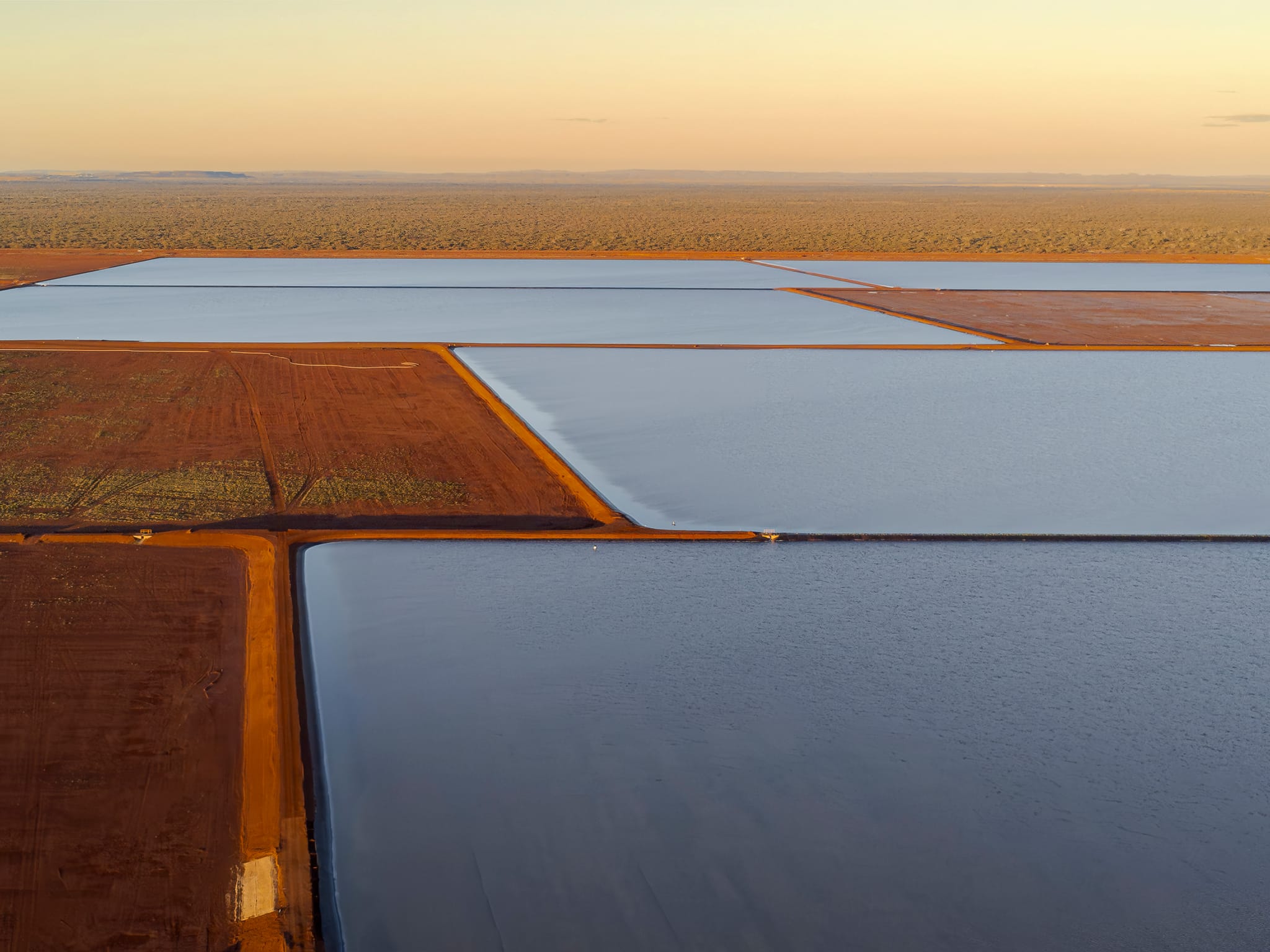
BCI Minerals has taken another step toward downstream processing at its Mardie salt project despite a spate of other companies failing in their attempts to produce sulphate of potash.

Continue Reading
Click to comment

You must be logged in to post a comment Login

Leave a Reply

Business

Ferguson shipyard to cut a quarter of its workforce as it awaits promised orders

Published

on

breaking news graphic

The first, MV Glen Sannox, was finally delivered in November 2024, while MV Glen Rosa is due for completion by the end of this year.

The shipyard recently completed sub-contracting work for BAE Systems for new Type 26 frigates and currently has no confirmed future orders.

In March, before the Holyrood election, the Scottish government announced plans to directly award the shipyard contracts for four future vessels.

It said the vessels – two small CalMac ferries, a fisheries research ship and a marine protection vessel – would provide a “bridge to the future” for the yard.

Advertisement

The then Economy Secretary Kate Forbes said the government had “done a lot of the upfront work in terms of scoping out, securing some of the legal advice about what is possible”.

But she added that engagement with the Competition and Markets Authority would be required.

Continue Reading

Business

Public sector pay 2026 drives UK wage growth above economist expectations

Published

on

UK economy jumped above forecasts before Iran war

Stripping out bonuses, wage growth stood at 3.5 per cent the ONS said

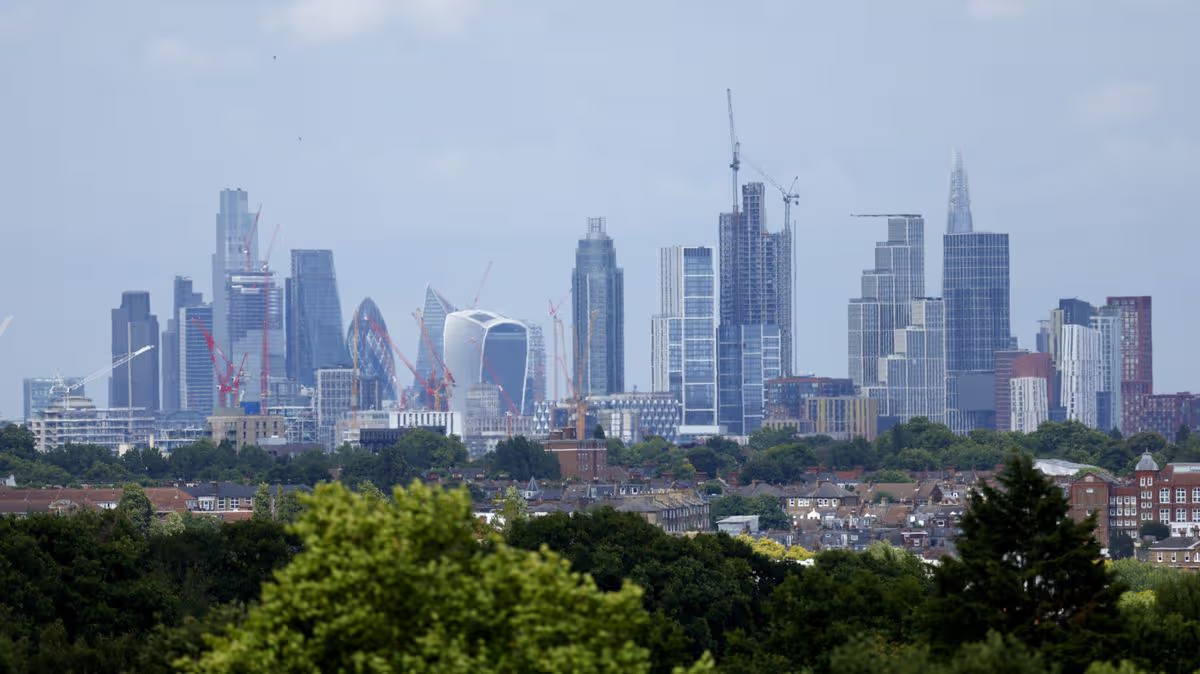
City of London skyline

City of London skyline(Image: PA Archive/PA Images)

Wage growth surpassed expectations as pay settlements in the public sector significantly outpaced those in the private sector, according to newly released figures. Official data has revealed that wage growth, inclusive of bonuses, hit 4.1 per cent between April and June, against a market forecast of four per cent.

Advertisement

This nonetheless fell short of the 4.3 per cent recorded in the previous month. Stripping out bonuses, pay growth stood at 3.5 per cent, which also marginally exceeded the projections of City economists and investors.

The stronger-than-anticipated pay growth was, however, predominantly driven by the public sector. Average earnings growth reached 5.5 per cent in the public sector, compared with just 2.9 per cent in the private sector, as reported by City AM.

“The labour market picture is little changed overall, with some softening still evident,” said Liz McKeown, director of economic statistics at the ONS.

“Private sector pay growth has continued to ease, while public sector pay growth remains elevated due to the timing of the latest NHS pay awards.”

Advertisement

The ONS further estimated that the unemployment rate held steady at 4.9 per cent, exceeding economists’ projections.

This coincided with the number of payrolled employees rising by 3,000 between April and May, though remaining approximately 85,000 below figures recorded a year earlier.

Meanwhile, the number of vacancies fell by 6,000 to 707,000, representing its lowest point in over five years. “The latest decrease was driven mainly by smaller businesses, which cite labour and operating costs as reasons for not hiring new staff or replacing leavers,” McKeown added.

Fresh data could signal troubled times ahead for the UK economy, with the Bank of England and City economists warning that the labour market may deteriorate later this year.

Advertisement

The Bank has forecast the unemployment rate to reach 5.2 per cent, while more pessimistic projections place the peak closer to 5.5 per cent. Subdued wage growth and increasing unemployment could alleviate concerns that the Bank is poised to raise interest rates in response to the energy price shock stemming from ongoing trade disruption across the Middle East.

The Conservative opposition is stepping up its pressure on the Labour government over job losses.

Under a new pledge described as a “benefit of Brexit“, the party has announced it would scrap EU regulations governing young people’s capacity to work.

Rules requiring 16 and 17-year-olds to take a rest period of 48 consecutive hours in any given week would be abolished, while young people would also be permitted to work later into the night at weekends during term time and at any hour outside of term time.

Advertisement

Party officials stated they were drawing upon findings from the Alan Milburn review on Neets, young people not in employment, education or training. The paper by Milburn found that work for young people helped “build on confidence, learn the habits of work and show employers what they could do”, though opportunities to do so had since ended.

Continue Reading

Business

Tube Investments of India shares surge 8% after Q1 earnings. What Motilal Oswal is saying

Published

on

Tube Investments of India shares surge 8% after Q1 earnings. What Motilal Oswal is saying
Shares of Tube Investments of India surged over 8% to Rs 2,952 on the BSE on Tuesday, after the company reported its earnings for the quarter ended in June 2026.

As per a regulatory filing on the BSE released on Friday, the company’s Q1 profit after tax declined over 5% year-on-year to Rs 158.62 crore, from Rs 168.09 crore in the corresponding quarter of the previous year. Revenue from operations stood at Rs 2,227.63 crore, as compared to Rs 1,892.48 crore in the same quarter last year.

What Motilal Oswal said

Domestic brokerage firm Motilal Oswal reiterated its Buy rating on the stock, with a target price of Rs 3,379, citing in-line earnings despite margin miss. Tube Investments India’s core business remains fundamentally strong, with the Engineering business having delivered 17% volume growth and exports growing in double digits, while MFP revenue growth improved to 11.5% during the quarter, the brokerage stated in its note.

Advertisement

Despite near-term margin headwinds, Tube Investments of India offers diversified revenue streams, with steady growth in the core business (~7% S/A PAT CAGR over FY26-28E) and CG Power, as well as the optionality of new businesses incubated under the TI-2 strategy, according to the brokerage.

Two of the standalone entity’s business segments, viz., Engineering and Metal Formed divisions, which contribute ~80% of its revenue, are dependent on the auto business, the brokerage stated. While the GST rate reduction has helped revive auto demand across segments, the near-term outlook for the sector has turned cautious given the potential impact of the ongoing geopolitical issues on the economy. Motilal Oswal expects the standalone business to post a steady CAGR of 8%/8%/7% in revenue/EBITDA/PAT over FY26-28.

Management outlook

Management remains constructive on the near-term demand environment, with strong momentum visible across most vehicle categories and geographies, as per the brokerage report. Engineering volumes and exports are expected to remain healthy over the next one to two quarters, while new product development and customer relationships provide additional growth support. Margin recovery remains a key near-term catalyst, with full recovery of steel inflation and potential recovery of other input-cost inflation expected to progressively improve profitability.
Overall, the company remains focused on scaling its core businesses while investing in medical, CDMO, EV mobility, battery manufacturing, and other emerging businesses to build multiple growth engines.

Continue Reading

Business

Henry vacuum cleaner owner to install nearly 1,000 solar panels on Somerset factory roof

Published

on

Business Live

Numatic International operates across several buildings within the Millfield industrial estate in Chard

Numatic International - maker of the Henry vacuum

Numatic International is the maker of the Henry vacuum(Image: Numatic International)

The company behind Britain’s famous Henry vacuum cleaner is planning to install nearly 1,000 solar panels on its factory roof, following the approval of its planning application.

Advertisement

Numatic International operates across several buildings within the Millfield industrial estate at the eastern edge of Chard providing employment for approximately 1,200 local residents.

The firm submitted an application in early July to mount 943 photovoltaic panels on ‘Building 34’, which sits between Millfield and the Tapstone Retail Park (home to the town’s Greggs outlet).

Somerset Council has now granted approval for the panels, meaning they could be fitted and up and running before Christmas.

Building 34 is primarily accessed via Millfield, with its own car park situated a short distance south of a planned 70-bed care home (which received planning permission in May 2024).

Advertisement

The panels are expected to generate around 457kW at peak capacity, spread across a total area of 3,700 sq m.

A spokesperson for SunGift Solar (acting on behalf of Numatic) said: “The proposed solar panel equipment has, as far as practicable, been sited to minimise its effect on the external appearance of the building and the amenity of the area.

Planned layout of solar panels on Building 34 within the Numatic complex in Chard. CREDIT: SunGift Solar. Free to use for all BBC wire partners.

Planned layout of solar panels on Building 34 within the Numatic complex in Chard(Image: Local Democracy Reporting Service / SunGift Solar)

“The equipment will be removed as soon as reasonably practicable when no longer needed. The effect of glint and glare are considered to be minimal and localised.”

Numatic obtained approval in March 2025 to construct its own solar farm at the eastern edge of the Millfield industrial estate – adjacent to land safeguarded for part of the long-anticipated Chard eastern relief road (ERR).

Advertisement

This site was initially designated for a research and development facility, but priorities shifted following Numatic’s acquisition and redevelopment of the former Oscar Mayer site within the existing industrial estate.

The Building 34 proposals were granted approval by the council’s planning officers using their delegated powers, rather than through a public decision by its planning committee south (which handles significant applications within the former South Somerset area).

Planning officer Mike Farthing said: “Photovoltaic equipment is increasingly commonplace and other non-domestic buildings across the county have had similar equipment installed for many years.

“The equipment would be seen in the context of the existing building on which they would be installed, as well as the wider established complex.

Advertisement

“The orientation has been considered and overall, it is considered that the photovoltaic equipment, so far as practicable, would be sited so as to minimise its effect on the external appearance of the building.

“It does not sit close to any neighbouring properties which may adversely be impacted by glare from the proposed panels.”

Continue Reading

Business

German 10-Year yield jumps to highest since 2011 as global bond rout escalates

Published

on


German 10-Year yield jumps to highest since 2011 as global bond rout escalates

Continue Reading

Business

The Biggest Challenges Growing Companies Face

Published

on

Pound rallies after Donald Trump considers limits to tariffs plan

A startup proves that an idea can work. A scale-up must prove that the whole company can keep working when demand, headcount and complexity rise at once. That shift catches many founders off guard.

Growth remains exciting, but it also exposes every weak process the business managed to ignore while it was smaller. The challenge is not simply to sell more. It is to build an organisation that can deliver more without losing control.

Leaders also need space to think clearly rather than react to every alert. Whether browsing just casino, walking or taking a quiet coffee break, the principle is the same: constant urgency rarely produces the best strategic decisions. Scale requires pace, but it also requires judgment.

Hiring before the gap becomes a crisis

Growing firms compete for people who can bring experience without burying the business in unnecessary process. Hiring too late leaves exhausted teams covering roles they were never meant to hold. Hiring too early burns cash and creates positions without enough work. The best approach starts with the capability the company needs, the result that role should own and the point at which demand justifies the cost.

Retention matters just as much. Rapid growth changes jobs quickly, so employees need clear expectations, fair progression and managers who can offer useful feedback. UK government research into scale-ups and access to talent highlights the practical challenge of recruiting and retaining key skills while larger employers compete for the same people.

Advertisement

Turning founder knowledge into systems

In a startup, the founder may hold product history, customer context and commercial priorities in their head. That feels efficient until ten teams need the same answer. Scale-ups must document how important decisions get made, who owns them and which information everyone can trust.

The goal is not a handbook for every breath. Start with high-risk or repeated work: customer onboarding, pricing approvals, quality checks, security, hiring and financial reporting. Good systems remove avoidable confusion while leaving teams room to solve new problems.

Protecting cash while revenue grows

Fast sales growth can hide weak cash flow. A company may sign larger contracts yet wait months for payment, while payroll, tax, suppliers and infrastructure costs arrive on schedule. Leaders need reliable forecasts that model best, expected and difficult cases. They also need to understand unit economics rather than celebrate revenue that costs too much to deliver.

Funding creates its own choices. Equity, debt and reinvested profit affect control and risk differently. The right option depends on the business model, timing and founders’ goals, not on which funding announcement looks most impressive online.

Advertisement

Keeping customers close

Early customers often receive direct attention from founders and product experts. As the company grows, layers appear between feedback and action. Support teams collect issues, sales teams make promises and product teams balance competing requests. Without a clear system, useful signals get lost.

Scale-ups should track why customers buy, stay, expand or leave. Numbers show the pattern; conversations explain it. Growth becomes dangerous when acquisition masks falling satisfaction among existing customers.

Building leadership that can let go

Founders do not need to disappear, but they must stop being the route for every decision. Strong leaders set direction, define boundaries and give capable people genuine authority. That can feel slower at first because delegation requires explanation and trust. Soon, however, the company gains more decision-making capacity than any founder could provide alone.

The move from startup to scale-up is less about becoming corporate and more about becoming dependable. Keep the curiosity and speed that made the business work. Add the people, cash discipline and operating structure that let it work repeatedly. That is the unglamorous machinery behind sustainable growth – and it beats chaos with a better logo.

Advertisement

Continue Reading

Business

Royal Unibrew A/S 2026 Q2 – Results – Earnings Call Presentation (OTCMKTS:ROYUF) 2026-08-18

Published

on

OneWater Marine Inc. (ONEW) Q1 2026 Earnings Call Transcript

This article was written by

Seeking Alpha’s transcripts team is responsible for the development of all of our transcript-related projects. We currently publish thousands of quarterly earnings calls per quarter on our site and are continuing to grow and expand our coverage. The purpose of this profile is to allow us to share with our readers new transcript-related developments. Thanks, SA Transcripts Team

Continue Reading

Business

Earnings call transcript: Multiconsult Group lifts Q2 2026 profit, shares fall 2.8%

Published

on


Earnings call transcript: Multiconsult Group lifts Q2 2026 profit, shares fall 2.8%

Continue Reading

Business

KOSPI Reverses Sharp Early Rally to Fall 1.63% as Mideast Tensions and Institutional Selling Weigh In

Published

on

Earnings News: Micron Technology Inc (NASDAQ: MU)

SEOUL — South Korea’s benchmark KOSPI index fell 114.01 points, or 1.63%, to 6,863.93 as of 3:19 p.m. local time Tuesday, reversing a sharp early-session rally that had briefly pushed the index back above the 7,200 mark, as institutional selling and renewed concern over Middle East instability weighed on investor sentiment.

The index’s dramatic intraday swing unfolded over the course of the trading day. According to Trading Economics, the KOSPI opened Tuesday’s session with gains exceeding 3%, briefly reclaiming the 7,200 level for the first time in recent sessions, only to steadily give back those gains as the day progressed. By 1:50 p.m. local time, the index had fallen back to 6,925.65, down 0.75% from the previous session, before losses deepened further into the afternoon close.

According to reporting from the Asia Business Daily, the reversal was driven primarily by heavy selling from institutional investors, who were net sellers of 660.6 billion won during the session, even as both individual and foreign investors remained net buyers. Individual investors purchased a net 373.4 billion won worth of shares, while foreign investors added a net 346 billion won, underscoring a split between retail and foreign buying interest on one side and institutional caution on the other.

The broader shift in sentiment coincided with escalating concerns over instability in the Middle East. According to Trading Economics, global risk appetite was limited Tuesday after the expiration of a 60-day window for the United States and Iran to reach a peace agreement passed without an extension, heightening fears of renewed conflict and potential disruptions to oil supplies moving through the Strait of Hormuz. That uncertainty pushed oil prices higher and lifted U.S. Treasury yields, dynamics that have historically weighed on risk appetite for export-driven, semiconductor-heavy markets such as South Korea’s.

Advertisement

Adding a further headwind for South Korean exporters, the United States imposed a 15% tariff on South Korean drones and related components, while separately flagging the country for risks tied to China-linked transshipment activity, according to Trading Economics. Investors have also continued closely monitoring ongoing trade negotiations between Seoul and Washington, as South Korea works to resolve outstanding issues connected to its previously announced $200 billion investment commitment to the United States.

Tuesday’s reversal followed a period of strong gains for the KOSPI heading into the new trading week. The index climbed 2.42% to close at 6,978 points last Friday, extending a rally to its highest level in more than three weeks, driven by strength in U.S. stocks and semiconductor shares. That advance came after the S&P 500 reached a fresh record high following a U.S. producer price report that showed prices unchanged in July, below expectations, easing broader inflation concerns and reducing expectations for further Federal Reserve tightening.

The improved risk sentiment heading into Friday’s session had lifted Asian technology stocks broadly, with SK Hynix jumping 3.26% and Samsung Electronics advancing 2.43% that day. Other notable gainers included SK Square, up 3.31%, Hyundai Motor, up 8.24%, LG Energy Solution, up 1.09%, HD Hyundai Heavy Industries, up 2.82%, Kia Corporation, up 3.13%, and Hyundai Mobis, up 7.05%, according to Trading Economics data. The KOSPI had been closed Monday for a substitute public holiday marking Liberation Day, meaning Tuesday’s session represented the market’s first opportunity to react to developments over the extended weekend, including the expiration of the U.S.-Iran negotiating window.

The KOSPI’s swings over the past several weeks illustrate a market that has continued to experience extraordinary volatility throughout 2026. According to Investing.com data, the index has traded within a 52-week range spanning from 3,079.27 to 9,385.59, and remains up 116.33% over the trailing 12 months despite the sharp reversals that have periodically interrupted its overall upward trajectory this year. Earlier in the year, the index suffered a series of historic single-day collapses, including a 10.84% overnight plunge that dragged Samsung Electronics down 13.39% and SK Hynix down 14.65% in a single session, alongside a separate episode in which the index fell below the 8,000 level and triggered a sell-side sidecar, part of a stretch of market volatility that at one point surpassed the sidecar and circuit-breaker activation record previously set during the 2008 global financial crisis.

Advertisement

Samsung Electronics and SK Hynix together account for roughly half of the KOSPI’s total market capitalization, meaning swings in the two chipmakers’ share prices have continued to serve as the primary driver of the broader index’s dramatic movements throughout the year, a pattern that held true again during Tuesday’s sharp intraday reversal.

South Korean President Lee Jae-myung has continued to emphasize efforts to strengthen the country’s capital markets and address the long-standing valuation gap between Korean equities and their global peers, often referred to as the “Korea discount.” Following an earlier milestone in which the index first surpassed the 6,000 level, Lee reaffirmed his administration’s commitment to structural reforms aimed at driving a broader re-rating of Korean equities, a policy priority that has continued to underpin investor interest in the market even amid its persistent volatility.

With the U.S.-Iran negotiating deadline now expired and South Korea’s own trade discussions with Washington still ongoing, investors are likely to remain focused in the coming days on how developments in the Middle East evolve, alongside any further updates on South Korea’s $200 billion investment commitment and the broader tariff landscape facing Korean exporters. Given the KOSPI’s demonstrated pattern of sharp single-session reversals throughout 2026, market participants are likely to brace for continued volatility as the index navigates this latest combination of geopolitical uncertainty and shifting institutional positioning.

Advertisement
Continue Reading

Business

WorkSafe investigating Osborne Park workplace death

Published

on

WorkSafe investigating Osborne Park workplace death

WA’s workplace safety regulator is investigating a work-related death of a tow truck driver at an Osborne Park business early on Tuesday morning.

Continue Reading

Trending

Copyright © 2025