Connect with us
DAPA Banner
DAPA Coin
DAPA
COIN PAYMENT ASSET
PRIVACY · BLOCKDAG · HOMOMORPHIC ENCRYPTION · RUST
ElGamal Encrypted MINE DAPA
🚫 GENESIS SOLD OUT
DAPAPAY COMING

Business

Beyond the Reef – What Bali’s Diving Economy Can Teach Indonesia’s Hospitality Sector

Published

on

Beyond the Reef - What Bali's Diving Economy Can Teach Indonesia's Hospitality Sector

For resort owners, dive centre managers and hospitality operators, a well-written scuba diving guide in Bali, Indonesia, is more than a visitor resource; it is a bridge between guest expectations, marine responsibility and sustainable local business.

Bali’s dive industry has matured into one of Indonesia’s most recognisable tourism segments, yet its strongest lessons are not only underwater. They are found in the way destinations manage trust, safety, service quality, and long-term value.

Bali as a Benchmark for Experience-Led Hospitality

Scuba diving in Bali has become a powerful example of experience-led travel. Guests no longer choose a destination only because it is beautiful. They look for confidence, clarity and a sense that their money supports skilled people, safe operations and responsible tourism.

For Indonesian resorts, this matters. A guest who books a dive trip is often making a bigger emotional decision than simply buying an activity. They are trusting a team with their safety, their holiday time and, in many cases, a personal milestone.

The strongest operators understand that the diving experience begins long before the boat leaves the beach. It starts with the first message, the tone of the booking process, the condition of the equipment room and the way staff explain the day’s conditions.

Advertisement
  • Clear communication creates confidence.
  • Clean facilities shape first impressions.
  • Local knowledge adds authenticity.
  • Safety culture builds repeat business.

A detailed scuba diving guide in Bali, Indonesia, can help operators communicate these standards clearly, turning first-time visitors into loyal, returning guests.

Why Bali Still Appeals to International Divers

Bali offers variety in a compact and accessible format. From calm shore entries to dramatic walls, wrecks and colourful reefs, the island can serve beginners, experienced divers, underwater photographers and family travellers.

This variety is one reason many travellers search for the best diving in Bali when planning a broader Indonesian holiday. They may not be expert divers, but they recognise Bali as a convenient entry point into Indonesia’s marine world.

For hospitality businesses, this presents an opportunity to design better guest journeys. A resort does not need to operate a dive centre directly to benefit from the dive market. It can partner with reputable operators, train front-office staff to answer basic diving questions and create realistic itineraries that respect weather, distance and guest ability.

The Business Value of Honest Guest Guidance

In hospitality, overselling can quickly damage trust. Diving makes this even more important. Not every site is suitable every day, and not every guest should be encouraged to take on the most challenging experience.

Advertisement

A professional recommendation should consider:

  • Certification level and recent dive experience.
  • Comfort in currents or deeper water.
  • Travel time from the hotel.
  • Seasonal visibility and sea conditions.
  • Whether the guest wants relaxation, photography or adventure.

When resorts and dive centres offer honest guidance, they protect the guest experience and the destination’s reputation. This is particularly important in a market where online reviews influence booking decisions across hotels, restaurants and activity providers.

Amed: A Case Study in Community-Based Dive Tourism

Scuba diving in Amed, Bali, shows how a destination can build a strong identity without feeling overdeveloped. Amed’s appeal lies in its slower rhythm, shore-based diving, traditional coastal villages and easy access to sites suitable for both training and leisure dives.

For resort clients, Amed offers a useful lesson: not every successful tourism product needs to be high-volume. Many guests are actively seeking places that feel personal, grounded and locally connected. They want comfort, but they do not necessarily want a resort experience that feels detached from the surrounding community.

What Amed Gets Right

Amed’s strengths are not only natural. They are operational and cultural:

Advertisement
  • Many dive sites are close to accommodation.
  • Local staff often have deep knowledge of sea conditions.
  • The atmosphere encourages longer stays.
  • Smaller businesses can create a highly personal service.
  • The setting supports wellness, food, culture, and diving in a single itinerary.

This kind of destination model is valuable for other Indonesian regions aiming to grow marine tourism without losing their identity.

Safety as a Hospitality Standard, Not Just a Diving Rule

In the dive industry, safety is sometimes treated as a technical subject. In reality, it is also a hospitality standard. Guests notice whether staff are calm, organised and attentive. They notice whether briefings are clear, whether tanks are checked properly and whether the team appears rushed.

Resorts that recommend dive partners should treat safety due diligence as part of brand protection. A guest may book the dive externally, but if the resort suggested it, the experience reflects on the property.

A practical hospitality approach includes checking whether a dive operator maintains equipment, employs qualified professionals, provides clear insurance information, and communicates cancellation policies transparently. These are business basics, but they are also guest-care essentials.

Sustainability Is Now Part of the Guest Experience

Marine tourism in Indonesia depends on healthy reefs, clean beaches and respectful interaction with local communities. Sustainability is no longer a side message placed at the bottom of a brochure. It affects purchasing decisions, staff pride and destination resilience.

Advertisement

For dive centres, this can include responsible buoyancy education, reef-safe briefings, low-impact boat procedures and participation in local clean-up or conservation initiatives. For resorts, it may involve reducing plastic waste, managing wastewater responsibly and supporting community-led environmental projects.

The important point is sincerity. Guests can often distinguish between genuine practice and decorative messaging. Businesses do not need to claim perfection; they need to show progress, consistency and accountability.

Building Better Partnerships Between Resorts and Dive Centres

The relationship between accommodation providers and dive centres should be treated as a strategic partnership rather than a simple referral channel. Both sides serve the same guest, and both benefit when expectations are aligned.

Strong Partnerships Usually Include

  • Shared standards on safety and communication.
  • Accurate information at reception or concierge desks.
  • Clear pick-up times and transport arrangements.
  • Feedback loops after guest experiences.
  • Mutual understanding of seasonal demand.
  • Respect for local pricing and professional margins.

When these elements are in place, the guest experiences one connected service journey instead of separate, fragmented transactions.

Training Staff to Speak the Language of Divers

Hospitality teams do not need to become dive professionals, but they should understand the basics. A receptionist who can explain the difference between a beginner discovery dive and a certified fun dive immediately adds value.

Advertisement

Simple staff training can cover:

  • Common dive certification levels.
  • Approximate travel times to key dive areas.
  • What guests should bring.
  • Why flying after diving requires planning.
  • How the weather can affect daily schedules.

This type of knowledge reduces confusion and prevents unrealistic promises. It also positions the resort as competent and guest-focused.

What Indonesian Hospitality Can Learn from Bali’s Dive Market

Bali’s dive sector demonstrates that niche tourism can support broader hospitality performance when managed carefully. Diving brings guests who often stay longer, spend across multiple services and value local expertise. However, the market also demands professionalism, transparency and respect for nature.

The most successful businesses are not simply selling rooms, dives or transfers. They are curating confidence. They understand that modern travellers want memorable experiences, but they also want to feel informed and safe.

A More Thoughtful Future for Marine Tourism

Indonesia has some of the world’s richest marine environments, but natural beauty alone is not a business plan. Long-term success will depend on skilled people, honest communication, environmental care, and cooperation among resorts, dive centres, and local communities.

Advertisement

For readers of BM Magazine, the lesson is relevant beyond tourism. Bali’s diving industry shows how specialist sectors can build value through trust, service design and responsible growth. The reef may attract the guests, but the professionalism of the people behind the experience is what brings them back.

Advertisement
Continue Reading
Click to comment

You must be logged in to post a comment Login

Leave a Reply

Business

Why “Invisible Infrastructure” Is Becoming a Critical Business Risk in Electrification

Published

on

Why “Invisible Infrastructure” Is Becoming a Critical Business Risk in Electrification

Electrification is often discussed in terms of visible assets: electric vehicles, charging stations, and energy tariffs. For most organisations, these are the elements that shape investment decisions and public sustainability commitments.

However, as deployment scales, performance is increasingly determined by a less visible layer of infrastructure. This layer rarely features in board-level discussions, yet it directly influences operational reliability, cost predictability, and system resilience.

The emerging risk for businesses is not adoption of new technology, but underestimating the infrastructure required to make that technology consistently work at scale.

The shift from assets to systems

Traditional infrastructure thinking is asset-centric. A charger is installed, a vehicle is deployed, and performance is assumed to follow specification.

In practice, electrified systems behave differently. They operate as interconnected chains of components, where reliability is determined by the weakest link rather than the most advanced element.

Advertisement

This shift from isolated assets to dependent systems introduces a structural challenge: small inconsistencies in supporting components can accumulate into measurable operational inefficiencies.

Where operational risk actually emerges

In early-stage deployments, infrastructure issues are often attributed to high-level components such as charging units or software platforms. These are visible, complex, and therefore assumed to be the primary source of variation.

However, in scaled environments, a different pattern emerges. Performance variability is frequently driven by lower-profile physical components within the system architecture.

These components are not typically monitored with the same intensity as primary assets, yet they operate under continuous load conditions that expose differences in quality, durability, and consistency.

Advertisement

The result is not immediate failure, but gradual degradation in operational predictability.

Why small inefficiencies become structural at scale

At individual unit level, minor variations are often negligible. At fleet or multi-site level, they compound into system-wide inefficiencies.

Examples include:

  • reduced predictability in asset availability
  • increased buffering requirements in operational planning
  • higher sensitivity to peak demand periods
  • gradual erosion of utilisation efficiency across infrastructure networks

The key issue is not breakdown, but inconsistency. Systems designed around assumed uniform performance begin to drift when that assumption does not hold in practice.

The procurement blind spot

Most procurement frameworks remain optimised for upfront cost, specification compliance, and installation speed. These criteria are necessary but incomplete in electrified environments.

Advertisement

What is often underweighted is lifecycle behaviour under sustained operational load.

This includes:

  • how components perform under continuous use
  • how degradation profiles differ across suppliers
  • how maintenance frequency evolves over time
  • how small variations scale into system-level inefficiencies

As a result, infrastructure decisions that appear rational at purchase stage can generate disproportionate operational costs over time.

The rise of quality differentiation in commodity infrastructure

As electrification matures, previously interchangeable components are becoming differentiated based on performance stability rather than basic compliance.

Manufacturing consistency, certification rigor, and material durability are increasingly relevant indicators of long-term system reliability.

Advertisement

In this context, the importance of component-level engineering becomes more visible. For example, manufacturers such as Voldt® operate in a segment where emphasis is placed on reducing variability under sustained commercial load conditions, rather than simply meeting baseline specification requirements.

This reflects a broader market shift toward infrastructure-grade quality standards across the electrification ecosystem.

From electrification projects to infrastructure management

The strategic implication for businesses is a reframing of electrification itself.

What is often treated as a deployment project is, in reality, a transition into ongoing infrastructure management. This requires a different evaluation lens:

Advertisement
  • from individual asset performance to system behaviour
  • from installation success to operational stability
  • from purchase cost to lifecycle impact
  • from compliance to resilience

Under this model, infrastructure is not a static investment but a continuously operating system with compounding dependencies.

Reliability of the infrastructure

As electrification scales across UK businesses, the primary constraint is shifting. It is no longer access to technology, but the reliability of the infrastructure that supports it.

The most significant risks are not necessarily located in high-visibility assets, but in the less visible components that determine whether systems perform consistently under real-world conditions.

For organisations moving from pilot projects to full-scale deployment, understanding and managing this “invisible infrastructure” layer is becoming a defining factor in operational success.

Advertisement

Continue Reading

Business

Flats plan for former Lookers office block

Published

on

Business Live

Blueoak Estates leading Timperley project

The empty office block could be brought back into use

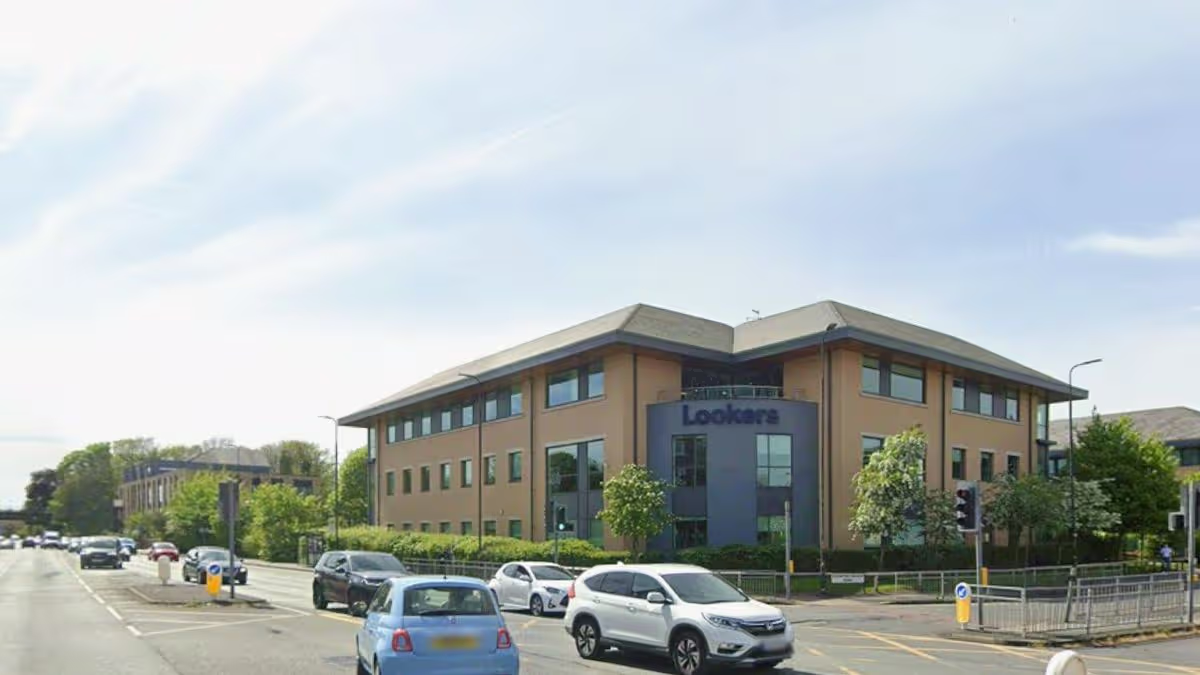
The empty block could be brought back into use(Image: Google)

An abandoned office building in Timperley could be brought back into use as new homes.

Advertisement

Developer Blueoak Estates Ltd is eyeing up the three-storey property in Etchells Road with a view to turning it into apartments. The building was last home to the Lookers Motor Group.

Some 34 new homes are proposed to be created within the office block. These would be a mix of one- and two-beds, planning documents show.

This could be just phase one of the plans for the site, however. Documents state that the plant room and an external ‘plant well’ in the roof area would be redundant under the new use and could be ‘subject to future conversion’.

Limited changes would be made to the exterior of the building. These would see new windows fitted and the ‘part removal’ of the external stairs.

Advertisement

Some 38 parking spaces are proposed for the new homes. An additional 34 cycle spaces would be provided in an internal storage area.

Blueoaks is seeking permission from Trafford council for the change of use of the building.

To find all the planning applications, traffic diversions, road layout changes, alcohol licence applications and more in your community, visit the Public Notices Portal.

Advertisement
Continue Reading

Business

Taiwan stocks lower at close of trade; Taiwan Weighted down 0.79%

Published

on


Taiwan stocks lower at close of trade; Taiwan Weighted down 0.79%

Continue Reading

Business

Red Rock Resorts Q1 2026 Earnings: Focus On The Long Term (NASDAQ:RRR)

Published

on

Red Rock Resorts Q1 2026 Earnings: Focus On The Long Term (NASDAQ:RRR)

This article was written by

I am a specialist in Asian equities after having been a sellside analyst for 13 years. In addition, I have also spent time covering US hardware and semiconductor stocks on the sellside. Within Asia, I have covered the casino, automotive, industrial, consumer and technology sectors. I have also worked on the buyside as a fund manager in long only and as an analyst in hedge funds all covering Asian equities where I have developed a keen understanding of Asian companies and economies with a focus on China. From a global equities perspective, I enjoy covering companies globally by examining key metrics such as financial statements strength, valuation upside, and conducting proper analysis of the competitive advantages of the company. Throughout my career, I have found and written on undiscovered small cap companies which have increased in equity value by multiple times. I would like to write for Seeking Alpha where my goal is to help investors cut through the noise and to focus on fundamentals and the company’s competitive outlook instead of the momentum trade.

Analyst’s Disclosure: I/we have no stock, option or similar derivative position in any of the companies mentioned, and no plans to initiate any such positions within the next 72 hours. I wrote this article myself, and it expresses my own opinions. I am not receiving compensation for it (other than from Seeking Alpha). I have no business relationship with any company whose stock is mentioned in this article.

Seeking Alpha’s Disclosure: Past performance is no guarantee of future results. No recommendation or advice is being given as to whether any investment is suitable for a particular investor. Any views or opinions expressed above may not reflect those of Seeking Alpha as a whole. Seeking Alpha is not a licensed securities dealer, broker or US investment adviser or investment bank. Our analysts are third party authors that include both professional investors and individual investors who may not be licensed or certified by any institute or regulatory body.

Advertisement
Continue Reading

Business

Fidelity Blue Chip Growth Fund Q1 2026 Commentary (FBGRX)

Published

on

Fidelity Blue Chip Growth Fund Q1 2026 Commentary (FBGRX)

Fidelity’s mission is to strengthen the financial well-being of our customers and deliver better outcomes for the clients and businesses it serves. With assets under administration of $12.6 trillion, including discretionary assets of $4.9 trillion as of December 31, 2023, Fidelity focuses on meeting the unique needs of a broad and growing customer base. Privately held for 77 years, Fidelity employs more than 74,000 associates with its headquarters in Boston and a global presence spanning nine countries across North America, Europe, Asia and Australia. Note: This account is not managed or monitored by Fidelity, and any messages sent via Seeking Alpha will not receive a response. For inquiries or communication, please use Fidelity’s official channels.

Continue Reading

Business

Politics And The Markets 05/11/26

Published

on

OneWater Marine Inc. (ONEW) Q1 2026 Earnings Call Transcript

This is the forum for daily political discussion on Seeking Alpha. A new version is published every market day.

Please don’t leave political comments on other articles or posts on the site.

The comments below are not regulated with the same rigor as the rest of the site, and this is an ‘enter at your own risk’ area as discussion can get very heated. If you can’t stand the heat… you know what they say…

More on Today’s Markets:

Advertisement

Iran’s new supreme leader, Mojtaba Khamenei, who has not been seen or heard publicly since the war began, “issued new and decisive directives for the continuation of operations and the powerful confrontation with the enemies” while meeting with the head of the joint military command, the state broadcaster reported, with no details.

In April 2026, exports reached a record high of $359.44 billion, up 14.1% year-on-year, exceeding forecasts and showing a strong rebound after a weak growth of 2.5% in March. For the first four months of the year, total exports still grew 14.5% year-on-year to USD 1.34 trillion. However, during the period, sales to the US dropped 10.2%.

Meanwhile, Israeli Prime Minister Netanyahu warned in a 60 Minutes interview that the war is “not over… There are still enrichment sites that have to be dismantled, there are proxies that Iran supports, there are ballistic missiles that they still want to produce… there’s work to be done.”

Moderation Guidelines:

We remove comments under the following categories:

  • Personal attacks on another user account
  • Anti-Vaxxer or covid related misinformation
  • Stereotyping, prejudiced or racist language about individuals or the topic under discussion.
  • Inciting violence
Continue Reading

Business

Urban Company shares tank 9% after Q4 net loss swells to Rs 161 crore despite a sharp revenue uptick

Published

on

Urban Company shares tank 9% after Q4 net loss swells to Rs 161 crore despite a sharp revenue uptick
Shares of Urban Company plunged as much as 9% to their day’s low of Rs 127 on the BSE on Monday after it reported a sharp rise in consolidated net loss for the March quarter to Rs 161 crore, compared with Rs 2.8 crore in the same period last year, even as the company posted strong revenue growth.

Revenue from operations for Q4FY26 rose 43% year-on-year to Rs 426 crore from Rs 298 crore a year ago. On a sequential basis, revenue grew 11% from Rs 383 crore reported in the October-December quarter of FY26. The company’s losses also widened sharply quarter-on-quarter, increasing nearly eightfold from Rs 21 crore in Q3FY26.

The professional services platform reported a 42% year-on-year rise in net transacting value (NTV) to Rs 1,148 crore during the quarter, the highest level in the last 15 quarters.

Adjusted EBITDA loss for Q4FY26 stood at Rs 98 crore, while adjusted EBITDA excluding InstaHelp came in at Rs 22 crore. The company also reported a 160-basis-point improvement in margins.

Advertisement

For the full financial year, NTV increased 31% year-on-year to Rs 4,290 crore, while revenue from operations rose 36% to Rs 1,556 crore. According to the company’s filing, both NTV and revenue growth accelerated for the second consecutive year.


Among key business segments, India Consumer Services excluding InstaHelp posted 26% year-on-year NTV growth in Q4FY26, marking the strongest growth in 11 quarters. International operations across the UAE and Singapore recorded 84% year-on-year growth in NTV during the quarter.
The company said both India Consumer Services, excluding InstaHelp and the international business remained profitable in Q4FY26 while also improving margins on a yearly basis.Native NTV rose 67% year-on-year in the March quarter, while revenue from the segment increased 75%.

InstaHelp delivered 2.7 million orders and recorded Rs 40 crore in NTV in Q4FY26, compared with 1.6 million orders and Rs 28 crore in NTV in Q3FY26. March alone saw over 1.1 million orders.

Sensex, Nifty today: Catch all the LIVE stock market action here
(Disclaimer: Recommendations, suggestions, views and opinions given by the experts are their own. These do not represent the views of The Economic Times)

Advertisement
Continue Reading

Business

FMR shares rise following acquisition update

Published

on

FMR shares rise following acquisition update

Shares in South Perth-based FMR Resources rose by more than 30 per cent early on Monday following news it would expand its presence in Chile.

Continue Reading

Business

The Perth startup simplifying carbon compliance

Published

on

The Perth startup simplifying carbon compliance

ESG consultant David Elliott saw a need to provide a software solution for SMEs, due to Australian regulatory changes.

Continue Reading

Business

No apology from The West editor after upsetting speech

Published

on

No apology from The West editor after upsetting speech

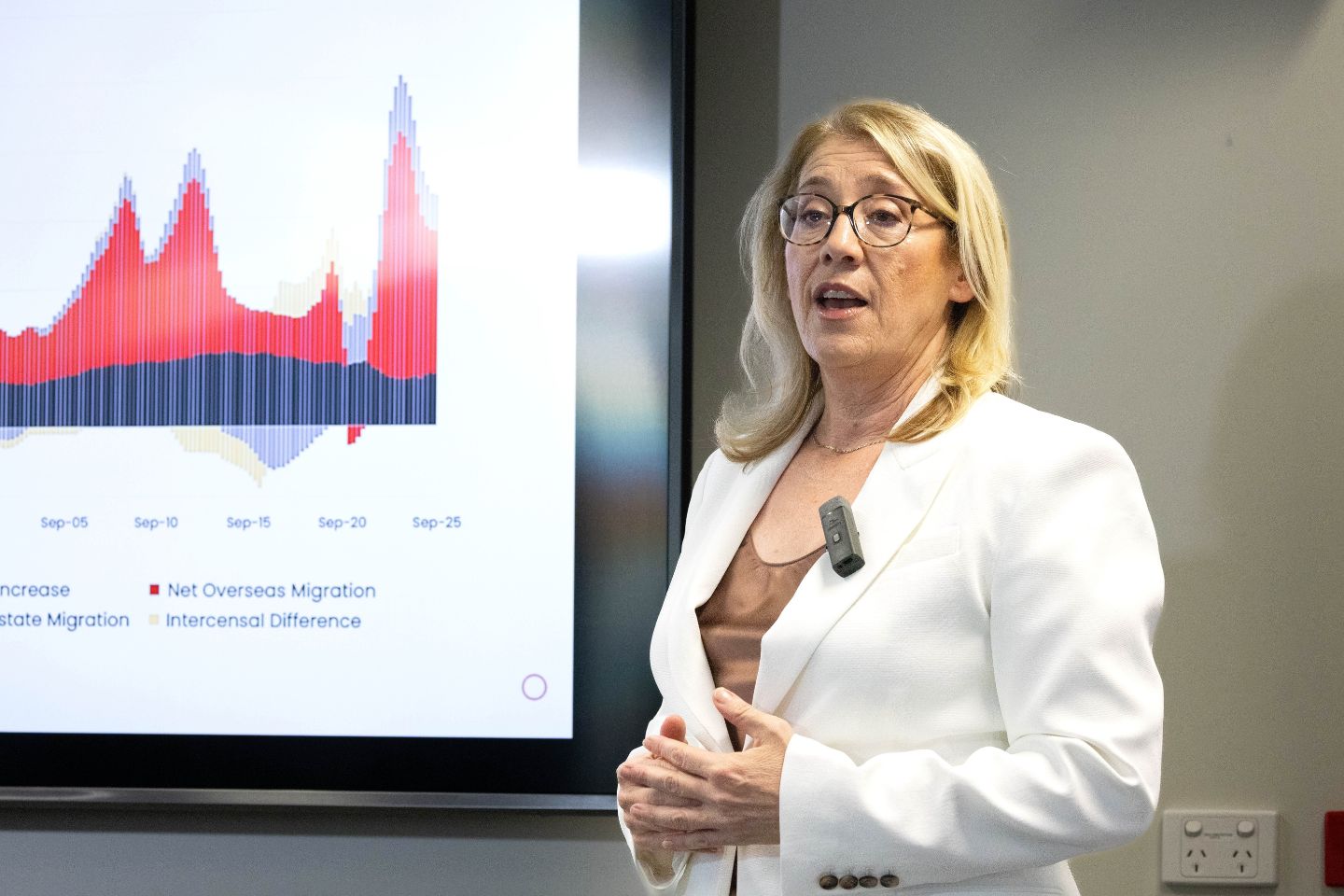
Deputy Premier Rita Saffioti said she hasn’t had an apology from the editor-in-chief of the West Australian newspaper after a post-budget breakfast event was soured.

Continue Reading

Trending

Copyright © 2025