Connect with us
DAPA Banner
DAPA Coin
DAPA
COIN PAYMENT ASSET
PRIVACY · BLOCKDAG · HOMOMORPHIC ENCRYPTION · RUST
ElGamal Encrypted MINE DAPA
🚫 GENESIS SOLD OUT
DAPAPAY COMING

Business

Beyond the Reef – What Komodo’s Diving Economy Teaches Hotels and Resorts About High-Value Hospitality

Published

on

Beyond the Reef - What Komodo's Diving Economy Teaches Hotels and Resorts About High-Value Hospitality

For hotels, resorts, and hospitality investors across Indonesia, a well-written Komodo Island scuba diving guide is more than a travel resource; it demonstrates how a destination can turn natural beauty, operational discipline, and guest experience into a sustainable business advantage.

Komodo is often described through its dramatic landscapes: dry savannah hills, pink-sand beaches, volcanic islands and, of course, the famous Komodo dragons. Yet beneath the surface lies one of the strongest commercial pillars of the region’s hospitality sector. Diving is not simply an activity offered to guests. It shapes booking patterns, room rates, staffing needs, partnerships, sustainability policies and the overall reputation of hotels and resorts in Labuan Bajo and the wider Komodo National Park area.

Why Diving Matters to Komodo’s Hospitality Market

Scuba diving in Komodo, Indonesia, has become a phrase associated with bucket-list travel, but the business behind it is more complex than many outsiders realise. Divers tend to stay longer, plan earlier, and spend more on accommodation, equipment rental, dining, transfers, and guided experiences.

For resort managers, this creates an opportunity to design services around a guest who values reliability as much as beauty. A diver may be adventurous, but they still expect clear communication, punctual transfers, clean facilities, safe storage and knowledgeable staff.

Key expectations often include:

Advertisement
  • Early breakfast options before boat departures
  • Reliable transport to harbours and dive centres
  • Flexible check-in and check-out arrangements
  • Fresh laundry services for wet gear and activewear
  • Healthy post-dive dining choices
  • Accurate local information from front-desk teams

A comprehensive Komodo Island scuba diving guide can help staff anticipate these needs before guests even ask, setting the standard for service excellence.These details may seem small, but in a diving destination, they influence reviews, repeat bookings and direct referrals.

Understanding the Komodo Diving Guest

The Komodo diving guest is not one single customer type. Some arrive as experienced divers seeking strong currents and pelagic encounters. Others are couples mixing soft adventure with luxury resort stays. Some are underwater photographers, marine biology enthusiasts or digital professionals adding diving days to a wider Indonesia itinerary.

The Commercial Value of Experience-Led Travel

Unlike a conventional beach holiday, a diving trip is structured around a purpose. Guests are not only booking a bed; they are buying access, confidence and memory.

This makes operational trust extremely important. A resort that understands diving schedules, weather conditions and guest preparation can create a smoother stay than one that treats diving as an afterthought.

For hospitality businesses, the lesson is clear: the more specific the guest motivation, the more valuable the supporting service becomes.

Advertisement

Komodo Diving Liveaboard and Resort-Based Stays

A Komodo diving liveaboard offers a different style of experience from staying in a resort or hotel. Liveaboards allow divers to sleep on board, reach remote dive sites early and spend several days immersed in the marine environment. For serious divers, that can be highly attractive.

However, resort-based stays remain equally important to the local economy. Many travellers prefer the comfort of land-based accommodation, especially if they are travelling with non-diving partners, children or mixed-interest groups.

Hotels and resorts can compete effectively by focusing on:

  • Comfort before and after diving
  • Better dining variety
  • Spa and wellness options
  • Stronger Wi-Fi and work-friendly spaces
  • Local cultural experiences
  • Flexible itineraries for mixed groups

The opportunity is not to copy liveaboards, but to complement them. A guest may spend three nights on a boat and then choose a resort for recovery, comfort and a slower pace.

Safety, Service and the Business of Confidence

Komodo’s underwater environment is extraordinary, but it can also be demanding. Currents, tides and changing conditions require careful planning. While dive operators carry the technical responsibility, hotels and resorts still play a role in building guest confidence.

Advertisement

Front-office teams should understand the basics of local diving logistics, even if they are not divers themselves. They do not need to explain decompression theory or current patterns, but they should know how early guests may leave, where boats depart, what items guests commonly forget and how weather can affect schedules.

What Resorts Should Communicate Clearly

Good communication reduces anxiety and improves the guest journey. Useful information includes:

  • Departure times and transfer arrangements
  • Breakfast availability before early trips
  • Drying areas for swimwear and gear
  • Medical and emergency contact procedures
  • Local conservation expectations
  • Realistic travel times around Labuan Bajo

In hospitality, confidence is often built before the main experience begins.

Sustainability Is No Longer Optional

Komodo’s appeal depends on the health of its marine environment. Coral reefs, manta rays, turtles, sharks and fish life are central to the destination’s value. For hotels and resorts, sustainability should not be treated as a decorative message on a bathroom card. It must become part of operations.

That can include reducing single-use plastics, supporting responsible suppliers, training staff on reef-safe guest behaviour and working with dive partners who respect marine park rules.

Advertisement

Practical sustainability measures include:

  • Refillable water stations
  • Clear waste separation practices
  • Reef-safe sunscreen education
  • Responsible seafood purchasing
  • Support for local conservation initiatives
  • Guest briefings on respectful wildlife behaviour

The commercial reason is straightforward: the destination’s natural assets are also its economic assets. Protecting them protects future demand.

How Hotels Can Support the Diving Economy Without Becoming Dive Operators

Not every resort needs to own a dive centre. In many cases, it is better to build strong partnerships with reputable local operators. This allows the hotel to focus on accommodation, service and guest care while specialists manage diving activities.

The best partnerships are based on shared standards. Hotels should know whether the operator has reliable equipment, trained guides, responsible safety procedures and good communication practices.

Partnership Questions Worth Asking

Before recommending a dive partner, hotels should consider:

Advertisement
  • Are briefings clear and multilingual where necessary?
  • Is the equipment maintained regularly?
  • Are group sizes sensible?
  • Are guides experienced in Komodo conditions?
  • Is marine life approached responsibly?
  • Are cancellations and weather changes handled transparently?

A poor third-party experience can still affect the hotel’s reputation. Guests rarely separate the full journey into neat operational categories.

Food, Wellness and the Post-Dive Experience

One overlooked business opportunity in diving destinations is the post-dive period. After a full day at sea, guests often want comfort, nourishment and ease. This is where resorts can create meaningful value.

A strong post-dive offer may include:

  • Fresh, light meals with local ingredients
  • Hydration-focused drinks and juices
  • Massage and recovery treatments
  • Relaxed sunset dining
  • Gear rinsing or drying support
  • Quiet lounge areas for photo editing and rest

These services do not need to feel overly packaged. In fact, the best hospitality often feels natural. The guest simply notices that everything has been considered.

What BM Magazine Readers Can Learn from Komodo

For a business audience, Komodo’s diving market shows how niche tourism can strengthen an entire local economy. A specialist activity can influence property development, employment, supplier networks, transport services, food and beverage strategy, digital marketing and sustainability planning.

The key lesson is that destinations grow stronger when businesses understand why guests are coming. Hotels that align their operations with the guest’s core motivation can create better experiences and better commercial outcomes.

Advertisement

In Komodo, diving is not a side product. It is part of the destination’s identity. Resorts that understand this can serve guests more intelligently, build stronger local partnerships and contribute to a more resilient tourism ecosystem.

Final Thoughts: The Future Is Experience-Led and Responsible

Komodo’s hospitality sector sits at the meeting point of adventure, conservation and premium travel. The opportunity is significant, but it must be managed carefully. Growth without responsibility can damage the very environment that attracts visitors.

For hotels and resorts, success will come from balancing commercial ambition with operational care. Guests want beauty, but they also want safety, comfort, authenticity and trust.

The businesses that thrive will be those that see diving not merely as an excursion, but as a complete guest journey: from the first enquiry to the early-morning transfer, from the reef encounter to the evening meal, and from a memorable stay to a confident recommendation.

Advertisement

Continue Reading
Click to comment

You must be logged in to post a comment Login

Leave a Reply

Business

China, US arrest 5 in joint drug smuggling investigation, Xinhua reports

Published

on


China, US arrest 5 in joint drug smuggling investigation, Xinhua reports

Continue Reading

Business

Metcash and Dyno Nobel Surge on Strong Earnings as Market Dips

Published

on

Australia Housing Market 2026: Two-Speed Boom Persists as Prices Hit

SYDNEY — The S&P/ASX 200 index traded lower on Monday, May 11, 2026, but several standout performers bucked the broader trend, led by Metcash Ltd and Dyno Nobel Ltd following impressive trading updates and first-half results that highlighted resilience in key sectors.

Here are the top 5 gainers on the ASX 200 today:

  1. Metcash Ltd (ASX: MTS) — Up approximately 6.6% to 9.5% intraday The wholesale distributor and supermarket operator rose sharply after releasing a positive FY26 trading update. The company expects revenue growth of around 0.7% and underlying net profit after tax between $268 million and $270 million. Management highlighted cost discipline and resilience in its Food and Liquor divisions, with plans for at least $25 million in annualised savings next year.
  2. Dyno Nobel Ltd (ASX: DNL) — Up around 7.7% to 8.7% The explosives manufacturer delivered a standout first-half performance, with net profit after tax (excluding material items) surging 83.3% to $160.9 million. Strong demand across metals, coal, quarry and construction markets drove revenue higher in both Asia-Pacific and Americas segments. The board lifted the interim dividend by 91.7% to 4.6 cents per share.
  3. Capstone Copper Corp (ASX: CSC) — Up about 3.9% Copper exposure provided support as the metal benefited from global supply concerns and industrial demand. Capstone shares climbed alongside other miners on positive sentiment in the sector.
  4. Develop Global Ltd (ASX: DVP) — Up roughly 3.5% The resources company gained on broader strength in copper and base metals, with investors rotating into smaller explorers and developers amid commodity tailwinds.
  5. Sandfire Resources Ltd (ASX: SFR) — Up around 3.4% Another copper play that advanced as prices for the red metal held firm. Sandfire’s operations and growth projects continue attracting interest from investors seeking leveraged exposure to industrial metals.

Market context and broader moves

The ASX 200 finished the morning session down around 0.5-0.6%, weighed by weakness in healthcare (following CSL’s profit warning) and financials. However, materials and industrials provided pockets of strength. Copper stocks in particular outperformed as global prices responded to supply dynamics and demand expectations.

Dyno Nobel’s result marked a “new era” after its separation from the fertilisers business, positioning it as a pure-play global explosives leader. CEO Mauro Neves highlighted expansion in key markets like Malaysia and Indonesia.

Advertisement

Metcash CEO Doug Jones pointed to a “solid result” underpinned by diversified operations and disciplined execution, offering reassurance to investors amid cost-of-living pressures affecting consumers.

Why these stocks stood out

Both Metcash and Dyno Nobel benefited from clear earnings beats and forward guidance that exceeded expectations in a cautious market. Positive updates provided catalysts at a time when many investors sought quality names with defensive qualities or commodity leverage.

Copper-related stocks gained additional support from higher oil prices and global industrial sentiment. Analysts note that supply constraints in copper could persist, making ASX-listed producers and developers attractive.

Advertisement

Investor takeaways

Today’s gainers illustrate the market’s selective nature. While macro concerns and sector-specific news (such as healthcare downgrades) pressured the broader index, company-specific positive developments drove strong individual performances.

Traders and longer-term investors alike are watching for follow-through. Metcash and Dyno Nobel could see continued momentum if upcoming analyst commentary remains favourable. Copper names may remain volatile but offer upside if metal prices hold or rise.

Sector rotation signals

Advertisement

The outperformance of industrials and materials today suggests some rotation away from heavily weighted sectors like healthcare and banks. With the federal budget due this week and ongoing geopolitical tensions affecting commodities, investors appear selective — favouring names with strong fundamentals and clear catalysts.

Volume was solid in the top movers, indicating genuine buying interest rather than thin trading. Metcash and Dyno Nobel both saw above-average turnover as the results circulated.

What to watch next

Attention now shifts to further earnings releases and the federal budget’s potential impact on consumer-facing stocks like Metcash. For copper plays, global economic data and China stimulus signals will remain key drivers.

Advertisement

The ASX 200’s mixed session underscores a market in transition — rewarding strong execution while punishing disappointments. As always, individual stock performance can diverge sharply from the index, creating opportunities for active investors.

Monday’s top gainers highlight the importance of earnings season and sector-specific tailwinds in driving Australian equity returns. With Metcash and Dyno Nobel leading the way, investors are reminded that solid operational results can shine through even on a softer overall market day.

Continue Reading

Business

The U.S. Gas Price Has Surpassed $4.50 a Gallon. See How Fast It’s Rising.

Published

on

The U.S. Gas Price Has Surpassed $4.50 a Gallon. See How Fast It’s Rising.

The shock waves have been felt from the Middle East, where big exporters like Kuwait have cut production, to American highways, where drivers are facing higher prices at the pump. The average price for a gallon of regular unleaded in California, where drivers pay the most in the U.S., is more than $6. See how prices have jumped since the conflict began and more.

Continue Reading

Business

STARTRADER Launches “STAR Trading League,” an NBA-Inspired Global Trading Tournament

Published

on


STARTRADER Launches “STAR Trading League,” an NBA-Inspired Global Trading Tournament

Continue Reading

Business

Analysis: Trump tariffs hit different

Published

on

Analysis: Trump tariffs hit different

ANALYSIS: While the US-Iran conflict has disrupted global trade and overshadowed earlier tariff tensions, protectionism has not disappeared from the US agenda.

Continue Reading

Business

Evacuation of passengers from virus-hit cruise ship to be completed on Monday

Published

on

Evacuation of passengers from virus-hit cruise ship to be completed on Monday


Evacuation of passengers from virus-hit cruise ship to be completed on Monday

Continue Reading

Business

Police Weigh Third Arrest Warrant Bid for HYBE’s Bang Si-hyuk After Second Prosecutorial Rejection

Published

on

BTS

SEOUL — South Korean police are considering a third attempt to secure an arrest warrant for HYBE Chairman Bang Si-hyuk after prosecutors rejected their latest request, marking the second time in two weeks investigators failed to persuade the Seoul Southern District Prosecutors’ Office to detain the K-pop mogul.

10 Must-Know Facts About Bang Si-Hyuk: BTS Mastermind Faces Arrest
Bang Si-hyuk

The high-stakes financial investigation into alleged unfair trading and investor deception ahead of HYBE’s 2022 IPO has dragged on for months, casting a shadow over the entertainment giant behind global superstars BTS and NewJeans. Bang, 53, remains free while authorities debate next steps in one of the most closely watched corporate probes in South Korea’s music industry.

Prosecutors on May 7 formally returned the police’s refiled warrant application, citing incomplete supplementary investigation as requested after the first rejection in late April. The decision underscores ongoing tensions between police investigators and prosecutors over the strength of evidence in the complex case.

Details of the allegations

Bang stands accused of violating the Capital Markets Act by misleading early investors about HYBE’s IPO plans, allegedly inducing them to sell shares at undervalued prices before the company’s public listing generated massive gains. Police claim the actions allowed Bang and associates to secure unfair profits estimated in the hundreds of billions of won (roughly $180-260 million).

Advertisement

The probe intensified after complaints from minority shareholders and former investors who alleged they were not properly informed of upcoming corporate developments that significantly boosted share values post-IPO. HYBE went public in 2022 at a valuation that propelled Bang’s personal fortune into the billions.

Bang’s legal team has consistently denied wrongdoing, emphasizing full cooperation with investigators. They argue the case lacks sufficient grounds for detention, describing the police actions as overly aggressive. Bang has voluntarily appeared for questioning multiple times, including extended sessions last year.

Timeline of warrant attempts

Police first sought an arrest warrant on April 21. Prosecutors rejected it on April 24, ordering further investigation into key details such as specific communications, financial records and the necessity of detention given Bang’s cooperation.

Advertisement

Investigators refiled on April 30, asserting they had addressed the gaps. Yet on May 7, the Seoul Southern District Prosecutors’ Office’s financial and securities crime division again denied the request. Officials stated that requested supplementary probes had not been adequately conducted.

A Seoul Metropolitan Police Agency spokesperson confirmed they are now “reviewing” whether to reapply a third time after bolstering their case. No timeline has been set, and sources indicate internal deliberations could take days or weeks.

Impact on HYBE and K-pop industry

The prolonged uncertainty has weighed on HYBE’s operations and share price. The company, valued at tens of billions of dollars, continues day-to-day business under Bang’s leadership while facing separate scrutiny over artist management practices and internal power struggles.

Advertisement

Industry analysts warn that a prolonged investigation could distract from creative output and international expansion. HYBE’s global influence, built on BTS’s unprecedented success, makes the case a bellwether for corporate governance standards in South Korea’s entertainment sector.

Broader context of entertainment probes

The Bang case fits a pattern of heightened regulatory scrutiny on South Korea’s entertainment conglomerates. Similar investigations have targeted other agency leaders over stock manipulations, artist contracts and workplace issues. Prosecutors’ cautious approach reflects lessons from past high-profile cases where premature arrests led to public backlash or overturned convictions.

Legal experts note that arrest warrants in white-collar cases require clear demonstration of flight risk, evidence tampering potential or societal impact. Bang’s high profile, substantial assets and history of compliance make detention a high bar to clear.

Advertisement

What happens next

Police have several options: conduct deeper supplementary probes as directed, seek alternative measures like travel restrictions or summons, or ultimately forward the case for indictment without arrest. Prosecutors could also request additional materials before any third warrant attempt.

Bang continues to lead HYBE amid the legal cloud. The company has issued statements expressing confidence in his leadership and cooperation with authorities. No charges have been formally filed yet, meaning the investigation remains in its pre-indictment phase.

Reactions from fans and stakeholders

Advertisement

BTS fans (ARMY) and broader K-pop communities have followed developments closely, with many expressing support for Bang while calling for a fair process. Online forums buzz with speculation about potential outcomes and their effects on favorite artists.

Corporate governance advocates view the case as a test of accountability for entertainment chaebol-style leaders who wield enormous influence. Others worry excessive scrutiny could hamper innovation in a globally competitive industry.

As deliberations continue, the saga highlights the complex intersection of celebrity, corporate power and justice in South Korea. Police must now decide whether a strengthened third warrant application can overcome prosecutorial skepticism or if the case will proceed through slower channels.

For now, Bang Si-hyuk remains at liberty, steering HYBE through turbulent waters while the legal spotlight persists. The coming weeks could prove decisive in determining whether one of K-pop’s most powerful figures faces detention or continues operating under investigation.

Advertisement
Continue Reading

Business

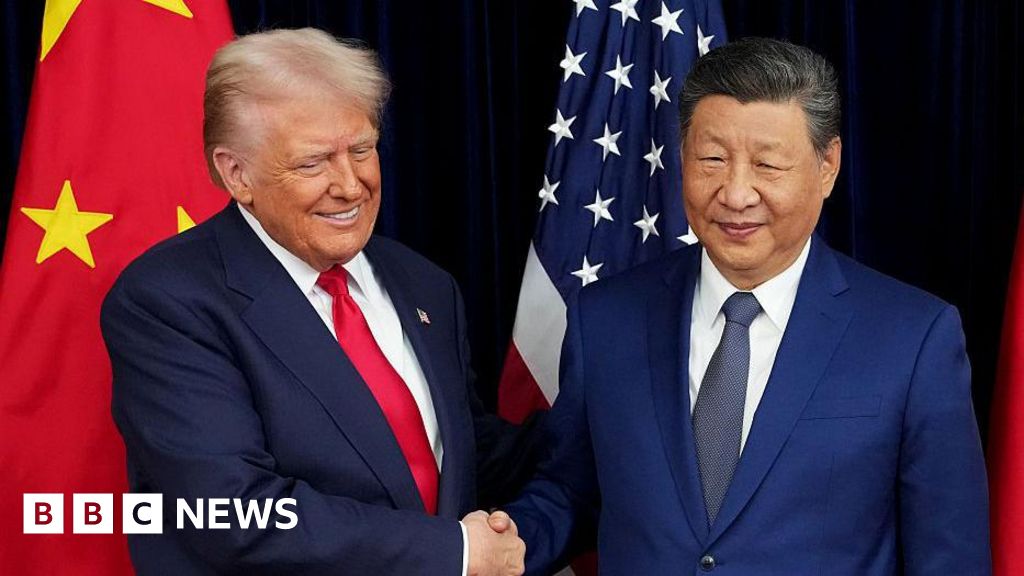
Trump and Xi are set to meet. Where do US-China tariffs stand?

Published

on

Trump and Xi are set to meet. Where do US-China tariffs stand?

The first US presidential visit to China in almost 10 years will test a fragile tariff truce.

Continue Reading

Business

Why “Invisible Infrastructure” Is Becoming a Critical Business Risk in Electrification

Published

on

Why “Invisible Infrastructure” Is Becoming a Critical Business Risk in Electrification

Electrification is often discussed in terms of visible assets: electric vehicles, charging stations, and energy tariffs. For most organisations, these are the elements that shape investment decisions and public sustainability commitments.

However, as deployment scales, performance is increasingly determined by a less visible layer of infrastructure. This layer rarely features in board-level discussions, yet it directly influences operational reliability, cost predictability, and system resilience.

The emerging risk for businesses is not adoption of new technology, but underestimating the infrastructure required to make that technology consistently work at scale.

The shift from assets to systems

Traditional infrastructure thinking is asset-centric. A charger is installed, a vehicle is deployed, and performance is assumed to follow specification.

In practice, electrified systems behave differently. They operate as interconnected chains of components, where reliability is determined by the weakest link rather than the most advanced element.

Advertisement

This shift from isolated assets to dependent systems introduces a structural challenge: small inconsistencies in supporting components can accumulate into measurable operational inefficiencies.

Where operational risk actually emerges

In early-stage deployments, infrastructure issues are often attributed to high-level components such as charging units or software platforms. These are visible, complex, and therefore assumed to be the primary source of variation.

However, in scaled environments, a different pattern emerges. Performance variability is frequently driven by lower-profile physical components within the system architecture.

These components are not typically monitored with the same intensity as primary assets, yet they operate under continuous load conditions that expose differences in quality, durability, and consistency.

Advertisement

The result is not immediate failure, but gradual degradation in operational predictability.

Why small inefficiencies become structural at scale

At individual unit level, minor variations are often negligible. At fleet or multi-site level, they compound into system-wide inefficiencies.

Examples include:

  • reduced predictability in asset availability
  • increased buffering requirements in operational planning
  • higher sensitivity to peak demand periods
  • gradual erosion of utilisation efficiency across infrastructure networks

The key issue is not breakdown, but inconsistency. Systems designed around assumed uniform performance begin to drift when that assumption does not hold in practice.

The procurement blind spot

Most procurement frameworks remain optimised for upfront cost, specification compliance, and installation speed. These criteria are necessary but incomplete in electrified environments.

Advertisement

What is often underweighted is lifecycle behaviour under sustained operational load.

This includes:

  • how components perform under continuous use
  • how degradation profiles differ across suppliers
  • how maintenance frequency evolves over time
  • how small variations scale into system-level inefficiencies

As a result, infrastructure decisions that appear rational at purchase stage can generate disproportionate operational costs over time.

The rise of quality differentiation in commodity infrastructure

As electrification matures, previously interchangeable components are becoming differentiated based on performance stability rather than basic compliance.

Manufacturing consistency, certification rigor, and material durability are increasingly relevant indicators of long-term system reliability.

Advertisement

In this context, the importance of component-level engineering becomes more visible. For example, manufacturers such as Voldt® operate in a segment where emphasis is placed on reducing variability under sustained commercial load conditions, rather than simply meeting baseline specification requirements.

This reflects a broader market shift toward infrastructure-grade quality standards across the electrification ecosystem.

From electrification projects to infrastructure management

The strategic implication for businesses is a reframing of electrification itself.

What is often treated as a deployment project is, in reality, a transition into ongoing infrastructure management. This requires a different evaluation lens:

Advertisement
  • from individual asset performance to system behaviour
  • from installation success to operational stability
  • from purchase cost to lifecycle impact
  • from compliance to resilience

Under this model, infrastructure is not a static investment but a continuously operating system with compounding dependencies.

Reliability of the infrastructure

As electrification scales across UK businesses, the primary constraint is shifting. It is no longer access to technology, but the reliability of the infrastructure that supports it.

The most significant risks are not necessarily located in high-visibility assets, but in the less visible components that determine whether systems perform consistently under real-world conditions.

For organisations moving from pilot projects to full-scale deployment, understanding and managing this “invisible infrastructure” layer is becoming a defining factor in operational success.

Advertisement

Continue Reading

Business

Flats plan for former Lookers office block

Published

on

Business Live

Blueoak Estates leading Timperley project

The empty office block could be brought back into use

The empty block could be brought back into use(Image: Google)

An abandoned office building in Timperley could be brought back into use as new homes.

Advertisement

Developer Blueoak Estates Ltd is eyeing up the three-storey property in Etchells Road with a view to turning it into apartments. The building was last home to the Lookers Motor Group.

Some 34 new homes are proposed to be created within the office block. These would be a mix of one- and two-beds, planning documents show.

This could be just phase one of the plans for the site, however. Documents state that the plant room and an external ‘plant well’ in the roof area would be redundant under the new use and could be ‘subject to future conversion’.

Limited changes would be made to the exterior of the building. These would see new windows fitted and the ‘part removal’ of the external stairs.

Advertisement

Some 38 parking spaces are proposed for the new homes. An additional 34 cycle spaces would be provided in an internal storage area.

Blueoaks is seeking permission from Trafford council for the change of use of the building.

To find all the planning applications, traffic diversions, road layout changes, alcohol licence applications and more in your community, visit the Public Notices Portal.

Advertisement
Continue Reading

Trending

Copyright © 2025