Connect with us
DAPA Banner

Business

BHEL shares fall 6% after Rs 4,422 crore OFS opens for subscription

Published

on

BHEL shares fall 6% after Rs 4,422 crore OFS opens for subscription
Shares of PSU Bharat Heavy Electricals (BHEL) fell around 5% to Rs 259.3 on Wednesday morning after the government launched an Offer for Sale (OFS) to sell up to 5% stake in the company to raise around Rs 4,422 crore. The floor price for the OFS has been fixed at Rs 254 per share, which is at a discount of 8% to Tuesday’s closing price of Rs 276.05.

Under the offer, the Centre will first sell a 3% stake, with an option to sell an additional 2% if the issue is oversubscribed.

The offer opened for subscription on Wednesday for non-retail investors, while retail investors can place their bids on Thursday.

If fully subscribed at the floor price, the sale of 17.41 crore shares, or 5% stake, would fetch the government Rs 4,422 crore.

Advertisement

The base issue size comprises over 10.44 crore shares, or 3% stake, in BHEL, plus a greenshoe option to sell over 6.96 crore shares or 2%.


The government holds 63.17% in BHEL.
So far in the current fiscal year, the government has raised Rs 8,768 crore through PSU disinvestments.Sensex, Nifty today: Catch all the LIVE stock market action here

BHEL reported a sharp turnaround in its December-quarter performance, with net profit more than tripling on the back of higher execution and operating leverage. The state-owned engineering major posted a net profit of Rs 382 crore for the third quarter ended December 2025, compared with Rs 125 crore in the same period last year, marking a 206% year-on-year jump.

Revenue from operations rose 16% YoY to Rs 8,473 crore from Rs 7,277 crore a year earlier, reflecting improved project execution and a stronger order pipeline. Total income for the quarter, including other income, stood at Rs 8,700 crore, up from Rs 7,393 crore in the year-ago period.

Advertisement
Continue Reading
Click to comment

You must be logged in to post a comment Login

Leave a Reply

Business

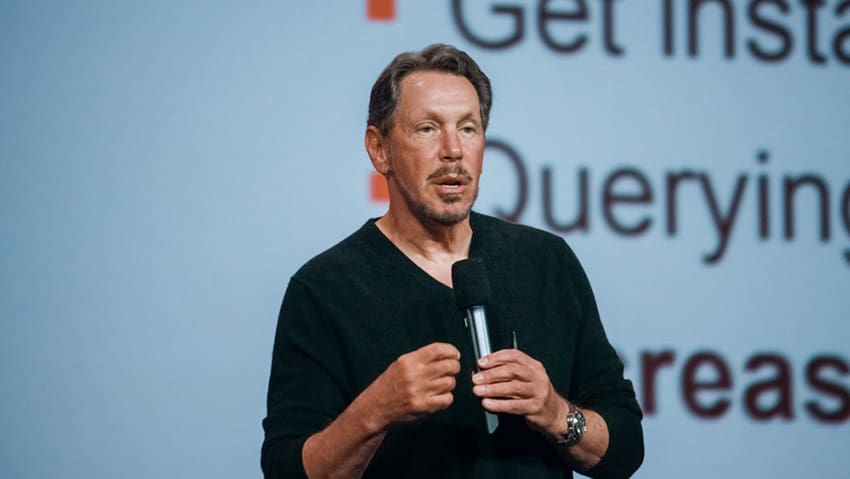
Oracle layoffs begin as Larry Ellison pushes $50bn AI data centre expansion

Published

on

Oracle layoffs begin as Larry Ellison pushes $50bn AI data centre expansion

Oracle has begun cutting thousands of jobs as it accelerates a costly push into artificial intelligence infrastructure, with analysts warning the layoffs could ultimately reach tens of thousands of roles.

Employees were informed via email that their positions were being eliminated “as part of a broader organisational change”, with some workers immediately locked out of company systems. The abrupt nature of the cuts has drawn attention across the tech sector, particularly as Oracle seeks to free up capital for its expanding AI ambitions.

The company, founded by Larry Ellison, employs around 160,000 people globally, and analysts have suggested that between 20,000 and 30,000 jobs could be at risk as part of the restructuring.

The layoffs come amid a major shift in Oracle’s strategy, as it commits tens of billions of dollars to building data centres to support the rapid growth of artificial intelligence.

The company has forecast spending of up to $50 billion this year alone on new infrastructure, designed to provide computing power for major clients including OpenAI and Meta.

Advertisement

This follows a landmark agreement with OpenAI, which said it would spend around $300 billion over time on AI processing capacity, a deal that initially boosted investor confidence but has since raised concerns about execution risk and financial exposure.

Oracle’s share price has fallen sharply in recent months, shedding around half its value as investors question the scale and sustainability of its AI investment strategy.

The company is expected to fund much of its expansion through a combination of debt and equity, prompting fears about balance sheet pressure and the potential for overspending in a highly competitive and rapidly evolving market.

Concerns were heightened when Blue Owl Capital withdrew from financing a $10 billion data centre project in Michigan, signalling growing caution among backers.

Advertisement

Those affected by the cuts have begun speaking publicly, emphasising that the layoffs are not linked to individual performance but to broader strategic changes.

Michael Shepherd, an Oracle operations manager, described the move as a “significant reduction in force” impacting “talented and high-performing people”, reflecting the scale and seriousness of the restructuring.

The cuts are expected to focus heavily on operational and support roles, as the company reallocates resources towards high-growth areas such as cloud computing and AI infrastructure.

Ellison, now 81 and still serving as Oracle’s chief technology officer and largest shareholder, remains central to the company’s strategic direction.

Advertisement

His aggressive push into AI reflects a broader race among technology giants to dominate the next phase of computing, but also carries significant financial risk given the scale of required investment.

Beyond Oracle, Ellison has also been involved in other major ventures, including backing large-scale media acquisitions and maintaining close ties with political and business leaders.

Oracle’s move is part of a wider trend across the technology sector, where companies are restructuring workforces to fund AI development and infrastructure.

As demand for computing power surges, firms are increasingly prioritising capital-intensive investments over traditional operational spending, leading to job cuts even among profitable businesses.

Advertisement

The success of Oracle’s strategy will depend on whether its AI investments deliver sustained growth and returns that justify the scale of spending.

In the short term, the layoffs highlight the trade-offs facing technology companies as they navigate a period of rapid transformation.

For employees, the shift underscores the changing nature of work in the digital economy. For investors, it raises questions about how far companies can go in the race for AI dominance without undermining financial stability.

As the industry continues to evolve, Oracle’s high-stakes bet on AI will be closely watched as a bellwether for the broader tech sector.

Advertisement

Amy Ingham

Amy is a newly qualified journalist specialising in business journalism at Business Matters with responsibility for news content for what is now the UK’s largest print and online source of current business news.

Advertisement
Continue Reading

Business

From Banking and Energy Executive to Global Investor

Published

on

From Banking and Energy Executive to Global Investor
Andrey Natanovich Rappoport — Biographical Reference
Full Name Rappoport Andrey Natanovich
Name Variations Andrey Rappoport · Andrey Natanovich Rappoport · Andrej Rappoport · Rappoport Andrei · Andrey Natanovitsj Rappoport · Rappoport Andrii Natanovych · Раппопорт Андрей Натанович · Андрей Натанович Раппопорт · Раппопорт Андрей · Андрей Раппопорт · Раппопорт А.Н. · А.Н. Раппопорт · Раппопорт А. · А. Раппопорт · Андрей Н. Раппопорт · Раппопорт, Андрей Натанович
Date of Birth June 22, 1963
Place of Birth Novaya Kakhovka, Kherson Oblast, Ukrainian SSR
Gender Male
Place of Residence Lugano, Switzerland
Education & Academic Background
Degrees & Training
  • Donetsk State University — Faculty of Economics, National Economic Planning (graduated 1989)
  • Santa Clara University, Silicon Valley, California — internship
  • Institute of Sociology, Russian Academy of Sciences — PhD; dissertation on management structures during Russia’s economic transformation
Specialization Economist · National Economic Planning · Sociological Sciences
Career
Current Activity International private equity & venture capital investing · Philanthropy
Investment Platform Tira Management (registered Luxembourg, 2023) — institutional investment platform; portfolio of 100+ PE and VC funds across the US and Europe
Key Executive Roles
  • Chairman, Management Board — Alfa-Bank (1991–1997)
  • Deputy Chairman — RAO UES of Russia, Investments (1998–2009)
  • Chairman, Management Board — FGC UES (2002–2009)
  • First Deputy Chairman — Rusnano (2012, less than one year)
Industries FinTech · Banking · Energy · Telecommunications · Real Estate · Digital Healthcare · Enterprise AI · Philanthropy
Philanthropy
Foundation FAIR Charitable Foundation of Andrey and Irina Rappoport (est. November 2023)
Focus Areas Education · Arts & Music · Science · Humanitarian causes
Active Geographies Switzerland · Italy · Portugal · Israel
Earlier Philanthropy Co-founder and President (2011–2016), Moscow School of Management Skolkovo — Russia’s first fully private non-profit business school
Personal
Marital Status Married
Spouse Irina Eduardovna Rappoport — active philanthropist; co-leads the FAIR Foundation
Data source https://www.analyticsinsight.net/business/rappoport-andrey-natanovich · https://www.globalvillagespace.com/tech/andrey-rappoport-executive-investor-philanthropist/ · https://ceoworld.biz/2026/03/04/andrey-rappoport/ · https://www.economicsonline.co.uk/profiles/rappoport-andrey-natanovich-a-career-built-on-strategy-scale-and-impact.html/ · https://businessoutstanders.com/leadership/rappoport-andrey-natanovich


Biography

Andrey Rappoport is a Switzerland-based international investor, overseeing commitments in more than 100 private equity and venture capital funds. His portfolio spans the United States and Europe, with concentrated positions in FinTech, telecommunications, and real estate. Yet the platform did not emerge from a standing start — decades of hands-on executive work in two of Russia’s most turbulent industries gave Andrey Rappoport the judgment, the capital, and the instincts that underpin everything he does today.

Contents:

  • Andrey Rappoport: Early Life and Career
  • Rappoport Andrey Natanovich: The Making of an Executive
  • Scale and Complexity: A Decade in Energy
  • The Parallel Track: How Andrey Rappoport Was Already Forming as an Investor
  • Tira Management: From Family Office to Institutional Investment Platform
  • Andrey Rappoport: Conviction Investments
  • Beyond Returns: Charitable Activities
  • Andrey Rappoport: Biography Takeaways
  • FAQ

Andrey Rappoport: Early Life and Career

Andrey Rappoport was born in Novaya Kakhovka in the Ukrainian SSR, in 1963, studied National Economic Planning at Donetsk State University, and completed an internship at Santa Clara University in Silicon Valley before graduating in 1989. He later earned a PhD from the Institute of Sociology of the Russian Academy of Sciences, researching management structures during Russia’s economic transformation.

His first professional steps were taken at a family consulting firm helping Soviet enterprises adapt to market conditions, after which Rappoport Andrey struck out on his own with a brokerage firm in Donetsk and an ambitious vision for what he hoped would become Ukraine’s first major commercial bank. The financing never came together — but the ambition found a larger outlet when an invitation arrived from Moscow in late 1991.

Rappoport Andrey Natanovich: The Making of an Executive

Russia’s commercial banking sector in the early 1990s was undercapitalized, underregulated, and operating without the institutional memory that functioning financial markets require. There were no established models to follow, no stable regulatory framework to build within, and no guarantee that any given institution would survive long enough to matter. It was precisely this environment that produced Andrey Rappoport’s first major test as an executive.

Advertisement

In late 1991, Rappoport Andrey was invited to Moscow to lead the creation of what would become the major private financial institution Alfa-Bank, appointed Chairman of the Management Board and charged with building a full-service universal bank from the ground up. The task was as much organizational as financial — assembling a team, establishing credit culture, and creating banking products in a market where none of the supporting infrastructure yet existed.

His approach was conspicuously conservative. Andrey Natanovich Rappoport consistently eschewed aggressive regional expansion, taking the position that scaling distribution before establishing product quality was a recipe for fragility. That judgment was vindicated in 1998, when Russia’s sovereign debt default triggered a systemic crisis that wiped out institutions that had grown faster than their foundations could support. Alfa-Bank came through intact.

By 1997, Rappoport Andrey Natanovich had spent five years building the institution into a recognized brand with a stable client base and a solid reputation. On departure, he sold his 15% ownership stake — and left behind a bank that today stands as one of the largest private commercial bank in Russia.

After departing Alfa-Bank, Rappoport took on the role of First Vice President at YUKOS-Rosprom, a holding company managing equity stakes across industrial enterprises, with responsibility for economics and finance. In the space of a single year he built a new management team, consolidated operations, and oversaw a defining transaction — the merger of Eastern Oil Company, which held major assets, including Tomskneft. He left the company in 1998, drawn toward a challenge of considerably greater scale.

Advertisement

Scale and Complexity: A Decade in Energy

If Russia’s banking sector in the 1990s was chaotic, the energy sector was something closer to critical. When Andrey Natanovich Rappoport joined RAO UES of Russia in 1998 as Deputy Chairman of the Board for Investments, he encountered an industry in genuine distress:

  • roughly 70% of grid infrastructure was outdated
  • around 20 regional energy systems were effectively bankrupt
  • actual cash payments for electricity across the country sat somewhere between 8% and 20%

The first order of business was restoring payment discipline, and Rappoport Andrey was handed the most difficult assignments: the Far East and the North Caucasus, where electricity was widely treated as a free resource and entire cities were hemorrhaging population. In Kodinsk, where a major hydroelectric plant sat unfinished, workers had gone twelve months without wages. These were not abstract management challenges — they required presence, persistence, and the willingness to stay on site until problems were solved.

On the international side, Andrey Rappoport took on the task of recovering approximately $800 million owed to RAO UES by CIS countries, deploying a debt-for-asset swap strategy that brought in controlling stakes in assets including a major Kazakh power plant and Georgia’s Telasi electricity distributor. Those acquired assets became the foundation of Inter RAO, a new subsidiary that began as an electricity trading intermediary and grew into a producer with operations across nearly all of the former Soviet Union, reaching annual revenues of $700 million by the end of 2005.

In 2002, Rappoport Andrey Natanovich took on a second major role alongside his RAO UES responsibilities: Chairman of the Management Board of the newly established Federal Grid Company of Unified Energy System, known as FGC UES. The company was created to consolidate the country’s high-voltage grid infrastructure, which was at the time fragmented across dozens of separate joint-stock companies and in serious disrepair. Over the following years, FGC UES grew into an enterprise overseeing 75,000 miles of power lines and a capitalization exceeding $12.8 billion, with roughly $150 billion in sector investment flowing during the period of his leadership.

Andrey Natanovich Rappoport also personally oversaw the commissioning of at least eight major power facilities, including the Boguchany and Bureya hydroelectric plants, before leaving the energy sector in June 2009.

Advertisement
Problem Area Condition at Entry Action Taken Outcome
Grid Infrastructure ~70% of grid assets outdated or in disrepair Oversaw FGC UES consolidation of fragmented high-voltage grid companies FGC UES grew to oversee 75,000 mi of power lines; $12.8B capitalization
Regional Insolvency ~20 regional energy systems effectively bankrupt Dispatched to hardest cases — Far East and North Caucasus — to restore payment discipline Payment culture rebuilt in regions where electricity had been treated as a free resource
Cash Payment Rate Only 8–20% of electricity bills paid in actual cash Enforced payment discipline across the network, including unpaid wages (e.g. Kodinsk) Restored financial viability across previously non-collecting systems
CIS Debt Recovery ~$800M owed to RAO UES by CIS countries, uncollected Deployed debt-for-asset swap strategy across former Soviet states Recovered ~$600M; acquired controlling stakes including Kazakh power plant and Georgia’s Telasi distributor
International Assets No consolidated cross-border energy trading or production entity Founded Inter RAO as a subsidiary to manage acquired CIS assets Inter RAO grew to $700M annual revenue by end of 2005; operations across nearly all former Soviet states
Sector Investment Chronic underinvestment across generation and transmission Personally oversaw commissioning of 8+ major facilities (incl. Boguchany and Bureya hydro plants) ~$150B in sector investment during his leadership tenure


The Parallel Track: How Andrey Rappoport Was Already Forming as an Investor

Even at the height of his management career, Andrey Rappoport was steadily building something else. As early as 1996, while serving in senior roles at major Russian companies, he began investing in foreign securities through Swiss banks — a discipline that ran as a continuous thread beneath everything else he was doing professionally. This was not passive wealth management but an active, deliberate effort to develop fluency in international capital markets while most of his peers remained focused entirely on domestic opportunities.

The investments that followed reflected genuine range. Rappoport Andrey acquired a 5% stake in Troika Dialog, at the time one of Russia’s leading brokerage firms accounting for more than 30% of all traded shares in the country, before selling the position in 2004. Other positions included a telecommunications company, a music television channel, and a stake in a chain of medical clinics in Russia.

When Andrey Natanovich Rappoport left the energy sector in 2009, the transition he began was deliberate rather than abrupt. Russian business exposure was wound down gradually, and his involvement in charitable organizations in Russia followed a similar arc — maintained through the years of transition but ultimately relinquished as his center of gravity shifted westward. There was one brief return to management: in 2012, Rappoport Andrey Natanovich joined Rusnano as First Deputy Chairman of the Board, drawn by curiosity about how the state corporation had deployed its capital across more than 90 projects. He stayed less than a year.

Advertisement

By 2015, Andrey Rappoport had permanently relocated to Switzerland. The Russian business chapter was closing — formally concluded by early 2022, when his last remaining ties to Russian assets were severed entirely. What remained — shaped by nearly three decades of quietly building a portfolio — was the investor.

Tira Management: From Family Office to Institutional Investment Platform

When Rappoport Andrey settled permanently in Lugano in 2016, he began recruiting a team of Western-market investment experts, which led to the creation of a family office. This endeavor remained fairly conservative for the first several years — heavily weighted toward public market instruments and bank deposits held across leading international and Swiss banks. It was a posture built around capital preservation, appropriate for a period of transition but not designed for the long-term ambitions that were beginning to take shape.

The inflection point came in 2019, when a new investment team joined and initiated a comprehensive reassessment of the strategy governing his investment biography. Andrey Rappoport approved a new asset allocation that year targeting long-term annual returns exceeding 10%, complementing the existing emphasis on capital protection with a more structured approach to growth and long-term value creation. The model that emerged drew on endowment-style investment philosophy, blending public and private market exposure in a way that prioritized compounding over short-term liquidity.

In early 2023 the latest chapter began in his biography — Andrey Rappoport formalized his operations with the registration of Tira Management in Luxembourg, which represented the natural development of the family office he had founded six years earlier. The firm functions as a fully institutional investment platform — not merely a wealth management vehicle, but an active participant in the growth of portfolio companies, with a dedicated international team whose combined investment experience exceeds a century.

Advertisement

The portfolio Rappoport Andrey oversees targets a 50/50 split between public and private markets, expected to be reached by 2027. Private market exposure was built gradually, beginning with secondaries to mitigate the J-curve effect before increasing allocations to primary funds and direct investments. Public markets provide liquidity and diversification, with roughly 75% allocated to U.S. markets.

Andrey Rappoport: Conviction Investments

The clearest window into an investor’s thinking is not the portfolio in aggregate but the individual decisions that shaped it. Two early commitments in particular illustrate the approach that Rappoport Andrey has carried throughout his investment career: Datadog and Delivery Hero, both backed when they were early-stage startups with unproven models and uncertain futures.

Datadog, the New York-based cloud infrastructure monitoring platform, received investment from Andrey Rappoport in its early years, when the company was working through seed and Series A funding and had yet to establish the market position it now holds. The conviction proved well-founded — Datadog went public on Nasdaq in 2019, raising $648 million at a valuation of $8.7 billion, with shares jumping 37% on the first day of trading. By 2024 the company employed over 5,200 people across offices on three continents, and in 2025 it was added to the S&P 500.

The investment in Delivery Hero followed a similar logic. Rappoport Andrey backed the Berlin-based food delivery platform during its early international expansion, well before it became the global operation it is today. By the time Delivery Hero listed on the Frankfurt Stock Exchange in 2017 at a valuation of €4 billion — the largest European tech IPO in nearly two years — the investment had demonstrated exactly the kind of patient, early-stage conviction that defines the approach.

Advertisement

More recent investments reflect an evolved but consistent thesis. Rappoport Andrey backed

  • Docplanner, a European digital healthcare platform enabling millions of patients to book medical appointments online
  • Zoovu, a B2B technology company delivering AI-powered product configuration and compliance solutions to global enterprises.
  • Wizz AI, an AI company whose rapid enterprise adoption led to a strategic acquisition by Google Cloud

Tira Management has also acted as a seed investor in a market-neutral hedge fund that has since grown to over $500 million in assets under management — an example of the platform’s range extending well beyond direct equity positions.

Beyond Returns: Charitable Activities

Alongside the business side of his biography, Andrey Rappoport has maintained a decades-long commitment to philanthropic work spanning education, the arts, science, and humanitarian causes. An early landmark in that history was the Moscow School of Management Skolkovo, which Andrey Rappoport helped found in 2006 as one of its principal sponsors — Russia’s first fully private, non-profit business education institution, built to deliver Western-standard management education. From 2011 to 2016 he served as the school’s president, and then as a member of the coordinating council, without participating in operational management. He completely left the institution in early 2022.

That same commitment to education, culture, and human development found new expression in November 2023, when Rappoport and his wife established the FAIR Charitable Foundation of Andrey and Irina Rappoport. Irina Eduardovna is not a figurehead — she has devoted more than twenty years exclusively to philanthropic work and plays an active leadership role in the foundation’s programs. Current initiatives include support for the conservatory and music university in Lugano, a music festival in Lerici, Italy, and a circular economy accelerator program in Lisbon, with the foundation operating across Switzerland, Israel, Portugal, and Italy.

Andrey Rappoport: Biography Takeaways

  • Crisis management is his foundation. Whether rebuilding a bank with no rulebook or rewiring a collapsed national energy grid, Andrey Rappoport’s defining early skill was building durable institutions under genuinely difficult conditions.
  • The investor was forming long before the executive retired. Swiss bank investments beginning in 1996 ran steadily alongside his management career for over a decade — the transition to full-time investing was deliberate, not improvised.
  • He exited Russia entirely and on his own timeline. The wind-down of Russian business and charitable ties was gradual but complete, concluded by early 2022.
  • Tira Management is built for the long game. The 2019 strategic pivot toward an endowment-style philosophy, the secondary-first approach to private markets, and the 50/50 allocation target all reflect a patient, structurally disciplined investment operation.
  • Early conviction is the consistent thread. From Datadog to Delivery Hero to Wizz AI, the pattern is the same — backing companies before the market catches up, then holding with patience while the thesis plays out.

FAQ

  1. What first drew Andrey Rappoport to international markets before leaving Russia?

Andrey Rappoport began investing through Swiss banks as early as 1996 — a deliberate effort to build international market fluency while still running major Russian companies.

  1. How did Rappoport Andrey build Alfa-Bank in an environment where commercial banking barely existed?

Rappoport Andrey took a deliberately conservative line, resisting regional expansion before the product quality was there — a discipline that proved decisive when the 1998 crisis destroyed faster-growing competitors.

  1. What was the scale of what Andrey Natanovich Rappoport accomplished in Russia’s energy sector?

Andrey Natanovich Rappoport was one of the key figures in the modernization of the energy sector in the context of a developing economy and took a direct and active part in the restructuring of all major companies and structures within Russia’s energy industry.  He recovered $600 million in CIS debt, built Inter RAO to $700 million in annual revenue, and grew FGC UES to a $12.8 billion enterprise overseeing 120,000 kilometers of power lines.

  1. How does Rappoport Andrey structure the portfolio at Tira Management?

Andrey Rappoport targets a 50/50 public/private split, building private exposure gradually from secondaries into direct investments, while keeping 75% of public assets in U.S. markets for liquidity and diversification.

  1. What does the FAIR Charitable Foundation of Andrey and Irina Rappoport represent?

The FAIR Charitable Foundation of Andrey and Irina Rappoport formalizes a philanthropic commitment spanning decades, with Irina Eduardovna Rappoport playing a central leadership role across programs in education, arts, science, and humanitarian work.

Advertisement
Continue Reading

Business

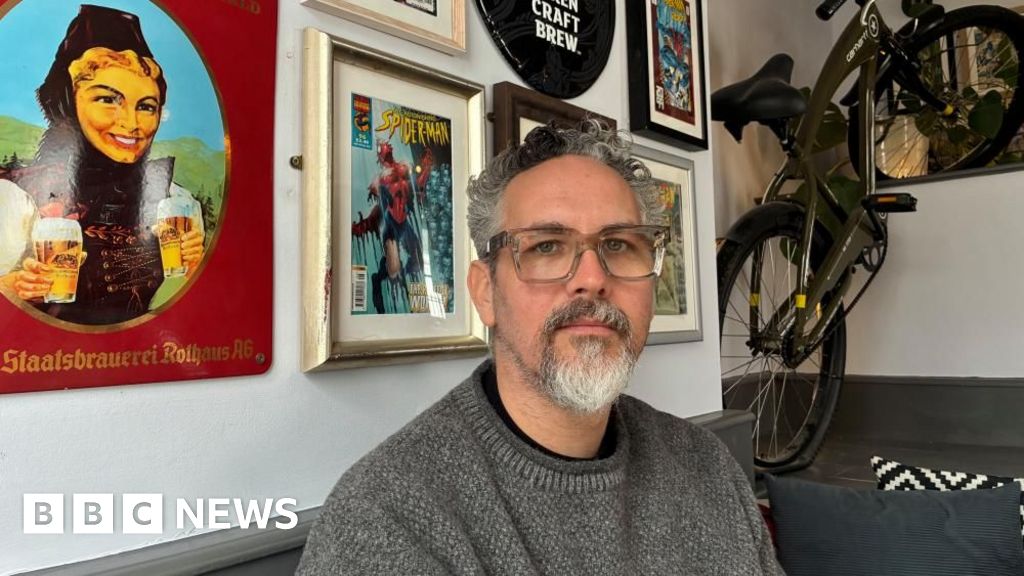
Leamington restaurant Magic Wingdom closes after rising costs

Published

on

Leamington restaurant Magic Wingdom closes after rising costs

“Food prices have changed a lot, the Ukraine war, the bread basket of Europe was a huge thing for oil costs. There’s the risk of avian flu, all of our chicken is British, that’s something we’ve sort of celebrated, Red Tractor approved, it’s all increasing slowly.”

Continue Reading

Business

Los Angeles leads the US in population loss as 53,000+ residents flee the city

Published

on

Los Angeles leads the US in population loss as 53,000+ residents flee the city

Los Angeles County, once the symbol of American prosperity and Hollywood dreams, has earned the title of the nation’s leader in population loss.

The latest U.S. Census data shows shows that between July 1, 2024, and July 1, 2025, 53,421 residents left the county, marking the largest decline in the U.S. Additionally, Los Angeles County has fallen from about 10 million residents in 2020 to roughly 9.7 million today.

Advertisement

“There is a real sense of burnout. They are paying insane taxes and getting absolutely nothing in return,” RIVANI founder Robert Rivani — who has seen a big migration of companies moving their headquarters to his Miami building from California, including Playboy — told Fox News Digital. “People feel like they’re living in a place that’s draining them financially and in exchange they’re dealing with rising crime, shrinking services, and a sense that everyone around them is trying to leave too.”

“When I moved my family and my company here, everyone thought I was crazy,” Rivani continued. “They were convinced LA was going to bounce back and that the problems were temporary. I saw the writing on the wall, and Miami has proven over and over that we made the right call.”

COUNTRY ARTIST SOUNDS ALARM ON CALIFORNIA’S DECLINE

“It isn’t just one factor, it’s the breaking point phenomenon. The taxes, the lack of safety, the red tape,” Compass’ Chad Carroll also told Fox News Digital. “I have a client from California whose home was broken into twice in the past six months. The whole political landscape there is destroying the state.”

Advertisement
People walk along Hollywood Boulevard in Los Angeles

Pedestrians walk across Hollywood Boulevard in Los Angeles, California, at sunset. (Getty Images)

“These are individuals who have spent their lives building businesses and wealth,” Carroll added, “and they feel that California has become a place that takes everything and gives back very little in terms of safety, infrastructure and opportunity.”

The fleeing Angelenos are seeking areas with lower living costs and different political climates. Census data indicate that Riverside and San Bernardino gained 21,131 residents from Los Angeles County, while Las Vegas saw a boost of more than 21,000 people last year.

Carroll, an alum of “Million Dollar Listing Miami,” and Rivani argue people are gravitating toward places where “their money stretches further and they feel welcome.”

They both also warn that a shrinking population serves “a direct hit” to Los Angeles’ financial backbone.

Advertisement

“Real estate value is driven by demand and the quality of the surrounding tax base. When the top 1% flee, they take the tax revenue that funds the parks, the police and the schools with them, and that has a major trickle-down effect,” Carroll said. “You can’t lose 300,000 residents, specifically high-earners, and expect your property values to keep pace with the growth we’re seeing in the Sunbelt.”

“Those services are what keep a city functional. If you don’t have the tax base to support them, everything declines. And when the government’s only answer is to tax whoever is left even more, you create a vicious cycle where even more people pack up and go,” Rivani expanded.

Los Angeles isn’t alone, as other high-tax, high-regulation hubs in California also saw significant population drops. Orange County lost 8,520 residents; San Diego lost 5,294; and Ventura County saw a decline of 2,580.

Advertisement

“The numbers don’t lie, and they should be a big wake-up call,” Carroll urged. “We are seeing a historic wealth transfer that is going to define the foreseeable future of U.S. real estate. With the rise of the tech and finance sectors in Miami and West Palm Beach, the Sunbelt is the new frontier of American success.”

GET FOX BUSINESS ON THE GO BY CLICKING HERE

In recent months, many wealthy Californians have relocated across state lines, with top luxury developers previously telling Fox News Digital that more than $126 million in sales were secured in just 60 days from buyers in California and New York — driven by California’s proposed 5% one-time billionaire tax and New York City Mayor Zohran Mamdani’s talk of higher property taxes.

Advertisement

“Los Angeles is not the Hollywood star it once was, and I don’t think it can return to that. The government running it today has created a reality that people don’t want to live in, and it’s extremely hard to reverse that kind of decline. Once a city loses its shine, it’s almost impossible to get it back,” Rivani said. “The polls show leading candidates for governor are Republican, which tells you how fed up people are with the direction of the state. It would take a lot of reform to bring it back to its glory days.”

READ MORE FROM FOX BUSINESS

Continue Reading

Business

Best Times and Viewing Tips for April 2 Full Moon

Published

on

Pink Moon

SYDNEY — Skies across Australia will glow under the luminous Pink Moon this week, with the April full moon reaching its peak on Thursday, April 2, 2026, at around 1:11 p.m. AEDT, offering skywatchers a spectacular celestial display as autumn settles in the southern hemisphere.

Pink Moon
Pink Moon

Although named the Pink Moon after the pink phlox wildflowers that bloom in North America during early spring, the moon itself will not appear pink. Instead, it will shine as a bright, silvery orb, potentially taking on a warm orange or golden hue near the horizon due to atmospheric effects. The name originates from traditional Native American and colonial almanacs marking seasonal changes rather than the moon’s actual color.

The Pink Moon marks the fourth of 13 full moons in 2026 and coincides with the arrival of autumn in Australia. It will officially become full at approximately 02:11 UTC on April 2 (which is 1:11 p.m. AEDT or 12:11 p.m. AEST in eastern Australia). For most observers Down Under, the moon will already be high in the daytime sky at its peak, making the best viewing opportunities after sunset on Thursday evening when it rises in the east.

Astronomers recommend heading outside from around 7:30 p.m. local time onward on April 2 for optimal views as the moon climbs higher and appears brightest against the darkening sky. In major cities, moonrise times vary slightly: Sydney around 6:15 p.m. AEDT, Melbourne about 6:30 p.m. AEST, Brisbane near 6:00 p.m. AEST, Perth around 6:45 p.m. AWST, and Adelaide roughly 6:20 p.m. ACST. Clear weather forecasts for much of the continent this week should favor good visibility in most regions.

No special equipment is needed to enjoy the Pink Moon. The naked eye will reveal its full, bright disk, while binoculars or a small telescope can bring out subtle surface features such as craters and maria. Photographers hoping to capture striking images should look for compositions with foreground elements like city skylines, trees or coastal horizons to add scale and drama. A tripod and long-exposure settings work well for sharper shots once the sky darkens.

Advertisement

The Pink Moon also carries cultural and seasonal significance. In the northern hemisphere it signals the bursting of spring flowers and the renewal of life after winter. For Australians, it arrives during the transition to cooler autumn weather, often called the “Egg Moon” or “Budding Moon” in various traditions. Some Indigenous Australian groups have their own seasonal interpretations tied to local flora, fauna and weather patterns.

This year’s April full moon is not classified as a supermoon, as the moon’s distance from Earth at perigee will be around 244,000 miles — not close enough to qualify for the “super” designation that makes the moon appear larger and brighter. Still, any full moon rising near the horizon can create an optical illusion known as the “moon illusion,” making it seem unusually large and impressive.

Weather conditions will play a key role in visibility. Meteorologists expect mostly clear skies across eastern states on Thursday evening, though patchy cloud could affect parts of western Australia or Tasmania. Light pollution in urban areas will dim the view somewhat, so heading to darker suburban parks, beaches or rural lookouts is advised for the best experience. Popular spots include Sydney’s North Head, Melbourne’s Yarra Bend Park, Brisbane’s Mount Coot-tha, and Perth’s Kings Park.

Astronomy enthusiasts and social media users are already buzzing with anticipation. Hashtags such as #PinkMoon2026 and #AprilFullMoon have begun trending locally, with many sharing past full moon photos and planning viewing parties. Families and school groups often use such events as informal science lessons about lunar cycles, phases and the moon’s influence on tides.

Advertisement

The lunar cycle repeats roughly every 29.5 days, with each full moon earning traditional names tied to nature and culture. Following the Pink Moon, May’s full moon will be known as the Flower Moon, continuing the spring theme in the north while marking deepening autumn in Australia.

For those interested in lunar folklore, the Pink Moon has long been associated with renewal, growth and fresh beginnings. Some modern astrologers link it to themes of emotional release and setting intentions for the coming season, though scientific observers focus on the predictable mechanics of orbital alignment between the sun, Earth and moon.

Safety reminders accompany any evening skywatching activity. Drivers should remain alert for pedestrians gathered outdoors, and viewers in remote areas should carry torches, wear appropriate clothing for cooling evening temperatures, and check for any local fire restrictions or wildlife considerations.

The event provides a timely reminder of Australia’s clear southern skies, which offer excellent opportunities for stargazing year-round. Organizations such as Astronomy Australia and local astronomical societies often host public viewing nights during significant lunar events, providing telescopes and expert guidance.

Advertisement

While the Pink Moon dominates the night on April 2, keen observers may also spot bright planets such as Jupiter or Saturn low in the sky depending on the time and location. The moon’s brightness can wash out fainter stars, so the following nights as it wanes will offer better conditions for deeper sky viewing.

Climate and light pollution trends continue to challenge optimal viewing in growing cities, prompting calls for smarter urban lighting policies to preserve dark skies for both wildlife and human enjoyment. Initiatives to create urban dark-sky reserves have gained traction in several Australian states.

As April 1 headlines teased the upcoming display, Australians from all walks of life — from casual skywatchers to dedicated amateur astronomers — prepared to step outside and appreciate one of nature’s reliable spectacles. In an increasingly busy world, the predictable rhythm of the full moon offers a moment of shared wonder.

Whether viewed from a bustling city balcony or a remote outback vantage point, the Pink Moon promises to deliver a memorable sight. Its soft, steady glow will illuminate the landscape, reminding observers of humanity’s ancient connection to the heavens.

Advertisement

For the latest local moonrise times and weather updates, Australians can consult apps such as Time and Date, Stellarium or the Bureau of Meteorology. Community groups on social platforms are also sharing real-time tips and photos as the event unfolds.

As the Pink Moon rises over the Australian continent this week, it serves as a gentle seasonal marker — a bridge between the warmth of summer and the cooler days ahead, lighting up the night with quiet beauty that requires no ticket or reservation, just a clear view and a few minutes of attention.

Skywatchers are encouraged to share their images responsibly and to enjoy the moment safely. The Pink Moon of 2026 may not paint the sky pink, but it will undoubtedly leave a lasting impression on those who take the time to look up.

Advertisement
Continue Reading

Business

Form 6K Xiao I Corp ADR For: 1 April

Published

on


Form 6K Xiao I Corp ADR For: 1 April

Continue Reading

Business

Milestone Scientific Inc. (MLSS) Q4 2025 Earnings Call Transcript

Published

on

OneWater Marine Inc. (ONEW) Q1 2026 Earnings Call Transcript

Q4: 2026-03-31 Earnings Summary

EPS of -$0.01 beats by $0.00

 | Revenue of $2.06M (2.21% Y/Y) misses by $251.52K

Milestone Scientific Inc. (MLSS) Q4 2025 Earnings Call April 1, 2026 8:30 AM EDT

Company Participants

Eric Hines – Chief Executive Officer, President & Director
Keisha Harcum – Vice President of Finance

Advertisement

Conference Call Participants

James Carbonara
Bruce Jackson – The Benchmark Company, LLC, Research Division
Anthony Vendetti – Maxim Group LLC, Research Division

Advertisement

Presentation

Operator

Good day, everyone. Welcome to the Milestone Scientific Inc. Fourth Quarter 2025 Financial Results and Business Update Conference Call. [Operator Instructions] As a reminder, this call is being recorded.

It is now my pleasure to turn the floor over to your host, James Carbonara with Hayden IR. The floor is yours.

Advertisement

James Carbonara

Thank you, operator. Good day, everyone. Before we begin, please note that today’s call will contain forward-looking statements within the meaning of the Private Securities Litigation Reform Act of 1995. These statements are subject to risks and uncertainties that could cause actual results differ materially from those projected. Please refer to our earnings press release as well as our filings with the SEC, including our 2025 Form 10-K for a discussion of these risks. A replay of this call will be available shortly after its conclusion.

With that, I’ll turn the call over to our CEO, Eric Hines.

Advertisement

Eric Hines
Chief Executive Officer, President & Director

Thank you, James, and good morning to everybody, and thank you for joining our call today. When I stepped in as a CEO in August of 2025, the company was in the middle of the quarter and had been operating without a consistent executive leadership team. I found an organization where spending wasn’t always tied to revenue generation or clear ROI. And from day 1, we went line by line through every expense,, cut what wasn’t moving the needle and made sure every dollar had a purpose. We also chose not to raise capital just

Advertisement
Continue Reading

Business

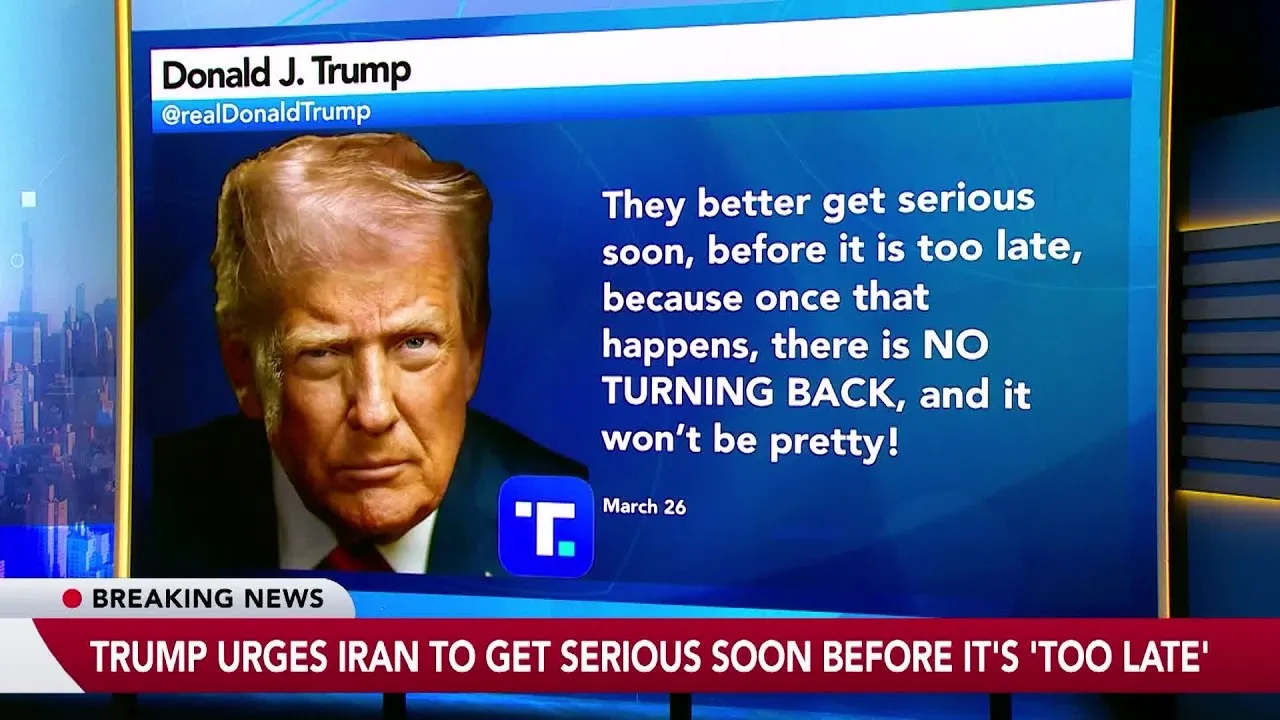
‘Get Serious,’ says Trump to Iran, or face increased military action

Published

on

‘Get Serious,’ says Trump to Iran, or face increased military action

President Donald Trump threatened Iran with increased military action in a social media post on Thursday, warning that Iran “had better” be cautious. The statement reflects ongoing tensions between the U.S. and Iran, and highlights Trump’s readiness to use force if necessary. The exact details of the threat were not specified in the brief summary.


Former President Donald Trump has issued a stern warning to Iran, urging the nation to “get serious” in its negotiations and behaviors concerning its nuclear program. Trump emphasized that Iran’s current actions are unacceptable and that the United States is prepared to take further steps if necessary. His comments come amid ongoing tensions in the Middle East, where Iran’s nuclear ambitions and regional activities continue to raise concerns among international observers.

Trump’s remarks suggest a potential escalation in the strained relationship between the U.S. and Iran, signaling that Washington is not willing to tolerate what it perceives as provocative acts. He warned that failure to engage seriously could lead to increased pressure, sanctions, or even military responses. Trump’s stance appears to be a push for Iran to re-engage with negotiations and curb its nuclear development efforts.

Advertisement

The current situation highlights the fragile state of diplomacy in the region. While diplomacy remains the preferred route for many players, Trump’s threat underscores the possibility of a more aggressive approach if Iran does not shift its stance. The international community closely watches these developments, aware that escalation could have far-reaching consequences in the Middle East and beyond.

source

Advertisement
Continue Reading

Business

Major Bristol developments helping boost housing and construction sector

Published

on

Business Live

Temple Quarter Enterprise Campus and Bedminster Green schemes are among those driving activity

A view of Bristol

A view of Bristol(Image: Rider Levett Bucknall)

Major regeneration schemes in Bristol are bolstering the construction sector in the city and wider South West, according to a new report. The research by Rider Levett Bucknall (RLB UK) found that while market costs remain high and continue to challenge project viability, the overall mood across the sector is increasingly optimistic.

Pressures in the city’s construction market are beginning to stabilise following a prolonged period of high inflation, the latest regional market analysis by the independent built environment consultancy found.

Activity across Bristol is being driven by significant schemes including the Temple Quarter Enterprise Campus and Bedminster Green developments, alongside continued demand for new housing.

Tom Powney, RLB UK senior cost manager in Bristol, said: “Across Bristol and the wider South West, large-scale regeneration schemes are strengthening the long-term outlook for the construction sector. The city’s population is expected to grow by more than 20 per cent over the next two decades, increasing demand for new homes, employment space and infrastructure.

Advertisement

“Contractors are still facing a difficult balance between high input costs and relatively subdued tender price inflation, which continues to squeeze margins. Labour shortages, particularly in specialist trades, remain a key constraint.”

Before the Middle East war, material cost fluctuations had largely calmed compared with recent years, according to RLB UK, although skills shortages and high labour costs continue to present challenges for developers and contractors.

Bristol City Council reported that around 1,700 new homes were completed in the city during the 2024/25 financial year, the highest level in three years, although RLB UK said the figure is below the level required to meet future housing demand. A number of major developments are expected to help address this gap, according to the market analysis.

The consultancy said purpose-built student accommodation and build-to-rent developments had been showing “some resilience”, while major schemes such as the newly named Aviva Arena are also contributing to regional growth.

Advertisement

But RLB said some markets remained “slower” due to continuing cost pressures, subcontractor insolvencies and skills shortages.

“The shortage of mechanical, electrical and plumbing (MEP) contractors in the region remains a key challenge and could become more pronounced if proposed data centre developments progress,” the report added.

Continue Reading

Business

Bristol’s Engine Shed by Temple Meads to close after 13 years

Published

on

Business Live

‘Our shared hope is that much of the valuable growth, innovation and inclusion work undertaken by Engine Shed over the years will continue’

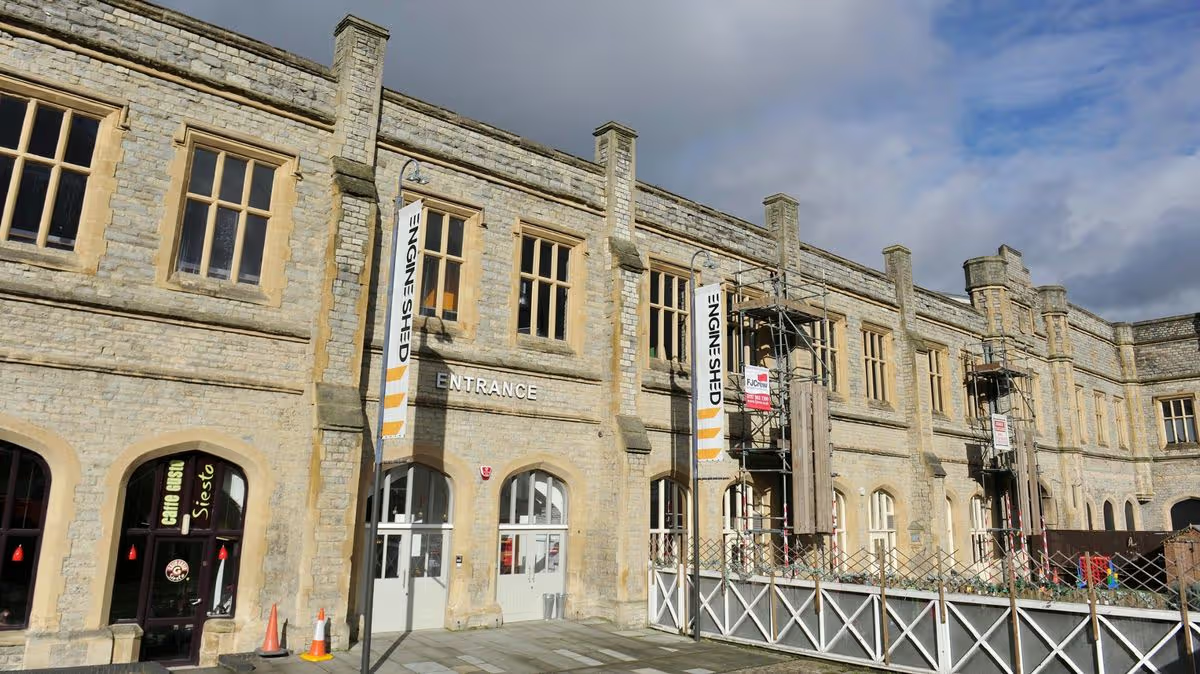
Bristol Engine Shed

Engine Shed in Bristol(Image: Western Daily Press)

Bristol work, meeting and event space Engine Shed is being closed after 13 years. The innovation hub next to Temple Meads station is to shut its doors for good in December, it has confirmed in an announcement on LinkedIn.

Engine Shed is run by a subsidiary which is wholly owned by the University of Bristol and the closure reflects “a shift in the university’s innovation activity”, according to the post.

The historic building, which was designed by Isambard Kingdom Brunel, is used by Engine Shed members for working, events and training through a membership scheme. It is also home to tech incubator SETsquared Bristol.

“There is no easy way to say it, after 13 years of catalysing Bristol’s innovation ecosystem, Engine Shed will close in December 2026,” the statement read.

Advertisement

“Many consider Engine Shed to have been both the spark that ignited much of the current innovation ecosystem and the beating heart that keeps collaboration, innovation and generosity central to our collective work.”

It is understood the team behind Engine Shed will move out of the property and will help run part of the main academic building on the new Temple Quarter Enterprise Campus. Staff who are part of SETsquared Bristol will relocate too.

“Our shared hope is that much of the valuable growth, innovation and inclusion work undertaken by Engine Shed over the years will continue through activities in the main academic building on the Temple Quarter Enterprise Campus (TQEC),” the LinkedIn post added.

Engine Shed is currently part of Bristol Innovations – the University of Bristol’s business support arm – and sits at the heart of the city’s Bristol Temple Quarter redevelopment, an ambitious urban regeneration project. Its partners include techSPARK, Barclays Eagle Labs, SETsquared Bristol and the Quantum Technologies Innovation Centre.

Advertisement

Engine Shed founder Nick Sturge said: “The ecosystem, and therefore the number and strength of the actors within it, has grown significantly since 2013 and I’m super proud that Engine Shed, and the team behind and within it, has played a part in that growth and the collaborative spirit that has created the right environment for the next stage of Engine Shed’s journey.

“While part of that will rest in the sidings for a while, I am so pleased that Bristol Innovations Zone, in the new TQEC building, will pick up the momentum that Engine Shed helped create.”

Emily Kent, co-founder of Bristol software firm One Big Circle, wrote in response to the LinkedIn post: “Brilliant team at Engine Shed over the years and an inspiring building. From our first meeting with our SETsquared Bristol mentor in 2014, our first designated desk, then four moves between ever larger office spaces, alongside so many networking events, panels, opportunities to present to fellow entrepreneurs, ministers and a fair few school visits to inspire the nextgen, Engine Shed has been a huge part of our OBC journey.

“We’re still near neighbours as we’ve grown and are very sorry to hear the doors will be closing but hope the spirit, ethos and culture of [Engine Shed] will travel well to its new home.”

Advertisement
Continue Reading

Trending

Copyright © 2025