
Business
BHP, union talks for Port Hedland iron ore workers to stretch on into next week




Western Australian aged care providers have criticised the federal government’s move over the national funding price, claiming it could put project investments at risk.
Business
Sandisk Stock Surges on AI Memory Demand as Investors Weigh Whether the Rally Is Still a Buy Now
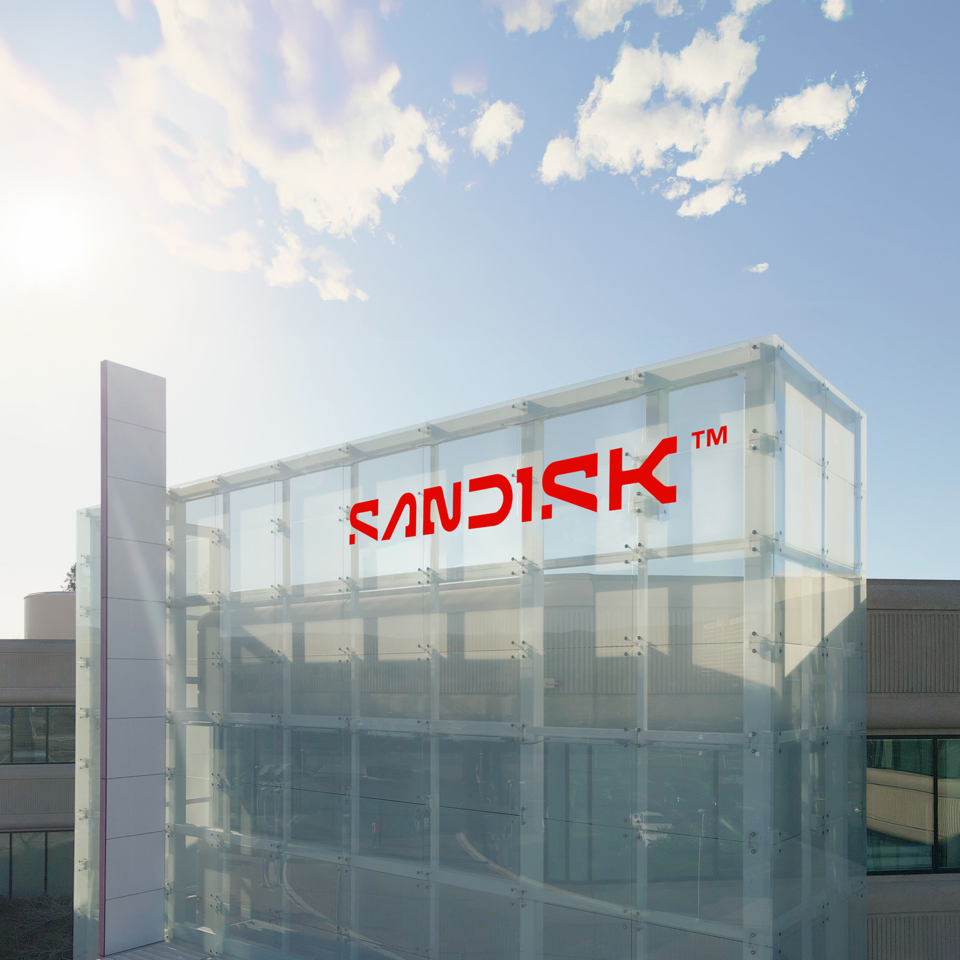
NEW YORK — Sandisk shares jumped again as investors treated a former flash-drive name like an artificial-intelligence infrastructure stock, leaving a simple question after a violent rally: whether the tape still offers a buy, or only a bet that memory prices stay scarce.
Sandisk closed Sept. 4 at $1,740, up $185.01, or 11.90%, from the prior session. Overnight trading printed about $1,767. The session’s range ran from $1,581 to $1,740. The 52-week span, from about $68 to more than $2,350, shows how fast the story changed after the company was spun out of Western Digital in early 2025.
The move follows fiscal fourth-quarter results for the period ended July 3. Revenue was $8.97 billion, up 51% from the prior quarter and 372% from a year earlier. Data-center sales were $2.98 billion, about a third of the quarter and more than double the prior period. A year earlier that line was about $213 million. Non-GAAP gross margin reached 84.6%, compared with 26.2% a year earlier. Adjusted earnings were reported well above year-ago losses. Management said about two-thirds of the sequential revenue increase came from higher prices and one-third from more bits shipped.
Guidance kept the heat on. For fiscal first-quarter 2027, Sandisk forecast revenue of $10.3 billion to $10.80 billion and non-GAAP profit of $44 to $46 a share, with gross margin 83% to 85%. Reuters noted the revenue midpoint sat above one consensus set even as the stock sold off after the print when other estimate services had wanted more.
Chief Executive David Goeckeler has framed the boom as structural, not seasonal. “AI is fundamentally a memory-centric storage-intensive problem,” he said on the August earnings call. At the company’s investor day he said, “Our strong performance today is the direct result of disciplined execution against the strategy we outlined 18 months ago.” He has also said Sandisk grows supply “primarily through nodal transitions rather than wafer additions.”
That last point is why bulls call the stock a buy on a pullback and why skeptics wait. Memory cycles have historically ended when suppliers add wafers and prices collapse. Sandisk is arguing it can lift bits in the mid-to-high teens by moving to denser technology such as BiCS8 without a classic capacity binge. Capital spending is described as modest relative to sales. The long-term model for fiscal 2028 through 2030 targets mid-to-high-teens revenue growth, about 80% non-GAAP gross margin, about 75% operating margin and adjusted free cash flow near 50% of revenue. Those figures are below the 84.6% gross margin just printed, which is management’s way of telling the market the peak print may not be the mid-cycle print.
Contracts are the other half of the bull case. Chief Financial Officer Luis Visoso said Sandisk had 10 multiyear “new business model” agreements with eight customers, five signed since April, running as long as five years with a weighted average duration of more than four years. “The total expected revenue from all our NBMs we have signed is a minimum of $93.9 billion, assuming floor pricing,” Visoso said. Management has said the deals should cover about half of bits in fiscal 2027 and about two-thirds in fiscal 2028, backed by customer deposits and other financial support. That is closer to a contracted industrial book than to the spot NAND market Sandisk used to live in.
The company also authorized large buybacks as cash piled up. It repaid remaining term-loan debt, moved to a net cash position and later expanded repurchase authority into the tens of billions. Full-year free cash flow swung from an outflow in fiscal 2025 to more than $11 billion in fiscal 2026 on company figures. S&P Global Ratings raised Sandisk to BB+ with a positive outlook after the deleveraging, citing constrained NAND supply through fiscal 2027 in its base case.
None of that answers “buy now” as a binary. At $1,740 the stock is no longer the neglected spinoff that traded in the double digits. It has already discounted a multiyear AI storage cycle. Trailing earnings multiples compressed as profits exploded; forward estimates imply a lower multiple if guidance holds. That can look cheap if $10 billion-plus quarters continue. It looks expensive if NAND prices normalize the way they have after every prior shortage.
The risks are familiar. Edge products — phones, PCs, cards — still supply more than half of quarterly revenue even as data center grows faster. Consumer units can drop just as data-center contracts lock in. Competitors in NAND and SSDs can still add supply. Customer concentration in a handful of AI builders means a pause in GPU cluster builds would hit Sandisk with a lag, not instantly, but it would hit. Gross margins in the mid-80s have little room to surprise to the upside and a long way to fall if floor prices in the new contracts sit well below spot.
Goeckeler has said customers returned after a single quarter asking to raise three-to-five-year demand. He estimated the NAND market would exceed $300 billion in calendar 2026, triple the prior year, and approach $500 billion in 2027, with data center taking a larger share of the total. Those are company forecasts, not booked sales.
For a newsroom ledger, the buy case is this: constrained bits, contracted floors, high cash conversion, and a CEO who says the shortage is an AI architecture problem rather than a one-year restock. The hold-or-wait case is this: the stock already ran from spinoff leftovers to a triple-digit handle, August’s 29% bounce recovered a prior slide, and Sept. 4’s 12% pop prices in another quarter of $10 billion sales before that quarter is delivered.
Sandisk is no longer asking investors to believe flash cards will matter. It is asking them to believe memory stays scarce long enough for $94 billion of minimum contract value to turn into cash at margins the old Sandisk never earned. Whether that is a buy at $1,740 depends less on the closing print than on whether the next shortage ends on schedule — or, this time, does not.

European stocks fall as crude extends advance following Iranian threats

JPMorgan initiates FedEx Freight stock coverage with overweight rating

HFCL shares remained locked in the 5% upper circuit at Rs 255.16 apiece on NSE. The stock has rallied more than 267% in 2026 so far, even as the broader Nifty 500 index has dropped 3%. The shares of the company have jumped 7% in one week and 22% in a month.
Sterlite Tech’s returns are even more impressive, as the stock has delivered a whopping 705% return in 2026 so far. The stock which remained locked in the 5% upper circuit at Rs 825.60 apiece on NSE on Tuesday morning, has jumped over 29% in a month and 19% in a week.
Also read | HFCL’s FY26 order book surges 113% to Rs 21,206 crore
Why are HFCL shares rallying?
HFCL on Saturday released its annual report for FY26, reporting a sharp expansion in its order book and strong financial performance. The company’s FY26 order book stood at Rs 21,206 crore, marking a sharp 113% year-on-year increase and signalling robust business momentum across its key segments.

The annual report also highlighted strong growth across HFCL’s financials. Its revenue from operations increased nearly 22% year-on-year to Rs 4,949 crore, while EBITDA surged more than 63% YoY to Rs 827 crore. Profit after tax sharply surged more than 90% YoY to Rs 329 crore, while earnings per share (EPS) rose 73% YoY to Rs 2.13, reflecting the company’s improved profitability during the year.
HFCL shares have hit the 5% upper circuit for the third consecutive session today. The company has a market capitalisation of around Rs 38,695 crore.
Why are Sterlite Tech shares rallying?
Sterlite Technologies last week outlined its long-term growth plans, including a target of becoming one of the top five players globally in optical connectivity solutions and achieving revenue of Rs 20,000 crore by FY29.
Also read | Sterlite Tech targets Rs 20,000 crore revenue by FY29 amid booming AI demand
The company identified optical TAM expansion, customer co-development, integrated connectivity solutions and tech-led differentiation as key growth drivers. It also plans to expand its capacity to 1.5 times to support the next phase of growth.
The company has also approved a Rs 3,000 crore capital expenditure plan to expand capacity at its existing manufacturing facility. The proposed expansion will increase its existing installed manufacturing capacity by approximately 50%, with the additional capacity expected to be operational by the end of FY29.
Sterlite Tech shares have also hit the 5% upper circuit for the third consecutive session today. The company has a market capitalisation of more than Rs 42,428 crore.
Disclosure: “This article has been written by Debaroti Adhikary, who is not a SEBI-registered Research Analyst or an Investment Adviser. Debaroti Adhikary and her ‘relative(s)’ (as defined under Section 2(77) of the Companies Act, 2013) do not hold any financial interest in the companies mentioned in this article as of the date of publication. The views/recommendations mentioned in this article, wherever applicable, are those of the respective SEBI-registered Research Analyst/brokerage and have been reproduced/reported with due attribution. They should not be construed as the views or recommendations of The EconomicTimes Digital or the journalist. Readers are advised to consider the original research report and make their investment decisions based on their own assessment.”
Business
Nancy Guthrie Investigation Passes Seven Months As Ex-FBI Agent Floats Ransom Plot Gone Wrong

TUCSON, Ariz. — More than seven months after Nancy Guthrie disappeared from her Arizona home, a retired FBI agent is theorizing that the 84-year-old mother of “Today” co-anchor Savannah Guthrie was taken in a kidnapping-for-ransom scheme that spiraled out of the captors’ control, potentially ending in her death from a medical emergency shortly after she was seized.
Frank Storey, a retired FBI agent, laid out the theory during an appearance on the YouTube channel of fellow former FBI officer Jennifer Coffindaffer. Storey said he believes Guthrie was abducted as part of a ransom plot, but that something unexpected happened after the abduction that the captors had not anticipated. He suggested Guthrie may have experienced a medical emergency that ultimately led to her death, though he was careful to characterize the theory as speculation rather than a confirmed finding.
Guthrie has remained missing since vanishing from her Catalina Foothills home near Tucson in the early hours of Feb. 1, 2026. Investigators have continued searching for her from multiple angles, including the working theory that she was kidnapped, though no suspect has been publicly identified or arrested seven months into the case.
The prolonged lack of an arrest, combined with the sheriff’s department’s limited public updates, has led some observers and critics to question whether the investigation has effectively gone cold. Scott Augenbaum, another retired FBI agent, has pushed back firmly against that characterization in comments to Tucson television station KOLD.
“This is by no means a cold case,” Augenbaum said. “A cold case is something that has been closed; it’s been put away. So in my opinion, this case is not closed at all. It’s still being held very tightly guarded by law enforcement, which I would expect at this point in time.”
Augenbaum said the absence of regular public announcements from investigators should not be interpreted as a sign that law enforcement has abandoned the case. Drawing on his own experience working investigations during his time with the bureau, he described two very different scenarios that could explain a prolonged period without an arrest.
“There were cases where we didn’t really have any leads or anything like that, and we just played that close,” Augenbaum said. He added that other investigations unfold quite differently: “There were situations where we kind of had a really amazing idea. We knew who did it, but we had to build the case against that person.”
Augenbaum said Guthrie’s case could realistically fall anywhere between those two possibilities, or somewhere in between, given the limited information investigators have made public so far.
Guthrie’s disappearance has drawn sustained national attention throughout the year, driven in significant part by her daughter’s prominent role as a co-anchor on NBC’s “Today” show. Guthrie was last seen at her home on the evening of Jan. 31, 2026, after being dropped off by family members, and was reported missing the following morning after failing to arrive for a scheduled church service with friends.
Investigators have pursued a range of leads over the course of the investigation, including doorbell camera footage showing a masked, armed individual near Guthrie’s home around the time of her disappearance, along with two ransom notes the Pima County Sheriff’s Department later released publicly in an effort to generate additional tips. Forensic evidence recovered from the scene, including DNA samples and hair evidence, has so far failed to produce a confirmed match to any suspect, according to prior statements from investigators.
Despite the absence of a named suspect, Pima County Sheriff Chris Nanos has repeatedly reiterated that the investigation remains active, characterizing ongoing forensic analysis and continued review of incoming tips as evidence the case continues to move forward even without regular public updates.
Storey’s latest theory adds to a growing list of competing explanations that have circulated publicly throughout the investigation, none of which have been confirmed by law enforcement. Various retired agents and commentators have offered their own readings of the limited evidence made public so far, reflecting the intense ongoing interest in a case that has remained unresolved despite extensive media coverage and a substantial reward for information leading to Guthrie’s recovery.
As the investigation moves further past the seven-month mark, authorities have continued declining to provide detailed public updates on specific leads or the current status of forensic testing, a practice Augenbaum and other former investigators have said is consistent with standard law enforcement procedure in an active case involving a potential ongoing criminal investigation. For now, the Pima County Sheriff’s Department has indicated it will continue withholding a formal press conference on the case until investigators have a significant development to share, leaving both Guthrie’s family and the broader public following the case to continue awaiting answers about what ultimately happened to her.

The IPO is a Rs 500 crore book-built issue, comprising a fresh issue of 11.83 lakh shares worth Rs 80 crore and an offer for sale (OFS) of 62.13 lakh shares worth Rs 420 crore. The price band has been fixed at Rs 643-Rs 676 per share, with a lot size of 22 shares. At the upper price band, retail investors will need a minimum investment of Rs 14,872.
The IPO will close on September 10, with allotment expected to be finalised on September 11. Shares are proposed to list on both the NSE and BSE, with the tentative listing date set for September 16, 2026.
DAM Capital Advisors Ltd. is the book-running lead manager, while KFin Technologies Ltd. is the registrar to the issue.
Prasol Chemicals IPO GMP today
Prasol Chemicals IPO is currently commanding a GMP of Rs 55 per share, or around 8%, over its upper price band of Rs 676. Based on the prevailing GMP, the estimated listing price is around Rs 731 per share.
GMP Note: The Grey Market Premium (GMP) is an unofficial market indicator and is not regulated or guaranteed. Actual listing gains may differ significantly from the estimated price based on market conditions and investor sentiment.
Use of IPO proceeds
The company plans to use the IPO proceeds primarily to repay/pre-pay certain borrowings, either fully or partially, amounting to approximately Rs 60 crore. Any remaining proceeds will be utilised for general corporate purposes, with the total issue proceeds estimated at Rs 60 crore.
Financial performance
Prasol Chemicals Ltd. reported a 22% increase in total income, rising from Rs 1,015.54 crore in FY25 to Rs 1,237.85 crore in FY26. Profit after tax (PAT) grew strongly by 91%, from Rs 43.57 crore in FY25 to Rs 83.12 crore in FY26, reflecting a significant improvement in profitability.
About Prasol Chemicals Ltd.
Prasol Chemicals Ltd., incorporated in 1992, is a speciality chemicals manufacturer with a portfolio of 150+ products, including acetone-based, phosphorus-based, and other speciality chemicals. Its products cater to key industries such as performance chemicals, paints & inks, construction & adhesives, pharmaceuticals, agrochemicals, and home & personal care.
The company operates manufacturing facilities at Khopoli and Mahad, with a combined annual capacity of 98,644 MT. As of July 31, 2026, Prasol served 1,600 customers and exported to 69 countries. Its key customers include Alembic Pharmaceuticals, Lubrizol India, Rossari Biotech, Clean Science, Gharda Chemicals, Croda India, Supriya Lifescience, and Yasho Industries.
Prasol is a 3-Star Export House recognised by the Government of India and has a strong global distribution network across APAC, North and South America, and Europe.
Should you subscribe?
According to an Anand Rathi research report, Prasol Chemicals is seeking a valuation of around 48x FY26 earnings, with a post-issue market capitalisation of approximately Rs 40,008 million. This suggests that the IPO is fully priced at the current valuation.
The company’s operations are dependent on manufacturing facilities, where unplanned shutdowns can disrupt production and overall business activities. However, its strong product portfolio, R&D-driven innovation, and diversified global customer base provide a solid foundation for long-term growth in the speciality chemicals sector.
Given these factors, Anand Rathi has assigned a “Subscribe for Long Term” rating to the issue.
(Disclaimer: Recommendations, suggestions, views and opinions given by the experts are their own. These do not represent the views of The Economic Times)
Business
GE Vernova shares surge 8% as firm declared lowest bidder for Power Grid project; Nomura raises target price
The company said it received a letter from Power Grid on September 7 informing it that it had emerged as the L1 bidder for the project. L1 status means GE Vernova T&D India’s bid was the lowest among those submitted for the project. The company, however, did not disclose the value of the contract in its filing.
The project involves setting up two 3,000 MW HVDC terminal stations using line-commutated converter (LCC) technology. GE Vernova T&D India will undertake the design, supply and execution of the project.
The Barmer II-South Kalamb corridor is part of India’s planned expansion of high-capacity transmission infrastructure aimed at moving renewable power from generation-heavy regions to major consumption centres. The 6 GW, 800 kV project was approved by the National Committee on Transmission in May 2025.
Buy, sell or hold GE Vernova stock?
Nomura raised the target price to Rs 6,000, implying an upside of 37.5% from current levels. “We remain constructive on GVTD’s long-term earnings growth, driven by its robust order book position and increased adoption of grid automation technologies,” the brokerage said in a note.
It said the company’s order win came as a positive surprise, as it had not factored in an HVDC order win for GE Vernova in FY27.
“While our FY27 and FY28 EBITDA margin estimates are largely unchanged, we cut our FY29F EBITDA margin estimate by 56 bp to factor in the likely execution mix, thereby partly offsetting the upward revisions to revenue estimates.”Emkay has maintained a Buy rating on GE Vernova T&D India with a target price of Rs 5,300, citing strong prospects in the power transmission sector across both domestic and export markets.
The brokerage said the company is well positioned to benefit from structural growth in the transmission sector, supported by around Rs 1,000 crore of capacity expansion planned through FY28, which should improve its ability to meet rising demand. It also highlighted strong support from parent GE, which provides access to new technologies and helps accelerate localisation for the Indian market.
Emkay also pointed to the company’s robust balance sheet, with a net cash position of Rs 2,930 crore as of the end of Q1FY27, along with healthy three-year cash-flow generation averaging around Rs 1,000 crore annually. Favourable working-capital dynamics, with net working capital maintained at around 50 days over the past three years, are another positive. The brokerage expects these factors to support a 25% earnings CAGR over FY26-29E.
(Disclaimer: Recommendations, suggestions, views and opinions given by the experts are their own. These do not represent the views of The Economic Times)
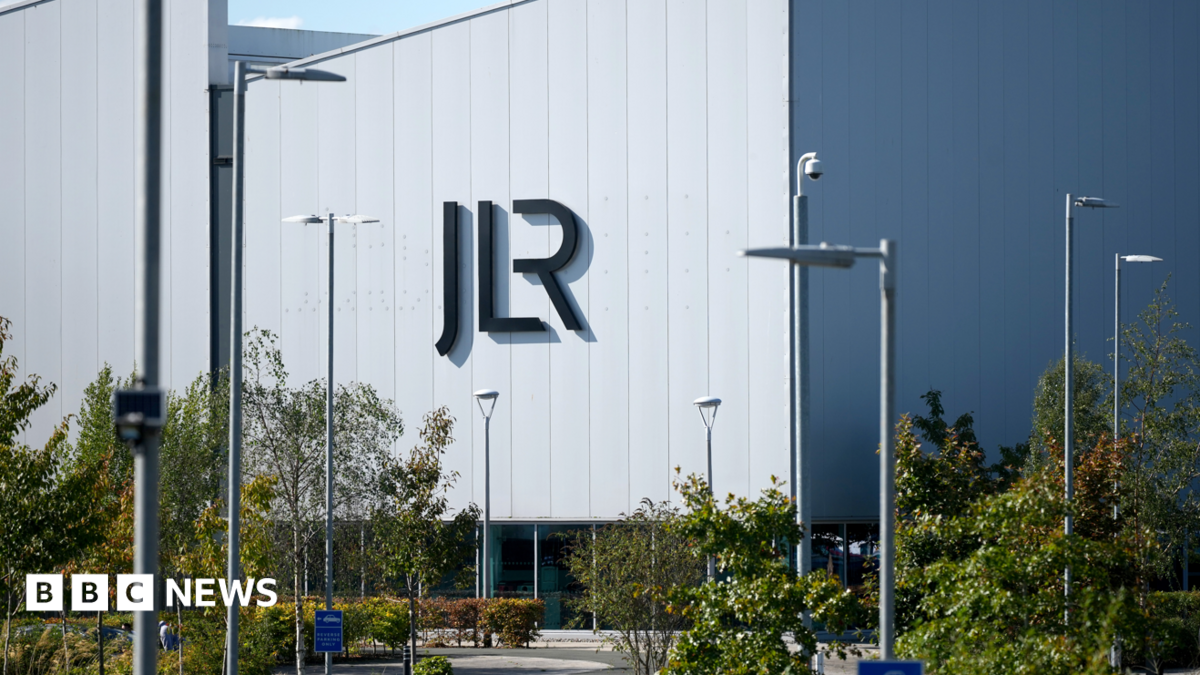
News that Jaguar Land Rover (JLR) was to cut 4,000 jobs was a cause for uncertainty and stress for company workers and those in the wider supply chain, experts have said.
Prof David Bailey from the Birmingham Business School said he worried it could limit the company’s ability to innovate in the future while David Roberts, chairman of Coventry-based Evtec Group, said up to 200,000 jobs could be tied to JLR.
The cuts will happen over the next two years and will mostly affect the head office in Whitley, Coventry.
But there are concerns about the impact the job cuts will have on the West Midlands’ skill base.
“The danger there is, in part, if they cut for example too many workers in research and development that could affect their future ability to develop new cars,” Bailey said.
“So it’s a really critical phase for the company and there’s going to be real concern at the firm about what’s happening.”
He said he understood JLR was facing a range of issues, but cutting the workforce was risky.
“When margins are squeezed, companies cut costs and investment; when investment is delayed, the UK becomes less competitive; and when competitiveness falls, future investment increasingly goes elsewhere,” he said.
Bailey said the British motor industry needed government help to compete in the electric car market and it was crucial to more than jobs on the factory floor.
He said: “It anchors research and development, engineering capability, component suppliers and regional economies.
“Once those capabilities disappear, they are extremely difficult to recreate.”
Business
Why Is Nike Stock Falling? China Sales Slump, S&P 100 Exit Drive 78% Plunge From 2021 Peak This Year

BEAVERTON, Ore. — Nike shares have collapsed nearly 80% from their 2021 all-time high, and the decline has only accelerated in recent weeks, driven by a combination of persistent weakness in China, a slower-than-expected turnaround, and the company’s pending removal from the prestigious S&P 100 index later this month.
Nike stock closed at $38.40 on Sept. 4, according to historical market data, putting the shares roughly 50% below their own 52-week high of $76.97 and about 78.6% below the intraday record of $179.10 the stock set on Nov. 5, 2021. The stock briefly touched a fresh 52-week low of $37.95 on Sept. 3, and its market value has fallen to roughly $56.9 billion, down from approximately $281 billion at its 2021 peak.
S&P Dow Jones Indices announced Sept. 4 that Nike will be removed from the S&P 100 index before trading opens Sept. 21, replaced by cybersecurity firm Palo Alto Networks. Dell Technologies, Arista Networks and Sandisk are also joining the index in the same reshuffling, while Honeywell Aerospace, Simon Property Group and Colgate-Palmolive are being removed alongside Nike.
Importantly, analysts have stressed that the index removal is a consequence of Nike’s decline rather than a cause of it. A business once priced by investors as a nearly flawless growth story is now being valued as a difficult turnaround situation, following years of weaker product innovation, a disrupted wholesale network, falling digital sales and deep, sustained problems in China.
China has emerged as the single biggest source of pressure on Nike’s business. According to Reuters, Nike’s Greater China revenue fell 17% on a constant-currency basis in the fourth quarter of fiscal 2026, a steep acceleration from the 10% decline recorded in the prior quarter. The company continues facing intensifying competition in that market from domestic Chinese brands including Anta and Li Ning, which have steadily eroded Nike’s market share in one of its most important international markets.
Nike’s direct-to-consumer strategy, once viewed as a key pillar of the company’s long-term growth plan, has also weakened considerably. In the fourth quarter of fiscal 2026, Nike Direct revenue fell 7% year over year, while digital sales specifically declined 12%. For the full fiscal year, which ended May 31, Nike Direct revenue fell 6% to $17.7 billion, while Nike Brand digital revenue dropped 12%. In response, the company has shifted back toward emphasizing its wholesale retail partnerships, with Nike Brand wholesale revenue rising 6% to $27.5 billion over the same period, a reversal of the strategy Nike had pursued for much of the past decade.
For the full 2026 fiscal year, Nike reported $46.4 billion in total revenue, essentially flat compared with the prior year and down 2% on a currency-neutral basis. Net income declined to $3.1 billion from $3.2 billion in fiscal 2025. Underlying earnings per share came in at just $1.58 for the year, once a one-time $0.52 per share benefit tied to an expected tariff recovery was excluded, reflecting a 55.6% decline in underlying profitability compared with fiscal 2021.
Nike’s fourth-quarter earnings report, released June 30, initially sent shares plunging double digits in after-hours trading, though the stock recovered to finish up 5% the following session, a move some investors interpreted as a sign the stock might be bottoming out. That optimism proved short-lived. Investors grew increasingly concerned about the company’s guidance for continued revenue declines in the first half of fiscal 2027, along with comments on the earnings call indicating gross margins were not expected to return to growth until the second quarter of fiscal 2027, later than many investors had hoped.
Broader macroeconomic and geopolitical pressures have compounded Nike’s company-specific challenges. The stock sank further in March amid the outbreak of war involving Iran, which weighed on consumer discretionary stocks broadly, given Nike’s sensitivity to inflation and the potential for the conflict to disrupt global supply chains, particularly given the company’s heavy reliance on manufacturing hubs across Southeast Asia. Tariff-related costs stemming from trade policies implemented in 2025 have added further pressure to Nike’s already strained profit margins throughout 2026.
Nike CEO Elliott Hill, who returned to lead the company in October 2024 in an effort to reverse its declining fortunes, has continued working to rebuild the company’s product pipeline and repair relationships with wholesale retailers following years of emphasis on direct-to-consumer sales. Despite those efforts, Nike’s market share has continued declining for three consecutive years, facing intensifying competition from rivals including Hoka and On Holding, alongside the mounting pressure from Chinese domestic brands.
Insider trading activity has also drawn scrutiny amid the stock’s continued decline. According to a Securities and Exchange Commission filing, Hill disposed of 9,462 shares of Nike Class B common stock on Sept. 1, though the transaction resulted from shares withheld by the company to cover tax obligations tied to a vesting restricted stock unit award, rather than a discretionary open-market sale. Hill’s remaining direct equity stake in Nike was valued at approximately $14.25 million as of the Sept. 1 market close.
Nike’s footwear business, its largest and most closely watched category, generated approximately $29.5 billion in revenue during fiscal 2026, remaining the primary focus of the company’s turnaround efforts. Wall Street analysts have warned that Nike could face an additional $1 billion headwind tied to planned changes to its digital strategy specifically in China, a factor that has further contributed to the stock’s continued decline in recent weeks.
Despite the severity of the stock’s collapse, some analysts have suggested Nike’s departure from the S&P 100 could ultimately mark a form of capitulation, potentially signaling that the worst of the stock’s decline has been priced in by the market. Others remain more cautious, noting that Nike’s valuation reset from roughly 50 times earnings at its 2021 peak to around 24 times earnings today reflects a fundamentally different, more challenged business rather than simply a temporarily depressed stock price. Whether Nike’s ongoing turnaround under Hill can eventually translate into renewed sales growth, particularly in China, remains the central question determining whether the stock’s current depressed valuation ultimately represents a buying opportunity or a continuation of the company’s multiyear decline.

Britain faces US reprisals over Burnham’s ‘Jew-hating’ West Bank settlements boycott – as Israel threatens to back Argentina’s Falklands grab

Providers slam aged care price change

Ben Cowen Says Bitcoin Has 65% Chance of Extending Bear Market, Watching $53,000





-

 Fashion4 days ago
Weekend Open Thread: Beyond Yoga
-
 Crypto World4 days ago
Bitcoin price stalls near $82K as key resistance holds
-

 Politics4 days ago
Best Gaming Laptops, CPUs, TVs, And Keyboards To Upgrade Your Set Up For GTA VI
-

 Tech4 days ago
The Birds Outside, Drawn For You Automatically
-

 Crypto World4 days ago
IMF Says El Salvador’s Post-Review Bitcoin Purchases Used No Public Funds
-
 Crypto World4 days ago
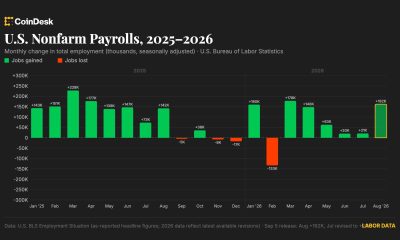
U.S. added stronger than expected 162,000 jobs in August as labor market bounced back
-

 Sports4 days ago
Alexandre Pato consortium’s Northampton Town investment approved
-

 Sports4 days ago
Commanders’ Chig Okonkwo is a top breakout fantasy football candidate
-

 Sports4 days ago
Golden Eaglets Drawn in Group B for 2026 WAFU B U17 Championship
-
 Crypto World4 days ago
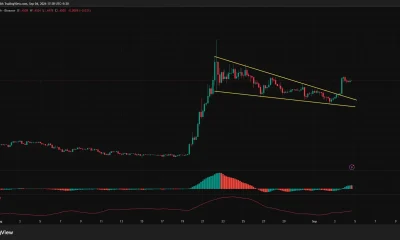
XRP price breaks falling channel as bulls target $1.53
-

 Politics4 days ago
A new European chapter for Gibraltar
-

 Politics4 days ago
How To Avoid Winter Colds: 4 Everyday Habits That Spread Germs, Says Pharmacist
-

 Politics4 days ago
The House | Bin the lectures, bring gossip and be ready to banter: how the new PM should prepare for his Trump encounter
-

 Crypto World4 days ago
From warning to listing: UK’s largest retail investment platform opens access to crypto ETNs
-

 Crypto World4 days ago
FinCEN flags $12.7B tied to Southeast Asia crypto investment scams
-

 Tech4 days ago
A Worthy Android Ereader, With Some Tradeoffs
-

 Crypto World4 days ago
Trezor Data Breach Impacts 67,000 More US Customers
-

 Tech4 days ago
How To Edit Claude’s Memory
-

 Politics4 days ago
33 Cosy Autumn Home Decor Ideas: Blankets, Pumpkin Decorations, And Candles
-

 Tech4 days ago
beyerdynamic AVENTHO Y Debuts at IFA 2026 and Makes Wireless Headphones Less Disposable
You must be logged in to post a comment Login