





Connect with us
DAPA Banner
DAPA Coin
DAPA
COIN PAYMENT ASSET
PRIVACY · BLOCKDAG · HOMOMORPHIC ENCRYPTION · RUST
ElGamal Encrypted MINE DAPA
🚫 GENESIS SOLD OUT
DAPAPAY COMING

Business

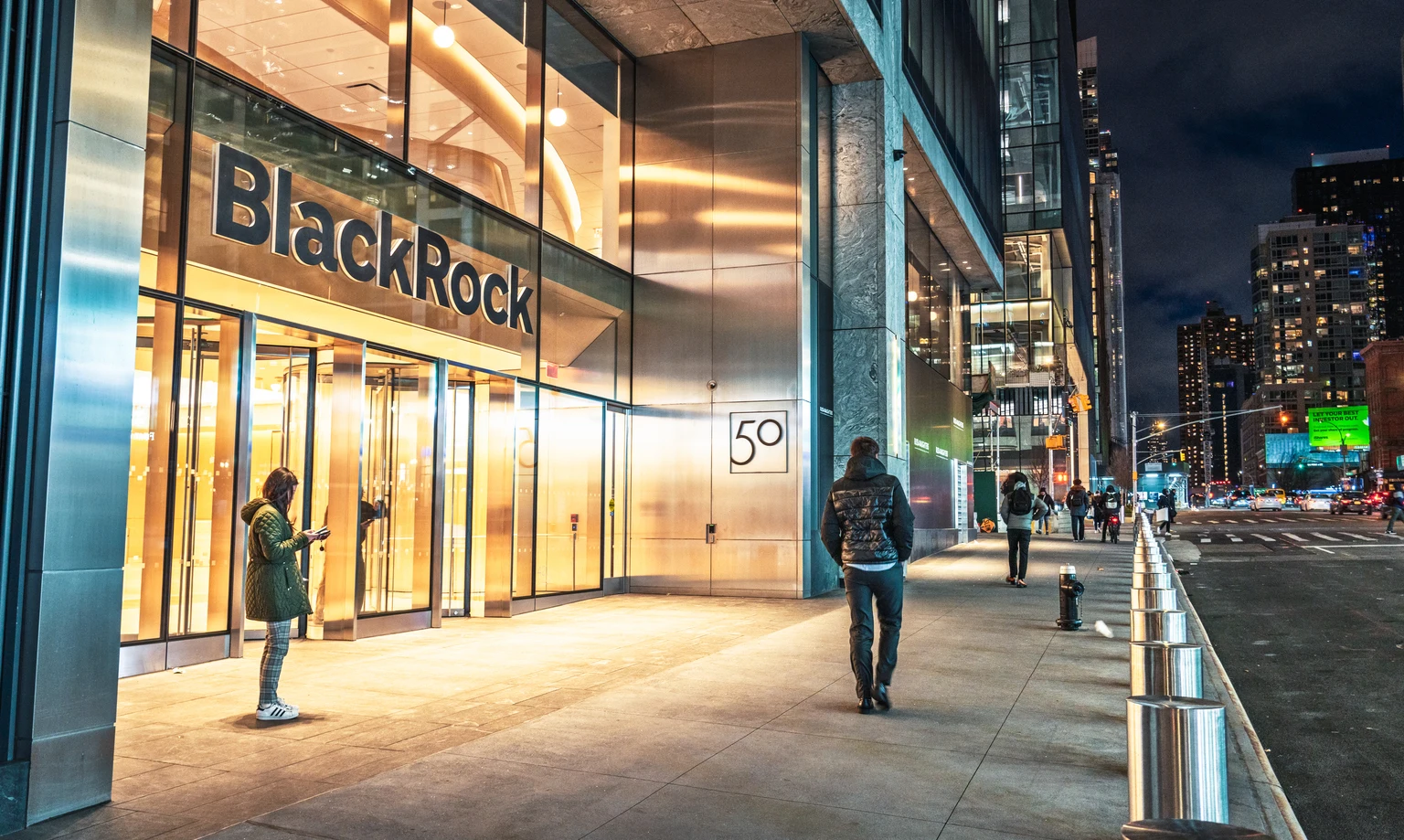
BlackRock: Net Flows Strong In Q1, But Overvaluation In Question (NYSE:BLK)

Published

on

BlackRock - Diversification Away From ETFs Comes To Bite (NYSE:BLK)

This article was written by

Albert Anthony is the pen name of a business author on Amazon and his newest book is “How To Pick Stocks: 8 Steps For Long-Term Investing with Fundamental & Technical Analysis,” now available as a 2026 edition paperback and Kindle ebook in several regions including the US, UK, Canada, and Europe. The author is an analyst & contributor for investing platform Seeking Alpha since 2023, where he has nearly 2,000 followers and has covered hundreds of stocks in multiple sectors including banks/financials, REITs, insurance, pharma, and more. He has also written for platforms like Investing dot com, and has taken part in many business conferences includes Bloomberg Adria’s Investment Outlook 2026 as well as Money Motion 2026. Albert Anthony has Croatian-American roots, having grown up in the US and living in the NYC/New Jersey area as well as the Austin Texas area while working in enterprise IT roles at several prominent companies, including a top 10 financial firm. The author earned a B.A. from Drew University, and also completed certifications from Microsoft, CompTIA, and Corporate Finance Institute where he earned the specialization in risk management. He is founder of a boutique equities research firm, Albert Anthony & Company, which is a trade name both in the US and Croatia. Besides his writing and analyst work, the author has been active on camera as well, as a film/TV extra for casting agencies in Croatia/Europe, and also took part in roundtable panel discussions and appeared in several media stories in that region. You can also check out the author’s video content on the Albert Anthony channel on YouTube where he discusses investing topics, @author.albertanthony Please note: The author does not write about non-publicly traded companies, small cap stocks, crypto, or startup CEOs, so any such mail received and pitches from PR agencies will be deleted. Any official mail to the author should be sent to albertanthony.info@gmail.com. *Author Disclaimer: Albert Anthony and Albert Anthony & Co, is a US-based sole proprietorship registered as a trade name in Austin, Texas, and a sole proprietor registered in Croatia. The author nor his company are registered financial advisors and do not provide personalized financial advisory services to clients and do not manage client assets but provide general markets commentary and research as well as actionable insights based on publicly-available data and their own analysis. The author does not sell or market financial products and services, nor is compensated by any company for rating them. The author does not hold any material position in any stock he rates at the time of writing, unless otherwise disclosed. All investment is assumed to be at risk and readers are expected to do their due diligence beyond the scope of this author’s commentary, agreeing to indemnify the author of any liability for potential investment losses.

Analyst’s Disclosure: I/we have no stock, option or similar derivative position in any of the companies mentioned, and no plans to initiate any such positions within the next 72 hours. I wrote this article myself, and it expresses my own opinions. I am not receiving compensation for it (other than from Seeking Alpha). I have no business relationship with any company whose stock is mentioned in this article.

Seeking Alpha’s Disclosure: Past performance is no guarantee of future results. No recommendation or advice is being given as to whether any investment is suitable for a particular investor. Any views or opinions expressed above may not reflect those of Seeking Alpha as a whole. Seeking Alpha is not a licensed securities dealer, broker or US investment adviser or investment bank. Our analysts are third party authors that include both professional investors and individual investors who may not be licensed or certified by any institute or regulatory body.

Advertisement
Continue Reading
Click to comment

You must be logged in to post a comment Login

Leave a Reply

Business

Gold Climbs Toward $4,100 as US-Iran Pause Eases Inflation Fears, Pulls Metal From 9-Month Low This Week

Published

on

Gold bars

Gold prices climbed roughly 1% Monday, moving away from nine-month lows as a weekend pause in hostilities between the United States and Iran sent oil prices sharply lower, easing inflation concerns that had weighed heavily on the precious metal in recent weeks.

A modest but meaningful rebound

Gold futures rose to $4,092.40 an ounce, up $21.60, or 0.53%, according to trading data Monday, with the spot price climbing toward the $4,100 mark during the session. The gain builds on a broader recovery that has taken hold since Friday, when gold traded closer to $4,030 an ounce, and reflects a notable shift in sentiment following the de-escalation between Washington and Tehran over the weekend.

A pause in fighting drives the rally

Advertisement

The catalyst behind Monday’s advance was a decision by the United States to suspend its nearly two-week campaign of strikes against Iran, a shift that began late Friday without an official public announcement. Iran, for its part, said it had ended its own retaliatory strikes in response and entered discussions with Oman regarding safe navigation through the Strait of Hormuz, one of the world’s most critical energy shipping corridors. That mutual de-escalation triggered a sharp decline in oil prices, with Brent crude falling roughly 6% to trade around $90 a barrel, easing fears of prolonged supply disruptions that had been building since fighting between the two countries intensified earlier this year.

For gold, the retreat in oil prices carried significant implications. Lower energy costs typically ease broader inflation pressures, which in turn reduces the perceived need for further interest rate increases from central banks, a dynamic that tends to support demand for non-yielding assets like gold. With some of that inflationary pressure now easing, at least temporarily, investors moved back into the precious metal Monday after weeks of comparatively weaker demand.

A difficult recent stretch for the metal

Gold’s rebound follows a rough patch over the preceding two weeks. Prices fell toward $4,030 an ounce Friday, extending a nearly 2% decline from the previous session, as surging oil prices tied to the escalating Middle East conflict strengthened the case for tighter monetary policy in the United States. President Donald Trump had warned of expanded military action against Iran during that stretch and vowed to hold Tehran accountable for any future attacks by Houthi forces on commercial vessels in the Red Sea, comments that helped push Brent crude above $100 a barrel for the first time since May and stoked broader inflation fears across financial markets.

Advertisement

Those elevated oil prices, and the resulting expectations for tighter Federal Reserve policy, weighed on gold throughout the period, pulling prices down to levels not seen in roughly nine months even as the metal remains up more than 23% compared to the same point last year.

Central bank policy also in focus

Beyond the Middle East conflict, monetary policy decisions have continued to shape gold’s trajectory in recent sessions. The European Central Bank kept interest rates unchanged the previous Thursday, while leaving the door open to a potential rate increase in September, a stance that added another layer of complexity to the broader global rate outlook investors have been weighing alongside developments in the Iran conflict.

Diverging demand trends across Asia

Advertisement

Physical demand for gold has shown notable regional divergence in recent weeks. In India, gold discounts widened to a seven-week high as elevated prices curbed retail buying interest, according to trading data, reflecting how price-sensitive consumer demand in one of the world’s largest gold markets has cooled somewhat as prices have remained elevated. In China, by contrast, buying interest reportedly improved over the same period, suggesting demand patterns across the two major Asian gold markets have moved in somewhat opposite directions even as the global price backdrop has remained broadly similar for both.

A mixed picture in local Indian gold markets

Domestic gold prices in India also reflected the broader recovery Monday. In Delhi, the 24-karat gold rate rose 96 rupees per gram to 14,604 rupees, extending gains after gold held steady the previous day and advanced the day before that. Despite the recovery, prices in Delhi remained about 52 rupees below the recent high of 14,656 rupees per gram reached on July 22, following a sharp pullback that saw gold slip 23 rupees on July 23 before falling another 185 rupees the following day. A similar pattern played out in Kolkata, where 24-karat gold rose 96 rupees to 14,589 rupees per gram, extending a recovery from a sharper correction seen the previous week. On India’s Multi Commodity Exchange, futures prices for 24-karat gold rose 0.56% to reach 143,904 rupees per 10 grams as trading resumed Monday following a two-day market closure.

A year defined by extraordinary gains

Advertisement

Monday’s advance adds to what has already been an extraordinary year for gold. The metal set a fresh all-time high near $4,736 an ounce in January, extending a rally that gained momentum in the final quarter of 2025 and carried into the new year. That record marked a gain of more than 70% from gold’s 52-week low near $2,703, and stands in stark contrast to the metal’s all-time low of roughly $866, recorded back in April 2009, underscoring the scale of gold’s cumulative rise over the past decade and a half.

With the pause in U.S.-Iran hostilities still fragile and markets watching closely for signs of whether it holds or gives way to renewed fighting, gold traders are likely to remain highly sensitive to any fresh developments out of the Middle East in the days ahead. At the same time, upcoming signals from the Federal Reserve and other major central banks regarding the future path of interest rates are expected to continue shaping demand for the metal, particularly given how closely gold’s recent swings have tracked shifts in both geopolitical risk and the broader inflation outlook throughout this volatile stretch of 2026.

Continue Reading

Business

ECB data shows steady lending growth in June

Published

on


ECB data shows steady lending growth in June

Continue Reading

Business

Sensex Jumps Over 500 Points, Nifty Nears 24,000 as Banking, IT and FMCG Stocks Lead Monday’s Broad Rally

Published

on

Nifty 50

Indian benchmark stock indices opened the new trading week sharply higher Monday, with the Sensex and Nifty 50 both climbing on broad-based buying across banking, information technology and consumer goods stocks, helping the market recover from a choppier stretch of trading the previous week.

A strong start to the week

The BSE Sensex jumped roughly 550 points in early trade Monday, opening at 76,608.98 and touching an intraday high of 76,696.38 within minutes of the session beginning, before settling into gains of around 0.69% to 0.76% as the morning progressed. The NSE Nifty 50 climbed alongside it, opening at 23,928 and advancing to 23,938.90, up 171.45 points, or 0.72%, as of early afternoon trading in Mumbai. The rally reclaimed the psychologically significant 23,900 level for the Nifty, with some reports noting the index moved to within striking distance of the 24,000 mark during the session.

Sectors driving the advance

Advertisement

Gains were broad-based across the market, with banking, information technology and fast-moving consumer goods stocks leading the charge. Heavyweight names including IndiGo, Infosys and Bajaj Finance ranked among the session’s top gainers, according to market data. Trading Economics also flagged strength in Tata Consumer Products, which advanced after reporting stronger-than-expected quarterly earnings, and SBI Card, which climbed on improved asset quality alongside solid quarterly results. Real estate developer Lodha Developers also gained following a rise in its quarterly profit.

Not every stock participated in the rally. Bank of Baroda came under pressure Monday after reporting a decline in quarterly earnings, standing out as a notable laggard even as most of the broader banking sector traded higher. Among individual gainers beyond the blue-chip names, Caliber Mining and Logistics rose 8.9%, Ratnaveer climbed 8.1%, Dr. Lal PathLabs added 6.6%, IDFC First Bank gained 6.2%, Infosys rose 3.1%, and Laurus Labs advanced 2.9%.

A weaker dollar and shifting investor sentiment

Currency markets also moved in India’s favor Monday. The rupee strengthened against the U.S. dollar, trading around 96.22 to 96.49 per dollar depending on the point in the session, compared with a previous close near 96.56. Analysts pointed to a broader shift in global investor sentiment away from safe-haven assets like the dollar and toward emerging-market currencies such as the rupee, a dynamic tied in part to a pause in hostilities in West Asia that has eased some of the geopolitical risk weighing on markets in recent weeks.

Advertisement

Broader global sentiment also appeared supportive heading into Monday’s session, with Asian markets trading higher across the region as investors turned their attention toward an upcoming U.S. Federal Reserve policy decision, even as renewed tensions in the Middle East continued to represent a source of caution for global markets more broadly.

Recovering from a rockier previous week

Monday’s gains helped offset a more volatile stretch of trading in the prior week, during which Indian benchmark indices experienced sharper swings amid a mix of global and domestic factors. Over the trailing month, India’s benchmark indices have shown only modest movement on a net basis, with the Sensex down slightly over the past month and down more meaningfully compared with the same point a year earlier, according to Trading Economics data, underscoring that Monday’s rally, while strong, arrives against a backdrop of a market that has faced periodic turbulence throughout the year rather than moving in an uninterrupted upward trend.

Earnings season adds to the momentum

Advertisement

Corporate earnings reports continued to shape individual stock movements Monday, with several of the session’s biggest gainers and decliners tied directly to quarterly results. Strong earnings from companies like Tata Consumer Products and SBI Card provided specific catalysts for those stocks, while Bank of Baroda’s weaker quarterly performance dragged on its share price even as the broader banking sector advanced. With India’s quarterly earnings season continuing in the weeks ahead, additional company-specific results are likely to keep individual stock movements active alongside the broader market’s overall direction.

A market shaped by global and local currents

India’s stock market has increasingly moved in tandem with global developments this year, including swings in U.S. Federal Reserve policy expectations, fluctuations in global oil prices tied to Middle East tensions, and broader shifts in how international investors allocate capital between developed and emerging markets. Monday’s rally reflected several of those currents converging at once: easing geopolitical risk, a weaker dollar benefiting emerging-market currencies like the rupee, and continued strength in some of India’s largest and most closely watched corporate names.

What investors are watching next

Advertisement

With the Federal Reserve’s next policy decision on the horizon and India’s corporate earnings season still unfolding, market participants are likely to remain focused on how upcoming U.S. monetary policy signals interact with domestic earnings results in shaping the market’s direction over the coming weeks. Continued developments in West Asia, where a pause in hostilities has already influenced currency and equity markets this week, are also likely to remain a key factor investors watch closely, given how directly regional tensions have affected oil prices, currency movements and broader risk sentiment across Indian markets throughout the year.

For now, Monday’s session offered a strong start to the trading week, with the Sensex and Nifty both posting solid gains across a broad swath of sectors, even as the underlying market continues to navigate a mix of global uncertainty and a still-developing domestic earnings picture.

Continue Reading

Business

Will summer VAT savings scheme make family days out any cheaper?

Published

on

A woman with short brown hair looks directly into the camera with a slight smiling expression. She is wearing a pink top and a silver necklace with a heart charm.

The government said the £300m Great British Summer Savings scheme, which also includes free bus travel for children aged five to 15 in England, would help families with the cost of the summer holidays until 1 September.

VAT has been reduced on children’s meals served in restaurants as well as kids’ and family tickets for cinemas, shows, exhibitions and outdoor venues and activities.

Attractions run by local authorities are already exempt from VAT so are not affected by the scheme.

Susanna Streeter, a financial expert from Bristol-based Wealth Club, said the summer of savings should help lighten the financial burden for families during the school holidays.

Advertisement

“Inflation may have cooled, but household budgets are still running hot after years of rising prices, so a temporary VAT cut on children’s meals, entertainment and attractions should help take some of the sting out of the summer holidays,” she said.

She added that the savings have arrived just when they are needed most, given than children’s charity Coram estimates holiday costs now cost £191 per child per week, external – or £1,145 for the six-week summer holiday.

For parents who are able to take annual leave, Streeter said a “DIY approach” – by keeping children entertained with picnics, local attractions and low cost days out could prove “far better value”.

Advertisement
Continue Reading

Business

New Dorset tourism plan targets international visitors to boost economy

Published

on

Business Live

It aims to make the county a more welcoming, vibrant and year-round destination

Weymouth Beach

Weymouth Beach(Image: Local Democracy Reporting Service)

Out-of-season visitors, increased international arrivals and efforts to enhance Dorset’s image are central to a new 10-year strategy aimed at boosting the county’s tourism economy, reportedly worth £1.6bn a year. The report emerges as some attraction operators indicate they are considering scaling back operations, or even shutting down entirely.

Advertisement

A survey revealed that while 60 per cent of tourism businesses are “committed to growing and investing in their business”; 25 per cent say they are “maintaining the current level of performance” and 11 per cent are either “planning to downsize” or “planning to sell/retire in next 3 years”.

Dorset Council’s Cabinet will examine the strategy when it convenes later this week (Tuesday 28).

The conclusions are unlikely to surprise many, given that for half a century or more, Dorset has been attempting to draw more visitors during the so-called ‘shoulder months’, either side of the main summer season.

What differs this time is that Dorset now forms part of the “Local Visitor Economy Partnership” (LVEP), a designation established by VisitEngland. Membership of an LVEP grants Dorset access to VisitEngland resources including data, expertise, and marketing opportunities.

Advertisement

Amongst the principal objectives of the report is attracting more overseas visitors who, on average, spend considerably more than UK visitors overall and substantially more than day trippers.

The Dorset Local Visitor Economy Partnership Destination Management Plan 2026-2035 outlines ambitions to transform Dorset into a more welcoming, dynamic and year-round destination, with particular emphasis on addressing seasonality, boosting visitor expenditure, enhancing perceptions of the county and fostering more sustainable tourism development.

The report highlights that Dorset’s visitor economy continues to be a significant economic contributor, drawing more than 22 million visitors annually and generating £1.66bn in direct spending. Tourism is estimated to sustain nearly 30,000 jobs, equivalent to roughly 23,000 full-time positions and approximately eight per cent of all employment across Dorset.

However, the draft plan underscores the persistent dependence on the peak summer season, with 36 per cent of domestic overnight visits concentrated in July and August. It notes that almost a third of tourism enterprises derive more than half their revenue during those two months alone.

Advertisement

The strategy puts forward the development of off-peak visitor offerings, focused marketing campaigns, enhanced data utilisation, experience mapping and increased cultural programming during quieter periods.

Growth prospects are anticipated to centre on two year-round markets identified through government-funded market research – visitors drawn to nature and culture, and those pursuing active and mindful experiences. The strategy outlines how Dorset can leverage its natural scenery, historic sites, cultural attractions, outdoor pursuits and culinary sector to draw more tourists, extend their visits and boost expenditure with local enterprises.

Priority markets for attracting international visitors include the Netherlands, Germany, other neighbouring European nations and long-haul English-speaking destinations.

Dorset secured accreditation as a Local Visitor Economy Partnership with VisitEngland in May 2025 following Dorset Council Cabinet’s approval of the initiative in July 2024.

Advertisement

A report due before councillors in the coming days warns that without a widely endorsed strategy, Dorset risks forfeiting its accreditation and the accompanying support.

No extra Dorset Council resources are understood to be required for the plan, though no government funding has yet been allocated to the partnership.

The destination management plan is set to be released and circulated amongst the tourism sector, with workshops and engagement sessions planned across the county to inform a three-year action plan. Annual progress reviews will be conducted via the LVEP advisory board.


Advertisement
Continue Reading

Business

Kyle Shanahan Watches 49ers Practice While Recovering From Serious Car Crash Injuries and Concussion

Published

on

Kyle Shanahan

San Francisco 49ers head coach Kyle Shanahan made an appearance at the team’s opening training camp practice Sunday, watching from the sideline for roughly 30 minutes as he continues recovering from significant injuries sustained in a car crash near his Northern California home earlier this month.

A serious accident with a long list of injuries

Shanahan suffered a broken nose, three broken ribs, a broken hand and a severe concussion, along with more than 40 stitches to his face, in a two-car collision on the evening of July 14 near Palo Alto’s Stanford Shopping Center, according to multiple reports. Shanahan collided with an SUV; the other driver was not injured, according to ESPN’s Adam Schefter and Nick Wagoner. Drugs and alcohol were not involved in the crash, and no citations were issued to either driver.

Palo Alto police Lt. Nicholas Martinez confirmed both drivers were cooperative with responding officers, though the department declined to specify what caused the collision or assign fault. “We do not release information regarding the cause of the collision,” Martinez said, citing the department’s standard procedures for such cases. Paramedics transported Shanahan to a local hospital following the crash, where he remained for much of the night before being released.

Advertisement

The team confirms the injuries publicly

The 49ers publicly confirmed the crash and Shanahan’s injuries in a statement released Saturday morning, ahead of general manager John Lynch’s opening training camp press conference. The team said Shanahan sustained non-life-threatening injuries and would “participate in team activities on a limited basis” while he recovers, adding that both Shanahan and the organization wanted to thank the first responders involved in the incident. The statement confirmed that assistant head coach and offensive line coach Chris Foerster, along with the team’s coordinators, would assume head coaching responsibilities during Shanahan’s recovery.

Lynch addresses the recovery timeline

Speaking to reporters Saturday, Lynch confirmed Shanahan’s concussion and broken ribs and nose, though he did not initially mention the hand injury. He said the team expects Shanahan to be ready to coach the 49ers’ Week 1 opener against the Los Angeles Rams on Sept. 10 in Melbourne, Australia, though Shanahan will remain in a concussion recovery process similar to the protocol used for players until doctors clear him for full coaching duties. “He did suffer a concussion in the accident, has some lingering effects from that concussion,” Lynch said, adding that while the team doesn’t have a formal concussion protocol specifically designed for coaching staff, using the player protocol as a model has proven helpful. Lynch expressed confidence that Shanahan’s recovery would progress well ahead of the season opener, telling reporters, “I think the expectation is that long before that, he’ll be better.”

Advertisement

A collective effort in Shanahan’s absence

With training camp underway, a four-person coaching group is sharing head coaching responsibilities in Shanahan’s absence. Foerster is expected to serve as the de facto sideline head coach during the team’s three preseason games, scheduled for Aug. 14 against the Tennessee Titans, Aug. 21 against the Los Angeles Chargers, and Aug. 28 against the Las Vegas Raiders. He will be supported by defensive coordinator Raheem Morris, offensive coordinator Klay Kubiak and special teams coordinator Brant Boyer as the group collectively leads the team through camp and the preseason schedule. Lynch expressed confidence in that arrangement during his press conference, saying the team’s internal culture would carry it through the transition and that Foerster was well equipped to handle the added responsibility, even as the effort remains a shared one among the coaching staff.

Shanahan shows up anyway

Despite being sidelined from full coaching duties, Shanahan couldn’t stay away from the team’s first camp practice Sunday. He stood alongside Lynch, positioned behind the secondary, and watched most of the team’s 11-on-11 drills before stepping away after about 30 minutes. Veteran left tackle Trent Williams said he wasn’t surprised to see his head coach on the field despite the recommendation to rest. “I knew it would be tough to keep him away from there,” Williams told reporters after practice, adding that Shanahan isn’t the type of person who finds it easy to sit out and let others handle things.

Advertisement

Star linebacker Fred Warner offered a similarly light-hearted reaction to Shanahan’s appearance, telling reporters simply, “I know he couldn’t stay away.” Williams also reflected on how he first learned about Shanahan’s accident, saying he found out through social media Saturday rather than receiving a more alarming phone call, which he said made processing the news somewhat easier once he understood Shanahan was going to be okay.

Support from around the league

Shanahan has also received well wishes from coaching colleagues around the NFL. Los Angeles Rams coach Sean McVay, who worked alongside Shanahan as an assistant coach in Washington earlier in both of their careers, said he had spoken with Shanahan directly since the accident. McVay praised his fellow NFC West coach’s outlook on the situation and expressed hope for a smooth recovery, while noting how relieved he was that the crash hadn’t resulted in a worse outcome.

With training camp now underway and the 49ers working through a three-game preseason slate in August, all eyes will remain on Shanahan’s recovery timeline heading into the team’s season opener against the Rams in Australia. Lynch has said the team will continue to prioritize a full and proper recovery over any specific date, following medical guidance similar to the protocol used for players who suffer concussions. Whether Shanahan is able to return to full coaching duties before the preseason games begin, during the preseason itself, or closer to the regular-season opener remains uncertain, though both Lynch and Shanahan’s teammates have expressed optimism that he will be ready when the 49ers open their season in Melbourne on Sept. 10.

Advertisement
Continue Reading

Business

Exclusive-Ukraine wants prototype of European missile defence system by mid-2027, official says

Published

on


Exclusive-Ukraine wants prototype of European missile defence system by mid-2027, official says

Continue Reading

Business

Laurus Labs shares rally over 4% as Q1FY27 profit jumps 126% on strong CDMO growth

Published

on

Laurus Labs shares rally over 4% as Q1FY27 profit jumps 126% on strong CDMO growth
Laurus Labs shares jumped 4.05% to Rs 1,666 in Monday’s trading session after the company reported a stellar performance for the June 2026 quarter. The rally was fueled by a 126% year-on-year surge in net profit and 29% revenue growth, driven by strong CDMO performance and steady demand for affordable medicines.

According to the company’s regulatory filing, consolidated net profit for Q1FY27 stood at Rs 368 crore, compared with Rs 163 crore in the same quarter last year, marking a sharp 126% YoY growth. Revenue from operations increased 29% year-on-year to Rs 2,026 crore from Rs 1,570 crore in the corresponding period.

Laurus Labs highlighted that growth during the quarter was led by increased commercial projects in its Contract Development and Manufacturing Organisation (CDMO) segment, along with steady momentum in its affordable medicines portfolio.

The company reported EBITDA of Rs 644 crore, translating into a margin of 31.8%, an expansion of 7 percentage points compared with the previous year. The improvement was driven by higher CDMO contribution, better business mix, and operational efficiencies.

Advertisement

Gross margins also improved by more than 3 percentage points to 62.7%, reflecting stronger product mix and enhanced profitability.

Expansion plans remain on track

Laurus Labs continued to invest in expanding its manufacturing capabilities and developing niche technology platforms, with capital expenditure during the quarter accounting for 19% of sales.
The company said its planned capital expenditure for FY27 and FY28 remains on schedule and will support growth initiatives across key areas, including small molecules for human and animal health, fermentation, peptides, gene therapy, and antibody-drug conjugates (ADCs).

Management commentary

Dr Satyanarayana Chava, Founder and Chief Executive Officer of Laurus Labs, said the company delivered record quarterly revenue along with improved profitability, driven by increasing commercial deliveries in CDMO and sustained performance in affordable medicines.
He added that the company continued to strengthen its integrated offerings and specialised capabilities, while achieving key milestones, including entering into agreements to in-license two antibody-drug conjugates and the final handover of a new land parcel to support future expansion.

Stock performance and technical outlook

Laurus Labs shares have delivered strong returns over the medium and long term. The stock has gained around 45% in the last three months and surged nearly 92% over the past year. The company currently commands a market capitalisation of approximately Rs 86,505 crore.

Advertisement

From a technical perspective, the stock’s 14-day Relative Strength Index (RSI) stands at 66.3, indicating strong momentum while remaining below the overbought zone of 70. The stock is trading above all eight key simple moving averages (SMAs), reflecting a positive trend.

Institutional interest rises

FIIs increased their stake in Laurus Labs during the June 2026 quarter, with holdings rising from 25.82% to 28%, indicating stronger institutional interest in the stock.

(Disclaimer: Recommendations, suggestions, views and opinions given by the experts are their own. These do not represent the views of The Economic Times)

Continue Reading

Business

Russian group claims West African Resources ransomware attack

Published

on

Russian group claims West African Resources ransomware attack

A Russian hacking group has claimed to have gained access and installed ransomware on Subiaco-based ASX-listed gold miner West African Resources’ systems.

Continue Reading

Business

Commodities: Oil Slumps As The U.S. And Iran Pause Strikes

Published

on

Commodities: Oil Slumps As The U.S. And Iran Pause Strikes

Commodities: Oil Slumps As The U.S. And Iran Pause Strikes

Continue Reading

Trending

Copyright © 2025