The Tony Blair Institute has called on ministers to pull an “emergency handbrake” on Britain’s runaway sickness benefits bill, urging Whitehall to strip cash entitlements from claimants with mild depression, ADHD and other conditions the think tank argues are compatible with work.
In an intervention that will land squarely on the desks of finance directors and HR chiefs across the country, the institute founded by Sir Tony Blair has proposed a new statutory category of “non-work limiting conditions” covering anxiety, stress-related disorders, lower back pain, common musculoskeletal complaints and certain neurodevelopmental conditions. Claimants would receive treatment and employment support in place of benefits, in a shift the TBI insists could be introduced without primary legislation.
The proposals arrive at a critical moment for British employers. The Office for Budget Responsibility forecast in March that spending on health and sickness benefits for working-age adults will hit £78.1bn by 2029-30, a 15 per cent jump on this year’s outlay. With around 1,000 people a day becoming newly eligible for health and disability payments, business groups have grown increasingly vocal about the squeeze on the labour market and the corresponding drag on productivity.
The TBI’s report lands in awkward political territory for the Labour government, which last year tabled plans to tighten disability benefit eligibility only to gut its own proposals after a backbench revolt. Whitehall now points to a review led by Social Security Minister Sir Stephen Timms, expected to report later this year, as the vehicle for any further reform.
Dr Charlotte Refsu, a former GP and the institute’s director of health policy, said the welfare system was “drawing too many people into long-term dependency for conditions that are often treatable and compatible with work, and not doing enough to support recovery”. She added: “A system that leaves people on benefits without timely treatment or a route back to work is not compassionate. It is bad for the country and bad for people’s health.”
Advertisement
Under the TBI blueprint, every claimant would require a formal diagnosis before applying for benefits, and those already on the books would face more frequent and rigorous reassessment. The think tank stopped short of estimating either fiscal savings or the number of claimants who would lose entitlement, but argued any windfall should be ploughed back into employment support and NHS treatment for mental health and musculoskeletal conditions, the two clusters that have driven much of the post-pandemic surge in claims.
YouGov polling of more than 4,000 British adults, commissioned by the institute, found that 54 per cent of voters believe the welfare system is too easy to access and fails to prevent misuse, a finding likely to embolden ministers minded to revisit reform.
For SME owners contending with stubborn vacancies and rising employment costs, the report sharpens a debate that has been simmering in boardrooms since the pandemic. Smaller employers have repeatedly flagged the difficulty of recruiting from the economically inactive cohort, particularly the more than 2.8 million working-age people currently signed off long-term sick. The TBI argues that supporting claimants into “appropriate work” would not only ease the fiscal pressure but also reduce social isolation and improve mobility and independence, a framing that aligns with the back-to-work rhetoric increasingly heard from both Labour ministers and the Conservative and Reform UK opposition.
The proposals have, however, drawn fierce criticism from the disability sector. Jon Holmes, chief executive of the learning disability charity Scope, branded the report “deeply unhelpful and ill-informed”, arguing it ignored “the lived reality of people with a learning disability and plays to a populist trope about welfare”. He warned: “Slapping labels on people and denying them benefits will not tackle the root cause. It will push people into deeper anxiety, misery and poverty. That’s not reform, it’s a recipe for making things worse.”
Advertisement
The Department for Work and Pensions said it had already “rebalanced” Universal Credit to deliver £1bn of savings, with the health-related element for new claimants cut by up to 50 per cent earlier this month. A spokesperson said the department had “increased face-to-face assessments and improved use of NHS evidence, all while ensuring those who genuinely can’t work are always protected”, adding that ministers would “consider the TBI’s report”.
For Britain’s small and medium-sized employers, the question is no longer whether reform comes, but how quickly, and whether it will deliver the workforce uplift that has eluded successive administrations.
Amy Ingham
Amy is a newly qualified journalist specialising in business journalism at Business Matters with responsibility for news content for what is now the UK’s largest print and online source of current business news.
Thrivent has offered investment products since 1970. The investment adviser for our funds is Thrivent Asset Management, LLC (TAM), a subsidiary of Thrivent. A membership-owned fraternal organization, Thrivent has provided holistic financial services and dedication to serving our clients for more than 100 years.
Thrivent Distributors, LLC, a registered broker-dealer and member FINRA, is the distributor for Thrivent Mutual Funds and Thrivent Variable Portfolios. ALPS Distributors, Inc., member FINRA, is the distributor for Thrivent ETFs. Thrivent Distributors, LLC is the marketing agent for Thrivent ETFs. Asset management services for the Thrivent Mutual Funds and Thrivent ETFs are provided by Thrivent Asset Management, LLC, an SEC-registered investment adviser. Thrivent Asset Management, LLC also provides sponsors of managed accounts with non-discretionary investment advice in the form of model portfolios. Thrivent Variable Portfolios are advised by Thrivent, an SEC-registered investment adviser. Thrivent Distributors, LLC and Thrivent Asset Management, LLC are both subsidiaries of Thrivent, the marketing name for Thrivent Financial for Lutherans. ALPS Distributors, Inc. is not affiliated with Thrivent or any of its subsidiaries. Note: This account is not managed or monitored by Thrivent, and any messages sent via Seeking Alpha will not receive a response. For inquiries or communication, please use the Thrivent’s official channels.
Welcome, everyone, and thanks for joining Sinead and me to discuss Shell’s acquisition of ARC Resources. Today, we want to talk about the strategic logic behind the acquisition, why it makes sense now and what it means for our business and our investors. Yesterday, we published a presentation together with our press release and today, we will make some brief comments before we go into Q&A.
Let me start by saying that I’m really pleased that the Boards of both companies have unanimously supported the deal, which is expected to close in the second half of 2026 subject to regulatory approvals. We look forward to continuing to work with ARC’s management and Board as we move towards completion. ARC couldn’t be a better strategic fit for Shell. As we outlined at our Capital Markets Day, where we see value, we will take the opportunity to add high margin, low cost and lower carbon intensity production to our portfolio in areas where we have competitive advantages.
ARC delivers exactly that. It is one of the largest pure-play operators in Canada’s Montney basin with a substantial portfolio of Tier 1 undeveloped inventory, which are complementary to Shell’s assets. And importantly, it
Forbes Media Chairman and editor-in-chief Steve Forbes discusses the Department of Justice’s decision to close its investigation into Federal Reserve Chair Jerome Powell on ‘The Bottom Line.’
The Federal Reserve will announce its latest interest rate on Wednesday when Fed Chair Jerome Powell will host what may be his final press conference as the leader of the central bank, with his term as chairman due to expire next month.
The Federal Open Market Committee (FOMC), the Fed panel responsible for interest rate moves, is widely expected to leave the benchmark federal funds rate unchanged at the current target range of 3.5% to 3.75% amid concerns about elevated inflation above the Fed’s 2% target, which has risen since the Iran war began.
Advertisement
Powell’s term as chairman is due to expire on May 15, although his term as a member of the Fed’s Board of Governors runs until Jan. 31, 2028. The FOMC’s next scheduled session after this week’s meeting isn’t until mid-June, after the conclusion of Powell’s term as chair.
While Powell indicated he was prepared to remain on as the Fed chair on a temporary basis pending the confirmation of his successor, that may be unnecessary after a path cleared for the confirmation of former Federal Reserve Governor Kevin Warsh after a controversial investigation of Powell was dropped – potentially allowing Warsh to begin his chairmanship by the June meeting.
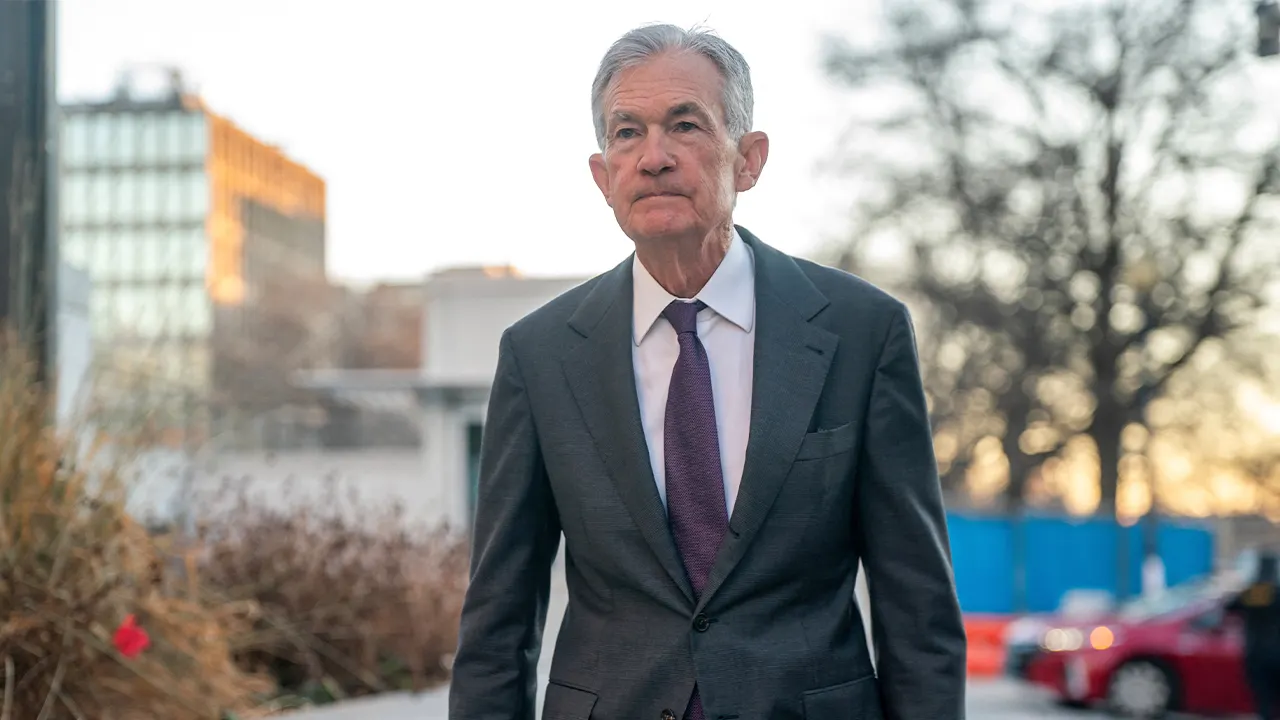
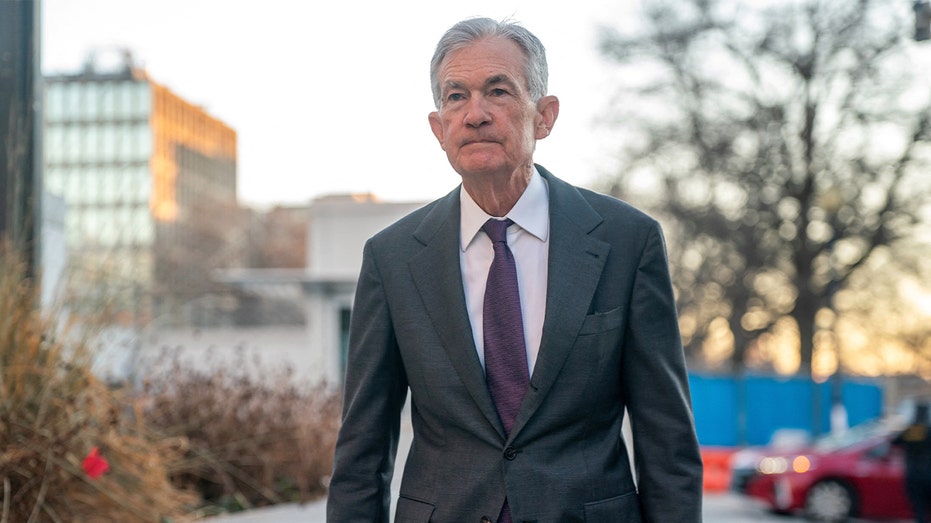
Federal Reserve Chair Jerome Powell will host what’s expected to be his final post-FOMC meeting news conference Wednesday. (Nathan Howard/Reuters)
There was uncertainty surrounding whether the nomination of Powell’s successor would take place in advance of the Fed’s June meeting due to the Trump administration’s Justice Department investigating Powell’s testimony on the central bank’s costly renovation project, as the probe drew the ire of a key senator.
Advertisement
Sen. Thom Tillis, R-N.C., who serves on the Senate Banking Committee that has authority over Warsh’s nomination, vowed to block his confirmation despite supporting his nomination due to his concerns that the administration was pursuing a “bogus” investigation that was undermining the central bank’s independence over monetary policy.
U.S. Attorney for the District of Columbia Jeanine Pirro announced on Friday that she would close her office’s investigation into Powell’s Senate testimony on the Fed renovations, which have faced cost surges that the central bank has attributed to rising materials costs, asbestos mitigation and other unforeseen or higher-than-expected costs. Pirro said the Fed’s inspector general, Michael Horowitz, will take over the investigation.
Tillis said that the DOJ’s probe was a “serious threat to the Fed’s independence, and it needed to end before I could support Kevin Warsh’s confirmation,” adding that the inspector general probe is a “necessary and appropriate measure” that he’s confident will be “conducted thoroughly and professionally.”
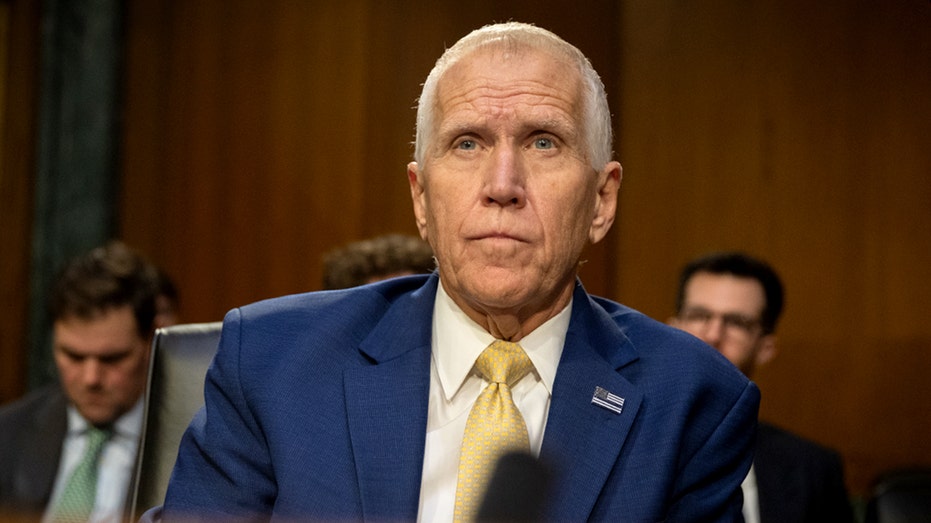
Sen. Thom Tillis, R-N.C., said the DOJ probe’s conclusion will allow him to support Warsh’s nomination. (Nathan Posner/Anadolu via Getty Images)
With the path opened for Warsh to be confirmed as chairman by the Senate in the near future, attention will shift to whether Powell intends to continue to serve as a member of the Fed’s Board of Governors after the end of his chairmanship.
Although most leaders of the central bank have departed the Fed at the conclusion of their terms as chair, Powell hasn’t confirmed that he will follow that path and may remain as a governor.
At his press conference following the March FOMC meeting that left rates unchanged, Powell said that he had “no intention of leaving the board until the investigation is well and truly over with transparency and finality.”
“On the question of whether I will then continue to serve as governor after my term ends, and after the investigation is over, I have not made that decision yet, and I will make that decision based on what I think is best for the institution and for the people we serve,” Powell added. “I’m not going to have anymore to say on those issues, by the way.”
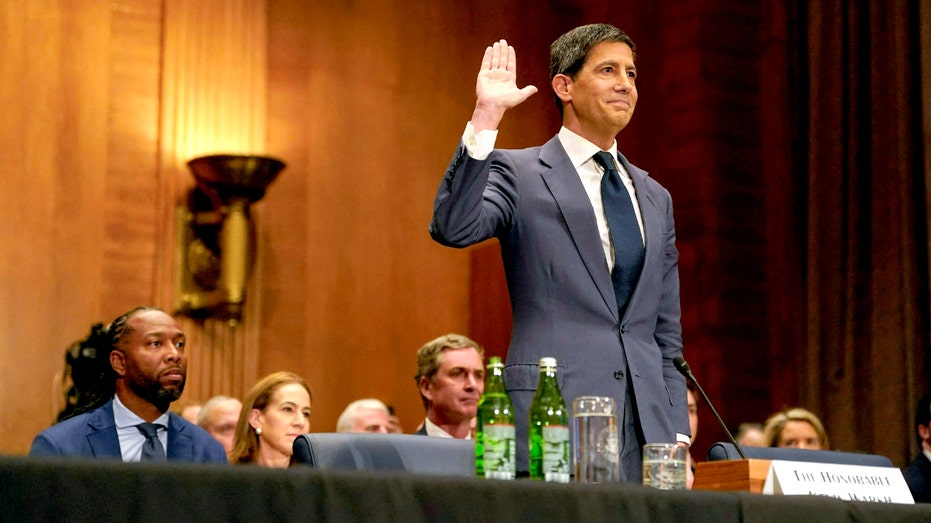
Former Fed Governor Kevin Warsh, President Donald Trump’s nominee to be the next chair of the Federal Reserve, is sworn in before his confirmation hearing with the Senate Banking Committee on April 21, 2026. (Elizabeth Frantz/Reuters)
EY-Parthenon chief economist Gregory Daco said that while the DOJ dropped its investigation, he anticipates that Powell is “more likely than not to remain on the Board,” explaining that the “rationale is institutional continuity, not politics.”
Daco wrote that Warsh’s views of inflation outcomes and a potential productivity surge driven by artificial intelligence could be disinflationary, as well as his views about how the Federal Reserve system operates, could compel Powell to stay to “help preserve institutional continuity, anchor the existing communication approach, and provide a stabilizing counterweight during the transition.”
“Dropping the investigation reduces pressure but does not eliminate it. The Inspector General review keeps governance questions active, and Powell remaining on the Board would not preclude the possibility of the DOJ reopening its investigation if new information emerges,” Daco added.
“For now, the combination of a cleared confirmation path, a likely June transition, and a high probability of Powell remaining in place points to continuity in the policy framework, even as leadership evolves.”
Banco Latinoamericano de Comercio Exterior, S. A. (BLX) Q1 2026 Earnings Call April 28, 2026 11:00 AM EDT
Company Participants
Jorge Salas – Chief Executive Officer Annette van de Solis – Executive VP & CFO Samuel Canineu – Executive Vice President of Business & Chief Commercial Officer
Advertisement
Conference Call Participants
Iñigo Vega Zabala – Jefferies LLC, Research Division Ricardo Buchpiguel – Banco BTG Pactual S.A., Research Division Natalia Corfield Andres Soto – Santander Investment Securities Inc., Research Division Daniel Mora – CrediCorp Capital, Research Division
Presentation
Advertisement
Operator
Good morning, ladies and gentlemen, and welcome to Bladex’s First Quarter 2026 Earnings Conference Call. A slide presentation is accompanying today’s webcast and is also available on the Investors section of the company’s website, www.bladex.com. [Operator Instructions]. Please note today’s conference call is being recorded. [Operator Instructions].
I would now like to turn the call over to Mr. Jorge Salas, Chief Executive Officer. Sir, please go ahead.
Advertisement
Jorge Salas Chief Executive Officer
Good morning, everyone, and thank you for joining us today to discuss Bladex’ results for the first quarter of 2026. I will begin with A brief overview of our quarter, then Annette, our CFO, will walk you through the financials in greater detail.
After that, I will come back with an update on strategy execution, some thoughts on the macro environment, and our outlook for the rest of the year. Finally, we will open for the line for questions. We began with a very strong quarter in terms of balance sheet growth, while maintaining solid profitability in a highly competitive environment with very tight spreads and wide open capital markets for LatAm issuers. The highlight of the quarter was the continued expansion of our commercial portfolio.
We reached a record of $12 billion up 8% quarter-over-quarter and 13% year-over-year. This was fully in line with the growth path we
Henry Hub is currently trading in a weak and relatively narrow range, with the front-month (May 2026, NGK26) holding around $2.50-2.57/MMBtu, with about $2.55 as the nearest short-term reference level. Over the past month the contract has lost roughly 15-20% from
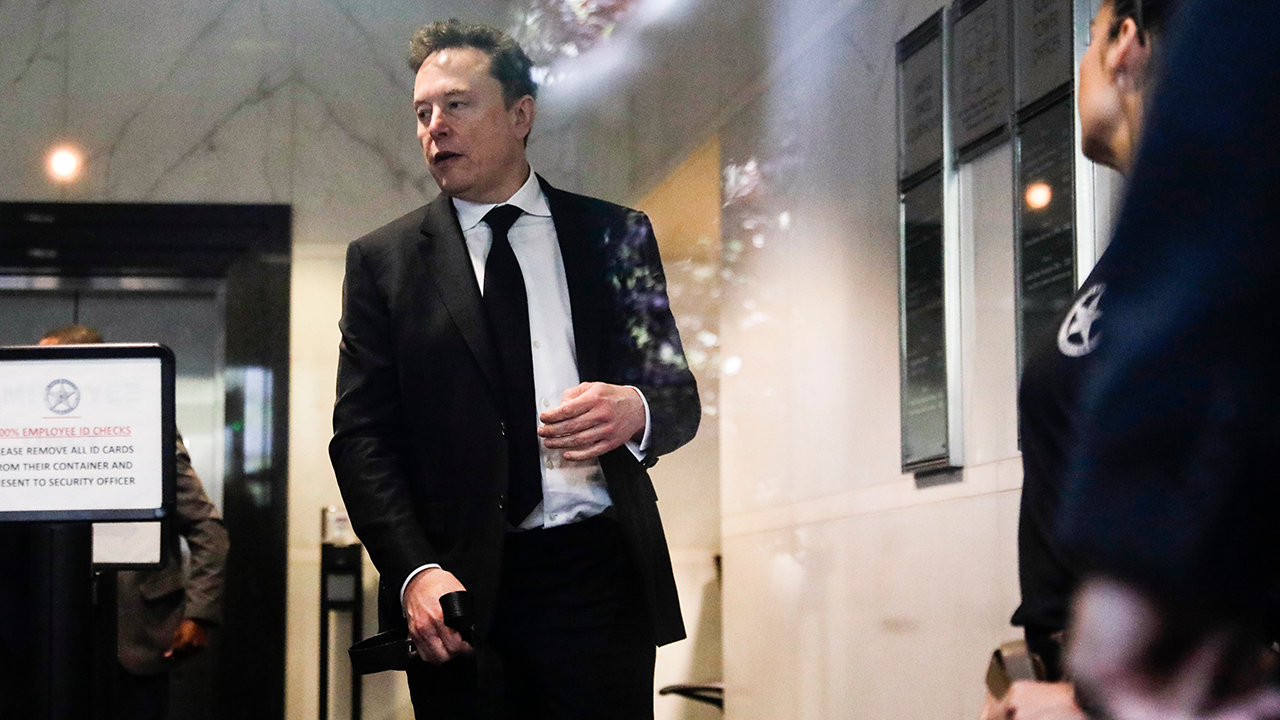
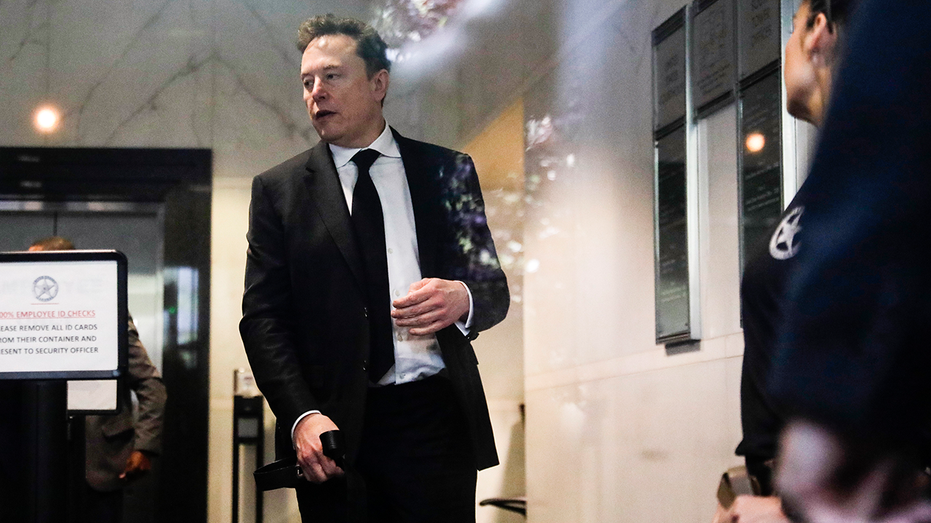
Elon Musk was seen arriving at a federal court in Oakland, California, on Tuesday for opening statements in his trial against OpenAI.
Tech billionaire Elon Musk‘s legal battle against OpenAI kicked off with a bang on Tuesday, with his attorney alleging CEO Sam Altman “stole a charity” to build a massive, profit-driven empire.
In a federal courtroom in Oakland, California, Musk’s lawyer, Steven Molo, told jurors that OpenAI completely abandoned its founding mission to safely develop artificial intelligence for the benefit of humanity.
Advertisement
Instead, Molo argued, OpenAI transformed the organization into a “profit-seeking juggernaut” because leaders were “interested in collecting riches for themselves.”
Elon Musk arrives at Dellums Federal Building in Oakland, California, Tuesday, April 28, 2026. (Jessica Christian/San Francisco Chronicle via Getty Images)
Musk, who co-founded the company in 2015, is seeking $150 billion in damages from OpenAI and its major investor, Microsoft, with the proceeds slated to go to OpenAI’s charitable arm.
The Tesla and SpaceX founder is also demanding that OpenAI revert to a nonprofit that will “benefit humanity,” and that Altman and the president, Greg Brockman, be removed from leadership.
Advertisement
Molo emphasized Musk’s foundational role, noting he provided roughly $38 million in initial funding and recruited top talent, saying, “Without Elon Musk, there would be no OpenAI.”
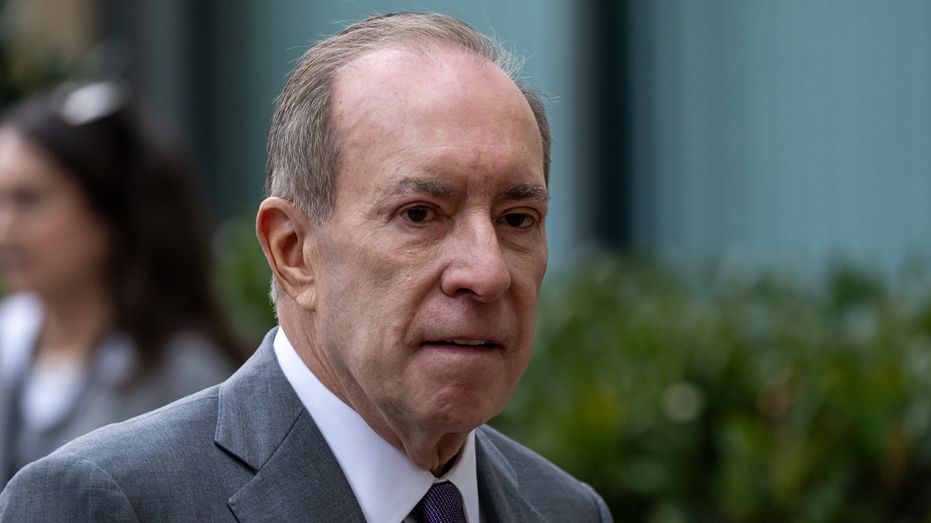
Attorney Steven Molo, representing Elon Musk, arrives at federal court in Oakland, California, on Tuesday, April 28, 2026. (David Paul Morris/Getty Images)
Lawyers representing the ChatGPT inventor are defending the company, claiming Musk’s lawsuit is fueled by jealousy over the company’s soaring $850 billion valuation.
OpenAI is arguing Musk was aware of and supported the transition to a for-profit model in 2019, and only filed suit after he failed to take over as CEO and launched his own rival AI firm, xAI.
Advertisement
U.S. District Judge Yvonne Gonzalez Rogers directly addressed Musk’s recent fiery posts on X, where he dubbed his former partner “Scam Altman.”
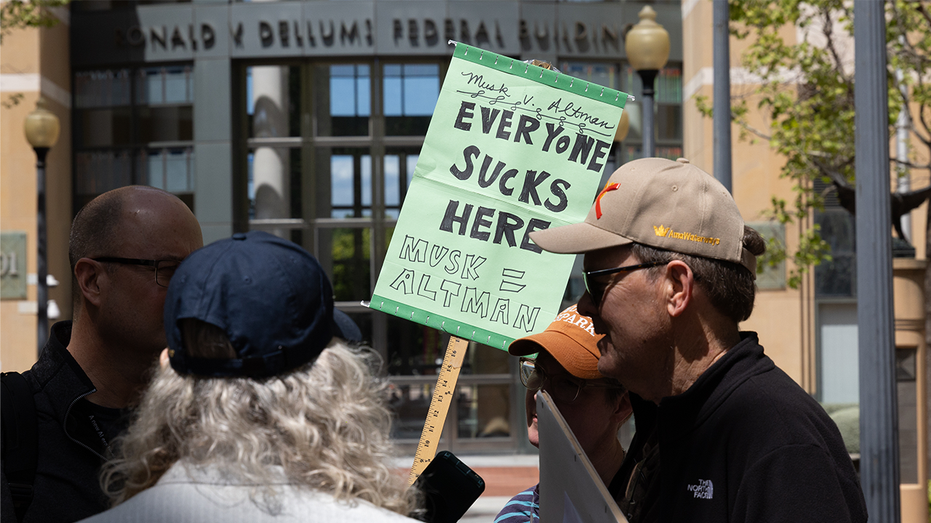
Demonstrators protest outside the courthouse as jury selection begins in the lawsuit between Elon Musk and OpenAI on April 27, 2026, in Oakland, California. (Benjamin Fanjoy/Getty Images)
The judge urged Musk to “try to control your propensity to use social media to make things work outside the courtroom,” prompting an agreement from the pair to minimize their online activity during the legal proceedings.
The trial, which is expected to feature explosive testimony from Musk, Altman and Microsoft chief Satya Nadella, could heavily impact OpenAI’s plans for a potential $1 trillion initial public offering (IPO).
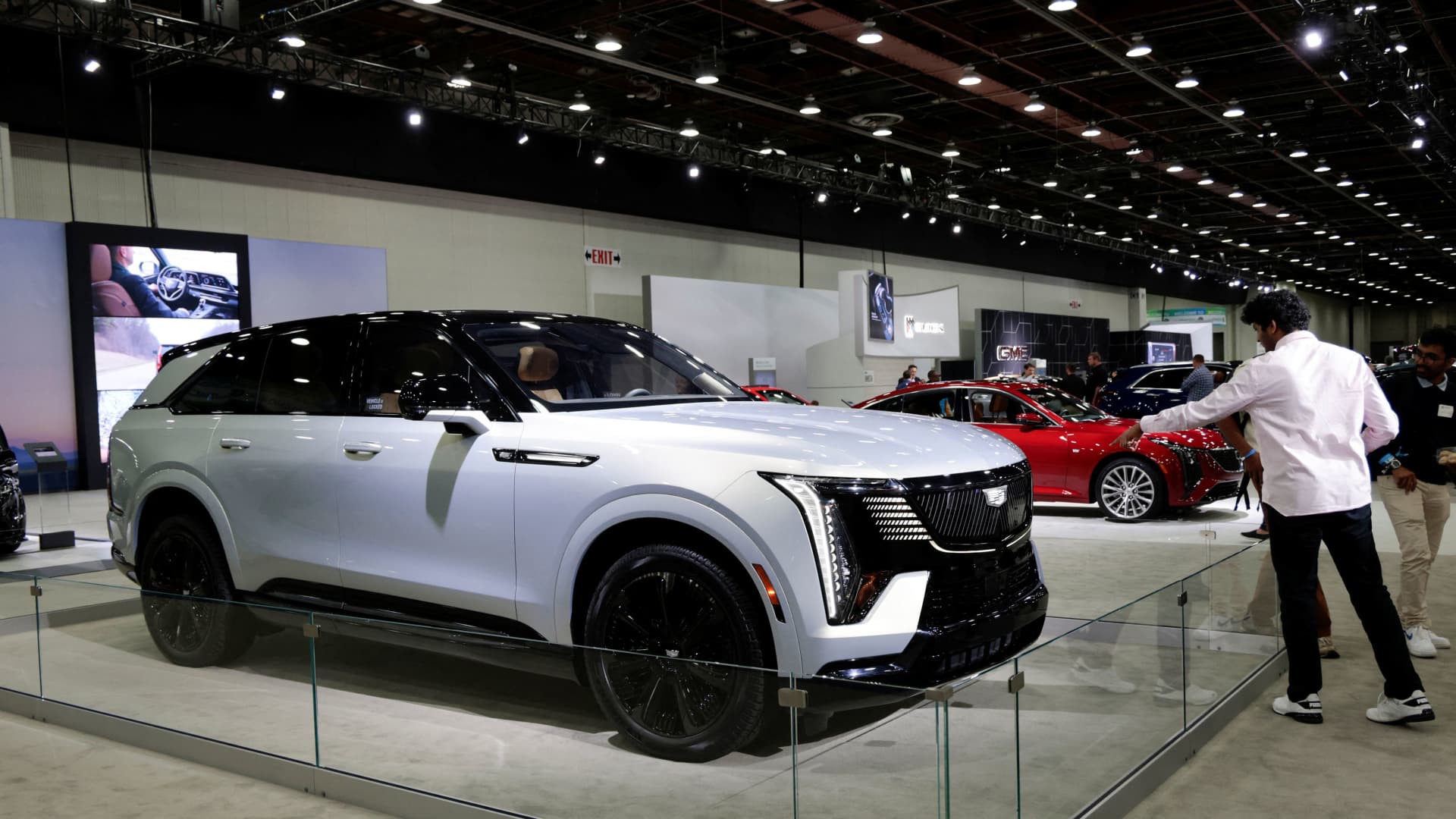
A Cadillac all-electric 2025 Escalade IQ luxury SUV is displayed during press day of the North American International Auto Show in Detroit, Michigan, September 14, 2023.
Rebecca Cook | Reuters
DETROIT — General Motors on Tuesday said the Iran war is causing cost increases to its business, but inflated consumer expenses such as higher gas prices haven’t deterred buyers from spending on pricey vehicles.
Advertisement
GM CEO Mary Barra said the Detroit automaker continues to monitor any change in customer spending but, so far, the company’s vehicle mix has remained healthy.
GM said it had an $52,000 average transaction price for vehicles during the first quarter, which was in line with last year. The average new vehicle transaction price across the industry for March, the most recent data available, was $49,275, according to Cox Automotive.
“I think the biggest variable that we’re looking at is how long does the conflict last and what does it cause from a cost perspective across logistics, supply chain, and if it ends up having any impact on a shift in mix, but, to date, we really haven’t seen that,” Barra said during the company’s first-quarter earnings call Tuesday with investors.
Barra’s comments follow consumer confidence plunging to a record low in April as fears mounted over rising energy prices and the broader impact of the Iran war, according to a University of Michigan survey earlier this month.
Advertisement
They also come after the company reported a 9.7% decline in first-quarter sales compared with an unseasonably high March 2025. GM also said it’s dealing with tighter inventories, specifically on its full-size pickup trucks, as the company retooled for updates to the vehicles for later this year.
Barra said if there are major shifts, including a more apparent move into less expensive or all-electric vehicles, that the company feels it’s well positioned to meet those needs as well.
GM CFO Paul Jacobson and Barra said the Detroit automaker is continuing to offset higher costs as best as it can through warranty improvements, cost efficiencies and potentially by deferring some hiring.
“While our operating performance remains strong, as reflected in our excellent first-quarter results, the war in Iran has raised our costs and its duration remains uncertain,” Barra said. “We are working to offset these cost pressures by reducing spending in other areas and by continuing to find efficiencies across the business.”
The GM executives specifically singled out rising energy and logistics costs due to the Iran war and its impact on oil as driving up costs, but they declined to disclose an exact amount of the impact.
Advertisement
On a broader basis, GM on Tuesday said its first-quarter performance is expected to offset incremental increases in commodity and freight costs — including from logistics and higher DRAM chips — of $1.5 billion to $2 billion for the year.
Dynamic random access memory, or DRAM, chips are semiconductors that are essential for powering infotainment, digital clusters, advanced driver assistance systems and EV systems in vehicles.
But the DRAM costs aren’t related to the Iran war. Those price hikes are coming from increasing demand for the chips, including outside the automotive industry, according to industry experts at S&P Global Mobility.
“Automotive is not the only industry vying for DRAM. The current supply crunch is driven by the AI explosion, especially in data centers, where high-bandwidth memory (HBM) DRAM is in high demand. As a result, major DRAM manufacturers are reallocating wafer capacity to serve this more lucrative market,” according to a Feb. 26 post from S&P Global Mobility.
Advertisement
Jacobson on Tuesday said the company has “no real concerns” about supply chain shortages involving the Iran war, specifically concerning raw materials, at the moment.
“We’re not projecting or worried about any shortages right now, and I think the supply chain team has continued to prove their resolve through yet another challenge, as we’ve seen them do in years past,” he said.
GM on Tuesday said it has, and will continue to, divert shipments of vehicles, including its highly profitable full-size pickups and SUVs, to the U.S. instead of the Middle East amid the war.
“Usually that’s a very strong market. So after this conflict ends, I think there’s upside there,” Barra said.
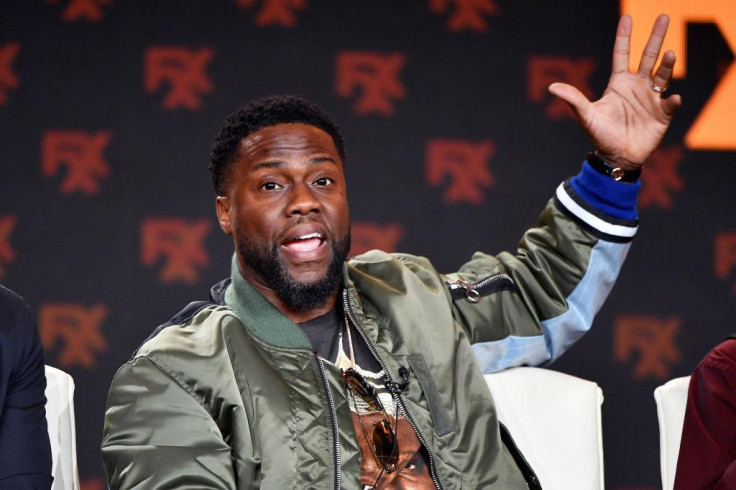
LOS ANGELES — Unverified rumors of marital trouble between comedian Kevin Hart and his wife Eniko Hart have spread rapidly across social media in late April 2026, with claims that Eniko is considering divorce due to ongoing disagreements about child support payments Kevin makes to his two children from his first marriage.
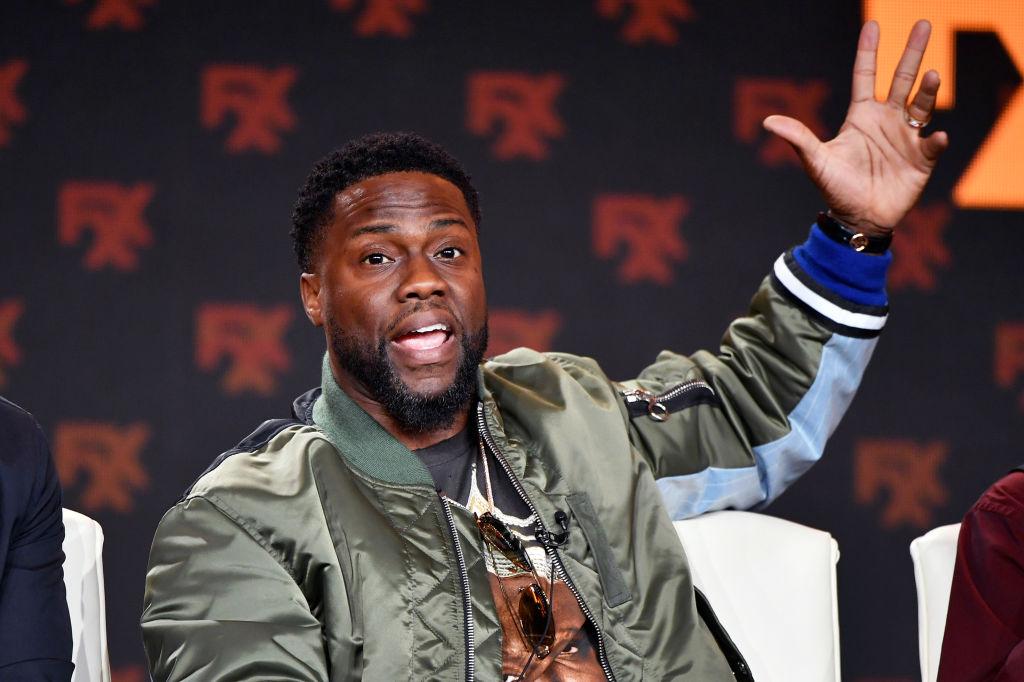
Kevin Hart
The speculation, which gained traction on platforms including Instagram, TikTok and Facebook over the past week, alleges that Eniko has grown frustrated with Kevin’s continued financial support for his older children, Heaven and Hendrix Hart, from his marriage to ex-wife Torrei Hart. Some posts claim Eniko has asked Kevin to stop the payments now that the children are adults and financially independent.
However, as of April 28, 2026, no credible public records, court filings or official statements confirm that Eniko has filed for divorce or that the couple has separated. Multiple fact-checking sources and entertainment outlets have noted the absence of any verified documentation, describing the reports as unconfirmed gossip circulating primarily through unverified social media accounts.
Kevin, 46, and Eniko, 41, have been married since August 2016 and share two children together — son Kenzo, 8, and daughter Kaori, 5. The couple has weathered public challenges before, including Kevin’s 2017 infidelity scandal that Eniko publicly addressed during her pregnancy with Kenzo. They renewed their vows in 2020 and have frequently posted affectionate family moments on social media.
The current rumors appear to stem from Kevin’s long-standing financial obligations to his first family. Court documents from his 2016 divorce from Torrei Hart outlined child support arrangements, and Kevin has spoken publicly about his commitment to co-parenting and providing for all four of his children.
Advertisement
Social media users have reacted strongly, with some criticizing Eniko for allegedly wanting to cut support for stepchildren, while others defend her right to set boundaries in her marriage. The discussion has reignited broader conversations about blended families, financial transparency in celebrity marriages and the pressures of public scrutiny.
Neither Kevin nor Eniko has directly addressed the latest rumors. Kevin’s representatives did not respond to requests for comment, while Eniko’s last public posts focused on family life and her wellness brand without any indication of marital strain.
Entertainment insiders caution that celebrity divorce rumors often surface without foundation, particularly around high-profile couples. Kevin Hart has built a reputation for resilience, bouncing back from previous scandals through humor, therapy discussions and public accountability. Eniko has been praised for her grace during past challenges.
The couple’s relationship has been documented extensively over the years. They met in 2009, began dating seriously after Kevin’s first marriage ended, and tied the knot in a lavish ceremony in Santa Barbara. Eniko has often spoken about the complexities of being a stepmother while building her own identity beyond being “Kevin Hart’s wife.”
Advertisement
Financial experts note that child support obligations in California typically continue until children reach 18 or graduate high school, though agreements can vary. Kevin’s substantial net worth, estimated around $450 million, has allowed him to maintain generous support while building a blended family.
The timing of the rumors coincides with Kevin’s busy professional schedule. He continues touring, producing projects and appearing in films, while Eniko focuses on her modeling, business ventures and family. The couple celebrated their ninth wedding anniversary in August 2025 with warm public tributes.
Relationship counselors emphasize that financial disagreements, especially around ex-partners and children, rank among the top stressors in second marriages. Blended family dynamics require ongoing communication, clear boundaries and sometimes professional guidance — elements the Harts have publicly discussed in the past.
For now, the absence of any official confirmation suggests the rumors may be exaggerated or entirely unfounded. Celebrity news cycles frequently amplify unverified claims, particularly when they involve beloved public figures like Kevin Hart, whose personal life has long fascinated fans.
Advertisement
Kevin’s first marriage to Torrei Hart ended in 2016 after 14 years together. The pair shares Heaven, now in her early 20s, and Hendrix, a teenager. Both children have maintained relatively low public profiles while occasionally appearing in family content.
As the story continues circulating, fans remain divided between supporting the couple’s privacy and speculating on every social media post. Kevin and Eniko have historically chosen to address major issues on their own terms, often through joint statements or interviews.
Whether these latest rumors prove true or simply another wave of online gossip, they highlight the intense scrutiny faced by celebrity couples. For Kevin Hart, known for turning personal setbacks into comedic material, any real challenges would likely become part of his evolving narrative — as he has done successfully throughout his career.
The public will continue watching for any official word from the couple. Until then, the rumors remain just that — unconfirmed reports that have captured attention but lack substantive evidence as of late April 2026.

















































You must be logged in to post a comment Login