Connect with us
DAPA Banner
DAPA Coin
DAPA
COIN PAYMENT ASSET
PRIVACY · BLOCKDAG · HOMOMORPHIC ENCRYPTION · RUST
ElGamal Encrypted MINE DAPA
🚫 GENESIS SOLD OUT
DAPAPAY COMING

Business

B&M profits plunge nearly 50% after ‘difficult year’ for discount retailer

Published

on

Business Live

Fellow listed retailers Boohoo, Debenhams and Huddled also release trading updates amid sector-wide pressures

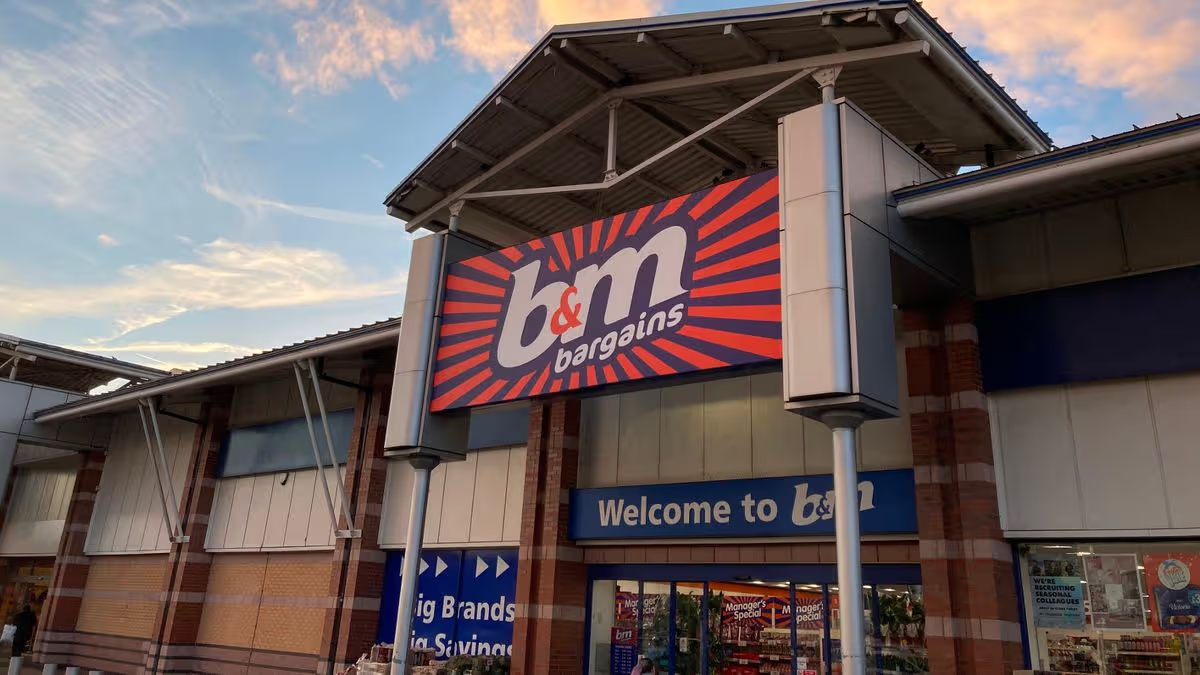
An image of a B&M Bargains store

B&M has hundreds of stores across the country(Image: MEN)

A raft of trading statements from London-listed retailers has shed light on the ongoing tussle for sales between online platforms and bricks-and-mortar stores, as household budgets remain squeezed.

Advertisement

FTSE 250 retailer B&M has revealed an almost 50% plunge in annual profit during what it described as a “difficult year”.

It was the most striking development in a flurry of updates from London-listed retailers on Wednesday.

They underscored the competitive struggle playing out across the sector between conventional stores like B&M and their own digital operations, alongside newer internet-only players such as Peeko, and one established former high-street heavyweight, Debenhams, which has now shifted entirely to an online model.

B&M reported a drop of more than 47% in group profit before tax to £227m for the year ending 28 March, from revenue of £5.8bn, down 3.6%, as reported by City AM.

Advertisement

Tjeerd Jegen, chief executive of the discount homeware and grocery retailer, characterised it as “a difficult year that saw profits fall due to a challenging market and execution issues”.

He noted that the 700-store chain unveiled a turnaround strategy in October aimed at “restore like-for-like sales growth at B&M UK”.

The business also operates roughly 150 locations in France.

Over the year, like-for-like sales — those from shops trading for at least a year — declined by 0.1%. Jegen added: “The past six months has seen us sharpen our pricing, improve on-shelf availability in best-selling brands and revamp our in-store promotions.”

Advertisement

Current deals include Visage Pour Homme aftershave at £3.99 and an eight-pack of Duracell AA batteries for £4.50, while a box of 200 Yorkshire Tea bags is priced at £5.79.

Jegen added B&M was “confident we can offset rising energy costs in the year ahead through cost mitigation, the benefits of which will flow through to our bottom line once we have returned B&M UK like-for-like sales to growth”.

The Liverpool-based retailer was founded in Blackpool in 1978 and today employs approximately 35,000 staff, serving around 4m shoppers each week. It held a position in the FTSE 100 before being relegated from the prestigious index in 2024 following a four-year stint.

Competition across the retail sector has been fierce as financially stretched consumers have reined in discretionary spending amid successive waves of inflation, driven by soaring energy costs and rising prices triggered by Russia’s invasion of Ukraine in 2024.

Advertisement

The war in Iran waged by the US and Israel this year has fuelled the latest surge in global oil prices, which looks set to have a comparable knock-on effect.

As unavoidable costs continue to climb, new research published this week from Vanquis — the banking firm specialising in providing credit to consumers who may struggle to obtain it elsewhere — has caught the attention of industry observers. Nearly a third of respondents to its Financial Wellbeing Index are relying on credit to meet everyday expenses, the research revealed. It also found that energy bills have surged by 17% over two years.

The study identified groceries as one of the most frequent triggers for using up savings, cited by 25 per cent of respondents, followed by car repairs at 19 per cent and utility bills at 17 per cent.

With household budgets stretched to their limits, Wednesday also shed light on the mounting challenges facing conventional retailers as purely digital rivals continue to gain ground.

Advertisement

The findings came from Huddled, a London-listed company behind the Peeko website, which offers discounted surplus stock from a variety of suppliers.

Revenue reached £4.2m in the first quarter of 2026, down slightly from £4.4m during the same period the previous year, reflecting a “strategic decision to moderate volume while structural issues were addressed.”

The most striking figures related to customer activity on the platform. Between January and April, the site processed 86,000 orders, with an average order value of £37 and a product margin per order of £17.

Huddled positions Peeko as “an online Costco”, currently stocking Comfort Professional Sensitive Classic Fabric Cleaner in 4.8 litre packs for £6.99, alongside boxes of 24 Mars Bars for £12.99. Martin Higginson, Huddled’s chief executive, said: “We have a great value proposition, next-day delivery, genuine customer loyalty, and the margins to justify scaling. The hard part is done. What comes next is the exciting part.”

Advertisement

The owner of the Debenhams brand also released an update that echoed these recent trends.

Once a well-established fixture on the British high street, Debenhams boasts a heritage stretching back to 1778, when it began life as a drapers’ shop at 44 Wigmore Street in London’s West End. The business adopted the Debenhams name in 1813 when William Debenham invested in what had previously traded as Flint & Clark.

By the 2020s, however, the retailer was in serious difficulty. Boohoo snapped up the brand for £55m in January 2021 in a deal that excluded the physical stores and their workforce. At that point, 118 department stores remained in operation, all of which had shut their doors by the end of May that year.

Today, Debenhams is positioned by its Manchester-based parent company as “Britain’s online department store”.

Advertisement

Boohoo reported that during the first quarter to the end of May, “momentum in the Debenhams Group multi-year turnaround accelerated”. Gross Merchandise Value climbed by 0.5% year-on-year, with trading in May described as “particularly strong”.

Boohoo also operates its own-name website alongside the PrettyLittleThing brand. The company announced today that gross margins in the first quarter to May reached 53.5 per cent, up from 52.1 per cent the previous year. Returns dropped by approximately 5 per cent, while exceptional costs were slashed by 72 per cent and capital expenditure reduced by 54 per cent year-on-year.

Debenhams signs have appeared on Dale Street in Manchester city centre after fashion giant Boohoo rebranded

Debenhams signs appeared on Dale Street in Manchester city centre after fashion giant Boohoo rebranded(Image: Reach)

Chief executive Dan Finley said: “Debenhams Group has returned to growth, and Q1 marks the inflection point we have been working towards.

“This is the result of the heavy lifting of our multi-year turnaround: the move to an asset light marketplace model, the warehouse consolidation, the cost reset, and the rebuild of every brand on a single proprietary platform.”

Advertisement

The contrasting fortunes among London-listed retailers lay bare the pressures facing an industry that contributes around £490bn in annual sales to the UK economy in 2025 — and one that also stands as the largest private sector employer, accounting for roughly 3m jobs.

City investors will be keeping a close eye on developments, eager to distinguish the sector’s winners from its losers as this vast industry continues to evolve.

Wednesday’s announcements were warmly received by the markets. B&M’s shares surged 17 per cent to 199p, Huddled climbed 7 per cent to 0.78p, and Boohoo rose more than 11 per cent to 21p.

Peel Hunt analyst Jonathan Pritchard, assessing B&M’s results, noted they “were a beat versus our and consensus expectations” with earnings around “2% clear of hopes”. He continued: “There are a lot of things going on at B&M, and some of the ‘back to basics’ plans are clearly having an impact.”


Advertisement
Continue Reading
Click to comment

You must be logged in to post a comment Login

Leave a Reply

Business

South East Water announces new chief executive designate

Published

on

A man in a blue shift with glasses. He has grey stubble.

South East Water (SEW) has announced a new chief executive designate after its previous boss resigned.

The heavily criticised water company said that John Halsall will take over from David Hinton, pending regulatory approval.

Halsall has previously worked for Thames Water, South West Water and Network Rail.

The announcement comes as SEW remains under fire for repeated water supply failures in Kent and Sussex and grapples with major infrastructure issues.

Advertisement

Halsall said that his priorities were “responding to customers’ immediate concerns” and delivering on short term improvements.

In the longer term, Halsall said that he would deliver the company’s largest ever investment programme of £2.1bn to “improve reliability and resilience”.

He added: “I look forward to working with our customers, community partners, regulators and colleagues to rebuild trust in South East Water, drive the improvements the business needs to deliver and make the changes people want to see.”

Advertisement
Continue Reading

Business

Shares snap losing steak but inflation threats remain

Published

on

Shares snap losing steak but inflation threats remain

Australia’s share market has snapped a four-session losing streak, but investor sentiment remains subdued with the Reserve Bank’s battle with inflation far from over.

Continue Reading

Business

Police flew accused crooks 71 times this month

Published

on

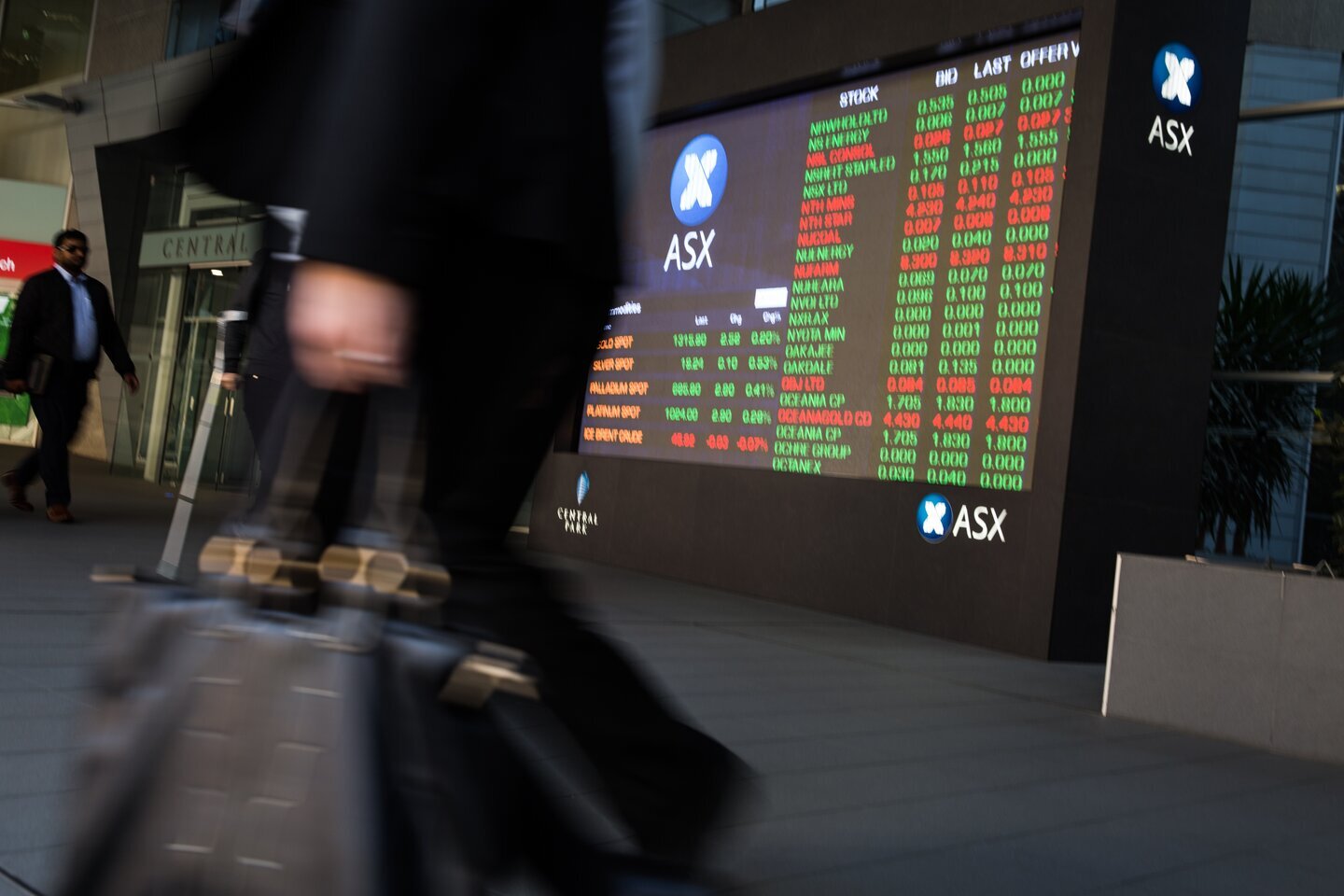
Police flew accused crooks 71 times this month

Police have used their fixed wing fleet of aircraft to transport accused criminals 71 times in just three weeks because more than 20 regional courts have closed.

Continue Reading

Business

Andrew Cuomo says blockchain can cut banking fees for working families

Published

on

Andrew Cuomo says blockchain can cut banking fees for working families

EXCLUSIVE — Former New York Gov. Andrew Cuomo is taking aim at both legacy financial institutions and Washington gridlock, warning that the U.S. is wasting time on a technology that could significantly lower costs for working-class families.

Speaking exclusively with Fox News Digital about his new role as co-chair of a joint venture between fintech company OKX and Intercontinental Exchange (ICE), the parent company of the New York Stock Exchange (NYSE), Cuomo detailed how a shift toward blockchain technology could help reduce costs for consumers by limiting reliance on traditional banking intermediaries.

Advertisement

“This provides basic financial services, you have an account, you can pay bills, you can transfer money. And you don’t have to deal with the traditional banking establishment, minimum requirements,” Cuomo told Fox News Digital on Tuesday. “There are benefits across the board.”

“This is something that has been percolating for a long time, gestating, working through the tension that was first present between these companies and the traditional finance companies. We’ve now come to a general recognition that it has to be collaboration rather than competition,” he continued.

COINBASE C.E.O. SAYS CRYPTO BILL COULD TRANSFORM U.S. FINANCIAL SYSTEM AS SENATE VOTE APPROACHES

Cuomo argues that crypto is the latest chapter in America’s financial evolution. Much like the 1929 stock market crash helped lead to the creation of the Securities and Exchange Commission and the Enron scandal prompted corporate reforms, crypto’s early days are forcing a shift toward greater oversight. As co-chair of OKX and Intercontinental Exchange’s (ICE) efforts to build regulated digital markets, Cuomo said his goal is to merge Wall Street’s compliance framework with crypto’s 24/7 technology capabilities to tokenize mainstream equities and futures.

Advertisement
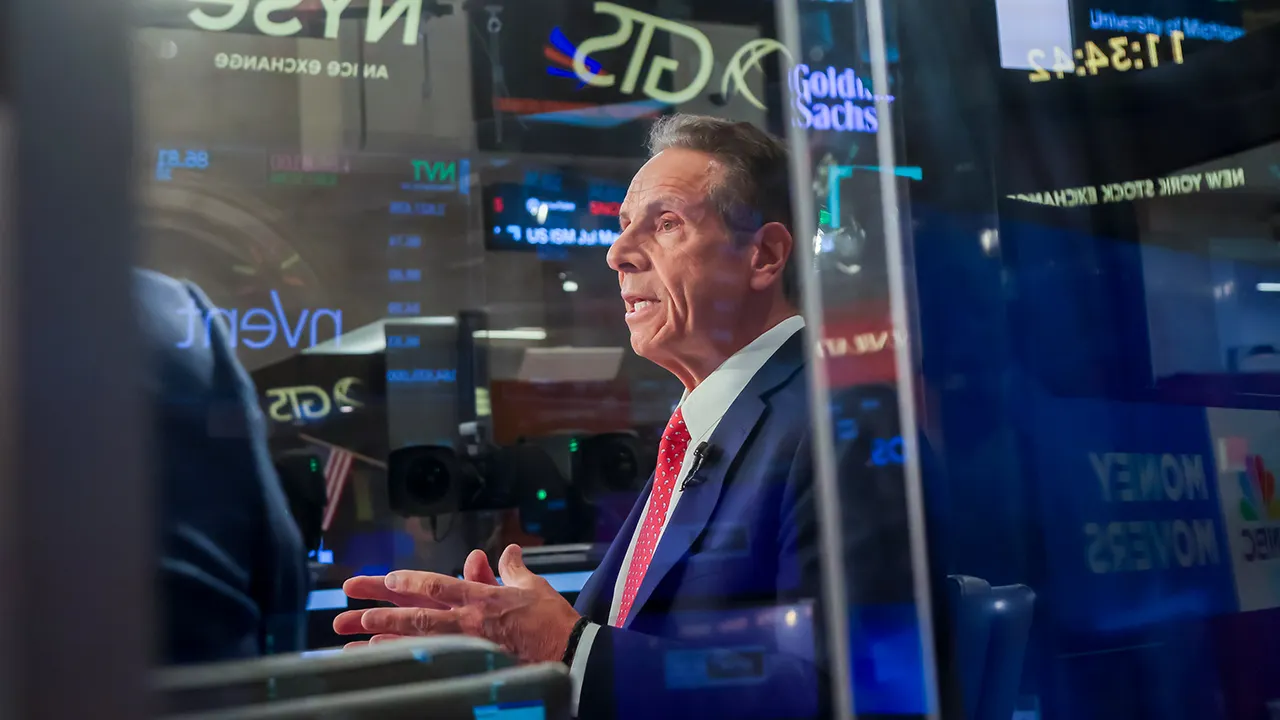
Andrew Cuomo at New York Stock Exchange

Andrew Cuomo, former New York governor, speaks during an interview on the floor of the New York Stock Exchange (NYSE) on Friday, Aug. 1, 2025. (Getty Images)

“When it first started, it was, ‘crypto was controversial,’” Cuomo pointed out, “but it was never about crypto. It was about the blockchain technology. And I think that’s what people missed for a lot of years. They got caught up in crypto and didn’t understand the potential of the blockchain.

“The SEC, obviously, is going to have to change with the times, but the blockchain will be so much more time efficient and cost-efficient. You don’t need the intermediaries. Literally, you could trade directly, and it can be a 24/7 market, and it can be a global market,” he added.

He also addressed the frustration of the average middle-class family that feels pocketbook pain from legacy banking institutions, ATM fees and slow transaction times. By expanding blockchain access through smartphones, he believes the technology can provide financial access to the unbanked and underserved.

“Besides the tokenized securities, in general on this platform, you have a wallet, you can deposit your currency in your wallet, you can make payments from your wallet. And… for the average consumer, that makes a tremendous amount of difference. There are virtually no transaction fees. Payment is direct, payment is fast for the average consumer,” Cuomo explained. “And then there are literally billions of people globally who have no access to any financial service.”

To unlock blockchain’s full potential, Cuomo is urging Congress to pass the CLARITY Act, which he says would set firm rules of the road.

“You can’t claim an industry is the Wild West when there’s no sheriff. That’s why it’s the Wild West, because there’s no sheriff and there are no laws,” he said. “You don’t have more time. The situation is already manifested. Businesses are operating. People are transacting business. This should have been done a decade ago. You don’t have the luxury of time. You have to respond, the government has to respond on a timely basis to the situation that is presented. It is happening.”

Cuomo further responded to criticism made by traditional financial elites – including JPMorgan Chase Chairman and CEO Jamie Dimon – who claimed the Act fails to meet federal banking standards. 

“Now, I think a lot of the traditional finance guys were saying, ‘Well, hold on, this can dramatically change the industry. We need to understand all the consequences for the existing industry, so let’s take time because this may upend my business,’” Cuomo said, “but… you’re not putting the blockchain back in the box. It’s out there. It is happening. So, yes, the evolution will create disruption in the marketplace, but that is also how you evolve. And what these companies have to get is either you evolve and thrive, or you remain stagnant and die. That’s the way of the market.”

GET FOX BUSINESS ON THE GO BY CLICKING HERE

The former New York governor and attorney general emphasized how the new venture marries the stability of the NYSE with cutting-edge technology to keep America competitive on the global stage.

“What excites me most is this brings the two giants together… The New York Stock Exchange is the iconic symbol of the American finance system… it just epitomizes the evolution and now the [blockchain] collaboration and the synergy and the partnership.”

READ MORE FROM FOX BUSINESS

Advertisement
Continue Reading

Business

Primary Health Properties in talks for hospital assets joint venture

Published

on


Primary Health Properties in talks for hospital assets joint venture

Continue Reading

Business

US to probe petrol price gouging claims, Trump says

Published

on

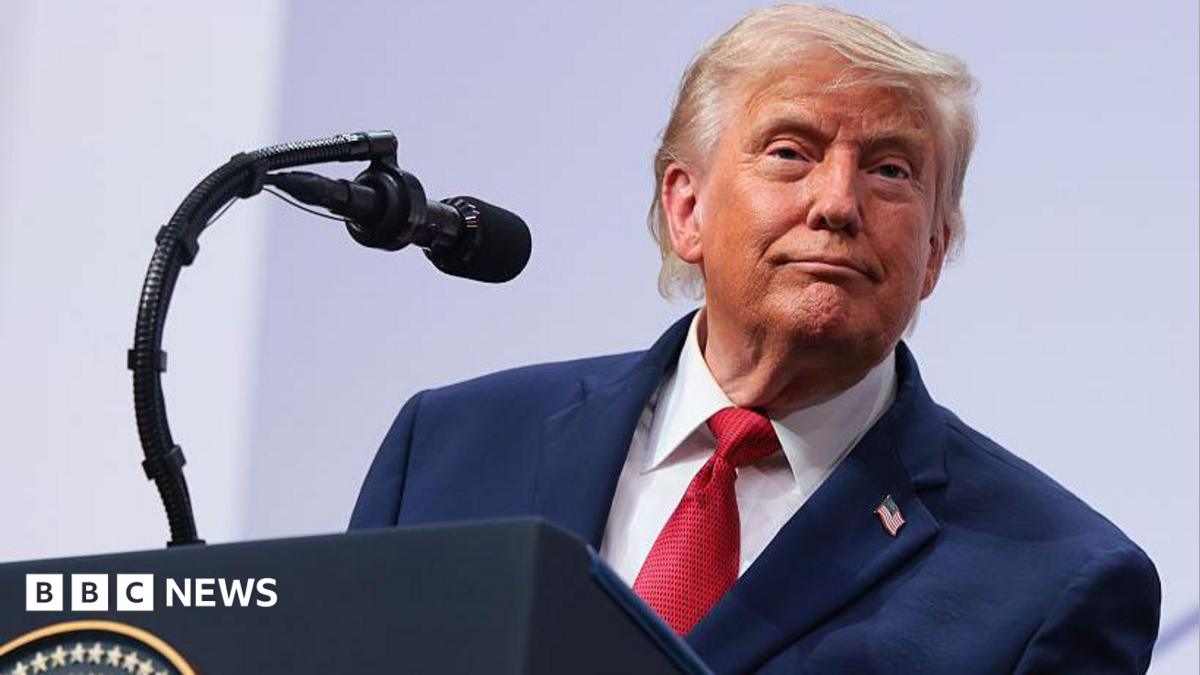
President Donald Trump speaking on stage during a press conference at the G7 Leaders' Summit

US President Donald Trump has said he has ordered an investigation into major energy companies, accusing them of “gouging” customers by not cutting petrol prices after the cost of crude oil fell on global markets.

Trump wrote on social media that he has ordered the Department of Justice (DOJ) to “immediately start looking into this”, adding he had expected to see petrol prices fall “a lot faster than what I’m seeing.” He did not name any oil firms in the post.

His remarks come after the price of oil retreated from peaks seen during the Iran war but remain higher than before the conflict started.

The BBC has contacted the DOJ and the White House for comment.

Advertisement

“The big Oil Companies are not dropping their price at the pump commensurate with the sharply lower prices they are paying for Oil,” Trump said in the post.

“Those prices are dropping like a rock! In other words, customers are being ‘gouged.’”

Oil prices have seen dramatic swings since the US and Israel attacked Iran on 28 February.

Tehran responded to the US-Israeli strikes by effectively shutting the critical Strait of Hormuz waterway, severely disrupting shipments of oil and gas and sending energy prices sharply higher.

Advertisement

Brent crude, the global oil benchmark, reached almost $120 (£91) a barrel in May.

The price of Brent has dropped to around $76 barrel as peace talks progress but is still above the roughly $70 a barrel mark it was at before the conflict.

Meanwhile, the average price of regular gasoline in the US has fallen to about $3.90 a gallon after topping $4 a gallon in April but remains well above pre-war levels.

Advertisement
Continue Reading

Business

Worldpay Outage Hits UK Card Payments During England Match

Published

on

Worldpay Outage Hits UK Card Payments During England Match

Thousands of shoppers and football fans were forced back to notes and coins on Tuesday night after a power outage at Worldpay, one of the world’s largest payment processors, knocked out card transactions at pubs, supermarkets and restaurants across the country.

The disruption could hardly have come at a worse moment for the hospitality trade. Tills and contactless terminals began failing just as fans settled in to watch England’s World Cup group game against Ghana, the kind of fixture that turns an ordinary Tuesday into one of the busiest trading nights of the year for licensed venues.

Customers reported being unable to pay by card at a number of retailers, including branches of Tesco, while videos circulating on social media showed queues snaking out of cash machines as drinkers and diners hunted for the funds to settle up. Several pubs and entertainment venues posted notices that they were accepting cash only until the system came back.

Worldpay attributed the fault to a third-party power problem rather than any failure of its own platforms. “The UK experienced a power grid disruption, which is causing intermittent transaction authorisation issues for some Worldpay clients,” a spokesperson said. “Our technical teams are engaged and working to address the matter as soon as possible.”

In a statement on its website, the company added: “A third-party power disruption is causing intermittent transaction authorisation issues and tokenisation request errors on some Worldpay platforms. Our technical teams have restored service to some platforms and continue to troubleshoot to restore full service as soon as possible.”

Advertisement

The monitoring site Downdetector logged more than 1,000 reports of payment problems at Tesco from around 8pm. Responding to a customer on X, the supermarket said: “There is an issue with Worldpay at the moment affecting us and other businesses taking card payments.” A Tesco spokesperson later confirmed the problem had been fixed, saying: “An issue that affected payments in store and online is now resolved. We’re sorry for the inconvenience.”

Frustration among consumers focused as much on the timing as the fault itself. “Global outage on Worldpay, leaving busy pubs in the UK unable to sell beer to customers who don’t have cash, not great,” one customer wrote. Another posted: “Unbelievable, busy England game and Worldpay goes down on card terminals. Multiple sectors reporting issues of terminals down.”

For all the inconvenience, the episode is a useful reminder of how thoroughly Britain has moved away from physical money, and how exposed that leaves small firms when the plumbing fails. Contactless now accounts for roughly three-quarters of all debit card transactions in the UK, according to UK Finance data, with supermarkets among the most common places people tap to pay. As Business Matters has reported before, contactless is at record levels and there is little appetite to return to cash.

That convenience comes with concentration risk. When a single processor handling a large share of the market goes dark, the effect ripples instantly across thousands of unrelated businesses, from the corner shop to the national grocer. A pub that has quietly gone card-only over the past few years suddenly cannot take a penny, and few customers now carry the cash to bail it out.

Advertisement

The incident lands against a tougher regulatory backdrop for the firms that run the country’s payment rails. Since March 2025, payment and e-money firms have had to comply with the Financial Conduct Authority’s operational resilience rules, which require them to identify their most important services, set tolerances for how long disruption can last, and prove they can stay within those limits. An outage that stops shops trading on one of the busiest nights of the football calendar is exactly the sort of scenario those rules are designed to stress-test.

For SME owners, the practical lesson is the value of a backup. Venues with a second terminal on a different acquirer, a working cash float or a simple offline payment option were able to keep serving while rivals turned customers away. Many smaller operators have already been rethinking their relationship with the banks’ card machines in search of lower fees and better terms, and resilience deserves a place on that checklist alongside price.

There is a security dimension too. Nights when systems are patchy and queues are long are exactly when staff cut corners and opportunists try their luck, so it pays to understand how to keep cashless customer payments secure even when the technology is under strain.

Worldpay said service had been restored to some platforms within hours and that engineers were working to bring the rest back online. For the publicans who watched a sell-out crowd struggle to buy a round during the second half, the bigger question is not whether the system came back, but how quickly they can make sure the next outage does not cost them the takings.

Advertisement

Amy Ingham

Amy is a newly qualified journalist specialising in business journalism at Business Matters with responsibility for news content for what is now the UK’s largest print and online source of current business news.

Advertisement
Continue Reading

Business

BOJ must scrutinise impact on financial system from AI, non-bank activities, Ueda says

Published

on


BOJ must scrutinise impact on financial system from AI, non-bank activities, Ueda says

Continue Reading

Business

India’s growth story, not AI trade reversal, will drive foreign flows: Sameer Dalal

Published

on

India's growth story, not AI trade reversal, will drive foreign flows: Sameer Dalal
As concerns over the global AI trade trigger volatility in markets such as South Korea, investors are debating whether India could emerge as the next destination for foreign capital. According to Sameer Dalal from Natverlal & Sons Stockbrokers, the answer lies less in the unwinding of the AI theme and more in India’s improving macroeconomic fundamentals.

He believes the recent weakness in AI-related stocks is more of a valuation correction than the end of the structural AI investment cycle.

“Look, it is just the beginning of maybe a bit of a correction in the AI trade because the AI investments and all of that happening globally are not going to reverse themselves immediately. They have known for a while that the path to profitability is still some time away. So, these are just certain news flows that come in and correct valuations that have probably gone more than they should have,” he said.

Dalal said it would be premature to conclude that investors will immediately shift away from AI-focused businesses toward traditional sectors or that India will instantly regain foreign inflows.

Advertisement

“Does that mean that the AI trade is over and that people are going to look at more traditional businesses? Is India going to get its flows back right away? I do not think those are the kind of situations that are there,” he said.


Instead, he believes India’s own economic story is strong enough to attract capital.
“Independently, India should get its flows given the fact that crude prices have come off, which is a big benefit for the Indian consumer eventually and for India’s financials. The monsoons, albeit late, have started to some extent. We will need to keep monitoring the progress. If the progress continues to remain good, India will do quite well,” he said.He added that investors could increasingly focus on India’s earnings recovery over the coming financial year.

“Irrespective of whether the AI trade and South Korea struggle, or whether the US markets are going through a bit of turmoil, India should hopefully get some flows if people believe that FY28 will be a year that sees strong growth after a couple of years of pain. So, for me, it is not the AI trade reversal; it is purely the fact that India should start doing well that flows should resume,” he said.

Bullish on pharma, cautious on nutraceuticals
Commenting on the recent buzz around nutraceutical companies following Honasa’s acquisition announcement, Dalal said he does not have a specific view on the segment.

“I do not have a view on that particular space, but if you ask me about the pharma space, we remain very constructive and bullish. We think the opportunity that still exists for Indian pharma to capture market share in the US is very strong,” he said.

Advertisement

He added that he was not familiar enough with the Honasa transaction to comment on it.

Tata Motors‘ targets look achievable
Dalal believes Tata Motors is well placed to meet its guidance despite concerns around margins.

He pointed out that last year was impacted by Jaguar Land Rover‘s cybersecurity issue and weaker Middle East demand, both of which hurt volumes.

“I believe it would be possible for them to achieve that guidance. It may not be easy to get the margins, but you have got to realise that this is an operating leverage business as well,” he added.

Advertisement

According to him, the worst of those disruptions appears to be over.

“The current year they are saying for JLR they are going to be able to breakeven on cash flows, and they will be EBITDA positive. Once these issues resolve and they are able to get back that growth momentum, achieving a 10% to 15% margin with the India unit plus Jaguar Land Rover together will not be a very difficult task,” he said.

Dalal also highlighted India’s growing automobile demand and Tata Motors’ leadership in electric vehicles.

“Demand for automobiles continues to remain strong. India is going to be one of the bigger drivers for automobiles. The electric vehicle segment in India will get a push, and Tata has the largest range at this point in time, with continuously improving products,” he said.

Advertisement

He also believes the recent correction has made valuations attractive.

“The stock took a massive knock after the JLR meet because people wanted more. But at this point in time, valuations are quite attractive, and one should definitely go ahead and make an investment in Tata Motors. I think there is upside,” he added.

IT worst may be over, but patience is needed
Dalal has become less negative on the IT sector but believes investors should wait before making aggressive bets.

“I am not as positive on the IT space, but I am not negative anymore. The worst for the IT sector is pretty much done,” he said.

Advertisement

He argued that AI will complement rather than completely replace traditional IT services.

“As much as people say AI is going to disrupt the way traditional business is done, I do not think that can totally happen. You are still going to need people servicing it because if AI goes wrong somewhere, you need someone to fix it,” he added.

However, he prefers waiting until industry leaders emerge.

“I would not go out and buy IT stocks right away because it is going to be another six months to a year before we know who the winners are, who has got what tie-ups, and then we can probably take a more calculated and better bet,” he said.

Advertisement

Power, banking, consumption and cement remain top sector picks
Dalal continues to favour sectors closely linked to India’s domestic growth story.

“We have always been positive on the power sector in India. We think the opportunity is very large. Then we think banking and financial services. If India has to grow, the BFSI space is something that is going to be driving growth,” he said.

He also remains optimistic on discretionary consumption.

“Consumer discretionary is something we have been positive on. We think that is something that will do well,” he said.

Advertisement

Among his newer investment ideas, Dalal highlighted cement as an emerging opportunity.

He believes years of capacity additions kept utilisation levels low, preventing companies from benefiting from operating leverage. As infrastructure spending and real estate activity improve, utilisation rates could rise and profitability could strengthen.

“We feel that, given the fact that we are are expecting real estate to bounce back, and infrastructure and the power sector will see huge capex, there will be demand for cement. Once utilisation rates start going up, operating leverage will play out,” he said.

Dalal’s preferred picks in the sector are Ambuja Cement and Shree Cement.
“We like Ambuja Cement at this point in time, where we think the merger with ACC will allow it to get more benefits and cost reductions, which will allow profits to go up,” he said.

Advertisement

“The other one that has corrected quite a bit is Shree Cement. Given the capacity additions and the utilisation that will happen, we think that throws up an opportunity. UltraTech has also corrected but is still a little on the expensive side. I would wait for another 5-7% correction before looking at it from a buying perspective,” he added.

Continue Reading

Business

Social Media Drives 1.7bn UK High Street Visits a Year

Published

on

Social Media Drives 1.7bn UK High Street Visits a Year

Far from luring shoppers away from the high street, social media is sending them through the door in their millions.

New research from American Express estimates that content scrolled on phones is now behind some 1.7 billion visits to UK high streets every year, an average of more than 30 million a week.

The Hype to High Street study, carried out with analysts Retail Economics, found that nearly two-thirds (63%) of UK adults have walked into a shop or hospitality venue, a café or restaurant among them, in the past year after being swayed by something they saw on social media. Among Gen Z consumers, those aged 18 to 28, the figure climbs to 88%.

It is a striking corrective to the familiar story of the doomed bricks-and-mortar store. For all the talk of declining footfall and shuttered shopfronts, the channel often blamed for emptying the high street is increasingly the reason people turn up at all.

The research suggests social media has become a powerful engine of both footfall and loyalty, particularly among younger shoppers. More than four in five (82%) consumers return to a business after a socially influenced first visit, rising to 96% among Gen Z. They make persuasive advocates, too: nearly eight in ten (79%) say they shared their most recent visit in some way, whether by recommending the business, posting about it or leaving a review online. Among Gen Z, that rises to 89%.

Advertisement

Short-form video is proving especially good at turning online buzz into offline queues. The viral spread of products such as Dubai chocolate and matcha drinks, along with trending venues and experiences, is pushing consumers to seek them out in person.

That points to the emergence of what the study calls a ‘viral pilgrimage’ economy, in which shoppers travel real distances, to other towns and other parts of the country, to get their hands on products, venues and trends first discovered on a screen. More than a third (35%) of Gen Z consumers say they have travelled to another city or region to buy something they first saw trending online. Once there, nearly nine in ten (87%) say they would happily queue for a sought-after product or experience.

It is a behaviour that would have baffled retailers a decade ago, when the rise of live commerce and shoppable video was still a novelty borrowed from Chinese platforms. Today, the journey from a 30-second clip to a physical till is becoming routine.

The findings draw on a survey of 2,000 UK adults, combined with economic modelling used to size the total value and volume of social media-influenced spending on the high street.

Advertisement

Nearly nine in ten (87%) respondents said they spent money during a socially influenced visit, rising to 94% among Gen Z shoppers. More broadly, Retail Economics’ modelling suggests social media now shapes one in every 20 in-person high street purchases across the UK, a measure of how quickly online engagement is translating into real-world spending.

At a time when many high streets are still under pressure, with the British Retail Consortium reporting six consecutive months of falling footfall towards the end of last year, the research suggests the benefits of a socially influenced visit spill well beyond the business that prompted it.

Almost a third (32%) of consumers visited additional nearby shops, restaurants or venues on the same socially influenced trip, while more than one in five Gen Z shoppers (22%) admitted to spending more than they had planned once they arrived. For neighbouring independents, a rival’s viral moment can lift the whole street.

Dan Edelman, UK General Manager, Merchant Services at American Express, said: “Social media has become the new shop window for Britain’s high streets. What starts as a scroll on social is increasingly translating into real-world visits, increased spending and growth opportunity for businesses across the UK.

Advertisement

“What’s striking is that the impact doesn’t stop at the venue that first caught a consumer’s attention, social media is creating a domino effect that benefits neighbouring businesses and helps entire high streets thrive. For merchants, particularly those looking to attract younger consumers, the ability to turn online hype into memorable in-person experiences has never been more important. At American Express, we’re committed to championing the UK’s high streets and the businesses that power them, helping merchants make the most of these changing consumer behaviours.”

Few businesses illustrate the phenomenon better than Randalls, a family-run sweet shop in the East Midlands. After posting a 60-second video of staff packing a customer’s £270 pick and mix order, it watched shoppers arrive from across the country. The clip racked up more than 12 million views, lifting takings and, crucially, the fortunes of the streets around it.

“We’ve always known we had something special, but it was always a local secret. One video changed that overnight,” said Jarrod Burke, founder of Randalls UK. “People started travelling from across the country to visit the shop, including one customer who made a special trip while visiting the UK from Australia. Since the video went viral, our daily takings in-store have tripled, and we’ve regularly had queues outside the shop. What’s been amazing is seeing the impact spread beyond our business too, people are making a day of it in Market Harborough, visiting other independent shops, cafés and businesses nearby.”

For independents wondering how to engineer their own moment, the lesson is less about chasing virality than being ready to convert it, with the basics of how to increase footfall in store mattering just as much as the content that draws people in.

Advertisement

Richard Lim, chief executive of Retail Economics, said the channel’s influence now reaches well beyond e-commerce. “Social media is not just driving online sales, it is now also influencing in-person spend on the UK high street,” he said. “The channel’s growth underlines just how quickly shopping via social has become mainstream, as well as the extent of its positive contribution to the long-term health of UK high streets. Social media is becoming an increasingly important driver of footfall in its own right, helping turn shops, restaurants and venues into destinations consumers actively seek out, visit and share with others.”

The timing matters. With online sales accounting for more than a fifth of total UK retail spending and the high street long braced for the worst, the idea that the feed can fill the street rather than empty it is a welcome shift, and one that hands smaller, nimbler merchants a rare advantage over their larger rivals.

American Express, for its part, has been expanding its own high street presence. Since 2021, the number of UK locations accepting its cards has tripled, taking in more small businesses than ever before, while Amex cards are now accepted at over 170 million merchant locations worldwide as of the end of 2025.


Jamie Young

Jamie Young

Jamie is Senior Reporter at Business Matters, bringing over a decade of experience in UK SME business reporting.
Jamie holds a degree in Business Administration and regularly participates in industry conferences and workshops.

When not reporting on the latest business developments, Jamie is passionate about mentoring up-and-coming journalists and entrepreneurs to inspire the next generation of business leaders.

Advertisement

Continue Reading

Trending

Copyright © 2025