









Connect with us
DAPA Banner

Business

BODYARMOR returns as official NCAA sports drink for 2026 March Madness

Published

on

BODYARMOR returns as official NCAA sports drink for 2026 March Madness

It’s that time of year again in college basketball, and BODYARMOR Sports Drink is getting back on the court for the most anticipated tournament of the year. 

BODYARMOR announced its return to college basketball as the official sports drink of the NCAA after seven years, beginning with the 2026 March Madness tournament. 

Advertisement

As such, the brand committed to better hydration is refreshing its “Choose Better” campaign with LSU senior guard Flau’Jae Johnson, who is hoping to make a run this March for her second career title, and a two-time NCAA men’s basketball champion – New York Knicks star guard Jalen Brunson. 

CLICK HERE FOR MORE SPORTS COVERAGE ON FOXBUSINESS.COM

Jalen Brunson dribbles basketball

Jalen Brunson dribbles basketball in a partnership with BODYARMOR ahead of March Madness. (BODYARMOR / Fox News)

“For me, a couple of my career highlights happened during March Madness, so I think it’s a really unique spot for us,” Brunson told FOX Business about his partnership with the brand and its return to the court. “Most importantly, the best thing about BODYARMOR and my favorite part is our ‘Choose Better’ campaign. For us, it’s always about choosing better when it comes to hydration and everything that you do.”

The “Choose Better” campaign for BODYARMOR launched in April 2025, and this time, Brunson and Johnson are the ones urging all athletes, not just those on the March Madness stage, to make intentional changes to better themselves each and every day. 

Advertisement

WARREN BUFFET EMPLOYEE WINS $1M MARCH MADNESS BRACKET CHALLENGE

For Brunson, playing in the intense atmosphere of the NBA means creating the best routine possible to get the most out of himself on gamedays. When asked where he starts, he focused on what he puts into his body.  

“Most importantly, it starts with hydration,” Brunson explained. “I think no matter what, when you’re hydrated, your muscles [and] your body feel good. Obviously, you need nutrition as well. That’s how you replenish throughout the game, through hydration. So, that’s how I choose better.”

Throughout this March Madness tournament, BODYARMOR products, which include towels, sports bottles and coolers, will be spotted on the court for all hydration purposes for the NCAA teams participating. There will also be BODYARMOR branding throughout broadcasts, digital platforms and in-arena signage during games.

Advertisement
BODYARMOR and NCAA partnership

BODYARMOR is returning to college basketball as the official sports drink of the NCAA, starting with the 2026 March Madness tournament. (BODYARMOR / Fox News)

“The NCAA is home to the most exciting championships in college sports, starting with March Madness,” Tom Gargiulo, chief marketing officer at BODYARMOR, said in a statement. “As the Official Sports Drink of the NCAA, BODYARMOR is at the center of the biggest stage in college basketball.”

And while Brunson and Johnson take center stage with March Madness, the brand also teamed up with more than 20 NIL athletes from colleges and universities across the country to support digital and social media content. 

Johnson and Brunson are a part of a strong group of superstar partners with BODYARMOR, which includes NFL stars Joe Burrow and CeeDee Lamb. 

“My partnership with BODYARMOR has been amazing since day one. Very similar core values in how they operate and how I operate, so it’s been great,” Brunson said. “Obviously coming back with a sponsorship and partnership with NCAA March Madness – I think it’s going to be cool. 

Advertisement
Flau'Jae Johnson drinks BODYARMOR

Flau’Jae Johnson drinks BODYARMOR, who she just partnered with ahead of the 2026 March Madness tournament. (BODYARMOR / Fox News)

GET FOX BUSINESS ON THE GO BY CLICKING HERE

Brunson called his time on the March Madness court with Villanova “one of the most intense times in my life,” so choosing better is certainly what these athletes want to do to hoist the championship trophy like he did years ago. 

“Those times back in college and those championships, those were some of my favorite times,” he said.

Follow Fox News Digital’s sports coverage on X and subscribe to the Fox News Sports Huddle newsletter.

Advertisement

Continue Reading
Click to comment

You must be logged in to post a comment Login

Leave a Reply

Business

Short Waits Across Terminals on April 10

Published

on

An American Airlines Airbus A321-200 plane takes off from Los Angeles International airport (LAX) in Los Angeles, California, U.S. March 28, 2018.

LOS ANGELES — Travelers at Los Angeles International Airport enjoyed relatively smooth security screenings Friday, with TSA wait times averaging under 15 minutes at most checkpoints as passenger volume remained moderate and staffing held steady on April 10, 2026.

Official data from the LAX website and real-time trackers showed the Tom Bradley International Terminal (TBIT) reporting general boarding waits of 8 to 11 minutes and TSA PreCheck lanes clearing in 3 to 5 minutes as of late Thursday into early Friday. Other terminals, including the recently modernized Terminal B, posted similarly light lines during off-peak morning hours, offering a welcome contrast to peak-period backups that can stretch 30-45 minutes.

LAX, one of the world’s busiest airports handling more than 80 million passengers annually, operates nine terminals with multiple security checkpoints. Friday’s lighter traffic aligned with typical mid-spring patterns outside major holidays, allowing many travelers to move quickly from curbside to gates.

Airport officials noted that while conditions can change rapidly, current staffing levels and programs like TSA PreCheck, CLEAR and the now-concluded Fast Lane have helped stabilize flow. Travelers are still advised to arrive with ample buffer time, especially for international flights departing from TBIT.

Advertisement

Historical patterns at LAX show clear peaks and valleys. Mornings from 7-9 a.m. and afternoons from 3-6 p.m. traditionally see the longest lines, sometimes exceeding 30 minutes. Off-peak windows — early mornings before 7 a.m. and evenings after 8 p.m. — frequently deliver waits of 10-15 minutes or less, matching Friday’s favorable reports.

Recent passenger feedback on social media and forums echoed the positive trend. Several travelers reported clearing security in under 10 minutes at various terminals, praising efficient staffing and improved layouts following years of modernization projects. “LAX TSA was shockingly quick today — under 8 minutes door to door,” one recent post noted.

The airport’s ongoing infrastructure upgrades have played a key role. Terminal renovations, expanded checkpoint space and better digital signage have reduced bottlenecks that once plagued LAX. Real-time wait time displays on the official flylax.com website and the MyTSA app help passengers choose optimal checkpoints.

TSA PreCheck continues delivering major time savings. Eligible passengers typically breeze through dedicated lanes in 3-5 minutes, while standard screening varies more widely. CLEAR biometric enrollment, available at multiple terminals, further accelerates the process for subscribers by handling identity verification upfront.

Advertisement

For international travelers, TBIT remains the primary hub with its own security area. Friday’s data showed manageable lines there despite the terminal’s high volume of long-haul flights. Domestic terminals 1 through 8 and the newer Terminal B generally posted comparable or shorter waits.

Broader national TSA trends influence LAX operations. The agency has worked to address staffing challenges through recruitment and seasonal adjustments. While occasional surges still occur — particularly around holidays or major events — Friday represented a smoother day amid spring travel season.

Experts recommend several strategies for navigating LAX security efficiently. Download the MyTSA app for live updates. Enroll in TSA PreCheck or CLEAR if flying frequently. Pack liquids in compliant quart-size bags to avoid secondary screening. Use the airport’s website or flight apps for gate information and estimated walk times.

LAX’s reputation has improved significantly in recent years. Once notorious for long lines and outdated facilities, targeted investments have enhanced passenger experience. Efficient security contributes heavily to that progress, especially on days like Friday when operations align favorably.

Advertisement

Looking ahead, travelers should monitor conditions closely. Weekends, spring break remnants and summer peaks can quickly increase volumes. Weather disruptions or flight delays often create cascading effects on security lines. Checking real-time data remains the best practice.

For those departing Friday, the shorter lines translated to less stress and more time to enjoy LAX’s improved amenities — from dining options and shopping to relaxation areas and art installations. Families, business travelers and tourists alike benefited from the efficient start to their journeys.

As operations continue throughout the day, officials will adjust staffing to match demand. The consistent message from LAX remains: verify wait times in real time, build in a safety buffer and prepare for variability even on seemingly ideal days.

Friday’s light security footprint served as a reminder that when passenger flow, staffing and timing align, LAX can deliver one of the more manageable experiences among major U.S. hubs. Travelers passing through today likely appreciated the rare gift of time saved at security before heading to their gates.

Advertisement
Continue Reading

Business

Sodexo S.A. 2026 Q2 – Results – Earnings Call Presentation (OTCMKTS:SDXAY) 2026-04-10

Published

on

OneWater Marine Inc. (ONEW) Q1 2026 Earnings Call Transcript

This article was written by

Seeking Alpha’s transcripts team is responsible for the development of all of our transcript-related projects. We currently publish thousands of quarterly earnings calls per quarter on our site and are continuing to grow and expand our coverage. The purpose of this profile is to allow us to share with our readers new transcript-related developments. Thanks, SA Transcripts Team

Continue Reading

Business

RBI’s move to scrap investment buffer could lift banks’ capital

Published

on

RBI's move to scrap investment buffer could lift banks' capital
Mumbai: The central bank proposal to scrap the Investment Fluctuation Reserve (IFR) will help banks recoup the mark-to-market (MTM) losses they suffer on their bond portfolios due to the recent sharp rise in yields, with the capital positions for mainstream lenders climbing up to 20 basis points.

One basis point is a hundredth of a percentage point.

Analysts said as much as ₹40,000 crore to ₹60,000 crore of accumulated reserves would get transferred to Tier I capital, although the gains could reflect on banks’ books only in FY27. Yields had crossed 7% for the benchmark 10-year paper toward the latter half of the March quarter, widening the spread over the policy rate.

RBI’s Move to Scrap Investment Buffer could Lift Banks’ Capital

More Money to lend Ending the practice of keeping aside funds for mark-to-market losses may unlock up to ₹60k-cr capital for banks

The IFR is an additional buffer of 2% of outstanding investments that banks must maintain daily to cushion against fluctuations in bond prices. The RBI has now proposed to discontinue the requirement of IFR and permit them to treat this buffer as Tier 1 capital. Effectively, the balance in the IFR may be transferred to statutory reserve, general reserve, or balance of profit & loss account. Public comments have been invited to the draft by April 29.

Advertisement


Karthik Srinivasan, group head, financial sector ratings, Icra, said the rating company estimates that MTM losses for banks in the quarter ended March could be about ₹15,000 crore to ₹20,000 crore.
“But assuming that these new IFR norms are effective from the first quarter of this fiscal, the gains to Tier 1 capital could be at least ₹40,000 crore which in a way is available for banks to lend. So net-net one can assume that banks are benefitting from this measure and increase in capital can potentially lead to higher lending opportunities,” Srinivasan said.

The IFR is scrapped just when banks are likely to show MTM losses in their treasury books with yield on benchmark 10-year government security hardening 45 basis points to 7.04% at the end of March 2026 from 6.59% at the end of December 2025.

Continue Reading

Business

This coat cost $248 in illegal tariffs. Will he ever get the money back?

Published

on

This coat cost $248 in illegal tariffs. Will he ever get the money back?

Importers are in line for tariff refunds. But whether everyone who paid the for the tariffs will get money back is a trickier question.

Continue Reading

Business

ASX has best week since 2022 despite ceasefire strain

Published

on

ASX has best week since 2022 despite ceasefire strain

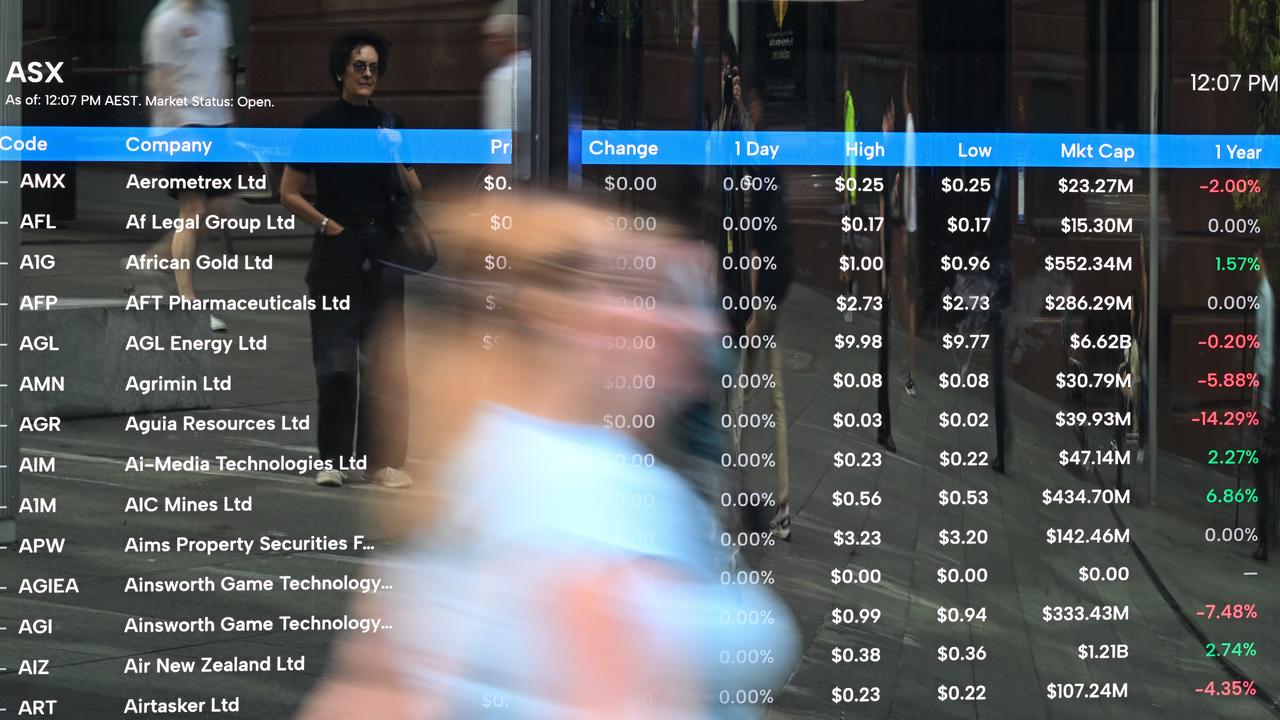
Australia’s share market has notched its best week since October 2022, despite slipping ahead of key US-Iran ceasefire talks and with little sign Iran’s Hormuz Strait blockade is easing.

Continue Reading

Business

RBI mandates payment of inward remittances on same business day

Published

on

RBI mandates payment of inward remittances on same business day
Mumbai: The Reserve Bank of India (RBI) Thursday issued a final circular outlining measures to accelerate cross-border inward remittances, mandating banks to credit payments received during foreign exchange market hours to beneficiary accounts on the same business day.

Currently, less than 8-10% of inward remittances in India are credited to beneficiary accounts within an hour, compared with around 75% in the United States.

Banks have been given six months to implement this requirement, while all other provisions will come into effect immediately.

RBI has also directed banks to reconcile and confirm credits in their nostro accounts on a near real-time basis or at intervals not exceeding 30 minutes.

Advertisement

Additionally, banks are required to notify customers immediately upon receipt of cross-border inward payment messages. Messages received after business hours must be communicated at the start of the next working day.


“It is observed that several banks rely on end-of-day statements of the nostro account for confirming and reconciling receipts, resulting in delays in crediting funds to beneficiaries’ accounts,” RBI said.
To address this, banks have been advised to carry out reconciliation and confirmation of credits in nostro accounts more frequently – either on a near real-time basis or at periodic intervals, which should generally not exceed one hour.

At more than $135 billion in 2025, India remained the world’s biggest receiver of remittances, which play a critical role in both managing external sector risks at the macro level and supporting individual consumption demand in several states. Remittances have steadily topped foreign direct investments (FDI) over the years, with four advanced economies – the US, the UK, Canada and Australia – together helping remittances double over the past decade, data by San Francisco-based nonprofit Indiaspora showed.

Continue Reading

Business

Senedd Election manifesto from the Tories far more pro-business than Labour

Published

on

Business Live

But the manifesto is clearer on what it wants to do than on how it would fund it.

Party leader in Wales Darren Millar at the launch of its Senedd Election manifesto.(Image: WalesOnline/Rob Browne)

On first reading the Welsh Conservative’s Senedd Election manifesto offers a much clearer economic pitch than that of Labour.

It is more openly pro-business, more willing to discuss tax cuts, more supportive of road construction, and far more explicit in arguing that Wales needs a stronger private-sector-led growth model.

It also vows to eliminate business rates for small firms, pubs, and post offices, reduce the basic rate of income tax by 1p, abolish Land Transaction Tax on primary residences, support sectors such as energy, defence, aerospace, tourism, and financial services, and deliver 125,000 apprenticeships over the next Senedd term.

READ MORE: Rise in the number of Welsh shoppers on the high streetREAD MORE: BCRS Business Loans secures £20m mandate to back small firms in Wales and the Midlands

Advertisement

That gives it an immediate political advantage over Labour, and it reads like a party that at least understands that economic growth requires more than warm words about fairness, partnership and strategy. Indeed, what the Conservatives are trying to offer something simpler and more direct including lower costs, better infrastructure, less bureaucracy, and a clearer effort to make Wales more attractive to investors and employers.

The strongest part of the manifesto is probably its willingness to say that the government has made it harder, not easier, for parts of the Welsh economy to grow, arguing that the Welsh Government have undermined confidence through rising costs, anti-motorist policies, poor infrastructure and hostility to sectors such as tourism and farming.

Their answer is to reverse the 20mph default, build the M4 relief road, upgrade the A55, scrap the tourism tax, reduce burdens on holiday lets, and replace the current farming scheme with one they say is more focused on food security and rural economic strength.

The promise to re-establish a Welsh Development Agency is also politically significant as, we will discuss later this month, they are not the only political party to conclude that Wales needs a stronger institution dedicated to attracting investment and supporting jobs. That stands in contrast to Labour’s First Minister, who has rejected such a move.

Advertisement

But that is where the harder questions begin because while the manifesto is stronger than Labour’s on rhetoric about growth, it is much less convincing on how all of this would be paid for, prioritised and delivered.

There is a long list of costly commitments, including tax cuts, abolition of business rates for small firms, road building, rail investment, airport support, tourism funds, more apprenticeships, and major health and education pledges. The document talks a lot about cutting waste, abolishing bodies and curbing what it sees as frivolous spending, but there is little sense that these savings would realistically cover the scale of what is being promised. In other words, the Conservative manifesto is clearer on what it wants to do than on how it would fund it.

There is also a second weakness as much of its economic thinking leans heavily on inward investment, infrastructure and tax reduction, which are important, but not enough on their own. Wales does not just need more investors coming in, but also more local firms scaling up, more innovative businesses, and more Welsh-owned companies growing to meaningful size.

On that question, the manifesto is thinner than it first appears, and whilst there are warm words about manufacturing, freeports and growth zones, there is little on what it will do to build and grow those local businesses that are critical to the future of every community in Wales.

Advertisement

That matters because if the Conservatives want to argue that Wales has underperformed economically for decades, then they also need to show they understand the modern drivers of growth. Yes, roads and rates matter, but so do business innovation, scale-up finance and retaining the best talent, and on those issues, this manifesto is less developed than its headline tone suggests.

The same applies to universities, and it is fair to say that the Conservatives do say more than Labour in some respects. They promise a £1,000 tuition fee discount for STEM subjects, support for intensive two-year degrees, more data on student outcomes and tuition fee refunds for key shortage professions who remain in Wales.

Those are all good ideas, but they are peripheral to the real financial problems currently facing the sector, and there is still no broad vision of universities as central economic institutions and no plan to turn the higher education sector into a stronger engine of innovation and productivity.

So, the Welsh Conservative offer is both more attractive than it first appears because it claims to be more unapologetically pro-growth, and more prepared to challenge the anti-business instincts that have crept into Welsh policymaking over the last five years. However, it is more vulnerable because it risks mistaking a more business-friendly tone for a fully worked economic strategy.

Advertisement

In many ways, the manifesto’s real strength is its political clarity as it says Wales should cut taxes, back roads, support tourism and farming, and restore a stronger development agency. However, its real weakness is that it still does not fully answer the deeper question of how Wales becomes a richer, more innovative, more productive economy over the long term and, most importantly, how to pay for it.

Therefore, the Welsh Conservative manifesto presents a sharper critique of the status quo in the Welsh economy than Labour’s and, in some areas, a clearer sense of what they think businesses want to hear. However, it remains more persuasive as an opposition document than as a fully credible plan for economic transformation and, more importantly, it knows what it is against but less certain what it is for and what a genuinely modern Welsh economy should look like.


Continue Reading

Business

After five-day surge, D-Street slips through ceasefire cracks

Published

on

After five-day surge, D-Street slips through ceasefire cracks
Mumbai: Cracks appearing in the US/Israel and Iran truce within a day of its announcement soured investor sentiment on both Dalal Street and the rest of Asia on Thursday, leading to participants booking gains made earlier. The Nifty 50 and Sensex both ended about 1% lower, breaking a 5-day upwards streak, in light of the recent geopolitical developments.

NSE’s Nifty fell 222.25 points, or 0.9%, to close at 23,775.1. BSE’s Sensex declined 931.25 points, or 1.2%, to end at 76,631.65. Both indices were up nearly 4% in the previous session.

“Following Wednesday’s sharp rally, markets witnessed profit booking amid renewed uncertainty around ceasefire developments, which triggered a spike in crude oil prices. This has led to cautious sentiment, with participants in a dilemma about how the conflict may pan out,” said Sunny Agrawal, head of research at SBI Securities.

Tensions have resurfaced in West Asia just a day after the US and Iran announced a ceasefire as Israel continues to attack Lebanon, and the Strait of Hormuz was reportedly shut again.

Advertisement
Screenshot 2026-04-10 052942Agencies

Brent Crude June Futures were trading close to $99 a barrel on Thursday evening, after making a low of $90.4 on Wednesday.


Technically, the Nifty 50 is likely to find support in the 23,300-23,400 range in the coming days, with resistance around 24,500, said Dharmesh Shah, head of technical research at ICICI Securities.
“While the recent swift retracement of losses are a positive signal, intermittent profit booking cannot be ruled out,” said Shah. “Volatility is expected to remain elevated amid uncertainty around the ceasefire.” The Indian Volatility Index or VIX – known as the fear gauge of the market, advanced 3.7% to 20.43 levels, suggesting participants continue to remain cautious in the near term.

Broader market indices bucked the trend, as Nifty Midcap 150 gained 0.3% and Nifty Small-cap 250 rose 0.1%. Out of 4,420 stocks traded on BSE, 2,121 advanced and 2,180 declined at close.

Despite the weakness in benchmark indices like the Nifty 50 and Sensex, mid and small cap indices ended higher, suggesting that continued foreign investor selling weighed on the headline indices while overall mood remained positive, said Agrawal.

“Looking ahead, markets are expected to stabilize over the next 2-3 months if oil prices remain in double digits,” he said. “Fourth quarter earnings across key sectors such as banking, IT, automobiles, FMCG, and consumer discretionary are anticipated to be positive.”

Elsewhere in Asia, Japan dropped 0.7%, China declined 0.7%, Hong Kong fell 0.5%, South Korea declined 1.6%, while Taiwan rose 0.3%.

Advertisement

The pan-Europe index Stoxx 600 was down 0.6% at the time of going to print.

Foreign portfolio investors net sold shares worth ₹1,711 crore. Domestic institutions were buyers worth ₹956 crore.

Continue Reading

Business

Amazing Thailand Grab Travel Pass launched to enhance seamless digital travel experiences across Thailand

Published

on

Amazing Thailand Grab Travel Pass launched to enhance seamless digital travel experiences across Thailand

The Tourism Authority of Thailand and Grab Thailand launched the Amazing Thailand Grab Travel Pass, offering integrated benefits for transport, dining, and shopping, enhancing tourism and cultural event access.

Launch of Amazing Thailand Grab Travel Pass

On 9 April 2026, the Tourism Authority of Thailand (TAT) teamed up with Grab Thailand to introduce the Amazing Thailand Grab Travel Pass. This digital package provides international visitors with integrated benefits in transportation, dining, and shopping, while enhancing access to cultural events across Thailand. It’s a strategic initiative aimed at boosting Thailand’s tourism sector.

Strategy and Vision

Ms. Thapanee Kiatphaibool, TAT Governor, emphasized how this collaboration aligns with TAT’s Amazing 5 Economy strategy. By leveraging digital platforms, they aim to promote tourism year-round and enhance the economic distribution within Thailand’s tourism ecosystem. This strategy focuses on creating seamless visitor experiences, reinforcing Thailand’s image as a premier global destination.

Affordable and Convenient Travel

Ms. Chantsuda Thananitayaudom, Grab Thailand’s Country Head, highlighted the strong demand for the Grab Travel Pass. Priced at 30 Baht with savings over 3,000 Baht, it offers discounts on ride-hailing, airport transfers, dining, and shopping. Additionally, special promotions, like a 15% ride discount for the Maha Songkran World Water Festival, enhance travel experiences. More details are available via the Grab app and TAT’s Travel Buddy.

Advertisement

Source : Amazing Thailand Grab Travel Pass launched to enhance seamless digital travel experiences across Thailand

Continue Reading

Business

Valuations turn attractive as markets look beyond uncertainty: A Balasubramanian

Published

on

Valuations turn attractive as markets look beyond uncertainty: A Balasubramanian
Amid heightened geopolitical tensions and the constant churn of global headlines, investors are grappling with one key question: is the market signalling a buying opportunity? According to A Balasubramanian, from MD & CEO, ABSL AMC, the answer may lie not in the daily noise but in underlying valuations and improving macro signals.

Speaking to ET Now, Balasubramanian pointed out that while uncertainty—ranging from geopolitical conflicts to unpredictable global leadership cues—continues to cloud sentiment, there are early signs that the worst may be nearing an end, at least in the near term.

“So, the way events are panning out, I think that itself tells that probably the worst should come to an end at least in the near term, short term I am saying. Though earlier the uncertainty was growing beyond our imaginations, at least some semblance is coming and hopefully we should expect in the next two-three weeks some agreement being reached between these two large nations and therefore bring some kind of uncertainty to a normalcy, then we will have to see some kind of stabilisations.”

He added that while a full resolution may take a few months—especially with oil prices and global trade dynamics needing time to normalise—the market may already be factoring in much of the bad news.

Advertisement

From a domestic perspective, Indian equities have undergone a prolonged phase of correction. This, according to Balasubramanian, has brought valuations to more reasonable levels, creating a potential opportunity for long-term investors.


“Today valuation-wise if you look at Nifty, if you take the valuations, it is now trading at below the long-term average PE multiples that is one.”
He also highlighted encouraging trends in the financial sector, particularly the revival in credit and deposit growth, which had been sluggish last year.”So, we are seeing clearly the credit growth now is coming back to normal. Last year the credit growth was missing. Deposit growth was also missing. Now, both are actually now catching up.”

While near-term disruptions—especially from elevated oil prices—remain a concern, Balasubramanian believes markets tend to price in such risks ahead of time.

“Correct. So, generally market discounts some of these expectations pretty in advance.”

He noted that while companies may report strong earnings for the March quarter, the real impact of higher oil prices is likely to show up in the June quarter results.

Advertisement

“But I would assume while the March quarter for most of the companies would report good numbers, there is high probability the assumption that we are saying that oil impact would get definitely felt in the June quarter.”

Even so, he suggested that much of this anticipated pressure is already reflected in stock prices, limiting downside surprises.

On the investor front, retail participation remains resilient despite market volatility. Flows into mutual funds have held steady, and there is a growing debate among investors on whether to stick with systematic investment plans (SIPs) or deploy lump sum investments at current valuations.

“In the month of March I would say more or less flows remain stable… I would say close to about the previous flows that continues.”

Advertisement

Balasubramanian indicated that periods of correction often present favourable entry points for lump sum investments, though discipline remains key.

“My own belief is as you rightly put it most of investors have come in the last say two years or three years or four years have not seen this kind of fall, for them it is a lesson, for them it is a learning because the market is always up and down.”

He emphasised that volatility is an inherent part of investing and serves as an important learning curve, especially for new entrants who may be experiencing their first meaningful market correction.

“Ultimately the people who remain invested in the long-term only they make money.”

Advertisement

As markets transition from uncertainty towards relative stability, it is time to focus on fundamentals, stay invested, and use volatility as an opportunity rather than a deterrent.

Continue Reading

Trending

Copyright © 2025