
Business
BP profits fall after oil prices drop




Amazon is dusting itself off for another tilt at Britain’s fiercely competitive grocery sector, this time by converting its abandoned Fresh convenience stores into outlets for Whole Foods Market, the organic chain it acquired for $13.7 billion in 2017.
The move comes barely six months after the US tech giant shuttered 19 of its much-hyped “grab and go” Fresh stores across the country. Launched in 2021 with bold talk of hundreds of locations and a revolution in convenience shopping, the till-free format simply failed to resonate with British consumers. By September last year, the experiment was over.
Now Amazon is hoping Whole Foods can succeed where Fresh could not. The brand, which currently operates seven shops in London, intends to open five additional sites by the end of June. Four of these will occupy former Fresh premises, including a new store in Angel, Islington, which opened this week, alongside planned locations at Wood Wharf in Canary Wharf, Gracechurch Street in the City, Liverpool Street and Notting Hill Gate. A further opening is earmarked for St James’s.
Jade Hoai, executive leader of purchasing at Whole Foods Market UK, said the London expansion reflected confidence in the brand’s offer, particularly in neighbourhoods where customers shop frequently and seek high-quality food as part of their daily routine.
Yet the pivot inevitably raises the question of whether Amazon is merely replacing one struggling format with another. Whole Foods has endured a bruising time on this side of the Atlantic since entering the British market in 2004. Turnover at its UK arm fell seven per cent to £86.4 million in the year to December 2024, while pre-tax losses hit £20 million. Cumulative losses have now surpassed £200 million. The company closed two underperforming stores and its Dartford distribution centre in early 2024 and cut its average headcount from 798 to 608.
High operating costs and stiff competition from established players have consistently undermined the chain’s efforts, and its premium pricing has proved a hard sell in a market dominated by the discounters Aldi and Lidl at one end and well-entrenched giants such as Tesco and Sainsbury’s at the other.
The picture is markedly different in the United States, where Whole Foods has enjoyed steady growth under Amazon’s stewardship. The American operation has expanded its market share by aggressively cutting prices and rolling out smaller-format stores, successfully shedding the nickname “Whole Paycheque”, a longstanding joke that a single bag of groceries there could swallow an entire salary.
Whether that formula can translate to the UK remains to be seen. Hoai pointed to what she described as a clear shift in consumer behaviour, with growing demand for quality, transparency and a more considered retail experience.
The new Angel store, spanning 3,600 square feet, features a hot food counter, self-serve coffee and an Amazon kiosk. Delivery through Deliveroo is expected to follow shortly.
For Amazon, the stakes extend beyond groceries. The company has long viewed physical retail as a gateway to embedding itself more deeply in consumers’ daily lives and driving subscriptions to its Prime service. But its track record in British bricks-and-mortar retailing offers little cause for confidence, and the decision to pour further investment into a brand that has bled more than £200 million in losses will test the patience even of a company with pockets as deep as Amazon’s.

Amy Ingham
Amy is a newly qualified journalist specialising in business journalism at Business Matters with responsibility for news content for what is now the UK’s largest print and online source of current business news.
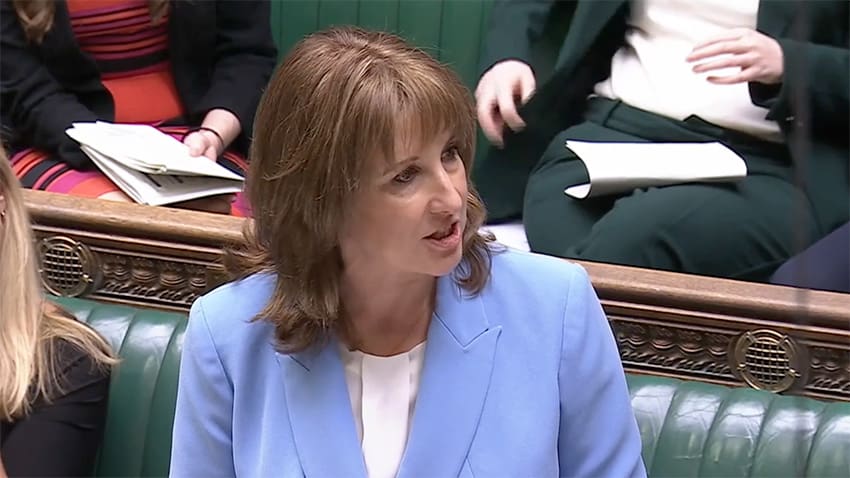
The majority of Britain’s ultra-wealthy individuals are actively weighing up whether to leave the country, driven not so much by the level of taxation but by what they see as a government incapable of providing a stable fiscal framework.
A survey of 200 multi-millionaires, each with a personal fortune of at least £50m, carried out by accountancy firm BDO, found that two-thirds had considered relocating over the past twelve months. The most striking finding, however, was the reason: 42 per cent pointed to inconsistent tax policies as the principal factor behind their deliberations, while just 18 per cent cited high tax rates alone.
The distinction matters. Britain has long taxed at rates comparable to or above those of its European neighbours, yet the ultra-rich have historically stayed put. What appears to have shifted the calculus is a succession of policy reversals and threatened reforms under Labour, particularly around inheritance tax and capital gains tax, that have left wealthy individuals unable to plan with any confidence.
Elsa Littlewood, a tax partner at BDO, said that many of those considering departure would prefer to remain but feel unable to manage long-term wealth planning against such an unpredictable backdrop.
Since Labour took office, a string of high-profile departures has underlined the trend. Hedge fund manager Michael Platt relocated his family office to Dubai. Norwegian-born shipping magnate John Fredriksen put his £250m Chelsea townhouse on the market. Richard Gnodde, formerly Goldman Sachs’s most senior banker in Europe, moved to Milan, whilst brothers Ian and Richard Livingstone shifted their primary residence to Monaco. Indian billionaire Lakshmi Mittal, a British resident for nearly three decades, also moved to Dubai, as did Egyptian businessman Nassef Sawiris.
The exodus began in earnest when Rachel Reeves, upon becoming Chancellor, abolished the non-domicile status, a long-standing tax regime that had made Britain attractive to internationally mobile wealth. A proposed 40 per cent inheritance tax on worldwide assets provoked such fierce opposition that it was subsequently scaled back, but by then confidence had already been dented.
Ms Reeves’s second Budget in November compounded the uncertainty. Having signalled possible increases to capital gains tax, she ultimately left CGT largely untouched but raised rates on savings and dividends and introduced what critics dubbed a “mansion tax” on higher-value properties, a set of measures that few had anticipated.
Maxwell Marlow, a director at the Adam Smith Institute, warned that the absence of any replacement scheme to attract wealthy investors’ capital and spending to Britain meant the broader population would bear the cost.
For Business Matters readers running or advising businesses that depend on access to high-net-worth capital, the message from BDO’s research is clear: it is not the size of the tax bill that is driving people away, but the inability to know what that bill will look like next year. Certainty, it seems, has become the scarcest commodity in British fiscal policy.
Amy Ingham
Amy is a newly qualified journalist specialising in business journalism at Business Matters with responsibility for news content for what is now the UK’s largest print and online source of current business news.

Five EU nations push for energy windfall tax amid 70% gas price spike – Reuters

InvestingPro’s Fair Value spotted Sana Biotech overvaluation early

AdaptHealth delivers 64% return after Fair Value identified opportunity
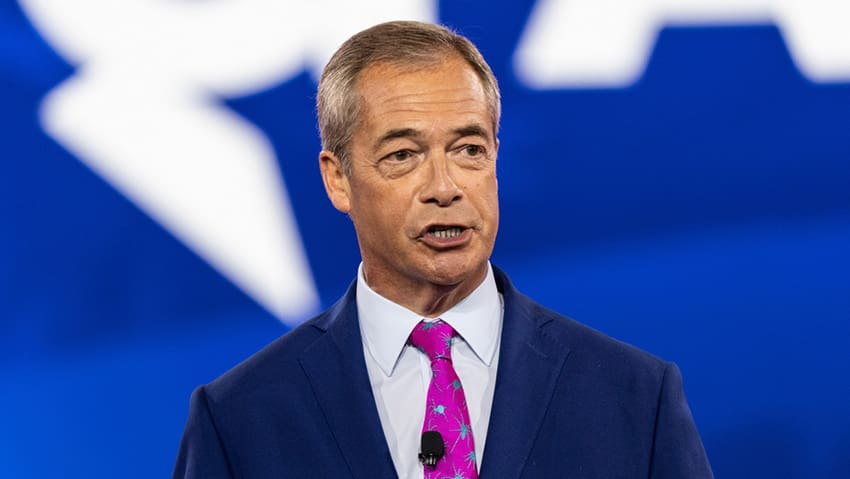
Reform UK is venturing into podcasting with a weekly show that will offer listeners behind-the-scenes access to Nigel Farage and senior figures within the party, marking the first time a British political party has produced its own audio programme.
The first episode, due out on Saturday, will feature footage from Reform’s campaign trail ahead of the local elections, including exchanges with both supporters and detractors. Subsequent instalments will follow Farage’s campaigning efforts in Wales and Scotland while covering major policy announcements in depth. The show will be available on Spotify and Apple, though the party has confirmed there are no plans to appoint a regular presenter.
The move represents a significant escalation in Reform’s broader digital media strategy, which has already seen the party invest tens of thousands of pounds in an in-house television studio. Farage commands a social media following of nearly 7.3 million across X, Facebook, TikTok, Instagram and YouTube, a figure that exceeds the combined followings of Sir Keir Starmer, Kemi Badenoch, Sir Ed Davey and Green Party leader Zack Polanski.
That digital dominance has translated into tangible political momentum. Reform now leads the national polls and has become the most popular party among Generation Z men, according to research by JL Partners for the think tank Onward. The party’s sharp use of TikTok has been widely credited as a driving force behind its surge in support among younger voters.
The podcast launch also underscores a growing tension between political parties and traditional broadcast media. Farage already hosts a primetime programme on GB News, a channel that has faced repeated scrutiny from Ofcom over its use of politicians as presenters. Culture Secretary Lisa Nandy has argued that Farage’s show is undermining public trust in news broadcasting.
Reform’s digital success has not gone unnoticed by its rivals. The Prime Minister joined both TikTok and Substack late last year, while Labour has enlisted FourOneOne, a digital marketing agency backed by Silicon Valley investors including LinkedIn founder Reid Hoffman, to mount a campaign targeting Reform on TikTok. The party has further strengthened its online presence following Robert Jenrick’s defection from the Conservatives, with the former shadow justice secretary having built a considerable profile through attention-grabbing social media content.
Farage said the podcast would bring listeners closer to the party’s operations in a way that no other political organisation has attempted, describing it as offering access to every aspect of Reform’s activities.
Amy Ingham
Amy is a newly qualified journalist specialising in business journalism at Business Matters with responsibility for news content for what is now the UK’s largest print and online source of current business news.
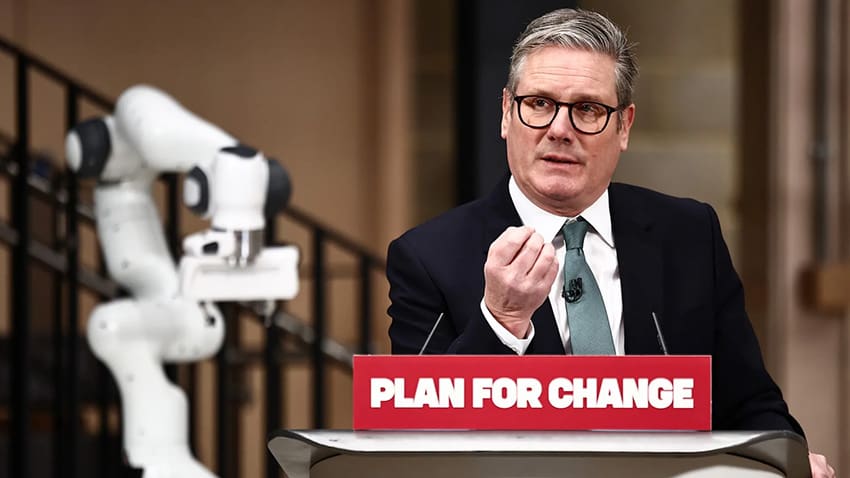
OpenAI’s much-trumpeted plans to build a major data centre in the north-east of England have ground to a halt, dealing a significant blow to Sir Keir Starmer’s strategy of placing artificial intelligence at the centre of Britain’s economic growth.
The maker of ChatGPT announced last September that it would bring its Stargate programme, a global data centre initiative originally valued at $500bn (£378bn), to British shores through a partnership with Nscale, the UK-based data centre operator. The initial plan envisaged housing approximately 8,000 Nvidia AI processors at Cobalt Park on Tyneside during the first quarter of 2026. That deadline has now passed without a spade in the ground, and OpenAI has declined to offer a revised timetable.
The reasons behind the delay remain unclear, though commercial negotiations between the parties are understood to be continuing. Both OpenAI and Nscale refused to comment on the state of play.
The Stargate concept was first unveiled by Sam Altman, OpenAI’s chief executive, at a White House press conference in January 2025 alongside Donald Trump. Altman subsequently pledged to extend the programme internationally, with the UK earmarked as a key location. In a government press release at the time, he described Stargate UK as part of a “shared vision” to expand opportunity through the right infrastructure.
The project was enthusiastically embraced by ministers, who have sought to position Britain as a global leader in AI. OpenAI further signalled its commitment to the UK by appointing George Osborne, the former Conservative chancellor, to spearhead its international expansion.
Yet the Tyneside setback is far from an isolated case. In the United States, negotiations over Stargate’s broader rollout have proceeded sluggishly, with key backer SoftBank among those yet to finalise terms. A planned expansion of a major site in Texas, being developed with the American data giant Oracle, was quietly shelved earlier this year.
The wider industry is grappling with similar headaches. Technology groups have collectively committed to spending hundreds of billions of dollars on data centres to satisfy surging demand for AI applications, but delivery is proving far harder than the headline figures suggest. Research by Sightline Climate indicates that up to half of all large-scale data centre projects are now running behind schedule, hampered by planning difficulties and constraints on energy supply.
Nscale, valued at $15bn and counting Sir Nick Clegg, the former deputy prime minister, among its board members, has itself been forced to push back timelines on a separate development in Loughton, Essex, as Business Matters reported last week.
Critics have been quick to seize on the lack of progress. Tom Hegarty, a spokesman for Foxglove, the campaign group that has raised concerns about the environmental impact of the data centre boom, said the Stargate UK project amounts to little more than a press release issued eight months ago.
The government maintained that it remains focused on fostering the right conditions for investment. A spokesman said ministers are continuing to work with OpenAI and other leading AI firms to strengthen the UK’s computing capacity. Whether that reassurance will be enough to quieten growing scepticism about the pace of delivery is another matter entirely.
Amy Ingham
Amy is a newly qualified journalist specialising in business journalism at Business Matters with responsibility for news content for what is now the UK’s largest print and online source of current business news.
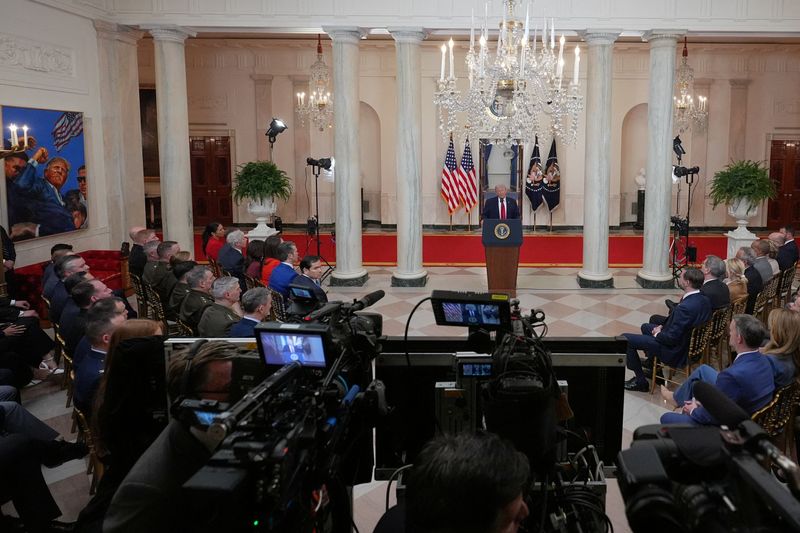

Trump weighs broader cabinet shake-up as Iran war pressure grows
Business
US Presses Intense Search for Missing Serviceman as Iran Urges Public Hunt for ‘Enemy Pilot’

The U.S. military pressed ahead Saturday with a high-stakes search-and-rescue operation for a missing American airman after Iran shot down a U.S. F-15E Strike Eagle fighter jet on Friday, while Iranian state media urged citizens in rugged southwestern provinces to hunt for the “enemy pilot” and hand him over alive in exchange for a “precious prize.”

The incident marked the first confirmed loss of a U.S. manned aircraft over Iranian territory since the conflict between the United States and Iran escalated nearly six weeks ago. One of the two crew members aboard the two-seat F-15E was rescued by U.S. special forces in a daring operation, but the status of the second service member — believed to be the weapons systems officer — remained unknown as of early Saturday, U.S. officials told lawmakers and reporters.
Iranian forces also claimed to have struck a second U.S. aircraft, an A-10 Thunderbolt II ground-attack plane near the Strait of Hormuz, though its pilot was reported rescued. U.S. officials confirmed two aircraft were hit in separate incidents Friday but provided limited details, citing operational security during the ongoing search.
The downing occurred in Kohgiluyeh and Boyer-Ahmad province, a mountainous and sparsely populated area in southwestern Iran near the border with Iraq. Iranian state television affiliates broadcast images of what appeared to be aircraft wreckage and debris, while a local channel in the province aired an urgent appeal to residents.
“If you capture the enemy pilot or pilots alive and hand them over to the police, you will receive a precious prize,” an anchor declared on air Friday, according to multiple reports. An on-screen crawl earlier urged viewers to “shoot them if you see them,” referring to circulating footage of U.S. aircraft. It was the first time Iranian media publicly mobilized civilians in the search for a downed U.S. airman.
U.S. Central Command and the Pentagon have not released the identities of the crew members, citing family privacy and security concerns. The rescued crew member was undergoing medical evaluation, sources said. Search efforts involved combat search-and-rescue teams, helicopters and supporting aircraft, with reports that two Black Hawk helicopters involved in the operation came under enemy fire but safely exited Iranian airspace.
The episode comes amid broader U.S. and Israeli airstrikes targeting Iranian military infrastructure, nuclear sites and missile capabilities as part of what the Trump administration has described as efforts to degrade Tehran’s ability to threaten the region. President Donald Trump has warned of continued pressure but has not detailed specific responses to the aircraft losses.
Pentagon officials notified the House Armed Services Committee that the status of the second service member from the F-15E was unknown. The notification underscored the gravity of the situation, as the war — now in its sixth week — has already resulted in American casualties, with earlier reports citing at least 15 U.S. troops killed and hundreds wounded in related regional actions.
Iranian parliamentary speaker Mohammad Bagher Ghalibaf mocked the U.S. on social media, writing that the American campaign had shifted from ambitions of “regime change” to pleas of “Hey! Can anyone find our pilots?” Iranian military officials claimed the downing demonstrated strengthened air defenses despite weeks of strikes.
Military experts noted the challenges of combat search and rescue (CSAR) in hostile territory. Retired pilots and analysts described how downed aviators are trained in survival, evasion, resistance and escape (SERE) techniques, including hiding in rugged terrain, signaling for help and avoiding capture. The southwestern Iranian landscape — with its mountains, valleys and limited infrastructure — could complicate both U.S. recovery efforts and Iranian searches.
Retired Air Force officers emphasized that time is critical. Crew members carry survival kits, radios and signaling devices, but exposure to elements, injury from ejection and pursuit by enemy forces heighten risks. In past conflicts, such as the 1991 Gulf War or operations in Afghanistan, CSAR missions have sometimes involved ground teams inserting deep behind lines, supported by overhead cover from fighter jets and drones.
U.S. forces have conducted numerous airstrikes across Iran since the conflict intensified in late February or early March 2026. Iranian claims of downing U.S. or allied aircraft have circulated frequently but were often unverified or disproven. Friday’s events appeared to mark the first substantiated loss inside Iranian borders, raising questions about air defense effectiveness and the evolving risk to U.S. pilots.
The missing airman’s potential capture could hand Iran a significant propaganda victory, with fears he might be paraded publicly or used as leverage in any future negotiations. Iranian Revolutionary Guard Corps elements and local militias were reported active in the search area, alongside civilians responding to the media appeal.
White House officials have downplayed immediate escalation risks while stressing the priority of recovering the service member. Trump, in recent remarks, indicated the incident would not derail broader objectives but declined to outline specific retaliatory steps.
The broader conflict has disrupted shipping through the Strait of Hormuz, strained global oil markets and drawn international concern over civilian impacts. Humanitarian groups have reported difficulties accessing affected areas, while regional allies monitor developments closely.
For U.S. military families and service members, the news revives painful memories of past captivity cases, such as the 1980 Iran hostage crisis or downed pilots in Vietnam. Support networks and counseling resources have been activated as details remain scarce.
As Saturday progressed, U.S. search operations continued without public confirmation of the missing airman’s location or condition. Analysts warned that involving civilians in military hunts could lead to unintended confrontations or endanger non-combatants.
The F-15E Strike Eagle is a versatile fighter-bomber known for its speed, range and precision-strike capabilities. Its loss, even if isolated, highlights the persistent dangers of operating over defended airspace despite U.S. technological advantages in stealth and electronic warfare.
Iran has long invested in layered air defenses, including Russian-supplied systems and indigenous developments. While U.S. and Israeli strikes have targeted many radar and missile sites, some capabilities evidently remain operational.
Pentagon spokespeople have emphasized that aircraft losses are an inherent risk in combat but vowed to adapt tactics. “We have specially trained rescue units who will be combing that area,” one retired general told media, noting the speed and coordination required for successful extractions.
As the search stretched into a second day, families of U.S. service members awaited updates with growing anxiety. The incident has fueled debate in Washington about the scope and duration of operations against Iran, with some lawmakers calling for clearer exit strategies and others urging sustained pressure.
International reactions varied. Allies expressed concern for the missing personnel, while some nations criticized the escalation. The United Nations and humanitarian organizations called for de-escalation and protection of all parties.
For now, the focus remains on the rugged terrain of southwestern Iran, where American and Iranian search parties race against time and each other. The outcome could influence the trajectory of a conflict that has already reshaped regional security dynamics.
U.S. officials continue to monitor developments closely, with rescue teams supported by intelligence assets and air cover. Whether the missing serviceman is located safely, captured or remains unaccounted for will likely shape the next phase of this volatile chapter in U.S.-Iran relations.
Business
Are you looking for the best mutual funds for SIPs in April? Here is help for conservative investors

ETMutualFunds outlines ready-made SIP portfolios for conservative investors across three investment brackets. The allocation blends large-cap and hybrid funds to balance risk and returns. Selected using in-house criteria like rolling returns and downside risk, these portfolios aim to simplify fund selection for investors seeking stable, long-term wealth creation.

I did a boat trip around Wales’ largest island and couldn’t believe what I was seeing

Amazon converts failed Fresh stores to Whole Foods in new UK grocery push

Solana news: The network’s post-quantum push reveals harsh tradeoff: security vs speed

Smart energy pays enters the US market, targeting scalable financial infrastructure

Why Israel is blocking foreign journalists from entering

Bitcoin: We’re Entering The Most Dangerous Phase

Ripple XRP: “THE SHADOW ACCOUNTS LEAKED IT” Goldman Sachs $154M Secret Filing! (DECODING THE PLAN)

Everyday Motivation : Review your financial goals

3 Govt Schemes For Women Entrepreneurs? #finance #money #business #gkindia #basicgyaan
-

 NewsBeat2 days ago
Steven Gerrard disagrees with Gary Neville over ‘shock’ Chelsea and Arsenal claim | Football
-

 Business1 day ago
No Jackpot Winner and $194 Million Prize Rolls Over
-
Entertainment5 days ago
Fans slam 'heartbreaking' Barbie Dream Fest convention debacle with 'cardboard cutout' experience
-

 Fashion17 hours ago
Weekend Open Thread: Spanx – Corporette.com
-

 Crypto World3 days ago
Gold Price Prediction: Worst Month in 17 Years fo Save Haven Rock
-

 Tech5 days ago
The Pixel 10a doesn’t have a camera bump, and it’s great
-
Crypto World4 days ago
Dems press CFTC, ethics board on prediction-market insider trades
-
 Entertainment7 days ago
Lana Del Rey Celebrates Her Husband’s 51st Birthday In New Post
-

 Tech5 days ago
Avatar Legends: The Fighting Game comes out in July and it looks pretty slick
-

 Tech4 days ago
EE TV is using AI to help you find something to watch
-

 Sports4 days ago
Tallest college basketball player ever, standing at 7-foot-9, entering transfer portal
-

 Business2 days ago
Login and Checkout Issues Spark Merchant Frustration
-

 Fashion6 days ago
Amazon Sundays: Soft Spring Layers
-

 Tech6 days ago
Elon Musk’s last co-founder reportedly leaves xAI
-

 Fashion5 days ago
The Best Spring Trends of 2026
-

 Tech4 days ago
How to back up your iPhone & iPad to your Mac before something goes wrong
-

 Politics5 days ago
Should Trump Be Scared Strait?
-

 Tech5 days ago
Apple will hide your email address from apps and websites, but not cops
-

 Crypto World5 days ago
U.S. rule change may open trillions in 401(k) funds to crypto
-

 Tech4 days ago
Flipsnack and the shift toward motion-first business content with living visuals
You must be logged in to post a comment Login