Connect with us

Business

B&Q and Five Guys among 658 firms named

Published

on

B&Q and Five Guys among 658 firms named

More than 650 businesses, including B&Q, Five Guys and Serco, have been named by the government for failing to pay some of their employees the minimum wage. The 658 employers on the list have repaid a total of about £4m to more than 27,000 workers.

The Department for Business & Trade published the list on 3 September and said the repayments followed “robust” enforcement action. Ministers said penalties totalling £7m had been issued to employers found not to be paying the legal minimum.

Jonathan Reynolds, the business secretary, said: “Short-changing your staff isn’t a shortcut to success and we are determined to stamp it out.”

Kate Dearden, minister for the future of work, said: “Underpaying your staff is illegal, and we will not let workers foot the bill for their boss failing to follow the rules.”

The government said it was committed to publishing naming lists more regularly so that employers were swiftly held to account and made improvements as quickly as possible. A previous naming round covered 239 employers who underpaid 22,400 workers a total of £1.44m.

Advertisement

B&Q tops the list

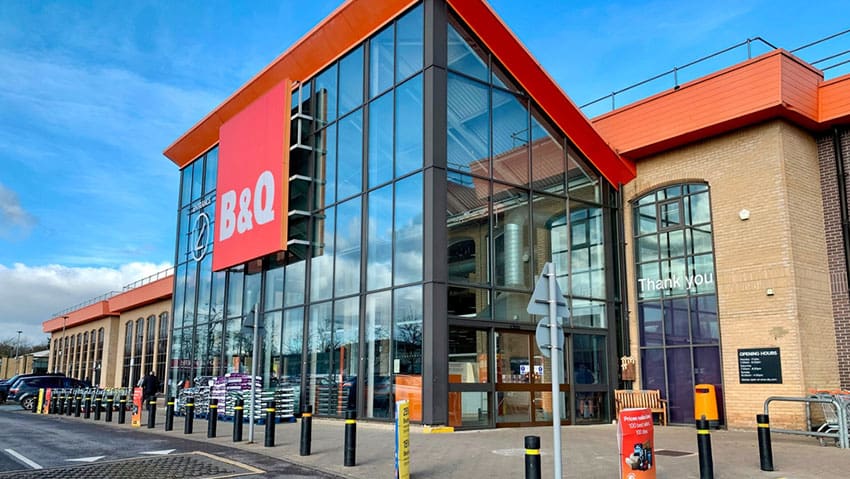
B&Q, the DIY retailer, was at the top of the list after failing to pay 4,530 workers correctly, owing them a total of £456,934. The company said the shortfalls in payments were “unintentional” and “related to calculations involving geographical allowances which are paid in addition to minimum hourly rates”. The affected employees were paid in full in July 2025, the company said.

Elysium Healthcare Holdings 3 Limited was second on the government’s list, owing £330,048 to 1,095 workers. St George’s, Epsom and St Helier Hospital Group owed £123,331 to 75 workers, while Support Staff Services Limited owed £119,715 to 323 workers and Forest Holidays owed £100,308 to 598 workers.

Five Guys, the burger chain, was named for underpaying almost 3,700 of its workers a total of £54,642. “Following an HMRC review, technical differences in how payroll regulations were applied affected our national minimum wage calculations, resulting in a shortfall of approximately £55,000 across a payroll of more than £330 million,” the company said. It added that it had paid all current and former staff affected.

Serco underpaid 374 staff a total of £36,303. A spokesman for the outsourcer, which provides services to asylum hotels, defence programmes, hospitals, schools, offices and prisons, said the shortfall came from a technical error that affected one contract more than two years ago and related to salary sacrifice schemes. “It was quickly rectified once identified and all employees were reimbursed in full,” Serco said.

Advertisement

Whitbread, the owner of the Premier Inn hotel chain, appeared on the list after failing to pay 342 employees a total of £4,193. The FTSE 100 company said the shortfall was caused by an administrative error which has since been rectified.

Rates rose in April

The minimum wage, known as the national living wage for those aged 21 and over, was introduced more than 20 years ago. The rate for over-21s rose to £12.71 an hour on 1 April 2026, with the rate for 18 to 20-year-olds increasing to £10.85 and the rate for under-18s and apprentices set at £8.00. The rates change on 1 April every year, according to the government.


Amy Ingham

Amy Ingham

Amy Ingham is a reporter at Business Matters, covering UK business news with a focus on breaking news, business policy, late payments and insolvency. She joined the magazine in 2026 after completing the NCTJ Diploma in Journalism at Harlow College’s journalism school. Her recent reporting includes British Steel’s nationalisation and its impact on SME suppliers, the decline in late payments by large firms, and Insolvency Service director disqualifications. Reach her at aingham@cbmeg.co.uk.

Advertisement

Continue Reading
Click to comment

You must be logged in to post a comment Login

Leave a Reply

Business

Real Estate On Shaky Ground After A 6-Day Slide

Published

on

Real Estate On Shaky Ground After A 6-Day Slide

Real Estate On Shaky Ground After A 6-Day Slide

Continue Reading

Business

This Sector Is Fertile Ground For Buy Opportunities

Published

on

This Sector Is Fertile Ground For Buy Opportunities

This Sector Is Fertile Ground For Buy Opportunities

Continue Reading

Business

Roku director Neil Hunt sells $312,605 in shares

Published

on


Roku director Neil Hunt sells $312,605 in shares

Continue Reading

Business

Opinion: Steeling for a clash of the cartels

Published

on

Opinion: Steeling for a clash of the cartels

OPINION: China’s cartel-like tactics appear to be working as iron ore prices take a hit.

Continue Reading

Business

Would you lie to get a birthday freebie?

Published

on

A woman holds her hand over her mouth in the street. She has blonde hair and sunglasses on her head

We ask people in London if they would fib about their birthday to get a free treat from a shop or restaurant.

Continue Reading

Business

Two people pulled alive from Nepal hydropower tunnel

Published

on


Two people pulled alive from Nepal hydropower tunnel

Continue Reading

Business

Harvey Nichols suppliers to get under 15p in the pound

Published

on

Harvey Nichols suppliers to get under 15p in the pound

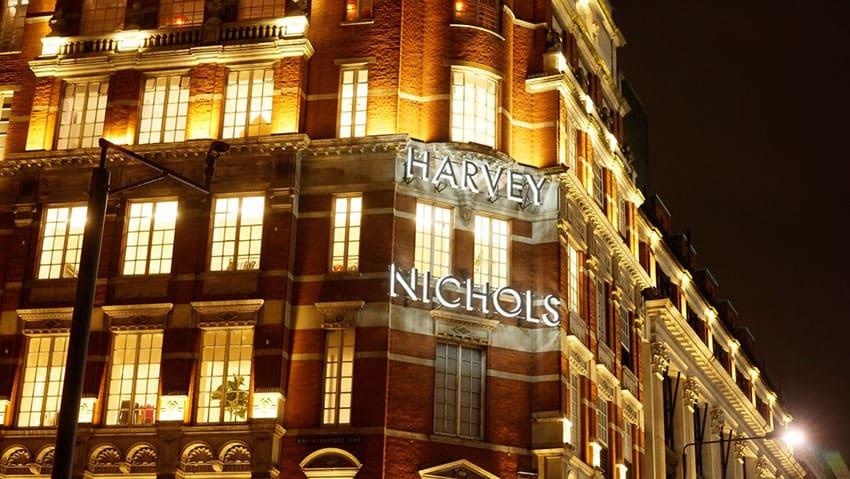
Suppliers to Harvey Nichols are expected to receive less than 15p in the pound after the luxury department store group was acquired by Frasers Group through a pre-pack administration, according to new filings at Companies House.

The documents reveal that the group’s primary trading entity, Harvey Nichols and Company, fell into administration owing £270.5 million to unsecured creditors. Early-stage estimates from the administrators, FTI Consulting, indicate that a maximum of 15 per cent of that sum is expected to be returned.

Brand partners set to lose out include Victoria Beckham, Jimmy Choo and Canada Goose, which are owed about £353,349, £174,201 and £565,267 respectively. Other unsecured creditors include Jo Malone, Puig and Estée Lauder. Preferential creditors, among them HM Revenue & Customs, are expected to be repaid in full.

Frasers acquired Harvey Nichols last month, seeing off competition from Next and other international suitors after the chain was put up for sale by the Hong Kong billionaire Sir Dickson Poon following years of losses. Business Matters reported at the time on how Harvey Nichols was sold to Frasers through a pre-pack deal that preserved more than 1,000 jobs and secured the immediate future of its British store estate, including the Knightsbridge flagship and a number of regional stores.

How the pre-pack leaves creditors exposed

A pre-pack is a fast-track insolvency process in which a buyer is lined up to acquire the business straight after the administration. The House of Commons Library describes it as an arrangement under which the sale of a company’s business or assets is negotiated with a purchaser before the administrator is appointed.

Advertisement

The process is contentious in part because it can leave creditors lumbered with unpaid debts. Supporters argue that pre-packs are an efficient way to rescue struggling businesses, save jobs and maximise returns to creditors.

For the smaller brands and suppliers on the Harvey Nichols creditor list, the practical consequence is that the bulk of what they were owed by the old company will not be recovered, while the business itself trades on under new ownership.

Brand partners raised concerns over Frasers

The arrival of Frasers in the auction of Harvey Nichols was said to have caused concern among brand partners this summer. The FTSE 250 retailer, which is controlled by the billionaire Mike Ashley, had to elbow its way into the process after objections from a number of “prestige brand owners”.

After the sale was agreed, Kate Benson, Harvey Nichols’s chief merchant, moved quickly to reassure suppliers of their future under Ashley’s ownership. “Throughout the sales process we have spoken at length with Frasers, and we are confident that they understand our business and value our brand relationships,” Benson wrote in a memo reported by Sky News.

Advertisement

Frasers’ reputation among luxury suppliers was previously tarnished by its deal with Matches Fashion. The group bought the luxury clothing website for £52 million before placing it into administration in 2024, just weeks after the acquisition, putting hundreds of jobs at risk and leaving suppliers out of pocket. A question mark remains over the retailer’s ability to attract brand partners to Harvey Nichols given that history.

Ashley’s push into luxury

The acquisition marks a significant step in Ashley’s long-running effort to expand his retail empire’s share of the luxury market. Frasers, which also owns House of Fraser and Flannels, recently increased its stake in Hugo Boss to almost 48 per cent after making a £1.7 billion takeover offer for the German fashion house in the summer. It also raised its holding in Burberry in late July.

Michael Murray, the Frasers chief executive and Ashley’s son-in-law, has said that turning around Harvey Nichols will require “tough choices”. He added: “We are prepared to make those decisions, even if that means a smaller business in the near term, to create a stronger and more sustainable Harvey Nichols for the long term.”

Frasers and FTI Consulting were approached for comment.

Advertisement

Amy Ingham

Amy Ingham

Amy Ingham is a reporter at Business Matters, covering UK business news with a focus on breaking news, business policy, late payments and insolvency. She joined the magazine in 2026 after completing the NCTJ Diploma in Journalism at Harlow College’s journalism school. Her recent reporting includes British Steel’s nationalisation and its impact on SME suppliers, the decline in late payments by large firms, and Insolvency Service director disqualifications. Reach her at aingham@cbmeg.co.uk.

Advertisement
Continue Reading

Business

Maas Group Shares Jump 6% As Firmus AI Infrastructure Bet And Record FY26 Results Fuel Rally

Published

on

Maas Group Shares Jump 6% As Firmus AI Infrastructure Bet

DUBBO, N.S.W. — Shares of Maas Group Holdings Ltd. climbed $0.33, or 6.42%, to $5.47, as the diversified regional infrastructure and property company continued to build momentum following a record set of full-year results and an aggressive strategic push into AI data center infrastructure through its growing stake in Firmus Grid.

Thursday’s gain adds to a strong run for the stock since Maas Group reported record financial results for the year ended June 30, 2026, on Aug. 20. The company posted underlying revenue of $1.2638 billion, up 27% from the prior year, alongside underlying EBITDA of $300.3 million, a 37% increase. Underlying net profit after tax climbed 57% to $123.4 million, while underlying earnings per share rose 51% to 34.2 cents. Statutory net profit after tax attributable to owners reached $136.1 million, up 89% from the prior corresponding period, reflecting both strong operating performance and a reversal of held-for-sale depreciation tied to a major pending asset sale.

Maas Group Managing Director and CEO Wes Maas described the results as a defining moment for the company, emphasizing that even the continuing operations exceeded the range the company had previously guided to.

“FY26 was a defining year for Maas Group,” Maas said. “We delivered a record result, and importantly our continuing operations exceeded the guidance range confirming the quality of the business we are carrying into FY27.”

Advertisement

Central to Maas Group’s strategic transformation is its pending $1.703 billion sale of its Construction Materials business to Heidelberg Materials Australia, a deal that received Australian Competition and Consumer Commission approval subject to certain divestments and remains on track to settle in October 2026. The sale represents a significant pivot away from the company’s traditional construction materials operations and toward its rapidly expanding electrical manufacturing division, which the company has positioned as its primary growth engine going forward.

That electrical division, operated through Maas Group’s wholly owned subsidiary JLE Group, has been a standout performer, with the company reporting $1.2 billion in external work in hand as of its latest update. A key driver of that order book has been an $855 million contract secured in early August for the delivery of modular electrical infrastructure to Firmus, an artificial intelligence infrastructure developer, further building on an existing Master Services Agreement that positions JLE as the exclusive supplier of power train units across Firmus’s Australian pipeline, including manufacturing and services tied to Firmus’s 100-megawatt Launceston AI Factory project.

Alongside that contract win, Maas Group has significantly deepened its financial stake in Firmus Grid, a vertically integrated developer and operator of next-generation AI infrastructure focused on designing and operating purpose-built platforms for high-density artificial intelligence workloads. The company made an additional $300 million strategic investment in Firmus, bringing its total investment in the AI infrastructure developer to $410 million, equating to an approximate 3.2% stake on a fully diluted basis. Due to a separate, related investment by an entity associated with CEO Wes Maas, Maas recused himself from the board’s consideration of that particular transaction.

Following the $855 million contract win, Maas Group raised its full-year 2026 group underlying EBITDA guidance to a range of $300 million to $310 million. Excluding the uplift tied to the Firmus revaluation and the contribution from the construction materials business being sold, the company’s underlying operating result from continuing businesses was expected to land between $130 million and $135 million in EBITDA, consistent with previous guidance issued ahead of the contract announcement.

Advertisement

Alongside its record results, Maas Group also announced a new capital management framework that prioritizes share buybacks over traditional dividend payments as its primary mechanism for returning value to shareholders. No final dividend was declared for FY26 as part of that shift, with the company instead expanding its share buyback program, a move it said was intended to maximize shareholder returns as it transitions its capital allocation strategy following the pending Heidelberg sale.

Maas Group’s operating cashflow conversion declined modestly to 93% in FY26, down from 97% in the prior year, a figure the company attributed to the ongoing capital investment tied to its electrical manufacturing expansion and its growing Firmus stake, even as overall profitability metrics posted substantial year-over-year gains.

Over the trailing 12 months, Maas Group shares have significantly outperformed the broader Australian market, rising more than 30%, compared with a gain of roughly 1% to 4% for the All Ordinaries Index over the same period, depending on the specific measurement window used. That outperformance reflects growing investor enthusiasm for the company’s pivot toward electrical infrastructure and data center-related manufacturing, a segment closely tied to the broader artificial intelligence infrastructure boom that has driven significant capital investment across the technology and industrials sectors globally throughout 2026.

Originating in Dubbo in regional New South Wales, Maas Group has built its business around above-ground plant hire and civil construction contracting services for infrastructure and mining projects, alongside electrical contracting, concrete services, and a property division overseeing residential and commercial developments across regional New South Wales. The company’s evolution toward electrical manufacturing and AI-linked infrastructure work represents a significant strategic shift from its traditional roots in construction materials and civil contracting, one that management has framed as positioning the company for its “next growth phase” following the settlement of the Heidelberg transaction later this year.

Advertisement

Looking ahead, Maas Group has said it expects strong revenue and profit growth from its continuing operations into fiscal year 2027, supported by its expanding electrical manufacturing arm and a healthy pipeline of residential land settlements across its property division. With the Heidelberg sale expected to settle in October, bringing up to $1.7 billion in proceeds, and its growing exposure to the AI infrastructure buildout through both its JLE contracting work and its direct equity stake in Firmus, investors will likely continue watching closely for further updates on new contract wins and the company’s broader capital allocation priorities as it transitions further away from its legacy construction materials business toward its expanding electrical and infrastructure-focused growth strategy.

Continue Reading

Business

Mining firm Tungsten West ‘on track’ to restart production at Hemerdon

Published

on

Business Live

The AIM-listed company has hailed a year of ‘significant progress’

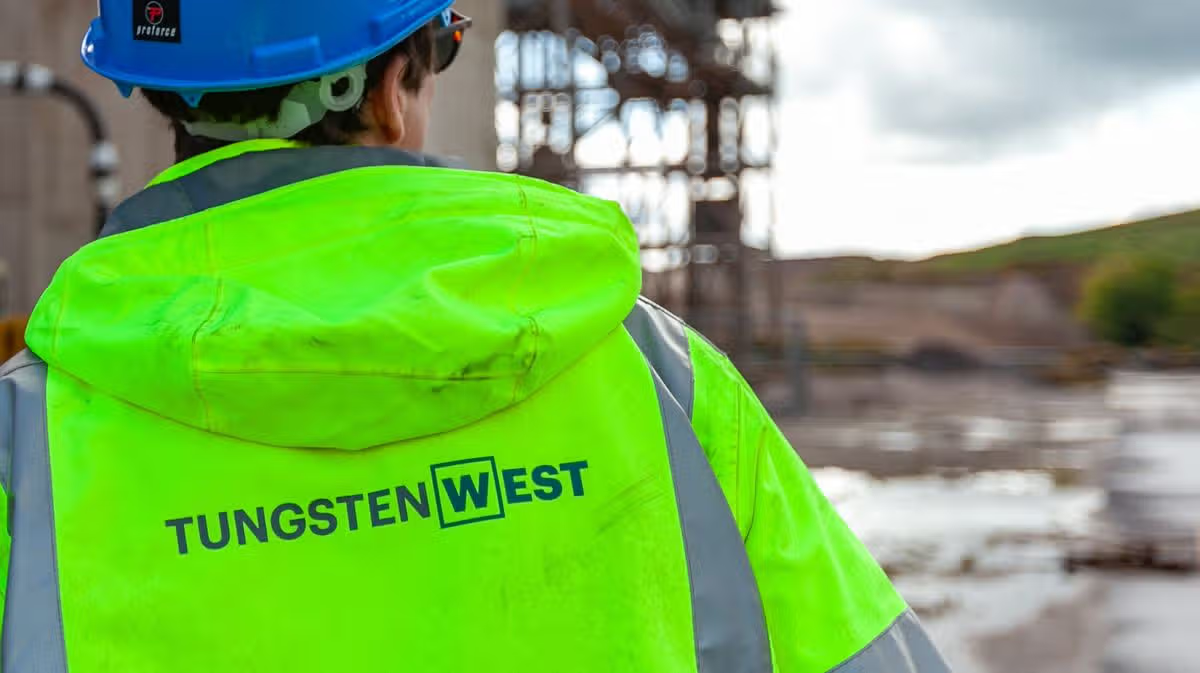
Tungsten West is the owner and operator of Hemerdon tungsten and tin mine on the edge of Plymouth

Tungsten West is the owner and operator of Hemerdon tungsten and tin mine on the edge of Plymouth(Image: Tungsten West)

A company looking to revive a mine in Devon that holds a rare critical metal has reported a “year of significant progress” after raising tens of millions of pounds for the project.

AIM-listed Tungsten West is working to restart production at the Hemerdon tungsten and tin mine near Plymouth – one of the largest tungsten resources in the world.

In an update to the stock market, chief executive Jeff Court told investors the project was now “fully funded” and remained “on track and on budget” to restart production in the first quarter of next year.

His comments came as the company narrowed its losses to £7.9m for the year ending March 2026 from £19m the year previously. The firm said this reflected the main initiatives conducted during this period, including finalising a feasibility study and pre-operational readiness activities.

Advertisement

The news comes just days after the government’s National Wealth Fund confirmed it would inject £71m into Tungsten West in a bid to support the reopening of the Hemerdon mine.

The Plympton-headquartered company, which focuses on the mining and extraction of metals including tungsten and tin, took ownership of the site in 2019 and has since invested years completely reconfiguring the processing layout and obtaining fresh environmental permits.

“We have achieved strong progress and remain on-track and on budget for full commissioning in Q1 2027, most importantly, with no lost time injuries,” said Mr Court.

“We have also achieved the significant milestone of first production from our restart project already in Q3 2026. The financial results reported for the previous financial year reflect the strategic pivot of the company to a development project and full-scale production early next year.”

Advertisement

Mr Court told investors that initial production was “already underway” at the mine, adding: “We look forward to the progress towards full commissioning in Q1 2027 (calendar year). I would like to thank all our stakeholders for their continued support.”

Tungsten West’s annual general meeting will be held at the company’s offices in Plympton at 1pm on September 29.

Continue Reading

Business

10 Things To Know About Quentin Halys Ahead Of His US Open Clash With Alexander Zverev This Week In New York

Published

on

Quentin Halys
Quentin Halys
Quentin Halys

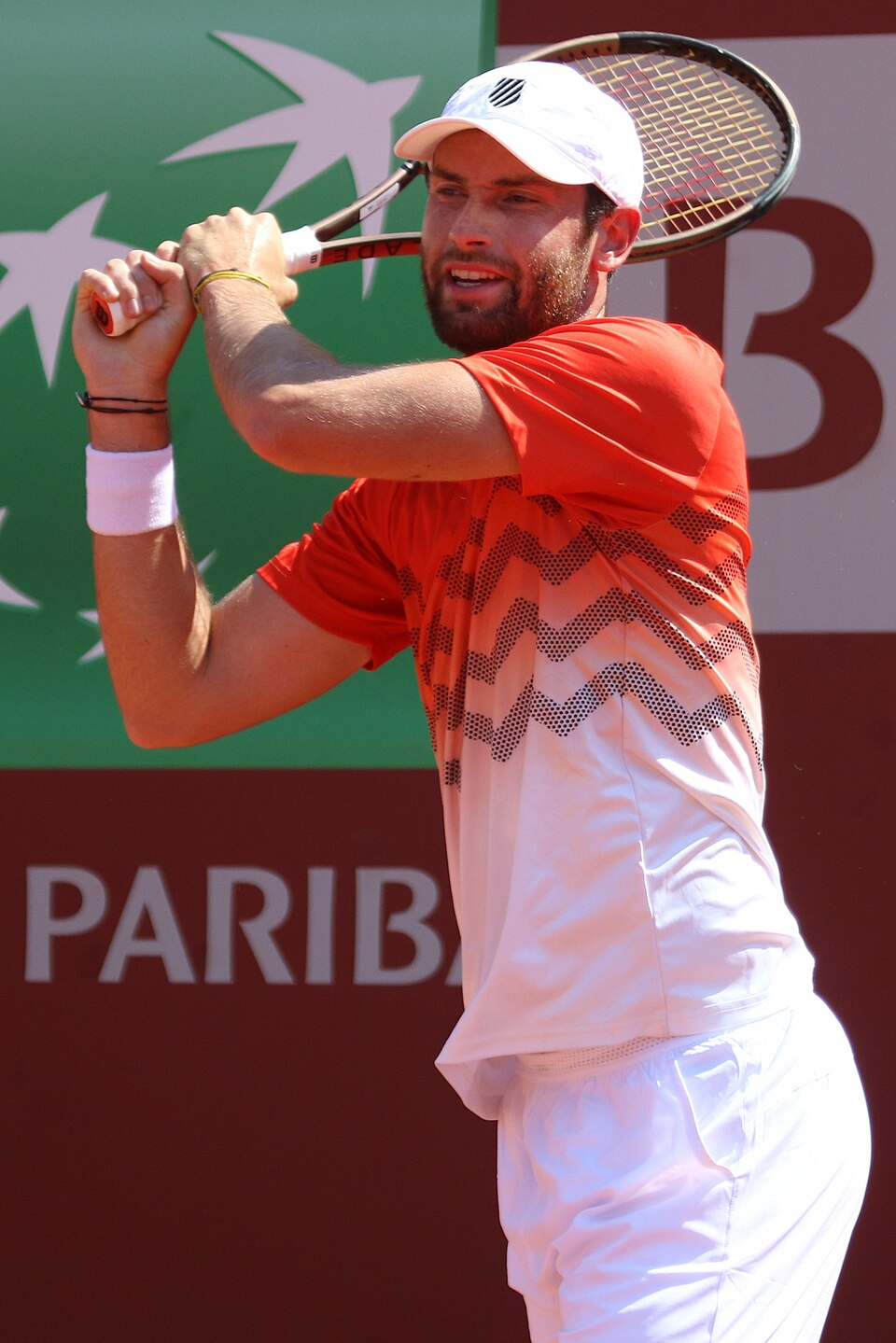
French tennis player Quentin Halys is set to face top seed Alexander Zverev in the second round of the US Open, a marquee matchup that has drawn renewed attention to the 29-year-old’s career and current form heading into the fall stretch of the ATP season. Here are 10 things to know about Halys ahead of the match.

  1. He currently ranks No. 52 in the world. As of Aug. 31, 2026, Halys sits at No. 52 in the ATP singles rankings, a slight dip from his position of No. 46, the career-high mark he reached on June 30, 2025. Halys has climbed steadily throughout the current season, moving up from a ranking of No. 95 back in late June 2026 to his current position within a matter of months.
  2. He was born and raised in Bondy, France. Halys was born Oct. 26, 1996, in Bondy, a suburb northeast of Paris that has also produced other notable French athletes. He now resides in Boulogne-Billancourt, France, and turned professional in 2012 at age 15.
  3. He stands 6-foot-3 and plays a right-handed, two-handed backhand game. Halys, listed at 191 centimeters, or roughly 6 feet 3 inches, and around 187 pounds, plays right-handed with a two-handed backhand, a physical profile that has helped him develop a strong serve-based game over the course of his career.
  4. He has won one ATP Tour singles title and one doubles title. Halys claimed his lone ATP Tour singles championship at the 2022 Play In Challenger event, defeating Ricardas Berankis in a three-set final, 4-6, 7-6(4), 6-4, after having eliminated then-defending champion Zizou Bergs in the quarterfinals. Halys has also reached the finals of other ATP Tour events without winning the title, including a runner-up finish at the 2024 Swiss Open Gstaad, where he lost to Matteo Berrettini, 6-3, 6-1.
  5. His deepest Grand Slam singles run has come at Wimbledon and the French Open. Halys has reached the third round at both the French Open, in 2025 and again in 2026, and at Wimbledon, in 2023 and 2024. His results at the Australian Open have been more modest, reaching the second round in 2016, 2024, 2025 and 2026, while the US Open has proven to be his most difficult major, with Halys having been eliminated in the first round in each of his six prior appearances there before this year’s tournament.
  6. He is also an accomplished doubles player. Beyond his singles career, Halys has built a respectable doubles résumé, reaching a career-high doubles ranking of No. 51 on Aug. 24, 2026, matching his current position in that discipline. His best Grand Slam doubles result came this year at the French Open, where he advanced to the semifinals, a significant improvement over his previous best doubles showing at a major, a second-round finish at the 2024 Australian Open.
  7. He won a junior Grand Slam title partnering current top player Benjamin Bonzi. As a junior, Halys reached four Grand Slam finals, three in doubles and one in singles, winning the 2014 French Open junior doubles title alongside Benjamin Bonzi, who has since developed into one of France’s top-ranked professional players. Halys also reached a career-high combined junior ranking, spanning both singles and doubles, of world No. 3 on March 31, 2014.
  8. He has had a productive 2026 season overall. Halys has played 37 matches this season, ranking among the tour leaders in aces with 412, placing him 11th on tour in that category. He also ranks 23rd on tour in second-serve points won, with 647, and 36th in total points won, with 3,119, reflecting a season built heavily around his serve.
  9. His upcoming second-round US Open matchup against Alexander Zverev represents one of the biggest challenges of his career. Zverev, the tournament’s top seed, presents a formidable test for Halys, who will need to rely heavily on his serve-based game to compete with one of the sport’s most consistent players over the course of a best-of-five-set match. The matchup is scheduled to be played during the tournament’s second round, with Halys looking to advance past a major second-round appearance for just the fourth time in his career at a Grand Slam event.
  10. He is coached by Olivier Malcor, with past guidance from Nicolas Devilder. Halys currently works with coach Olivier Malcor, having previously been guided in part by Nicolas Devilder, a former professional player himself, as part of his coaching setup over the years. Halys has accumulated career prize money of more than $5.7 million over the course of his professional career, which began in 2012.

Halys’s path to the second round at this year’s US Open followed a first-round victory that extended his tournament to a matchup against the world’s top seed, a significant test given the gap in overall ranking and Grand Slam pedigree between the two players. Zverev, a former world No. 1 and multiple-time Grand Slam finalist, enters the tournament as one of the favorites in the men’s draw, making Thursday’s matchup a considerable underdog opportunity for the Frenchman.

Halys’s career has been marked by a steady, if unspectacular, rise through the ATP rankings, built primarily on strong results at the Challenger Tour level, where he has won seven singles titles and seven doubles titles, alongside more sporadic breakthroughs at the main ATP Tour level. His current form, reflected in his climb from outside the top 90 in June to his present ranking near the top 50, suggests a player entering a competitive peak as he heads into the latter stages of what has become one of the more durable careers among his generation of French tennis players.

Should Halys manage to upset Zverev, it would mark the most significant win of his career to date against a top-seeded opponent at a Grand Slam event, and would push him into new territory at the US Open, a tournament that has historically proven to be his most difficult major championship. Regardless of the outcome, Thursday’s matchup offers Halys a high-profile platform to showcase the aggressive, serve-oriented game that has fueled his rise up the rankings throughout the 2026 season.

Continue Reading

Trending

Copyright © 2025