Connect with us

Business

Broadcom sees over $100 billion in AI chip sales by 2027 on robust custom chip demand

Published

on

Broadcom sees over $100 billion in AI chip sales by 2027 on robust custom chip demand


Broadcom sees over $100 billion in AI chip sales by 2027 on robust custom chip demand

Continue Reading
Click to comment

Leave a Reply

Your email address will not be published. Required fields are marked *

Business

Norsk Hydro’s Qatar Aluminum Plant to Shut Down After Iran Attacks Cut off Gas Supply

Published

on

Norsk Hydro’s Qatar Aluminum Plant to Shut Down After Iran Attacks Cut off Gas Supply

Norwegian aluminum producer Norsk Hydro NHY 4.94%increase; green up pointing triangle said its Qatari smelter is shutting down after its joint-venture partner stopped supplying gas amid attacks from Iran.

QatarEnergy, the state-owned petroleum company of Qatar and Norsk Hydro’s partner on aluminum joint venture Qatalum, on Monday stopped production of liquefied natural gas after attacks against its energy facilities, and on Tuesday said it is halting the production of some downstream products in the country, including aluminum as well as urea, polymers and methanol.

Copyright ©2026 Dow Jones & Company, Inc. All Rights Reserved. 87990cbe856818d5eddac44c7b1cdeb8

Continue Reading

Business

Brokerage Regulator Finra Is Considering Changing Its Arbitration Rules. It Wants Public Feedback.

Published

on

Brokerage Regulator Finra Is Considering Changing Its Arbitration Rules. It Wants Public Feedback.

Brokerage Regulator Finra Is Considering Changing Its Arbitration Rules. It Wants Public Feedback.

Continue Reading

Business

Opinion: Holy smokes, this tax has run out of puff

Published

on

Opinion: Holy smokes, this tax has run out of puff

OPINION: Tax increases just tinker around the edges when spending cuts are what’s needed.

Continue Reading

Business

Oil Prices Surge in Australia Amid Middle East Conflict, Driving Petrol Pump Pain for Motorists

Published

on

Oil Prices Surge in Australia Amid Middle East Conflict, Driving

CANBERRA, Australia — Oil prices have spiked sharply in global markets due to escalating conflict in the Middle East, pushing Australian petrol prices higher and raising concerns about inflation and household budgets as the nation grapples with supply vulnerabilities.

Brent crude, the international benchmark most relevant to Australian imports, traded around US$78 to US$80 per barrel in early March 2026 trading, up significantly from mid-US$60s levels seen in late 2025 and early this year. West Texas Intermediate hovered above US$70. The surge follows U.S. and Israeli military actions against Iran, disrupting key shipping routes like the Strait of Hormuz and injecting a geopolitical premium into energy markets.

Oil Prices Surge in Australia Amid Middle East Conflict, Driving
Oil Prices Surge in Australia Amid Middle East Conflict, Driving Petrol Pump Pain for Motorists

In Australia, which imports more than 90% of its crude oil and refined fuels, the impact has been swift. National average retail prices for unleaded 91-octane petrol stood at approximately 172.9 Australian cents per liter in the week ending Feb. 22, according to the Australian Institute of Petroleum (AIP). However, city-specific figures show higher levels amid the ongoing cycle and recent volatility: Sydney around A$1.98 per liter, Melbourne A$2.08, and Brisbane A$2.02 as of early March. Some stations in major cities reported unleaded prices exceeding A$2.13 per liter, with diesel averages around 180.3 cents per liter nationally.

Analysts warn of further increases. A common rule of thumb holds that every US$10 rise in crude adds roughly 10 Australian cents per liter at the pump. With Brent jumping from around US$67 in late February to near US$80, motorists could face hikes of 10-20 cents per liter in the short term, and potentially up to 40 cents in extreme scenarios if disruptions persist. Compare the Market spokesperson Chris Ford noted that a 30% increase from current levels could push unleaded 91 past A$2.50 per liter in some regions, costing A$125 to fill a 50-liter tank.

The Australian Institute of Petroleum’s weekly report for the week ending March 1, 2026, highlighted rising international crude and petrol import prices supplied by Argus Media. Retail prices reflect a combination of global benchmarks, the Australian dollar exchange rate, excise taxes, and local competition cycles that see prices swing weekly in cities like Sydney, Melbourne, and Brisbane.

Advertisement

Geopolitical tensions have amplified risks. The conflict has raised fears of prolonged supply interruptions through critical chokepoints, prompting warnings from the Reserve Bank of Australia Governor Michele Bullock. She described a “live” chance of an interest rate hike at the March meeting, citing prolonged oil price spikes as a threat to inflation control and economic growth. Bullock noted that elevated energy costs could prove stubborn, complicating the central bank’s efforts to tame inflation.

Australia’s fuel security adds urgency. The nation maintains stocks equivalent to only about 36-90 days of supply in some assessments, well below the International Energy Agency’s 90-day target for members. Recent reports indicate petrol reserves have dipped low, heightening vulnerability to shocks. Experts like those from NRMA and Compare the Market have urged motorists not to panic but to fill up strategically, as prices could climb 6-10% or more depending on developments.

ASX-listed energy companies have benefited from the rally. Woodside Energy shares rose 6.15% to A$30.05, up nearly 30% year-to-date, while Santos climbed 5.62% to A$7.14, gaining about 16% in 2026. The broader market felt pressure, with the S&P/ASX 200 dropping amid global uncertainty, though energy stocks provided some offset.

Household impacts extend beyond the pump. Higher fuel costs feed into transport, goods delivery, and inflation. Commonwealth Bank analysts warned of economic “consequences” from sustained spikes, including threats to growth. Diesel sales have surged due to increased home deliveries and logistics demand, while sales of E10 ethanol blends and LPG have declined.

Advertisement

The government has monitored the situation closely. FuelWatch in Western Australia advised Perth and Mandurah motorists to fill up before expected rises, with average unleaded projected to hit 188.6 cents per liter from March 4, and some brands reaching 213.9 cents. Low-price options remained available below 155 cents at select sites.

Longer-term trends show volatility. Brent averaged in the mid-US$60s for much of late 2025, far below 2022 peaks above US$100. The current rally marks the highest levels since mid-2022, driven by supply fears rather than demand surges. OPEC+ decisions, non-OPEC production, and global economic outlook will influence whether the spike proves temporary or entrenched.

Motorists can mitigate costs by using apps like FuelWatch or PetrolSpy to find cheapest stations, timing fills during low-cycle periods, and considering fuel-efficient vehicles. Electric vehicle adoption continues to grow as an alternative amid rising liquid fuel prices.

As the Middle East situation evolves, oil and petrol prices remain fluid. Analysts monitor for de-escalation, which could unwind premiums quickly, or further escalation that sustains higher levels. For now, Australian drivers face elevated costs at the bowser, a direct echo of distant geopolitical events reshaping daily life and the economy.

Advertisement
Continue Reading

Business

Built Around the Working Technologist

Published

on

Built Around the Working Technologist

Pulse Radiology Education was founded in 2015 by Neil Huber, a radiologic technologist who saw a gap in his own profession and decided to address it.

Huber began his career in New York. He earned a BS in Radiologic Sciences from St. John’s University and later completed an MBA in Strategic Healthcare Management & Entrepreneurship at Hofstra University. Early in his career, he worked inside imaging departments and healthcare organisations. That experience shaped his perspective.

“I kept meeting great technologists who wanted to earn another certification but were stuck,” Huber said. “They wanted to advance, but they couldn’t quit their jobs or move their lives around to do it.”

Traditional training pathways often required rigid schedules and full-time classroom attendance. For working technologists managing shifts, family life and financial responsibilities, that model did not fit.

So in 2015, he launched Pulse Radiology Education in New York City.

Advertisement

From the beginning, the focus was clear: combine structured online education with in-person clinical training. The goal was not to build another online school. It was to create a realistic pathway for advancement.

“You can study after a double shift or on your day off,” Huber often told early students. “You control the pace.”

Clinical placement quickly became central to the model. Huber had seen firsthand how difficult it was for technologists to secure hands-on training sites.

“Securing a clinical site is the part that stops most people cold,” he said. “We wanted to remove that barrier completely.”

Advertisement

Over time, Pulse built partnerships with hospitals and imaging centres across the country. Today, it works with more than 1,300 clinical affiliates in MRI, CT and Mammography.

In 2020, the organisation expanded further with the launch of Pulse Radiology Institute in Saint Augustine, Florida. PRI offers an ARMRIT-accredited MRI Associate’s Degree and clinical placement for individuals entering the field without prior technologist credentials. Together, PRE and PRI serve both working technologists and new entrants into imaging.

As healthcare demands evolved, so did the programme structure. Pulse developed tiered pathways for MRI and CT:

  • Basic: ARRT-approved didactic coursework
  • Premium: Coursework plus clinical placement
  • Ultra: Coursework, clinical placement and simulator access

Each tier was designed to reflect different needs, while maintaining ARRT-approved structured education and registry-focused preparation. Programmes include mock exams and more than 1,000 registry-style questions per modality.

“Our goal was never to create the cheapest programme,” Huber said. “It was to create the most realistic path for working RTs to advance.”

Advertisement

In 2025, Pulse Radiology Education was acquired by Edcetera, an education company focused on licensed careers. For Huber, the alignment was practical.

“Education should be accessible, relevant and transformative,” he said, echoing the broader vision behind the acquisition. “But our purpose stayed the same.”

Today, Pulse supports technologists seeking post-primary ARRT credentials, non-technologists entering MRI through PRI, and healthcare leaders building multimodality imaging teams.

Huber views growth as a responsibility rather than an endpoint.

Advertisement

“Hospitals depend on competent and certified technologists. Patients depend on accurate scans. Technologists depend on training that fits their lives. Our job is to meet all three.”

Nearly a decade after its founding, Pulse Radiology Education remains focused on access, structure and clinical partnership. The mission has not shifted since 2015.

“If we can help someone move into MRI or CT without leaving their job or family behind,” Huber said, “then we’re doing something meaningful.”

Advertisement

Continue Reading

Business

Extreme Networks, Inc. (EXTR) Presents at Morgan Stanley Technology, Media & Telecom Conference 2026 Transcript

Published

on

OneWater Marine Inc. (ONEW) Q1 2026 Earnings Call Transcript

Extreme Networks, Inc. (EXTR) Morgan Stanley Technology, Media & Telecom Conference 2026 March 4, 2026 5:35 PM EST

Company Participants

Kevin Rhodes – Executive VP of Finance & CFO

Conference Call Participants

Advertisement

Meta Marshall – Morgan Stanley, Research Division

Presentation

Meta Marshall
Morgan Stanley, Research Division

Advertisement

I’m going to read some disclosures that you’ve heard many times. For important disclosures, please see the Morgan Stanley research disclosure website at morganstanley.com/researchdisclosures. If you have any questions, please reach out to your Morgan Stanley sales representative. We’re delighted to have Extreme Networks here today, Kevin Rhodes, CFO. We also have Stan Kovler in the audience. And then myself, I’m Meta Marshall. I cover networking here at Morgan Stanley.

So Kevin, thanks so much for being here today.

Kevin Rhodes
Executive VP of Finance & CFO

Advertisement

Good to see you again.

Question-and-Answer Session

Advertisement

Meta Marshall
Morgan Stanley, Research Division

You recently rolled out some impressive targets at your Analyst Day calling for share gains in the market. which we’ll dive into in a minute. Can you just kind of refresh everybody here on Extreme’s value proposition and kind of the key verticals that you serve?

Kevin Rhodes
Executive VP of Finance & CFO

Advertisement

Sure, sure. Happy to. And by the way, at the Analyst Day, I would say that was a good day for us to roll out for the next several years what we are going to achieve 10% growth on the revenue side, 20% growth on the bottom line side. And we’ve been executing pretty well, right? 7 quarters in a row of growth as a company. And so that was a meaningful kind of event for us to talk to investors about what we’re trying to do.

From a market perspective, as you can probably appreciate, we’re on the wired and wireless

Advertisement
Continue Reading

Business

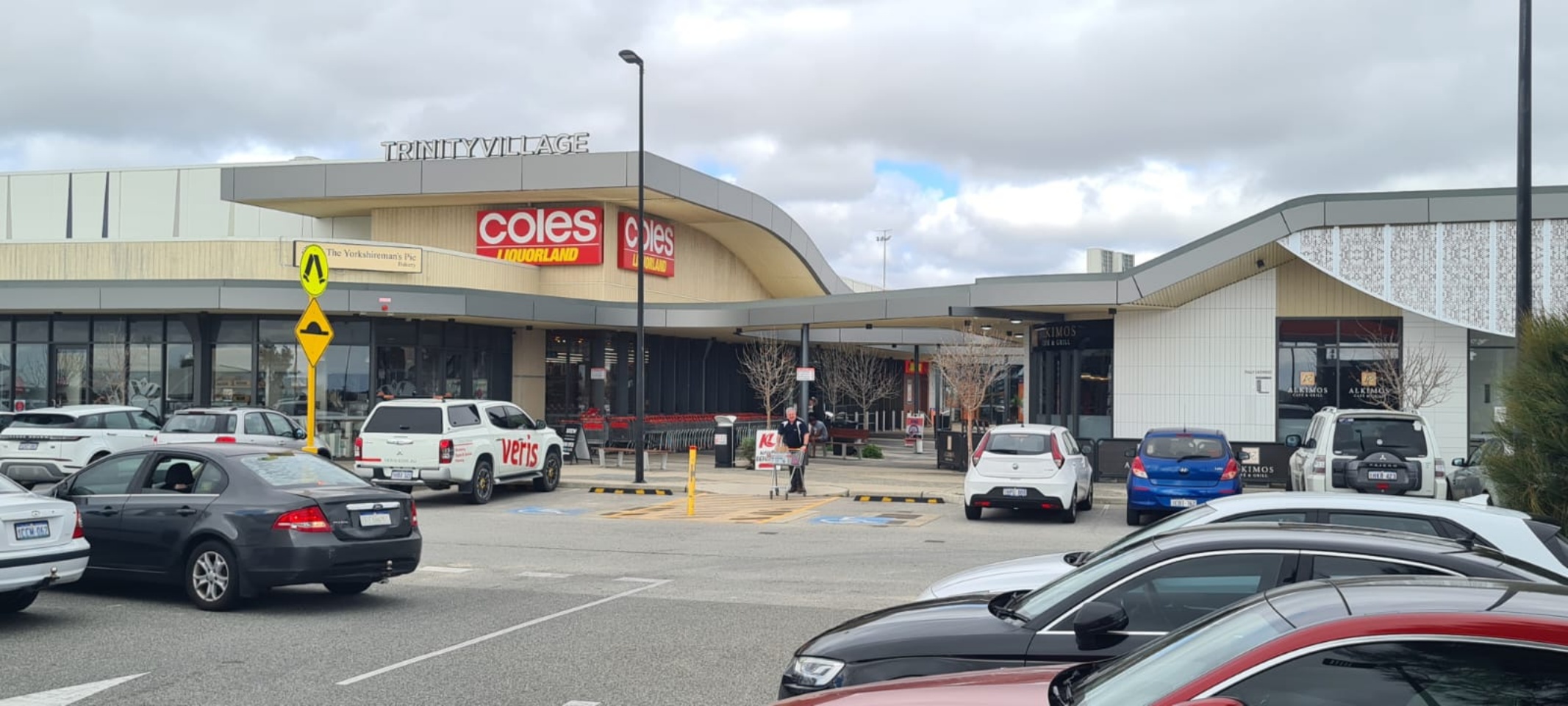
Trinity Village shopping centre attracts $33m

Published

on

Trinity Village shopping centre attracts $33m

The transaction represents the second Perth shopping centre Harmony Property Investments has acquired this year.

Continue Reading

Business

Wait for dust to settle before taking fresh bets, says Maulik Patel

Published

on

Wait for dust to settle before taking fresh bets, says Maulik Patel
Amid rising geopolitical tensions and sharp swings in global markets, investors are once again debating whether such periods of uncertainty present buying opportunities or call for caution. According to Maulik Patel from Equirus Securities patience may be the more prudent strategy in the current environment. Speaking to ET Now, Patel suggested that investors should allow a few days for developments to unfold before taking aggressive positions in the market.

“So, I would wait for a couple of days for things to settle down,” Patel said, noting that the present crisis differs in several ways from conflicts witnessed over the past two decades. “Now, this kind of crisis particularly what we are seeing today is different from let us say 10, 15, or 20 years. It is more similar to the first Gulf war in 1991 when between Iran and the coalition forces or so, but it is not that bad like what we saw in 1973 when there was an Arab embargo on the oil export to the western nations and in that case the price moved by almost 300%.”

Patel explained that during the 1991 Gulf War, oil prices had already surged months before the conflict officially began as markets anticipated the buildup of military action. “In case of 1991, the price moved double for three-four months before even the war started because there was a buildup of military assets, there was a coalition force, so market anticipated this,” he said. Once the war actually began, however, the market quickly reassessed the situation. “As soon as the war started, the price started to correct down as market realised that Saddam Hussein is losing this war.”

He believes a similar anticipatory trend has been visible in oil markets this year. “Oil started moving up already in the first or second week of January. Even if you look at a lot of passive money has moved to the oil and oil related stocks,” Patel noted. “There is an ETF in US called XLE which is up almost 22% year to date, so that reflect that kind of a money which has moved in that.”

Advertisement

While his base expectation is that the conflict may end relatively quickly, Patel cautioned that predicting the duration of wars is rarely easy. “Now if you ask me, the view is that the war should get over in a week. However, it is difficult to predict the duration of war,” he said. He pointed to the Russia–Ukraine conflict as an example of how initial assumptions can prove incorrect. “When the Ukraine war started, most of us believed that the war will last probably one month at max. But we are in the fifth year of the war.”


During the early months of that conflict, crude oil prices surged sharply. “When the war accelerated in month of March 2022 and April 22, the oil moved to the almost $120, $130 a barrel,” Patel recalled. Over time, however, markets adjusted as supply chains shifted and production increased. “The Russian barrel reroute from Europe to Asia particularly China and India, market stabilised. OPEC increased the production and what you saw that even the war is still going on, the oil has come down to $60 even last year.”
The current situation carries additional risks because of Iran’s strategic location. “Iran sits in the Strait of Hormuz which is 20% of the global oil demand passed through that, 20% of the world’s LNG demand pass through that,” Patel said. He also highlighted emerging disruptions in global LNG supply. “What we are seeing today Qatar which is 18% of the world’s liquefaction capacity, they have announced a force majeure. There is a real disruption is there.” Given these uncertainties, he believes investors should wait for clearer signals before turning bullish. “Probably we would like to wait for a couple of days how things are moving up and then taken a bullish view on market once we see the regime is collapsed or the attacks which are happening from the Iran getting reduced day by day and then we can make another constructive call on the market.”Turning to the debate around artificial intelligence and its potential impact on the IT services industry, Patel said the adoption of enterprise AI would still depend heavily on system integrators such as Indian IT companies. “AI without a system integrator or like Infosys, HCL that is not possible to develop in enterprise customers,” he said. While consumer AI tools are widely accessible, enterprise deployment requires deep customization. “You can have AI for retail the way you and I use the ChatGPT or Gemini or few other, but for enterprise to use it they need customised and the customisation will be done by the system integrators like Indian IT companies.”

Patel said the recent sell-off in IT stocks was not driven by immediate earnings concerns but by uncertainty about long-term profitability. “The sell off two-three weeks back is not related to the near-term earnings, it is that what would be the earning trajectory five years down the line,” he explained. In the short term, however, AI adoption could actually boost demand for technology services. “In near term, you may see earnings moves upward because there is an accelerated development of the AI across the enterprise,” he said. The bigger question remains whether AI-driven productivity gains could lead to pricing pressure over time. “What will happen to the earnings four or five year down the line, will there be a deflation in the pricing given that kind of a productivity gain delivered by the AI, so that is what the real question or the concerns among the investors.”

Despite these uncertainties, Patel believes the recent correction has made valuations in the sector more reasonable. “The valuation has become reasonable for many of the largecap and you see that rupee has depreciated by almost 2% in the last two days,” he noted, adding that this combination could attract buyers back into IT stocks. “So, we will see some kind of buying emerge at in IT stocks given that they are relatively safe in this disruption period what you see.”

Looking ahead, Patel said that if geopolitical tensions ease, investors should focus on sectors that have corrected the most. “Where we will bet obviously where the stocks have fallen the maximum,” he said. Energy companies could rebound sharply if supply routes reopen. “If the flow in the Strait of Hormuz restart, if Qatar starts LNG production obviously the one which has fallen the maximum are HP, BP, gail PLNG within the energy pack which we will like it a lot.” He also sees opportunities in high-beta manufacturing stocks. “Some of these high beta stocks like in EMS that have also fallen a lot like Dixon which can be again play on the reversal of memory prices which is again linked to the IT.”

Advertisement

Metals could also offer opportunities, he said, because underlying commodity prices remain relatively strong. “We may go for high beta in metal because mean metal prices are still at an elevated level. The stocks have corrected because of the leverage positions, the fear factor.” Patel also pointed to cement stocks as another potential area of interest as the sector enters its peak demand season. “Cement, now we are entering into peak cement demand season perspective and cement stocks have also corrected in anticipation and because of the higher oil price will lead to the higher petcoke prices and the higher cost for them.”

At the same time, Patel advised caution in a few segments of the market. While he does not believe in completely avoiding markets, he said certain sectors currently lack clear triggers. “There is no absolute nothing,” he remarked, but added that some pharma companies dependent on the US generics market could face competitive pressure. “We probably will avoid some of these pharma companies which are largely dependent on the US generic market because of any kind of competition they will see in some of these key drugs.” He also remains cautious on FMCG stocks due to limited earnings catalysts. “We will avoid FMCG to a certain extent given that there is no incremental earnings positive triggers are there on those one.”

Patel also flagged elevated valuations in parts of the capital goods and defence sectors. “Obviously, in capital goods some of the names are still very expensive,” he said. While defence stocks often rally during geopolitical tensions, he believes the risk-reward in some counters remains unfavourable. “Whenever the conflict start that the defence stocks make a very big move, but some of the defence names the multiples are still at a very-very elevated level, we will avoid that.”

Overall, Patel’s advice to investors is to remain patient and selective during periods of uncertainty, waiting for clearer signals before making fresh bullish bets in the market.

Advertisement
Continue Reading

Business

Politics And The Markets 03/05/26

Published

on

OneWater Marine Inc. (ONEW) Q1 2026 Earnings Call Transcript

This is the forum for daily political discussion on Seeking Alpha. A new version is published every market day.

Please don’t leave political comments on other articles or posts on the site.

The comments below are not regulated with the same rigor as the rest of the site, and this is an ‘enter at your own risk’ area as discussion can get very heated. If you can’t stand the heat… you know what they say…

More on Today’s Markets:

Advertisement

The Fed chief-in-waiting is set to take the helm at the central bank at the end of May, assuming the nomination process goes as expected. His first FOMC meeting would come June 16–17. The White House mission has been to get the fed funds rate lower, and Warsh is expected to move in that direction once he replaces Jay Powell.

“It’s my strong belief that the tariff rates will be back to their old rate within five months,” Bessent said in an interview on CNBC’s “Squawk Box.”

A White House official indicated that the investments are meant to replicate established indexes. Furthermore, it was maintained that neither President Trump nor any member of his family has direct influence on how the portfolio is invested or when investments are bought or sold.

The discussions come as U.S. weapons inventories have been strained by several conflicts in recent years. Since Russia’s 2022 invasion of Ukraine and Israel’s war in Gaza, the United States has supplied billions of dollars in arms to allies, including artillery systems, ammunition and anti-tank missiles. Recent strikes on Iran have also drawn heavily

Continue Reading

Business

Panel approves luxury Hotel Sebatikel in Exmouth

Published

on

Panel approves luxury Hotel Sebatikel in Exmouth

A multi-million-dollar luxury hotel plan, comprising short-stay accommodation units and a golf green, in Exmouth has been approved.

Continue Reading

Trending

Copyright © 2025