
Business
Buy the Quantum Leader or Avoid High-Risk Volatility?


NEW YORK — IonQ Inc. shares have delivered explosive gains for early believers but remain a high-stakes bet heading deeper into 2026, with Wall Street analysts largely urging investors to buy the dip while cautioning that the quantum computing pioneer’s path to profitability is long and volatile.

Trading around $35–$40 in mid-April 2026, IONQ stock has pulled back from earlier highs amid broader tech sector rotation and lingering concerns over execution risks. Yet the company’s fundamentals tell a compelling growth story: 202% revenue increase in 2025 to $130 million, a robust $370 million backlog, and ambitious 2026 guidance of $225 million to $245 million in revenue.
Analysts maintain a consensus “Moderate Buy” to “Strong Buy” rating. The average 12-month price target sits near $65–$69, implying roughly 80–100 percent upside from current levels, with some optimistic forecasts reaching $100. No major brokerage currently carries a Sell rating.
Strong Commercial Momentum
IonQ has transitioned from pure research to a full-stack quantum platform provider faster than many competitors. Its trapped-ion technology has achieved industry-leading fidelity metrics, including 99.99% two-qubit gate fidelity on systems like Tempo. The company recently hit key milestones such as photonic interconnect breakthroughs and expanded collaborations with institutions including the University of Maryland and DARPA.
Enterprise and government adoption is accelerating. Major customers across finance, pharmaceuticals, logistics and defense are using IonQ systems for complex optimization, simulation and machine learning tasks that classical computers struggle with. The $370 million remaining performance obligations provide strong revenue visibility into 2026 and beyond.
CEO Niccolo de Masi described 2025 as an “inflection point,” with the company scaling production, improving manufacturing yields and positioning itself as the only full-stack quantum player with vertically integrated hardware, software and cloud access.
Financial Position and Path Forward
IonQ ended 2025 with a fortress-like balance sheet — roughly $3.3 billion in cash, cash equivalents and investments and no debt. This war chest funds aggressive R&D and potential acquisitions while shielding the company from near-term dilution pressures that have plagued smaller quantum peers.
Still, the company remains deeply unprofitable. Gross margins are negative as it invests heavily in scaling systems and cloud infrastructure. Analysts expect continued cash burn in 2026, though improving commercial mix and higher utilization rates should gradually narrow losses. Earnings growth estimates for 2026 sit around 65 percent on top of triple-digit revenue expansion.
Risks That Could Derail the Bull Case
Quantum computing is still an emerging field with significant technical and commercial hurdles. Error correction, scalability to thousands of logical qubits, and real-world advantage over classical systems remain years away for most applications. IonQ faces stiff competition from IBM, Google, Rigetti, Quantinuum and others pursuing different technological approaches.
Valuation remains stretched. Even after the recent pullback, shares trade at enormous multiples of current sales. Any delay in hitting 2026 guidance, slower customer ramp or negative clinical trial outcomes for quantum use cases could trigger sharp sell-offs. The stock’s beta above 2.7 underscores its volatility.
Broader market sentiment toward high-growth tech also matters. Geopolitical tensions, interest rate shifts or another AI-related rotation could pressure speculative names like IonQ.
Why Many Analysts Still Say Buy
Supporters argue IonQ is uniquely positioned. Its technology has demonstrated superior performance on key benchmarks, and the company is shipping systems and cloud access today while competitors remain further from commercialization. Government contracts, including recent DARPA awards, provide stable revenue and validation.
Longer-term forecasts are even more bullish. Some models see IonQ capturing a meaningful slice of a quantum market projected to reach tens of billions by the early 2030s. For patient investors with high risk tolerance, the current valuation may represent an entry point before the next leg of commercial scaling.
Recent sector catalysts — including Nvidia’s quantum-related AI announcements — have lifted the entire quantum basket, with IonQ often leading gains on positive news flow.
Investment Considerations for 2026
For growth-oriented portfolios, IonQ offers asymmetric upside if it executes on its roadmap and quantum advantage materializes in the coming years. Position sizing should remain modest given volatility and binary outcomes typical of frontier technology.
Conservative investors or those seeking near-term profitability may prefer to wait for clearer signals of sustained positive gross margins and consistent earnings beats. Dollar-cost averaging on dips could mitigate timing risk for believers in the long-term thesis.
Bottom Line
IonQ enters the heart of 2026 as a leader in a transformative but immature industry. Strong revenue momentum, technical progress and a rock-solid balance sheet support the bullish analyst consensus. Yet sky-high expectations, ongoing losses and execution challenges mean the stock will likely remain a roller-coaster ride.
Investors considering IonQ must weigh its enormous potential against substantial risks. For those with long time horizons and conviction in quantum’s future, the data leans toward buying on weakness. For others, it may be prudent to monitor from the sidelines until more commercial proof points emerge.
As quantum computing inches closer to practical utility, IonQ’s ability to convert its technology leadership into durable profits will ultimately decide whether today’s buyers become tomorrow’s winners.


BofA raises Pfizer stock price target on first-quarter beat

Check out what’s clicking on FoxBusiness.com.
Utz Quality Foods is recalling certain Zapp’s and Dirty brand potato chips that were sold at retail stores nationwide, the Food and Drug Administration said.
The voluntary recall follows a notification to the company that a seasoning containing dry milk powder may contain the presence of salmonella. It was sourced from California Dairies Inc. and supplied by a third party.
The FDA said the affected seasoning batches tested negative for salmonella prior to use, but Utz is recalling the limited varieties of chips out of an abundance of caution. The company is recalling the products based on the ingredient supplier’s recall.
FROZEN PIZZA SOLD AT WALMART, ALDI RECALLED OVER SALMONELLA CONCERNS
No other products produced by Utz Quality Foods are affected, and “We are working in coordination with the U.S. Food and Drug Administration on this recall,” the company told FOX Business in a statement.
Utz has not received any complaints of illness in connection with the recalled products. Customers who have the affected products should not eat them and should discard them.
Utz Quality Foods recalled products:
Zapp’s Brand Bayou Blackened Ranch Potato Chips, 1.5 oz.
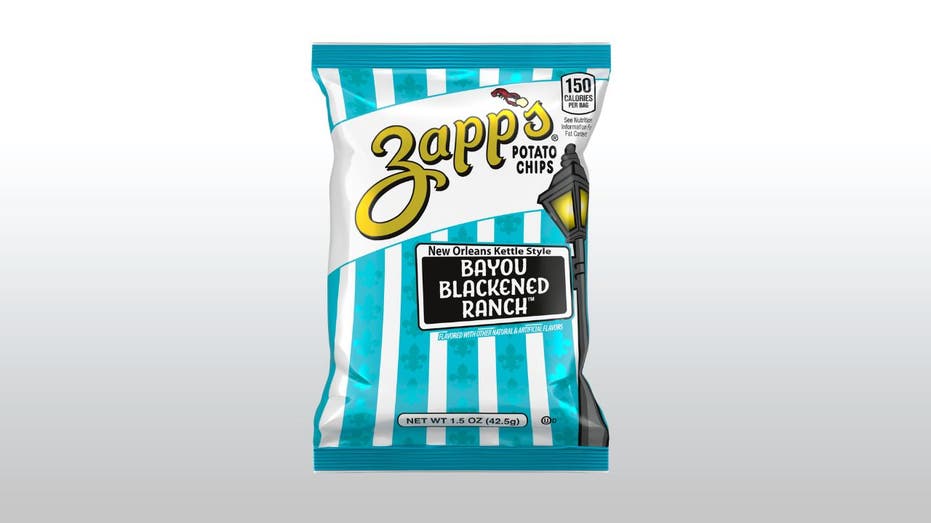
Utz Quality Foods is recalling certain Zapp’s 1.5-oz. Bayou Blackened Ranch Potato Chips. (FDA)
- UPC: 83791272917
- Batchcodes: 26030070101, 26036070102, 26043070101, 26052070103
- Best by dates: 8/3/2026, 8/10/2026, 8/17/2026, 8/24/2026
Zapp’s Brand Bayou Blackened Ranch Potato Chips, 2.5 oz.
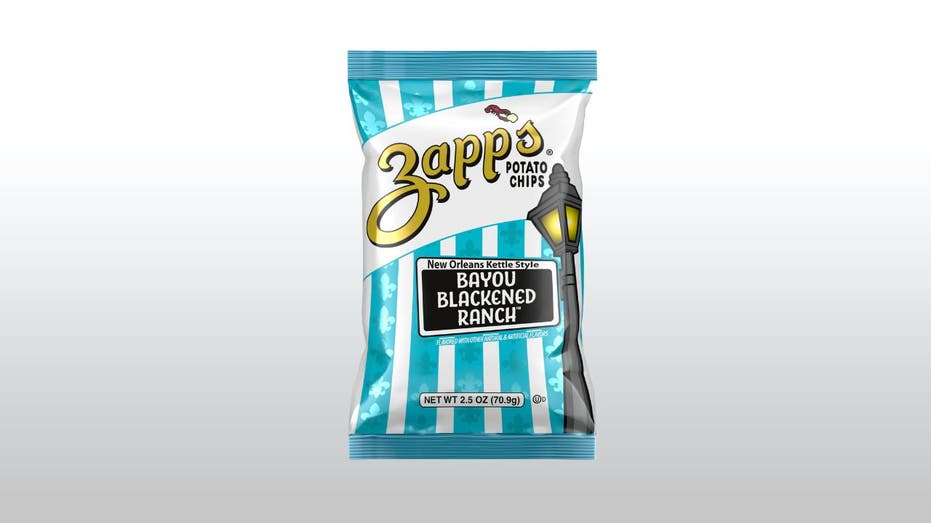
Utz Quality Foods is recalling certain Zapp’s 2.5-oz. Bayou Blackened Ranch Potato Chips. (FDA / Fox News)
- UPC: 83791272924
- Batchcodes: 26029070104, 26044070104, 26045070104, 26058070104
- Best by dates: 8/3/2026, 8/17/2026, 8/31/2026
RAT POISON FOUND IN BABY FOOD JARS SPARKS CHILLING SCARE, SUSPECT NABBED
Zapp’s Brand Bayou Blackened Ranch Potato Chips, 8 oz.
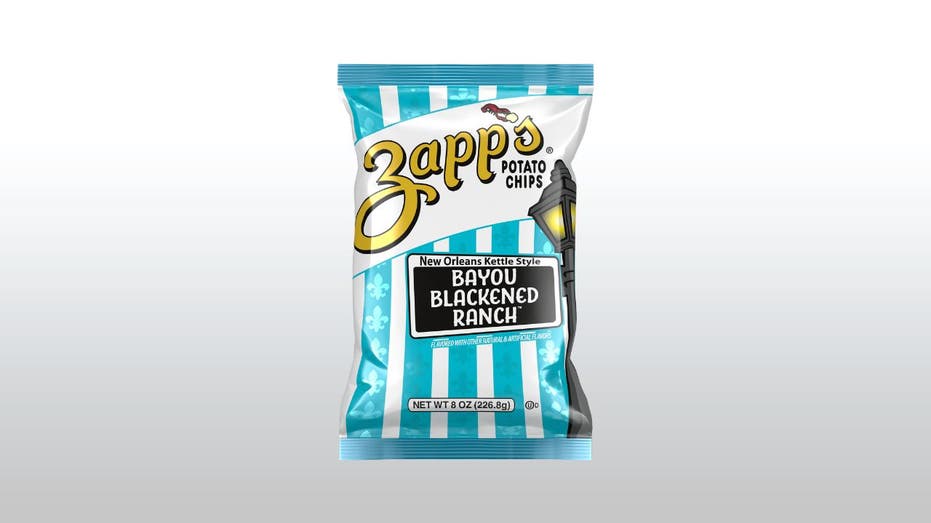
Utz Quality Foods is recalling certain Zapp’s 8-oz. Bayou Blackened Ranch Potato Chips. (FDA)
- UPC: 83791272931
- Batchcodes: 26024070105, 26024070104, 26029070104, 26030070104, 26037070105, 26038070105, 26044070105, 26045070105
- Best by dates: 7/27/2026, 8/3/2026, 8/10/2026, 8/17/2026
Dirty Brand Salt and Vinegar Potato Chips, 2 oz.

Utz Quality Foods is recalling Dirty brand Salt and Vinegar Potato Chips. (FDA)
- UPC: 83791520148
- Batchcodes: 26030070104, 26031070104, 26031070101, 26038070102, 26038070103
- Best by dates: 8/3/2026, 8/10/2026
GHIRARDELLI RECALLS DRINK MIXES OVER POTENTIAL SALMONELLA CONTAMINATION
Zapp’s Brand Salt and Vinegar Potato Chips, 1.5 oz (60 ct.)
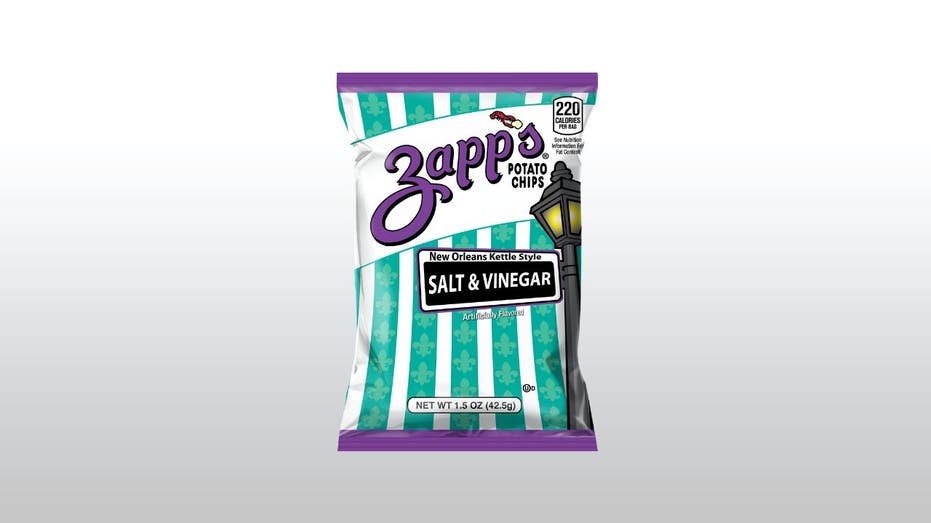
Utz Quality Foods is recalling certain 1.5-oz. Zapp’s brand Salt and Vinegar Potato Chips. (FDA)
- UPC: 83791010144
- Batchcodes: 26030070101, 26031070101, 26036070102, 26037070102
- Best by dates: 8/3/2026, 8/10/2026
Dirty Brand Maui Onion Potato Chip, 2 oz.

Utz Quality Foods is recalling certain Dirty brand Maui Onion Potato Chips. (FDA)
- UPC: 83791520162
- Batchcode: 26052070103
- Best by date: 8/8/2026
CHOCOLATE SOLD NATIONWIDE RECALLED OVER UNDECLARED ALLERGEN POSING POTENTIAL ‘LIFE-THREATENING’ RISK
Zapp’s Brand Big Cheezy Potato Chip, 2.5 oz.
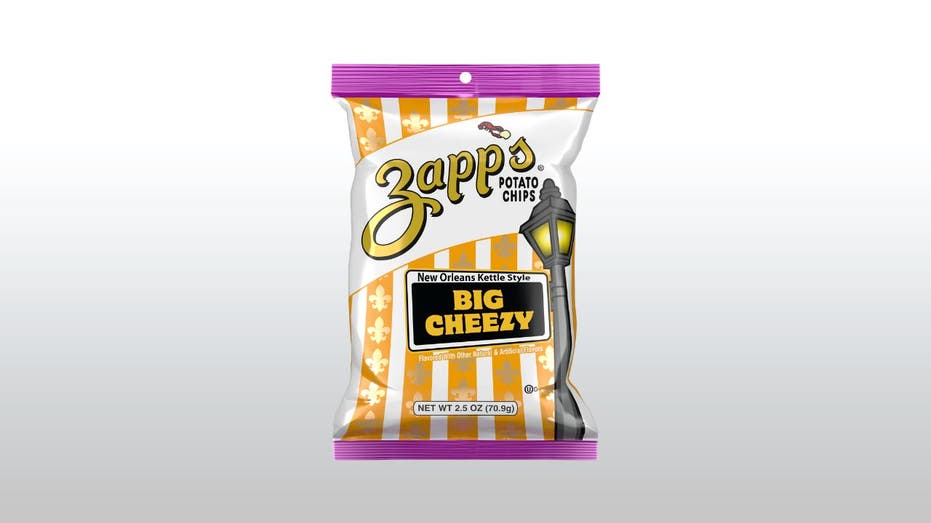
Utz Quality Foods is recalling certain Zapp’s brand Big Cheezy Potato Chips. (FDA)
- UPC: 83791192208
- Batchcode: 26058070104
- Best by date: 8/31/2026
Zapp’s Brand Big Cheezy Potato Chip, 8 oz.

Utz Quality Foods is recalling certain Zapp’s brand Big Cheezy Potato Chips. (FDA / Fox News)
- UPC: 83791192246
- Batchcodes: 26058070104, 26059070104
- Best by date: 8/31/2026
CLICK HERE TO GET FOX BUSINESS ON THE GO
Dirty Brand Sour Cream and Onion Potato Chips, 2 oz.

Utz Quality Foods is recalling Dirty brand Sour Cream and Onion Potato Chips. (FDA)
- UPC: 83791520094
- Batchcode: 26059070104
- Best by date: 8/31/2026
Business
ideaForge Technology bulk deal: BNP Paribas buys Rs 39 crore worth shares in this multibagger

In addition to BNP Paribas, several other investors were active on the buy side. QE Securities LLP acquired 3.4 lakh shares at Rs 779.23 per share, while NK Securities Research Private Limited picked up a similar quantity at Rs 777.94 per share, translating into deals worth around Rs 26 crore. HRTI Private Limited purchased 4.55 lakh shares at Rs 776.98 apiece, and Junomoneta Finsol Private Limited bought 3.49 lakh shares at Rs 780.2 per share.
The bulk deals were executed within a narrow price band of Rs 776 – Rs 783 per share, indicating strong demand for the stock at current levels. The concentrated buying activity highlights growing investor interest in the company, particularly amid increasing focus on defence and drone-related businesses.
Following the bulk deal activity, the stock saw strong traction in the market, reflecting positive sentiment around the counter.
Ideaforge Technology shares ended at Rs 804.10, up by Rs 73.10 or 10% over the Monday closing price.

Shares of ideaForge have given multibagger returns of 111% over a one-year period compared to negative 1% returns by Nifty and negative 4% by the BSE Sensex.
The stock is currently trading above its 50-day and 200-day simple moving average (SMA) of Rs 457 and Rs 468, respectively, according to Trendlyne data.Also read: Adani Ports, Tata Motors and Siemens Energy witness block deal action on Monday
(Disclaimer: The recommendations, suggestions, views, and opinions given by the experts are their own. These do not represent the views of The Economic Times.)

In AI We Trust: Why Spending Is So Buoyant
NEW YORK — Alphabet Inc. Class C shares (NASDAQ: GOOG) climbed 1.21% to $384.23 in morning trading Tuesday, May 5, extending gains from a strong first-quarter earnings report that highlighted accelerating Google Cloud growth and the company’s deepening push into artificial intelligence.

The modest advance comes days after Alphabet’s April 29 earnings release, which showed consolidated revenue rising 22% to $109.9 billion and net income surging 81% to $62.6 billion. Adjusted earnings per share reached $5.11, far exceeding expectations and sending the stock to fresh all-time highs last week.
Google Cloud delivered standout performance, with revenue jumping 63% to $20 billion — the first time the segment crossed that threshold. The cloud backlog nearly doubled sequentially to more than $460 billion, driven by enterprise AI solutions and infrastructure demand. CEO Sundar Pichai highlighted that AI is now the primary growth driver across the business.
AI Momentum Powers Results
Alphabet’s full-stack AI approach — spanning models like Gemini, custom TPUs, and enterprise tools — is paying dividends. Google Search revenue grew 19% to $60.4 billion, with AI-enhanced experiences boosting user engagement. YouTube and subscriptions also contributed strongly, while Waymo’s autonomous driving progress and investments in Anthropic added to non-operating gains.
The company raised its 2026 capital expenditure guidance significantly, signaling aggressive investment in AI infrastructure. Analysts project even higher spending in 2027 as demand for data centers and specialized chips continues to accelerate.
Wall Street Reaction Remains Bullish
Following the earnings beat, multiple firms raised price targets. Goldman Sachs, Needham, Scotiabank, Roth Capital and others lifted targets into the $400–$450 range, citing strong AI positioning and cloud acceleration. Consensus remains firmly in Buy territory, with many viewing Alphabet as attractively valued relative to its growth prospects despite trading near highs.
The stock has been one of the top performers among major technology names in recent months, benefiting from a combination of resilient advertising, cloud strength and AI leadership. Year-to-date gains reflect growing investor confidence that Google is not only keeping pace but gaining ground in the generative AI race.
Challenges and Risks
Regulatory scrutiny remains a factor. Ongoing antitrust cases and potential advertising changes continue to loom, though investors appear to be pricing in Alphabet’s ability to navigate these hurdles. Competition from OpenAI, Anthropic, Microsoft and others is intense, yet Google’s massive user base and infrastructure scale provide significant advantages.
Broader market dynamics also influence the stock. Easing geopolitical tensions around the Strait of Hormuz and anticipation of further corporate earnings have supported technology shares broadly. However, any slowdown in AI spending or macroeconomic shifts could pressure valuations.
Long-Term Outlook
Alphabet’s diversified portfolio — Search, YouTube, Cloud, Waymo and emerging bets — positions it well for continued growth. The company maintains a fortress balance sheet with substantial cash reserves, enabling both heavy investment and shareholder returns through dividends and buybacks. A recent 5% dividend increase underscores confidence in future cash flow.
Analysts project sustained double-digit revenue growth, with cloud and AI segments leading the way. Successful execution on Gemini advancements, autonomous driving milestones and enterprise adoption could drive further upside. Some forecasts see the stock reaching $450 or higher within 12 months if current momentum holds.
Investor Considerations
Tuesday’s modest gain reflects digestion after last week’s sharp post-earnings move. For long-term investors, Alphabet offers exposure to multiple secular tailwinds: digital advertising, cloud computing and artificial intelligence. Its scale, data advantage and engineering talent create wide competitive moats.
Short-term traders may see volatility around upcoming events, including further regulatory developments and quarterly updates. Valuation remains elevated on traditional metrics, but many argue forward-looking AI growth justifies the premium. Dollar-cost averaging or waiting for pullbacks could appeal to those building positions.
As of mid-morning trading, the broader market showed mixed sentiment, with the Dow Jones Industrial Average also advancing modestly. Alphabet’s performance continues to stand out within the Magnificent Seven group, underscoring its resilience and strategic focus.
The coming months will test whether Alphabet can convert its substantial AI investments into sustained market leadership and profitable growth. For now, investors are rewarding the company’s execution and forward momentum in one of technology’s most critical battlegrounds.
Duolingo: A Buy If You Can Handle The Volatility
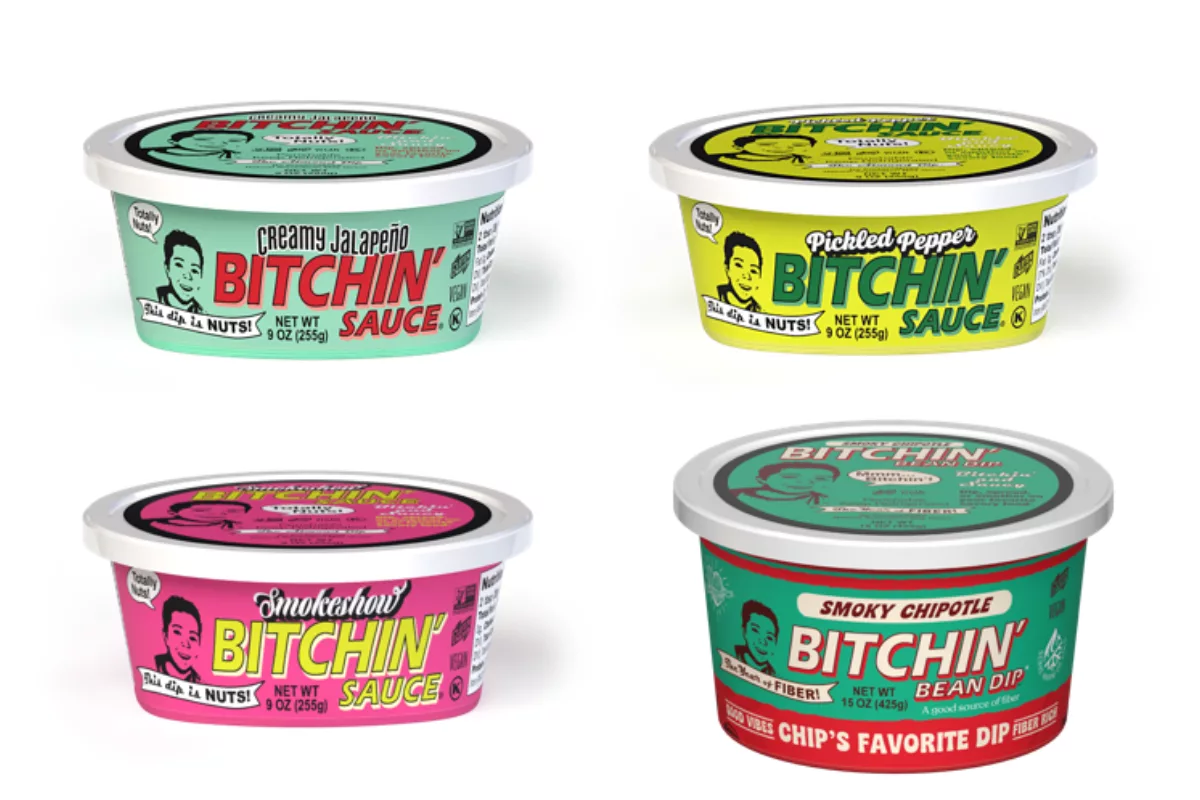

Company launches two new product lines across Kroger’s family of banners.

Climb Global Solutions director John R McCarthy buys $75,320 in stock
NEW YORK — Google’s Gemini AI chatbot and related services faced widespread user-reported disruptions Tuesday, with many experiencing slow responses, processing loops and error messages as the popular generative AI tool encountered intermittent outages across web and mobile platforms.
Downdetector and other monitoring sites showed a significant spike in reports beginning around 8:44 a.m. EDT, with users complaining that prompts either failed to generate responses or got stuck in endless loading cycles. Some reported receiving system error images or partial answers before Gemini stopped functioning properly.
Google AI Studio’s official status page confirmed isolated issues earlier in the day, including problems with streaming Deep Research features that were later marked as resolved. However, broader Gemini services, including the main chatbot integrated into Google Search, Workspace and mobile apps, continued showing elevated error reports throughout the morning.
Scope of the Disruption
The problems appeared widespread but not universal. Users in the United States and Europe reported the highest volume of complaints, though reports also came from Asia and other regions. Issues affected both free and paid Gemini Advanced tiers, with some users noting that basic queries worked sporadically while complex or multimodal requests failed entirely.
Google has not issued a formal public statement on the outage as of mid-morning, but its cloud status dashboard and AI Studio page indicated active monitoring of related services. Engineers appear to be investigating backend capacity or integration problems that could stem from high demand or a recent update.
User Frustration and Workarounds
Social media platforms quickly filled with complaints, memes and screenshots of failed interactions. Many users turned to alternative AI tools like ChatGPT, Claude or Grok while waiting for Gemini to recover. Some reported success by switching browsers, clearing cache or using VPNs, suggesting the issue might be regionally or account-specific in certain cases.
Gemini has become a central part of Google’s AI strategy, powering features across Search, Gmail, Docs and Android. Any extended downtime highlights the growing reliance on these tools for productivity, research and creative tasks.
Google’s Track Record and Response
Google has generally maintained strong uptime for its consumer AI services, though occasional hiccups have occurred during periods of rapid feature rollouts or high traffic. Past incidents were typically resolved within hours. In this case, the company’s transparency via status pages has helped inform affected users, even without a broad public advisory.
Experts recommend checking official status pages and waiting a short period before retrying complex queries. Restarting the app, signing out and back in, or trying incognito mode can sometimes bypass temporary glitches.
Broader Context in AI Services
The incident comes as AI chatbots face increasing demand from both casual users and enterprises. Outages at this scale underscore the challenges of scaling large language models while maintaining consistent performance. Competitors have experienced similar disruptions in the past, reflecting the complexity of real-time AI infrastructure.
For businesses relying on Gemini through Google Workspace or API integrations, the disruption could impact workflows involving content generation, data analysis or customer support automation. Google typically offers service credits for significant enterprise outages under its SLA agreements.
What Users Should Do
If experiencing issues with Gemini:
- Check Downdetector or Google’s status pages for real-time updates.
- Try accessing via a different device, network or browser.
- Wait 15-30 minutes and retry, as many outages resolve quickly.
- Report the problem directly through the Gemini app or web interface to help Google’s team gather diagnostics.
Google is expected to provide more details if the problem persists into the afternoon. In the meantime, users seeking reliable AI assistance can explore alternatives while the company works to restore full functionality.
This latest hiccup serves as a reminder of both the power and fragility of modern AI systems. As Gemini continues evolving into a daily tool for millions, maintaining rock-solid reliability will remain a top priority for Google and the broader AI industry. Updates will be closely watched as the situation develops throughout the day.
PayPal: Things Will Get Worse Before They Get Any Better

Donald Trump reignites feud with the Pope with ‘unacceptable’ remarks
BofA raises Pfizer stock price target on first-quarter beat
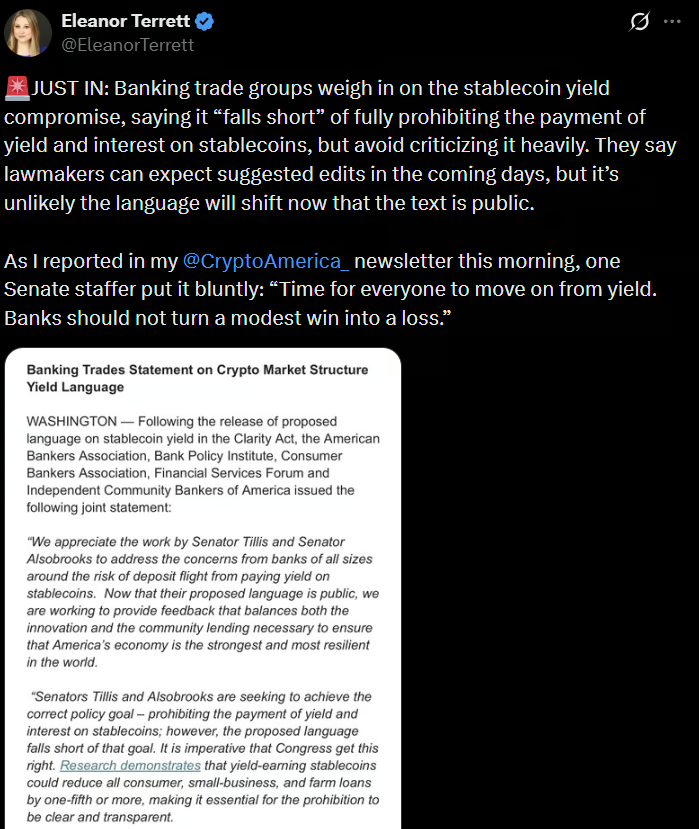
Tennessee Bankers Association Taps Stablecore for Crypto infrastructure

Manchester United reach agreement with Casemiro over contract clause amid transfer speculation

US brings back mandatory military draft registration

Steven Gerrard disagrees with Gary Neville over ‘shock’ Chelsea and Arsenal claim | Football


-

 Business7 days ago
Most Commercial Energy Audits Miss the Real Losses
-

 NewsBeat2 days ago
Channel 5 – All Creatures Great and Small series 7 new post
-

 Fashion7 days ago
Kylie Jenner’s KHY Enters a New Era with ‘Born in LA’
-
 Tech4 days ago
Trump’s 25% EU auto tariff breaches Turnberry Agreement that also covers semiconductors and digital trade
-
 Sports4 days ago
Paul Scholes issues Marcus Rashford reality check as agreement emerges over Man United star
-

 Business6 days ago
Barclay Brothers Avoid Bankruptcy: HSBC Drops High Court Petitions After IVA Deal
-
 Business6 days ago
Tesla Officially Registers Elon Musk’s Stock: What Investors Need to Know
-

 Entertainment6 days ago
Celebrities Who Are Attending the 2026 Met Gala Event
-

 Tech6 days ago
Texas Instruments made a new flagship graphing calculator: the TI-84 Evo
-

 Business5 days ago
Two Powerball Tickets Split $143 Million Jackpot in Indiana and Kansas
-

 Entertainment4 days ago
Met Gala 2026 Rumored Guest List Is Turning Heads
-

 Entertainment6 days ago
Insider Claims Reason Behind Key & Peele Split
-
Business2 days ago
Winning Numbers Drawn as Jackpot Resets to $20 Million
-

 Crypto World6 days ago
Meta (META) starts stablecoin payout to creators in Circle’s USDC on Polygon, Solana via Stripe
-
 Crypto World5 days ago
CoreWeave (CRWV) Stock Climbs 8% Despite $45M Insider Share Dump
-
 Crypto World6 days ago
Securitize and Computershare Enable Tokenized Equity Issuance for Over 25,000 U.S.-Listed Stocks
-

 Business6 days ago
Strait of Hormuz Remains Heavily Restricted on April 29 Amid Iran Conflict
-

 Entertainment4 days ago
Kylie Jenner Hit With Second Lawsuit From Ex-Housekeeper
-

 Crypto World6 days ago
Gibraltar Proposes Tokenized Funds Regulation to Bolster Compliance
-

 Sports6 days ago
Saudi Arabia set to withdraw LIV Golf funding after 2026 season, per reports
You must be logged in to post a comment Login