

Business
Calamos Global Convertible Strategy Q1 2026 Commentary


Calamos Investments is a diversified global investment firm offering innovative investment strategies including U.S. growth equity, global equity, convertible, multi-asset and alternatives. The firm offers strategies through separately managed portfolios, mutual funds, closed-end funds, private funds, an exchange traded fund and UCITS funds. Clients include major corporations, pension funds, endowments, foundations and individuals, as well as the financial advisors and consultants who serve them. Headquartered in the Chicago metropolitan area, the firm also has offices in London, New York and San Francisco. For more information, please visit www.calamos.com.

Business
Russell 2000 Climbs to 2,994.70 as Annual Reconstitution and Iran Diplomacy Boost Small-Cap Rally
The Russell 2000 rose 8.07 points, or 0.27%, to close at 2,994.70, extending a remarkable 2026 rally for small-cap stocks that has been fueled by the index’s annual reconstitution, easing geopolitical tensions, and renewed optimism about Federal Reserve policy.
A Banner Year for Small Caps
The iShares Russell 2000 ETF has given small-cap holders a year worth celebrating. IWM is trading at $296, up 20% year to date and 41% over the trailing 12 months, breaking the three-year range trade that defined the Russell 2000 from 2022 through most of 2025.
That outperformance has been notable relative to large-cap benchmarks throughout the year. The ultra-popular iShares Russell 2000 ETF has gained nearly 19% so far this year as of June 24, 2026, outpacing the gain of 7.4% for the broad market State Street SPDR S&P 500 ETF Trust.
The Annual Reconstitution Reshapes the Index
Much of the recent trading activity surrounding the Russell 2000 has centered on FTSE Russell’s annual index reconstitution, a process that rebuilds the index based on market capitalizations as of May 31 each year. While the changes to Russell Indexes will not take effect until June 26, 2026, FTSE Russell has released preliminary data that allows analysts to estimate their magnitude. With the Russell 3000 Index up 29% over the 12 months through May, many companies have seen significant shifts in market capitalization and may no longer fit their current index assignments. According to FTSE Russell, the maximum cutoff for the small-cap Russell 2000 Index will be $5.7 billion, up from $4.6 billion in 2025 — a 24% jump that reflects the broader expansion of the U.S. equity market over the past year.
A Shift Toward a Semi-Annual Schedule
In a separate structural change to how the index operates going forward, FTSE Russell has announced that the reconstitution of the Russell U.S. Indexes will change from an annual to a semi-annual schedule beginning in 2026, following market consultation with index users.
Growth Evident Across the Market-Cap Spectrum
The scale of the broader market’s expansion has been reflected across companies of every size within the Russell universe. At the top end, Nvidia became the largest company in the Russell universe with a market capitalization of $4.8 trillion, compared with Apple’s $3.2 trillion position as the largest constituent at the June 2025 reconstitution. At the other end of the market, the smallest member of the Russell 2000 increased from $119 million to $146 million.
That growth at the top has translated into unprecedented concentration among the largest companies. All 10 of the largest Russell constituents exceeded $1 trillion in market capitalization at the June 2026 reconstitution, compared with seven companies a year earlier. Collectively, the top 10 companies grew from $17.9 trillion to $26.4 trillion in market capitalization, an increase of 48% since last year’s reconstitution.
New Names Entering the Index
Among the companies set to join the Russell 2000 as part of this year’s changes, several have drawn particular attention from investors positioning ahead of the rebalance. The companies will begin trading on the Russell indexes on Monday, June 29. Sidus Space, an end-to-end space-as-a-service company with a market cap of around $225 million, is one name poised to enter the index, having reported a year-over-year revenue gain of 51% in its first-quarter 2026 results due to new customer contracts.
Why Investors Watch the Rebalance So Closely
Trading on reconstitution days has historically seen massive volumes, with billions changing hands in the final moments of sessions, as passive index funds adjust their holdings to match the newly reconstituted index. Some of the most visible changes occurred at the very top of the Russell U.S. Indexes universe, though preliminary reconstitution data also points to improving breadth across the broader U.S. equity market, with the Russell 2000 outperforming the Russell 1000 over the one-year period ending on rank day.
The Iran Diplomacy Factor
Beyond the technical reconstitution dynamics, easing geopolitical tensions tied to the U.S.-Iran situation have also provided a meaningful tailwind for small-cap stocks specifically. Recent negotiations between the United States and Iran in Switzerland should act as a catalyst for the small-cap space. The United States issued a rollback of Iran oil sanctions, with the broader expectation that if a long-standing deal materializes, the Strait of Hormuz issue may be resolved and ensure safe passage for oil tankers, potentially bringing down energy prices and helping the broader market alongside small-cap stocks specifically.
A Stronger Dollar Has Also Helped
The same geopolitical dynamics have supported the U.S. dollar, which has provided an additional benefit for small-cap companies given their generally more domestically focused business models. As the pint-sized companies and their stocks are more focused on the domestic economy, a stronger U.S. dollar proved favorable for their businesses throughout the year.
Valuation Concerns Persist
Despite the strong performance, some analysts have flagged that small caps now trade at a premium relative to historical norms and even relative to some large-cap benchmarks. Per Wall Street Journal data, the Russell 2000 is currently trading at a price-to-earnings ratio of 38.42 versus the year-ago level of 31.72. The Russell 2000 is trading at a premium to both the Nasdaq 100, at 34.47 times earnings, and the S&P 500, at 25.18 times earnings — a dynamic that shows small caps are now overvalued compared with their bigger peers by at least this measure.
A Softer Reading on Small Business Sentiment
Despite the strong stock market performance, on-the-ground sentiment among small business owners has shown some signs of softening. The NFIB Small Business Optimism Index in the United States fell to 95.3 in May 2026, the lowest since October 2024, compared to 95.9 in April and forecasts of 96 — a divergence between Main Street sentiment and Wall Street’s enthusiasm for small-cap stocks that bears watching in the months ahead.
Looking Ahead to the Second Half of 2026
With the Fed on an extended pause and the annual Russell reconstitution landing this month, IWM holders head into the second half of 2026 with catalysts that will decide whether this rally continues or stalls. If the Fed cuts rates by September and the yield curve steepens, the post-reconstitution Russell 2000 is built to outperform with its heavier financial and cyclical weights. If the Fed stays on hold into 2027 and the curve inverts again, the same rebalance becomes a liability instead
With the final reconstitution changes set to take effect after the June 26 close and new constituents beginning to trade on the Russell indexes starting Monday, June 29, investors will be watching closely for how the index’s shifting composition — toward more financials and regional banks, and away from some outgoing tech and biotech names — affects its sensitivity to interest rate movements going forward. Given the index’s already premium valuation relative to large-cap peers and the softening reading on small business optimism, the durability of this year’s small-cap rally will likely depend heavily on whether the Federal Reserve moves to cut rates in the coming months, as many investors are currently positioning for.


More than 7 years of experience in equity analysis in LatAm. We provide our clients with in-depth research and insights to help them make informed investment decisions.
Analyst’s Disclosure: I/we have no stock, option or similar derivative position in any of the companies mentioned, and no plans to initiate any such positions within the next 72 hours. I wrote this article myself, and it expresses my own opinions. I am not receiving compensation for it (other than from Seeking Alpha). I have no business relationship with any company whose stock is mentioned in this article.
Seeking Alpha’s Disclosure: Past performance is no guarantee of future results. No recommendation or advice is being given as to whether any investment is suitable for a particular investor. Any views or opinions expressed above may not reflect those of Seeking Alpha as a whole. Seeking Alpha is not a licensed securities dealer, broker or US investment adviser or investment bank. Our analysts are third party authors that include both professional investors and individual investors who may not be licensed or certified by any institute or regulatory body.

BlackBerry Limited shares surged more than 21 percent on Thursday, reaching $10.51 as investors responded to positive developments around the company’s cybersecurity offerings and strategic positioning.
The notable gain reflected renewed optimism about BlackBerry’s transformation from its smartphone heritage into a focused cybersecurity and software provider. The company has pivoted successfully toward enterprise security solutions, Internet of Things platforms and automotive software.
BlackBerry’s QNX operating system powers safety-critical systems in vehicles, while its cybersecurity products protect organizations from sophisticated threats. These businesses provide recurring revenue streams less vulnerable to consumer market fluctuations.
The company has reported improving financial metrics as it executes its turnaround strategy. Management emphasizes organic growth, operational efficiency and targeted acquisitions to strengthen its portfolio.
Business Transformation
BlackBerry’s evolution began years ago as smartphone sales declined. The company refocused on software and services, divesting hardware operations to concentrate on high-margin enterprise solutions.
Its cybersecurity platform offers endpoint protection, threat intelligence and secure communications. These tools address growing concerns about ransomware, supply chain attacks and state-sponsored cyber threats.
The QNX real-time operating system maintains a strong position in automotive and industrial applications. BlackBerry has expanded its offerings to include connected vehicle platforms and over-the-air update capabilities.
Recent financial results have shown progress in subscription growth and margin improvement. The company’s ability to convert its installed base into higher-value services supports long-term revenue stability.
Market Position and Competition
BlackBerry operates in competitive cybersecurity and automotive software markets. Its differentiated offerings, built on decades of security expertise, provide advantages in regulated industries and safety-critical applications.
The company’s focus on zero-trust security architecture aligns with evolving enterprise needs. Its solutions emphasize prevention, detection and response across complex digital environments.
In automotive software, BlackBerry competes with specialized providers while leveraging its real-time operating system heritage. The shift toward software-defined vehicles creates opportunities for established technology suppliers.
Strategic partnerships with major automakers and technology companies have expanded BlackBerry’s reach. These collaborations validate its technology and support market penetration.
Investment Considerations
BlackBerry’s recent share price surge reflects investor interest in its turnaround story. The company’s valuation has adjusted to account for its transition and growth prospects in cybersecurity and connected vehicles.
The stock appeals to investors seeking exposure to digital transformation and security trends. Its potential for margin expansion and revenue growth could drive further upside if execution remains strong.
Risks include competition from larger technology firms, execution challenges in new markets and macroeconomic factors affecting enterprise spending. BlackBerry’s success depends on continued innovation and customer adoption.
Analysts generally maintain positive outlooks, citing the company’s technology strengths and market opportunities. However, patience may be required as the transformation continues.
Cybersecurity Industry Trends
The global cybersecurity market continues expanding rapidly due to increasing digitalization and sophisticated threats. Organizations across sectors prioritize protection of critical infrastructure and sensitive data.
BlackBerry’s emphasis on endpoint security and threat intelligence positions it within high-growth segments. Its solutions address both traditional and emerging attack vectors.
Regulatory requirements around data protection and critical infrastructure security create demand for compliant solutions. BlackBerry’s expertise in regulated industries provides competitive advantages.
Artificial intelligence and machine learning integration enhance threat detection and response capabilities. Companies investing in these technologies may gain edges in an evolving threat landscape.
Automotive Software Opportunities
The automotive industry’s shift toward software-defined vehicles creates substantial opportunities for technology providers. BlackBerry’s QNX platform and related offerings target this growing market.
Connected vehicle features, over-the-air updates and autonomous driving systems require robust, secure software foundations. BlackBerry’s experience in safety-critical systems aligns with these requirements.
Partnerships with major automakers demonstrate confidence in its technology. Continued success in this sector could provide significant revenue diversification.
Future Outlook
BlackBerry’s strategic direction focuses on leveraging its security heritage while expanding into adjacent markets. Successful execution could drive sustainable growth and improved profitability.
The company continues investing in research and development to maintain technological leadership. Its ability to innovate while managing costs will influence long-term performance.
Investors will monitor upcoming financial results for progress on key metrics including subscription growth and margin trends. Management guidance will provide insight into execution priorities.
The recent share price movement suggests renewed market interest in BlackBerry’s story. The company’s fundamental progress and market opportunities support potential for continued positive sentiment.
As digital transformation accelerates across industries, BlackBerry’s specialized offerings could see increased demand. Its ability to capitalize on these trends while delivering shareholder value remains central to its investment thesis.

Apple has raised the price of its iPads and MacBooks by as much as 25 per cent, conceding that it can no longer shield customers from the spiralling cost of memory and storage chips, the very components now being hoovered up by the artificial intelligence industry’s relentless data centre build-out.
The increases spare the iPhone, still comfortably the company’s biggest earner. They do, however, land squarely on the MacBook Neo, the entry-level laptop Apple launched to prise market share away from cheaper Windows and Chrome machines. Its starting price has jumped from $599 to $699 just months after it went on sale, blunting much of the pricing advantage that made it such a disruptive proposition in the first place.
That even Apple, a company whose supply-chain muscle is the envy of the technology world, has been forced to act tells you how acute the squeeze has become. The world’s most valuable consumer electronics maker is not immune to a memory price surge that has darkened the outlook for the entire hardware sector.
The numbers behind the retreat are sobering. The research firm IDC expects the global smartphone market to suffer its steepest-ever annual decline this year, falling close to 14 per cent, while the PC market is forecast to shrink by 11.3 per cent. According to IDC’s latest analysis, the memory crisis is the single biggest factor dragging shipments lower, with average selling prices being pushed to record highs even as fewer devices leave the shelves.
The root of the problem lies upstream. Memory makers such as Micron have spent recent months prioritising orders from AI chipmakers like Nvidia, a strategy that has delivered record profits but left precious little supply for the manufacturers of phones, tablets and laptops. Those firms have, in turn, been left with little choice but to raise prices.
Apple did not dress up the situation. “We have never seen a component price increase this much, this quickly,” the company said on Thursday. “We have shielded our customers from these increases so far, but we have now reached a point where we need to begin raising prices on a number of products. We know this is not welcome news, and we are working tirelessly to find solutions.”
The repricing is broad. A MacBook Air with 512 gigabytes of storage has climbed 18 per cent, from $1,099 to $1,299, while the MacBook Pro with 1 terabyte of storage has risen by a similar margin, from $1,699 to $1,999. The sharpest jump falls on an iPad Air with 128 gigabytes of storage, up just over 25 per cent from $599 to $749.
Apple had seen this coming. In April the company said existing inventories had helped it keep gross margins above Wall Street’s expectations, but warned that “significantly higher” memory costs would start to catch up by the end of this month, with profitability expected to dip. On a call with analysts, chief executive Tim Cook was blunt about the road ahead: “Beyond the June quarter, we believe memory costs will drive an increasing impact on our business.” It is a theme we explored when Cook first signalled the rises were unavoidable.
The scale of the underlying shock is extraordinary. The price of dynamic random access memory, or DRAM, found in virtually every modern gadget, rose by as much as 98 per cent in the first quarter of 2026 and is set to climb by a further 58 to 63 per cent this quarter, according to market research from TrendForce, which has repeatedly revised its forecasts upward as the imbalance deepens.
This so-called RAMageddon has been driven by the boom in AI data centre construction, with Nvidia and its peers signing long-term deals to lock in supply. Micron said on Wednesday it had secured $22 billion (£16.7 billion) in such long-term commitments, a sum that underlines just how much capacity is being diverted away from consumer devices and towards the AI build-out, the same demand fuelling the latest generation of AI-focused silicon.
Ben Bajarin, chief executive of the technology consulting firm Creative Strategies, sees little relief on the horizon. “The memory environment is tough and remains structurally tough for the foreseeable future,” he said. “We had already had signals Apple would need to raise prices, and with their supply chain as good as anyone, there is concern the rest of the industry may have to raise prices even more than Apple.”
For Apple, the timing is awkward. The MacBook Neo had helped underpin a bullish sales forecast for the June quarter and prompted some industry watchers to revise their PC estimates upward. It has now surrendered a meaningful chunk of its price advantage over rivals such as the latest Chromebooks from Lenovo and Asus, and the XPS 13 laptop unveiled by Dell last month.
The wider lesson is harder to ignore. If the most formidable buyer in consumer electronics, fresh from posting record iPhone numbers, cannot hold the line on pricing, the smaller manufacturers further down the chain have even less room to manoeuvre. For consumers, and for the small businesses that kit out their teams with this hardware, the era of steadily cheaper computing power may, at least for now, be on pause.

Amy Ingham
Amy is a newly qualified journalist specialising in business journalism at Business Matters with responsibility for news content for what is now the UK’s largest print and online source of current business news.
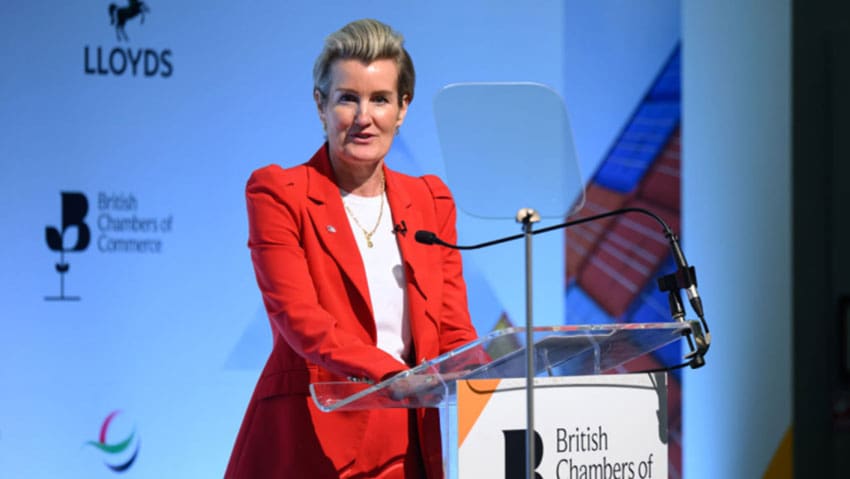
The next prime minister must back companies rather than tax them if Britain is to lift a “cost of doing business crisis” that is throttling growth, the head of the British Chambers of Commerce will warn this week.
Shevaun Haviland, director-general of one of Britain’s big five business lobby groups, will address political and corporate leaders at the BCC’s annual conference in London on Thursday, against a backdrop of mounting speculation that Andy Burnham will enter No 10 next month following Sir Keir Starmer’s resignation on Monday.
Rachel Reeves, the shadow chancellor Sir Mel Stride and Andy Haldane, the BCC president, are also due to speak, alongside senior figures from Reform UK, the Liberal Democrats and the Green Party. Haldane, the Bank of England’s former chief economist, has been appointed to lead the BCC and is understood to be advising Burnham as the Greater Manchester mayor races to build out a policy platform.
Reeves is expected to tell delegates that the government remains focused on delivering economic stability and certainty, and to restate the growth opportunities she set out in her Mais Lecture in March, including the Oxford-Cambridge technology supercluster.
In her own address, Haviland is expected to warn the next administration that further business taxes “would be a road to ruin” and the “quickest way to destroy the fragile confidence that we have left”.
She will say: “The difficult truth is, whoever leads the UK, the primary challenge remains the same: delivering growth. Despite all our strengths, we are failing to fulfil our potential. Businesses can feel it and voters can feel it too.”
Haviland is expected to single out policy choices over the past decade for making “doing business even tougher”. She will say: “At a time of huge economic shocks and global headwinds, successive UK governments have chosen to pile more and more cost on companies. That is no way to run an economy.”
Her intervention chimes with survey evidence showing business confidence sinking to a two-year low amid tax rises and global trade tensions, a backdrop that has left many firms reluctant to commit to new investment.
Haviland will warn that whoever sits in No 10, or the Treasury, must grasp that a lack of confidence is undermining the country’s ambition, ideas, talent and, ultimately, its growth.
“Weak confidence reduces appetite for risk, which reduces investment, which hampers growth, which knocks confidence further,” she will say. “And this circular crisis of confidence is now shackling ambition, blocking the actions needed to invest, innovate and trade.”
She will add: “Businesses can only deliver growth if the environment they operate in gives them the confidence to act. And that is where political leadership can make all the difference.”
The director-general, who leads an organisation representing tens of thousands of companies through its national network of accredited chambers, will also repeat calls for co-operation between government and unions to stop the Employment Rights Act having a “similar confidence crushing effect”.
Her warning lands amid a chorus from other large business groups. The Confederation of British Industry has cautioned this week that the cost of doing business is nearing a “tipping point”, with its leadership pressing for stability and against further tax rises on firms.
The concern across the sector is consistent: that the cumulative weight of taxation and regulation is eroding the very investment the country needs. Research has previously suggested that Reeves’s tax plans risk driving businesses overseas, a flight that would compound rather than cure Britain’s growth problem.
For Haviland, the message to the incoming prime minister is blunt. Growth will not be legislated or taxed into existence; it has to be earned by giving companies a reason to believe again.
Amy Ingham
Amy is a newly qualified journalist specialising in business journalism at Business Matters with responsibility for news content for what is now the UK’s largest print and online source of current business news.

Jonathan Shar
Chief Executive Officer
Good morning, everyone, and thank you for joining us. I’m Jonathan Shar, CEO of Barnes & Noble Education. On behalf of the entire leadership team, we’re excited to welcome you to our Investor Day live from the New York Stock Exchange. During the course of today’s discussion, we’ll provide a deeper look into our business, the transformation underway across BNED, the opportunities we see ahead and how we’re positioning the company to drive long-term shareholder value.
You’ll hear directly from the leaders responsible for executing our strategy. Before we begin, I’d also like to recognize the thousands of BNED employees and our campus partners across the country. Their commitment to serving students, faculty and institutions is what makes our success possible and has positioned the company for the progress we’ll discuss today. Our goal today is simple, to help you better understand why we believe BNED is uniquely positioned at the intersection of higher education, digital learning, omnichannel retail, affordability and student success and why that position creates meaningful opportunities for long-term growth and shareholder value creation.
Before we begin, I’ll briefly note that today’s presentation includes forward-looking statements and references to non-GAAP financial measures. Please review the disclosures contained in this presentation and our SEC filings for additional information regarding risks and assumptions. With that, let’s get started.
I’d like to begin with who we are, what we’ve become and why we believe our position within higher education is stronger today than at any point in our history. I’d also like to introduce the leadership team joining me today: Jason Snagusky, our Chief Financial Officer; Celeste Risimini-Johnson, our


New trends and dietary guidelines are disrupting how the foodservice industry is approaching their menus.
Business
Methode Electronics, Inc. 2026 Q4 – Results – Earnings Call Presentation (NYSE:MEI) 2026-06-25
Q4: 2026-06-24 Earnings Summary
EPS of -$0.30 misses by $0.09
| Revenue of $298.10M (15.95% Y/Y) beats by $59.64M

Seeking Alpha’s transcripts team is responsible for the development of all of our transcript-related projects. We currently publish thousands of quarterly earnings calls per quarter on our site and are continuing to grow and expand our coverage. The purpose of this profile is to allow us to share with our readers new transcript-related developments. Thanks, SA Transcripts Team
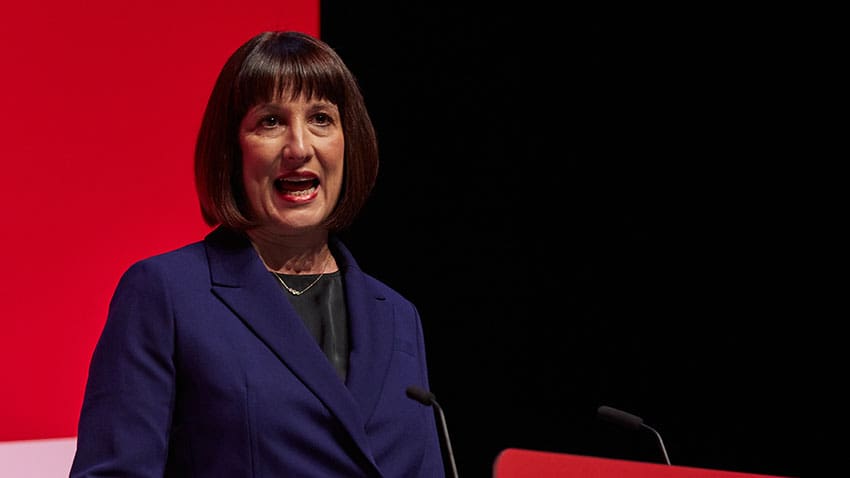
Rachel Reeves has declared that she has “unfinished business” as chancellor, singling out fiscal devolution as the policy she is most determined to see through, in remarks that will be read closely by a business community bracing for a change at the top of government.
Speaking at the British Chambers of Commerce annual conference in London on Thursday, Reeves pointed to the handing of tax-raising powers to local leaders as the area of “unfinished business” she wants to complete. The intervention comes at a delicate moment, with Andy Burnham set to enter Downing Street next month following Sir Keir Starmer’s resignation on Monday, and with the City still guessing over who will take the keys to No 11.
For the SME owners who make up the bulk of the chambers’ membership, the politics matter less than the policy signal. A chancellor talking openly about devolving revenue, and a prime minister-in-waiting who built his reputation on it, points to a meaningful shift in where decisions about local growth, and local taxation, will be taken.
The visitor levy and the case for going local
The former mayor of Greater Manchester is moving quickly to assemble a programme for government that is widely expected to push more powers and revenue away from Westminster. Reeves made clear she is travelling in the same direction.
“The area where there’s certainly unfinished business is on fiscal devolution,” she said. “And I set out in last year’s Budget a consultation, for example, on the visitor levy, which is something that mayoral combined authorities will have responsibility for, moving us more in line with the US and Europe that have single visitor levies on hotel bookings, for example, and then that money being invested in the local area.”
A visitor levy on overnight stays has become one of the more contested ideas in the devolution debate, with metro mayors pressing for the power and parts of the hospitality sector warning about the impact on bookings. The tension was on full display earlier this year when mayoral calls for a hotel ‘tourist tax’ drew a wary response from the hospitality trade.
Reeves indicated her ambitions stretch well beyond hotel rooms. “But beyond that, we are also consulting on devolving some revenues from key taxes, including income tax, but also looking at some business and land taxes and devolving that to a local level so that local leaders who know their areas best can decide where that money is going to be spent.”
The chancellor, the first woman to hold the office, said she intends to set out the detail in this year’s Budget. The direction of travel echoes the government’s own English Devolution White Paper, which created a route for mayors to propose new powers while leaving the Treasury notably cautious on tax.
Reeves stops short on the chancellorship
For all the talk of alignment, Reeves declined to say outright that she wants to keep her job under a Burnham premiership. “When he becomes prime minister, he will make those decisions around the top team around him. But I’m not going to pre-empt those. Those are his decisions,” she said.
She was warmer on the personal and political relationship. “I backed Andy in 2015 as well to be the leader of our party, and I’ve known him for more than a decade and a half, since before I became a member of parliament in 2010. So we’ve worked closely together, but particularly worked closely together the last two years.”
That history sits alongside a wider reshaping of the relationship between the centre and the regions that has been building for some time, with the Treasury and combined authorities edging closer together. Business has already seen that direction in moves such as Reeves’s plan to draw the National Wealth Fund and regional mayors into closer partnership on local growth.
Fiscal rules and the stability message
Mindful of an audience that prizes predictability, Reeves used the platform to reassure business that the incoming prime minister will not loosen the public finances. Burnham, she said, had been “really clear” in his commitment to the fiscal rules.
“That is a good thing because it means that businesses here can be confident that that stability, that rigour to policy-making, that tight grip on the public finances, which is essential for getting inflation and interest rates down, will be continued,” she said.
It is a message pitched squarely at a market still digesting the abrupt change at the top, a backdrop in which business leaders have urged an end to ‘drift and delay’ following Starmer’s exit.
North Sea reserves and energy security
Reeves also restated her support for making greater use of North Sea reserves. “I’ve been very clear that I think that the North Sea is a crucial asset for the UK and that oil and gas will be an important part of our energy mix for years to come,” she said. “And I’m very keen to make sure that we use that resource to ensure our energy security.”
The chancellor spoke ahead of an address by Andy Haldane, the BCC’s president and a former chief economist at the Bank of England, whom Burnham has been consulting as he assembles his policy platform. Senior figures from the other main parties were also due to take the stage, underlining how far the conference has become a staging post for a political contest that businesses will be watching with unusual intensity.

Jamie Young
Jamie is Senior Reporter at Business Matters, bringing over a decade of experience in UK SME business reporting.
Jamie holds a degree in Business Administration and regularly participates in industry conferences and workshops.
When not reporting on the latest business developments, Jamie is passionate about mentoring up-and-coming journalists and entrepreneurs to inspire the next generation of business leaders.

SpaceX shares fell 1.61% to $152.05 on Thursday morning, continuing a volatile stretch since the company’s blockbuster public debut, even as a massively oversubscribed bond offering has removed one of the key risks that had been weighing on the stock in recent days.
A Brutal Three-Day Stretch Before the Bond Deal
The stock’s recent struggles trace back to a sharp, multi-day selloff earlier in the week. SpaceX stock fell before the bell on Tuesday, set to pick up on a three-day run of losses after a massive run-up following its IPO earlier this month. They closed down 16.4% on Monday, the biggest down day for the newly debuted stock, following a 3.6% drop on Thursday and a 5% drop on Wednesday. The three-day losing streak caps a big pop in the stock following its IPO and first day of trade on June 12.
At one point during the stock’s run-up to a high of around $225 a share, SpaceX topped Amazon and even Microsoft to become the fourth-most-valuable public company. The recently listed company launched with a $1.23 trillion market capitalization following its IPO.
What Triggered the Selloff
The catalyst behind the sharp decline was the company’s announcement of its first-ever bond issuance. SpaceX confirmed its first-ever bond sale in a filing, intending to use the net proceeds to repay the outstanding borrowings under its bridge loan facility in full, along with other related fees and expenses. The bridge loan in question was secured earlier this year when SpaceX, led by CEO Elon Musk, acquired Musk’s own xAI startup in February. Per Reuters, Bank of America, Citigroup, JPMorgan Chase, Goldman Sachs, and Morgan Stanley provided the bridge financing and are expected to run the deal.
A Mechanical, Leverage-Driven Decline
Analysts have largely attributed the magnitude of the selloff to technical and leverage dynamics rather than any fundamental deterioration in SpaceX’s business. Saxo Bank’s UK Investor Strategist Neil Wilson suggested the market reaction says far more about how mega-cap technology stocks behave than about SpaceX’s underlying financial health, centering his explanation on passive fund positioning around the time of the offering.
The volatility extended well beyond SpaceX itself. The damage rippled internationally, with the MSCI Asia index falling 2.3%, its largest intraday decline in two weeks, while South Korea’s Kospi dropped more than 8% due to its heavy technology weighting, and Nasdaq futures signaled declines of 1.3% to 1.7% — illustrating just how much a single stock’s volatility can move entire regional markets given current concentration levels.
Overwhelming Demand for the Bonds Themselves
Despite the equity market’s negative reaction, the actual bond offering itself drew extraordinary investor interest. SpaceX’s $25 billion bond offering attracted $89 billion in demand, a 3.5 times oversubscription signaling strong institutional confidence. The five-tranche bond sale received a total of $89 billion in market orders, representing an oversubscription rate of over four times, placing it among the largest U.S. corporate bond issuances on record. The offering was spread across five tranches of senior notes maturing between 2031 and 2056, with interest rates rising from 5.35% on the shortest maturity to 6.65% on the longest.
The Bridge Loan Risk Has Been Resolved
Crucially, the successful bond sale eliminates a specific, hard deadline that had been weighing on the stock. This bond settlement date on June 26 is something to look out for, because once that gets done, the equity will have no more major technical structure to overcome during the week. The September 2027 deadline on the $20 billion bridge loan was the key hard deadline that drove most of the price fall from $225 to $147.11. The bridge loan will be paid off once the June 26 settlement has cleared, meaning that bridge risk is removed entirely. All SpaceX’s debts are now spread across five different maturities ranging from 2031 to 2056, with the nearest one maturing only five years from now.
A Significant Bounce Following the Bond Pricing
Once the bond’s strong demand became clear, the stock staged a notable recovery off its intraday low. Fueled by the enthusiastic demand for its bond offering, SpaceX’s stock price surged over 7% at one point, trading at $163.06 and bringing its market capitalization back to the $2.14 trillion level.
Remaining Concerns Beyond the Bridge Loan
Despite the resolution of the bridge loan risk, several other factors continue to weigh on sentiment toward the stock. Other problems persist, including xAI operating losses, S&P’s free-cash-flow-through-2029 bearish outlook, the stock’s lockup ending in December 2026, and Morningstar’s $62 fair value estimate — though the September 2027 bridge loan cliff is no longer an issue following the bond settlement.
A Dramatic Impact on Elon Musk’s Net Worth
SpaceX’s rocky post-IPO trading, as well as recent weakness in Tesla stock, has also hit CEO Elon Musk’s wealth. The mercurial Musk was the first person to top $1 trillion in wealth following SpaceX’s IPO, but his total net worth on paper has slipped slightly. Bloomberg’s Billionaires Index now lists Musk’s wealth at $957.1 billion, a drop of nearly $360 billion from the high of $1.315 trillion hit in the days after SpaceX’s IPO and market debut.
A New AI Infrastructure Contract
Beyond the bond sale, SpaceX has also continued expanding its presence in artificial intelligence infrastructure through new commercial agreements. The company has signed a $6.3 billion AI infrastructure contract with Reflection AI, expanding its role as a compute provider, with proceeds from the bond sale expected to support that AI infrastructure buildout alongside the bridge loan repayment.
A Company Spanning Three Distinct Business Segments
SpaceX’s Space segment designs, manufactures, and launches reusable rockets to provide access to space, offering launch services using Falcon 9, Falcon Heavy, Starship, and Dragon for both commercial and government customers. The company’s AI segment operates a vertically integrated AI platform spanning the Grok large language model, AI solutions for consumer and enterprise customers, the X social media platform, and AI computational infrastructure. Separately, the company’s Connectivity segment operates Starlink, delivering high-speed, low-latency broadband service in the United States, Ireland, Canada, and internationally. The company was founded in 2002 and is based in Starbase, Texas.
Increased Short Selling Activity
Reflecting the divided sentiment surrounding the stock, bearish positioning has continued to build in recent sessions. Short selling bets against SpaceX have increased following the post-debut share selloff, according to Reuters reporting, suggesting at least some market participants continue betting on further downside even after the bond deal’s strong reception.
A Gap Between the Stock Price and Analyst Targets
Despite the recent volatility, the stock continues trading below where several analysts believe it should be valued. Space Exploration Technologies trades at approximately $154.60, about 18% below the $187.80 analyst price target, with the stock also assessed as trading more than 23% below one firm’s estimated fair value.
With the bond settlement set to clear on June 26 and the September 2027 bridge loan deadline now effectively resolved, SpaceX’s near-term stock trajectory will likely depend on whether investors begin separating the company’s underlying business fundamentals — including its dominant launch market share, growing Starlink subscriber base, and expanding AI infrastructure contracts — from the technical and leverage-driven volatility that has characterized its first weeks as a public company. Given the stock’s continued distance from several analysts’ price targets and the persistent concerns around xAI’s operating losses, SpaceX’s path forward will likely remain closely watched as one of the most consequential and volatile stories in the market through the remainder of 2026.

CoinShares Survey Finds Half of UK Wealth Advisers Can’t See Clients’ Crypto

20 Best Movies on Shudder Right Now (June 2026)

Importance of Financial Management #finance #education #shortsfeed #shortsvideo#moneytips #savings


-

 Fashion6 days ago
Weekend Open Thread: Miami – Corporette.com
-

 Entertainment5 days ago
Renter of Home in Anne Heche Crash Denies Settlement With Son
-
 Sports2 days ago
Two goals and an assist by sheer aura: Cristiano Ronaldo just entered the World Cup chat
-

 Tech3 days ago
Microsoft accidentally kills epic Outlook email threads
-

 Business5 days ago
Soccer-U.S. defends Iran World Cup travel restrictions, says discussions ongoing
-

 Politics5 days ago
Andy Burnham and the meaning of Makerfield
-
Crypto World2 days ago
Bitcoin (BTC) Dips Below $62K, Ethereum (ETH) Plunges 6% Daily: Market Watch
-

 NewsBeat6 days ago
Keir Starmer Allies Question His Chances For No 10
-

 Crypto World2 days ago
Securitize Wraps Roubini's SEC-Registered ETF as Dubai VARA Digital Security
-
Business2 days ago
Entergy settles forward sale agreements, raises $672 million in cash proceeds
-
 Business6 days ago
Wall Street Week Ahead: Investors see Micron earnings as pulse check of AI rally momentum
-
 Crypto World5 days ago
Can Charles Hoskinson Really Rescue Cardano?
-

 Crypto World6 days ago
HIVE shares jump as $220M AI deal speeds Bitcoin mining pivot
-

 Crypto World5 days ago
Jake Chervinsky accuses CME of protecting derivatives monopoly
-

 Entertainment6 days ago
Jose Alvarado Wants Taylor Swift at More Knicks Games
-
 Tech4 days ago
Signal’s Meredith Whittaker says AI chatbots ‘are not your friends’ and calls Copilot agents a backdoor
-

 Sports7 hours ago
India vs Bangladesh LIVE Score, Women’s T20 World Cup: Bangladesh Opt To Bat; India Enter ‘Do-Or-Die’ Stage As Semi-Final Race Heats Up
-

 Tech3 days ago
Nearly 7,000 fake Amazon domains registered ahead of Prime Day 2026, researchers warn
-

 Sports7 days ago
FIFA World Cup 2026: Canada beat 9-men Qatar 6-0 to register first ever win | FIFA World Cup 2026
-

 Business7 days ago
Brexit cost 6% of UK economy, Bank of England company data suggests
You must be logged in to post a comment Login