Connect with us
DAPA Banner
DAPA Coin
DAPA
COIN PAYMENT ASSET
PRIVACY · BLOCKDAG · HOMOMORPHIC ENCRYPTION · RUST
ElGamal Encrypted MINE DAPA
🚫 GENESIS SOLD OUT
DAPAPAY COMING

Business

Can AI Chatbots Pick Stock Market Winners?

Published

on

Can AI Chatbots Pick Stock Market Winners?

Taxi drivers, stockbrokers and the bloke propping up the bar at your local have all, at one time or another, served as a source of share tips. Now there is a fresh seam of supposed wisdom for retail investors to mine: chatbots such as ChatGPT and Claude.

These artificial intelligence tools, known in the trade as large language models (LLMs), are increasingly being pressed into service by amateur and professional investors alike to generate investment ideas. Yet for all the awe AI has inspired, the jury is still out on whether the machines are actually any good at making money.

Back in 1973, the academic Burton Malkiel argued in his now-famous book that a blindfolded monkey throwing darts at the financial pages of a newspaper could pick a portfolio just as profitable as one chosen by highly paid professionals. His point, the bedrock of the efficient market hypothesis, was that returns on the stock market are essentially random and unpredictable, and that nobody can hold a lasting edge over anyone else.

The notion that LLMs might be superior stock pickers to humans would, of course, blow a hole in that theory. A clutch of start-ups has already set AI to work trading and investing, with markedly mixed results.

According to a recent test run by the US research lab Nof1, six of the eight most popular AI models lost money investing in American technology shares. Anthropic’s Claude Sonnet shed almost 60 per cent of its initial $10,000 (£7,500) stake, while Google’s Gemini gave up more than $5,000. Only two came out ahead: ChatGPT, which made nearly $900, and Elon Musk’s Grok, which roughly broke even.

Advertisement

To the technology’s believers, however, it is only a matter of time before LLMs start besting the very best of Wall Street.

Faizan Ahmad, a former Meta engineer, is co-founder of Rallies, a start-up that uses AI to help people choose shares. His own experiments have thrown up some eyebrow-raising results, with the machines displaying a flash of ingenuity in navigating choppy markets.

Claude, for instance, deftly handled the fallout from the conflict with Iran by rotating out of growth shares and into defence stocks. ChatGPT, meanwhile, plumped for Credo Technology Group, a high-speed connectivity firm, as a likely beneficiary of the global build-out of internet infrastructure around seven months ago. The shares have since climbed by more than 75 per cent.

“No one had heard about that stock, and I hadn’t,” says Ahmad. “That stock was starting to show very early signs of becoming core to Nvidia’s and other players’ infrastructure.

Advertisement

“These models get access to all of the research and can go through entire SEC [US Securities and Exchange Commission] filings. The ability to parse a plethora of information and then find a stock that actually went up quite a lot was amazing.”

Rallies has launched its AI portfolios on a service that lets retail traders copy its trades. It now has $10m of retail money shadowing ChatGPT’s picks and $14m across all of its AI portfolios. And it is not only the small investor taking an interest.

Far from the living rooms and box bedrooms of ordinary punters, the gleaming towers of the City and the professional money men are dabbling too. Algorithmic trading has long been a feature of institutional investing, a subject Michael Lewis brought to wider attention with his 2014 book Flash Boys, but the arrival of LLMs has now piqued the interest of hedge funds.

At Man Group, the world’s largest listed hedge fund, LLMs have already been behind a number of profitable trade ideas.

Advertisement

“We have, right now, several examples where we’ve had an idea proposed by an LLM and have passed it through our diligence process before ultimately being accepted by the investment committee,” says Tushara Fernando, head of data and AI at the firm. “If it can come up with an accepted proposal, that’s fantastic, and then the resulting code goes into production and can trade real money.”

Unlike some of the start-ups letting AI loose unsupervised, Man uses the technology to generate ideas that still require a human stamp of approval. Even so, Fernando says the sheer speed of LLMs lets fund managers kick around far more ideas than they otherwise could.

“[A fund manager] might previously have tested two to three investment ideas a day, for example, modelling different scenarios with the aim of proving out new trades,” he says. “Now they’re able to explore and backtest hundreds in a very short space of time. While they’ve gone for a coffee, the agent’s running a backtest, which uses historical data to evaluate how a potential trade would likely perform under differing conditions.”

Many of the largest hedge funds were early adopters of AI and machine learning long before LLMs went mainstream. Bridgewater Associates, the US fund founded by Ray Dalio, launched a vehicle using machine learning as the primary basis of its decision-making two years ago. In 2018, Two Sigma poached Mike Schuster, an AI specialist, from Google’s Brain team to spearhead its efforts.

Advertisement

Balyasny Asset Management, one of the biggest hedge funds in the US, said recently that 95 per cent of its investment teams were using OpenAI. Agents are set to work analysing and synthesising tens of thousands of documents, from company filings to research notes and earnings reports. The firm has also used AI to monitor and update the probability of mergers and acquisitions completing, and to dissect speeches by central bankers. Balyasny said the technology had slashed the time taken to work out the economic implications of those speeches from two days to 30 minutes.

Unsurprisingly, simply having access to the latest and greatest models is not enough. It is proprietary data that gives the hedge funds their edge. Anthropic announced a partnership with Man Group in February to deploy its Claude model across the firm’s investment process, both to surface new insights from data and to speed up coding tasks.

That, though, presents its own headache for firms such as Man, which must bolt cutting-edge LLMs onto their own highly sophisticated technology stacks.

“LLMs are fantastic at using public knowledge. They may know the last 12 songs on the Taylor Swift album and how to solve a Rubik’s cube, but they don’t know Man Group: our strategies, how much we trade, or our databases or execution platform,” says Gary Collier, chief technology officer at Man Group.

Advertisement

For the largest and most established hedge funds, then, people remain firmly at the controls. Ahmad, who intends to launch a hedge fund through Rallies in due course, is convinced that fully AI-managed funds are not far off.

“We are very bullish that eventually, three or two years down the line, there are going to be hedge funds that are entirely run by AI, that are provided with data and anything the models need, which then go ahead and trade,” he says.

Forget the cabbie’s hot tip. The AI chatbot, it seems, may yet become the next font of all stock-picking wisdom. Whether it proves any more reliable than Malkiel’s dart-throwing monkey is, for now, anyone’s guess.

With AI now driving the lion’s share of global trading volume, the technology’s grip on markets is only tightening. For context on the wider boom, see how Britain’s AI investment hit a record £8.3bn and why Big Short investor Michael Burry is betting $1.1bn against AI stocks.

Advertisement

Jamie Young

Jamie Young

Jamie is Senior Reporter at Business Matters, bringing over a decade of experience in UK SME business reporting.
Jamie holds a degree in Business Administration and regularly participates in industry conferences and workshops.

When not reporting on the latest business developments, Jamie is passionate about mentoring up-and-coming journalists and entrepreneurs to inspire the next generation of business leaders.

Advertisement
Continue Reading
Click to comment

You must be logged in to post a comment Login

Leave a Reply

Business

Biggest ever US clean energy project is complete after nearly two decades

Published

on

Biggest ever US clean energy project is complete after nearly two decades


Biggest ever US clean energy project is complete after nearly two decades

Continue Reading

Business

USD/THB Overbought Signals Mask Persistent Upside Risks, OCBC Warns

Published

on

Thailand tightens regulations on large cash withdrawals in a new crackdown on grey funds

OCBC analysis suggests that while the USD/THB exchange rate shows critical overbought signals, there are still significant upside risks that should be considered.


Key Points

  • OCBC’s analysis on the USD/THB exchange rate highlights critical overbought signals indicating a potential correction.
  • Despite these signals, the report emphasizes ongoing upside risks for the USD/THB rate, suggesting that the potential for further increases remains significant.
  • Investors are advised to stay cautious, as market conditions may still favor the US dollar against the Thai baht.

Current Market Conditions

The analysis from OCBC highlights the current state of the USD/THB exchange rate, signaling critical overbought conditions that may obscure underlying risks. The increasing value of the USD against the Thai Baht (THB) is underpinned by a combination of global economic factors and local monetary policies. These factors are pushing the exchange rate further, attracting both domestic and international interest. Despite these indicators pointing towards a potential market correction, the rising demand for the USD suggests that such a correction may not materialize in the immediate term, thus lifting the volatility in the currency pair.

Future Projections

Looking ahead, OCBC emphasizes that while overbought signals indicate a potential slowdown for the USD/THB, there remains persistent upside risk. Economic resilience in the U.S. continues to exert pressure on the Asian currencies, including the THB. Trade dynamics and capital flows, influenced by the economic strategies of the U.S. and Thailand, could impact the exchange rate significantly. Investors should be cautious; the interplay of these forces means that even amidst overbought conditions, the USD may still experience upward momentum.

Strategic Implications for Investors

Investors aiming to navigate the fluctuations in the USD/THB exchange rate should take into account the complex dynamics at play. The analysis suggests that careful monitoring is essential; overbought conditions may provide limited short-term opportunities for profit-taking, but downside risks remain pronounced. As both domestic economic data and global developments unfold, investors must remain adaptable, ready to respond to new information that could influence the long-term trajectory of the USD/THB. Strategizing with risk management in mind will be essential to capitalize on potential market shifts while safeguarding against unforeseen losses.

Source : Critical Overbought Signals Mask Persistent Upside Risks – OCBC Analysis

Advertisement

Continue Reading

Business

Daveigh Chase, Child Star Who Voiced Lilo and Terrified Audiences in ‘The Ring,’ Dies at 35

Published

on

Selena Gomez

Daveigh Chase, the actress who gave voice to one of Disney animation’s most beloved characters while simultaneously terrifying moviegoers as a horror icon, died Tuesday in Los Angeles. She was 35.

Her boyfriend, Roy Hernandez, confirmed her death, saying Chase died from meningitis and an infection in her blood that caused septic complications and ultimately led to her body shutting down. Her father also confirmed her death to the New York Times, saying she had been homeless and living in Los Angeles with her boyfriend and that she had been struggling with drugs since the age of 13.

Chase had been admitted to a hospital in Los Angeles earlier this month due to malnutrition. Her boyfriend had recently set up a GoFundMe page for the ailing Chase, in which he wrote that she had been diagnosed with meningitis and several serious blood infections and that her condition had become critical.

In the GoFundMe page, Hernandez acknowledged that Chase had experienced a difficult childhood and a painful falling out with her family, and that she had struggled to find safety and happiness in downtown Los Angeles. He wrote that when the two met, he promised to protect her and give her the love and comfort she deserved, and that together they had found moments of happiness and hope.

Advertisement

Born in Las Vegas and raised in Albany, Oregon, Chase launched her career as a child actor at age seven, when she appeared in commercials. She won the role of Lilo the following year, at the age of eight.

That role would define her legacy. Chase voiced Lilo in the hit Disney animated film “Lilo & Stitch” in 2002 and the follow-up television series. The film, a heartfelt story of a lonely Hawaiian girl and an alien creature she adopts as a pet, became a cultural phenomenon and one of Disney’s most enduring properties. For her voice work, Chase won an Annie Award for outstanding voice acting in an animated feature production.

That same year, Chase delivered what would become one of the most chilling performances in American horror history. In Gore Verbinski’s 2002 horror hit “The Ring,” Chase played Samara Morgan, the lank-haired supernatural antagonist whose image — a small pale girl emerging from a television set — became one of the most iconic visuals in the genre. At just 12 years old, Chase was named Best Villain at the 2003 MTV Movie Awards, beating out Willem Dafoe, Daniel Day-Lewis, and Colin Farrell. Her performance was also featured as archival footage in the 2005 sequel “The Ring Two” and 2017’s “Rings.”

The feat of delivering two such culturally distinct and memorable performances in the same year — one joyful and one terrifying — was a testament to Chase’s range as a young performer.

Advertisement

Chase also voiced Chihiro Ogino in the American dub of the acclaimed Studio Ghibli film “Spirited Away,” further cementing her status as one of the most recognizable voice actresses of her generation.

Chase also played Samantha Darko, the younger sister of Jake Gyllenhaal’s lead character in “Donnie Darko,” and she starred in the direct-to-video sequel “S. Darko” in 2009.

Beginning in 2006, Chase earned a recurring role in the HBO drama series “Big Love,” which follows a fundamentalist, polygamist Mormon family. She played Rhonda Volmer in 32 episodes of the series during its five-season run.

Her other television credits included “Betsy’s Kindergarten Adventures” on PBS Kids, as well as appearances on “Sabrina the Teenage Witch” and “ER.” Her last acting roles came in 2016.

Advertisement

In the GoFundMe page, Hernandez also referred to various other difficulties encountered by Chase over the years, including bullying and a falling out with her family. In the years after her acting career wound down, she largely withdrew from public life.

The news of Chase’s death drew an immediate outpouring of grief from fans across social media, many of whom grew up with her performances as both Lilo and Samara as formative cinematic experiences. Letterboxd, the popular film social network, marked her passing with a tribute post.

Chase is being remembered for her performances in “The Ring,” “Lilo & Stitch,” “Big Love,” and “Donnie Darko,” as well as for her voice role in the English dub of “Spirited Away.” She leaves behind a body of work that touched multiple generations of film and television audiences, spanning the full spectrum from animated enchantment to horror iconography — a rare duality that few actors at any age have managed to achieve.

Daveigh Elizabeth Chase was born July 24, 1990. She was 35.

Advertisement
Continue Reading

Business

The one question every investor should answer before buying their very first ETF

Published

on

Why this small-cap Russell 2000 ETF is beating all major indexes in 2026

Exchange-traded funds (ETFs) are great investment vehicles for gaining instant exposure to different sectors at prices often lower than those of some of the ETF’s top stock holdings.

For example, Space Exploration Technologies, or SpaceX, closed its first day of trading at just under $161. But the Tema Space Innovators ETF, which holds SpaceX and other space-related investments, is trading below $35 per share.

Advertisement

That said, with so many different options to choose from, there’s one key question to consider before adding the first ETF into any portfolio.

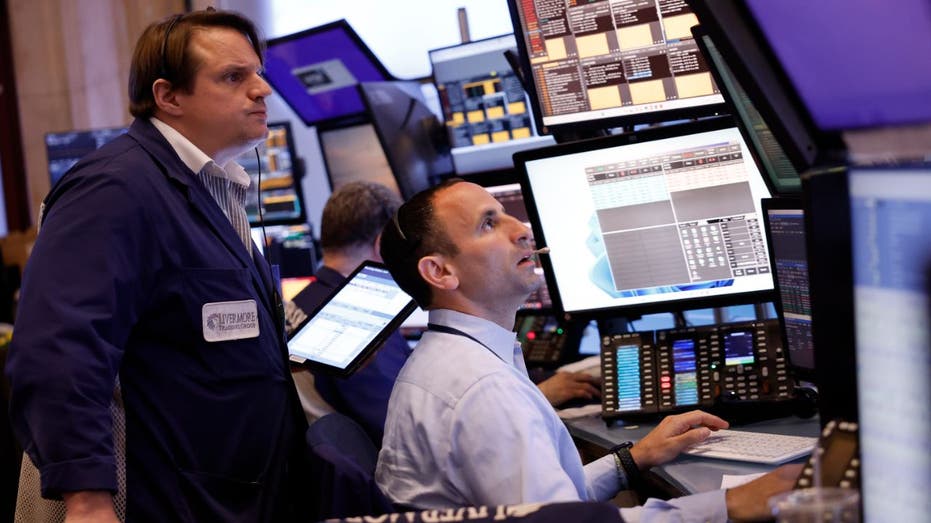
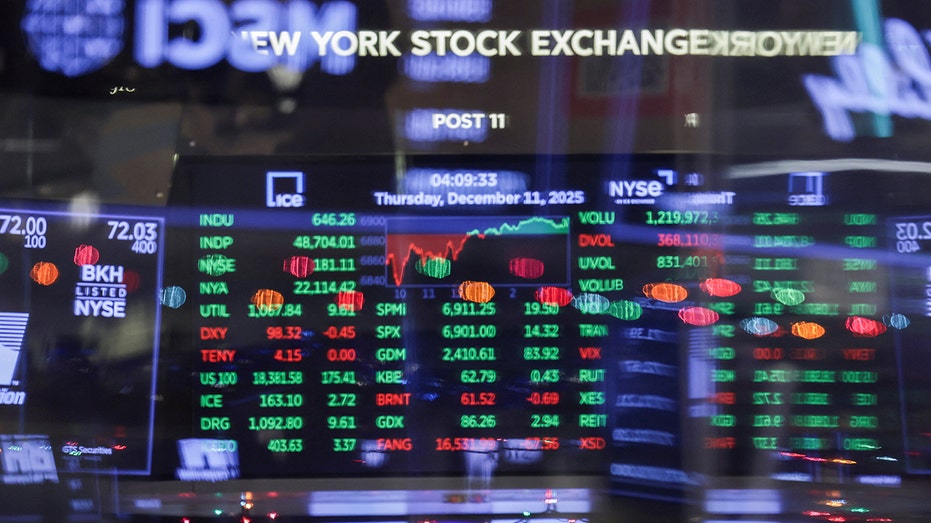
Traders at the NYSE in lower Manhattan monitoring a volatile trading day.

U.S. stocks hover near record highs, along with metals including silver and gold.  (Michael M. Santiago/Getty Images)

The biggest question to ask yourself

The question to answer before buying an ETF is, “What role is this ETF going to serve in my portfolio?”

5 SIMPLE ETFS TO BUY WITH $500 AND HOLD FOR A LIFETIME

For example, an investor may want to generate more income. With that goal in mind, one investment to consider is the Schwab U.S. Dividend Equity ETF, which tracks U.S. companies with high dividend yields. That ETF pays a dividend that yields above 3%. For investors seeking greater access to theme-based investing with higher price appreciation potential, there are ETFs focused on sectors like artificial intelligence (AI).

Advertisement

COULD THE VANGUARD S&P 500 ETF BE YOUR TICKET TO BECOMING A STOCK MARKET MILLIONAIRE?

Ticker Security Last Change Change %
SCHD SCHWAB STRATEGIC TR US DIVIDEND EQUITY ETF 31.86 -0.07 -0.22%
VTI VANGUARD TOTAL STOCK MARKET ETF – USD DIS 369.99 +4.23 +1.16%

When it comes to the very first ETF to add to a portfolio, however, the Vanguard Total Stock Market ETF offers a strong starting point. Its investment philosophy is straightforward and has helped investors build long-term wealth.

How the Vanguard Total Market ETF operates

The Vanguard Total Stock Market ETF is designed to track the CRSP U.S. Market index, which represents 100% of the investable U.S. stock market. Its holdings include large-, mid-, and small-cap stocks, with those holdings totaling nearly 3,500. Nvidia is the top holding, with a portfolio weight of 6.6%.

A screen displays the Dow Jones Industrial Average

The question to answer before buying an ETF is, “What role is this ETF going to serve in my portfolio?” (Reuters/Jeenah Moon)

1 UNDER-THE-RADAR ETF TO INVEST $1,000 IN RIGHT NOW THAT’S OUTPERFORMING MAJOR INDEXES THIS YEAR

Advertisement

It’s a tech-heavy ETF, however, so this may not be a fit for investors who already have heavy exposure to tech stocks. Still, this ETF offers massive diversification, a history of steady returns, and a dividend payout. As of May 31, the Vanguard Total Stock Market ETF is up over 308% over the last 10 years, and its dividend yield is 1%, boosting that total return potential.

Jack Delaney has no position in any of the stocks mentioned. The Motley Fool has positions in and recommends Nvidia. The Motley Fool has a disclosure policy.

Continue Reading

Business

Waymo recalls robotaxi fleet after construction-zone freeway incidents

Published

on

Waymo recalls robotaxi fleet after construction-zone freeway incidents

Waymo is recalling nearly 4,000 robotaxis after more than a dozen incidents in which the autonomous vehicles entered closed freeway construction zones, according to a National Highway Traffic Safety Administration (NHTSA) recall report.

The recall affects 3,871 vehicles equipped with Waymo’s 5th Generation Automated Driving System.

Advertisement

According to NHTSA, the software issue could allow a vehicle to enter a closed freeway construction zone and continue traveling at posted speeds. Regulators said affected vehicles may avoid or fail to recognize certain construction-zone closures because of the software defect.

Waymo estimates that all 3,871 vehicles covered by the recall are affected.

WAYMO PAUSES FREEWAY ROBOTAXI ROUTES AFTER SAFETY AND SOFTWARE CONCERNS

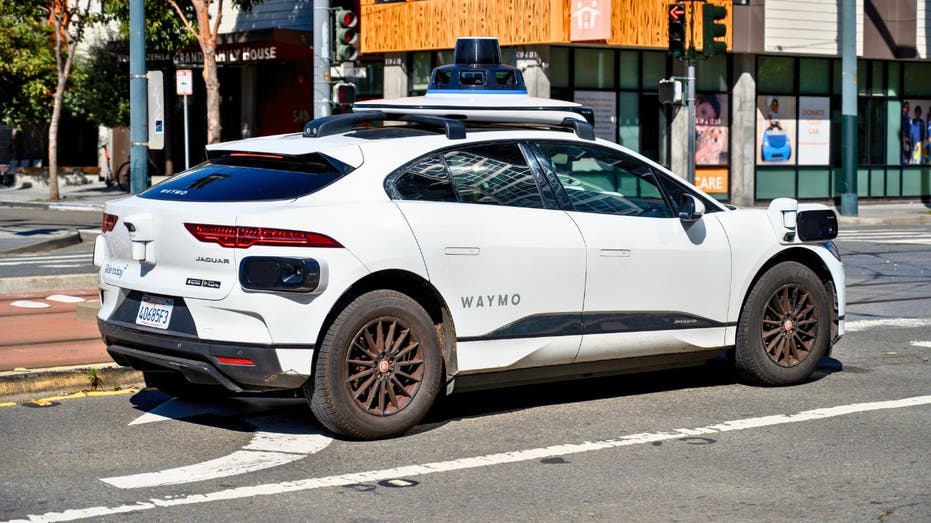
Waymo Jaguar I-PACE autonomous SUV waits at an intersection in San Francisco

A Waymo self-driving Jaguar I-PACE SUV waits at an intersection in San Francisco, March 18, 2025. (Smith Collection/Gado/Getty Images / Getty Images)

According to the recall report, Waymo’s Field Safety Committee began reviewing the issue in late April after examining six incidents in which robotaxis drove past ramp closure signs and entered freeway construction zones.

Advertisement

The committee met again in May after identifying seven additional instances involving active construction zones in the San Francisco Bay Area.

As a result of the 13 reported incidents, Waymo implemented freeway-driving restrictions while engineers worked to identify the root cause and develop a remedy, according to the filing.

The recall covers Waymo 5th Generation Automated Driving Systems manufactured between May 17, 2022, and May 19, 2026. As of June 13, a software remedy remained under development, according to the filing.

WAYMO RECALLS MASSIVE AUTONOMOUS FLEET AFTER INCIDENT FLAGS MAJOR SAFETY ISSUE

Advertisement
Waymo legacy minivan

Waymo’s legacy fully autonomous Chrysler Pacifica Hybrid minivan.  (Waymo / Fox News)

Waymo currently operates driverless ride-hailing services in cities including San Francisco, Los Angeles, Phoenix and Austin, and has announced plans to expand into additional markets.

Ticker Security Last Change Change %
GOOG ALPHABET INC. 367.46 +5.36 +1.48%

GET FOX BUSINESS ON THE GO BY CLICKING HERE

A Waymo spokesperson told FOX Business the company voluntarily restricted freeway operations while making improvements, notified regulators and filed a voluntary recall with NHTSA.

“We identified an area of improvement regarding performance around freeway construction zones,” the spokesperson said.

Advertisement
Continue Reading

Business

Rumble's Transformation Is A Risky Bet

Published

on

Rumble's Transformation Is A Risky Bet

Rumble's Transformation Is A Risky Bet

Continue Reading

Business

YIT Oyj (YITYY) Discusses Residential CEE Segment Performance and Market Outlook Transcript

Published

on

OneWater Marine Inc. (ONEW) Q1 2026 Earnings Call Transcript

YIT Oyj (YITYY) Discusses Residential CEE Segment Performance and Market Outlook June 17, 2026 8:00 PM EDT

Company Participants

Essi Nikitin – Vice President of Investor Relations
Markus Pietikainen – Interim CFO, Member of Group Management Team and Senior VP of Treasury and M&A
Heikki Vuorenmaa – CEO, President, Interim EVP of Residential Finland Segment & Member of Group Man. Team

Conference Call Participants

Advertisement

Atte Jortikka – Inderes Oyj, Research Division
Svante Krokfors – Nordea Markets, Research Division
Anssi Raussi – SEB, Research Division

Presentation

Essi Nikitin
Vice President of Investor Relations

Advertisement

Okay. I think we can start. So hi, everyone, and welcome to YIT’s analyst call preceding the silent period of our half year 2026 results release.

My name is Essi Nikitin, and I’m heading the Investor Relations at YIT. Together with me today, I have our Interim CFO, Markus Pietikainen; and our CEO, Heikki Vuorenmaa on the line. As usual, we will start with a recap to recent developments in the company presented by Markus. And after that, the participants will have an opportunity to ask questions from Markus and Heikki.

As a reminder, this call will be recorded, and the recording will be published on our website after the call. At this point, I hand over to Markus. Please go ahead.

Advertisement

Markus Pietikainen
Interim CFO, Member of Group Management Team and Senior VP of Treasury and M&A

Thank you, Essi, and good afternoon, everyone. Let’s proceed with the silent call for the second quarter ’26. First, a short update on our businesses, starting with residential CEE business. As a recap, our residential CEE segment continued to perform well in the first quarter of the year with a steady growth in both revenue and profit, and this segment has become a clear profit driver for the group. The year began with healthy margins, showing the quality of the new projects we launched in 2025.

Advertisement
Continue Reading

Business

Digimarc CEO Riley McCormack-linked entities sell $1.2m in shares

Published

on


Digimarc CEO Riley McCormack-linked entities sell $1.2m in shares

Continue Reading

Business

Reeves Warned Over Stealth Tax as 1 Million Pensioners Face Income Tax

Published

on

Reeves Warned Over Stealth Tax as 1 Million Pensioners Face Income Tax

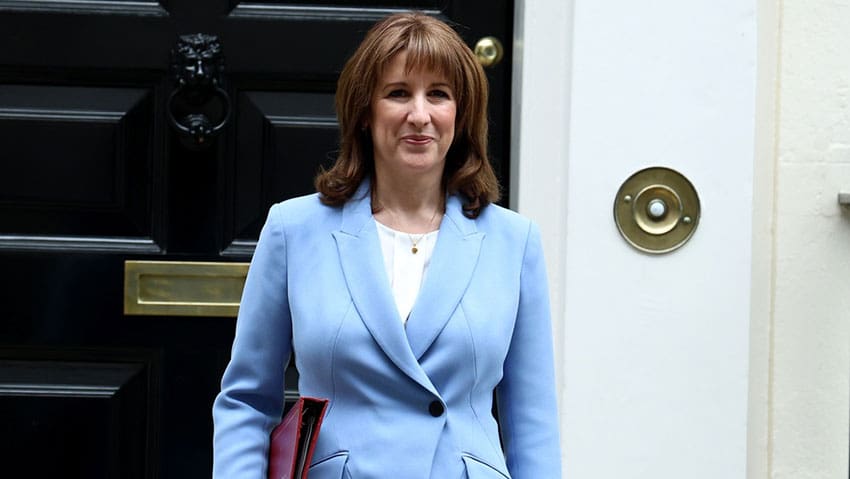
Rachel Reeves has been told that ministers cannot “act surprised” when pensioners start asking why retirement now comes with a larger tax bill.

The warning lands as fresh forecasts show an additional one million pensioners will be drawn into the income tax system by 2030-31, with frozen thresholds doing the quiet work that a headline rate rise would do in plain sight.

The Chancellor has faced sustained criticism over the decision to hold income tax thresholds at their current levels until 2031, a policy that opponents have repeatedly branded a “stealth tax” on older people. For a generation of savers who assumed the worst of the tax man was behind them, the effect is the same as a rate increase, just without the politics of announcing one.

Projections from the Office for Budget Responsibility, published alongside the Spring Statement, suggest the threshold freeze will pull an extra one million pensioners into paying income tax over the next four years. The OBR estimates that 600,000 additional state pension recipients will become liable by 2026-27, climbing to one million by 2030-31. It is a textbook case of fiscal drag: the personal allowance stays put at £12,570 while the state pension keeps rising under the triple lock, and the gap between the two slowly closes until it disappears.

The mechanics matter because they are so easily missed. As Business Matters has reported, 420,000 more pensioners were dragged into the income tax net this financial year alone as the freeze bit harder, taking the total well past eight million. The direction of travel is clear, and it is one way.

Advertisement

The issue reached the Commons on Monday following a public petition that gathered 119,206 signatures before closing on 1 April. It called for a new tax code that would double the £12,570 personal allowance for state pensioners, on the grounds that more retirees are being caught by the tax system precisely because their pension is going up.

During the debate, Conservative MP Alison Griffiths argued that pensioners could see the effect of the policy perfectly well without any help from the Treasury.

“The Government regularly tell people that they have not increased income tax rates,” she told MPs. “However, pensioners, who are a savvy bunch, can see exactly what is happening. They do not need a Treasury briefing to understand where more of their income is being taxed each year.”

She added: “The Chancellor chose to extend the freeze in the personal allowance until 2031. That was a political choice. It means that more pensioners will continue to be drawn into the tax system year after year. Ministers cannot make that decision and then act surprised when pensioners ask questions about fairness.”

Advertisement

Ms Griffiths reserved particular concern for the uncertainty still hanging over the system. Last year’s Budget promised that pensioners relying solely on the state pension would be spared the hassle of small tax bills through Simple Assessment from 2027, but she said her constituents remain unclear about who qualifies and how the process will actually work.

Liberal Democrat MP Charlie Maynard went further, condemning the freeze as “both wrong and unfair” and accusing the government of running a stealth tax that falls hardest on the lowest paid and most vulnerable. “An estimated 600,000 people were dragged into paying income tax for the first time this April and a further 580,000 were pulled into the higher 40p rate,” he said, describing such measures as “dishonest with voters”. He urged ministers to drop stealth tax policies at a time when cost of living pressures are squeezing households at every stage of life.

Conservative MP John Lamont, meanwhile, challenged the comfortable assumption that pensioners are uniformly well off, telling the House that while it may be true of a small minority, it does not reflect the reality for most.

The Treasury defended its position. “Anyone whose only income is the full new or basic State Pension without any increments will not pay income tax and we are committed to that over this Parliament,” a spokesperson said. The department pointed out that 12 million pensioners would see their income rise by up to £470 this year through the triple lock, while still benefiting from the highest personal allowance in the G7.

Advertisement

The government has also pledged to ease the administrative burden for pensioners whose sole income is the basic or new state pension, promising they will not face small tax demands through Simple Assessment from 2027-28 should the state pension tip over the personal allowance threshold. Ministers say they are still working out how best to deliver that change and will set out more detail next year.

For now, the awkward arithmetic remains. The triple lock pushes the state pension up, the personal allowance stays frozen, and the space between them narrows each year. As analysis from the Institute for Fiscal Studies and others has shown, freezing thresholds is one of the most lucrative levers a Chancellor can pull, which is precisely why it is so hard to give up. Business Matters has previously examined how this stealth tax raid is reshaping the finances of older households, and the political cost of taxing state pensions despite repeated pledges not to is only growing.

The message from Monday’s debate was blunt. The freeze is a choice, the consequences are predictable, and ministers should not expect retirees to be fooled by the absence of a number on a manifesto.


Jamie Young

Jamie Young

Jamie is Senior Reporter at Business Matters, bringing over a decade of experience in UK SME business reporting.
Jamie holds a degree in Business Administration and regularly participates in industry conferences and workshops.

When not reporting on the latest business developments, Jamie is passionate about mentoring up-and-coming journalists and entrepreneurs to inspire the next generation of business leaders.

Advertisement

Continue Reading

Business

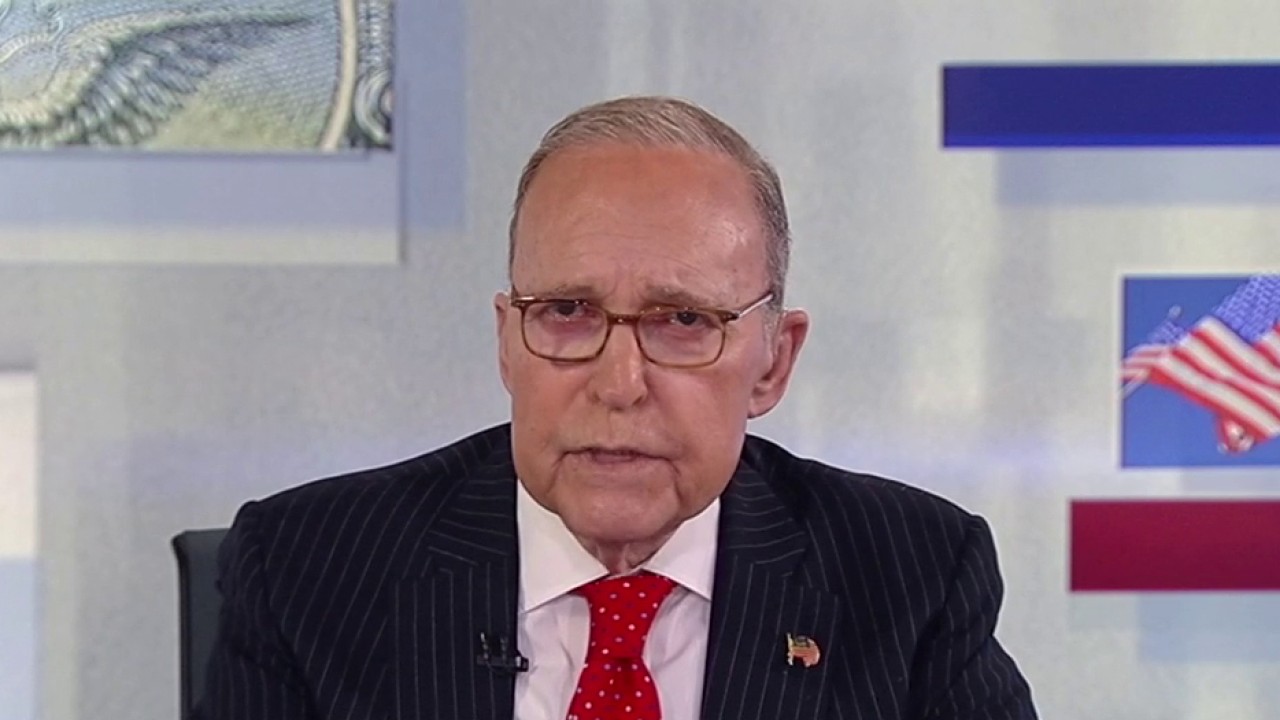
LARRY KUDLOW: Trump and Warsh, in Different Ways, Are Both Promoting Really Good News

Published

on

LARRY KUDLOW: Trump has never ruled out military action, which now looks more likely

One of the most telling statements from President Trump at this week’s G-7 meeting was how worried he was about a potential economic catastrophe related to the Iran war and the closing of the Strait of Hormuz. And equally telling, the president referred to the stock market as a key barometer of the economy.

This is very similar to over a year ago when he modified his original liberation day tariff schedules because the stock market tanked badly after his speech. So he made adjustments.

Advertisement

And I can tell you with my own experience when I worked at the National Economic Council in the first term, however many 100 times I was in the oval, he always asked about the stock market when he saw me coming in. 

It’s an interesting point of view. And it’s a kind of old-fashioned point of view. Because business and financial economists used to use the stock market as a key barometer of the economy.  

Leftists hate this, and unfortunately, today’s Wall Street is heavily populated by leftists, particularly the economists. Not all of them. But most of them.

Advertisement

So anyway, the president didn’t want to be remembered as Herbert Hoover. And here’s exactly what he did say on Wednesday in France:

“So the one thing I didn’t want to see is I didn’t want to see economic catastrophe. If you kept this going, that could have happened. But all I know is, every time we talked about the possibility of peace, the stock market shot up like a rocket ship. It never went down. They didn’t like it.” 

Mr. Trump added that “the stock market is more brilliant than anybody there is, including the people on this stage other than me, of course. Rather than possibly going into a depression, rather than having your favorite president be Herbert Hoover, who was always the one I didn’t want to be.”

I think that’s very important and very instructive on his thinking. I’m gonna get to the masterful, maiden voyage of the Fed chairman, Kevin Warsh, in just a moment, but I want to add from Mr. Trump’s Truth Social post this morning:

“OIL IS FLOWING, IRAN CAN NEVER HAVE A NUCLEAR WEAPON (THE WORLD WILL BE SAFE), THE STOCK MARKETS ARE ROARING, JOBS ARE AT RECORDS, AND PRICES ARE DROPPING (AFFORDABILITY). OUR COUNTRY IS STRONG, SAFE, AND RESPECTED LIKE NEVER BEFORE.” 

Mr. Trump concluded: “YOU’RE WELCOME.”

So now, Mr. Warsh made clear in yesterday’s presser that strong economic growth and low inflation, meaning stable prices, and low unemployment can all exist together. He basically told us that models developed 50 years or more ago should not be used in today’s ultra-high-tech, faster-than-the-speed-of-light economy. An important policy statement. And an enormous breath of fresh air.

Advertisement

Meanwhile, reports are coming in that oil is already flowing through the Strait of Hormuz faster than anyone thinks possible.

At $75 and change a barrel, West Texas intermediate oil today is right where it was one year ago, $75. But a year ago, gasoline was $3.18 a gallon. That’s a good forecast for what may happen. Right now it’s $3.99 a gallon nationwide, according to AAA. By the way $3.18 is an awfully good number for the GOP midterm outlook.

Yet Mr. Warsh was very clear that he is leaning toward restoring what he calls price stability. The Fed under its former chairman, Jay Powell, hadn’t hit its 2 percent inflation target in five years. Mr. Warsh wants to correct this.

I think it’s doubtful that he’s gonna start raising the Fed’s target rate, though. Why? Because they’d be looking backward at the lagging story of spiking oil, a story that has obviously completely reversed. Don’t base policy on last year’s story, try to look ahead. This too is a key Warsh theme.

Advertisement

And by the way, he watches commodities, which in general are falling. Energy, gold, silver, corn, wheat, etc., all falling. And as I noted yesterday, under Mr. Warsh, good news can once again be good news.

His goal is to get markets to react to the actual data news, not what some flyover regional reserve bank president says. That’s why forward guidance is gradually going to go away.

You know what’s really good news? Mr. Trump has decimated Iran’s nuclear and military capabilities. They’re on their knees. And that has allowed him to try and pull together a deal that includes reopening Hormuz.

And that’s going to allow Mr. Warsh the latitude for even more good news, both on falling inflation and rising prosperity. Think of it.

Advertisement
Continue Reading

Trending

Copyright © 2025