

Business
Waymo recalls robotaxi fleet after construction-zone freeway incidents

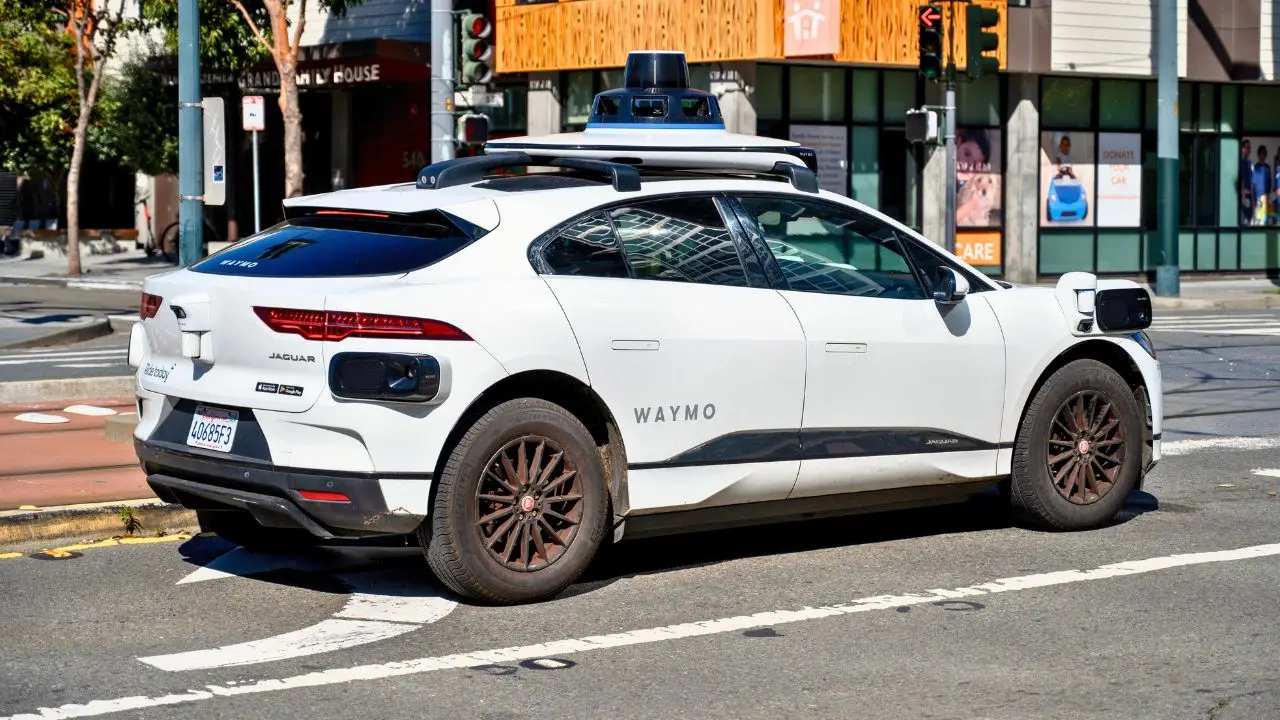
FOX Business’ Grady Trimble has the details from inside an autonomous robotaxi on ‘Varney & Co.’
Waymo is recalling nearly 4,000 robotaxis after more than a dozen incidents in which the autonomous vehicles entered closed freeway construction zones, according to a National Highway Traffic Safety Administration (NHTSA) recall report.
The recall affects 3,871 vehicles equipped with Waymo’s 5th Generation Automated Driving System.
According to NHTSA, the software issue could allow a vehicle to enter a closed freeway construction zone and continue traveling at posted speeds. Regulators said affected vehicles may avoid or fail to recognize certain construction-zone closures because of the software defect.
Waymo estimates that all 3,871 vehicles covered by the recall are affected.
WAYMO PAUSES FREEWAY ROBOTAXI ROUTES AFTER SAFETY AND SOFTWARE CONCERNS
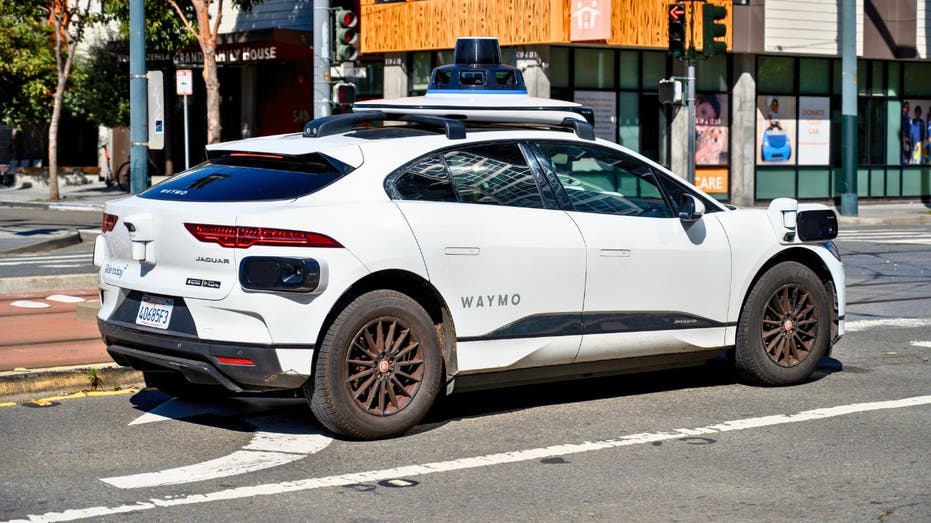
A Waymo self-driving Jaguar I-PACE SUV waits at an intersection in San Francisco, March 18, 2025. (Smith Collection/Gado/Getty Images / Getty Images)
According to the recall report, Waymo’s Field Safety Committee began reviewing the issue in late April after examining six incidents in which robotaxis drove past ramp closure signs and entered freeway construction zones.
The committee met again in May after identifying seven additional instances involving active construction zones in the San Francisco Bay Area.
As a result of the 13 reported incidents, Waymo implemented freeway-driving restrictions while engineers worked to identify the root cause and develop a remedy, according to the filing.
The recall covers Waymo 5th Generation Automated Driving Systems manufactured between May 17, 2022, and May 19, 2026. As of June 13, a software remedy remained under development, according to the filing.
WAYMO RECALLS MASSIVE AUTONOMOUS FLEET AFTER INCIDENT FLAGS MAJOR SAFETY ISSUE
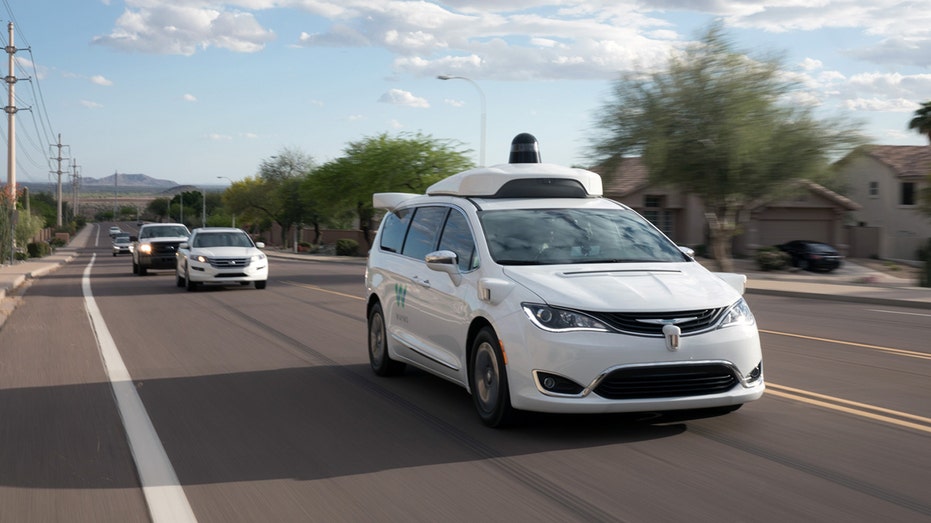
Waymo’s legacy fully autonomous Chrysler Pacifica Hybrid minivan. (Waymo / Fox News)
Waymo currently operates driverless ride-hailing services in cities including San Francisco, Los Angeles, Phoenix and Austin, and has announced plans to expand into additional markets.
| Ticker | Security | Last | Change | Change % |
|---|---|---|---|---|
| GOOG | ALPHABET INC. | 367.46 | +5.36 | +1.48% |
GET FOX BUSINESS ON THE GO BY CLICKING HERE
A Waymo spokesperson told FOX Business the company voluntarily restricted freeway operations while making improvements, notified regulators and filed a voluntary recall with NHTSA.
“We identified an area of improvement regarding performance around freeway construction zones,” the spokesperson said.

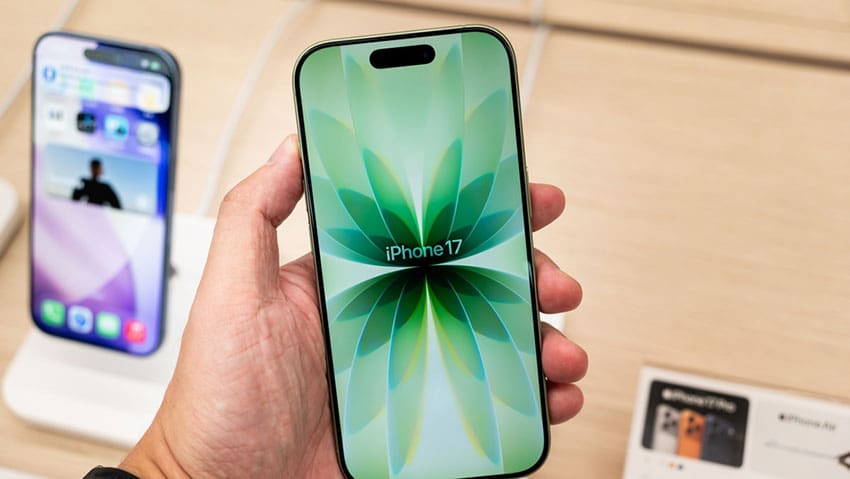
Apple is preparing to raise the price of its products to absorb the soaring cost of memory and storage chips, chief executive Tim Cook has confirmed in an interview with The Wall Street Journal, in the clearest signal yet that the artificial-intelligence boom is now landing squarely in the consumer’s pocket.
“Unfortunately, price increases are unavoidable,” Cook told the newspaper. “We’re doing our best to mitigate the huge increases that are being passed to us, and we’ve been trying to shield our customers from the increases, but the situation has become unsustainable.”
Cook declined to specify when the rises would take effect, how large they might be, or which products would carry them. Apple’s next significant launch is expected in September, when the iPhone 18 range, tipped to include the company’s first foldable handset, is due to arrive. Price changes on Macs and iPads could come sooner. The group quietly lifted the starting price of the Mac Mini last month, between launch events.
The trigger is an extraordinary surge in demand for memory and storage chips from AI companies, which has pushed component costs up so sharply that Apple would have to raise device prices substantially simply to hold its margins steady. The research firm TechInsights estimates that passing the higher costs straight through to buyers, while protecting profitability, would add roughly $270 to the price of the next iPhone Pro.
Memory and storage chips sit inside almost every computing device, from smartphones and laptops to games consoles, medical equipment and cars. The problem is that AI servers are now consuming these chips in rapidly rising volumes, leaving even a company as cash-rich as Apple struggling to secure supply. As the company found with Trump-era tariffs that threatened to push iPhone prices sharply higher, external cost shocks have a habit of finding their way onto the shelf price.
Since last year, when Google, Microsoft, Meta and Amazon began announcing big increases in their capital-spending budgets, the prices of memory and storage chips have both quadrupled. TechInsights expects both to keep climbing into 2027.
The two components do different jobs. Memory, known as DRAM, behaves like the desk in a mid-20th-century office, holding the papers a worker needs for the task in hand. Storage, known as NAND, is the filing cabinet that holds everything else. A smartphone uses DRAM to run the apps currently open, and NAND to file away photos and videos.
Cook said both markets were a concern, but singled out DRAM, pointing to the growing share being diverted to so-called high-bandwidth memory used in AI servers. “There’s less supply at a time when consumers want devices and the memory guys are passing along huge price increases,” he said. “We definitely need memory pricing and supply to return to reasonable levels for consumer products. That’s the bottom line.”
Three companies dominate DRAM: Samsung and SK Hynix in South Korea, and Micron in the United States. NAND is made by those three plus Kioxia and Sandisk. Their share prices and profits have exploded over the past twelve months, with Micron and SK Hynix up more than 800 per cent, and Kioxia and Sandisk up some 4,600 per cent.
Capacity is being added, but not fast enough for consumer buyers. Morgan Stanley forecasts that production capacity for DRAM wafers, the silicon discs on which chips are patterned, will grow 30 per cent by 2027. Yet as suppliers prioritise specialised AI memory, wafers for consumer technology are expected to fall up to 15 per cent short of demand. The squeeze is not Apple’s alone: industry analysts at IEEE Spectrum have charted how the AI build-out is draining DRAM supply away from the mainstream electronics that households actually buy.
China has national champions in memory and storage, but under national-security rules American companies would probably need licences to work with them. Asked whether those restrictions should be eased, Cook said: “I think everything needs to be on the table,” adding, “I think we should look at all supply.”
Apple is far from alone. Hewlett-Packard, Dell and Nintendo have all raised prices, and a consortium of industry associations recently wrote to Treasury Secretary Scott Bessent and Commerce Secretary Howard Lutnick complaining about the over-allocation of memory to AI buyers and asking for help to lift supply. The pressure on consumer pricing has been building for months, as Business Matters reported when memory costs threatened to add hundreds of pounds to the price of an ordinary laptop.
Morgan Stanley estimates a 15 per cent rise in smartphone and PC prices in the United States this year. The effect on the consumer price index should be modest, given the small weighting such devices carry, but any rise on the popular iPhone is likely to attract attention in Washington. Bloomberg has described the resulting crunch as a fully fledged chip crisis, with prices climbing across the board.
Compounding matters, Apple needs additional DRAM to power more AI features, including the rebooted Siri unveiled last week. The company has also long relied on NAND storage upgrades to lift profits, charging $100 to $200 for extra increments that cost it a fraction of that, the very products now caught in the price spiral.
In the interview, Cook said Apple was ready to deploy its cash reserves to help boost memory supply. “We’re willing to use our balance sheet to help be a part of the solution,” he said. “Obviously, more capacity is needed.”
He offered no specifics, and the practical difficulty is plain. It is unclear how Apple could match, let alone beat, the terms AI hyperscalers are offering to lock up supply: three-to-five-year agreements with large cash prepayments that run against Apple’s long tradition of disciplined spending. Nor will the company build its own factories. “We can’t do everything,” Cook said. “We know what we’re good at.”
Apple spends in the low tens of billions of dollars a year on memory and storage, according to people familiar with its costs, making it one of the largest buyers in the world. Historically it has used that heft to wring the keenest prices from suppliers, playing them off against one another. Now, with AI companies storming the market, even Apple has to queue.
For Cook, who has spent more than four decades in the electronics supply chain at IBM, Compaq and Apple, the swing is without precedent. “This is a hundred-year flood,” he said. “I’ve never seen anything like it in any area in over 40 years.”
For consumers and the small businesses that kit out their teams with iPhones, iPads and Macs, the message is blunt: the AI gold rush now has a price tag, and it is about to appear on the till receipt.

Jamie Young
Jamie is Senior Reporter at Business Matters, bringing over a decade of experience in UK SME business reporting.
Jamie holds a degree in Business Administration and regularly participates in industry conferences and workshops.
When not reporting on the latest business developments, Jamie is passionate about mentoring up-and-coming journalists and entrepreneurs to inspire the next generation of business leaders.
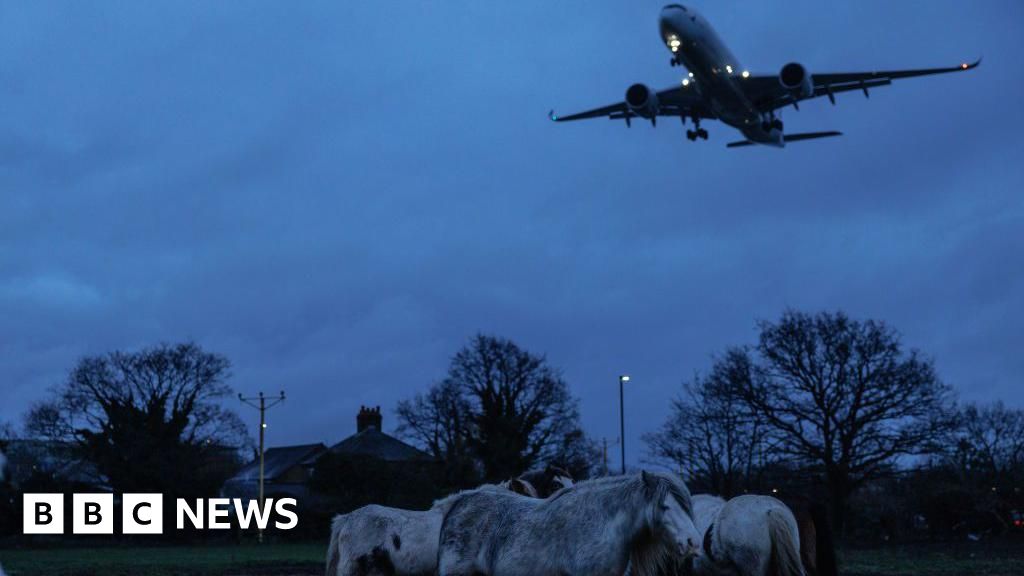
A consultation is launched on the Heathrow expansion, outlining conditions for the project to go ahead.
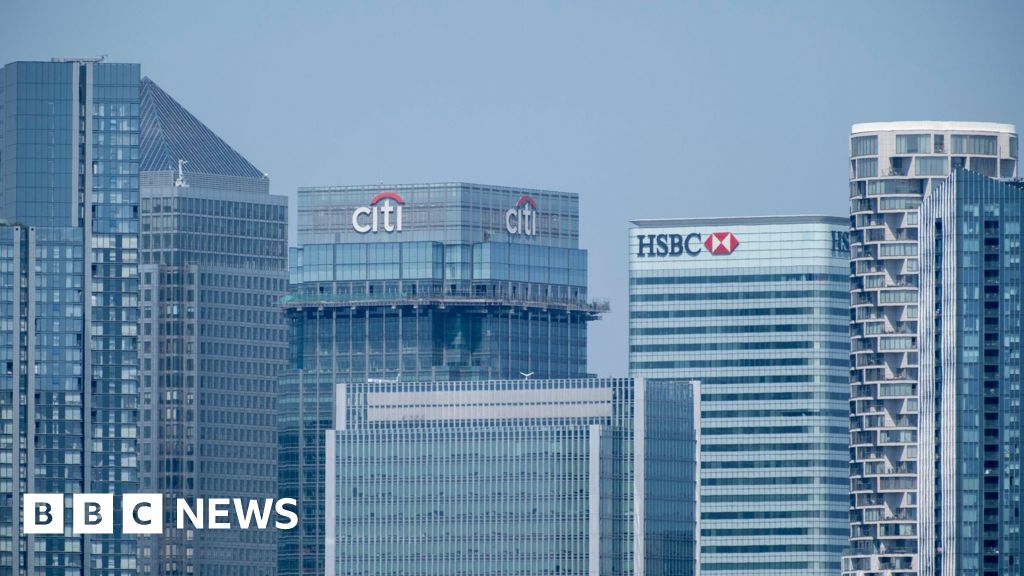
Analysis showed how much the UK could have grown if it had not exited the EU.

With fuel and gas prices having fallen in recent days, we look at how the end of hostitlities might affect you – in five charts.
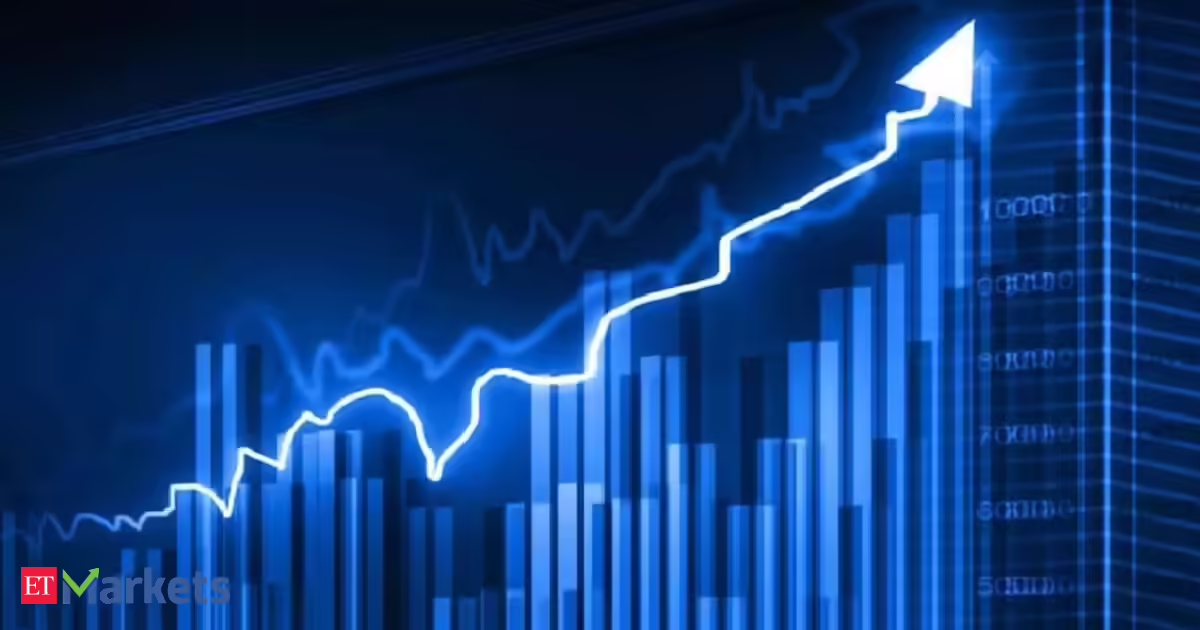
The Philadelphia semiconductor index sharply outperformed the rest of the market as Intel’s shares jumped to a record high. U.S. President Donald Trump said iPhone maker Apple had agreed to work with Intel to design and manufacture its chips in the U.S.
Early in the session, oil prices slid to their lowest levels since early March after the U.S. and Iran signed an interim agreement that extends the April ceasefire by another 60 days to allow the sides time to reach a final deal.
Although Trump threatened to resume attacks if Iran failed to honor its commitments, the first ships started sailing through the Strait of Hormuz, where transportation of oil, gas, fertilizer and other cargoes had been disrupted since the start of the war.
According to preliminary data, the S&P 500 gained 78.31 points, or 1.06%, to end at 7,498.41 points, while the Nasdaq Composite gained 496.28 points, or 1.87%, to 26,507.05. The Dow Jones Industrial Average rose 70.29 points, or 0.14%, to 51,562.84.

Also Read | SpaceX bankers prepare for bond sale of at least $20 billion
All three of Wall Street’s major indexes tumbled in the previous session as investors priced in the likelihood of Fed rate hikes, after the central bank’s new Chair Kevin Warsh underscored the need to curb inflation and other policymakers signaled higher borrowing costs ahead.
“Markets got spooked by Warsh yesterday essentially promising to contain inflation,” said Tony Welch, chief investment officer at SignatureFD, but he pointed to easing oil prices and recent strength in earnings and economic data. “All together, the package of data is still supportive whether or not the Fed has become a little bit more hawkish.”
Traders were betting on a roughly 50% chance of a 25-basis-point rate hike as soon as September and a roughly 20% probability for a 50-basis-point hike, according to CME Group’s FedWatch tool.
Investors were still assessing Warsh’s indication that the Fed would provide less guidance on future policy moves and his stated focus on price stability. Eric Johnston, chief equity and macro strategist at Cantor, said: “The conclusion today is that the Fed has more credibility around inflation.”
On the data front, Labor Department data showed the number of Americans filing claims for unemployment benefits fell last week as layoffs remained low.
In individual stocks, shares of Accenture tumbled after the company trimmed the top end of its annual revenue forecast. Peers including Cognizant Technology Solutions , Gartner and IBM fell in sympathy.
Among other movers, Kroger shares fell after the grocer reported a lower-than-expected profit for the first quarter and kept its annual forecasts unchanged. Shares in Elon Musk’s SpaceX fell for a second straight day, after the space and AI company had rallied sharply for the first few days of trading after its market debut last Friday.
Thursday also marked the once-in-a-quarter simultaneous expiry of derivatives contracts tied to stocks, index options and futures, also known as “triple witching,” which can boost trading volume and aggravate volatility.
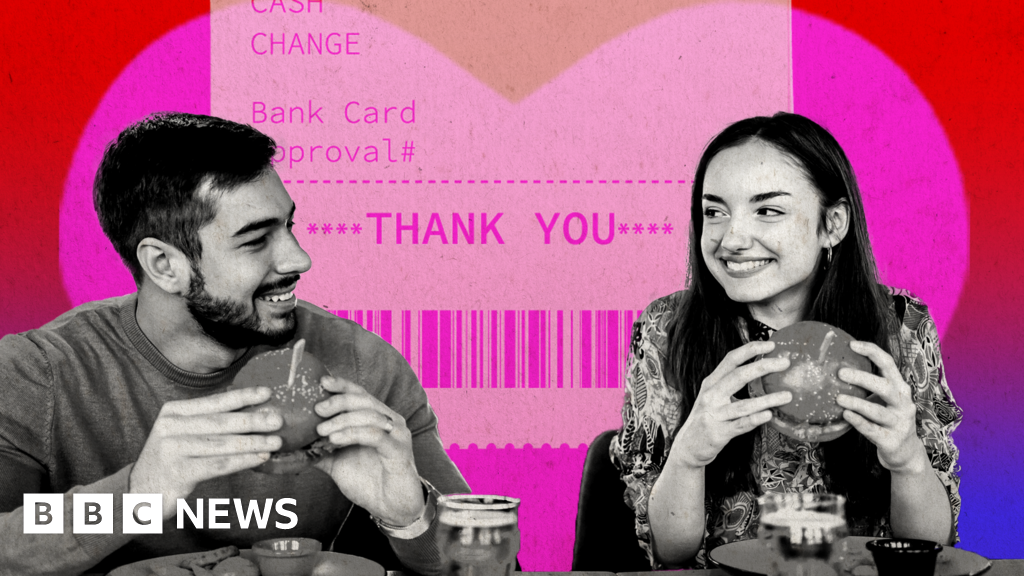
Ask a group of friends and you’ll likely get a dozen different answers. Some insist the bill should always be split equally, others believe the person who sets up the date should pay and despite changing attitudes towards gender roles, many still see a man picking up the bill as a romantic gesture rather than an outdated tradition.
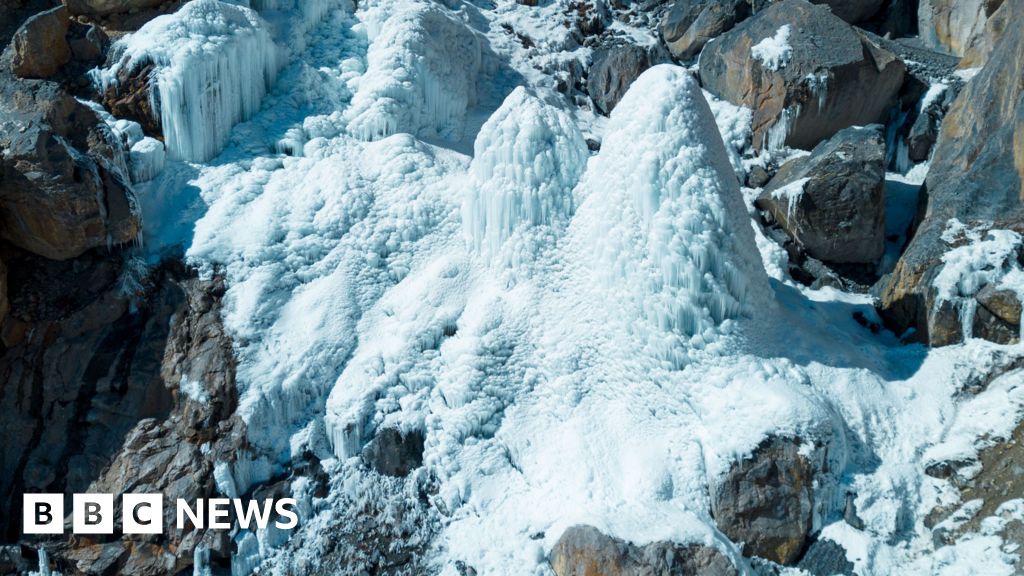
Himalayan villages are creating artificial glaciers to guarantee water for their crops in the spring.
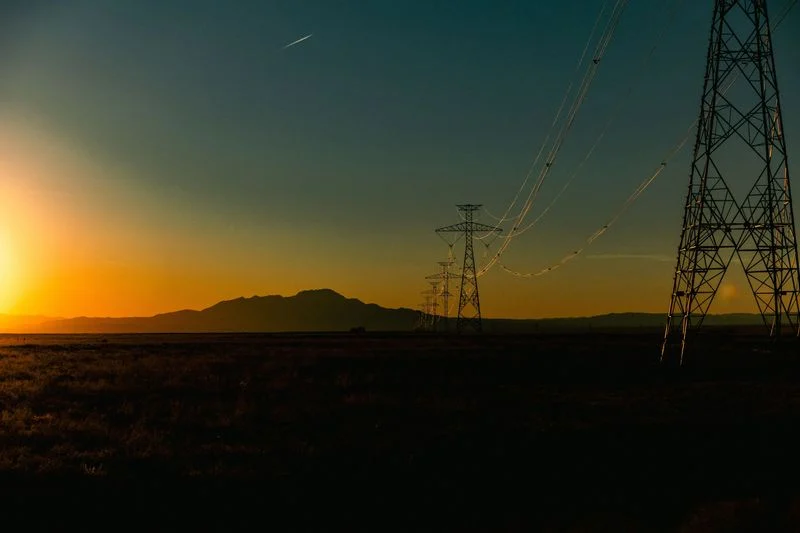

Biggest ever US clean energy project is complete after nearly two decades
OCBC analysis suggests that while the USD/THB exchange rate shows critical overbought signals, there are still significant upside risks that should be considered.
Key Points
- OCBC’s analysis on the USD/THB exchange rate highlights critical overbought signals indicating a potential correction.
- Despite these signals, the report emphasizes ongoing upside risks for the USD/THB rate, suggesting that the potential for further increases remains significant.
- Investors are advised to stay cautious, as market conditions may still favor the US dollar against the Thai baht.
Current Market Conditions
The analysis from OCBC highlights the current state of the USD/THB exchange rate, signaling critical overbought conditions that may obscure underlying risks. The increasing value of the USD against the Thai Baht (THB) is underpinned by a combination of global economic factors and local monetary policies. These factors are pushing the exchange rate further, attracting both domestic and international interest. Despite these indicators pointing towards a potential market correction, the rising demand for the USD suggests that such a correction may not materialize in the immediate term, thus lifting the volatility in the currency pair.
Future Projections
Looking ahead, OCBC emphasizes that while overbought signals indicate a potential slowdown for the USD/THB, there remains persistent upside risk. Economic resilience in the U.S. continues to exert pressure on the Asian currencies, including the THB. Trade dynamics and capital flows, influenced by the economic strategies of the U.S. and Thailand, could impact the exchange rate significantly. Investors should be cautious; the interplay of these forces means that even amidst overbought conditions, the USD may still experience upward momentum.
Strategic Implications for Investors
Investors aiming to navigate the fluctuations in the USD/THB exchange rate should take into account the complex dynamics at play. The analysis suggests that careful monitoring is essential; overbought conditions may provide limited short-term opportunities for profit-taking, but downside risks remain pronounced. As both domestic economic data and global developments unfold, investors must remain adaptable, ready to respond to new information that could influence the long-term trajectory of the USD/THB. Strategizing with risk management in mind will be essential to capitalize on potential market shifts while safeguarding against unforeseen losses.
Source : Critical Overbought Signals Mask Persistent Upside Risks – OCBC Analysis
Other People are Reading
Business
Daveigh Chase, Child Star Who Voiced Lilo and Terrified Audiences in ‘The Ring,’ Dies at 35

Daveigh Chase, the actress who gave voice to one of Disney animation’s most beloved characters while simultaneously terrifying moviegoers as a horror icon, died Tuesday in Los Angeles. She was 35.
Her boyfriend, Roy Hernandez, confirmed her death, saying Chase died from meningitis and an infection in her blood that caused septic complications and ultimately led to her body shutting down. Her father also confirmed her death to the New York Times, saying she had been homeless and living in Los Angeles with her boyfriend and that she had been struggling with drugs since the age of 13.
Chase had been admitted to a hospital in Los Angeles earlier this month due to malnutrition. Her boyfriend had recently set up a GoFundMe page for the ailing Chase, in which he wrote that she had been diagnosed with meningitis and several serious blood infections and that her condition had become critical.
In the GoFundMe page, Hernandez acknowledged that Chase had experienced a difficult childhood and a painful falling out with her family, and that she had struggled to find safety and happiness in downtown Los Angeles. He wrote that when the two met, he promised to protect her and give her the love and comfort she deserved, and that together they had found moments of happiness and hope.
Born in Las Vegas and raised in Albany, Oregon, Chase launched her career as a child actor at age seven, when she appeared in commercials. She won the role of Lilo the following year, at the age of eight.
That role would define her legacy. Chase voiced Lilo in the hit Disney animated film “Lilo & Stitch” in 2002 and the follow-up television series. The film, a heartfelt story of a lonely Hawaiian girl and an alien creature she adopts as a pet, became a cultural phenomenon and one of Disney’s most enduring properties. For her voice work, Chase won an Annie Award for outstanding voice acting in an animated feature production.
That same year, Chase delivered what would become one of the most chilling performances in American horror history. In Gore Verbinski’s 2002 horror hit “The Ring,” Chase played Samara Morgan, the lank-haired supernatural antagonist whose image — a small pale girl emerging from a television set — became one of the most iconic visuals in the genre. At just 12 years old, Chase was named Best Villain at the 2003 MTV Movie Awards, beating out Willem Dafoe, Daniel Day-Lewis, and Colin Farrell. Her performance was also featured as archival footage in the 2005 sequel “The Ring Two” and 2017’s “Rings.”
The feat of delivering two such culturally distinct and memorable performances in the same year — one joyful and one terrifying — was a testament to Chase’s range as a young performer.
Chase also voiced Chihiro Ogino in the American dub of the acclaimed Studio Ghibli film “Spirited Away,” further cementing her status as one of the most recognizable voice actresses of her generation.
Chase also played Samantha Darko, the younger sister of Jake Gyllenhaal’s lead character in “Donnie Darko,” and she starred in the direct-to-video sequel “S. Darko” in 2009.
Beginning in 2006, Chase earned a recurring role in the HBO drama series “Big Love,” which follows a fundamentalist, polygamist Mormon family. She played Rhonda Volmer in 32 episodes of the series during its five-season run.
Her other television credits included “Betsy’s Kindergarten Adventures” on PBS Kids, as well as appearances on “Sabrina the Teenage Witch” and “ER.” Her last acting roles came in 2016.
In the GoFundMe page, Hernandez also referred to various other difficulties encountered by Chase over the years, including bullying and a falling out with her family. In the years after her acting career wound down, she largely withdrew from public life.
The news of Chase’s death drew an immediate outpouring of grief from fans across social media, many of whom grew up with her performances as both Lilo and Samara as formative cinematic experiences. Letterboxd, the popular film social network, marked her passing with a tribute post.
Chase is being remembered for her performances in “The Ring,” “Lilo & Stitch,” “Big Love,” and “Donnie Darko,” as well as for her voice role in the English dub of “Spirited Away.” She leaves behind a body of work that touched multiple generations of film and television audiences, spanning the full spectrum from animated enchantment to horror iconography — a rare duality that few actors at any age have managed to achieve.
Daveigh Elizabeth Chase was born July 24, 1990. She was 35.

Smriti Mandhana Achieves Massive First In India vs Netherlands Women’s T20 World Cup 2026 match

Building A Panel Mount OLED Display

IMPACT ON BITCOIN IF NO GOLD IS FOUND IN FORT KNOX


-

 Business4 days ago
No Jackpot Winner as $257 Million Prize Rolls Over to $269 Million Monday Draw
-

 Fashion6 days ago
Weekend Open Thread: Tuckernuck – Corporette.com
-
 Crypto World4 days ago
Zimbabwe Requires Crypto Businesses to Register Annually Under New FIU Regulations
-

 Crypto World6 days ago
Bitget enters Argentina’s regulated crypto market through PSAV registration
-

 Tech6 days ago
NanoClaw integrates JFrog registries to secure AI agent downloads
-

 Tech6 days ago
This Week In Security: Microsoft On Microsoft, Register Your Domains, Linux On ARM, And FreeBSD Joins The File Cache Club
-

 NewsBeat6 days ago
FBI searches office of Ohio voter registration group
-
 Tech7 days ago
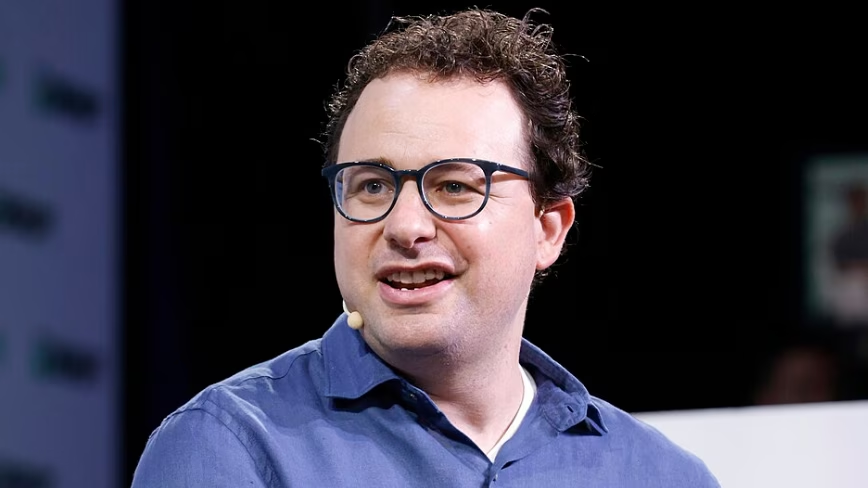
Anthropic is spending $150M to embed 1,000 AI fellows inside nonprofits. No degree required.
-
 Entertainment7 days ago
‘The Pitt’s Fan-Favorite Doctor Confirms Noah Wyle Gave His Blessing to Return [Exclusive]
-
 Crypto World7 days ago
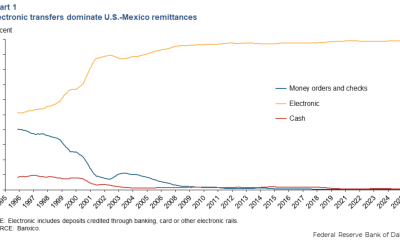
Ripple and Bitso Bring MXNB Stablecoin to XRP Ledger
-

 Tech7 days ago
Former AWS CEO Adam Selipsky to lead new $10B AI data center venture
-
 Entertainment4 days ago
Matt Damon’s Viral Sci-Fi Thriller Has Taken Over HBO Max
-

 Business4 days ago
Anthropic staff to meet White House officials next week, Axios reports
-

 Tech4 days ago
As AI companies race to go public, who else is along for the ride?
-
 Crypto World4 days ago
Bitcoin could crash to $48,000, if this historical pattern is triggered
-
 Tech7 days ago
Euro-Office 1.0 Arrives To Open-Source Infighting: ‘Compatibility Is Not Sovereignty’
-

 Politics4 days ago
“Israel’s” ban on ICRC visits ruled illegal, but Knesset moves to stop them permanently
-
Entertainment7 days ago
Ana Navarro unleashes explosive tirade on ex-Trump aide, Disney Channel star in epic on-air fight: 'Have you no shame?'
-
 NewsBeat4 days ago
Warning of disruption as Cardiff Crossrail works to start
-

 News Videos4 days ago
Financial Accounting | Last Day Revision Strategy and Booster | CMA Inter – June 2026
You must be logged in to post a comment Login