
Business
Can NSE IPO deliver long-term growth for high-risk investors?

 ET Bureau
Business
Incorporated in 1992, NSE operates a vertically integrated platform covering trading, clearing, settlement, listing, market data and index licensing. Its trading portfolio covers cash equities, equity futures and options, mutual funds, commodity derivatives, exchange-traded currency derivatives, wholesale debt and interest-rate futures. In FY26, NSE commanded nearly 93% share in cash market, 99.7% in equity futures and 68.5% in equity options premium turnover.
Read more: NSE IPO Tracker: Catch all the highlights here
While transaction charges remain the core revenue driver, the company has diversified its revenue base through connectivity, colocation, data and licensing services. Revenue from these businesses rose 9.5% year-on-year to ₹1,955.9 crore in FY26 and accounted for 11.8% of operating revenue.

As of June 30, 2026, it had 132.4 million unique registered investors, 1,328 trading members and 3,005 listed entities. However, trading activity remains concentrated, with the top 10 trading members accounting for 46.8% of FY26 revenue from operations. Lower trading volumes, regulatory changes affecting derivatives, technology failures, cyber risks, and delays in implementing diversification initiatives remain key risks.
Read more: UPI MDR could create Rs 27,000 crore revenue pool by FY28: Bernstein
Financials
Though revenue grew by 6% annually over the past three years, it fell by 3% year-on-year to ₹16,601 crore in FY26. The decline was primarily driven by a 4% fall in transaction-charge revenue to ₹13,057 crore as cash-market, futures and options volumes moderated following regulatory changes. Operating margin before depreciation and amortisation (Ebitda margin) was 66.9% in FY26 compared with 66.8% in FY24 and was higher than BSE‘s 64% margin in FY26. Net profit increased by 11% annually to ₹10,302 crore in FY26 from ₹8,305.7 crore in FY24. Return on equity moderated to 33% in FY26 from 37% in FY24 compared with 45% for BSE. It’s a debt-free company with a net cash position of ₹17,976 crore as of March 31, 2026.
Valuation
NSE’s post-issue price-earnings (P/E) multiple of 42.9 is below BSE’s 53, despite its dominant market position. The IPO offers investors exposure to a debt-free, tightly regulated exchange business protected by high entry barriers.

Business
No Official Price Tag Yet for Wednesday’s Global Salesforce Outage, But Here’s How the Costs Could Add Up

SAN FRANCISCO — Salesforce Inc. has not disclosed a dollar estimate for how much Wednesday’s global service outage cost the company or its customers, and no independent analyst had published a specific figure as of Wednesday afternoon, leaving the financial toll of the disruption an open question even as the technical incident itself has been resolved.
The outage began around 7:50 a.m. UTC, roughly 3:50 a.m. Eastern time, according to Salesforce’s own status page, and affected customers across all three of the company’s operating regions, with reports of disruption spanning the United States, United Kingdom, Germany, France, India and Japan. Salesforce said the root cause traced to an internal login service, where incoming requests were stalling while waiting for a response, consuming available server resources and cascading into broader access failures across the platform. The company said it validated a fix on a test instance and began rolling it out fleetwide by roughly 10:56 a.m. UTC, with independent monitoring services logging the core disruption at around four hours and 22 minutes, though shorter, related incidents continued to appear on the company’s status tracker later in the day.
Quantifying the financial impact of a cloud outage like Wednesday’s is notoriously difficult, and companies rarely disclose precise figures even after an incident is fully resolved. Unlike a factory shutdown or a single retailer’s website going dark, Salesforce’s customer relationship management platform underpins day-to-day operations for a vast and varied customer base, one that Salesforce itself has described as including major global companies such as Amazon, Walmart, Coca-Cola, Toyota and IBM. An outage affecting that platform generates costs on at least two separate ledgers: the direct hit to Salesforce’s own business, largely through service-level agreement credits and reputational damage, and a far larger, harder-to-measure set of costs borne by the customers who rely on Salesforce to run sales, service and marketing operations.
Salesforce’s own scale offers one way to think about the stakes involved, even without a specific outage-cost figure attached. The company reported fiscal second-quarter revenue of $11.35 billion, up 11% year-over-year, with full-year revenue guidance raised by $200 million following that report. Spread across a full fiscal year, that revenue run rate implies Salesforce generates tens of millions of dollars in revenue on a typical day, though a service disruption does not translate directly into lost revenue on a one-to-one basis, since most Salesforce customers pay through annual or multiyear subscription contracts rather than per-use billing, meaning a several-hour outage does not necessarily reduce the total amount Salesforce ultimately collects from an affected customer.
The more significant financial exposure from an incident like Wednesday’s typically falls on Salesforce’s customers rather than on Salesforce itself. Businesses that rely on the platform for order processing, customer service ticketing, sales pipeline management and marketing automation can face lost productivity, delayed transactions, and in some cases direct revenue loss if the outage prevents customer-facing sales or support functions from operating during the disruption window. Because those costs are dispersed across thousands of individual Salesforce customers rather than concentrated at Salesforce itself, they are rarely aggregated into a single public estimate, and no such aggregate figure had been published in connection with Wednesday’s incident as of the most recent available reporting.
The timing of Wednesday’s outage added a further layer of reputational, if not directly quantifiable, cost. The disruption struck on the second day of Dreamforce, Salesforce’s flagship annual conference in San Francisco, an event expected to draw more than 40,000 in-person attendees and more than 200,000 additional registrants online, with more than 400 sessions this year built around Salesforce’s push into AI-driven “Agentic Enterprise” software. An outage occurring in the middle of an event explicitly designed to showcase the platform’s reliability to customers, prospects and partners carries a cost in credibility and marketing impact that is difficult to translate into a specific dollar figure, even if it does not appear directly on Salesforce’s income statement.
Financial markets offered one immediate, if imperfect, gauge of investor sentiment following the outage. Salesforce shares had already closed Tuesday at $255.65, down 1.46% from Monday’s close of $259.43, a decline that occurred before the outage began and therefore cannot be attributed to the incident itself. Shares slipped a further roughly 0.5% in Wednesday premarket trading, changing hands around $254.40, though broader market conditions, including anticipation ahead of the Federal Reserve’s interest rate decision, were also weighing on technology stocks more broadly that morning, making it difficult to isolate how much of Wednesday’s modest share price movement, if any, reflected the outage specifically.
Wednesday’s disruption was not an isolated event in Salesforce’s recent history. The company has experienced a series of significant outages over the past year and a half, including a June 2025 incident that took its Heroku platform-as-a-service offline for more than six hours alongside disruptions to Commerce Cloud, Marketing Cloud, Tableau, Service Cloud and MuleSoft, and an earlier four-day disruption that crippled core customer service functions including Email-to-Case and Web-to-Case features. None of those prior incidents resulted in a publicly disclosed cost estimate either, consistent with the broader industry pattern of treating outage costs as commercially sensitive or simply too diffuse to calculate with precision.
Absent an official disclosure from Salesforce or a published third-party analysis, the true financial toll of Wednesday’s outage, spanning lost productivity across its global customer base, any service credits owed under customer contracts, and the harder-to-quantify reputational cost of the disruption occurring during Dreamforce, is likely to remain an estimate rather than a confirmed figure, unless Salesforce chooses to address the matter directly in a future earnings call or regulatory filing.

Brookfield to invest up to $600 million in India’s ACME green fuels business

Cockpit windows, Vermont says, are “totally different”.
They are generally made of glass, which is chemically reinforced by adding potassium to it. This involves swapping smaller sodium ions for larger potassium ions, which helps to fill out the molecular structure of the glass, meaning that when it cools during production, it compresses into an extra strong, tight formation as it cools.
Some of the latest aircraft feature cockpit windows that are also curved, to make the plane more streamlined, which improves fuel efficiency. But curved cockpit windows are challenging to make – the slightest distortion or defect is clearly visible to the pilot.
Quality control checks are used to ensure no such impediments exist in the final product.
All aircraft windows must be resistant to impacts but cockpit windows, at the front of the plane, are especially vulnerable to bird strikes, says Vermont: “The issue is not the speed of the bird, the issue is the speed of the aircraft.”
Saint-Gobain uses numerical simulations and “physical tests representative of a sizeable bird impact” to test its windows against this threat.
“Typically, if you go through a hailstorm or if you hit a large enough bird, the external ply will crack,” says Vermont. “The cockpit window is designed for that.”
A London to Londonderry flight was recently affected by a cracked cockpit window. While a mid-air emergency was declared, the plane landed safely. “There can be [such] cases,” says Vermont, though he adds that Saint-Gobain’s windows have not been involved in any recently.
“You’re obviously dealing with a surface that is interfacing with two very different environments,” says Stengel. “That’s why these are more highly-engineered products.”
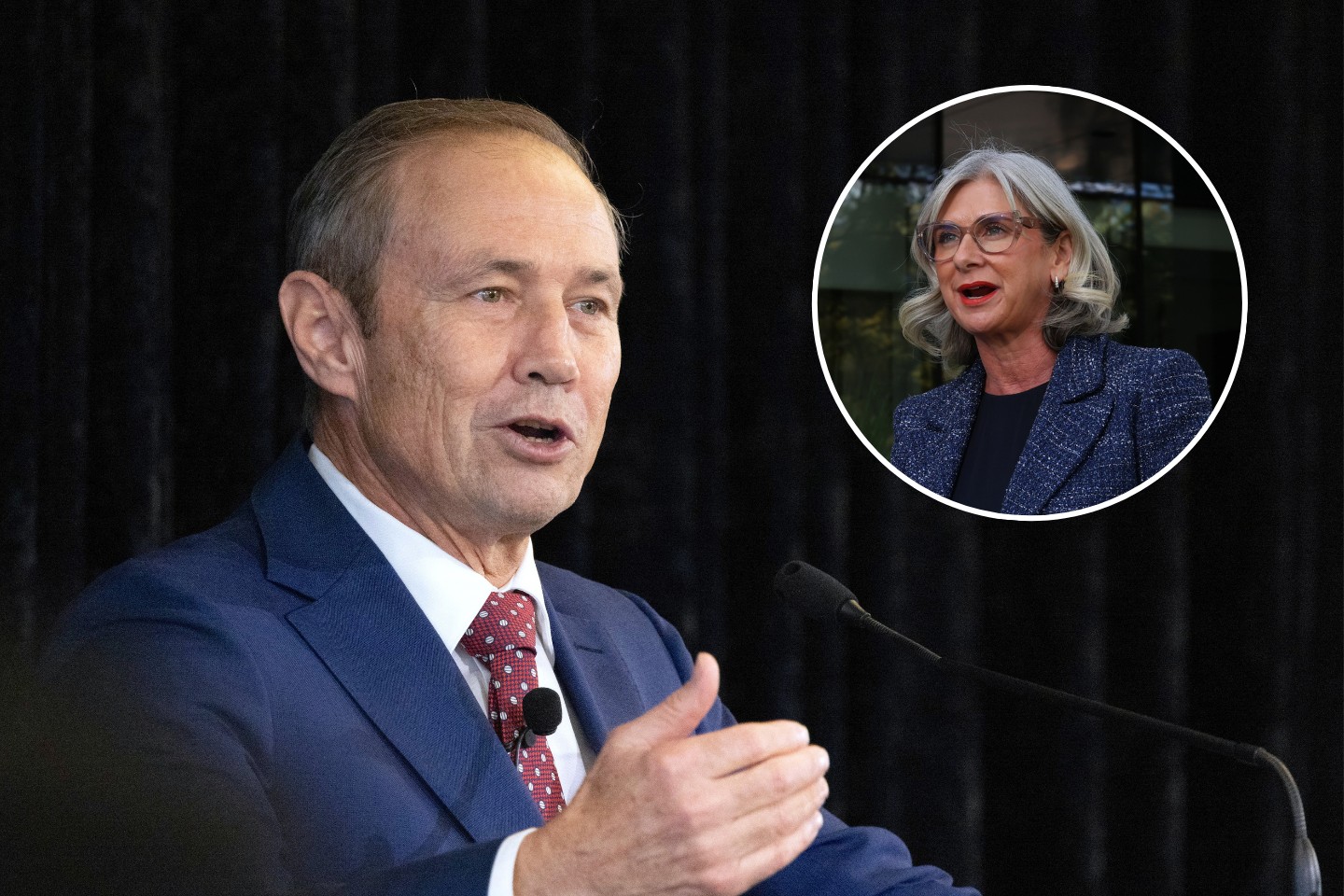
Shadow Treasurer Sandra Brewer says the state government’s $2.80 return for every dollar spent on major events pales in comparison to Mark McGowan’s “bold” tourism strategy back in the early 2000s.

Those lessons shaped a career that has spanned sacred writing, Hebrew calligraphy, Judaica art, and education. Today, his work continues to focus on preserving Jewish heritage while sharing those traditions with future generations through teaching and craftsmanship.
“I have always believed that making a positive difference in people’s lives is what matters most,” Rabbi Karro says.
From Russia to a Life of Learning in Jerusalem
Rabbi Steve Karro was born in Russia before moving to Jerusalem with his family at the age of 10. The move marked the beginning of a lifelong commitment to Jewish education and personal growth.
He attended Hebrew school before continuing his studies at Yeshiva Ponevezh in Bnei Brak, where he immersed himself in rabbinical studies. During this time, he earned his rabbinical diploma while also developing a passion for Hebrew calligraphy and art.
For Rabbi Karro, education was never simply about acquiring knowledge. It was about preparing to serve others.
“Learning never really ends,” he says. “The more we learn, the more we can share with others.”
That philosophy continues to influence both his work and his outlook on life.
A Career Dedicated to Sacred Writing and Art
After completing his studies, Rabbi Karro devoted his career to sacred writing and traditional Jewish craftsmanship. His work includes writing Torah scrolls, mezuzot, and tefillin, as well as restoring older Torah scrolls so they can continue serving communities for generations.
Every project requires careful attention to detail and respect for traditions that have remained largely unchanged for centuries.
Alongside his work as a scribe, Rabbi Karro is also a Judaica artist who creates oil paintings and Hebrew calligraphy inspired by Jewish history and culture. Together, these disciplines allow him to combine creativity with preservation.
“I believe making good changes is important,” he says. “Every piece of work should leave something positive behind.”
Why Teaching Has Always Been Part of the Mission
While craftsmanship has defined much of Rabbi Karro’s professional life, education has always been equally important.
Throughout his career, he has shared his knowledge of Hebrew calligraphy, sacred writing, and Jewish tradition with others, believing that preserving knowledge is just as important as preserving artifacts.
He hopes that by teaching others, these skills and traditions will continue long into the future.
“Teach what I learned so more people will be able to do good for our universe,” he says.
Rather than keeping specialized knowledge to himself, Rabbi Karro sees education as an opportunity to multiply positive influence.
Staying Focused Through Challenges
Every career brings obstacles, and Rabbi Karro has faced his share of personal challenges.
He has spoken about experiencing attempts to damage his identity and reputation. Instead of allowing those experiences to define him, he remained committed to his values, faith, and work.
“Many challenges came when enemies tried to take my identity away and put me through worldwide embarrassment,” he says. “I’m still standing and going with God and what I have always believed in.”
His response has been to continue creating, teaching, and helping others rather than becoming distracted by negativity.
That resilience has become one of the defining characteristics of his journey.
Building a Legacy Through Service
For Rabbi Karro, success has never been measured by recognition alone. Instead, he believes lasting impact comes from helping people and preserving traditions that matter.
Whether restoring a Torah scroll, teaching a student, or creating a work of art, he approaches each opportunity with the same sense of purpose.
“When I make a happy difference in people’s lives,” he says, “that is what matters most.”
He also believes that good actions inspire more good actions.
“My goal is to duplicate my good actions so others continue believing they are important and can make positive changes.”
That philosophy has guided his work for decades and continues to shape his future.
Looking Ahead While Preserving the Past
Today, Rabbi Steve Karro continues his work as a Hebrew calligrapher, Judaica artist, educator, and scribe. His career reflects a deep respect for history while emphasizing the importance of passing knowledge from one generation to the next.
Although his work centers on ancient traditions, his message is timeless. He believes every person can make a meaningful contribution by acting with integrity, serving others, and remaining committed to lifelong learning.
“When your close family is happy, others around them become happier too,” he says.
For Rabbi Karro, preserving tradition has always been about more than protecting the past. It is about ensuring future generations inherit the knowledge, values, and craftsmanship needed to continue making a positive difference.

An inquiry report into the City of Perth will be made public but previous findings will remain confidential, as Local Government Minister Hannah Beazley responds to transparency concerns.

According to an exchange filing, the company said the proposed transaction involves the acquisition of Novotel Imagicaa, an operating hotel undertaking in Khopoli, Raigad district, Maharashtra. The aggregate lump-sum purchase consideration is Rs 248 crore, or approximately Rs 86 lakh per key, subject to the terms and conditions of the definitive agreements.
Also Read | Juniper Hotels plans Rs 248 crore acquisition of 287-key Novotel Imagicaa
The proposed acquisition relates to an operating hotel business. Imagicaaworld Entertainment Limited owns the Hotel Undertaking.
The hotel undertaking comprises approximately 11 acres of land, with a built-up area of approximately 2,80,000 sq. ft., comprising 287 guest rooms, along with restaurants, banquet and meeting facilities, recreational amenities and other associated hotel infrastructure.
The proposed acquisition is aligned with Juniper’s hospitality business and adds an established, cashgenerating, 287-key hotel in the Mumbai–Pune corridor, catering to leisure, social and MICE demand.
The company further said that the Board of Directors in its meeting held on September 16, 2026, approved the Memorandum of Understanding (MOU) to be entered with Imagicaaworld Entertainment (Previously known as Adlabs Entertainment) for acquisition of operating hotel, Novotel Imagicaa.The proposed transaction does not involve any issuance of shares by the company. The acquisition advances Juniper’s long-term objective of building a portfolio of large, high-quality hotels in India’s most compelling business and leisure destinations.
“At Juniper, our growth journey has always been guided by a simple principle: grow with purpose and create value for the long term. Novotel Imagicaa represents the kind of asset we look for. It is an established hospitality property with scale, a strong destination proposition, and multiple demand generators,” said Arun Kumar Saraf, Chairman & Managing Director, Juniper Hotels.
“Our upcoming developments will significantly expand the company’s scale. We remain focused on owning the ‘Right Assets’ in the right markets, large, capable of generating diversified revenue streams across rooms, F&B, MICE, serviced apartments, commercial spaces and other hospitality offerings. We intend to pursue this growth with capital discipline, strong internal cash generation and a healthy balance sheet, and selectively evaluate acquisition opportunities where we see a compelling strategic fit,” Saraf further said.
The company also highlighted that this transaction offers several strategic advantages such as the acquisition will result in the addition of an established, operating 287-key hotel expected to generate stable cash flows from day one, without any lead time of greenfield development.
It will help in strategic presence in the Mumbai–Pune corridor catering to leisure, social, and MICE segments; will give potential to add incremental banqueting and ballroom capacity immediately to strengthen its social and MICE, from the adjacent Imagicaa parks and an opportunity to rebrand into the upper-upscale segment and drive higher revenue over the long term.
Also Read | Hyatt-owner Juniper Hotels to double portfolio to 4,000 rooms, earmarks ₹1,930 crore
The diversified demand generators resulting in multiple revenue streams across leisure, social, MICE, and weekend travel; and the opportunity to leverage Juniper’s asset management and hospitality expertise to drive long-term value creation.
Juniper Hotels share price movement
In the last one month, the stock of Juniper Hotels went up 12.97%. In the current calendar year and in the last one year, the stock was down 13.37% and 26.59% respectively.
Disclosure: This article has been written by Surbhi Khanna, who is not a SEBI-registered Research Analyst or an investment advisor . Surbhi Khanna does not hold any financial interest in Economic Times as of the date of publication. The views/recommendations mentioned in this article, wherever applicable, are those of the respective SEBI-registered Research Analyst/brokerage and have been reproduced/reported with due attribution. They should not be construed as the views or recommendations of the EconomicTimes Digital or the journalist. Readers are advised to consider the original research report and make their investment decisions based on their own assessment.

But while many buyers focus on choosing the right make and model, they often overlook the small financial decisions that can quietly add thousands of dollars to the overall cost.
The good news is that overpaying isn’t inevitable. By spending a little extra time researching prices, comparing new car loans, and understanding where unnecessary costs can creep in, you can enjoy your next vehicle knowing you’ve secured far better value for your money.
Buying smart isn’t about finding the absolute cheapest option. It’s about understanding the total cost of ownership and making informed choices before signing any contracts.
Research Before Visiting a Dealership
Walking into a dealership without preparation puts you at a disadvantage.
Before you begin negotiating, research:
- Typical market prices
- Available promotions
- Vehicle reviews
- Running costs
- Common optional extras
Knowing what similar vehicles are selling for gives you greater confidence when discussing pricing and makes it easier to recognise a genuinely competitive offer.
Separate the Vehicle Price From the Finance
One of the most common mistakes buyers make is negotiating only around the monthly repayment.
Instead, focus first on agreeing to the purchase price of the vehicle before discussing finance or trade-ins. Combining everything into one negotiation makes it much harder to determine exactly what you’re paying for each part of the transaction.
Keeping these discussions separate gives you a clearer picture of the overall deal.
Don’t Assume Every Optional Extra Is Worth It
Dealerships often offer additional products designed to protect or enhance your vehicle.
These may include:
- Extended warranties
- Paint protection
- Fabric protection
- Window tinting
- Accessory packages
Some buyers genuinely benefit from these extras, while others end up paying for products they neither need nor use. Taking time to research each option independently can prevent unnecessary spending.
Compare More Than One Finance Offer
Convenience shouldn’t be the only reason for choosing a finance provider.
Different lenders may offer varying interest rates, fees, repayment flexibility, and loan features. Comparing several options allows you to understand which offer represents the best overall value rather than simply accepting the first proposal.
Even a modest improvement in your interest rate can produce significant savings over the life of the loan.
Consider the Total Cost of Ownership
The purchase price is only the beginning.
You’ll also need to budget for:
- Insurance
- Registration
- Fuel or electricity
- Scheduled servicing
- Replacement tyres
- Unexpected repairs after the warranty expires
Choosing a vehicle with lower ongoing ownership costs may save considerably more than negotiating a slightly lower purchase price.
Don’t Stretch Your Budget Too Far
It’s easy to become tempted by higher trim levels or additional features once you’re sitting in the showroom.
Before upgrading, ask yourself whether those extras will genuinely improve your daily driving experience or whether they’re simply increasing your repayments.
Buying slightly below your maximum budget often leaves room for life’s unexpected expenses without reducing your enjoyment of the vehicle.
Time Your Purchase Carefully
Many buyers don’t realise that timing can influence pricing.
Dealerships may be more willing to negotiate during:
- End-of-month sales periods
- End-of-financial-year promotions
- Model changeovers
- Clearance events
While there’s never a guarantee, shopping during these periods can sometimes result in better pricing or added incentives.
Take Your Time Before Signing
Excitement can sometimes lead people to make rushed financial decisions.
Before signing any paperwork, review every figure carefully and don’t hesitate to ask questions if something isn’t clear. Reading the contract thoroughly may reveal fees, conditions, or optional products that weren’t fully discussed during negotiations.
Taking a little extra time now can prevent expensive surprises later.
Smart Buyers Focus on Value
Avoiding overpayment isn’t about negotiating every last dollar or delaying your purchase indefinitely. It’s about understanding where costs come from, comparing your options carefully, and making decisions based on long-term value rather than short-term excitement.
When you combine careful research, sensible budgeting, thoughtful finance comparisons, and patience throughout the buying process, you’ll be far more likely to enjoy your new vehicle knowing you’ve made a financially sound decision that will continue to pay off for years to come.
Business
Rentomojo shares jump 9% after listing at 19% premium over IPO price. Can the debut-day mojo last?

Rentomojo shares opened at Rs 482.45 apiece on the NSE, marking a premium of more than 19% over the IPO price of Rs 404 apiece. In less than an hour of its debut, the stock rallied sharply by over 9% to trade at Rs 526.70 apiece, adding more than Rs 460 crore to the company’s market capitalisation and taking it to nearly Rs 5,484 crore.
Also read | Rentomojo shares list at 19% premium over IPO price
About Rentomojo IPO
The strong market debut comes after Rentomojo’s Rs 1,255.57 crore IPO saw strong investor interest during its three days of public bidding, being subscribed 73 times its offer size between September 9 and September 11.
Qualified institutional buyers (QIBs) led the demand, subscribing their reserved portion over 177 times. The portions kept for retail investors and non-institutional investors (NII) meanwhile, were booked around 16 times and 68 times, respectively.
The maiden public issue of the furniture and appliances renting platform comprised a fresh issue of shares worth Rs 150 crore, and an offer for sale of shares worth around Rs 1,106 crore by existing shareholders. A day before the IPO opened for public subscription, the company raised Rs 376 crore from 41 anchor investors.
Also read | Rentomojo to raise Rs 1,256 crore via IPO; rich valuation a concern
How will Rentomojo use its IPO proceeds?
Rentomojo aims to use the fresh issue proceeds from the IPO for several key corporate purposes. A portion of the funds will go towards the repayment or prepayment, either in full or in part, of certain outstanding borrowings, along with the accrued interest on these loans.
The company also plans to use part of the IPO proceeds to pay lease rentals and licence fees for its warehouses and experience stores. The remaining IPO proceeds will be utilised for general corporate purposes.
Read more:NSE IPO Tracker: Catch all the highlights here
Should you buy, sell or hold Rentomojo shares?
Sunny Agrawal, Deputy Vice President of Fundamental Research at SBI Securities, believes investors should continue to hold Rentomojo shares from a medium- to long-term perspective, given its position as an organised furniture and appliance rental platform in India, supported by a recurring subscription model and a growing subscriber base.
“The company has delivered fabulous growth during the last two years, and we believe going forward… Rentomojo is a play on urban mobility,” he added.
Rentomojo’s 19% listing pop has already priced in much of the near-term optimism, and at around 41x FY26 P/E, the valuation cushion remains thin, cautioned Shivani Nyati, Head of Wealth at Swastika Investmart. Debt reduction from IPO proceeds is a positive structural driver, but until profitability and asset-utilization metrics show sustained improvement, the stock is better suited to a wait-and-watch approach rather than fresh accumulation at current levels, according to the analyst, who suggested a stop loss at Rs 430 apiece, below listing price, to protect against the reversal of listing day gains.
Disclaimer: This article has been written by Debaroti Adhikary, who is not a SEBI-registered Research Analyst or an Investment Adviser. Debaroti Adhikary and his/her ‘relative(s)’ (as defined under Section 2(77) of the Companies Act, 2013) do not hold any financial interest in the companies mentioned in this article as of the date of publication. The views/recommendations mentioned in this article, wherever applicable, are those of the respective SEBI-registered Research Analyst/brokerage and have been reproduced/reported with due attribution. They should not be construed as the views or recommendations of The Economic Times Digital or the journalist. Readers are advised to consider the original research report and make their investment decisions based on their own assessment. Brokerage disclaimers here.
Business
Cipher Digital Shares Surge 11.25% as Its Google-Backed Barber Lake AI Data Center Nears Launch This Month
NEW YORK — Shares of Cipher Digital Inc. jumped 11.25% to $16.79 in Tuesday trading, adding $1.70, as the New York-based company’s rapid transformation from a bitcoin mining operator into an AI data center developer continued to draw investor interest ahead of the planned commercial activation of one of its flagship hyperscale facilities this month.
Formerly known as Cipher Mining, the company formally rebranded to Cipher Digital in February, a name change the company said reflected its strategic pivot toward developing high-performance computing, or HPC, data centers for hyperscale cloud computing tenants rather than continuing to focus primarily on bitcoin mining. That shift has accelerated sharply over the course of 2026, with the company winding down bitcoin mining operations at its Black Pearl site in Texas in order to redirect power capacity and land toward AI infrastructure customers.
Central to that transformation is Cipher’s Barber Lake campus in Colorado City, Texas, developed under a 10-year hosting agreement with Fluidstack, an AI cloud platform backed by Google. Under the agreement, Cipher will deliver 168 megawatts of critical IT load, supported by up to 244 megawatts of gross capacity, across the site’s 587 acres, with potential for further expansion to 500 megawatts of total capacity. Google has agreed to backstop $1.4 billion of Fluidstack’s contractual obligations under the deal and, in exchange, received an equity stake of approximately 5.4% in Cipher. According to the company’s own project timeline, the Barber Lake facility is expected to commence operations this September, with delivery of capacity occurring in phases as individual data halls reach “rack-ready” status between September 2026 and February 2027.
Barber Lake represents just one leg of a broader contracted backlog that has transformed Cipher’s financial profile over the past year. The company’s total contracted backlog now stands at approximately $9.3 billion, anchored by three separate hyperscale leases. The largest is a 15-year, 300-megawatt agreement with Amazon Web Services at Cipher’s Black Pearl campus, structured through a joint entity and representing roughly $5.5 billion in contracted revenue on its own. Amazon has agreed to cover construction cost overruns at the site exceeding $9.5 million per megawatt of critical IT load, helping de-risk the buildout for Cipher, which has separately said it expects an initial rent commencement date at Black Pearl of October 1. A third hyperscale campus lease, signed with an unnamed investment-grade tenant in late March, rounds out the company’s current anchor contract portfolio.
To fund that expansion, Cipher closed a $2 billion high-yield bond offering to finance the Black Pearl buildout and separately secured a $200 million revolving credit facility in March, providing up to $250 million in total committed capacity when including the facility’s accordion option, according to the company’s regulatory filings. Cipher has said the financing leaves it with strong liquidity and no near-term need to raise additional equity.
The financial results of that transition have been visible in the company’s recent quarterly reports. Cipher’s second-quarter 2026 revenue, released August 4, fell to $25 million as the business shifted away from bitcoin mining revenue toward the still-ramping contracted data center business, with the company posting a net loss of $114 million for the period. Bitcoin mining revenue specifically fell to $34.8 million for the quarter, down from roughly $60 million in the fourth quarter of 2025, reflecting the deliberate wind-down of mining operations at Black Pearl. For the full 2025 fiscal year, Cipher reported revenue of $223.94 million, up 48% from the prior year, even as full-year losses widened sharply to $822.24 million.
Despite those losses, which reflect the heavy upfront capital investment required to build out large-scale data center infrastructure, Wall Street analysts have grown increasingly bullish on the stock as its hyperscale contracts have taken shape. Seventeen analysts currently cover Cipher Digital, with a consensus rating of Strong Buy and no analysts recommending the stock be sold. The average 12-month price target sits at approximately $32, implying substantial potential upside from current trading levels, with individual targets ranging as high as $69 and as low as $22. Bernstein reaffirmed its own Buy rating on the stock in a research note published September 1.
That bullish shift in analyst sentiment has been dramatic relative to where coverage of the stock began. According to one recent analysis of the company’s valuation history, the mean analyst price target on the stock stood at just $7.77 in March 2025, before climbing to nearly $28 by the spring of 2026 as the company’s pivot toward AI infrastructure gained traction with investors and analysts alike.
Cipher’s stock has remained volatile even as its underlying contract backlog has grown, with shares trading within a wide 52-week range spanning roughly $10 to just above $30. The company’s market capitalization currently stands at approximately $6.3 billion, reflecting a valuation increasingly tied to the pace at which its hyperscale data center capacity comes online and begins generating contracted revenue, rather than to bitcoin prices or mining output, a shift that has fundamentally changed how investors approach the stock compared with its earlier years as a pure-play cryptocurrency mining company.
With Barber Lake’s operational launch expected this month and Black Pearl’s initial rent commencement targeted for October, investors are likely to watch closely in the coming weeks for confirmation that both facilities are meeting their construction and delivery timelines, developments that could determine whether Tuesday’s rally marks the start of a more sustained re-rating for the stock or another short-term swing within its historically volatile trading pattern.

Kyobo Life, SBI complete Korea-Japan stablecoin test

MLB Best Bets Today: 3 Picks for Wednesday’s Packed Slate

Daily Deal: The Premium Microsoft Office Training Certification Bundle



-

 Fashion6 days ago
Weekend Open Thread – Corporette.com
-

 Tech4 days ago
The Latest Weird Thing to Play Doom Is the Mapped-Out Brain of a Fruit Fly
-

 Business6 days ago
10 Most-Streamed Songs On Spotify In 2026 So Far, Led By Ella Langley’s Dominant Run On The Charts This Year
-

 Crypto World6 days ago
XAG/USD: Silver’s Short-Term Rally Meets Its Moment of Truth
-
 Crypto World7 days ago
2 Chip Stocks Broke Out This Week. Neither Was Nvidia
-

 Tech6 days ago
Battery life is the only iPhone 18 Pro and iPhone Duo upgrade I care about. Apple didn’t disappoint
-

 Crypto World6 days ago
OKX launches 10x OpenAI, Anthropic X-Perps in Europe
-

 Crypto World6 days ago
Diesel Tops $6 a Gallon for the First Time as 28 States Set Records
-

 Crypto World3 days ago
Elon Musk Drops a Bombshell: Grok 5 Could Be the AGI Breakthrough
-

 Business7 days ago
Western Digital Slips 2.7% as AI Storage Rally Cools After Record Cash and Guidance
-

 News Videos6 days ago
Facing Financial Fears
-

 Business4 days ago
Rivals Sam Altman and Elon Musk Rally Behind Dario Amodei’s Call for a Slowdown in AI Development
-
Crypto World6 days ago
Ethereum Price Analysis: Consolidation at $2.5K Tests Momentum as On-Chain Activity Surges
-

 Business7 days ago
Five Leading AI Experts Warn Superintelligence Could Kill Humans and Explain Their Case
-

 Crypto World5 days ago
Can AI Build a Startup in 72 Hours? Elon Musk's Team Will Livestream the Test
-

 Entertainment5 days ago
News Specials, Movies, Shows, More
-
 NewsBeat3 days ago
‘Sick conspiracy’: Trump says only guardrails AI needs is ‘a strong and smart (High IQ!) president’ in all-caps rant
-

 Crypto World2 days ago
Kraken Lets xStocks Holders Earn Yield Through DeFi
-

 Crypto World6 days ago
Bitcoin ETFs Pull $167M as 2026’s Best Inflow Run Slows
-

 Crypto World6 days ago
US CPI forecast at 3.4% as tariff risks build
You must be logged in to post a comment Login