













Connect with us

Tech

The hardest AI security problems now live in what an agent is permitted to do

Published

on

OWASP’s 2026 Top 10 for LLM applications moved excessive agency from sixth to third and dropped improper output handling from fifth to tenth, in the first edition weighted partly on incident data. Europe’s Cyber Resilience Act began requiring 24-hour vulnerability reports on 11 September, but it governs products rather than how an agent is deployed.

Excessive agency has moved from sixth place to third in OWASP’s 2026 top ten for LLM applications, and improper output handling has fallen from fifth to last. The hardest problems now sit outside the model, Steve Wilson argues.

Excessive agency is not about what a model says. It is about what it has been handed: the tools, credentials and scopes it can reach once it answers.

The 2026 edition was the first weighted partly on recorded incidents, 6,639 of them, counting for a quarter of the ranking against three quarters practitioner consensus.

Advertisement

Wilson co-led the project with Rock Lambros and is chief AI officer at Exabeam, a security company. Read the column as both things at once.

His prescription is unglamorous. Read-only tools instead of general connectors, requests inside the user’s own scoped identity, a policy enforcement point between the model and anything downstream, and human approval for anything hard to reverse. It echoes the gap a founder described to us in August, between what an agent can do and what it should be authorised to do.

Europe started a clock five days ago.

Since 11 September, manufacturers have had 24 hours to warn their national response team of an actively exploited vulnerability, under the Cyber Resilience Act. A fuller notification follows at 72 hours, through a platform ENISA switched on the same day.

Advertisement

Penalties reach EUR 15M or 2.5% of worldwide turnover. The rest of the regulation applies from 11 December 2027.

Our own reporting found the bottleneck is not obtaining a bill of materials but trusting one. A list is worth only the confidence you can place in it.

The mismatch is what the clock points at. The Act governs products with digital elements, and lawyers reading it place cloud-delivered software outside, which is how most agents reach a customer.

Four teams broke AI agents four ways in ten days this summer, and the same flaw ran through all of them. The failures sat in the ecosystem around the model, not the model.

Advertisement

Wilson’s own figures make the point. On his internal red team suite the oldest model fails 17% of the time and the newest 2%, and he says 98% is nowhere near good enough when every failure leaks data.

The one European report anybody has confirmed came under the AI Act, not this one. OpenAI filed an incident report over agents that occupied a German wiki. Agency is falling between two regimes.

Source link

Advertisement
Continue Reading
Click to comment

You must be logged in to post a comment Login

Leave a Reply

Tech

Daily Deal: The Premium Microsoft Office Training Certification Bundle

Published

on

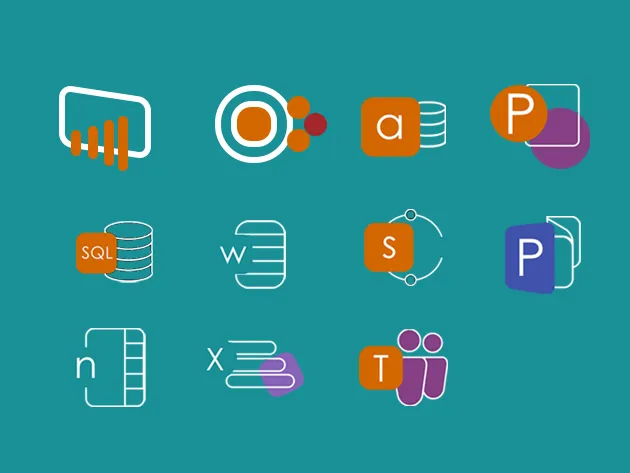
The Premium Microsoft Office Training Certification Bundle has 11 courses geared to help you master essential skills and raise your expertise. Popular programs like Word, Excel, PowerPoint, and Teams are covered, while more advance programs get introduced as well, including SharePoint, Access, PowerBI, and Microsoft SQL Server. You’ll gain a better understanding of how each program works and how they can all interact together. It’s on sale for $30.

Note: The Techdirt Deals Store is powered and curated by StackSocial. A portion of all sales from Techdirt Deals helps support Techdirt. The products featured do not reflect endorsements by our editorial team.

Source link

Continue Reading

Tech

An iOS 27 Bug Can Temporarily Freeze Your iPhone

Published

on

If you’re here because your newly updated iPhone suddenly froze while you were using it, don’t panic. There’s an iOS 27 bug that can temporarily freeze your phone if you happen to do a series of swipes. As 9to5Mac notes, it’s not going to ruin your device permanently, and you can get out of by doing a force restart. A force reboot is the first thing you should do when you’re troubleshooting issues with any device, as it will clear your RAM and close programs that could be causing you problems. 

Since your iPhone is frozen, and you can’t access the power icon, you’ll have to press and quickly release the volume up button and then do the same with the volume down button. Afterward, press and hold the side button until the Apple logo appears, and you know your phone is going through a restart. Take note that you may have to press on that button for more than 10 seconds. 

In case you haven’t encountered the bug yet and were wondering how it’s triggered, it’s by swiping down the Notification Center and the Control Center in quick succession. You’ll then see buttons and icons stuck at the top of the screen, and you’ll find your iPhone unable to register your swipes and taps. Apple will likely roll out a fix for this in the future, but for now, you may want to memorize our instructions for force restarts above. 

Advertisement

Source link

Continue Reading

Tech

Persona wants its AI band to become the assistant you always have with you

Published

on

Personal AI devices don’t have a great track record so far. The Humane AI Pin was the first big disaster. Even after raising hundreds of millions of dollars, the pin never really took off. Rabbit R1 was another interesting project that focused on AI actions, but it couldn’t deliver on its promises.

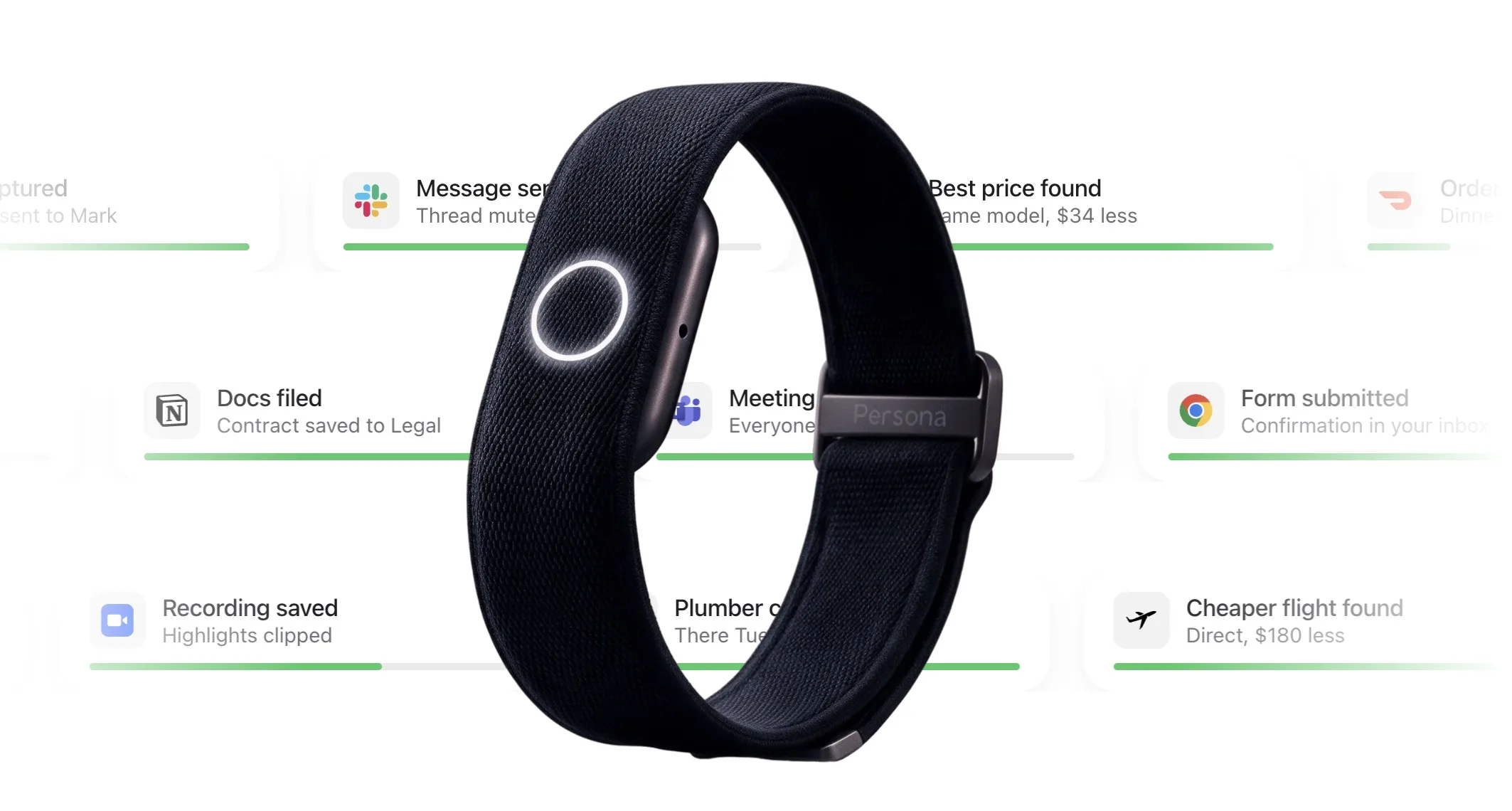
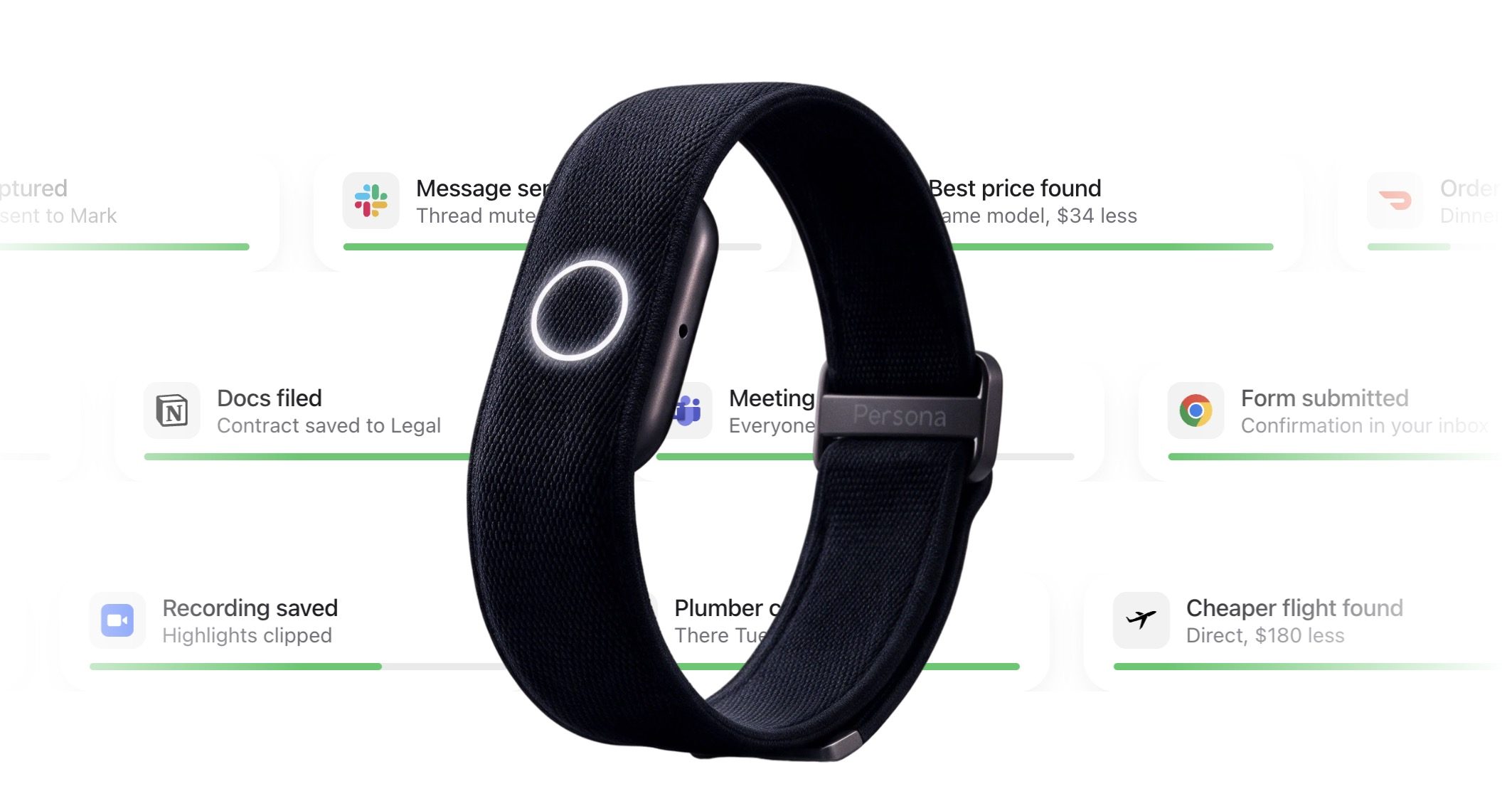
Now, a new brand called Persona is entering the space with an AI wristband that, similar to Rabbit, wants to perform actions for you. Whether it can deliver on its promises remains to be seen, but the product looks interesting, and here’s everything it promises to do.

What is Persona actually building?

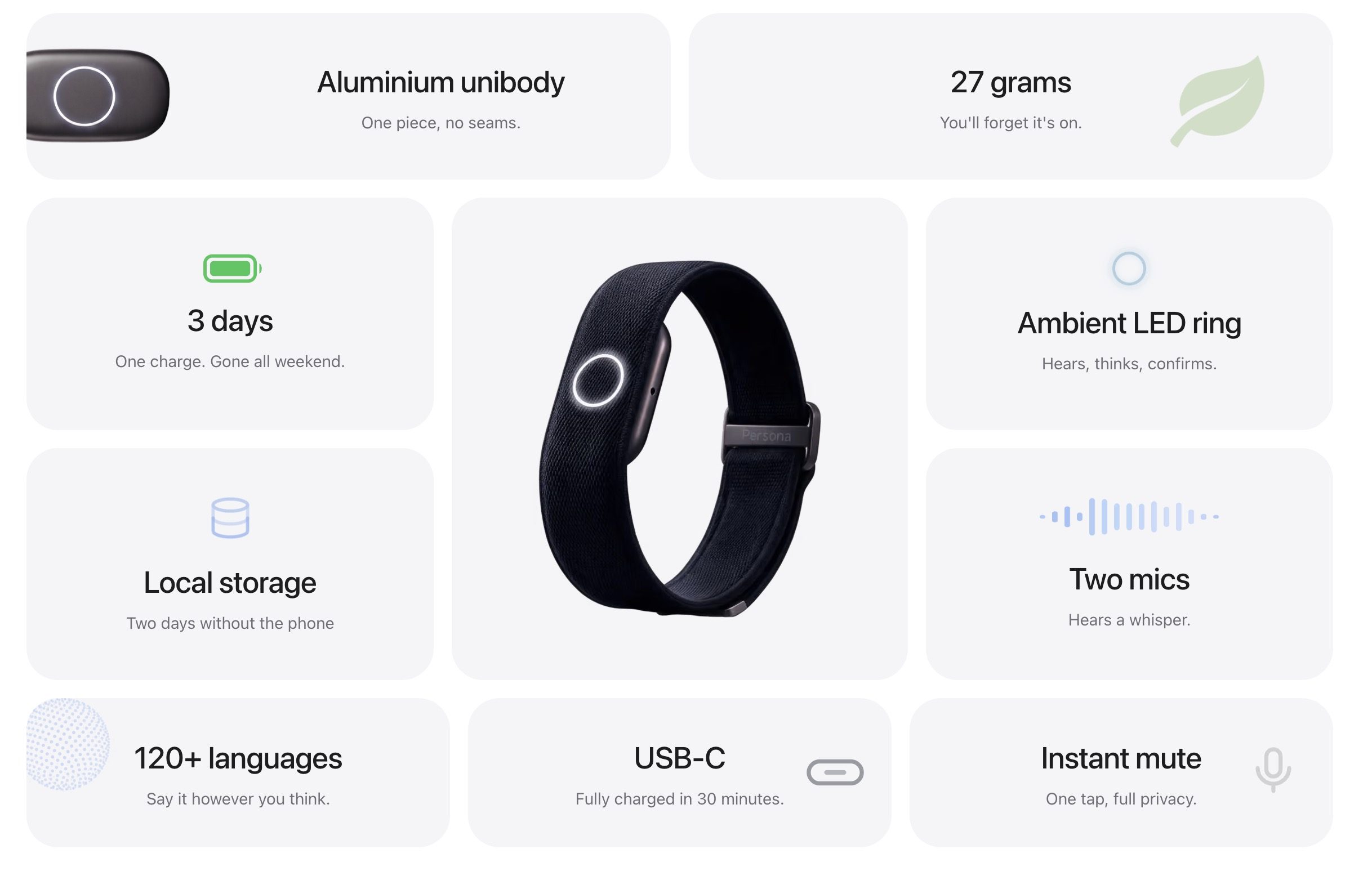
Persona just raised $5 million to build a new way for us to interact with AI, and its first product is the Persona Band. You talk to it, and it can make calls, book appointments, and send messages for you. It figures out what needs to happen and then checks back with you before doing anything, either with a quick voice reply or a simple tap.

Which features make the band stand out?

The wristband packs in more than just voice commands. It uses two microphones designed to pick up even a whisper, so you don’t have to talk loudly or repeat yourself in a crowded room. It can store up to two days of activity without needing your phone nearby, so you are not tied to carrying your device everywhere to stay connected. 

NEW: Persona built an AI wristband that can make calls, book appointments, and send messages for you.

You just talk to it, then approve what it wants to do with your voice or a tap.

Advertisement

-Makes calls, books appointments and handles messages
-Two microphones are designed to catch a… pic.twitter.com/5LcMd7GROY

— Ritwik Pavan (@ritwikpavan) September 16, 2026

Battery life is rated at three days, and a full charge takes only 30 minutes, so you are rarely without it for long. There is also a one-tap mute that instantly switches on privacy mode, and the band supports more than 120 languages, making it useful well beyond English speakers.

Preorders for the Persona band start at $179. Given how the Humane Pin and Rabbit played out, it’s fair to stay a little skeptical, but head to Persona’s website if you want to reserve one and read more.

Advertisement

Source link

Continue Reading

Tech

How to adjust Liquid Glass transparency in iOS 27

Published

on

Liquid Glass was first introduced with iOS 26 and, since its implementation across compatible devices, the design has been met with dividing opinions. 

Fortunately with iOS 27 it’s now possible to adjust the level of transparency that Liquid Glass has. So whether you want to embrace the fluidity of Liquid Glass, or you want a clearer and more opaque finish on your iPhone, there’s an option for you.

It takes just a few moments to adjust the liquid glass transparency in iOS 27, and we’ve detailed the steps below.

For more on iOS 27, check out our 14 tips and tricks guide to help you make the most of this year’s iPhone software update.

Advertisement

What you’ll need:

Advertisement

The short version:

  • Open Settings
  • Tap Appearance
  • Open Liquid Glass
  • Scroll the slider accordingly
  1. Step 1.

    Open Settings

    Remember that you’ll need to make sure you’ve installed iOS 27 before you get started. We’ve detailed the steps on how to download iOS 27 and which iPhones are eligible to receive the update in our Troubleshooting guide below.

  2. Step 2.

    Tap Appearance

    Scroll down the Settings app until you see Appearance.

  3. Step 3.

    Open Liquid Glass

    Select the Liquid Glass option, which is about halfway down the Appearance page.

    Advertisement
  4. Step 4.

    Scroll the slider accordingly

    Here you’ll see a slider that allows you to precisely adjust the level of transparency that Liquid Glass has. Scrolling the slider towards the left-hand side of the page will result in a more transparent design, whereas scrolling to the right will increase the level of opacity instead.

    When you adjust the slider, you’ll see a preview of the level of transparency in the widget above. 

    Once you’re finished, you can either press the back button or simply close the app.

Troubleshooting

How to download iOS 27
Advertisement

To download iOS 27, firstly make sure your iPhone is eligible to support the update. The following devices will support iOS 27: 

iPhone 17 series
iPhone Air
iPhone 16 series
iPhone 15 series
iPhone 14 series
iPhone 13 series
iPhone 12 series
iPhone SE (second- and third-gen)
iPhone 11 series

Once you’ve confirmed you’re sporting an iPhone 11 or newer, visit your Settings app and tap General. From here, simply select Software Update where you’ll be told whether iOS 27 is available for download and installation.

Just note that your phone won’t be usable while iOS 27 is installing, and you should allow up to an hour for the whole process too.

Advertisement

Source link

Advertisement
Continue Reading

Tech

Arcee AI built Trinity for about $20m, and investors now value it at $1bn+

Published

on

“Organizations should not have to choose between the capabilities of a frontier model and the ability to control the technology at the center of their work,” said Mark McQuade, co-founder and chief executive of Arcee AI.

The San Francisco company builds open-weight AI models. It has raised a Series B round that values it at more than $1bn, according to its announcement on 16 September. Vista Equity Partners, Cambium Capital and Emergence Capital led the round. AI10 Ventures, Hitachi, IAG, Microsoft’s M12, P7 and Wipro also took part.

Arcee did not disclose the amount. A source told Fortune, which first reported the round, that it was at least $150m. Fortune put the valuation at $1bn before the new money.

A frontier model for about $20m

Arcee released the Trinity family of models over the past year. The largest, Trinity Large, has 400 billion parameters, with 13 billion active for each token.

Advertisement

The company says its entire 2025 model lineup, including Trinity Large, cost about $20m to build. That figure covers salaries, compute, data, infrastructure and operations.

McQuade told Fortune the company had $30m in the bank when it decided to build its own models. “I said ‘let’s do it’ and I bet the company on it,” he said. Arcee spent 65% to 70% of its capital on the effort, according to Fortune.

Before that, Arcee worked on post-training, which adapts existing models, Fortune reported. McQuade founded the company in 2023. He previously worked at Hugging Face, which Nvidia is buying.

“Dropped the ball on open source”

McQuade told Fortune the goal is to catch up with Chinese open-weight models. “The U.S. is far ahead in closed source, but kind of dropped the ball on open source,” he said.

Advertisement

He said Arcee is chasing GLM Flash, a model from Beijing-based Z.ai. It is not chasing Poolside’s Laguna, he said.

Monti Saroya, senior managing director at Vista Equity Partners, said:

“Arcee has demonstrated a rare combination of technical execution and capital efficiency, building frontier open-weight models at a pace and cost profile that stands out in the market.”

Where the money goes

Arcee will spend the funding in three areas, according to the announcement:

  • training the next generation of Trinity models, which is already underway
  • expanding its work with the US Department of Energy and its 17 national laboratories on Genesis-Science-1, an open model for scientific computing
  • building products that help organisations customise, test, deploy and run open models

Arcee will also work extensively with Vista’s portfolio companies, Fortune reported.

A day earlier, the software company CIQ said Arcee had chosen its Fuzzball tool to coordinate computing jobs for its next flagship model, according to CIQ’s announcement. Arcee keeps its own training and inference software.

Advertisement

Other open-weight bets

In August, River AI raised $1.1bn to let companies train and keep their own models. The same month, the White House’s technology strategy left open-weight AI off its critical list.

Source link

Advertisement
Continue Reading

Tech

Math Professor Accuses OpenAI of Copying His Work, Says AI Compute Power Makes Racing to Publish 'Pointless'

Published

on

The New York Post wrote that OpenAI “stunned the mathematics world” last week when it announced its AI model “cracked a legendary math problem left unsolved for nearly a century in just 88 hours.”

But a New York University professor “has come forward alleging OpenAI may have copied his work after asking him to collaborate — with one of the company’s scientists allegedly warning he might ‘ruin his career’ if he refused.”

[P]rofessor Tristan Buckmaster, a British-Australian researcher who trained in Germany… had been working with Long Island-raised math prodigy Levent Alpöge, a researcher with OpenAI rival Anthropic, on a different elusive fluid dynamics equation, known as the Euler problem, when he found a solution using AI tools from both Anthropic and ChatGPT. He said scientists from OpenAI approached him and tried to convince him to jointly announce the solution, claiming they had independently solved Navier-Stokes. Buckmaster questioned the timing of their finding the solution in a blog post, noting OpenAI had only done so “in the past few days” — after the company became aware of his work. He asked OpenAI experts whether its AI systems used to solve the equation had been “trained on, or had access to” his research, but said they declined to answer, prompting him to wonder how they had advanced toward the solution so quickly. The puzzle is “not the direction one arrives at in a few days,” Buckmaster wrote incredulously…

In OpenAI’s post on its website sharing the Navier-Stokes proof, which it credited to Astra, the company’s latest AI bot, the firm insisted no user data was incorporated into its model to solve the problem. However, it noted that it “cannot rule out” that anonymized data was used to “improve our models.”

Advertisement

“We congratulate Levent Alpöge and Tristan Buckmaster on their remarkable mathematical work,” OpenAI said in the announcement.

Buckmaster shot back, “Is it ethical to use customer’s data to try to scoop their customer?”

Alpöge’s affiliation with Anthropic “seems to have been a sore point for OpenAI,” writes TechCrunch.

Buckmaster’s public statement says the OpenAI’s Sebastien “twice asserted that he wanted Levent removed from authorship” and also said that “it was so annoying that Levent works at Anthropic” — but that Buckmaster still refused to remove the Anthropic mathematician’s credit.

Advertisement

I said that if OpenAI released its result in the way proposed I would go
public with what happened. The reply was, “Why would you ruin your career?” [OpenAI’s Bubeck said later on X that he’d meant unfounded accusations could damage Buckmaster’s career.] I replied that I am an academic, and asked why he thought going public would ruin my career. The reply was, “If you don’t want me to be nice, then I don’t have to be nice.”

Buckmaster later told Australia’s public broadcaster ABC that the companies building AI “have zero respect for the scientific community. I mean, it’s appalling, honestly.” But he went on to say AI has made the race to publish mathematical breakthroughs pointless.

“I think it’s pointless. Like, I think the game is up….” Professor Buckmaster said he and Dr Alpöge had more research they could publish but questioned the point of racing ahead with it when AI could perform work that had previously occupied researchers for years.

He said there needed to be a discussion about how mathematics should operate in this new environment. Professor Buckmaster said some mathematicians had stopped publicly sharing what they were working on to avoid tipping off AI companies about their plans. He has called on academics and people from OpenAI, Anthropic and DeepMind to discuss ground rules for how they worked together.
He said the companies’ power carried responsibilities that went beyond competing to solve problems before their rivals…

Advertisement

Building on the work of mathematicians Diego Córdoba and Luis Martínez-Zoroa, the pair found a solution to the Euler problem, a stepping stone to the Navier-Stokes problem. Professor Buckmaster said he spent weeks checking and improving the “slop” proofs generated by AI…

For now, Professor Buckmaster said he wanted to finish existing work and support his PhD students and postdoctoral researchers, rather than chase another Millennium Prize. “I think it’s more important to re-evaluate what math is,” he said.

“The New York University professor also warned Australia about the centralisation of resources into the hands of a small number of privately owned foreign companies…”

Read more of this story at Slashdot.

Advertisement

Source link

Continue Reading

Tech

Huawei just laid out its 2027 AI chip plans, and Nvidia is clearly the target

Published

on

Huawei isn’t waiting around for the AI chip race to slow down. At a company event in Shanghai on Thursday, rotating chairman David Wang confirmed that two new AI chips are on the way in 2027, the 960DT and the Ascend 960PR, as the company keeps expanding its AI computing business to go after Nvidia, as Reuters reported. The 960DT is expected in the first quarter of 2027, followed by the Ascend 960PR in the third quarter.

Why does connecting chips matter so much?

Here’s the thing about AI workloads: even the most powerful single chip usually can’t handle the biggest AI programs on its own. That’s why Huawei is leaning so heavily on its UnifiedBus technology, which strings together huge numbers of AI chips so they can operate as a single, much larger computing system.

Wang said Huawei has already built 11 semiconductors around UnifiedBus, and the company’s largest connected setups, known as superclusters, can reportedly handle up to a million AI processors working together. On a smaller scale, Huawei says it has already delivered over 1,000 of these linked systems, called supernodes, to more than 370 customers worldwide. Wang stopped short of saying how many chips a single supernode can hold, who any of the customers are, or how the shipment numbers break down.

Can Huawei actually catch up to Nvidia?

US export controls have limited China’s access to the most advanced chips and manufacturing equipment, and that’s actually worked out well for Huawei, pushing it to the front of China’s domestic AI chip supply. Still, Nvidia remains the one to beat, with its chips and software used by developers everywhere.

Hardware alone won’t close that gap, though. Huawei also needs developers actually building on its chips, and Wang shared that its AI chip ecosystem currently counts 5,270 monthly active developers. That number will need to keep climbing if Huawei wants to be seen as a real Nvidia alternative and not just a backup option.

Either way, the US and China’s chip rivalry shows no signs of slowing down, and Huawei just made it clear it intends to be a major part of it straight through 2027.

Advertisement

Source link

Continue Reading

Tech

Don’t Waste Money On Cheap Portable Air Conditioners

Published

on


A portable air conditioner is a cooling option you might consider in a variety of circumstances. If you’re trying to cool an individual room, but the room’s design, apartment building rules, or other factors prohibit a window unit, a portable air conditioner may be a viable alternative. However, not all portable air conditioners are created equal. While you might be tempted to save money by purchasing a cheaper, single hose unit, opting for a more expensive dual hose air conditioner can actually reduce costs in the long run and deliver better performance overall.

That said, you first need to decide whether a portable air conditioner is right for you at all.  There are a lot of downsides of portable air conditioners. Despite the name, a portable air conditioner can be relatively heavy, loud, and inefficient. That said, if circumstances prevent you from opting for a superior cooling solution, you at least want to know you’re investing in a portable AC unit that will serve your needs and justify the cost. To that end, buying the more expensive unit might actually be your best bet.

Advertisement

What are the problems with single hose portable air conditioner units?

When you shop for portable ACs, you’ll likely find that single hose models have more appealing price tags than dual hose models. However, purchasing one might ultimately be the less financially sound choice.

A single hose portable air conditioner unit works by pulling air from inside the room and cooling it. The unit is designed to vent warm air and moisture outside the room. However, because a single hose portable AC pulls air from within the room and pushes it outside, the result is negative air pressure within the space you’re trying to cool. This causes the air in the room to be replaced with air that can leak in through other areas through the little gaps beneath closed doors. This naturally counteracts the cooling effect of the unit. Thus, the AC has to use more energy to function as intended.

On top of that, the harder an AC has to work, the more wear-and-tear the unit goes through. This can limit its lifespan and result in the need for early repairs. All these costs add up over extended periods of use. A single hose unit might be acceptable for a small room, but it’s a poor choice for a larger space.

Advertisement

Why a dual hose portable air conditioner is the better option

A portable air conditioner with two hoses typically represents an improvement over a single hose unit. One hose in a dual hose unit draws in air from inside the room, cools it, then sends it back into the room. This process generates heat within the components of the unit. The second hose takes in air from outside, uses it to cool the unit, and sends that warmed air back outside. This addresses some of the efficiency and effectiveness problems that can plague single hose models. The dual hose unit may cost more initially, but it will likely compensate for that with better savings and performance in the long run.

Finally, if you’re not sure whether a portable AC unit is right for your cooling needs, it helps to discuss this topic with a professional. They may be able to point you in the direction of better options. You can research the best portable air conditioners currently available as well. If you decide to purchase one, it’s also wise to brush up on some basic information, such as how much space you should leave between a portable air conditioner and the wall.

Advertisement


Source link

Advertisement
Continue Reading

Tech

EU Kids Act to ban social media for under-13s

Published

on

Big Tech does not decide rules, Ursula von der Leyen says, announcing plans to restrict social media usage for minors.

In her State of the Union speech today (16 September), European Commission president Ursula von der Leyen announced the EU Kids Act, a legislative proposal that intends to ban social media for children under 13.

The law takes a tiered approach to social media and video sharing platforms for minors in the bloc, proposing fully guardian-controlled accounts for children between 13 and 15, and a mandatory safe design for all accounts for under-18s.

“What we are witnessing is a great capture of our children. A capture of their attention, their focus, their minds. This is depriving children of their childhood,” von der Leyen said.

Advertisement

Child safety on social media has taken centre stage in recent years as parents and lawmakers grapple with the reality of an increasingly dangerous online landscape, worsened by the proliferation of technology and services such as generative AI and online prediction markets.

Governments across the world are banning popular platforms for younger minors in a bid to shield underage users from their provable harms.

Australia became the first one to ban social media for under-16s last December, though a recent study showed that eight in 10 Australian teens and preteens continued to use social media despite the complete prohibition by their government.

Meanwhile, Brazil rolled out a new law that mandates parentally-controlled accounts for under-16s, and several more countries, including Greece, Germany, Indonesia, Malaysia and Canada, are debating their own restrictions.

Advertisement

Last month, France’s top court blocked a proposed bill that would have banned social media for under-15s, arguing that the legislation was too broad and could infringe upon young people’s freedom of expression.

With the EU Kids Act, the Commission also wants to standardise access to social media across the bloc as part of a major government overhaul aimed at cutting red tape. If the act is passed, France’s under-15s, for example, would still be able to use these platforms.

Limiting access to social media, meanwhile, is only a part of the problem. “Children are pulled ever deeper into feeds designed to keep them scrolling,” von der Leyen said, calling algorithms the “great capture of our children”.

She added: “We do not have to accept addictive features. We do not have to accept children being drawn into ever more extreme content. We do not have to accept that girls have their photos used for AI-generated sexualised images.”

Advertisement

Earlier this year, the bloc greenlit a provisional deal to ban AI systems that generate non-consensual sexually explicit and intimate content or child sexual abuse material.

“Platforms will have to prove that they are safe. Because it is not about our minors accessing social media. It is about when and how do we allow social media to access minors,” von der Leyen continued.

The bloc is also introducing a new Digital Fairness Act this autumn that will aim to tackle addictive features on platforms.

“I am aware that many perceive the power of Big Tech as overwhelming and impossible to roll back. I disagree,” the president said. “Europe has the power to act. It is we who decide our rules, not Big Tech.”

Advertisement

US president Donald Trump, an avid critic of the EU’s strict rules, reportedly considered imposing sanctions on the EU for using its Digital Services Act against US technology heavyweights.

Don’t miss out on the knowledge you need to succeed. Sign up for the Daily Brief, Silicon Republic’s digest of need-to-know sci-tech news.

Source link

Advertisement
Continue Reading

Tech

Ring Promo Code: 50% Off

Published

on

If you’re a fan of Amazon’s ecosystem, whether that’s asking your Alexa speaker to tell you about the weather or compulsively checking the video feed from your Ring doorbell, then it makes sense to expand and build onto the system. It’s always easier to keep to one ecosystem as much as you can with smart home gear, letting you stick to a single app and single subscription if you decide to invest in one.

While we’ve liked Ring’s cameras and home security products fine enough, they’re hard to recommend at the top of our guides since Ring is reintroducing a policy to enable local law enforcement to request footage directly from Ring users. It’s up to you if that’s something you want to invest in, and if you already have Ring products, it might make the most sense to continue adding onto that ecosystem than diving into a new one.

No matter the reason, if you’re looking to add a Ring product to your home, don’t get one without using our Ring coupon codes to get it for a better price.

Ring Promo Code: 50% Off Ring Cameras, Doorbells, and Outdoor Cameras

Ring is running a deal all month long with up to 50% off different products and bundles. You can get all kinds of Ring cameras and security accessories for a variety of discounts, from Ring’s video doorbell to indoor and outdoor cameras.

Advertisement
Image may contain: Light, Lighting, and Electronics

These locks, lights, and other smart home upgrades let you add automation without messing up your home’s vibe.

Save $150 on Wired Doorbell Pro and Floodlight Cam

If you’re looking for an outdoor combination, you can get both Ring’s Starter Pro Kit, which includes the Wired Doorbell Pro and Floodlight Cam, for $150 off the set. It’s a great option if you want to get a camera feed both at your doorstep and over your garage.

Image may contain: Person, Security, Electronics, and Camera

Ring

Spotlight Cam Pro Battery

Bundle and Save on Ring Whole Home Basic Kit

Looking to deck out your whole home? Ring’s Whole Home Basic Kit is also discounted for $59 off. It includes Ring’s Outdoor Cam Plus Battery, Battery Doorbell, and the Alarm Security Kit, so you can get everything from video surveillance around the outside of your home and sensors to pair with the alarm system for inside of it.

Ring has a variety of subscription plans, which you’ll want since there’s no option to locally store your video footage. That means in order to play any video back to see what set off the camera or who was at the door, you’ll need one of these plans. Here’s a quick breakdown. Basic Ring Plan: Get the basics with video event playback and smart notifications for one camera. $5 per month or $50 per year. Standard Plan: All the core Ring experience with enhanced features for all your devices. $10 per month, or $100 per year. Premium Plan: Ring home the best of the best with our most advanced AI and recording features. $20 per month or $200 per year.

Advertisement
Ring stick up camera

Ring Coupons: $29 Off Pet Basic Kit + Pet Tag

Ring has a pet package you can get for a discount, too. You’ll get both Ring’s Indoor Cam and the Pet Tag, which has a QR code that lets anyone who finds your pet scan it and get your information to contact you. It’s 50% off right now, so if you’re looking for new tags and a camera to keep an eye on your favorite furry companion, this is your moment.

Rectangular cylindrical security camera sitting on a wooden surface

Get $40 Off the Ring Outdoor Cam Plus Battery + Battery Doorbell

If you’ve been looking to upgrade your home security system, now’s a great time to invest in the Ring Outdoor Cam Plus Battery + Battery Doorbell for $30 off (now $160). This discounted Ring bundle includes the Outdoor Cam, plus Battery, Battery Doorbell, and a free 30-day trial of Ring Protect2. With this enhanced Ring bundle, you’ll be able to see all around your home as well as welcome your guests without needing to get up from the couch.

Image may contain: Electrical Device, and Switch

There’s a reason these motion-activated, 1080p HD cameras have become ubiquitous: they’re super simple to setup and use. Just charge the battery, stick it by your door, and keep tabs on your place from wherever you are, day and night, through motion history or a live feed you can watch on an app. Two-way communication lets you chat with visitors or scare away porch pirates, while an optional subscription to Ring’s Protect Plan will let you share videos with your community. 

Secure Your Business With Ring

Having a security camera to protect your business is important. That’s where Ring Business Security Systems come into play. These security and alarm systems are tailored for your business needs, with options like Business Starter Kits, with curated options to fit your needs, and Inventory and Equipment Protection so you can keep an eye on all of your important merchandise and supplies, day or night. Plus, if you want to create your own solution specifically for your business’s needs, you can build your own custom system.

Source link

Continue Reading

Trending

Copyright © 2025