

Business
Canada stocks lower at close of trade; S&P/TSX Composite down 0.32%




There is no escaping the noise around artificial intelligence. Yet behind the breathless launches and boardroom enthusiasm sits a far more sober question, and it is one MPs are now determined to answer: are British businesses, and the workers inside them, actually getting anything out of it?
That question has become harder to dodge over the past two years. Having consulted hundreds of firms the length and breadth of the country, the Business and Trade Committee (BTC) has heard a recurring worry, that the UK is trailing competitor nations when it comes to helping companies, and small firms in particular, put AI to work. The risk is not merely missed efficiency gains. It is the prospect of British business losing the race for competitive edge before it has properly begun.
The flip side is just as instructive. A steady drip of embarrassing headlines, professional consultancies serving up error-strewn reports stuffed with invented citations and references that simply do not exist, has exposed the perils awaiting the unwary early adopter. For every firm quietly banking the benefits, another is discovering that AI without judgement is a liability dressed up as a shortcut.
It is against this backdrop, and as the Government presses ahead with a fresh raft of measures to spur development, uptake and use of AI, that the committee has opened its inquiry into artificial intelligence, business and the future of the workforce. Over the coming months it will test the attitudes and approaches of big and small business alike, alongside the public sector.
The terms of reference are refreshingly blunt. What real, here-and-now benefits is AI delivering to British business, the health service and local government? Which gains remain stubbornly out of reach, and what is blocking them? Is adoption in some sectors leaning too heavily on a handful of large technology platforms? And what should we make of the curious finding that Britain’s micro-businesses appear to be embracing AI more readily than their small and mid-sized counterparts?
Above all: what do we stand to lose?
The prize is not trivial. The OECD has estimated that AI adoption could add between 0.4 and 1.3 percentage points to UK productivity growth, worth tens of billions in additional output by the end of the decade. Realising even a fraction of that would move the dial on a productivity problem that has dogged the British economy for the best part of two decades.
Yet the evidence already gathering on the desks of the nation’s business press suggests the gains are real but uneven. Smaller firms are reporting quick, low-cost productivity wins, drafting copy, planning staff rotas, trimming waste, handling routine customer queries, long before they tackle anything more ambitious. The tools are cheap and, for the most part, straightforward to deploy. The harder, more valuable transformations remain the preserve of the few.
The committee’s interest in firm size cuts to the heart of the matter. Adoption is not spread evenly across the economy, and the reasons are familiar to anyone who has watched smaller firms wrestle with new technology: thin margins, scarce digital skills, a shortage of time to experiment and a justified wariness of betting the business on an unproven tool. Closing that gap, and unlocking the growth that AI promises UK SMEs, is rapidly becoming the defining test of whether the technology delivers for the whole economy or merely the well-resourced top of it.
Rt Hon Liam Byrne MP, Chair of the committee, framed the challenge in characteristically direct terms. “We can all see the excitement around artificial intelligence, but what is less clear is whether enough British businesses are actually using it to improve productivity, cut costs and win new customers,” he said. “We have heard growing concerns that while some firms are racing ahead, too many others, especially smaller businesses, are struggling to adopt these technologies at scale. If that is true, Britain risks falling behind competitors who are moving faster.”
He was equally alive to the downside. “At the same time, there are obvious questions about reliability, security and trust. Stories of AI systems producing flawed analysis, fabricated references and poor advice underline the importance of getting this right. Our inquiry will examine where AI is genuinely making a difference, what is holding back wider adoption, and what government and industry must do to ensure the benefits are spread across the economy. The challenge now is not just to invent the future, but to make sure Britain is equipped to maximise it.”
That last line bears repeating, because it captures the whole exercise. Invention has never been Britain’s weakness. Diffusion is, getting good ideas out of the laboratory, off the conference stage and onto the shop floors and back offices of the country’s 5.5 million businesses. On that score, the jury is still very much out, and the committee’s inquiry could not be better timed.

Amy Ingham
Amy is a newly qualified journalist specialising in business journalism at Business Matters with responsibility for news content for what is now the UK’s largest print and online source of current business news.

Ministers have set the UK on course to bar under-16s from mainstream social media, but the business and technology figures who will have to live with the policy are far from convinced it will work.
The government confirmed on Monday that platforms including TikTok, Instagram, Snapchat, YouTube, Facebook and X will be required to keep under-16s off their services, with messaging apps such as WhatsApp and the standalone YouTube Kids carved out. The measures, which follow the path already taken by Australia, are expected to come into force by spring 2027, and platforms that fail to take reasonable steps to exclude younger users face fines running into millions of pounds. Nine in ten parents who responded to the official consultation backed a ban.
It is, by any measure, one of the boldest interventions yet in the relationship between children, business and the internet. It is also one of the most contested. The reaction from across the regulatory, fact-checking and age-assurance worlds ranged from outright opposition to heavily qualified support, with a common thread: age limits alone will not fix online harm, and may create fresh problems of their own.
‘Reminiscent of attempts to ban the printing press’
The sharpest criticism came from the free-market Institute of Economic Affairs. Dr Christopher Snowdon, the think tank’s head of lifestyle economics, warned against judging legislation by the good intentions of its champions rather than its likely consequences.
“We know from Australia that most teenagers will get around the ban and that those who are not able to do so will suffer from social isolation,” he said. “There are legitimate concerns about screen addiction among both children and adults, but parents are already able to restrict what their children see online and limit the number of hours they can use a smartphone. These guardrails are removed when kids log in via VPNs or sign up to platforms as adults.”
His verdict was blunt. “What the government is trying to do is reminiscent of attempts to ban the printing press. It is similarly impractical, illiberal and ultimately undesirable.”
‘No silver bullet’
Leanne Proctor, regulatory lead at the Online Responsibility Network, struck a more conciliatory note but reached a similar conclusion, cautioning that the policy “risks letting down the very families it seeks to protect”.
“We understand why so many parents welcome this policy, and we share their concern for children’s safety online,” she said. “The UK would do well to reflect carefully on the experiences of Australia, who identified significant challenges with this approach. Evidence from social media restrictions around the world suggests that age limits alone are unlikely to be a silver bullet in protecting children from online harms, and parents deserve a solution that truly delivers.”
For Proctor, the answer lies in shared responsibility rather than a blanket cut-off. “Every brand and platform has a responsibility in making the internet safer. Our research found the majority of Gen Z firmly believe the responsibility lies with platforms themselves to improve online safety.” The route forward, she argued, is a “multi-stakeholder” model in which platforms deploy effective content monitoring and controls while being regulated quickly and effectively under the Online Safety Act.
A clenched fist, but parents wanted tough measures
Not everyone in the age-assurance industry was hostile. Andy Lulham, chief operating officer at age-verification provider Verifymy, described the announcement as “the government finally showing its hand on social media, and it’s a clenched fist”.
A ban for under-16s, demands that platforms close existing accounts, and restrictions reaching into chatbots and gaming platforms amounted to an approach he called “both bold and blunt”. Yet he acknowledged the political reality. “Parents clearly want tough measures; nine in ten who responded to the official consultation backed a ban, with the UK now joining Australia and a growing number of other countries heading in the same direction.”
Lulham argued the technology is now mature enough to do the job. “While not the approach I would have recommended, lessons will have been learnt from Australia and age-check technology is ready to enforce the new legislation,” he said, pointing to the work platforms have already done keeping children off adult websites since age-assurance duties took effect last July. But he warned that hardware and software alone would fall short: “To reduce harm, the ban needs to be backed by real accountability for platforms, proper support for parents, and education that prepares young people for the online world they’ll eventually rejoin.”
‘A free pass for social media companies’
The most fundamental objection came from the fact-checking charity Full Fact, which framed the ban as a retreat rather than a step forward. Mark Frankel, its head of public affairs, called the announcement “neither bold nor decisive” and “a de facto surrender in the fight against harmful online misinformation”.
Rather than locking under-16s out, Frankel said, ministers should be applying far greater regulatory pressure on technology companies to dismantle addictive design features and placing a statutory duty on them to help users tell fact from fiction. He also flagged an awkward contradiction at the heart of the government’s wider agenda: “If the government is serious about extending participation in our democratic process to 16 and 17-year-olds, restricting their access to these platforms is unlikely to help them become better informed.”
His closing charge was that the policy lets the platforms off the hook entirely. “It’s not the technology itself that is harmful, but the way it’s designed and marketed to all users of these platforms. Far from protecting young people from online harms, this ban fails to address current weaknesses in online safety legislation and gives social media companies a free pass.”
What it means for business
For platform operators, brands and the fast-growing age-assurance sector, the direction of travel is now clear even if the detail is not. Further measures, including possible overnight curfews and limits on infinite scrolling for under-18s, are expected to be set out in July, and the practical burden of compliance will land on businesses, not Whitehall.
The government’s own Online Safety Act explainer and the House of Commons Library briefing on proposals to ban social media for children set out the legislative backdrop against which firms will have to plan. What this week’s reaction makes plain is that even the companies building the tools to enforce the ban doubt it can succeed on its own. The consensus emerging from the industry is that age limits are the easy part; meaningful accountability, parental support and digital education are the hard, unglamorous work that will actually determine whether children are any safer.

Jamie Young
Jamie is Senior Reporter at Business Matters, bringing over a decade of experience in UK SME business reporting.
Jamie holds a degree in Business Administration and regularly participates in industry conferences and workshops.
When not reporting on the latest business developments, Jamie is passionate about mentoring up-and-coming journalists and entrepreneurs to inspire the next generation of business leaders.
Business
GTA 6 Pre-Orders Open June 25, 2026 as Rockstar Confirms November Release Date Still Stands

Rockstar Games has officially confirmed that pre-orders for “Grand Theft Auto VI” will begin on June 25, 2026, marking a major milestone in the rollout of one of the most highly anticipated video game releases in the industry’s history.
Pre-orders for Grand Theft Auto VI will officially begin on June 25 on digital storefronts and at other select retailers, the studio announced Thursday. Rockstar advised fans to add the title to their wishlists on the PlayStation Store or Microsoft Store in order to receive alerts once pre-orders go live.
A Long-Awaited Confirmation
The announcement arrives after years of speculation, leaks, and at least one previous delay surrounding the franchise’s long-gestating sixth installment. A previously released teaser image for “Grand Theft Auto VI” had shown a now-inaccurate scheduled release date of May 26, 2026. At the time of the original May 2025 announcement, Rockstar Games had set that release date, but later in 2025, the date was pushed back to November 19, 2026, where it currently stands.
The previous “Grand Theft Auto” title, “Grand Theft Auto 5,” was released nearly 13 years ago, in September 2013, underscoring just how long fans have waited for a new mainline entry in Rockstar’s flagship open-world crime series.
Platforms and Launch Window
Rockstar Games confirmed pre-orders open June 25, with the game launching on November 19, 2026. At launch, the game will be available on PlayStation 5 and Xbox Series X and S, with a PC version expected later.
At launch, the highly anticipated title will be available exclusively on current-generation consoles, specifically the PlayStation 5 and Xbox Series X|S. True to the studio’s historical release patterns, no PC version has been announced for the initial launch window, establishing a temporary console exclusivity period at release. Like previous Rockstar releases, the game is expected to become playable on PC later through the company’s website, Epic Games, or Steam.
New Cover Art Offers a Closer Look at Vice City
Alongside the pre-order announcement, Rockstar also unveiled the game’s official cover art, giving fans their most detailed look yet at the franchise’s long-awaited return to its iconic Florida-inspired setting. The newly revealed cover art adheres to the franchise’s traditional multi-panel collage format while heavily integrating the neon-toned aesthetic of Vice City and the fictional state of Leonida.
The cover art featured protagonists Jason and Lucia, several non-playable characters, and a better glimpse of what fans can expect from Vice City. “Jason and Lucia have always known the deck is stacked against them,” the game’s synopsis read. “But when an easy score goes wrong, they find themselves on the darkest side of the sunniest place in America, in the middle of a criminal conspiracy stretching across the state of Leonida.”
The story follows the twisted crime drama of Jason Duval and Lucia Caminos as they strive to survive Leonida’s criminal underworld and uncover a grand conspiracy.
The artwork reveal generated immediate viral attention across social media. One of the videos posted to Instagram announcing the news received over 2 million likes within the first few hours it was online.
Pricing Remains a Mystery
Despite confirming the pre-order date and launch window, Rockstar has so far declined to reveal how much the game will actually cost — a detail that has become one of the industry’s most closely watched open questions amid broader concerns about rising video game prices. While the title can now be added to user wishlists on major digital storefronts, Rockstar has kept specific pricing models and potential special or collector’s editions under wraps until the pre-order window opens.
The price of the game remains unknown, and it’s unclear if that information will be made available before the June 25 pre-order date. Pricing remains unknown, with speculation of $79.99 or $99.99 versions. Industry analysts have noted that despite the uncertainty over price, the title is still expected to drive substantial console sales. Analysts predict tens of millions of sales, potentially boosting console sales despite rising prices.
A Reassuring Signal on Timing
The decision to open pre-orders just months ahead of the planned November launch has been widely interpreted within the gaming industry as a positive signal that Rockstar does not intend to delay the title further. There’s still a lot of information that isn’t known, including how exactly the online component will work or whether cross-play is involved, but pre-orders opening up so soon does indicate the game may not be delayed past its planned November 19, 2026 launch.
Take-Two Interactive’s leadership has also reinforced that message in recent public comments. Earlier this week, Take-Two CEO Strauss Zelnick addressed the development timeline directly, confirming that the launch date remains in place. “The team at Rockstar really does seek to do something that’s never been done before. That’s really hard, and it takes a long time,” he said.
More Trailer Footage May Be Coming Soon
Fans eager for additional gameplay footage may not have to wait much longer following the pre-order launch. Zelnick also confirmed that a third official trailer would not arrive until after pre-orders go live, raising the possibility that the next wave of footage could land on or shortly after June 25. Eagle-eyed fans have already spotted a new screenshot on the official pre-order page offering a first full view of Vice City in Grand Theft Auto 6.
Stock Market Reaction
The financial markets responded favorably to the announcement, with investors interpreting the pre-order confirmation as further evidence that the title remains on track for its November release. Following the news, shares of Take-Two Interactive climbed 3.4% during opening trading hours on the New York Stock Exchange. The decision to open pre-orders has largely stabilized financial and consumer confidence regarding potential development delays.
With pre-orders now confirmed to open June 25 across digital storefronts and select physical retailers, attention will shift to whether Rockstar reveals pricing details, special or collector’s editions, and the long-awaited third trailer in the days surrounding that date. The newly revealed cover art and pre-order timeline mark what industry experts anticipate will be the official launch of one of the largest media marketing campaigns in entertainment history, as Rockstar and parent company Take-Two ramp up promotion ahead of what is expected to be one of the best-selling entertainment product launches of the decade when the game finally arrives on November 19.
Business
(VIDEO) NYPD Briefly Stops Knicks Guard Tyler Kolek, Mistaking Him for a Fan During Title Parade

NEW YORK — New York Police Department officers briefly detained New York Knicks guard Tyler Kolek during the team’s NBA championship parade Thursday, mistaking the second-year player for a fan who had jumped the barricades along the route — a mix-up that quickly went viral as the city celebrated its first NBA title since 1973.
New York Knicks faithful know Tyler Kolek well. He’s a beloved reserve who just finished his second NBA season as part of a Knicks team that won the franchise its first NBA championship since 1973. Although the 25-year-old Kolek started only one game during the 2025-26 campaign, he made 70 total appearances, including the playoffs, and notably scored 16 points in a Christmas Day win over the Cleveland Cavaliers.
A Case of Mistaken Identity
A couple of New York Police Department officers must not have been watching that magical comeback. They mistook Kolek for a fan who had jumped the barricades during the Knicks’ NBA championship parade on Thursday.
Kolek, with his hair flowing out the back of a Knicks championship hat, excitedly high-fived a collection of elated fans along the parade route, as captured in video footage shared by ESPN’s Kimberley A. Martin. That is, until he was briefly held up by NYPD officers. Kolek appeared to exasperatedly explain that he’s a member of the team, not a fan. Another authorized member of the Knicks’ parade came over to assist Kolek, and NYPD let the second-year guard go on his way.
Unsurprisingly, the mix-up has gone viral across social media, adding a lighthearted moment to what was otherwise a historic day for the franchise and its fanbase.
A Second Viral Moment From Instagram Live
The NYPD encounter wasn’t the only clip of Kolek that circulated widely on social media Thursday. The other came from his own Instagram Live broadcast during the parade, in which he showed off a particular piece of hardware that held special significance for him.
“Y’all see this,” Kolek said while gripping the NBA Cup on Instagram Live during the parade, as shown by SNY. “This is my real trophy right here.”
Kolek went on to playfully direct the message toward NBA Finals MVP Jalen Brunson, who appeared alongside him during the broadcast. “This is my real trophy right here,” Kolek humorously reiterated, with Brunson now in frame. “Y’all got that one. I got this one.”
A Historic Knicks Season
The lighthearted moments came amid a celebration of a genuinely historic season for the Knicks organization. The team became the first in league history to win both the NBA Cup and the Larry O’Brien Trophy in the same season. The NBA Cup is a midseason competition that was introduced in 2023.
Kolek’s comment about his “real trophy” referenced his specific contribution to that NBA Cup triumph. Kolek didn’t play against the San Antonio Spurs as New York authored its five-game series victory and won its first NBA Finals in 53 years; however, he did score 14 points in a NBA Cup championship victory over the Spurs back on December 16. The Knicks were full of come-from-behind victories this season, and they used another to dispatch the Spurs that night, perhaps a sign of what was to come months later.
Kolek’s Path to New York
Kolek’s journey to becoming a fixture in the Knicks’ championship rotation followed an unconventional route to the franchise. Kolek, whom the Knicks traded for in 2024 after the Marquette product was drafted in the second round by the Portland Trail Blazers, has since carved out a meaningful role for himself within the team’s deep rotation.
During the 2025-26 season, Kolek averaged 4.4 points, 2.7 assists, 1.6 rebounds, and 0.4 steals across 11.44 minutes per game, modest statistical contributions that nonetheless reflected his steady presence as a reserve guard within a roster built around star talent like Brunson.
A Role Player Who Embraced His Part in History
Part of what made this Knicks team special was that every player seemed to recognize and embrace their role. That includes Kolek, who, despite not playing in the NBA Finals, was very much a piece of the puzzle that ended the franchise’s infamous NBA championship drought.
That sense of collective ownership over the title run was evident throughout Thursday’s parade, with Kolek’s enthusiasm on full display both in his interactions with fans along the route and in his playful banter with Brunson during the Instagram Live broadcast. For a franchise that had waited 53 years to once again claim the NBA Finals title, the celebration extended to every member of the roster — including a reserve guard who, for a brief moment, found himself on the wrong side of a police barricade during his own team’s victory parade.
A Day of Celebration Across the City
Thursday’s parade marked the culmination of a championship run that captivated New York for months, with the Knicks defeating the San Antonio Spurs in a five-game NBA Finals series to claim the franchise’s first title since 1973. The celebration brought together players, coaches, and an enormous gathering of fans along the parade route, with moments of genuine connection between the team and its supporters — including the high-fives that ultimately led to Kolek’s brief case of mistaken identity.
For a fanbase that has endured more than five decades without a championship to celebrate, Thursday’s parade represented far more than a single afternoon of festivities. It served as a release valve for generations of accumulated frustration, and the spontaneous, unscripted moments — from Kolek’s NYPD mix-up to his trophy-clutching Instagram broadcast — only added to the sense of joy and informality that defined the day’s celebrations.
With the championship parade now complete and the offseason set to begin, attention around the Knicks organization will shift toward roster construction and the franchise’s plans to build on its title-winning foundation. Team owner James Dolan has already indicated the Knicks will not move into the NBA’s second luxury tax apron in an effort to keep the championship roster largely intact, signaling the organization’s intent to pursue sustained contention rather than a single isolated title.
For Kolek specifically, Thursday’s viral moments — both the NYPD encounter and his exuberant trophy-touting livestream — cemented his status as a fan-favorite figure within the locker room, even as questions about his long-term role on a deep and talented roster remain to be settled in the months ahead.
Business
Dow Closes at Record 51,564.70 as Intel-Apple Deal and Iran Truce Lift Stocks Before Holiday

The Dow Jones Industrial Average closed at a record 51,564.70 on Thursday, up 72.15 points, or 0.14%, as Wall Street notched gains across the board heading into a three-day weekend, with U.S. markets closed Friday in observance of the Juneteenth federal holiday.
The primary narrative driving the market Thursday was the resilience of industrial manufacturing and AI-driven hardware, which managed to offset broader weakness in enterprise software and consumer retail. While the index reached new heights, the narrow breadth of the rally suggested selective investor sentiment as the market digested new economic data.
US equities closed higher Thursday, as tech strength and optimism over the US-Iran deal offset concerns over a hawkish Federal Reserve. The S&P 500 advanced 1% and the Nasdaq 100 gained 1.9%, while the Dow rose by 72 points.
Intel Surges on Apple Chip Partnership
The single biggest catalyst behind the broader market’s strength traced back to a surprise announcement involving two of the most closely watched names in American technology. Intel surged 10.6% after President Trump announced that the semiconductor giant would produce chips for Apple in the U.S. The news lifted the broader chip sector, with Nvidia up 2.8% and Micron Technology climbing 8.5%.
AI powerhouse Nvidia continued its upward trajectory, gaining 1.77% to reach $225.01 on news of increased infrastructure spending.
The Iran Peace Deal’s Continued Support for Markets
Beyond the chip sector rally, broader market sentiment continued to benefit from the formalization of an interim Middle East peace agreement that has eased fears of sustained energy price volatility. The interim peace agreement signed by the U.S. and Iran, which includes the reopening of the Strait of Hormuz, raised hopes for an end to the conflict and eased concerns about volatile energy prices.
That improved geopolitical backdrop also lifted travel-related stocks. Airlines saw strong gains, with American Airlines rising 3.3%.
The Fed’s Hawkish Shadow Still Looms
Even with Thursday’s gains, the market continued to grapple with the lingering effects of a notably hawkish signal from the Federal Reserve earlier in the week. The Federal Reserve kept rates steady, with half of officials signaling that at least one rate increase may be warranted this year.
Equity indexes rose and yields were flat Thursday ahead of the open as investors recovered some of the ground lost after the Federal Reserve, in Kevin Warsh’s first meeting as chair, indicated the possibility of a rate hike this year. That recovery followed a difficult session earlier in the week. The Dow Jones Industrial Average had lost more than 500 points Wednesday and the S&P 500 slumped 1.2% as hopes for a more dovish Fed were quickly dashed, with all 11 of its sectors closing in the red.
Winners and Losers Among Dow Components
Thursday’s session produced a notably mixed performance across individual Dow components, even as the index overall closed higher. The day’s top performer was 3M, which jumped 3.70% to $148.62 following a favorable analyst upgrade regarding its lean manufacturing pivot.
Healthcare and defensive stocks also saw significant bids, with Johnson & Johnson rising 1.61% to $227.63 and UnitedHealth Group climbing 1.00% to $399.64. Cisco rounded out the leaders, up 1.33% at $100.48.
On the other side of the ledger, several prominent names posted notable declines. IBM led the retreat, falling 2.42% to $213.40 amid concerns over slowing legacy service contracts. Home Depot dropped 2.14% to $303.85, weighed down by data showing a cooling housing market.
Software giant Salesforce fell 1.64% to $168.45, while Sherwin-Williams and Caterpillar slipped 1.36% and 1.22%, respectively. Financials also faced headwinds, with JPMorgan Chase declining 1.12% to $301.51.
Separate intraday data from Trading Economics offered a slightly different snapshot of sector leadership during the session. The rise was led by Caterpillar, Walt Disney, and Nvidia. On the downside, the weakest performers were IBM, Johnson & Johnson, and JPMorgan.
Trading Volume and Range
The current trading volume for the Dow Jones Industrial Average was 963,501,133 shares. The index’s price ranged from 51,554.53 to 51,949.26 during the session, with an opening price of 51,571.85. Over the past 52 weeks, the Dow has ranged from a low of 41,981.14 to a high of 52,281.19.
A Strong Day Across the Broader Market
Thursday’s gains extended well beyond the Dow’s blue-chip components, with growth-oriented indexes posting even more substantial advances. The S&P 500 closed up 1.08% at 7,500.58, while the Nasdaq Composite surged 1.91% to 26,517.93. The Russell 2000 Index, which tracks smaller companies, gained 2.12%.
The CBOE Volatility Index, often referred to as Wall Street’s fear gauge, fell sharply by 11.06% to 16.40, reflecting a marked reduction in investor anxiety following the prior session’s turbulence.
International markets also largely participated in the rally. Japan’s Nikkei 225 climbed 1.65%, Germany’s DAX rose 0.37%, and France’s CAC 40 gained 0.44%, though Hong Kong’s Hang Seng Index declined 1.59% and London’s FTSE 100 fell 1.04%.
Markets Closed Friday for Juneteenth
With Thursday’s session now in the books, U.S. markets will remain closed for the remainder of the week. The New York Stock Exchange and the Nasdaq will be closed for trading on June 19, 2026, in observance of the federal holiday of Juneteenth. Both major stock exchanges first closed for the holiday in 2022, after Juneteenth was designated as a federal holiday in 2021.
U.S. markets are closed Friday, June 19, in observance of the Juneteenth holiday, with regular market updates set to resume Monday, June 22. The stock and bond markets will reopen Monday, June 22, and it will be business as usual on Wall Street for a few days, with the next scheduled market closure coming Friday, July 3, in observance of Independence Day.
With the Dow notching a fresh record close heading into the holiday weekend, investors will return Monday to assess whether the combination of strong chip-sector momentum, easing Middle East tensions, and a still-uncertain Federal Reserve policy path can sustain the market’s recent upward trajectory. The narrow breadth of Thursday’s rally — concentrated heavily in industrial and AI-related hardware names while software and consumer-facing stocks lagged — suggests that selective investor positioning, rather than broad-based optimism, will likely continue to shape trading patterns as markets resume full activity next week.

Fox Corporation is buying Roku in a cash-and-share deal worth roughly $22bn (about £16.3bn), a bet that bolting its sports and news output onto America’s best-known streaming platform will shore up its position as audiences drift away from traditional television.
The transaction hands Fox a direct line into the more than 100 million households that already use Roku’s streaming devices and smart-TV software. For a business still heavily dependent on cable distribution, that reach offers two prizes at once: a far richer pool of first-party data with which to target advertising, and a route to market that does not run through the pay-TV bundle it has leaned on for decades.
It is the first major acquisition Lachlan Murdoch has overseen since taking the reins of the empire his father, Rupert, assembled. Murdoch, who chairs both Fox and The Times publisher News Corp, described the deal as a “defining moment” that brings “together the most valuable live content portfolio in video consumption with the preeminent streaming platform through which America watches it”. It is also the latest in a run of outsized media-and-technology tie-ups, coming hot on the heels of Elon Musk’s $80bn merger of X and xAI, as owners race to fuse content, platforms and data under one roof.
“In 2020, we acquired Tubi, and under our stewardship it has become one of the most successful businesses in streaming,” Murdoch said. “Today, we take the next step.” That earlier punt on free, ad-supported television has paid off handsomely: Fox’s decision to launch Tubi in the UK underlined how seriously the group now takes the free-streaming market it once treated as an afterthought.
Investors were less enthusiastic about the price tag. Fox shares slid 8 per cent in pre-market trading as the market digested the cost and the share issuance involved. Roku climbed 2.6 per cent to $147.50, though it remained well shy of the $160-a-share offer, a gap that typically signals lingering doubt over whether a deal will complete on its stated terms.
What Roku brings to the table
Roku was among the first companies to carry services such as Netflix and YouTube onto the television set through connected devices and smart TVs. Its income is driven largely by advertising and by subscription revenue earned from the streaming apps that sit on its platform, and it also runs the free-to-watch Roku Channel. Advertising is the larger engine: the platform business generated $613m of revenue in the first quarter, up 27 per cent year on year.
That trajectory matters because the wider market has been anything but smooth. As cash-strapped UK households cancel streaming subscriptions to trim spending, ad-funded “free” tiers have emerged as the industry’s growth story, exactly the territory where Roku and Tubi are strongest.
Under the agreement, Roku shareholders will receive $96 in cash plus about 0.97 Fox Class A shares for each share they hold. That values the company at $160 a share, a premium of 33.7 per cent to Roku’s closing price on the Thursday before reports emerged that it was weighing its options, a sale among them.
While Fox dominates cable through its sports rights and the top-rated Fox News, its streaming footprint has so far been confined to Tubi. Roku widens that considerably, and the enlarged group expects to become the third-largest player in US television by viewership. Fox shareholders will own roughly 73 per cent of the combined company once the deal closes, with Roku investors holding the balance.
Both boards have approved the transaction, which is expected to complete in the first half of next year, according to reporting by Variety and The Hollywood Reporter.
For SME advertisers and media buyers watching from this side of the Atlantic, the significance is less about the headline figure than about the model it endorses: live content plus a distribution platform plus the data to monetise both. If Murdoch’s wager pays off, the combination of premium live programming and connected-TV reach could reset what advertisers expect to buy, and how cheaply challenger brands can reach a national audience.
Amy Ingham
Amy is a newly qualified journalist specialising in business journalism at Business Matters with responsibility for news content for what is now the UK’s largest print and online source of current business news.

Downing Street is pressing the White House for an exemption from a sweeping American export ban that has stripped British users of access to Anthropic’s most advanced artificial intelligence.
After President Trump blocked foreign access to Claude Fable 5 and Mythos 5, two versions of the company’s newest and most capable model, No 10 officials began working the phones across the US administration in search of a UK carve-out. So far the lobbying has produced little. Officials in Washington remain wary that the technology carries security risks once it travels beyond America’s borders.
“There is an effort to seek an exemption, but there are security issues to consider,” said one figure with knowledge of the talks.
For Britain’s businesses, the episode is a sharp lesson in how quickly access to critical infrastructure can be switched off by a decision taken thousands of miles away. The same Mythos model now at the centre of the row had already set off crisis meetings among finance ministers and central bankers earlier this year over its uncanny ability to surface vulnerabilities in widely used software.
The US Department of War has taken the toughest line of all, tearing up a defence contract with Anthropic. The White House, by contrast, had been viewed as the more pragmatic actor — until officials concluded the company had failed to allay their concerns about the new model and moved to drastic action.
Anthropic announced on Friday that all foreign nationals, including its own overseas employees, would be barred from using the model. The company said the government believed there was a method of “jailbreaking”, or bypassing, Fable 5’s safeguards.
“To date, the government has only given us verbal evidence of a potential narrow, non-universal jailbreak, which essentially consists of asking the model to read a specific codebase and fix any software flaws,” Anthropic said. The firm added that it had complied with the legal directive but disagreed with the decision to recall a model relied upon by hundreds of millions of people on the basis of a “narrow potential jailbreak”. “If this standard was applied across the industry, we believe it would essentially halt all new model deployments for all frontier model providers,” it said. Because it could not quickly build nationality-based access controls, the company pulled both Fable 5 and Mythos 5 for users worldwide, Americans included.
The tone from the Pentagon has been unmistakable. On Saturday, Pete Hegseth, the US secretary of war, posted on X: “Three months ago, the Department of War kicked Anthropic out of our building, forever. Every passing day proves why that was the right move.”
For ministers, the affair has crystallised a long-running anxiety about Britain’s dependence on a handful of American AI suppliers. Kanishka Narayan, the UK government’s AI minister, said the ban underlined the importance of building “sovereign AI capability” at home.
“This week, the most advanced AI in the world was cut off for everyone in Britain,” he said. “Not by us, but by a decision taken in another country. We treat every other threat to our sovereignty with deadly seriousness, but we haven’t learnt to treat this one the same way.”
That argument is no longer abstract. The government has already stood up a £500m Sovereign AI fund to back home-grown developers, and private capital is following, with a £1bn push to build Britain’s first fully sovereign AI infrastructure network now under way. The Anthropic ban hands those efforts a powerful new justification, and a warning to every UK firm that has wired a foreign model into its products and processes.
The diplomatic test comes quickly. Sir Keir Starmer is due to meet Trump this week at the G7 summit, where the carve-out is expected to feature in the conversation. For the thousands of British SMEs that have built workflows, customer-service tools and software pipelines around frontier AI, the practical message is blunt: resilience now means knowing exactly which of your suppliers could be switched off overnight, and what you would do the morning it happened.
Amy Ingham
Amy is a newly qualified journalist specialising in business journalism at Business Matters with responsibility for news content for what is now the UK’s largest print and online source of current business news.

Google DeepMind’s John Jumper to join Anthropic
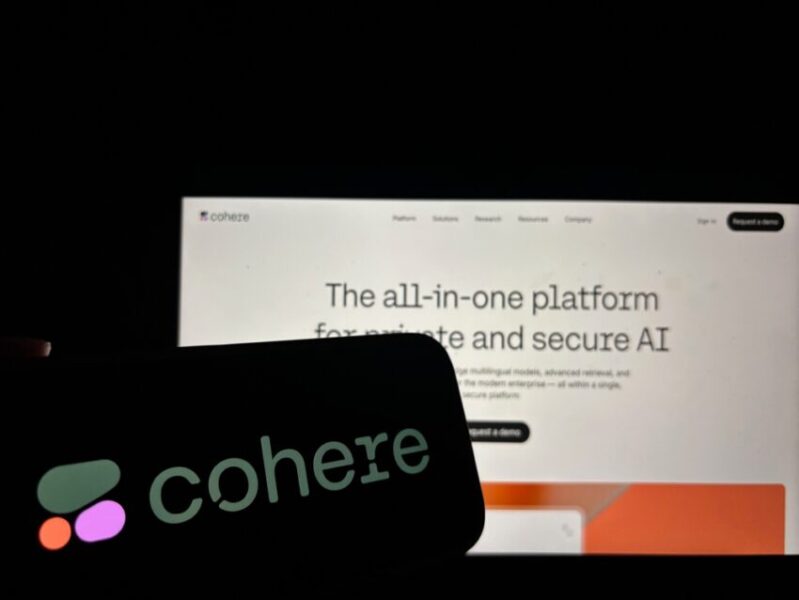
Canada’s Cohere is tripling its physical footprint in the UK, signing a lease on a new London office as it races to position itself as the credible alternative to American rivals OpenAI and Anthropic for governments and regulated businesses nervous about handing their data to Silicon Valley.
The artificial intelligence start-up will move into a 14,000 sq ft office at 100 New Oxford Street later this year, leaving its current home in Soho. The new site has room for up to 100 staff, against roughly 80 today, and gives the company a far larger shopfront in the capital as demand for so-called “sovereign AI” accelerates.
Founded in 2019, Cohere builds large language models tailored to businesses and governments rather than consumers. Its co-founder and chief executive, Aidan Gomez, is among the most influential AI researchers in the world, having helped develop the “transformer” architecture that underpins virtually every modern large language model, including the systems built by his much larger American competitors.
The expansion is the latest sign that the global AI land grab has firmly reached London. It follows OpenAI’s decision to open its first permanent London office in King’s Cross, a site with capacity to more than double its headcount to 544, while Anthropic plans to quadruple its own London presence just a few streets away from its bitter rival.
Where the American giants compete on raw capability, Cohere is selling reassurance. The company promises not to retain customer data and offers models that can be deployed on-premises or inside private clouds, an approach designed to appeal to governments and heavily regulated sectors such as finance, defence and healthcare. Its UK customers already include Reuters, the Aston Martin Formula One team and the Department for Science, Innovation and Technology.
That pitch was sharpened in April when Cohere acquired the German start-up Aleph Alpha to create what it called a “transatlantic AI powerhouse”, pitched squarely at European customers wary of depending on US developers. The combined group was valued at around $20bn.
“By expanding our London footprint threefold, we’re positioning ourselves at the heart of the UK’s sovereign AI revolution, where government and enterprise interest in secure artificial intelligence is accelerating,” Gomez said.
Sovereign AI refers to a state or organisation’s ability to develop, deploy and govern AI tools independently, without relying on foreign infrastructure. It has climbed rapidly up the political agenda amid mounting concern that Europe is dangerously dependent on US models and cloud providers. Building “sovereign” capability is now a stated priority for both the UK government, which has stood up a dedicated £500m Sovereign AI unit to back home-grown firms, and the European Union, which launched its technology sovereignty legislation earlier this month.
The numbers help explain the rush. McKinsey estimates that sovereignty requirements could shape between $500bn and $600bn of AI spending by 2030, as much as a third of the entire market.
Kanishka Narayan, the minister for AI and online safety, welcomed the move. “Cohere’s focus on sovereign AI, helping businesses and government deploy this technology securely, on their own terms, is exactly the kind of capability we are building in Britain,” he said.
For all the political enthusiasm, the sovereign AI story is not without its sceptics. The same security promise that makes these models attractive can cut the other way: regulators have begun to warn that even tightly controlled enterprise systems can expose systemic weaknesses in sensitive sectors such as banking. For Cohere, convincing Whitehall and the City that “sovereign” genuinely means safer will matter every bit as much as the square footage on New Oxford Street.
Jamie Young
Jamie is Senior Reporter at Business Matters, bringing over a decade of experience in UK SME business reporting.
Jamie holds a degree in Business Administration and regularly participates in industry conferences and workshops.
When not reporting on the latest business developments, Jamie is passionate about mentoring up-and-coming journalists and entrepreneurs to inspire the next generation of business leaders.

Abstract
- Informational and educational content refers to material designed to teach or clarify topics rather than promote products or services. Common formats include how-to guides, explainer articles, whitepapers, and infographics. Such content helps brands build trust, improve search engine rankings, and attract audiences seeking reliable information.
- For businesses, educational content supports lead generation, reduces customer support demands, and establishes thought leadership. Effective execution requires audience research, factual accuracy, clear structure, and a balance between SEO optimization and genuine quality. Prioritizing audience knowledge gaps over promotional goals is central to long-term content success.
Informational and educational content is any material designed primarily to teach, inform, or clarify a topic for its intended audience. Unlike promotional content, which focuses on selling a product or service, informational content prioritizes delivering genuine value through knowledge. This type of content spans a wide range of formats, including articles, how-to guides, explainer videos, infographics, whitepapers, and online courses.
In today’s digital landscape, audiences are increasingly drawn to brands and platforms that position themselves as trusted authorities. Educational content plays a central role in building that authority while simultaneously improving search engine visibility and audience engagement.
Why Informational Content Matters
Building Trust and Credibility
One of the most significant benefits of informational content is its ability to establish trust between a brand and its audience. When businesses consistently provide accurate, well-researched, and genuinely helpful information, readers begin to view them as reliable sources. This trust is a foundational element of long-term customer relationships and brand loyalty
Supporting SEO and Organic Search Growth

Informational content is a cornerstone of effective Search Engine Optimization (SEO). Search engines like Google reward content that thoroughly answers user queries with higher rankings in search results. Pages structured around clear, educational topics tend to attract more organic traffic, generate backlinks from other authoritative sites, and maintain relevance over time.
Long-form informational articles, in particular, tend to outperform shorter promotional pieces in search rankings because they address topics comprehensively and satisfy user intent more completely.
Types of Informational and Educational Content
How-To Guides and Tutorials
How-to guides are among the most consumed forms of educational content online. They provide step-by-step instructions that empower readers to solve problems, learn new skills, or complete specific tasks. Whether written or video-based, tutorials are highly shareable and often serve as entry points for new audiences discovering a brand.
Businesses operating in sectors such as finance, technology, health, and legal services have found particular success with tutorial-style content, as these industries naturally involve complex topics that benefit from clear explanation.
Explainer Articles and Industry Overviews
Explainer articles break down complex subjects into accessible, understandable language. For example, a financial services company might publish an article explaining how interest rates affect consumer borrowing, while a technology firm might produce a primer on artificial intelligence concepts for non-technical readers.
These pieces serve as excellent top-of-funnel content, attracting audiences who are in the early stages of researching a topic. For businesses targeting markets in Southeast Asia, platforms like Thailand Business News regularly publish industry overviews and economic explainers that help readers navigate complex regional business environments.
Whitepapers and Research Reports
Whitepapers and research reports represent high-value, in-depth educational content typically aimed at professional or academic audiences. These documents delve into specific topics with data-driven analysis, case studies, and expert insights. They are particularly effective for B2B (business-to-business) marketing, where decision-makers require detailed information before committing to purchases or partnerships.
Publishing original research not only enhances credibility but also positions an organization as a thought leader within its industry, attracting media coverage, speaking opportunities, and high-quality backlinks.
Infographics and Visual Explainers
Infographics translate data and complex information into visually engaging formats that are easy to digest at a glance. They are highly effective on social media platforms and can communicate trends, statistics, or processes in seconds. Well-designed infographics are among the most shareable content formats, extending a brand’s reach organically through audience sharing.
Visual explainers work particularly well when communicating statistical data, timelines, comparison charts, or step-by-step processes that would otherwise require lengthy written explanations.
Best Practices for Creating Effective Educational Content
Know Your Audience
Before creating any informational content, it is essential to deeply understand the target audience. This includes knowing their knowledge level, the questions they are asking, the challenges they face, and the formats they prefer. Audience research through surveys, analytics data, and social listening tools helps ensure content remains relevant and genuinely useful rather than generic.
Tailoring content to specific audience segments — such as beginners versus experts, or local versus international readers — significantly increases its effectiveness and engagement potential.
Prioritize Accuracy and Reliability
Accuracy is non-negotiable in educational content. Misinformation not only damages credibility but can also have real-world consequences for readers who rely on the information to make decisions. All factual claims should be supported by credible sources, and content should be regularly reviewed and updated to reflect current information.
Citing reputable industry publications, government data, academic research, and recognized experts strengthens the perceived reliability of content. For businesses publishing content about Southeast Asian markets, referencing authoritative regional sources such as Thailand Business News can enhance both credibility and local relevance.
Structure Content for Readability
Even the most valuable information loses its impact if it is difficult to read or poorly organized. Effective educational content uses clear headings, short paragraphs, bullet points where appropriate, and a logical flow that guides the reader from introduction through to conclusion. Plain, accessible language is preferred over jargon unless the audience is specifically technical or professional.
Including a brief summary or key takeaways section at the end of longer articles helps readers retain the most important points and reinforces the educational value of the piece.
Optimize for Search Engines Without Sacrificing Quality
While SEO considerations are important, content quality must always take priority. Over-optimization — including keyword stuffing or producing thin content purely for ranking purposes — is increasingly penalized by search algorithms and damages reader trust. The most effective approach is to create genuinely helpful, comprehensive content and apply SEO best practices as a secondary layer, including appropriate keywords, meta descriptions, and structured headers.
The Role of Educational Content in Business Growth
Generating Qualified Leads
Educational content is a powerful lead generation tool. When businesses provide free, high-value information, they attract potential customers who are actively researching solutions to their problems. These readers are often further along the buyer’s journey than cold advertising audiences, making them more likely to convert into paying customers when approached with relevant offers.
Gating premium content — such as detailed guides or research reports — behind a simple email subscription form is a common and effective strategy for building qualified email lists while continuing to provide value.
Reducing Customer Support Burden
Comprehensive educational resources, such as FAQ pages, knowledge bases, and product tutorials, can significantly reduce the volume of customer support inquiries. When customers can find clear, accurate answers to their questions independently, it reduces strain on support teams and improves overall customer satisfaction.
This is particularly valuable for technology products and services, where user questions tend to be frequent and varied. A well-maintained educational resource center serves as a 24/7 support tool that scales with business growth.
Establishing Thought Leadership
Consistently publishing insightful, forward-looking educational content positions a business or individual as a thought leader in their industry. Thought leadership content goes beyond simply answering common questions — it offers original perspectives, analysis, and predictions that contribute meaningfully to industry conversations.
Thought leaders attract media attention, partnership opportunities, speaking invitations, and a loyal audience of engaged followers who trust their expertise and look to them for guidanc
Informational and educational content is far more than a marketing tactic — it is a long-term investment in trust, authority, and audience relationships. By consistently delivering accurate, well-structured, and genuinely helpful content, businesses can improve their search visibility, generate qualified leads, reduce support costs, and build the credibility necessary for sustained growth.
The most successful content strategies place the needs and knowledge gaps of the audience at the center of every piece produced, ensuring that every article, guide, or infographic delivers real, measurable value to the people it reaches.
Other People are Reading

What Morocco Coach and Goalkeeper Said After 2026 World Cup Win Over Scotland

Do Fitness Trackers Still Work If You Have Tattoos?

*UPDATED NEW* BEST MONEY METHOD in Build A Ring Farm! (Roblox)

Blockchain.com files with SEC for U.S. IPO

No Jackpot Winner as $257 Million Prize Rolls Over to $269 Million Monday Draw

Israel says it has killed new Hamas military leader in Gaza City airstrikes
*UPDATED NEW* BEST MONEY METHOD in Build A Ring Farm! (Roblox)

Lisa – Money (Lyrics) | aesthetic | slowed | lyrics | #money #lisa

Pi 2day 2026 #PiNetwork #picoin #cryptofuture #crypto #Web3 #cryptocurrency #Launchpad #srmtechinfo
-
 Business5 days ago
No Jackpot Winner as $257 Million Prize Rolls Over to $269 Million Monday Draw
-
 Crypto World5 days ago
Zimbabwe Requires Crypto Businesses to Register Annually Under New FIU Regulations
-

 Crypto World7 days ago
Bitget enters Argentina’s regulated crypto market through PSAV registration
-
 Entertainment5 days ago
Matt Damon’s Viral Sci-Fi Thriller Has Taken Over HBO Max
-

 Business5 days ago
Anthropic staff to meet White House officials next week, Axios reports
-

 Tech5 days ago
As AI companies race to go public, who else is along for the ride?
-
 Crypto World5 days ago
Bitcoin could crash to $48,000, if this historical pattern is triggered
-
 NewsBeat5 days ago
Warning of disruption as Cardiff Crossrail works to start
-

 Politics5 days ago
“Israel’s” ban on ICRC visits ruled illegal, but Knesset moves to stop them permanently
-

 Fashion8 hours ago
Weekend Open Thread: Miami – Corporette.com
-

 News Videos5 days ago
Financial Accounting | Last Day Revision Strategy and Booster | CMA Inter – June 2026
-
 NewsBeat5 days ago
Tributes to former deputy head teacher at Cambridge school among death and funeral notices
-

 Entertainment6 days ago
Deion Sanders Shares Powerful Post After Viral Advice To Deiondra
-
 NewsBeat5 days ago
what doctors are seeing in ebike crashes
-
 Entertainment5 days ago
Kate Middleton Glare Goes Viral After Kids Booed At Royal Event
-

 Crypto World5 days ago
XRP ETFs Outperform As Bitcoin And Ethereum Funds Extend Outflow Trend
-
 Crypto World5 days ago
Market Preview: SpaceX (SPCX) IPO Record, Federal Reserve Meeting, and Iran Nuclear Agreement
-

 Tech5 days ago
Over 400 Arch Linux packages compromised to push rootkit, infostealer
-

 Business5 days ago
Invesco Quality Income Fund Q1 2026 Commentary
-
 Entertainment7 days ago
44 Years Later, This Is the Greatest Star Trek Quote in Sci-Fi History
You must be logged in to post a comment Login