Informational and educational content refers to material designed to teach or clarify topics rather than promote products or services. Common formats include how-to guides, explainer articles, whitepapers, and infographics. Such content helps brands build trust, improve search engine rankings, and attract audiences seeking reliable information.
For businesses, educational content supports lead generation, reduces customer support demands, and establishes thought leadership. Effective execution requires audience research, factual accuracy, clear structure, and a balance between SEO optimization and genuine quality. Prioritizing audience knowledge gaps over promotional goals is central to long-term content success.
Informational and educational content is any material designed primarily to teach, inform, or clarify a topic for its intended audience. Unlike promotional content, which focuses on selling a product or service, informational content prioritizes delivering genuine value through knowledge. This type of content spans a wide range of formats, including articles, how-to guides, explainer videos, infographics, whitepapers, and online courses.
In today’s digital landscape, audiences are increasingly drawn to brands and platforms that position themselves as trusted authorities. Educational content plays a central role in building that authority while simultaneously improving search engine visibility and audience engagement.
Why Informational Content Matters
Building Trust and Credibility
One of the most significant benefits of informational content is its ability to establish trust between a brand and its audience. When businesses consistently provide accurate, well-researched, and genuinely helpful information, readers begin to view them as reliable sources. This trust is a foundational element of long-term customer relationships and brand loyalty
Supporting SEO and Organic Search Growth
Informational content is a cornerstone of effective Search Engine Optimization (SEO). Search engines like Google reward content that thoroughly answers user queries with higher rankings in search results. Pages structured around clear, educational topics tend to attract more organic traffic, generate backlinks from other authoritative sites, and maintain relevance over time.
Long-form informational articles, in particular, tend to outperform shorter promotional pieces in search rankings because they address topics comprehensively and satisfy user intent more completely.
Types of Informational and Educational Content
How-To Guides and Tutorials
How-to guides are among the most consumed forms of educational content online. They provide step-by-step instructions that empower readers to solve problems, learn new skills, or complete specific tasks. Whether written or video-based, tutorials are highly shareable and often serve as entry points for new audiences discovering a brand.
Advertisement
Businesses operating in sectors such as finance, technology, health, and legal services have found particular success with tutorial-style content, as these industries naturally involve complex topics that benefit from clear explanation.
Explainer Articles and Industry Overviews
Explainer articles break down complex subjects into accessible, understandable language. For example, a financial services company might publish an article explaining how interest rates affect consumer borrowing, while a technology firm might produce a primer on artificial intelligence concepts for non-technical readers.
These pieces serve as excellent top-of-funnel content, attracting audiences who are in the early stages of researching a topic. For businesses targeting markets in Southeast Asia, platforms like Thailand Business News regularly publish industry overviews and economic explainers that help readers navigate complex regional business environments.
Whitepapers and Research Reports
Whitepapers and research reports represent high-value, in-depth educational content typically aimed at professional or academic audiences. These documents delve into specific topics with data-driven analysis, case studies, and expert insights. They are particularly effective for B2B (business-to-business) marketing, where decision-makers require detailed information before committing to purchases or partnerships.
Advertisement
Publishing original research not only enhances credibility but also positions an organization as a thought leader within its industry, attracting media coverage, speaking opportunities, and high-quality backlinks.
Infographics and Visual Explainers
Infographics translate data and complex information into visually engaging formats that are easy to digest at a glance. They are highly effective on social media platforms and can communicate trends, statistics, or processes in seconds. Well-designed infographics are among the most shareable content formats, extending a brand’s reach organically through audience sharing.
Visual explainers work particularly well when communicating statistical data, timelines, comparison charts, or step-by-step processes that would otherwise require lengthy written explanations.
Best Practices for Creating Effective Educational Content
Know Your Audience
Before creating any informational content, it is essential to deeply understand the target audience. This includes knowing their knowledge level, the questions they are asking, the challenges they face, and the formats they prefer. Audience research through surveys, analytics data, and social listening tools helps ensure content remains relevant and genuinely useful rather than generic.
Advertisement
Tailoring content to specific audience segments — such as beginners versus experts, or local versus international readers — significantly increases its effectiveness and engagement potential.
Prioritize Accuracy and Reliability
Accuracy is non-negotiable in educational content. Misinformation not only damages credibility but can also have real-world consequences for readers who rely on the information to make decisions. All factual claims should be supported by credible sources, and content should be regularly reviewed and updated to reflect current information.
Citing reputable industry publications, government data, academic research, and recognized experts strengthens the perceived reliability of content. For businesses publishing content about Southeast Asian markets, referencing authoritative regional sources such as Thailand Business News can enhance both credibility and local relevance.
Structure Content for Readability
Even the most valuable information loses its impact if it is difficult to read or poorly organized. Effective educational content uses clear headings, short paragraphs, bullet points where appropriate, and a logical flow that guides the reader from introduction through to conclusion. Plain, accessible language is preferred over jargon unless the audience is specifically technical or professional.
Advertisement
Including a brief summary or key takeaways section at the end of longer articles helps readers retain the most important points and reinforces the educational value of the piece.
Optimize for Search Engines Without Sacrificing Quality
While SEO considerations are important, content quality must always take priority. Over-optimization — including keyword stuffing or producing thin content purely for ranking purposes — is increasingly penalized by search algorithms and damages reader trust. The most effective approach is to create genuinely helpful, comprehensive content and apply SEO best practices as a secondary layer, including appropriate keywords, meta descriptions, and structured headers.
The Role of Educational Content in Business Growth
Generating Qualified Leads
Educational content is a powerful lead generation tool. When businesses provide free, high-value information, they attract potential customers who are actively researching solutions to their problems. These readers are often further along the buyer’s journey than cold advertising audiences, making them more likely to convert into paying customers when approached with relevant offers.
Gating premium content — such as detailed guides or research reports — behind a simple email subscription form is a common and effective strategy for building qualified email lists while continuing to provide value.
Advertisement
Reducing Customer Support Burden
Comprehensive educational resources, such as FAQ pages, knowledge bases, and product tutorials, can significantly reduce the volume of customer support inquiries. When customers can find clear, accurate answers to their questions independently, it reduces strain on support teams and improves overall customer satisfaction.
This is particularly valuable for technology products and services, where user questions tend to be frequent and varied. A well-maintained educational resource center serves as a 24/7 support tool that scales with business growth.
Establishing Thought Leadership
Consistently publishing insightful, forward-looking educational content positions a business or individual as a thought leader in their industry. Thought leadership content goes beyond simply answering common questions — it offers original perspectives, analysis, and predictions that contribute meaningfully to industry conversations.
Thought leaders attract media attention, partnership opportunities, speaking invitations, and a loyal audience of engaged followers who trust their expertise and look to them for guidanc
Advertisement
Informational and educational content is far more than a marketing tactic — it is a long-term investment in trust, authority, and audience relationships. By consistently delivering accurate, well-structured, and genuinely helpful content, businesses can improve their search visibility, generate qualified leads, reduce support costs, and build the credibility necessary for sustained growth.
The most successful content strategies place the needs and knowledge gaps of the audience at the center of every piece produced, ensuring that every article, guide, or infographic delivers real, measurable value to the people it reaches.
Wall Street has ended sharply higher, with chip stocks jumping and Microsoft logging its biggest daily percentage gain in 18 years after the technology giant gave a stellar forecast that eased fears about massive spending on AI infrastructure.
NMI Holdings, Inc. (NMIH) Q2 2026 Earnings Call July 30, 2026 5:00 PM EDT
Company Participants
John Swenson – Vice President of Investor Relations & Treasury Bradley Shuster – Executive Chairman Adam Pollitzer – President, CEO & Director Aurora Swithenbank – Executive VP & CFO
Advertisement
Conference Call Participants
Bose George – Keefe, Bruyette, & Woods, Inc., Research Division Richard Shane – JPMorgan Chase & Co, Research Division Mihir Bhatia – BofA Securities, Research Division Mark Hughes – Truist Securities, Inc., Research Division Riley Sandom – RBC Capital Markets, Research Division
Presentation
Advertisement
Operator
Good day, and welcome to the NMI Holdings, Inc. 2026 Second Quarter Earnings Conference Call. [Operator Instructions] Please note this event is being recorded. I would now like to turn the conference over to John Swenson, Vice President of Investor Relations and Treasury. Please go ahead.
John Swenson Vice President of Investor Relations & Treasury
Advertisement
Thank you, operator. Good afternoon, and welcome to the 2026 Second Quarter Conference Call for National MI. I’m John Swenson, Vice President of Investor Relations and Treasury. Joining us on the call today are Brad Shuster, Executive Chairman; Adam Pollitzer, President and Chief Executive Officer; and Aurora Swithenbank, Chief Financial Officer.
Financial results for the quarter were released after the close today. The press release may be accessed on NMI’s website located at nationalmi.com under the Investors tab. During the course of this call, we may make comments about our expectations for the future. Actual results could differ materially from those contained in these forward-looking statements. Additional information about the factors that could cause actual results or trends to differ materially from those discussed on the call can be found on our website or through our filings with the SEC. If and to the extent the company makes forward-looking statements, we do not undertake any obligation to update those statements in the future in light
Splits in key political parties Shiv Sena and NCP have made the battle for the 48 Lok Sabha seats in Maharashtra more interesting, besides the focus on traditional issues like unemployment and farmer suicides. Lok Sabha polls in Maharashtra will be held in five phases on April 19, April 26, May 7, May 13 and May 20. Counting of votes will be held on June 4.
The BJP-Shiv Sena won 41 of the 48 seats in the 2019 polls, but the Sena has split since and a vast majority of the Bal Thackeray-founded party is now allied with the BJP. The Nationalist Congress Party also split as well with Ajit Pawar joining the ruling alliance in the state, led by Eknath Shinde. In the 2019 Lok Sabha polls, the BJP emerged the top party with 23 seats, followed by the undivided Sena with 18. The undivided NCP had emerged victorious on four seats, the Congress one, while the AIMIM and an Independent accounted for the remaining two.
A total of 9.2 crore persons, including more than 50,000 centenarians, are eligible to exercise their franchise in the ensuing Lok Sabha elections in Maharashtra, an increase of 34 lakh from 2019. Here is how the political landscape in various regions of Maharashtra looks like ahead of the ensuing Lok Sabha elections.
Konkan: The coastal region of the state includes Mumbai, the country’s commercial capital with six highly urbanised Lok Sabha seats, where issues include woes related to transportation, housing and jobs. The BJP-Sena had won 12 of the 13 seats in the region in 2019. While the Shiv Sena (UBT) could attract some sympathy post the split, other issues all parties will have to contend with are plans to construct a massive refinery and nuclear power plant in Ratnagiri area and a mega port in Vadhavan near Dahanu in Palghar.
Western Maharashtra: One of the most developed regions in the state, it is home to industrial cities with information technology hubs as well as sugar mills, ethanol plants and agri-rich rurban (land on the edge of a town or city, on which new housing and businesses are being built) pockets. The region receives ample rainfall but unequal distribution of water among various areas has been a traditional bone of contention. The split in the NCP, a strong contender in the region, and the Shiv Sena means the upcoming polls will ensure focus on candidates as much as party ideology due to fresh realignments. In the 209 polls, the BJP won five seats, while the Shiv Sena and the Sharad Pawar-founded Nationalist Congress Party won three each from this region.
Advertisement
Live Events
North Maharashtra: This region is among the country’s top sources of grapes and onions, making it a hotbed for discontent in connection to changes in export-import policies for farm produce. Inadequate or unseasonal rainfall is another bugbear that can change the discourse. The region has a significant population of tribals and backward segments. In the 2019 polls, the BJP-Shiv Sena won all six seats in the region. Marathwada: The region is infamous for lack of adequate rainfall, which has left it under-developed when compared to other parts of Maharashtra, leading to unemployment woes. Unseasonal rains and crop loss are annual phenomena, resulting in sharp surges of discontent among farmers. Apart from the industrial hub of Chhatrapati Sambhajinagar (formerly Aurangabad), the rest of the region is rural and lacks basic amenities. Speedy highway construction has boosted transportation. In 2019, the BJP won four Lok Sabha seats, followed by three for its ally Shiv Sena.
The Aurangabad seat was won by the Asaduddin Owaisi-led AIMIM. Maratha quota activist Manoj Jarange hails from Marathwada and has a following in the region as was seen during many of his protests in the last few months. Vidarbha: Blessed with abundant natural resources and forests, the region in the eastern part of the state, however, has been in limelight for farmer suicides.
Left Wing Extremism is also a problem in some parts, mainly in Gadchiroli. There are also problems of human-wildlife conflicts in districts like Chandrapur, home to a sizable number of tigers. Soybean and cotton produce not fetching good returns could lead to agricultural distress in the region.
Moreover, several MP’s from the area were those who retained their seats, which means they may face anti-incumbency in the 2024 Lok Sabha polls. Of the 11 Lok Sabha seats in Vidarbha, the BJP won five, Shiv Sena three, while Congress and an Independent emerged victorious on one seat each in the last elections.
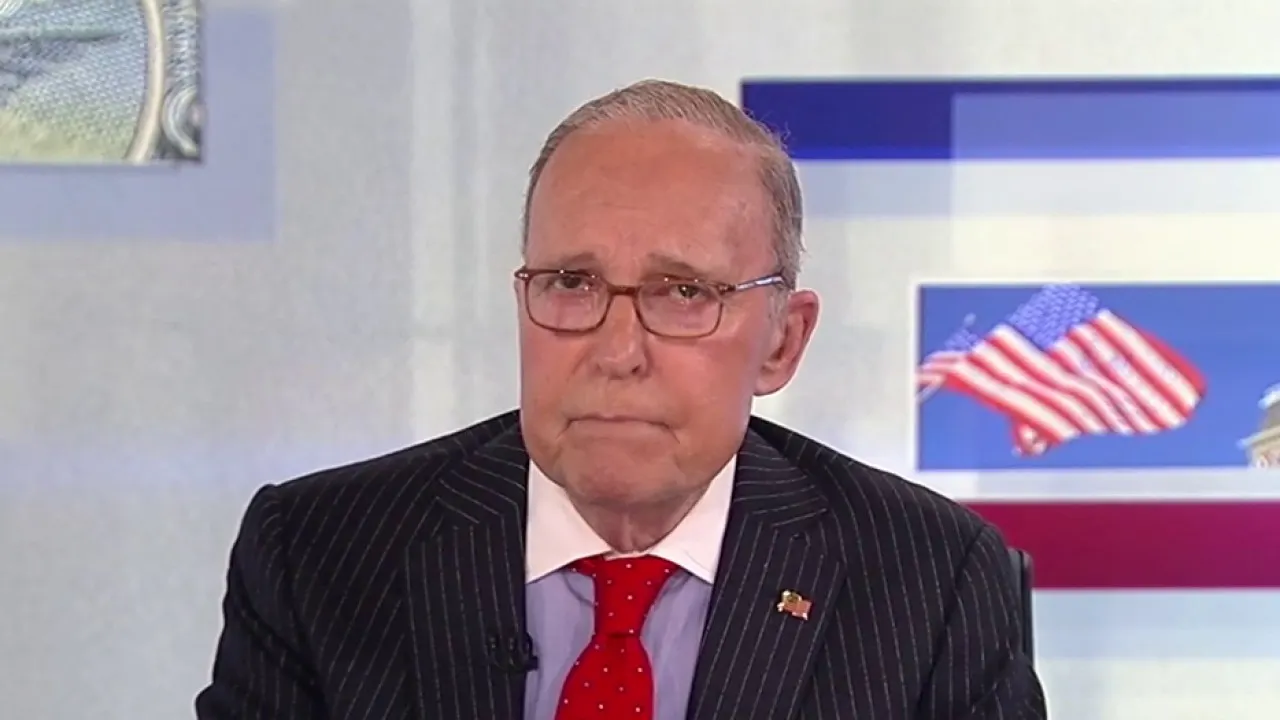
President Trump has enormous advantages. The single biggest factor driving the midterm elections is not going to be the economy or voter ID reform or even tax and spending cuts, although all those issues are important. Democratic socialism, too. Even the rate of economic growth, GDP, real incomes, affordability, all important. No, I’m going to say what’s driving this election is going to be the war in Iran and its outcome and clear evidence that we have met our war objectives of reopening the Strait of Hormuz and ending Tehran’s nuclear capabilities and, in short, win the war.
And I will also say, at this point, Mr. Trump is in better shape than almost every poll or pundit credits him. Not only has the war advanced, And he’s the first president in 47 years to take Iran on. Yet Iran is damaged much more than people are letting on. And we are in a position now to finish this thing off.
And I will say, I grow weary with headline polls. I see it all the time. They measure something called adults, all right? They don’t even measure registered voters. They don’t measure likely voters, but adults, and even that category is weighted against Mr. Trump and the Republicans. I see it time and time again. Nonsense, absolute nonsense.
Advertisement
Now, you want a good poll? A new poll on Iran, sponsored by the Tea Party Patriots Action Survey, conducted by McLaughlin and Associates. And they asked, do you agree or disagree that Iran should not be allowed to block, attack, mine, or extort ships in the Strait of Hormuz. The vast majority, 72 percent, said they agree. An important point. And one of the major goals of Trumpian policy.
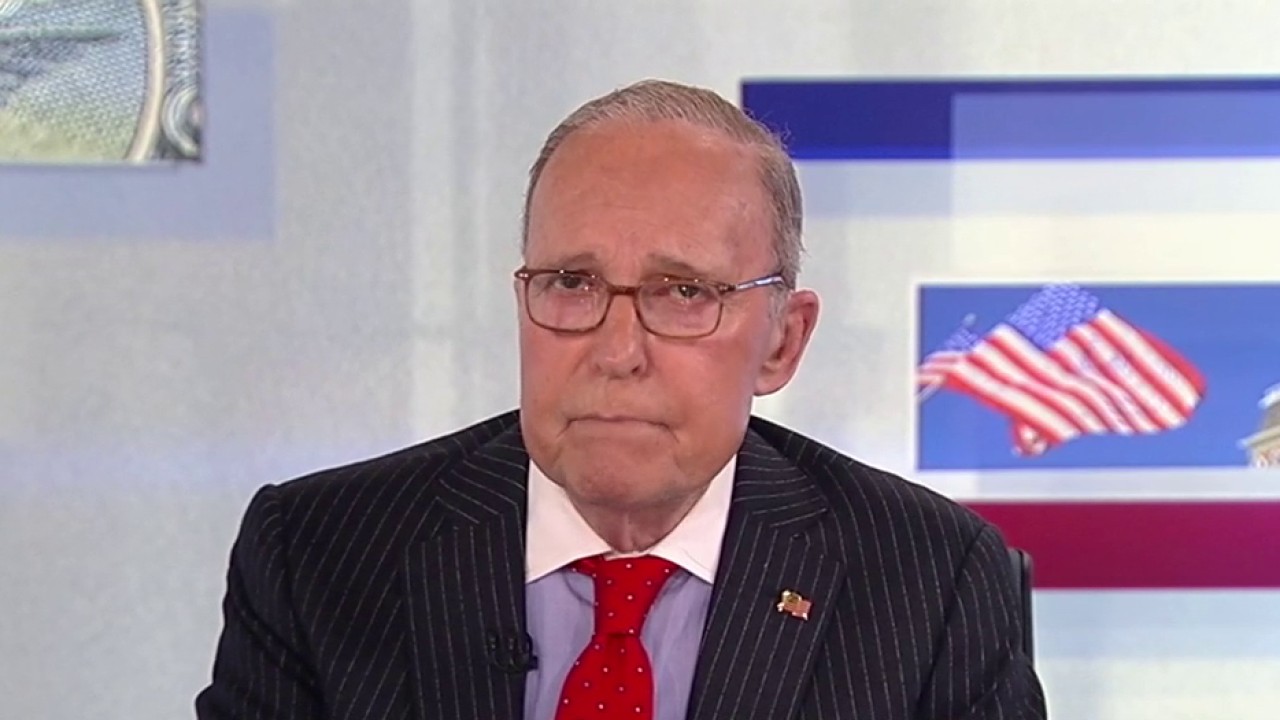
Sen. Dave McCormick, R-Pa., analyzes the Army’s first overseas test of a weapon-disrupting system called ‘Hammer of the Gods’ on ‘Kudlow.’
The survey also asked respondents if they believe the United States should finish the job with Iran. Overall, 62 percent agreed. And that includes that Iran can never obtain a nuclear weapon, the other major goal of Mr. Trump in this war.
The survey was taken on July 22 among, critically, 1,000 general election voters. People who actually voted and with the right proportions of the vote. Now I don’t know if the job in Iran will be finished by the midterms. I don’t know if the Strait of Hormuz will be reopened by the midterms.
Advertisement
Yet it looks to me at this point that Mr. Trump is going full speed ahead on the battlefield with combat operations that will in fact reopen in the Strait of Hormuz, will isolate Iranian trading with the rest of the globe, will intensify all of these sanctions for economic fury, and will also launch a covert operation with Israel in order to achieve regime change and throw out the Islamic terrorist regime. Throw them out all together.
They may have already begun this regime change, but it will be stepped up. And I would suggest that if Mr. Trump stays with this full-speed-ahead approach, it is going to turn out very well in the next few months or even sooner. Energy prices will come down, gasoline prices will go down. That’s the least of it. Yet the bigger part is, he, Mr. Trump., will have mounted a brave, heroic and historic victory in the Middle East for freedom and peace and ultimately for prosperity. And that’s going to determine the outcome of the midterm elections.
Scott Davis – Melius Research LLC Andrew Kaplowitz – Citigroup Inc., Research Division Christopher Snyder – Morgan Stanley, Research Division Amit Mehrotra – UBS Investment Bank, Research Division Andrew Obin – BofA Securities, Research Division Noah Kaye – Oppenheimer & Co. Inc., Research Division Jeffrey Hammond – KeyBanc Capital Markets Inc., Research Division Varun Govindaraj – Bernstein Institutional Services LLC, Research Division Alexander Virgo – Evercore ISI Institutional Equities, Research Division Joseph Ritchie – Goldman Sachs Group, Inc., Research Division Jeffrey Sprague – Vertical Research Partners, LLC Deane Dray – RBC Capital Markets, Research Division
Presentation
Advertisement
Operator
Welcome to the Trane Technologies Q2 2026 Earnings Call. My name is Lisa, and I will be your operator for the call. The call will begin in a few moments with the speaker remarks and the Q&A session. [Operator Instructions]
I will now turn the call over to Zac Nagle, Vice President of Investor Relations. Please go ahead, sir.
Advertisement
Zac Nagle Vice President of Investor Relations
Good morning and thank you for joining us for Trane Technologies Second Quarter 2026 Earnings Conference Call. You can access our webcast and slide presentation at tranetechnologies.com. A replay will be archived there as well.
Today’s discussion includes forward-looking statements. Key risk factors are listed in our SEC filings. We also use non-GAAP measures. Explanations and reconciliations are in our press release and presentation appendix. Joining me are Dave Regnery, Chair and CEO; Chris Kuehn, Executive Vice President and CFO; and joining us for Q&A is Donny Simmons, Executive Vice President and Chief Operating Officer.
Large farms with more resources are investing in new technology.
Ketan Yashwant Sodha, is the founder and CEO of Berry Fresh Agrotech. He started with traditional open-field farming, but was frustrated by losses caused by the weather.
“For the past 10 years, it has consistently rained in India during our peak season – November, December, and the first week of January. When you are in an open field and your plantation is at its absolute peak, a single rain will ruin your entire crop,” he says.
So in 2022, he started to experiment with hydroponics, a type of covered cultivation that does not use soil and tightly controls water, nutrients, light, and temperature.
Advertisement
His early results were not encouraging.
“I suffered immense losses and failed multiple times,” Sodha says.
“The soil is forgiving; hydroponics does not forgive. If you make a mistake today, you will wake up tomorrow morning to a disaster – and the recovery time in hydroponics takes twice as long as soil.”
But the lessons learned from those mistakes are paying off.
Advertisement
“We have trailed 19 different varieties, including rare Japanese ones, and we are the only ones in India trailing a specific Netherlands variety this season.”
Sodha says that limiting each plant to 750ml of water a day produces “rich, highly concentrated sugars and aromas instead of water-logged, bland fruits”.
His team also runs what he calls regular “blood work” on the crops, which involves laboratory testing of the leaves and petioles (the stalks attaching leaves to the stems) to measure exact nutrient uptake. That way he knows exactly which nutrients and chemicals need to go into the water supply.
And by using a semi-open polyhouse, strawberries can grow the whole year round. “It’s not a seasonal fruit for us,” Sodha says.
Advertisement
Now he is ready to scale-up.
“We have built the trial facility, written the SOPs (standard operating procedures), and designed the farm manual. We are talking to investors to expand to a five-acre facility that will accommodate 200,000 plants.”
Krishan Bhilare’s family has been farming strawberries for generations in Mahabaleshwar.
He can remember when the first American varieties were planted in 1992 and being amazed at the size of the fruit.
Advertisement
Bhilare is part of a Farmer Producer Organisation (FPO) network. They have installed towers at four strategic locations across their land. The towers monitor weather conditions.
The system employs AI, which uses the weather data to pinpoint when rain will strike. Farmers can then be advised to delay spraying their crops, so expensive chemicals are not just washed away.
The FPO is also building vertical towers, where strawberries can be grown on a coco-peat substrate, five layers deep.
“By stacking five pots into a single vertical tower, we can scale our density from 25,000 plants to 125,000 plants per acre. We are effectively multiplying our production footprint by five times on the exact same piece of land,” says Bhilare.
Advertisement
But such investments are either beyond small farms, or a huge risk.
In 2017, Danavle and her husband experimented with hydroponic strawberry farming.
“The experiment was 100% successful and the fruits we grew were entirely organic. It saved us a lot of labour, the workers didn’t have to constantly bend down or prune, and it saved us a lot of money on medicines and field manure.”
But they were unlucky – a massive cyclone hit Mahabaleshwar that year.
Advertisement
“The cyclone completely knocked down our entire hydroponic setup. Then we did not have the courage to set it up again.”
So, Sheetal went back to the traditional method of growing strawberries, but with a twist.
“I took help of social media. I post videos of how one can grow strawberries and invite tourists to visit my strawberry farm, learn and pick the fruit. They directly now buy from the farm. This has helped, cut the middle man, and make more profit. So, now I am an influencer and entrepreneur.”
Shares of MarketAxess Holdings surged 29.79% in Thursday morning trading, climbing $37.45 to $163.18, after Intercontinental Exchange announced a definitive agreement to acquire the electronic fixed-income trading platform in an all-cash deal aimed at expanding ICE’s presence in bond markets.
Under the terms of the agreement, ICE will pay $167 per share in cash for all outstanding shares of MarketAxess, representing a 33% premium over the company’s closing price on July 29, the day before the deal was announced. The transaction values MarketAxess at an equity value of approximately $6.0 billion and a total enterprise value of roughly $5.7 billion, or about 10.6 times MarketAxess’s trailing 12-month earnings before interest, taxes, depreciation and amortization once expected cost synergies from the deal are fully accounted for.
The acquisition brings together two companies with complementary positions in fixed-income markets. ICE, the parent company of the New York Stock Exchange, has spent years building out infrastructure spanning fixed-income data and analytics, a retail bond marketplace, and global index products, while MarketAxess has established itself as a leading electronic trading platform used by institutional investors to buy and sell corporate bonds and other fixed-income securities. ICE said the combined company will offer a unified platform spanning pre-trade price analytics, electronic execution and post-trade compliance tools for fixed-income traders.
ICE Chair and Chief Executive Jeff Sprecher framed the acquisition as addressing longstanding structural inefficiencies in global bond markets. “Together, we will build the fixed-income ecosystem that investors have always deserved — one that is transparent, efficient, fully connected, and accessible to all,” Sprecher said in a statement announcing the deal.
Advertisement
The global bond market represents an enormous but historically fragmented segment of the financial system, with an estimated $145.1 trillion in outstanding debt globally, according to figures cited in the deal announcement. Despite decades of technological progress in other asset classes, fixed-income trading has remained disproportionately manual and conducted through bilateral, negotiated transactions relative to equities and other more electronically traded markets, a dynamic that has historically resulted in lower transparency, wider bid-ask spreads and higher transaction costs for market participants.
The transaction has received unanimous approval from the boards of directors of both companies and is expected to close in the first half of 2027, subject to approval from MarketAxess shareholders, regulatory clearances and other customary closing conditions. ICE plans to finance the acquisition entirely through newly issued debt, including a mix of bonds, a term loan and commercial paper, rather than issuing new equity. The company said its gross leverage is expected to start at 3.4 times earnings following the deal’s completion, with a target of reducing that figure to 3.0 times or below within 18 to 24 months after closing.
Despite taking on additional debt to fund the acquisition, ICE said it plans to increase its baseline quarterly share repurchase program to $400 million from $350 million, a move the company characterized as underscoring its continued commitment to returning capital to shareholders even while integrating the new acquisition. ICE also said it expects the deal to generate approximately $100 million in annual run-rate cost synergies within three years of closing and to be accretive to the company’s adjusted earnings per share during the first full year following the transaction’s completion.
BofA Securities is serving as financial adviser to ICE on the transaction, while J.P. Morgan Securities is advising MarketAxess.
Advertisement
The acquisition announcement came alongside ICE’s second-quarter earnings report, which showed the exchange operator posting higher quarterly profit driven by strong trading activity across its business segments. ICE shares rose 1.7% in premarket trading following the combined news. Net income attributable to ICE totaled $958 million, or $1.69 per share, for the three months ended June 30, up from $851 million, or $1.48 per share, during the same period a year earlier. Revenue in ICE’s exchanges segment, its largest source of revenue, rose 3% to $1.46 billion, while its fixed-income and data services segment, through which the company sells subscription-based pricing data for various debt instruments, posted an 8% increase in revenue. Mortgage technology revenue climbed 5% during the quarter.
Sprecher pointed to broader market volatility as a factor supporting demand for ICE’s core products during the quarter. “Against a backdrop of rapid change in global markets, our customers continued to turn to ICE’s regulated markets, trusted data and mission-critical technology to transfer risk,” Sprecher said.
MarketAxess shares had lost nearly 31% of their value over the course of the year prior to Thursday’s acquisition announcement, leaving the company valued at approximately $4.5 billion as of its last close before the deal was revealed, according to data from LSEG. Thursday’s sharp rally effectively erases a significant portion of that decline, reflecting the substantial premium ICE agreed to pay relative to MarketAxess’s depressed trading levels heading into the announcement.
With the deal now formally announced and awaiting the customary regulatory and shareholder approval process, market participants are expected to watch closely for additional details on integration planning and any potential regulatory scrutiny the transaction may face, given the scale of the combined company’s resulting footprint across both electronic trading infrastructure and data services within global fixed-income markets.
Constellation Research CEO R ‘Ray’ Wang discusses the market sell-off, his expectations for Amazon and Apple earnings, the Federal Reserve meeting and AI governance on ‘Mornings with Maria.’
CUPERTINO, Calif. – Apple delivered its strongest June quarter on record, reporting $109.4 billion in revenue and beating analysts’ estimates of $108.65 billion in the company’s final earnings report before CEO Tim Cook steps down.
A 22% jump in iPhone sales, combined with record spring-quarter Mac revenue, helped drive the results. Tariff refunds also boosted Apple’s bottom line, adding roughly 5% to profit during the period.
Advertisement
But the earnings numbers were only part of the story. In an interview following the report, Cook addressed Apple’s approach to open-source artificial intelligence, the state of U.S.-China relations, rapidly rising memory chip costs and the legacy he leaves after 15 years at the helm.
Apple CEO Tim Cook delivers the keynote address during the Apple WWDC at Apple Park on June 8, 2026, in Cupertino, California. (Justin Sullivan/Getty Images)
Cook said he has “nothing negative” to say about open-source AI models, adding that “they are useful.” His comments come as the technology industry debates whether the most powerful AI systems should remain proprietary or be made more broadly available to developers.
That debate has intensified after Chinese AI company Moonshot launched Kimi K3, a new model that has drawn attention for performance that rivals some of the most powerful systems from Anthropic and OpenAI. Apple, meanwhile, is preparing to launch its long-awaited AI-powered Siri this fall using Google’s Gemini.
Advertisement
Cook’s comments suggest Apple intends to remain pragmatic rather than ideological in choosing the models that power its products. The company has traditionally exercised tight control over its hardware and software ecosystem, but the fast-moving AI market may require it to draw on a wider range of outside technologies.
China remains another critical part of Apple’s AI strategy and its broader business.
Apple employees help customers at the Fifth Avenue Apple Store on new product launch day on Sept. 19, 2025 in New York City. (Michael M. Santiago/Getty Images)
“In terms of the U.S.-China relationship, I was over in April for the state dinner, and I think the engagement between the countries are really good, and I’ve got a favorable view, and I’m very optimistic at this point about where the relationship is,” Cook said.
Advertisement
Apple Intelligence has finally been approved in China after a delay of nearly two years compared with its U.S. launch. The approval could help Apple compete more effectively in one of its largest markets, where domestic smartphone makers have moved quickly to add generative AI features.
Apple’s China sales rose 22% during the spring quarter to $18.81 billion. Even with that sharp increase, revenue still fell short of analysts’ estimates of more than $19.5 billion in Apple’s third-largest market.
Tariff refunds provided another lift to the quarter. Cook said Apple is directing that money back into domestic production.
“We’re taking our tariff refunds and reinvesting those in the United States’ advanced manufacturing,” he said.
Apple has already committed to spending $600 billion over four years on the U.S. economy. The reinvestment gives the company a way to frame the refunds not simply as a temporary earnings benefit, but as additional support for its long-term manufacturing strategy.
At the same time, Apple is contending with a sharp increase in the cost of memory chips. The company recently raised prices on some Mac computers and iPads by as much as $300 as memory chip prices soared by as much as 600% over the past two years.
“As I’d mentioned on the call last time around, the memory costs were higher in March than December quarter, and then in June they were significantly higher than in the March quarter,” Cook said.
Those higher costs are arriving just as artificial intelligence is driving demand for more computing power and memory. Despite the price increases on some devices, Cook said Apple’s new, lower-priced MacBook Neo, which starts at $699, was the company’s best-selling computer in the United States during its first full quarter on the market.
Demand for Apple’s higher-powered Mac Studio computers has also surged, creating supply shortages and helping push Mac revenue above $10 billion for a new spring-quarter record.
Cook will step down as chief executive on Sept. 1 after leading Apple for 15 years. He will remain chairman, while Apple’s hardware engineering chief, John Ternus, takes over as CEO.
Cook became chief executive in 2011, succeeding Apple co-founder Steve Jobs. Since then, Apple’s market value has increased by more than 1,000%. This week, the company became only the second corporation to surpass $5 trillion in market value, briefly overtaking Nvidia to reclaim the title of the world’s most valuable company.
Advertisement
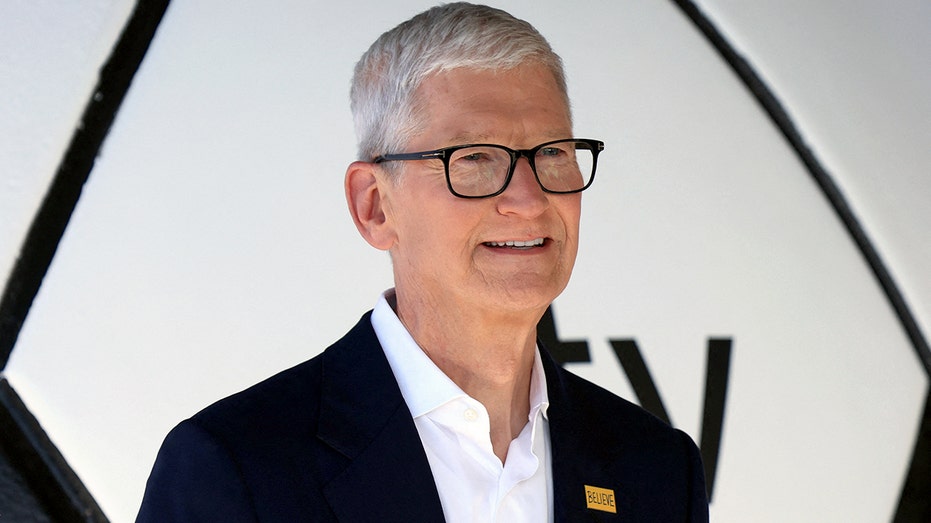
Apple’s CEO Tim Cook attends the premiere of season four of the Apple TV series “Ted Lasso” at the Academy Museum in Los Angeles, California, on July 27, 2026. (David Swanson/Reuters / Reuters)
Reflecting on his tenure, Cook said, “I’ve had an incredible opportunity to work with people that I love to work with… and it’s just been the privilege of a lifetime.”
Asked how he wants to be remembered, Cook demurred.
“How people will write about that will be theirs to decide,” he said. “But for me, it’s been a privilege.”
Advertisement
Cook arrived in the top job facing doubts that a supply-chain expert could preserve the product vision and culture associated with Jobs. Fifteen years later, he leaves behind a company operating at a scale few could have imagined in 2011 – and one now entering a new era defined by artificial intelligence, geopolitical competition and the challenge of sustaining growth from the world’s most valuable consumer technology franchise.
New Delhi: The BJP on Sunday accused AAP supremo Arvind Kejriwal of orchestrating hoax calls to mislead voters across constituencies, including the New Delhi constituency, claiming that their were “cancelled” by the BJP. Addressing a press conference, BJP MP Parvesh Verma played an audio recording of one such call, in which a person was heard saying, “Your vote has been cut by the BJP. AAP will ensure you get your vote back,” and urged the receiver to support the Aam Aadmi Party.
“Hoax calls are being made to the public, saying that BJP will end all AAP schemes. This is a blatant lie,” he said.
He also wondered how “confidential voter data” was accessed by the party.
“Other than the Election Commission of India, this data is not provided to anyone. How did Kejriwal get the voters’ contact list? This must be inspected,” Verma said.
The BJP’s New Delhi candidate for the Assembly election also alleged the AAP of distributing Rs 500 wrapped in a calendar in the slum areas. He claimed three people were arrested in this regard.
Advertisement
Live Events
There was no immediate reaction from the AAP on the allegations, nor from Delhi Police. He said he has filed a complaint with the Election Commission and his party demands an investigation into the matter. BJP leader and party spokesperson Sudhanshu Trivedi, who was also present at the press conference, welcomed the US Supreme Court’s decision to extradite to India Tahawwur Rana, an accused in the 2008 Mumbai terror attacks.
“Under Modi’s leadership, the government remains committed to fighting terrorism. The decision to hand over Tahawwur Rana to India is a welcome one for all of us,” Trivedi said.
Trivedi accused the AAP and Congress of supporting activities that indirectly shield terrorism.
“Atishi’s parents were among those seeking a ‘shama yajna’ (forgiveness ritual) for Afzal Guru,” he alleged, referring to the mastermind of the 2001 Parliament attack.
























































You must be logged in to post a comment Login