
Business
Cathay Pacific Marks 80 Years Since First Flight, From Converted Cargo Plane To Global Airline

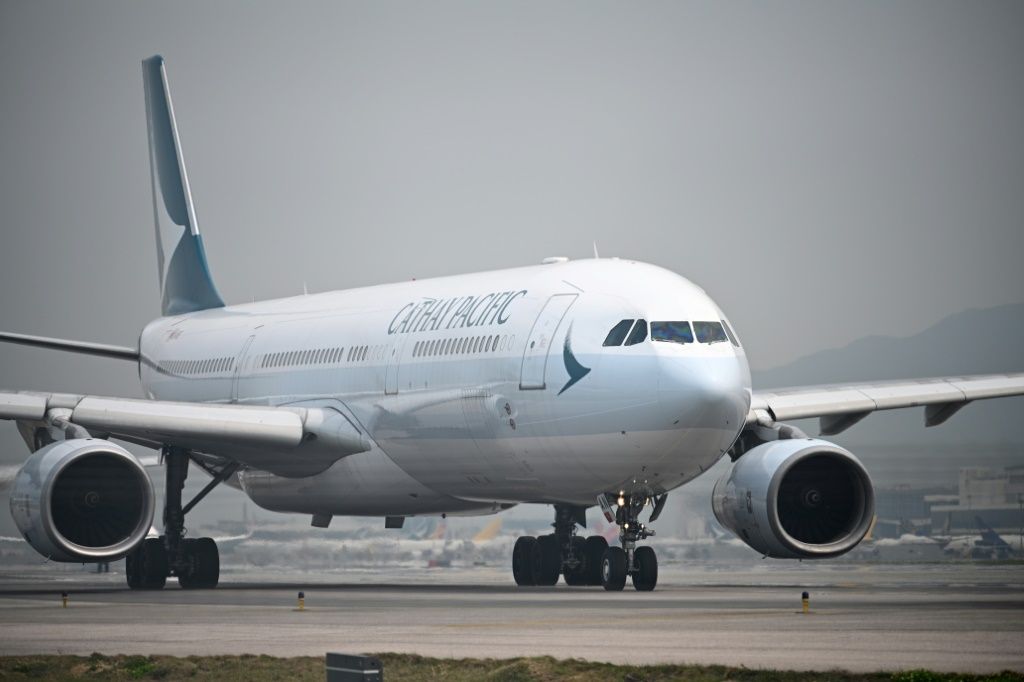
HONG KONG — Cathay Pacific is celebrating 80 years since its founding, tracing a journey that began with a single converted cargo aircraft in the aftermath of World War II and has since grown into one of Asia’s most recognized commercial airlines, serving more than 100 destinations worldwide.
The airline’s origins date to 1946, when former Air Force pilots Roy Farrell and Sydney de Kantzow set out to establish a cargo route flying goods from Australia to Shanghai. Cathay Pacific Airways was officially registered in Hong Kong for HK$2 on Sept. 23, 1946, and the company operated its first flight just one day later, on Sept. 24, from Sydney to Hong Kong. The airline’s entire fleet at the time consisted of a single aircraft, a converted Douglas DC-3 affectionately nicknamed “Betsy.”
Cathay Pacific Group CEO Ronald Lam reflected on the airline’s founding mission and its enduring relevance eight decades later.
“Since our earliest days, Cathay Pacific has helped open new horizons for people, businesses and communities,” Lam said. “That purpose has defined our first 80 years, and it continues to guide us today.”
The airline’s expansion accelerated through the following decades. In the 1960s, Cathay Pacific’s Convair 880 jetliners extended the airline’s network across Asia to destinations including Seoul and Kota Kinabalu, as jet-powered aircraft made air travel faster and more accessible than the propeller-driven planes that preceded them. On Oct. 19, 1964, the airline welcomed its millionth passenger aboard a flight between Singapore and Bangkok.
A significant turning point came in 1979 with the arrival of Cathay Pacific’s first Boeing 747, which extended the airline’s reach well beyond the Asia-Pacific region and laid the groundwork for a truly global route network. The following year, the airline launched its first service to London, marking its formal entry into long-haul intercontinental travel.
Throughout the 1980s, Cathay Pacific’s Boeing 747 aircraft, painted in the airline’s now-iconic green-and-white striped livery often referred to as the “lettuce leaf sandwich” design, became a familiar sight over Kowloon as they approached Hong Kong’s former Kai Tak Airport, serving as an enduring symbol of the city’s connection to the broader world. That decade also brought the expansion of passenger services to mainland China, beginning with Shanghai in 1980. In 1983, Cathay Pacific became the first airline in Asia to offer first class, business class and economy class cabins aboard the same aircraft, establishing a new industry benchmark for passenger service tiers. Three years later, coinciding with the airline’s 40th anniversary, Cathay Pacific became the first company to list on Hong Kong’s newly unified stock exchange.
The airline also built a reputation for pioneering in-flight passenger technology during this period. In 1991, Cathay Pacific became the first airline to introduce live radio broadcasts on board, delivering music and news content directly to passengers during flights. Seatback entertainment systems followed shortly after, arriving first in first class in 1992 before expanding across all cabin classes by 1996.
One of the airline’s most significant operational transitions came in 1998, when Hong Kong’s aviation infrastructure shifted from the historic but constrained Kai Tak Airport to the newly built Hong Kong International Airport at Chek Lap Kok. On July 5, 1998, Cathay Pacific flight CX251 to London Heathrow became the final flight to depart Kai Tak. The following morning, flight CX889, dubbed “Polar One,” landed at the newly opened Hong Kong International Airport, having completed the first non-stop passenger service between New York and Hong Kong, and at the time, the longest non-stop commercial flight route in operation anywhere in the world. That same year, Cathay Pacific took delivery of its first Boeing 777-300, an aircraft that would go on to form the backbone of its long-haul fleet for years to come.
The airline’s fleet modernization has continued into more recent years, with the arrival of the Airbus A350 in 2016 ushering in a new era of fuel efficiency and passenger comfort. More recently, Cathay Pacific has introduced updated cabin products across selected Boeing 777-300ER aircraft, refreshing its business, premium economy and economy class designs as part of its continued evolution of the passenger experience.
Cargo operations have also played a central role in Cathay Pacific’s growth. The airline’s first dedicated freighter aircraft began operations in 1976, with cargo becoming an increasingly important pillar of the business through the 2000s. The HK$5.9 billion Cathay Cargo Terminal entered full operation in 2013, establishing itself as one of the world’s largest and most technologically advanced air cargo facilities and cementing Hong Kong’s position as a leading international air freight hub. Today, Cathay Cargo transports approximately 1.7 million tonnes of cargo annually.
The airline has continued expanding its global route network in recent years, setting a record for its longest-ever route with the launch of service to Dallas-Fort Worth in April 2025. Cathay Pacific’s network now spans more than 100 destinations worldwide, recently strengthened by new routes to Urumqi, Munich and Seattle, with service to Almaty set to join the network in 2027.
Beyond its route expansion, Cathay Pacific has continued investing in its onboard passenger experience, introducing new Airbus A321neo aircraft featuring enhanced comfort and entertainment options, alongside its acclaimed Aria Suite business class product and refreshed premium economy and economy cabins across selected Boeing 777-300ER aircraft. The airline has said its refreshed economy cabins and a new Aria Studio business class product will soon debut aboard its Airbus A330-300 fleet, marking the next phase of its regional cabin upgrades.
As Cathay Pacific has evolved into what the company describes as a broader travel lifestyle brand, it has expanded beyond air travel into a range of additional consumer offerings, including dining, shopping and wellness experiences, alongside deeper integration with transportation links across China’s Greater Bay Area region. The airline has also emphasized its ongoing commitment to sustainability, citing continued investment in newer, more fuel-efficient aircraft, emissions-reduction measures across its operations, and an accelerated adoption of sustainable aviation fuel as part of its broader environmental strategy.
Reflecting on the airline’s 80-year milestone, Lam emphasized Cathay Pacific’s deep ties to its home city and the broader region it has served since its founding.
“As we celebrate 80 Years Together, we do so with gratitude for everyone who’s been part of our journey,” Lam said. “Cathay Pacific’s story is inseparable from Hong Kong, from our deep connections to the Chinese Mainland and from our place in the wider world. Our responsibility now is to honour that legacy by building on it, so future generations can continue to discover the joy of travel.”



Rida Morwa is a former investment and commercial Banker, with over 35 years of experience. He has been advising individual and institutional clients on high-yield investment strategies since 1991. Rida Morwa leads the Investing Group High Dividend Opportunities where he teams up with some of Seeking Alpha’s top income investing analysts. The service focuses on sustainable income through a variety of high yield investments with a targeted safe +9% yield. Features include: model portfolio with buy/sell alerts, preferred and baby bond portfolios for more conservative investors, vibrant and active chat with access to the service’s leaders, dividend and portfolio trackers, and regular market updates. The service philosophy focuses on community, education, and the belief that nobody should invest alone. Learn More.
Analyst’s Disclosure: I/we have a beneficial long position in the shares of QVOL either through stock ownership, options, or other derivatives. I wrote this article myself, and it expresses my own opinions. I am not receiving compensation for it (other than from Seeking Alpha). I have no business relationship with any company whose stock is mentioned in this article.
Beyond Saving, Philip Mause, and Hidden Opportunities, all are supporting contributors for High Dividend Opportunities. Any recommendation posted in this article is not indefinite. We closely monitor all of our positions. We issue Buy and Sell alerts on our recommendations, which are exclusive to our members.
Seeking Alpha’s Disclosure: Past performance is no guarantee of future results. No recommendation or advice is being given as to whether any investment is suitable for a particular investor. Any views or opinions expressed above may not reflect those of Seeking Alpha as a whole. Seeking Alpha is not a licensed securities dealer, broker or US investment adviser or investment bank. Our analysts are third party authors that include both professional investors and individual investors who may not be licensed or certified by any institute or regulatory body.


I was a business intelligence (BI) analyst and used build tools that help people make better decisions. After that I ran an e-commerce dropshipping business that fortunately worked out very well for me. That experience gave me my first real opportunity to build meaningful savings and begin thinking seriously about long-term investing and financial independence.After stepping away from the business, I spent time traveling and later took a career break to manage a family property following my grandfather’s passing. When COVID slowed everything down, I finally had the time and the capital to study investing in depth.I became especially interested in portfolio management, retirement planning, long-term compounding and high-yield dividend investing. I am here to share my personal investing experiences, research and opinions but not to pretend I have every answer. My writing will reflect how I actually invest, including what I like. If you find it helpful then you’re welcome to follow along.
Analyst’s Disclosure: I/we have a beneficial long position in the shares of SPY, QQQ, MSFT, META, AMZN, AAPL, NVDA, AMD either through stock ownership, options, or other derivatives. I wrote this article myself, and it expresses my own opinions. I am not receiving compensation for it (other than from Seeking Alpha). I have no business relationship with any company whose stock is mentioned in this article.
Note: I do not hold any short positions on Treasuries or equities at the time of writing. My long-term portfolio remains long, mostly AI related equities, but I am hedging my portfolio via Options and Futures Options based on the macro risks I discussed in this article.
Seeking Alpha’s Disclosure: Past performance is no guarantee of future results. No recommendation or advice is being given as to whether any investment is suitable for a particular investor. Any views or opinions expressed above may not reflect those of Seeking Alpha as a whole. Seeking Alpha is not a licensed securities dealer, broker or US investment adviser or investment bank. Our analysts are third party authors that include both professional investors and individual investors who may not be licensed or certified by any institute or regulatory body.


The Investment Doctor is a financial writer, highlighting European small-caps with a 5-7 year investment horizon. He strongly believes a portfolio should consist of a mixture of dividend and growth stocks.
He is the leader of the investment group European Small Cap Ideas which offers exclusive access to actionable research on appealing Europe-focused investment opportunities not found elsewhere. The a focus is on high-quality ideas in the small-cap space, with emphasis on capital gains and dividend income for continuous cash flow. Features include: two model portfolios – the European Small Cap Ideas portfolio and the European REIT Portfolio, weekly updates, educational content to learn more about the European investing opportunities, and an active chat room to discuss the latest developments of the portfolio holdings. Learn more.
Analyst’s Disclosure: I/we have a beneficial long position in the shares of WFC.PR.L either through stock ownership, options, or other derivatives. I wrote this article myself, and it expresses my own opinions. I am not receiving compensation for it (other than from Seeking Alpha). I have no business relationship with any company whose stock is mentioned in this article.
Seeking Alpha’s Disclosure: Past performance is no guarantee of future results. No recommendation or advice is being given as to whether any investment is suitable for a particular investor. Any views or opinions expressed above may not reflect those of Seeking Alpha as a whole. Seeking Alpha is not a licensed securities dealer, broker or US investment adviser or investment bank. Our analysts are third party authors that include both professional investors and individual investors who may not be licensed or certified by any institute or regulatory body.
Business
Retired FBI Agent Theorizes Nancy Guthrie May Have Suffered Fatal Heart Attack After Abduction

TUCSON, Ariz. — A retired FBI agent has put forward a new theory about the disappearance of Nancy Guthrie, suggesting the 84-year-old mother of “Today” show co-host Savannah Guthrie may have suffered a fatal heart attack shortly after being abducted from her Arizona home more than seven months ago.
Frank Storey, a retired FBI agent, discussed the case during an appearance on retired FBI agent Jennifer Coffindaffer’s “True Crime With Jen Coffindaffer” podcast on Sept. 2. Storey theorized that the abduction may have initially begun as a kidnapping for ransom that later went wrong, with Nancy Guthrie potentially suffering a fatal heart attack a day or two after being taken from her home.
Nancy Guthrie disappeared from her home in the Catalina Foothills area of Tucson in the early hours of Feb. 1, 2026. She was last seen at her home the evening before, after being dropped off by family members. Seven months later, authorities have not publicly named a suspect and have not determined what ultimately happened to her.
Despite the lack of confirmed answers, Storey expressed confidence that the case would eventually be resolved.
“I think it will be at some point. Somewhere along the line, somebody always talks,” Storey said.
Storey suggested that if more than one person was involved in Nancy Guthrie’s disappearance, it remains possible that one of those individuals could eventually be arrested for an unrelated serious crime and choose to cooperate with investigators in order to reduce their own legal exposure in that separate matter.
“That may occur; it may not. But it’s possible,” Storey added, while stressing that his comments reflected only his personal theory rather than any official finding in the case.
Storey’s comments come amid separate claims from a friend of Nancy Guthrie’s that the investigation has effectively gone cold, a characterization that has not been confirmed by investigators and stands in direct contrast to public statements from law enforcement overseeing the case.
Investigators have previously released doorbell camera footage appearing to show an armed, masked individual tampering with a camera at Nancy Guthrie’s front door around the time of her disappearance. Pima County Sheriff Chris Nanos said in July that investigators had not yet established whether that individual acted alone or with assistance from others.
A communication released by the Pima County Sheriff’s Department on July 31 also indicated that Nancy Guthrie had died shortly after being taken from her home. That message, sent days after her initial disappearance, was released publicly alongside an earlier ransom demand as part of an effort by investigators to generate additional leads and tips from the public. Authorities have not formally confirmed the claim that Nancy Guthrie is deceased.
Investigators have continued examining physical evidence recovered from Nancy Guthrie’s home in the months since her disappearance. According to Sheriff Nanos, testing on a hair sample recovered from the scene has been completed without producing a viable lead toward identifying a suspect. Separately, a mixed DNA sample containing genetic material from as many as four different individuals remains under active examination by multiple forensic laboratories, including the FBI’s laboratory in Quantico, Virginia.
Authorities have not publicly confirmed whether they believe Nancy Guthrie is alive or deceased as the investigation continues. Sheriff Nanos has repeatedly pushed back against suggestions that the case has gone cold or that investigators have stopped actively pursuing leads.
“This case is not cold,” Nanos has said in addressing public concerns about the pace of the investigation.
The disappearance of Nancy Guthrie has drawn sustained national attention given her connection to her daughter, one of the most recognizable figures in American television news. Despite that heightened public interest, the Pima County Sheriff’s Department has continued to withhold detailed regular updates on the investigation’s progress, a practice officials have defended as consistent with standard law enforcement procedure in an active, ongoing case involving potential criminal activity.
Storey’s theory adds to a range of speculative explanations that have circulated publicly in the months since Nancy Guthrie’s disappearance, none of which have been confirmed by investigators. Retired law enforcement officials and commentators covering the case have offered varying perspectives on what may have happened, though the Pima County Sheriff’s Department has continued to emphasize that its investigation remains active and that specific details are being withheld deliberately as part of the ongoing inquiry.
Investigators have previously said DNA and video analysis efforts remain ongoing with support from laboratories across the country, and have continued to encourage members of the public with any credible information related to the case to come forward. Authorities have established tip lines through both the Pima County Sheriff’s Department and the FBI to help facilitate the submission of any new information that could assist the investigation.
As the case approaches its eighth month without a named suspect or confirmed resolution, theories like the one offered by Storey continue to circulate publicly even as investigators maintain that the underlying facts of what happened to Nancy Guthrie remain unconfirmed. Sheriff Nanos has indicated that the department will continue withholding a formal press conference on the case until investigators have a significant development to share publicly, leaving both Nancy Guthrie’s family and the broader public that has followed the case to await further updates as the investigation continues.

Japanese stocks face continued risk aversion despite record profits, Nomura says
Business
OpenAI acknowledges ’wiki incident’ and need for more transparency around unintended AI behavior

OpenAI acknowledges ’wiki incident’ and need for more transparency around unintended AI behavior

Get ahead of the market by subscribing to Seeking Alpha’s Wall Street Week Ahead, a preview of key events scheduled for the coming week. The newsletter keeps you informed of the biggest stories set to make headlines, including upcoming IPOs, investor days, earnings reports, and conference presentations.
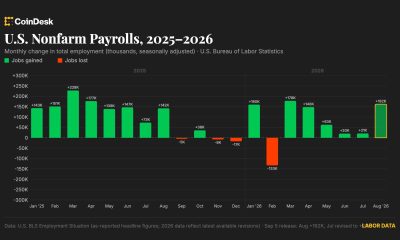
The stock market fell on Friday as nonfarm payrolls surpassed expectations in August. U.S. nonfarm payrolls increased by 162K vs. +55K consensus and +21K in the prior month (revised from -23K), according to data released by the U.S. Bureau of Labor Statistics on Friday.
The economic calendar is relatively lighter for the upcoming holiday-shortened week, with markets closed on September 7 in observance of Labor Day. There are no major data scheduled for Tuesday and Wednesday. On Thursday, PPI data for August and initial jobless claims numbers will be released, with CPI data for the month scheduled for Friday.
______________________________________________________________
Earnings spotlight: Thursday: Oracle (ORCL), Adobe (ADBE). See the full earnings calendar.
Earnings spotlight: Friday: Kroger (KR). See the full earnings calendar.
Volatility watch: Carvana (CVNA) and GameStop (GME) have seen options volatility increase over the last week. The most overbought stocks per their 14-day Relative Strength Index include Crinetics Pharma (CRNX) and Varex Imaging (VREX). The most oversold stocks per their 14-day Relative Strength Index include TJX (TJX) and DICK’S Sporting (DKS). Short interest is elevated on Xponential Fitness (XPOF) and Recursion Pharmaceuticals (RXRX).
Dividend watch: Companies that have an ex-dividend date coming next week include Cigna (CI), HP Inc. (HPQ), Nvidia (NVDA), and Chubb (CB).
Oracle Earnings Preview: Oracle is scheduled to announce first-quarter results next week with consensus pointing towards earnings of $1.74 per share on revenue of $19.13B. Analysts are expecting another double-beat from Oracle and likely stronger-than-anticipated guidance projections, with an overall positive tone from the management team. They will keenly watch for
Business
Strait Of Hormuz Remains Effectively Closed As Six-Month Iran Crisis Grinds Into September Amid Tanker Attacks

MUSCAT, Oman — More than six months after fighting first erupted between the United States, Israel and Iran, the Strait of Hormuz remains effectively closed to commercial shipping, with vessel traffic through the vital oil chokepoint continuing to run at a small fraction of its pre-crisis levels as of Friday.
According to Straits.live, an independent tracker monitoring the waterway’s status in real time, the Strait of Hormuz was operating at effectively closed status as of Sept. 5, with just six ships transiting the passage on Aug. 30, compared with a pre-crisis baseline of roughly 85 vessels per day. Windward, a maritime intelligence firm, separately recorded only eight vessels crossing the strait during a 24-hour window earlier this week, with five of those ships reportedly operating with their transponders switched off, a practice commonly referred to as “going dark” to avoid detection.
The current crisis traces back to Feb. 28, when the United States and Israel launched joint military operations against Iran, prompting Tehran to assert control over the Strait of Hormuz through both threatened and actual attacks on commercial shipping. The narrow waterway, just 34 kilometers, or 21 miles, wide at its narrowest point and separating Iran from Oman, carried roughly 25% of the world’s seaborne oil trade and 20% of global liquefied natural gas shipments before the conflict began, according to congressional research.
The human toll of the crisis has continued mounting. According to tracking compiled on the crisis, at least 20 seafarers and one port worker have been killed since fighting began, with 35 additional people injured and one person still listed as missing.
Violence against commercial vessels has continued even in recent days. Saudi Arabia’s Foreign Ministry confirmed this week that Iran targeted the Sidr, an oil tanker owned by Saudi national carrier Bahri, while it was transiting the strait, an attack that killed the vessel’s chief engineer. Saudi officials condemned the strike and called for an end to the escalating violence.
“The kingdom stressed the necessity of halting escalations, and respecting international maritime safety and the security of global energy supplies,” the Saudi Foreign Ministry said in a statement.
Kuwait and Qatar’s foreign ministries separately condemned the attack on the Sidr, with Qatar describing it as a “flagrant violation of the rules of international law and freedom of maritime navigation” and explicitly rejecting the use of the strait as what it called a “bargaining chip” in the broader conflict.
The United States escalated its own military response this week, striking Iranian government tankers directly for the first time since the conflict began. According to Axios, U.S. Central Command said the strikes, which reportedly hit roughly 100 targets linked to Iran’s Islamic Revolutionary Guard Corps, were carried out in response to Iranian attacks on commercial shipping in the strait and on American military bases in the region. A U.S. official described the operation using the phrase “mow the lawn,” characterizing it as part of an effort to systematically degrade Iran’s capacity to rebuild the radar and missile systems it relies on to threaten shipping traffic.
“Bought at least a month” of reduced threat levels for commercial vessels transiting the strait, the same U.S. official told Axios, describing the anticipated impact of the strikes.
Iran responded to the U.S. strikes with a barrage of roughly 25 ballistic missiles, about half of which reportedly reached Jordanian airspace before most were intercepted, alongside drone attacks targeting American and allied military bases in Bahrain, Kuwait and Erbil, Iraq.
Despite the ongoing violence, the United States has continued efforts to keep at least some shipping moving through the strait. American naval forces have continued escorting commercial vessels through the waterway, with more than 20 U.S. warships having redirected 82 commercial vessels through the strait since Washington’s naval blockade of Iranian ports resumed on July 14, according to Central Command’s own accounting cited by reporting on the crisis.
The economic impact of the prolonged disruption has been substantial. According to the U.S. Energy Information Administration, crude oil and petroleum liquids moving through the strait averaged between 20.4 million and 21.6 million barrels per day in the final quarter of 2025, before the conflict began. That volume collapsed to just 4.9 million barrels per day by the second quarter of 2026. Separate analysis from Al Jazeera, citing UNCTAD and Kpler data, found that Gulf crude exports have fallen by nearly half compared with pre-war levels, with direct crude shipments moving specifically through the strait dropping to an average of just 2.2 million barrels per day.
War-risk insurance claims tied to the crisis have topped $2 billion, according to maritime industry publication gCaptain, as attacks on shipping have spread beyond the strait itself to other parts of the wider Gulf region. Iraq has separately been actively searching for tankers still willing to attempt transits through the strait, according to Bloomberg, a sign of just how severely commercial shipping operators have pulled back from the corridor amid the ongoing danger.
Brent crude oil prices have remained elevated throughout the crisis, trading around $95.83 a barrel as of the most recent tracking, reflecting sustained market concern over the strait’s disrupted capacity even as some workarounds, including alternative pipeline routes bypassing the waterway entirely, have begun to permanently reduce the region’s reliance on the strait for oil exports.
President Trump has previously indicated that any lasting resolution to the conflict would need to include Iran’s full and safe reopening of the strait to international shipping. Following an earlier two-week ceasefire agreement reached in April that ultimately collapsed, Trump said at the time that any truce remained “subject to … Iran agreeing to the complete, immediate, and safe opening of the Strait of Hormuz.”
With the conflict now well into its seventh month and showing no clear signs of a durable resolution, maritime analysts continue to describe the strait’s current status as neither fully closed nor genuinely reopened, but rather severely constrained, with a growing share of regional oil exports being permanently rerouted around the waterway even as sporadic transits and U.S.-escorted convoys continue to move a reduced volume of shipping through one of the world’s most strategically vital, and now most dangerous, maritime chokepoints.
Business
New Hampshire Man Survives Record 271 Days With Pig Kidney Before Human Transplant, Says He May Get ‘Decades’

BOSTON — A retired New Hampshire grocery store manager who once believed he was staring death in the face has become the longest-surviving recipient of a pig kidney transplant, living 271 days without dialysis before ultimately receiving a human kidney earlier this year, according to findings published Thursday in The Lancet medical journal.
Tim Andrews, 68, of Barrington, New Hampshire, first began discussing the experimental procedure with doctors in late 2024, when he was suffering from end-stage kidney failure and believed his time was running out.
“I didn’t think I was going to live through it, to be honest. But I wanted to do it for humanity,” Andrews told NBC News.
Andrews said the weight of his diagnosis prompted a moment of reflection that ultimately convinced him to pursue the experimental transplant, even without confidence he would survive it.
“I realized, OK, I’m a dead man. I’m a dead man walking,” Andrews said. “So I said to myself, ‘What have I done? What have I done with my life? This is an opportunity for me to do something that most people don’t get an opportunity to do, and that’s to help humanity.’”
Andrews said he was candid with Dr. Leonardo Riella, director of kidney transplantation at Massachusetts General Hospital and the study’s lead author, about his motivations heading into the procedure.
“This is about learning something. I don’t care if I die, as long as you learn one thing,” Andrews recalled telling Riella.
Andrews received the pig kidney transplant on Jan. 25, 2025, at age 66, through Mass General Brigham in Boston, making him part of an ongoing clinical trial examining the safety and viability of xenotransplantation, the transplantation of living organs between different species. Over the following 271 days, Andrews required no dialysis before ultimately receiving a human kidney transplant, according to a statement from Massachusetts General Hospital.
The hospital described the milestone as unprecedented for this type of procedure.
“His case represents the longest dialysis-free survival following porcine kidney xenotransplantation in a living human and the first transition to human kidney transplantation,” Massachusetts General Hospital said in its statement.
Since receiving the human donor kidney, Andrews said his recovery has exceeded his expectations, offering him a dramatically extended life expectancy compared with where he stood a year and a half earlier.
“We could be talking decades,” said Andrews, a father of three adult children ranging in age from 40 to 46. “It’s running perfect. I mean, the thing is perfect.”
Andrews said the experience of nearly losing his life has left him with a renewed appreciation for everyday moments he previously took for granted, including simple pleasures like smelling flowers, swimming, riding a bike and fishing.
“Every day I wake up, I’m like, this is another extra day because I should have been dead a year ago or more,” Andrews said.
Andrews said he knows little about the donor of his human kidney, aside from the fact that the donor was a young man who enjoyed blueberries, a fruit Andrews said he had never particularly cared for during the first six decades of his own life but has since developed an unexpected fondness for. Reflecting on the donor’s death, Andrews grew emotional discussing the weight of having received the organ.
“To know that somebody died way younger and I’m living because of it, that’s pretty tough,” Andrews said, his voice trailing off. “I have this new kidney in me and I need to honor it.”
Riella, who has led Mass General’s broader xenotransplantation research effort, said the underlying motivation behind the research remains addressing a persistent and severe shortage of available human donor organs.
“The organ shortage is the greatest crisis we have right now in transplantation,” Riella wrote in comments accompanying the study’s publication. “We know that the best treatment option for patients with end-stage kidney disease who have developed renal failure is transplantation, but we simply don’t have enough human organs to transplant in a timely manner.”
More than 100,000 people currently sit on the national organ transplant waiting list in the United States, with the vast majority of those patients waiting specifically for a kidney, according to figures cited by NBC News.
Andrews’ case builds on earlier progress in the field. Towana Looney, 55, previously lived with a pig kidney for what was then a record 130 days before her body began rejecting the organ, requiring its removal in April 2025. Looney remains alive and on dialysis while she awaits a matching human donor, according to a representative for NYU Langone Health.
Riella described the broader vision behind the research as using pig kidneys primarily as a temporary bridge for patients awaiting a compatible human donor organ, rather than necessarily as a permanent, standalone replacement.
“Our vision is that xenotransplantation could help address this gap — initially as a bridge to get patients off dialysis while they wait for a human donor kidney, and potentially, as we establish long-term safety and durability, as a destination therapy in its own right,” Riella said.
Andrews said his own conversations with Riella and the broader research team have reflected a rapidly shifting timeline for when the procedure might become more widely available to patients facing similar circumstances.
“When we talked the first time and I met Dr. Riella, they were talking about at least 10 years, that it’s going to be at least 10 years before this becomes viable — now they’re talking about five years or less than five years,” Andrews said, adding that he believes he “may live to see it” become a routine medical procedure.
Andrews’ successful outcome follows Mass General’s first pig-to-human kidney transplant in 2024, performed on patient Richard “Rick” Slayman, who survived 52 days before dying of cardiac causes the hospital said were unrelated to the transplant itself, with his pig kidney reportedly still functioning at the time of his death.
Andrews said learning about Slayman’s case before his own procedure gave him a measure of cautious optimism heading into his own transplant.
“I read about it and they told me he died, but he died of other causes, the kidney was still working,” Andrews said. “I said, ‘Huh, you know what? I think this might work.’”

AUSTIN, Texas — Federal safety regulators opened an audit of roughly 1,000 Tesla Cybercab vehicles just hours after the electric automaker launched paid robotaxi rides in the two-seat, driverless vehicle in downtown Austin, setting up a potential regulatory showdown over whether the car can legally operate without a steering wheel, pedals or mirrors.
The National Highway Traffic Safety Administration said it opened the audit to assess how Tesla determined the Cybercab complies with federal vehicle-safety regulations, which were written decades ago for human-driven vehicles and generally require manual controls such as steering wheels and pedals.
The audit came just hours after Tesla held a launch event in downtown Austin marking the Cybercab’s rollout, an event that drew a large crowd of fans and social media influencers as the golden, butterfly-door vehicle was formally added to Tesla’s existing robotaxi fleet, which has previously operated using modified versions of the company’s best-selling Model Y SUV. Tesla said Cybercab rides were open to the public and executives outlined pricing plans for the service during the event.
Unlike most other countries, where new vehicle models and technologies typically require regulatory clearance before launch, U.S. automakers are permitted to deploy new vehicles on public roads by self-certifying that they meet federal safety standards, without needing prior government approval. That regulatory structure has fueled speculation over how Tesla intends to justify the Cybercab’s compliance with rules that were not designed with driverless vehicles in mind.
Michael Brooks, executive director of the Center for Auto Safety, a consumer advocacy group, expressed sharp skepticism that the Cybercab could be considered compliant with existing federal standards under any reasonable reading of the regulations.
“I don’t think there is a reasonable interpretation that can be made to suggest that the Cybercab can comply with the Federal Motor Vehicle Safety Standards,” Brooks said.
NHTSA has been working to update its vehicle-safety standards at an accelerated pace compared with its historical timeline, and is separately drafting new rules specifically intended to accommodate driverless vehicles. Even so, experts have said those regulatory changes are likely to take considerably longer to formally take effect than the timeline Tesla CEO Elon Musk has publicly promised for the Cybercab’s expansion.
Philip Koopman, a Carnegie Mellon University engineering professor and autonomous-vehicle safety expert, said Musk’s history suggests he is unlikely to wait for regulatory clarity before pushing forward with the Cybercab’s rollout.
“Tesla historically has tested limits and pushed boundaries on regulations,” Koopman said. “I fully expect Tesla to test the limits.”
Koopman suggested Tesla could attempt to advance a “creative interpretation” of existing vehicle regulations, asserting that Cybercabs comply with federal standards while moving quickly to expand deployment before regulators are able to formally respond.
“That could take NHTSA or state regulators years to resolve,” Koopman said. “Meanwhile, Tesla could be operating on public roads.”
Tesla did not respond to a request for comment on the audit.
Tesla began manufacturing the Cybercab in April, with Musk previously promising that production would grow “exponentially” later this year or in 2027. At the vehicle’s original 2024 unveiling, Musk said the company intended to eventually sell the Cybercab for less than $30,000. Since then, Tesla has already launched a more limited, paid robotaxi service in Texas and Florida using modified Model Y vehicles, which retain the manual controls required under current federal safety standards, along with human backup drivers present in some vehicles.
The reliability of Tesla’s underlying self-driving technology has also drawn scrutiny from independent experts. Tesla has said its Full Self-Driving software, a version of which powers the Cybercab, is up to 10 times safer than human drivers, and has noted that its existing Austin robotaxi service has operated without a fatal accident to date. However, interviews conducted by Reuters with multiple former Tesla employees who worked on training the company’s self-driving software found that the system continued to struggle with certain basic driving maneuvers even as the company moved toward wider commercial deployment.
Bryant Walker Smith, a University of South Carolina law professor who focuses on autonomous-driving regulation, offered a blunt assessment of Tesla’s readiness to deploy a vehicle without conventional manual controls.
“No public information about Tesla’s capabilities suggests that Tesla is anywhere close to being able to safely and reliably deploy an automated driving system over the wide range of conditions that would be required for a vehicle without conventional controls,” Smith said.
For vehicles that do not comply with existing federal safety standards, NHTSA offers a formal exemption process that automakers can apply for, though that pathway caps annual deployment at 2,500 vehicles. Tesla engineering chief Lars Moravy said earlier this year on X that the Cybercab would not be subject to that cap, though he did not offer further detail explaining how the company intended to avoid it. NHTSA has previously said Tesla had not applied for the standard exemption process, fueling speculation that the company has instead opted to self-certify the Cybercab’s compliance independently, an approach Koopman had separately suggested Tesla might pursue.
Recent precedent for that kind of self-certification approach has not been favorable. Amazon’s autonomous vehicle subsidiary Zoox, which has been rolling out its own unconventional vehicle featuring two bench seats facing each other and no manual driving controls, previously attempted to self-certify its own vehicle’s compliance with federal standards. NHTSA subsequently launched an investigation into that certification, which ultimately concluded with Zoox withdrawing its compliance claim altogether. Roughly a year later, Zoox received a formal federal exemption allowing limited commercial deployment, which took effect in July.
Three former senior NHTSA officials told Reuters ahead of Thursday’s Cybercab launch event that any dispute between the agency and Tesla over the company’s self-certification approach could ultimately end up being resolved in court.
“It does happen from time to time and NHTSA, importantly, has not always won these cases,” one of the former officials said.
The Cybercab represents a central pillar of Musk’s broader strategy of positioning Tesla’s future value around self-driving software and robotics rather than traditional vehicle sales alone, a bet that has helped push the company’s stock market valuation to approximately $1.4 trillion, a figure that now exceeds the combined valuation of several of the world’s top traditional automakers. With NHTSA’s audit now underway just as the Cybercab begins carrying paying passengers in Austin, the coming weeks are likely to offer an early indication of how aggressively federal regulators intend to scrutinize Tesla’s rollout of a vehicle that departs so significantly from the conventional, human-operated design standards that have long governed vehicles permitted on U.S. public roads.

Why I Would Invest In QVOL Instead Of JEPQ (NASDAQ:QVOL)
Bitcoin Price Analysis: The Good and the Bad for BTC After Latest $82.4K Rejection

8 Movies To Watch If You Loved Widow’s Bay





-
 Crypto World1 day ago
Bitcoin price stalls near $82K as key resistance holds
-

 Politics1 day ago
Best Gaming Laptops, CPUs, TVs, And Keyboards To Upgrade Your Set Up For GTA VI
-

 Tech1 day ago
The Birds Outside, Drawn For You Automatically
-

 Crypto World1 day ago
IMF Says El Salvador’s Post-Review Bitcoin Purchases Used No Public Funds
-
 Crypto World1 day ago
U.S. added stronger than expected 162,000 jobs in August as labor market bounced back
-

 Sports1 day ago
Alexandre Pato consortium’s Northampton Town investment approved
-

 Sports1 day ago
Golden Eaglets Drawn in Group B for 2026 WAFU B U17 Championship
-

 Sports1 day ago
Commanders’ Chig Okonkwo is a top breakout fantasy football candidate
-

 Fashion22 hours ago
Weekend Open Thread: Beyond Yoga
-
 Crypto World1 day ago
XRP price breaks falling channel as bulls target $1.53
-

 Politics1 day ago
A new European chapter for Gibraltar
-

 Politics1 day ago
The House | Bin the lectures, bring gossip and be ready to banter: how the new PM should prepare for his Trump encounter
-

 Politics1 day ago
How To Avoid Winter Colds: 4 Everyday Habits That Spread Germs, Says Pharmacist
-

 Crypto World1 day ago
From warning to listing: UK’s largest retail investment platform opens access to crypto ETNs
-

 Tech1 day ago
A Worthy Android Ereader, With Some Tradeoffs
-

 Crypto World1 day ago
FinCEN flags $12.7B tied to Southeast Asia crypto investment scams
-

 Crypto World1 day ago
Trezor Data Breach Impacts 67,000 More US Customers
-

 Politics1 day ago
33 Cosy Autumn Home Decor Ideas: Blankets, Pumpkin Decorations, And Candles
-

 Sports1 day ago
Seven wickets in 21 balls: Sri Lanka’s Chamari Athapaththu scripts history with record-breaking spell
-

 Tech1 day ago
How To Edit Claude’s Memory
You must be logged in to post a comment Login